

Singapore steps up executions and pressure on anti-death penalty groups
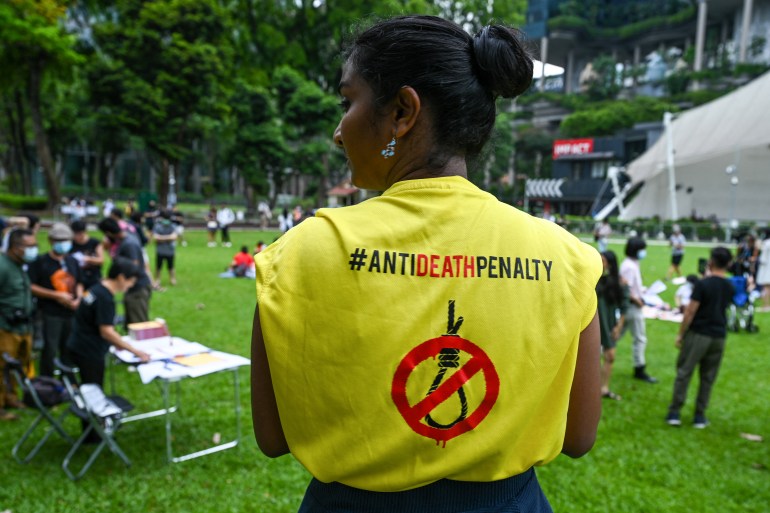
Singapore – Masoud Rahimi Mehrzad’s father was in a remote part of Iran when he received the news that he had long dreaded. His son was to be hanged in Singapore’s Changi Prison. Suffering from deteriorating health and with just a week’s notice until the execution at dawn on November 29, he was unable to take on the demanding trip to see his son in person for one last time, according to reports. Instead, the final contact between the father and son came via a long-distance phone call. Despite a last-ditch legal challenge, Masoud was hanged on the final Friday of November, more than 14 years after he was first arrested for drug offences. Masoud, 35, became the ninth person to be hanged in Singapore this year. “With four executions in November alone, the Singaporean government is relentlessly pursuing its cruel use of the death penalty,” said Bryony Lau, Deputy Director for Asia at Human Rights Watch. Anti-death penalty campaign groups believe that about 50 inmates are currently on death row in Singapore. Advertisement Despite opposition from prominent human rights groups and United Nations experts, Singapore claims that capital punishment has been “an effective deterrent” against drug traffickers and ensures the city-state is “one of the safest places in the world”. A group of UN experts said in a joint statement last month that Singapore should “move from a reliance on criminal law and take a human rights-based approach in relation to drug use and drug use disorders”. An anti-death penalty activist takes part in a rally against the death sentence at Speakers’ Corner in Singapore in April 2022 [File: Roslan Rahman/AFP] Stories of the plight of death row inmates generally come from activists, who work tirelessly to fight for the rights of those facing the ultimate punishment. The recent wave of executions has now left them shaken. “It’s a nightmare,” says Kokila Annamalai, a prominent anti-death penalty campaigner with the Transformative Justice Collective (TJC). Her work has led her to form a close bond with many death row prisoners. “They’re more than just people we are campaigning for. They’re also our friends, they feel like our siblings. It’s been very difficult for us personally,” Annamalai told Al Jazeera. ‘Losing another son, he couldn’t accept it’ Like almost all of Singapore’s prisoners on death row, Masoud was convicted for drug offences. Born in Singapore to an Iranian father and Singaporean mother, he had spent his childhood between Iran and Dubai. At the age of 17, he returned to Singapore to complete his compulsory national service and it was during this period in his life that he was arrested on drug charges. In May 2010, aged 20, he drove to meet a Malaysian man at a petrol station in central Singapore. Masoud took a package from the man, before driving away. He was soon stopped by the police. They searched the package and some other bags that they found in the car. Advertisement In total, officers discovered more than 31 grams of diamorphine, which is also known as heroin, and 77 grams of methamphetamine. Masoud was arrested for possessing drugs with the purpose of trafficking. Under Singapore’s strict laws, anyone caught carrying more than 15 grams of heroin can face the death penalty. Masoud told police that he was suffering from post-traumatic stress disorder and anxiety. He also blamed an illegal money-lending syndicate for planting the drugs in order to frame him. His defence did not stand up in court and he was sentenced to death in 2015. Masoud Rahimi Mehrzad [Photo courtesy of Transformative Justice Collective] Masoud’s sister, Mahnaz, released an open letter shortly before her brother was hanged last month. She described the pain that the death sentence had inflicted on their father. “My dad was completely heartbroken, and he has never recovered. One of my brothers died when he was 7 years old, from appendicitis … losing another son, he couldn’t accept it,” she wrote. Masoud had fought tirelessly to appeal his conviction, but his numerous legal challenges failed, as did a plea for clemency to Singapore’s President Tharman Shanmugaratnam. Before his own execution, Masoud’s sister recounted how her brother had dedicated his time on death row to helping other prisoners with their own legal battles. “He’s very invested in helping them find peace,” Mahnaz said. “He feels it’s his responsibility to fight for his life as well as the others, and he wishes for everyone on death row to feel the same motivation, to be there for each other,” she said. Advertisement ‘People start to care deeply’ In October, Masoud was one of 13 death row prisoners who won a case against the Singapore Prison Service and the Attorney General ‘s Chambers, after they were deemed to have acted unlawfully by disclosing and requesting the private letters of prisoners. The court also found that the prisoners’ right to confidentiality had been breached. Masoud was also due to represent a group of 31 prisoners in a constitutional challenge against a new law relating to the post-appeal process in death penalty cases. A hearing in that legal challenge is still scheduled for late January 2025, a date that is now too late for Masoud. Singapore’s Central Narcotics Bureau said the fact that Masoud’s execution was carried out in advance of the upcoming high court hearing was “not relevant to his conviction or sentence”. After a two-year pause due to the COVID-19 pandemic, executions have ramped up in recent years in the Southeast Asian finance hub. According to news reports, 25 prisoners have been executed in Singapore since 2022, with the authorities showing little prospect of softening their approach to capital punishment for drug traffickers. An activist lights candles for death row inmate Tangaraju Suppiah during a vigil for him in Singapore in April 2023. Suppiah was executed on April 26, 2023 [File: How Hwee Young/EPA] Anti-death penalty campaigners in the city-state continue to voice their outrage at the government’s actions, using social media to amplify the personal stories
Will South Korea’s President Yoon survive second impeachment motion?
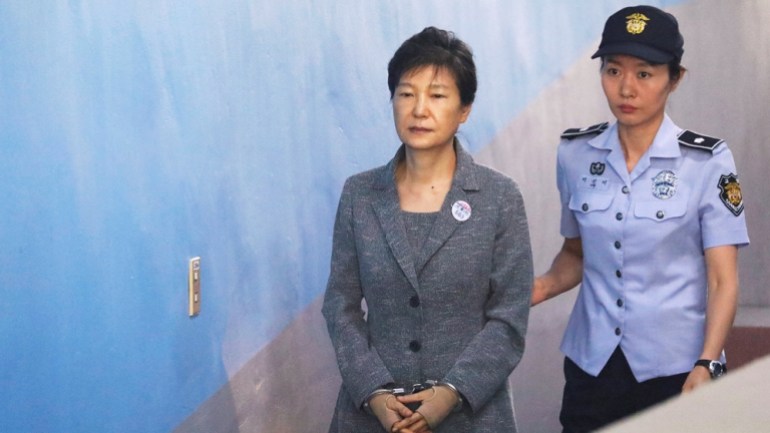
Seoul, South Korea – South Korean President Yoon Suk-yeol is set to face a second impeachment motion in the National Assembly on Saturday, just a week after a previous attempt by the political opposition fell short. The stakes are high following Yoon’s controversial declaration of martial law on December 3, which triggered nationwide protests and heightened uncertainty for Asia’s fourth-largest economy. For the latest impeachment motion to succeed, it must secure at least 200 votes – a two-thirds majority – in South Korea’s 300-seat National Assembly. The opposition bloc holds 192 seats, leaving it eight votes short of the number required. However, in recent days, a small yet growing number of legislators from Yoon’s governing People Power Party have openly supported the motion, making impeachment increasingly more likely. In a defiant televised address on Thursday, Yoon dismissed the idea of voluntary resignation, stressing, “Whether they impeach me or investigate me, I will stand firm.” Advertisement What happens if Yoon is impeached? If the National Assembly passes the impeachment motion, a series of legal and constitutional processes will unfold, starting with the official delivery of the impeachment resolution from the National Assembly to the President’s Office and the Constitutional Court. From that moment, Yoon’s presidential powers will be suspended. He will still retain the title and some privileges associated with the presidency, including the presidential residence, and continued security protection. During this period, South Korea’s prime minister will assume the role of acting president under Article 71 of the Constitution. However, the opposition is also considering impeaching Prime Minister Han Duck-soo in connection with his possible role in the martial law declaration. If Han is impeached, too, the deputy prime minister for the economy would take over as acting president. The acting president will handle essential duties such as military command, issuing decrees, and managing state matters. While the Constitution does not clearly limit the scope of an acting president’s authority, precedent suggests powers should be limited to maintaining the status quo rather than initiating major policy changes. Review at the Constitutional Court The impeachment process then moves to the Constitutional Court, where justices will review the case to determine whether Yoon’s removal is justified. At least six out of the nine justices must support the motion for it to be upheld. Advertisement However, only six justices currently sit on the bench, meaning Yoon needs just one supportive ruling to survive the impeachment attempt. The three vacant seats are positions that the National Assembly can nominate. While legislators are now rushing to fill those seats, the president has the final authority to approve the appointments, raising the possibility of delays or rejections. The court is required to issue its decision within 180 days of receiving the case. The Constitutional Court took 63 days to rule on former President Roh Moo-hyun’s impeachment in 2004 and 91 days for former President Park Geun-hye’s case in 2016. South Korea’s removed President Park Geun-hye arrives at a court in Seoul, South Korea, in August 2017 [File: Kim Hong-ji/Reuters] Yoon’s potential legal defence Yoon’s speech on Thursday appeared to preview his defence strategy should the case reach the Constitutional Court. He is likely to argue that declaring martial law was within his constitutional powers and did not constitute an illegal act or an insurrection. He framed the martial law declaration as a “highly political decision” falling under the president’s powers, which are “not subject to judicial review”. Yoon insisted that his decision was an “emergency appeal to the public” amid what he described as a severe political crisis, which he blamed on the opposition-controlled National Assembly. Constitutional Court’s ruling If the court upholds the impeachment, Yoon will be removed from office. Advertisement He will lose privileges afforded to former presidents, such as pensions and personal aides, though he will continue to receive security protection. A presidential election must then be held within 60 days to elect a new leader. If the impeachment is rejected, Yoon will be reinstated as president and resume his duties. Separate investigations Even if he survives the second impeachment bid, Yoon still faces criminal investigations. Although a sitting president enjoys immunity from criminal prosecution, this protection does not extend to charges of insurrection. Multiple investigative agencies, including the police, the prosecution, and the Corruption Investigation Office for High-ranking Officials, are investigating senior officials and military commanders on charges of insurrection. This means that Yoon could potentially be arrested, which would mark the first such case involving a sitting president in South Korea. Adblock test (Why?)
Elon Musk’s election talk sparked concern in swing state, emails reveal
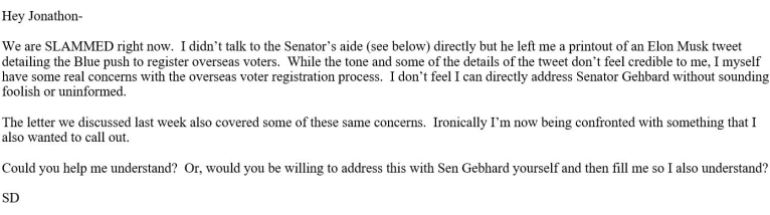
Elon Musk’s claims of voting fraud in the United States presidential election prompted a flurry of concerned correspondence to election officials in a key swing state, newly released emails reveal. The Tesla and SpaceX CEO’s commentary on X prompted a Republican state senator and others in Pennsylvania, the most important battleground state with 19 Electoral College votes, to contact the top election official in one district to discuss concerns about overseas voting, according to the emails, which provide new insight into the billionaire’s behind-the-scenes effect on the vote. The office of Senator Chris Gebhard in October contacted the director of elections for Lebanon County, a heavily Republican district located northwest of Philadelphia, to express the lawmaker’s “concerns with what is being communicated” about the November 5 election, the emails show. “Can you help us out by giving us a statement? I dropped off one of the emails,” Daniel Bost, an aide to Gebhard, wrote in an October 10 email to Sean Drasher. Advertisement Bost provided Drasher with a “printout” of an X post by Musk by way of illustrating the senator’s concerns, according to an email Drasher sent to a state-level election official seeking advice on how to respond to the lawmaker. Though it is not clear which of Musk’s posts the officials were referring to, Drasher said in his email to Jonathan Marks, Pennsylvania’s deputy secretary for elections and commissions, that it detailed “the Blue push to register overseas voters”, referring to the traditional colour of the Democratic Party. Al Jazeera obtained the emails through a records request submitted under Pennsylvania’s Right-to-Know Law. False claims In the run-up to the election, Musk, one of US President-elect Donald Trump’s most powerful allies, posted prolifically on X about the supposed risks of voter fraud. Many of those posts included false or unsubstantiated claims, such as hundreds of thousands of migrants had been flown to swing states and put on a fast-track to citizenship as part of a plan to give Democrats an electoral advantage. Although not involving Musk, Republicans filed lawsuits in multiple states, including Pennsylvania, casting doubt on the security of overseas voting in the weeks before the vote. In late October, a federal judge dismissed a lawsuit, in which six Republican state lawmakers in Pennsylvania called for new checks to confirm the identities of voters overseas, ruling that the lawmakers had no justifiable reason for making their claim so close to the election and had relied on “hypothetical concerns”. Advertisement Trump also singled out overseas voting for criticism during his campaign, falsely claiming that people overseas are sent ballots “without any citizenship check or verification of identity whatsoever”. Concerns about overseas voting The outreach to Drasher prompted by Musk’s social media activity apparently left the election official conflicted about how to respond, in part because of his own concerns about overseas voting, according to the emails. Drasher said that although the “tone and some of the details” of Musk’s posts did not seem credible to him, he himself had “real concerns” about the voter registration process. “I don’t feel I can directly address Senator Gehbard [sic] without sounding foolish or uninformed,” Drasher wrote in an October 10 email to Marks. “Ironically I’m now being confronted with something that I also wanted to call out. Could you help me understand? Or, would you be willing to address this with Sen Gebhard yourself and then fill me [in] so I also understand?” Drasher reiterated his concerns about overseas voting registration the following day in an email to his Lebanon County colleagues. “This puts us in a bit of an uncomfortable position because, frankly, I don’t like the UMOVA/UCOVA statutes myself,” he wrote, referring to legislation that facilitates overseas and military absentee voting. “I want to see them changed. And in my opinion, some of the things you see out on Twitter end up being completely valid concerns. I take comfort in the fact that this affects a tiny number of voters; And in our County its [sic] barely statistically relevant.” Advertisement Drasher said that given the attention elected officials were paying to the issue, it would be “only a matter of hours before we start getting calls from constituents who will also be looking for answers”. “I will bow to our excellent solicitor on this, but my own feedback is once again: We can only follow the law as written and we will happily enforce any changes as soon as the Legislature moves on them,” he wrote. When contacted by Al Jazeera, Drasher said he could not remember the exact X post that had prompted the discussions in his office. Asked to elaborate on his concerns about overseas voting, Drasher said it was his job to be concerned about “all” aspects of voter registration. “My concern is that I need to more fully understand the process and rationale behind its structure,” he said. Requests sent to X seeking Musk’s comment did not receive a response. The Pennsylvania Department of State did not follow up on requests for comment. About 4.4 million US citizens were living abroad in 2022, about 2.8 million of whom were voting age, according to the Federal Voting Assistance Program. Research shows voter fraud to be extremely rare in the US. An Associated Press review of every case of potential voter fraud in six battleground states in 2020 identified 475 cases out of more than 25 million ballots cast. Adblock test (Why?)
Dutch court rejects bid to halt arms exports to Israel as Gaza war rages
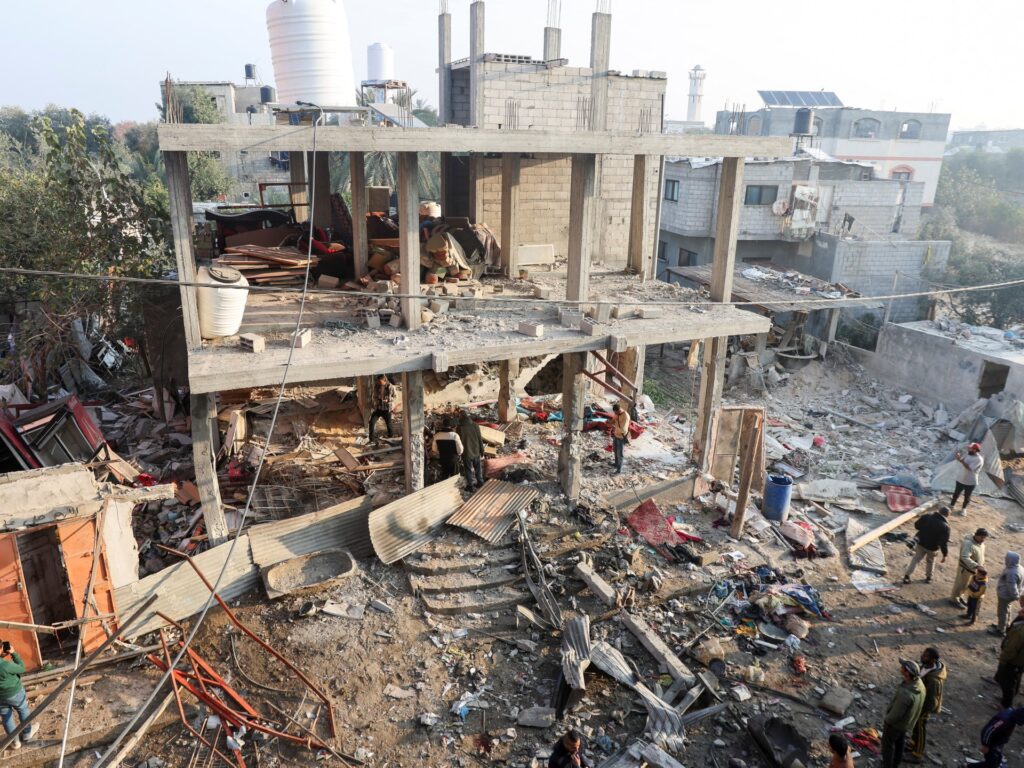
Court says ‘all claims dismissed’ after rights groups file lawsuit to stop arms sales, citing genocide convention. A Dutch court has rejected a bid by 10 pro-Palestinian NGOs to stop the Netherlands from exporting weapons to Israel and trading with illegal Israeli settlements in the occupied Palestinian territory. The Hague district court stressed on Friday that the state has some leeway in its policies and courts should not rush to step in. “The interim relief court finds that there is no reason to impose a total ban on the export of military and dual-use goods on the state,” it said in a statement. “All claims are dismissed.” The plaintiffs, citing high civilian casualties in Israel’s assault in the besieged Gaza Strip, had argued that the Dutch state, as a signatory to the 1948 Genocide Convention, has a duty to take all reasonable measures at its disposal to prevent genocide. “Israel is guilty of genocide and apartheid” and “is using Dutch weapons to wage war”, said Wout Albers, a lawyer representing the NGOs, during the hearings. The NGOs cited a January order to Israel by the International Court of Justice (ICJ) to prevent acts of genocide in Gaza. The UN’s top court said it was plausible Palestinians were being deprived of some rights protected under the Genocide Convention. Advertisement The coalition said it will review the court’s ruling and is considering an appeal. Shawan Jabarin, the general director of Al-Haq, described the decision as an “abominable injustice”. “The Netherlands has abandoned the most basic rules of international law, to prevent colonisation, annexation, apartheid and genocide,” he said. The decision in The Hague came a day after an Israeli air strike hit a residential building in the Nuseirat refugee camp Gaza on Thursday, killing at least 40 Palestinians and wounding dozens more, according to medics. Last month, the International Criminal Court issued arrest warrants for Israeli Prime Minister Benjamin Netanyahu, his former defence minister, and Hamas’s military chief, accusing them of crimes against humanity in connection with Israel’s war on Gaza. The warrants said there was a reason to believe that Netanyahu and former Defence Minister Yoav Gallant had used “starvation as a method of warfare” by severely restricting humanitarian aid and had intentionally targeted civilians in Israel’s assault in Gaza. Earlier this week, the United Nations said humanitarian aid to north Gaza, where famine is looming, has largely been blocked for the past 66 days since Israeli forces launched a renewed ground offensive there, leaving between 65,000 and 75,000 Palestinians without access to food, water, electricity or healthcare. Israel’s offensive has killed at least 44,805 people in Gaza since October last year, a majority of them women and children, according to figures from Gaza’s Health Ministry. Advertisement Earlier this month, Amnesty International accused Israel of “committing genocide” against Palestinians in Gaza since the start of the war last year. Israel has rejected the allegations. Adblock test (Why?)
UN human rights office resumes activities in Venezuela despite Maduro clash

The United Nations High Commissioner for Human Rights has announced that his office is starting to resume its activities in Venezuela, despite past clashes with the government of President Nicolas Maduro. High Commissioner Volker Turk made the announcement on Friday at a meeting with the UN Human Rights Council, where he reiterated his concerns about conditions in Venezuela, particularly after its most recent presidential race. “My office has begun to resume its operations in the country in recent weeks. My hope is that we will be able to restore our full presence,” Turk said in his opening remarks, pitching his organisation as a “bridge-builder”. The UN human rights office had previously established a presence in the country in 2019. But that changed in February, when Maduro’s administration accused the office of plotting with opposition members to undermine the government — an allegation made without proof. Its local office was ordered to close immediately, and its members were told to leave the country within 72 hours. President Nicolas Maduro and First Lady Cilia Flores wave to supporters during an event in Caracas, Venezuela, on December 10 [Ariana Cubillos/AP Photo] In a statement at the time, Venezuelan Foreign Affairs Minister Yvan Gil Pinto accused the UN human rights office of becoming a “colonialist” and “improper” presence in the country, stirring up unrest. Advertisement “Far from showing it as an impartial entity”, Gil Pinto said the office’s actions have “led it to become the private law firm of coup plotters and terrorist groups that permanently conspire against the country”. The Maduro government, however, has long faced condemnation for its human rights record, which includes allegations of arbitrary arrests, torture and extrajudicial killings. Shortly before the human rights office in Venezuela was ordered to be closed, UN officials had expressed concern about the sudden detention of human rights lawyer Rocio San Miguel. In a social media post about her arrest, the human rights office wrote that “due process guarantees, including right to defence, must be respected”. The shuttering of the local office also coincided with intensifying scrutiny over the fairness of Venezuela’s latest presidential election. Maduro, at the time, was seeking a third term in office, but public opinion polls in the months leading up to the race heavily favoured the opposition. The government disqualified several popular opposition candidates from running, including opposition leader Maria Corina Machado and her subsequent replacement, Professor Corina Yoris. Ultimately, Edmundo Gonzalez, a former diplomat, was picked to lead the opposition ticket. The election was held on July 28. But in the early hours of July 29, shortly after polling stations closed, Venezuela’s electoral authority announced that Maduro had won — though it did not release the paper voting tallies that traditionally accompany the results. Advertisement Critics immediately slammed the announcement as fraudulent and called for transparency in the voting results. The contested election led to protests in the streets of the capital Caracas and other cities, as the opposition published voting documents online that it said proved Maduro’s defeat. An estimated 2,000 people were arrested in the government crackdown that followed, with dozens killed and hundreds injured. In his statement at the UN council on Friday, Turk underscored the human toll of the violence. “Looking back over recent months, I remain deeply concerned by the disproportionate use of force and violence during post-electoral protests in July and August, including by armed individuals supporting the government,” Turk said. “I urge a prompt and effective investigation into at least 28 killings that reportedly included demonstrators, bystanders and members of the armed forces.” Still, in a gesture to the country’s authorities, Turk applauded recent waves of prisoner releases that freed protesters and opposition members detained during the post-election protests. An estimated 225 political prisoners were released under “precautionary measures” — including mandatory court appearances — on November 26, and another 103 were set free on Thursday. “This is an important step,” Turk said. But he nevertheless urged Venezuelan officials to review all the cases of those still detained. People detained during a government crackdown on post-election protests walk out of the Yare 3 prison in San Francisco de Yare, Venezuela, on November 16 [File: Cristian Hernandez/AP Photo] “I urge the release of all those arbitrarily detained, both before and after the presidential election. This includes human rights defenders such as Rocio San Miguel and Javier Tarazona, as well as humanitarian workers,” he said. Advertisement “The continued use of counterterrorism legislation against protesters, including adolescents, and reports of enforced disappearances and ill treatment are deeply troubling.” As part of that alleged ill treatment, Turk indicated detainees struggle with “overcrowded cells” and inadequate supplies of food, water and healthcare. He also called on the Venezuelan government to allow each of the prisoners a fair trial, including access to a lawyer and translators if needed, particularly for Indigenous detainees. Looking ahead to Maduro’s inauguration in January and National Assembly elections later in 2025, Turk reflected on his previous visits to Venezuela. He cast his office’s role in the country as one of cooperation. “It was clear to me then, as it is now, that the society needs to heal; overcome divisions and polarisation; and engage in an inclusive dialogue as an absolute priority,” Turk said. “We stand ready to support the people of the Bolivarian Republic of Venezuela during these difficult times in a spirit of constructive engagement.” Adblock test (Why?)
“I’m looking for my uncle” A personal story from Syria
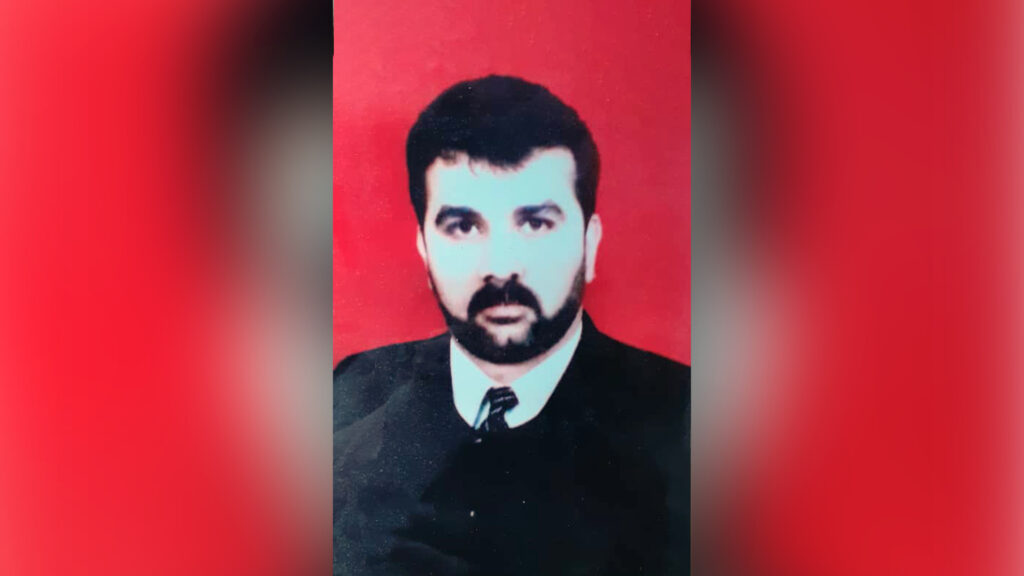
NewsFeed Sarah Kassim is one of many Syrians looking for missing loved ones. She records her search for her uncle, who had been locked away in one of Bashar al-Assad’s prisons. Published On 13 Dec 202413 Dec 2024 Adblock test (Why?)
What does Bashar al-Assad’s fall mean for Syria and the region?
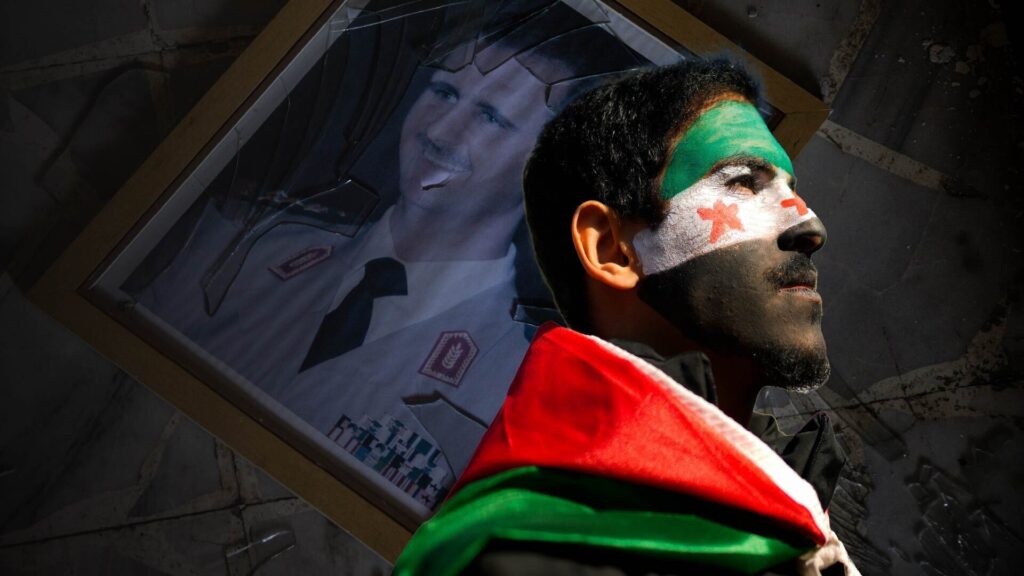
What’s next for Syria? Middle East experts and a former US diplomat join Marc Lamont Hill to unpack the fall of al-Assad. After more than 50 years of the al-Assad’s family reign over Syria, opposition forces, led by Ahmad al-Sharaa, also known as Abu Mohammed al-Julani, launched a swift and unexpected offensive that overthrew President Bashar al-Assad. While al-Assad fled to Russia and has been granted asylum, Syria’s future hangs in the balance. A transitional government has been put in place, but uncertainty over who will ultimately lead the country remains. Will this moment lead to democracy for Syrians after decades of brutality? Will foreign interference and internal conflict undermine a new and independent Syria? This week on UpFront, Marc Lamont Hill talks to former Arabic-language spokesperson for the US State Department Hala Rharrit; founding director of the Middle East and Islamic Studies Program at George Mason University Bassam Haddad; senior fellow at the CATO Institute Mustafa Akyol; and Middle East expert at the Russian International Affairs Council Alexey Khlebnikov. Adblock test (Why?)
McKinsey to pay $650m to settle US opioid consulting probe
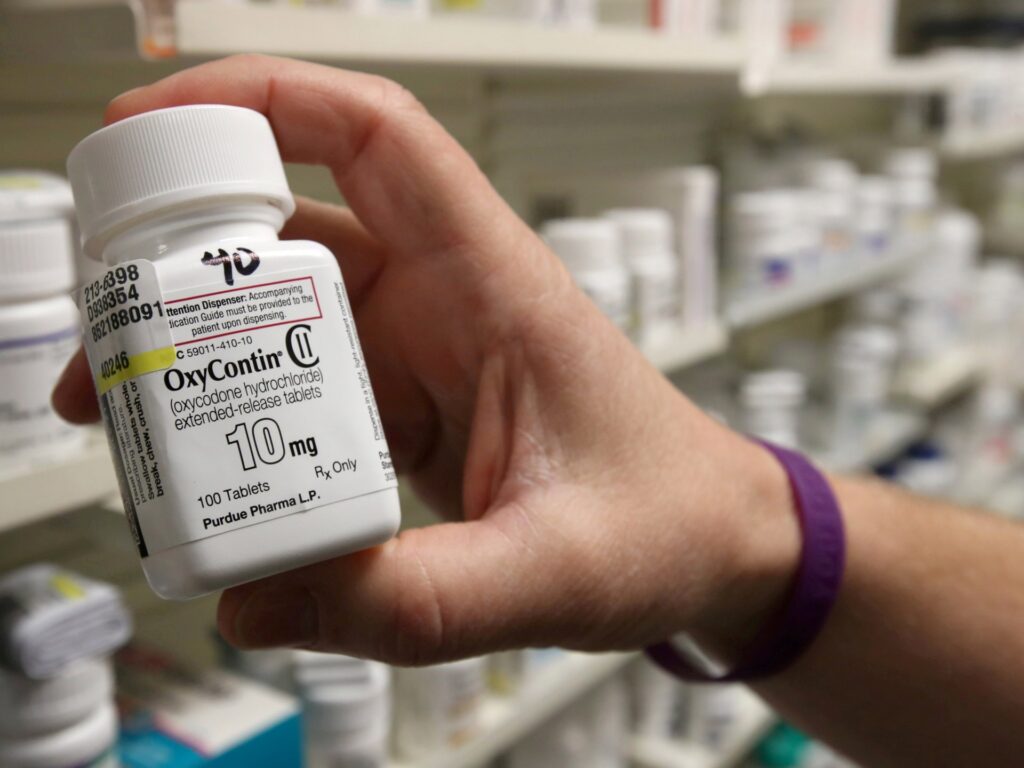
Prosecutors say McKinsey provided Purdue advice on measures it could take to ‘turbocharge’ OxyContin sales. Consulting firm McKinsey & Company has agreed to pay $650m to resolve a United States Department of Justice investigation into the consulting firm’s work advising opioid manufacturer Purdue Pharma on how to boost OxyContin sales. McKinsey has entered into a five-year deferred prosecution agreement filed on Friday in federal court in Abingdon, Virginia, to resolve criminal charges brought as part of a rare corporate prosecution concerning the marketing of addictive painkillers that helped fuel the deadly US opioid epidemic. Prosecutors said McKinsey provided Stamford, Connecticut-based Purdue advice on measures it could take to “turbocharge” OxyContin sales. It was charged with conspiring to misbrand a drug and obstruction of justice. A former senior partner at McKinsey, Martin Elling, has also agreed to plead guilty to obstruction of justice for destroying records related to McKinsey’s work for Purdue, according to court papers. He is scheduled to enter his plea on January 10. Elling deleted documents related to his work for Purdue from his company laptop, sending himself emails to remind himself to do so, according to court papers. Advertisement “We are deeply sorry for our past client service to Purdue Pharma and the actions of a former partner who deleted documents related to his work for that client,” McKinsey said in a statement. “We should have appreciated the harm opioids were causing in our society and we should not have undertaken sales and marketing work for Purdue Pharma. This terrible public health crisis and our past work for opioid manufacturers will always be a source of profound regret for our firm.” A lawyer for Elling declined to comment. McKinsey agreed to pay $650m over five years, improve its compliance practices to detect illegal activity and submit to oversight from the Justice Department and US Department of Health and Human Services (HHS) inspector general’s office as part of the deferred prosecution agreement, the company said. The consulting firm also agreed to resolve a related civil probe regarding alleged violations of the False Claims Act and enter into a “corporate integrity” agreement with the HHS inspector general’s office, the company said. ‘Opioid abatement’ Purdue pleaded guilty in 2020 to criminal charges covering widespread misconduct regarding its handling of prescription painkillers, including conspiring to defraud US officials and pay illegal kickbacks to both doctors and an electronic healthcare records vendor. Purdue is currently involved in court-ordered mediation over a multibillion-dollar settlement reached in bankruptcy proceedings that the US Supreme Court turned aside. Advertisement In a statement on Friday, Purdue said it was working to forge consensus on the plan to “deliver billions of dollars of value for opioid abatement” and create a new company as an “engine for good”. Settlement proceeds also aim to compensate victims, Purdue said. McKinsey previously reached agreements totalling nearly $1bn to settle widespread lawsuits and other legal actions alleging the company helped fuel the opioid epidemic through its work advising Purdue Pharma and other drugmakers. The settlements involved all 50 states; Washington, DC; US territories; local governments; school districts; Native American tribes; and health insurers. In 2019, McKinsey announced it would no longer advise clients on opioid-related businesses. The company has maintained that none of its settlements contains admissions of liability or wrongdoing. Adblock test (Why?)
Russia intensifies assaults on Ukraine ahead of Trump’s inauguration
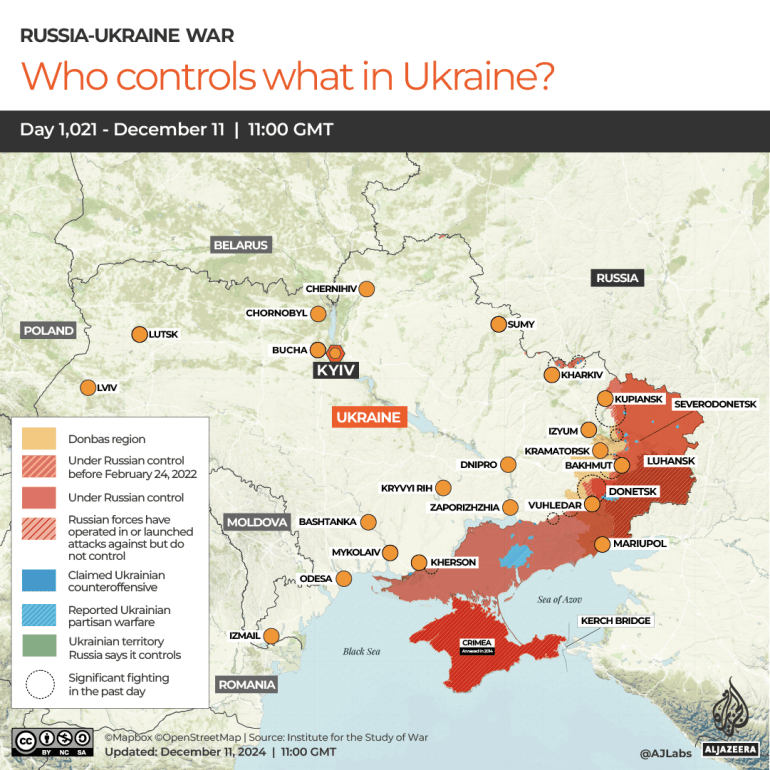
Mounting evidence suggests that Russia ramped up its assaults on Ukraine leading up to the United States election on November 5, in a possible effort to strengthen isolationists supporting Donald Trump. It also appears to be doubling down on that strategy ahead of Trump’s inauguration on January 20. “November was the fifth straight month that Russian Forces have suffered an increase in monthly total losses,” said Britain’s Ministry of Defence, as Ukraine estimated that 45,680 Russian soldiers were killed and wounded during the month. The General Staff of the Ukrainian Armed Forces has estimated Russian losses for September at 38,130 and for October at 41,980. Those climbing casualty figures are due to the fact that Russian ground assaults have steadily mounted despite the pain. The Institute for the Study of War, a Washington-based think tank, estimated that Russian daily gains on Ukrainian turf averaged 22sq km (8.5 square miles) in October and 27sq km (10.4 square miles) in November. Advertisement “Russian forces have thus suffered an estimated 125,800 casualties during a period of intensified offensive operations in September, October, and November 2024 in exchange for 2,356 square kilometres of gains,” said the ISW. These losses were well beyond what US officials believed Russia could sustain. They put its recruitment capacity at 25,000-30,000 a month. (Al Jazeera) Ukraine has recorded a similar crescendo in airborne attacks. “From September to November 2024, the enemy used over 6,000 UAVs and missiles in air strikes on Ukraine,” said Victoria Vdovychenko, a programme director at the Centre for Defence Strategies, a Ukrainian think tank, and a fellow at Cambridge University’s Centre for Geopolitics. “This is three times the number used from June to August 2024 and four times the number used from September to November 2023,” she told Al Jazeera. Before and after the election, Vdovychenko believes Russia also upped its information campaigns to manipulate US public opinion. North Korean troops entered active combat in the Russian region of Kursk on the day of the election, showing that Russia had access to fresh manpower. When US President Joe Biden reacted to Vice President and Democratic presidential candidate Kamala Harris’s defeat by authorising US weapons to strike deep inside Russia, Russian President Vladimir Putin fired the Oreshnik ballistic missile into Ukraine in apparent retaliation. But Russian chief of staff Valery Gerasimov recently told his US counterpart the launch “had been planned long before the Biden administration agreed to allow Ukraine to use American ATACMS to strike deeper into Russia”, reported The New York Times, quoting US officials. Putin was nonetheless able to create the impression that it was the US that was provoking Russia and prolonging the war. Advertisement These messages all played into the hands of the Trump campaign, his supporters admit. “President Trump seeks peace and an end to ‘never-ending wars’ that benefit entrenched elites,” said Demetries Andrew Grimes, a former US naval officer, aviator and diplomat who supports Trump. “The American people made it clear by electing Trump that they desire peace and an end to US funding for the war in Ukraine, reflecting growing concerns about prolonged involvement,” he told Al Jazeera. “The topic of negotiations skyrocketed everywhere since the election, especially in the foreign media,” said Vdovychenko. “Yet Russia doesn’t show any sign that it’s ready to go into talks because they don’t suggest they are ready to give up on anything.” Russia intensifies attacks Russia now appears to be intensifying its attacks, doubling down on the tactics that helped Trump win. Ukraine estimated Russian casualties at at least 11,000 for the first week of December, while Ukrainian President Volodymyr Zelenskyy tallied drones, missiles and glide bombs at more than 900 for that week. Putin outlined his terms for talks in June. “Ukrainian troops must be completely withdrawn from the Donetsk and Luhansk people’s republics and Kherson and [Zaporizhia] regions,” Putin told foreign ministry officials, naming the four regions his armies partly occupied by force. “As soon as Kiyv declares that it is ready to make this decision … and also officially notifies that it abandons its plans to join NATO, our side will follow an order to cease fire and start negotiations,” Putin said. Advertisement Zelenskyy has since outlined a “victory plan” that includes providing additional weapons to Ukraine and offering it unconditional NATO membership immediately, guaranteeing its security. In an interview with Sky News on November 30 he appeared to compromise, and seek NATO membership for free areas of Ukraine only. “Zelenskyy was saying [there are ways of bringing this conflict to an immediate end] if there were immediate NATO membership for the free areas of Ukraine and deal with the occupied territories later,” said Keir Giles, a Eurasia expert at Chatham House, a London-based think tank. “But, he says, ‘There’s nobody who’s actually suggested that to us’. He knows it’s a nonstarter because NATO doesn’t do things immediately or even swiftly, even without opposition from the US and Germany. So what Zelenskyy was doing, was showing up the lack of political will in NATO and the coalition of backers to actually arrive at a workable solution to the conflict.” Most Ukrainians prefer to keep fighting, according to a poll released this week. The New Europe Center, a Kyiv-based think tank, following its annual December survey of public opinion, said “64.1 percent of Ukrainians believe that negotiations with Russia are not worthwhile unless Ukraine receives real security guarantees from the West”. “The argument is that Russia will start the war again after a short pause,” it said. Could Trump abandon Ukraine? Some observers believe that Trump has already cost Ukraine the battlefield initiative it had following a 2023 counteroffensive. Advertisement Last autumn, he put pressure on Republican members of Congress to deny $60.4bn in military aid, and succeeded in delaying it by six months. “If you look at the pattern of slow, incremental, steady Russian advances, it seems to begin after Ukrainians were compromised in their ability to defend themselves by the hold in aid eventually feeding through
France’s Macron names centrist ally Francois Bayrou as new prime minister
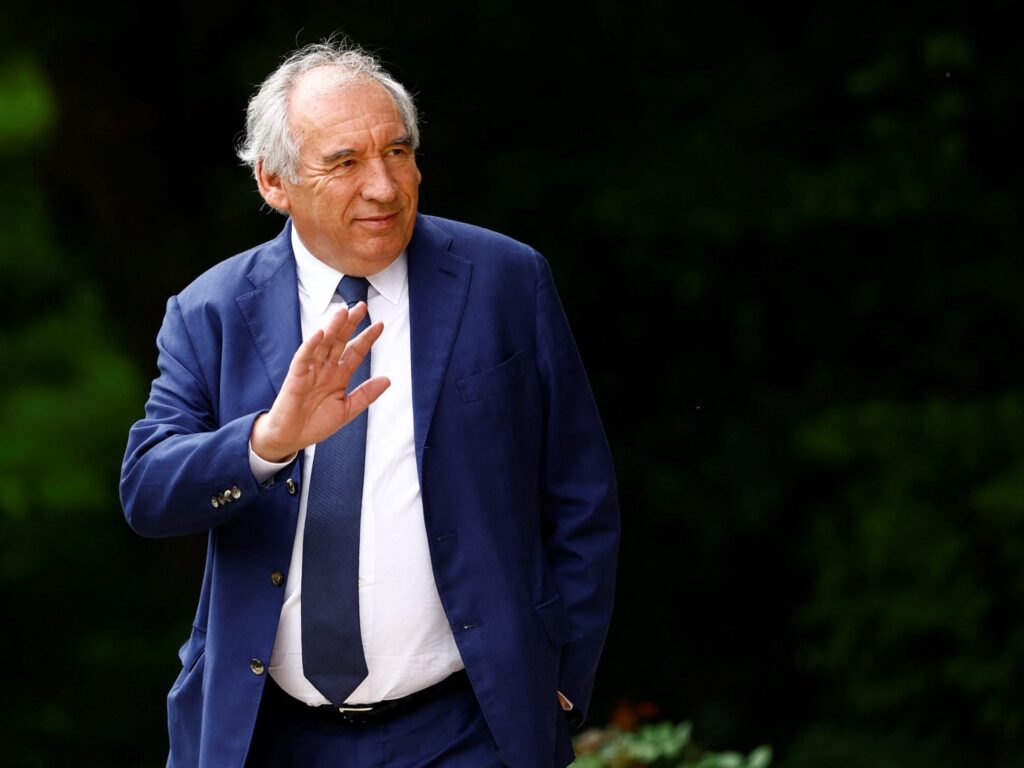
Veteran politician tasked with hauling nation from crisis after the previous government was toppled. French President Emmanuel Macron has named centrist leader Francois Bayrou as his new prime minister after the previous government was deposed last week. Bayrou’s appointment, confirmed by the Elysee presidential palace on Friday, came after former Prime Minister Michel Barnier was forced by far-right and left-wing lawmakers to step down after just three months in office in a historic no-confidence vote last week. Bayrou is a well-known figure in French politics whose political experience is seen as key in efforts to restore stability to the country. The 73-year-old leader of the Democratic Movement (Mouvement Democrate, or MoDem) group, which has been allied to the president’s centrist Renaissance party since he swept to power in 2017. The country was plunged into a political crisis when Macron called snap elections earlier this year after his party polled badly in European elections, with Marine Le Pen’s far-right National Rally (RN) party emerging as the clear victor. But his bid to buttress his minority government, which had struggled to pass legislation, backfired spectacularly when the poll delivered an inconclusive result, leaving parliament divided among three warring blocs with no absolute majority. Advertisement Bayrou, who served as education minister from 1993 to 1997, now faces the immediate challenge of putting together a cabinet that can survive a no-confidence vote and thrash out a 2025 budget in a bid to limit economic turmoil. The new prime minister, the country’s fourth this year, was recently cleared in a case alleging embezzlement of European Parliament funds. His appointment has raised hackles on the left of the political spectrum, which is wary of continuing the president’s policies, and on the right, where he is disliked by influential former President Nicolas Sarkozy. Jordan Bardella, the president of the RN, said the party would not be calling for an immediate no-confidence motion against Bayrou. France’s festering political malaise has raised doubts about whether Macron will complete his second presidential term, which ends in 2027. The president has pledged to stay on “until the end” of his five-year term, until May 2027. In a critical moment, Le Pen will be judged in an embezzlement trial next year. If convicted, she could lose the opportunity to stand in the 2027 election. The public appears to be eager for a period of stability in French politics, with just over two-thirds of respondents in an Elabe poll published Wednesday saying they want politicians to reach a deal, not to overthrow a new government. Adblock test (Why?)