

How India’s Gukesh Dommaraju became chess king in a cricket crazy country
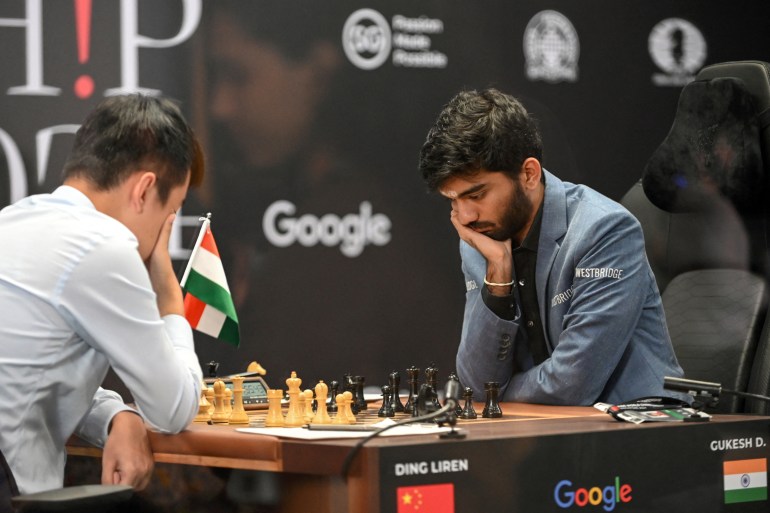
Indian chess prodigy Gukesh Dommaraju has become the youngest world chess champion ever after defeating defending champion Ding Liren of China. Gukesh’s win on Thursday came in the last game of the 14-game World Chess Championship in Singapore. The otherwise cricket-crazed India is jubilant at the 18-year-old’s victory. Here is more about Gukesh, and how he clinched the world title: Who is Gukesh? Gukesh comes from Chennai, the capital of the southern Indian state of Tamil Nadu. He attended Chennai’s Velammal Nexus School. He started playing chess at the age of seven, Gukesh said in an interview uploaded in 2019 by the Gibraltar International Chess Festival. “Chess is so complex, so I just love it,” Gukesh said in the video. “I want to become a world champion.” By the age of 12, Gukesh had become a grandmaster – the highest title a chess player can attain – making him the third-youngest grandmaster in history and the youngest one from India. Gukesh sees beauty and philosophy in pawns, bishops and boards. A YouTube video uploaded by the chess news publication ChessBase India shows the shelves of his room in his Chennai house stacked with trophies and chess books, such as Under the Surface by Jan Markos and Yochanan Afek’s Practical Chess Beauty. Advertisement Chennai has come to be known as the chess capital of India. Out of the 85 chess grandmasters in India, 31 are from Tamil Nadu. The state is even home to a temple dedicated to the game Is he the youngest world chess champion? Yes. Before Gukesh, Russian legend Garry Kasparov was the youngest to become world champion at the age of 22 in 1985. How did Gukesh win? Gukesh qualified for the championship in April by winning the men’s Candidates Tournament of the International Chess Federation (FIDE). He was the youngest candidate to win the Candidates Tournament. He competed against seven other contestants in the event held in April in Toronto, Canada. The winner of the double round-robin tournament goes on to challenge the defending champion for the world title. Ding, 32, became world champion in 2023. Starting November 25, Gukesh and Ding faced off over 14 intense games. In chess, a player wins one point for a win and half a point for a draw. Ding went into the lead by winning the first game. The second round ended in a tie. Gukesh won the third game, tying things up with Ding at 1.5 each. They remained tied for multiple games, drawing each of them. In the 11th game, Gukesh, playing with white, took the lead after Ding made a blunder. But Ding bounced back by winning the 12th game, levelling the playing field once again. The 13th game resulted in a draw. The winning moment Gukesh played with black in the 14th and final game. Midway through, a draw appeared imminent. But Ding made the mistake of moving his last powerful piece, his rook, off a strong position. Ding’s mistake took Gukesh by surprise, and he looked intently at the board and calculated his next moves. Ding, left, and Gukesh compete in game 14 of the 2024 FIDE World Championship in Singapore on December 12, 2024 [Simon Lim/AFP] After realising his mistake, Ding was visibly disappointed and resigned three moves later, conceding the world champion title to Gukesh. Advertisement “It took me a while to realise I blundered. … I think I played my best tournament in the year. “I could be better, but considering yesterday’s luck, it’s a fair result to lose in the end. I have no regrets,” Ding said at a news conference after the game, saying he would continue to play chess. [Simon Lim/AFP] When Gukesh realised he had won, he broke into tears. Speaking to reporters after the game, Gukesh said he initially did not realise Ding’s blunder but when he did: “It was probably the best moment of my life.” Gukesh reacts after winning. [Simon Lim/AFP] Gukesh said Ding “fought like a true champion”. Who are the earlier 17 champions? Wilhelm Steinitz: Born in Prague, Steinitz was the first official world champion, grabbing the title in 1886 and holding it for eight years over four championships. Emanuel Lasker: Born in Prussia in what is today Poland, Lasker won the title in 1894 and held it over six championships. Jose Raul Capablanca: Hailing from Cuba, Capablanca won the title in 1921. Alexander Alekhine: The Russian who obtained French citizenship won the title first in 1927 and three times after that. Max Euwe: The Dutch mathematician won the title in 1935. Mikhail Botvinnik: The Russian won the title five times, first in 1948. Vasily Smyslov: The Russian became world champion in 1957. Mikhail Tal: The Latvian became world champion in 1960. Tigran V Petrosian: The Armenian remained world champion from 1963 to 1969. Boris Spassky: The Russian became world champion in 1969. Bobby Fischer: The American became world champion in 1972. Anatoly Karpov: The Russian held the title from 1975 to 1985, winning five times. Garry Kasparov: The Russian held the title from 1985 to 2000, winning six times. Vladimir Kramnik: The Russian held the title from 2000 to 2007, winning three times. Viswanathan Anand: The first grandmaster and world champion from India won the title in 2007 and held it until 2013, winning four times. Magnus Carlsen: The Norwegian grandmaster won the title in 2013 and held it until 2023. Ding: The Chinese grandmaster held the title of world champion for 20 months after winning it in April 2023. Advertisement What are the reactions to Gukesh’s win? Indian Prime Minister Narendra Modi: Modi posted on X on Thursday: “This is the result of his unparalleled talent, hard work and unwavering determination. Indian opposition leader Rahul Gandhi: Gandhi also posted on X: “Gukesh, you’ve made all of India proud!” Gukesh, you’ve made all of India proud! At just 18, becoming the youngest-ever World Chess Champion is a phenomenal achievement. Your passion and hard work remind us that with determination, anything is possible. Congratulations, champ! pic.twitter.com/wcK4YZmVB9
US President-elect Trump invites China’s Xi Jinping to his inauguration
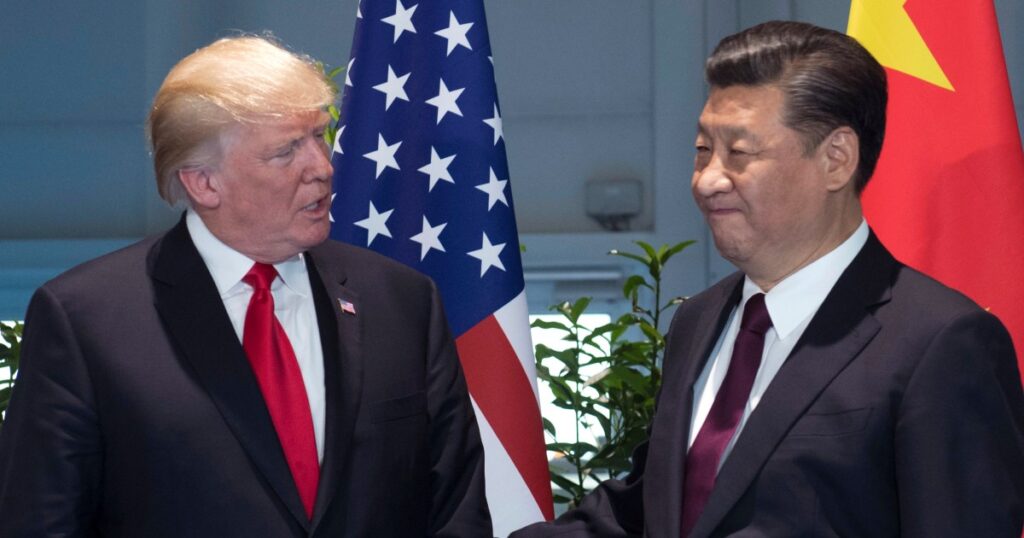
United States President-elect Donald Trump has invited his Chinese counterpart Xi Jinping to attend his inauguration ceremony in January, despite his history of hawkish rhetoric and tariff threats. On Thursday, Trump’s incoming press secretary, Karoline Leavitt, confirmed reports of the invitation in an appearance on the conservative TV channel Fox News. She framed the invitation as an effort to strengthen ties between the two countries, long seen as rivals. “This is an example of President Trump creating an open dialogue with leaders of countries that are not just our allies but our adversaries and our competitors, too,” Leavitt told the programme Fox & Friends. Experts say that it would be unprecedented for a Chinese leader to attend a US presidential inauguration, given the frosty relations that have persisted between the two countries for decades. “This is diplomatic theater, nothing more. Other heads of state, let alone Xi Jinping, haven’t attended US presidential inaugurations,” Scott Kennedy, a China specialist at Washington’s Center for Strategic and International Studies, told the news agency Reuters. Advertisement Experts say Xi is unlikely to accept the invitation. When asked at a briefing about Trump’s invitation, Chinese Foreign Ministry spokesperson Mao Ning responded: “I have nothing to share at present.” But the symbolism behind his appearance at Trump’s second inauguration would likely be fraught. Danny Russel, vice president for international security and diplomacy at the Asia Society Policy Institute, told The Associated Press that Xi’s attendance – if he accepts – could be construed as the Chinese president “celebrating the triumph of a foreign leader”. “Can you imagine Xi Jinping sitting outdoors in Washington, DC, in January at the feet of the podium, surrounded by hawkish members of Congress, gazing up at Donald Trump as he delivers his inaugural address?” asked Russel. Xi and Trump have also butted heads in the past. During Trump’s first term, from 2017 to 2021, he initiated a trade war with China that saw the two countries impose tariffs on each other’s imports. In 2019, the United Nations Trade and Development organisation issued a report warning that the trade war was “economically hurting both countries”. Experts have also warned that the cost of tariffs is often offset onto consumers. Trump also exchanged a war of words with Xi’s government during the COVID-19 pandemic, which he called the “China virus”. He demanded China be held accountable for its spread. China, for its part, condemned Trump’s accusations as “baseless” and called his rhetoric stigmatising. Advertisement A second Trump term may spark further tensions with China. Already, he has pledged to impose an additional 10 percent tariff on Chinese goods if more is not done to curb the trade of the synthetic drug fentanyl. And his incoming administration is stacked with several notable foreign policy hawks, including Secretary of State nominee Marco Rubio, who has accused China of deploying “theft” and “predatory tactics” to strengthen its economy. China sanctioned Rubio in 2020. The current administration of US President Joe Biden has also left some tariffs from Trump’s first term largely in place and taken aggressive steps meant to hobble China’s tech sector. But this week, there was evidence the US could seek to increase cooperation with China moving forward. The Biden administration announced a delegation of senior Treasury Department officials would travel to Nanjing, China, while other officials would coordinate with their Chinese counterparts at a meeting for the Group of 20 (G20) forum in South Africa. Trump too has signalled a willingness to warm relations. Speaking from the floor of the New York Stock Exchange on Thursday, Trump also said his incoming administration would engage in “a lot of talks with China”. “We have a good relationship with China. I have a surprising relationship. Now, when the COVID came in, I sort of cut it off. That was a step too far,” he said. Some are hopeful that the two global powers will find room for collaboration where possible. “We should choose dialogue over confrontation and win-win cooperation over zero-sum games,” Xi said in the letter read aloud at a US-China Business Council gala in Washington, DC, on Wednesday. Advertisement Adblock test (Why?)
Trump backs dockworkers in fight over automation
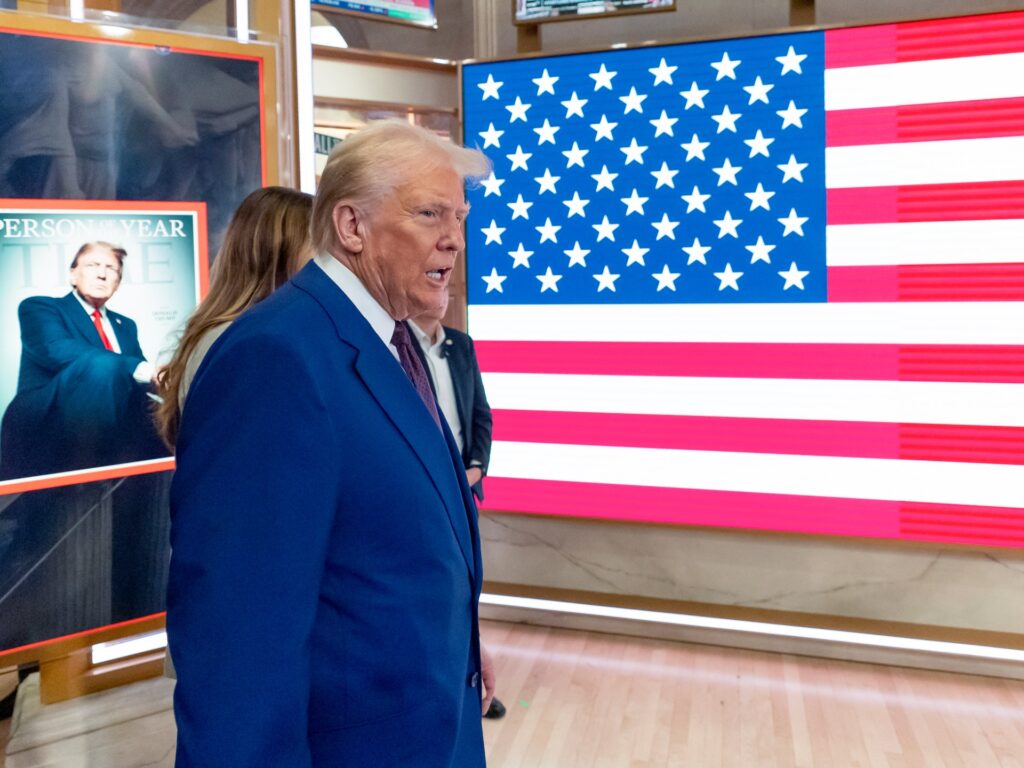
US president-elect says savings from automation are not worth the ‘distress, hurt, and harm’ caused to workers. United States President-elect Donald Trump has thrown his support behind union dockworkers who are at an impasse with their employer over the use of automation. The International Longshoremen’s Association (ILA) and the US Maritime Alliance (USMX) have until January 15 to agree on a new contract, after the sides reached a temporary deal in October. The deal, which was brokered under intense pressure from the administration of President Joe Biden, brought an end to a three-day strike that crippled operations at East Coast and Gulf Coast ports, but left the contentious use of semi-automated cranes unresolved. Trump on Thursday signalled his support for the workers’ stance following a meeting with Harold Daggett, the president of ILA, and Dennis Daggett, the union’s executive vice president. “I’ve studied automation, and know just about everything there is to know about it. The amount of money saved is nowhere near the distress, hurt, and harm it causes for American Workers, in this case, our Longshoremen,” Trump said on Truth Social. Advertisement Trump said that foreign shipping firms had “made a fortune” through their access to the US market and should hire more American workers. “They shouldn’t be looking for every last penny knowing how many families are hurt. They’ve got record profits, and I’d rather these foreign companies spend it on the great men and women on our docks than machinery, which is expensive, and which will constantly have to be replaced. In the end, there’s no gain for them, and I hope that they will understand how important an issue this is for me,” he said. Much as his support of tariffs and scepticism of interventionist foreign policy marked him out from traditional Republicans, Trump’s remarks are a departure from his party’s longstanding support of businesses over unions. The ILA argues that automation destroys jobs, while USMX contends that modernisation is necessary to keep US ports competitive. USMX said in a statement after Trump’s remarks that it looked forward to working with the incoming administration to strengthen supply chains and support jobs. “It’s clear President-elect Trump, USMX, and the ILA all share the goal of protecting and adding good-paying American jobs at our ports. But this contract goes beyond our ports – it is about supporting American consumers and giving American businesses access to the global marketplace – from farmers, to manufacturers, to small businesses, and innovative start-ups looking for new markets to sell their products,” the employer group said. “To achieve this, we need modern technology that is proven to improve worker safety, boost port efficiency, increase port capacity, and strengthen our supply chains. ILA members’ compensation increases with the more goods they move – the greater capacity our ports have and goods that are moved means more money in their pockets.” Advertisement Adblock test (Why?)
Indonesia’s Prabowo steers strategic middle path amid China, US rivalry
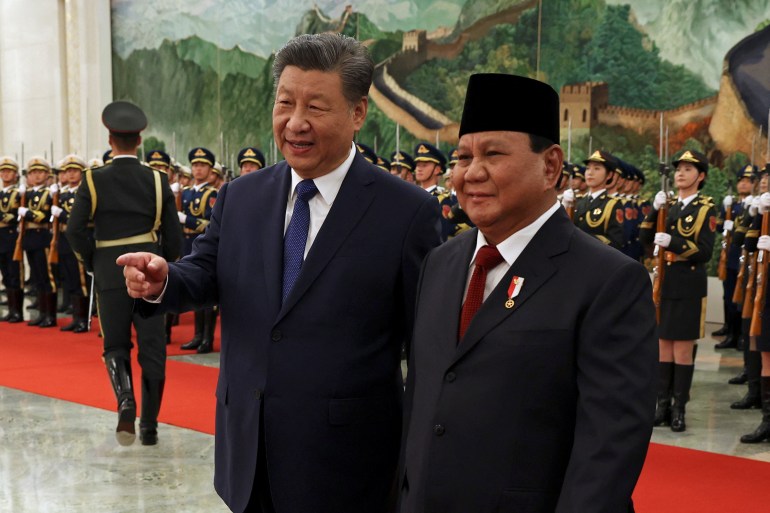
When Prabowo Subianto was sworn in as Indonesia’s eighth president in October, an immediate question was what the appointment of the once-feared ex-special forces general would mean for regional security during his five-year term in office. Analysts tell Al Jazeera that Prabowo’s approach to foreign policy will differ significantly from his predecessor – ex-President Joko Widodo, better known as “Jokowi” – whose term in office was focused more on attracting foreign investment to Indonesia and building export markets, than on defence spending and international affairs. As competition mounts between China and the United States in the Asia Pacific region, just how far the 73-year-old President Prabowo will take Indonesia in a new foreign policy direction remains to be seen. “Unlike Jokowi, who largely delegated foreign affairs and security matters, Prabowo, through his defence minister, will drive more opportunities with the Pentagon,” Natalie Sambhi, an Indonesia expert and executive director of Verve Research, told Al Jazeera. Advertisement “That said, we have early signs that Indonesia is looking to deepen its relationship with China, including resuming military exercises,” Sambhi said. “We have five years to see whether the complexity and frequency of military exercises with the [Chinese] People’s Liberation Army evolves in ways that rival the intensity with the US military,” she said. ‘Mitigating the impact of US–China rivalry’ While it raised some eyebrows at the time, Prabowo’s early choice of state visits upon securing Indonesia’s presidency gave away little of his strategic thinking for Indonesia’s place in a region of rapidly evolving military competition. He visited Australia in August and Russia in September as Indonesia’s president-elect. That was followed by a visit to China in November when he was elected president. Shortly after, he travelled to Washington, DC, where he met with US President Joe Biden, capping the visit with a phone call to the US’s president-elect Donald Trump. In late November, Prabowo visited the United Kingdom and met with British Prime Minister Keir Starmer and King Charles. Zachary Abuza, a lecturer in Southeast Asian politics and security at the National War College in Washington, DC, said the decision to visit Russia and China ahead of the US “certainly raised some alarm bells about what he is going to do with the bilateral relationship”. Chinese President Xi Jinping and Indonesian President Prabowo attend at the Great Hall of the People in Beijing, China, on November 9, 2024 [Florence Lo/pool/Reuters] But the order of the countries that Prabowo chose to visit could have also been more an issue of logistics and timing than a symbolic indication of strategic intent as a visit to the US would have been complicated while the country was in the middle of a presidential election campaign in October and early November, Abuza said. Advertisement What is certain, according to Abuza, is that “Prabowo is going to be a different figure” when it comes to foreign policy and the new Indonesian president may also mean a strengthened Association of Southeast Asian Nations [ASEAN] amid the regional rivalry between Beijing and Washington. Prabowo “understands that ASEAN is more effective with a stronger Indonesia at the helm”, Abuza said. Sambhi of Verve Research said that analysts would likely be looking at how Indonesia under Prabowo might deepen and diversify its regional security partnerships away from the twin poles of Washington and Beijing. US President Joe Biden, right, meets with President Prabowo in the Oval Office of the White House in Washington, DC, on November 12, 2024 [Kevin Lamarque/Reuters] Other security partners for Indonesia may include Australia, France, India, the Philippines, South Korea and Vietnam, Sambhi said. “The more Indonesia does with other middle and emerging Indo-Pacific powers, the better for the region in mitigating the impact of US-China rivalry,” she said. Special forces commander to Indonesian president Prabowo comes to Indonesia’s top job with a diverse portfolio and a chequered reputation in some of the Western countries that may now be eager to build a new security relationship as a counterbalance to China. Born in Jakarta in 1951, Prabowo began his military career in 1970, when he enrolled in the Indonesian Military Academy, and from which he graduated in 1974 before joining the Indonesian Special Forces Command (Kopassus). Advertisement Throughout his military career, he was accused of a string of human rights abuses while in active service, including accusations of abuses in East Timor and Indonesia’s West Papua, as well as involvement in the bloody race riots in 1998 during the fall of then-president Soeharto – of whom he was once a son-in-law. Prabowo denied involvement in the abductions of student activists during Soeharto’s rule and while he has never stood trial, the allegations of abuses and rights violations saw him banned from travelling to the US and Australia for almost two decades. Then-Indonesian Chief of Strategic Command Lieutenant-General Prabowo, right, speaks with the country’s Military Commander General Wiranto in Jakarta in 1997 [File: Reuters] Prabowo’s travel ban was quietly overturned by Washington in 2020 when he was named Indonesian defence minister by Jokowi. Australia also dropped its ban on Prabowo in 2014 when Canberra too hastily predicted that he was on the cusp of securing the Indonesian presidency on his first attempt a decade ago. Australia ‘yoking itself exclusively to the US’ Australia’s relationship with Indonesia remains complex. In August, both countries signed a defence cooperation agreement described as “historic”. But the relationship between Indonesia and Australia will be one to watch as Prabowo tries to steer a middle path between China and the West, said Ian Wilson, a lecturer in politics and security studies at Perth’s Murdoch University. Indonesia was one of the founders of the Non-Aligned Movement during the Cold War, and has a “bebas-aktif” or “free and active” approach to foreign policy, which means that it does not align itself with any major power bloc – choosing instead to work with everyone, Wilson told Al Jazeera. Advertisement Australia, however, has new regional security commitments under AUKUS – the trilateral defence partnership between Australia, the UK
How the US funds Israel’s war on Gaza
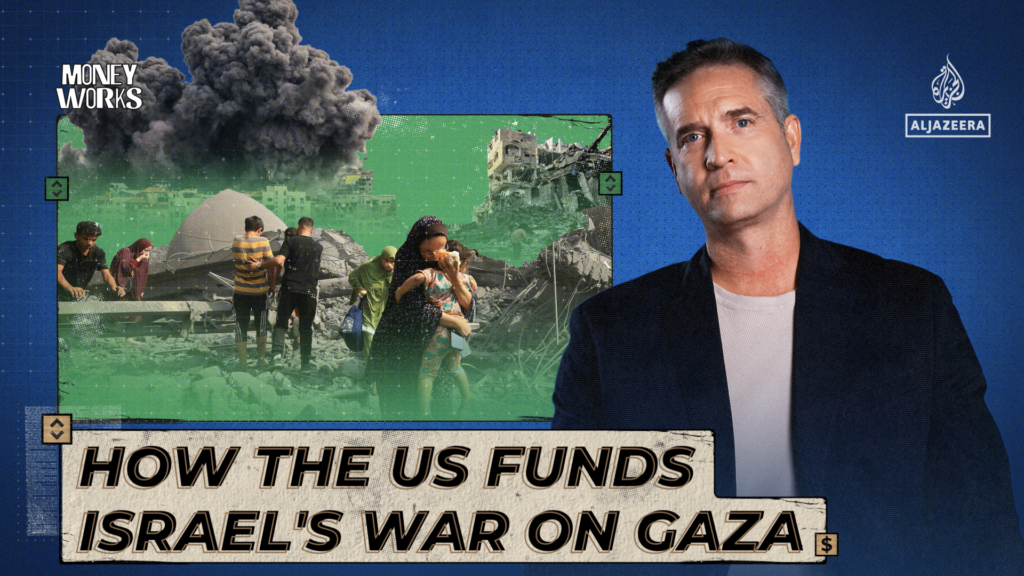
Money Works The United States has backed Israel in its ongoing war on Gaza for more than a year, providing substantial military aid worth billions of dollars. But this financial support never actually leaves the US. Find out how this funding system works. Published On 12 Dec 202412 Dec 2024 Adblock test (Why?)
At a Syria morgue, people search for loved ones killed by Assad regime
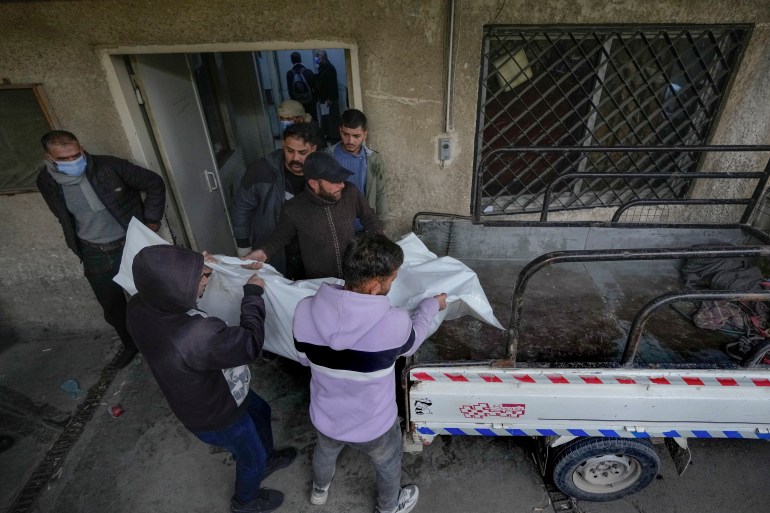
Mohammad Chaeeb spoke softly into his phone, telling a relative the grim news: he found his brother at the Al-Mujtahid Hospital morgue. “I saw him and said my goodbyes,” he said. His gaze lingered on the blackened body of Sami Chaeeb, whose teeth were bared and whose eye sockets were empty. It looked as if he had died screaming. “He doesn’t look normal. He doesn’t even have eyes.” The dead man was jailed five months ago, disappearing into a dark prison system under the rule of President Bashar al-Assad. His body is just one of many found in Syrian detention centres and prisons since Assad’s government fell last weekend. Nearby, forensic workers worked rapidly to identify the bodies and hand them over to relatives. Yasser Qasser, a forensic assistant at the morgue, said they received 40 bodies that morning from the hospital, that were being fingerprinted and having DNA samples taken. The staff had already identified about eight bodies, he said. “But dozens of families are arriving, and the numbers don’t match.” Syrian citizens carry the body of Sami Chaeeb, 34, after his body was found at the Al-Mujtahid Hospital morgue in Damascus [Hussein Malla/AP Photo] Some bodies came from the notorious Sednaya prison, still dressed in prisoner uniforms, Qasser said. Advertisement His colleague, Dr Abdallah Youssef, said identifying all of them would take time. “We understand the suffering of the families, but we are working under immense pressure. The bodies were found in salt rooms, exposed to extreme cold,” he said. Morgue officials who examined the corpses have seen bullet wounds and marks that appeared to be the result of torture, he added. An estimated 150,000 people have been jailed or reported missing in Syria since 2011 when peaceful antigovernment protests descended into war. Under al-Assad’s rule, any whiff of dissent could send someone to prison immediately. For years, it was a sentence akin to death, as few ever emerged from the system. Quoting testimony from freed prisoners and prison officials, Amnesty International has reported that thousands of Syrians were killed in frequent mass executions. Prisoners were subjected to constant torture, intense beatings and rape. Inmates frequently died from injuries, disease or starvation. Some fell into psychosis and starved themselves, the human rights group said. Hilala Meryeh, a 64-year-old Palestinian mother of four, weeps in the middle of an identification room after finding her son’s body at the Al-Mujtahid Hospital morgue [Hussein Malla/AP Photo] Among the bodies at the morgue on Wednesday was Mazen al-Hamada, a Syrian activist who fled to Europe but returned to Syria in 2020 and was imprisoned upon arrival. His mangled corpse was found wrapped in a bloody sheet in Sednaya. Hilala Meryeh, a 64-year-old Palestinian mother of four, stood in the dingy identification room, bags of bodies all around her. She had just found one of her sons. Advertisement Her four boys were arrested by the former Syrian regime in 2013 during a crackdown on the Yarmouk Palestinian refugee camp. She still needed to find three. “I don’t know where they are,” she said. “Give me my children, search for my children!” Other Syrians, like Imad Habbal, stood motionless in the morgue, coming to grips with the reality and injustice of their loss. Habbal gazed at the body of his brother, Diaa Habbal. “We came yesterday, and we found him dead,” he said. “They killed him. Why? What was his crime? What did he ever do to them? Just because he came back to his country?” Diaa Habbal, a Syrian who had been living in Saudi Arabia since 2003, returned to Damascus in mid-2024 to visit his family, his brother said. He was arrested by the Syrian military police six months ago on charges of evading military service. With trembling hands, Imad Habbal lifted the covering, his voice breaking as he wept and spoke to his brother. “I told you not to come,” he said. “I wish you didn’t come.” Adblock test (Why?)
Biden aides in Middle East in diplomatic push for Syria, Gaza
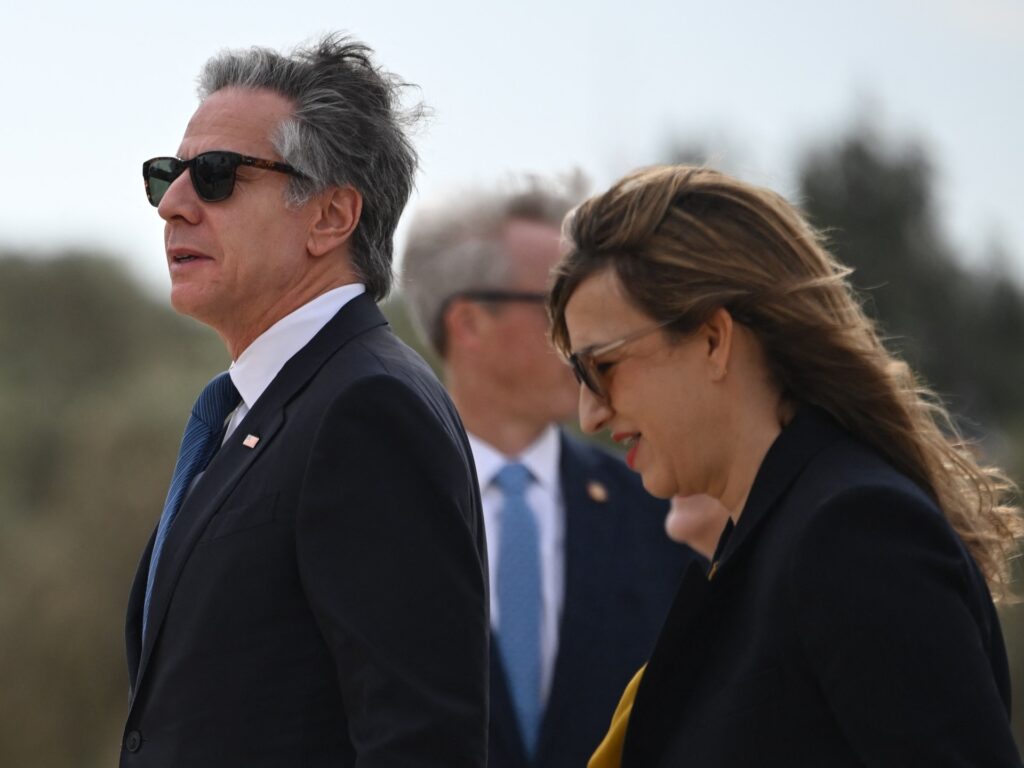
Two-pronged diplomatic push sees Blinken covering Jordan, Turkiye, while Sullivan holds talks in Israel, Qatar and Egypt. US Secretary of State Antony Blinken has arrived in Jordan, launching a crisis tour of the Middle East following the removal of Syrian President Bashar al-Assad. The outgoing US diplomat, who is calling for an “inclusive” process to form Syria’s next government that protects minorities, touched down in the Red Sea city of Aqaba on Thursday, heading straight to a meeting with King Abdullah II before a trip to Turkiye later in the day. Blinken’s trip comes days after opposition forces launched a lightning offensive spearheaded by Hayat Tahrir al-Sham (HTS), a group formerly affiliated with al-Qaeda, ending five decades of brutal rule by the al-Assad family. Announcing the trip, the State Department said Blinken would call for a Syria that is not “a base of terrorism or posing a threat to its neighbours” – a nod to the concerns of Israel and Turkiye. Since al-Assad’s flight to Russia on Sunday, Israel has attacked Syria hundreds of times, hitting airports, air defence facilities and other infrastructure, and deploying its military to the buffer zone along the occupied Golan Heights separating Syria and Israel since 1974. Advertisement Turkiye, for its part, has funded Syrian rebel fighters – known as the Syrian National Army (SNA) – to battle the Kurdish-led, US-backed Syrian Democratic Forces (SDF), pushing the group out of the northeastern city of Manbij. Ankara views the SDF, which has carved out self-ruled territory in the country’s east, as a “terrorist” group and wants to reduce its presence near its borders. Blinken’s diplomatic push on Syria comes as leaders of the Group of Seven (G7) major democracies issued a statement emphasising that al-Assad should be held accountable for his crimes. Shaping Biden’s legacy In parallel with Blinken’s tour, National Security Adviser Jake Sullivan will meet Israeli leaders in Jerusalem on Thursday and then travel to Qatar and Egypt. Both Blinken and Sullivan will be trying to make progress towards a deal to end the 14-month war in Gaza and win the release of the remaining captives held there by Palestinian armed group Hamas. The Biden administration hopes that the recent ceasefire agreement between Israel and Iran-backed Lebanese armed group Hezbollah, combined with the removal of Tehran ally al-Assad could help build momentum towards a Gaza deal after months of unsuccessful diplomacy. The high-level tours could help shape Biden’s legacy in the Middle East in the last weeks of his term before former President Donald Trump returns to the White House on January 20. However, it is unclear whether Biden has enough leverage in the region to secure major deals before he leaves office. Advertisement Hamas wants an end to the war before the captives are released but Netanyahu has insisted that it reserves the right to carry out military operations. Israel also does not want Hamas to govern Gaza. Trump warned last week there would be “hell to pay” in the Middle East if captives held in Gaza were not released before his January inauguration. On Tuesday, White House national security spokesperson John Kirby applied pressure for a deal, saying Hamas was “increasingly isolated” and should realise the “cavalry is not coming to rescue them”. Adblock test (Why?)
Zelenskyy slams Orban over call with Russia’s Putin to discuss Ukraine
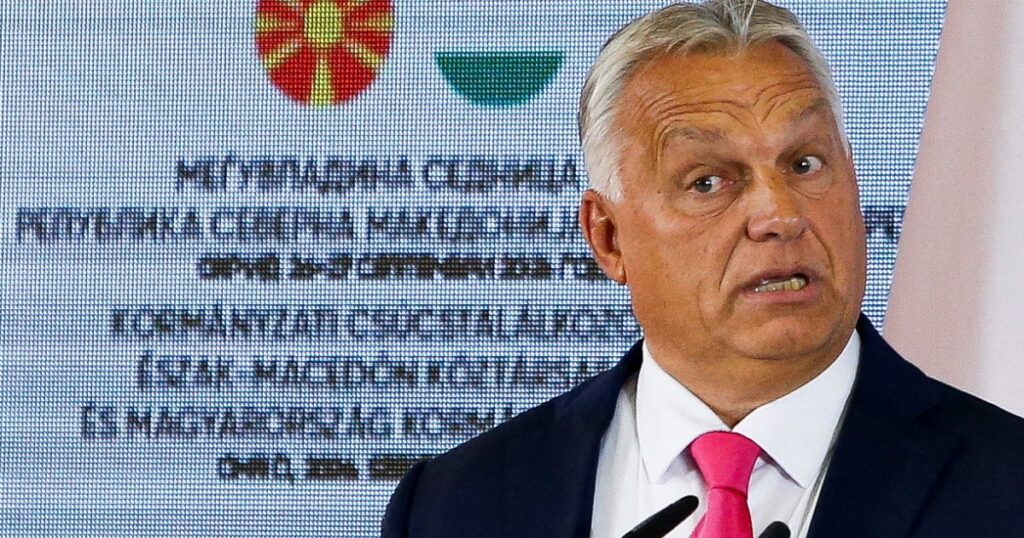
Kyiv has long called for unity among its allies on isolating Putin and said discussions on the war must include Ukraine. Ukrainian President Volodymyr Zelenskyy has criticised Hungarian Prime Minister Viktor Orban for discussing the Ukraine war in a call with Russian leader Vladimir Putin. Orban, who has maintained closer ties with Putin than other European countries throughout Russia’s war in Ukraine, said on X that the pair’s phone call on Wednesday lasted an hour and that “these are the most dangerous weeks” of the war. “No one should boost [their] personal image at the expense of unity,” Zelenskyy said on X. “We all hope that Orban at least won’t call Assad in Moscow to listen to his hour-long lectures as well,” he added, referring to Russia’s decision to grant deposed Syrian President Bashar al-Assad political asylum. Kyiv has repeatedly called for unity among its allies on isolating Putin and has said any discussions on the war must involve Ukraine. Ukrainian officials have also warned that a ceasefire in the 33-month-old war would benefit Moscow, as it could freeze current front lines with Russia holding about 20 percent of Ukrainian territory. Advertisement The Kremlin said Putin had told Orban during the phone call that Kyiv’s stance excluded the possibility of a peaceful settlement to the war. The call was initiated at the Hungarian leader’s request, the Kremlin said, and came a day after Hungary’s top diplomat said his country would forge ahead with its self-styled Ukraine “peace mission”. Orban responded to Zelenskyy’s gripe on X by saying that Hungary had proposed a “Christmas ceasefire” and a prisoner exchange but that the Ukrainian leader had “clearly rejected and ruled this out”. Orban did not offer more details about exactly when or how he had proposed such a truce, or whether the same offer was made to Putin. At the end of the Hungarian EU Presidency, we made new efforts for peace. We proposed a Christmas ceasefire and a large-scale prisoner exchange. It’s sad that President @ZelenskyyUa clearly rejected and ruled this out today. We did what we could! https://t.co/17f4tXJEsc — Orbán Viktor (@PM_ViktorOrban) December 11, 2024 Ukraine, in turn, denied that Orban discussed a Christmas truce with them. “As always, the Hungarian side did not discuss anything with Ukraine. As always, the Hungarian side did not warn [us] about its contacts with Moscow,” presidential aide Dmytro Lytvyn said in a statement. “There can be no discussions about the war that Russia wages against Ukraine without Ukraine,” Zelenskyy said on Wednesday. Orban has repeatedly called for peace talks and refused to send military aid to Ukraine since Russia launched its offensive in February 2022. Advertisement He angered fellow EU leaders in July by engaging in diplomatic talks with Russia on ending the conflict, just days after Hungary took over the bloc’s rotating six-month presidency. Adblock test (Why?)
Israeli strikes kill five in southern Lebanon amid shaky ceasefire
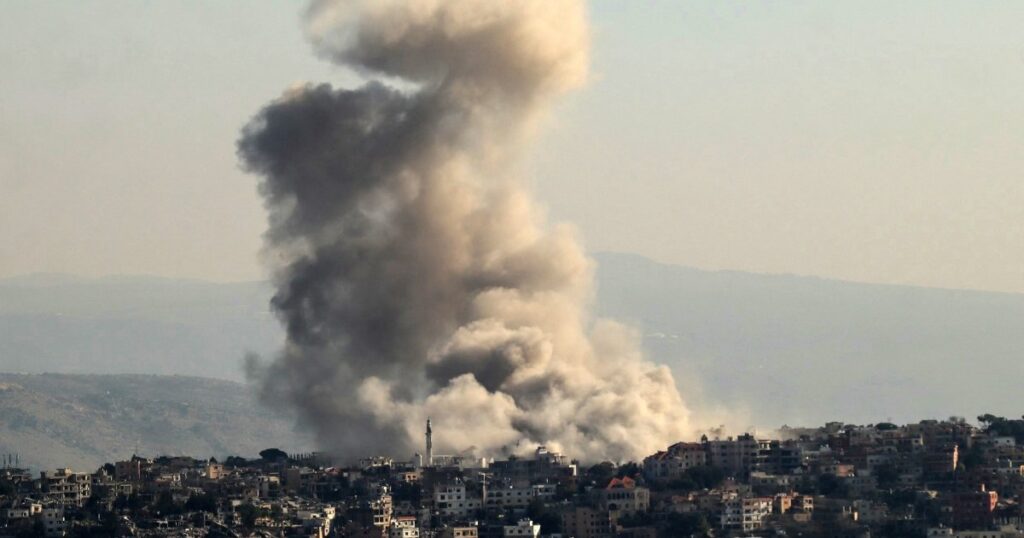
Attacks on several towns come as officials from countries including the US and France meet with a Lebanon official in Beirut. At least five people have been killed in Israeli attacks on several towns in southern Lebanon, the country’s Health Ministry has said, amid a fragile ceasefire between Israel and Hezbollah. “An Israeli enemy drone strike on the town of Ainata killed one person and wounded another,” the ministry said. An “Israeli strike on the town of Bint Jbeil killed three people,” while a third “on Beit Lif killed one person”, it added. There was no immediate comment from the Israeli military on the attacks. Israel’s army escalated its attacks on Lebanon in late September after more than 11 months of cross-border exchanges of fire with the Lebanese armed group Hezbollah, which began firing rockets towards Israel after the Palestinian group Hamas’s attack on southern Israel on October 7, 2023. A United States-brokered ceasefire started on November 27, but both sides have accused the other of repeated violations. Israel has launched near-daily strikes, mostly in southern Lebanon, that have killed scores of people since the deal took effect. Advertisement Under the terms of the agreement, the Lebanese army is to deploy in the south alongside United Nations peacekeepers as the Israeli army withdraws over a period of 60 days. Hezbollah is required to withdraw its forces north of the Litani River, about 30 kilometres (20 miles) from the border, and dismantle its military infrastructure in the south. Lebanese armed forces deploy The Lebanese army said it deployed troops around Khiam, a key town just five kilometres (three miles) from the border that witnessed heavy Israeli air strikes and fighting between Israeli soldiers and the Iran-aligned group. The Lebanese army said “units deployed in five positions around the town of Khiam” in coordination with UN peacekeepers and “within the framework of the first phase of deployment in the area, at the same time as the Israeli enemy withdrawal”. “The deployment will be completed in the next phase, while specialised units” will survey the town to “remove unexploded ordnance”, it added. Earlier, UN peacekeepers entered Khiam “to inspect the road and verify the Israeli enemy army’s withdrawal”, Lebanon’s state-run National News Agency (NNA) said. The NNA said the peacekeepers found the body of a man “in the vicinity of his house” in the border town. The NNA reported that ambassadors from the United States, France, Saudi Arabia, Qatar and Egypt held a meeting Wednesday with Lebanon’s Speaker of Parliament Nabih Berri, a Hezbollah ally who has scheduled a parliament session in January for lawmakers to elect a president. Advertisement Crisis-hit Lebanon has been without a head of state for more than two years amid deadlock between pro- and anti-Hezbollah blocs in Parliament. Envoys from the five countries who met Berri have been working for months to facilitate the process. Separately, US Army General Erik Kurilla, who leads US Central Command, met with the head of the Lebanese army General Joseph Aoun to discuss ongoing American support for the implementation of the ceasefire agreement. Adblock test (Why?)
Will the status of Syrian refugees in Europe change?
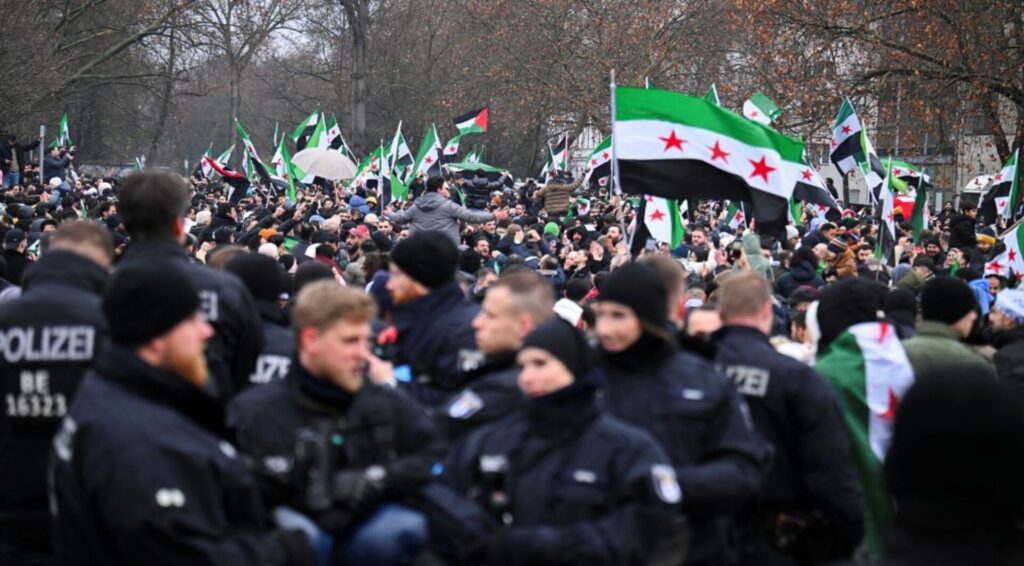
Several European countries pause Syrian asylum requests days after the al-Assad dynasty collapsed. More than a million Syrians have sought asylum in Europe in the past 13 years. But the overthrow of President Bashar al-Assad is raising questions about the future of about 100,000 refugees. At least eight nations have frozen Syrian asylum applications. What triggered the decisions? Do European governments believe Syria is safe for refugees to return? And if they do choose to go home, what lies ahead? Presenter: Bernard Smith Guests: Louise Calvey – Executive director of refugee rights charity Asylum Matters Bushra Alzoubi – Syrian refugee and human rights activist Daniel Sohege – Specialist in international refugee law and protection Adblock test (Why?)