

Accused UnitedHealthcare CEO attacker Mangione fights New York extradition

Luigi Nicholas Mangione, the 26-year-old accused of fatally shooting United Healthcare CEO Brian Thompson in a Midtown Manhattan attack last week, has signalled he will fight being extradited to New York to face murder charges. Mangione appeared in court in Pennsylvania on Tuesday, a day after he was arrested in the town of Altoona following a tip from a McDonald’s employee. He was charged with Thompson’s New York killing hours after his arrest, as well as a slate of lesser offences in Pennsylvania. Emerging from a police car, Mangione gave a partly unintelligible message to reporters, although he made reference to an “insult to the intelligence of the American people”. At the brief hearing, his defence lawyer, Thomas Dickey, told the court that Mangione would contest extradition to New York, requesting a hearing on the issue. He has 14 days to lodge a formal challenge to being relocated to New York, and in the meantime, he will be held in Pennsylvania without bail. While in court, Mangione wore an orange prison jumpsuit, alternating between staring forward, looking at papers and looking back at the gallery. He was quieted at one point by his lawyer when he attempted to speak. Advertisement The court appearance came six days after a gunman fatally shot Thompson, the head of one of the largest health insurance companies in the United States, outside of a hotel in Midtown Manhattan. The brazen nature of the attack – and the days-long manhunt – garnered national intrigue. Even while condemning the violence, many experts, doctors and US citizens said it was emblematic of the undercurrent of anger in the country towards the healthcare industry, where high costs leave many patients vulnerable to the will of insurers. Bullet casings found at the scene of the killing bore the words “deny”, “defend” and “depose”, appearing to reference a phrase used by critics to describe how health insurers avoid claim payouts. The gunman fled via electric bike to Central Park, and later, he boarded a bus out of the city. In the days since the attack, many have taken to social media to share accounts of insurance companies denying claims. The sentiment has led authorities to gird for copycat attacks, according to a law enforcement memo obtained by US media. The White House has also weighed in. “Obviously, this is horrific,” Press Secretary Karine Jean-Pierre told reporters on Tuesday. “Violence to combat any sort of corporate greed is unacceptable.” Further details emerge The law enforcement memo, which was based on Mangione’s writings, some of which were recovered at the time of his arrest, said that Mangione was likely motivated by what he described as “parasitic” health insurance companies and an overall disdain for corporate greed. Advertisement Authorities have said a 3D-printed gun, a suppressor and several fake IDs, including one believed to be used by the attacker to check into a hostel in New York before the shooting, were recovered when Mangione was arrested. According to the memo, Mangione had written that the US has the most expensive healthcare system in the world and that profits of major corporations continue to rise while “our life expectancy” does not. The document added that Mangione may have been inspired by the so-called “Unabomber” Ted Kaczynski, who he called a “political revolutionary”. Kaczynski had carried out a series of bombings from the late 1970s to mid 1990s railing against modern society, technology and the destruction of the environment. His attacks killed three. The profile that has emerged since Mangione’s arrest also bears some similarities to Kaczynski, who was considered a maths prodigy. Mangione comes from an influential family in Baltimore, Maryland, and was the valedictorian at an elite Baltimore prep school. He went on to earn undergraduate and graduate degrees in computer science in 2020 from the University of Pennsylvania, a prestigious Ivy League school. Known as affable and intelligent, some friends have said in interviews with US media that Mangione’s demeanour changed after recent surgery on his spine. “Our family is shocked and devastated by Luigi’s arrest,” Mangione’s family said in a statement posted on social media late Monday by his cousin, Delaware state legislator Nino Mangione. Advertisement “We offer our prayers to the family of Brian Thompson, and we ask people to pray for all involved.” Adblock test (Why?)
Houthis clash with US Navy ships in the Gulf of Aden
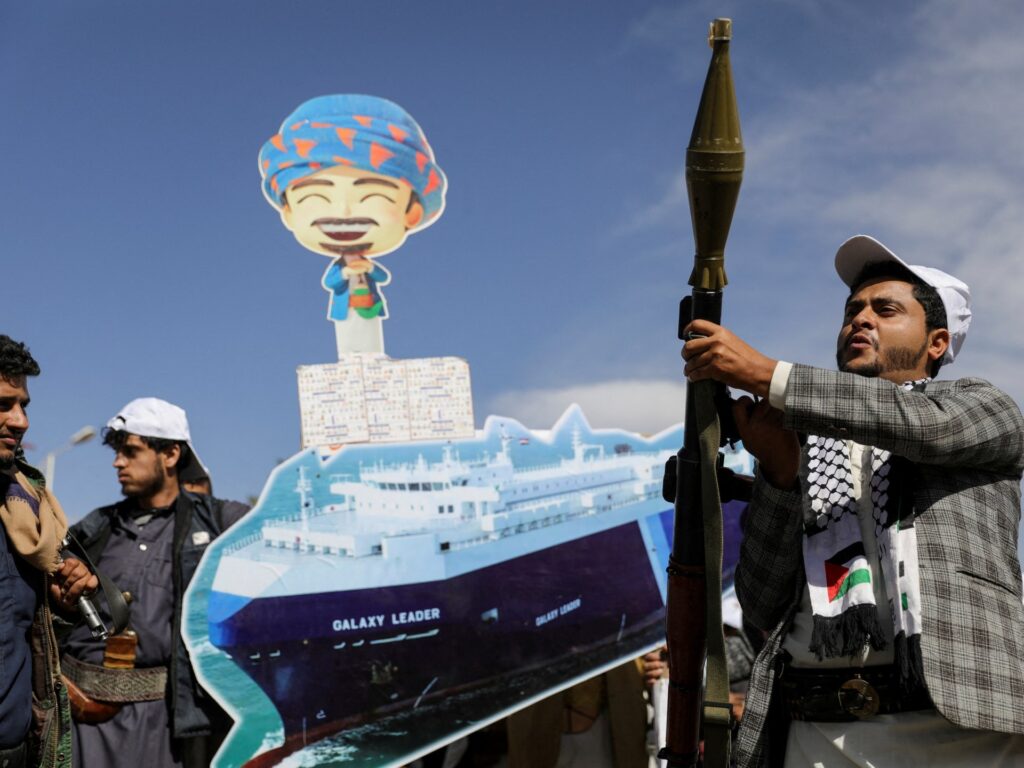
The US military says it has intercepted a barrage of missiles and drones fired by the Yemen-based group. The United States military has said its forces successfully fended off an attack by the Houthis, a Yemen-based armed group, while escorting a group of three commercial vessels through the Gulf of Aden. The US Central Command (CENTCOM), which oversees US military activities in the Middle East, said on Tuesday that two destroyers intercepted a barrage of cruise missiles and drones launched from Yemen. “The destroyers were escorting three US owned, operated, and flagged merchant vessels. The reckless attacks resulted in no injuries and no damage to any vessels, civilians or US Naval,” CENTCOM said in a statement. CENTCOM Forces Defeat Houthi Attacks on U.S. Navy and U.S.-Flagged Ships in the Gulf of Aden. U.S. Navy destroyers USS Stockdale (DDG 106) and USS O’Kane (DDG 77) successfully defeated a range of Houthi-launched weapons while transiting the Gulf of Aden, Dec. 9 – 10. The… pic.twitter.com/Jz4AtqBuEL — U.S. Central Command (@CENTCOM) December 10, 2024 US forces in the region have exchanged fire with the Houthis for months, as the group seeks to block certain commercial ships from travelling through the Red Sea. The group says those actions are a means of exerting pressure to end Israel’s war in Gaza, of which the US is a key supporter. Advertisement But the US has depicted the Houthi attacks as a threat to trade and freedom of navigation. “These actions reflect the ongoing commitment of CENTCOM forces to protect US personnel, regional partners, and international shipping against attacks by Iran-backed Houthis,” CENTCOM said. The three US-flagged commercial vessels were sailing towards Djibouti when the US said they came under attack by “uncrewed aerial systems” and one antiship cruise missile. Two US Navy ships, the USS Stockdale and the USS O’Kane, responded to the attack. Citing an unnamed official, The Associated Press (AP) news agency reported that a US Navy helicopter and French Air Force aircraft also helped repel the attack. Together, they shot down four of the drones and a missile, according to the AP. Despite months of US efforts to put an end to the attacks, including numerous strikes on Yemen, the Houthis have continued to target military and shipping vessels in the Red Sea and the Gulf of Aden. At the start of this year, the US military reported that the Houthis had conducted 27 such attacks in less than two months, from November 19, 2023, to January 11. The Yemeni group also claimed responsibility for a drone attack in central Israel on Monday. Adblock test (Why?)
Russia-Ukraine war: List of key events, day 1,020
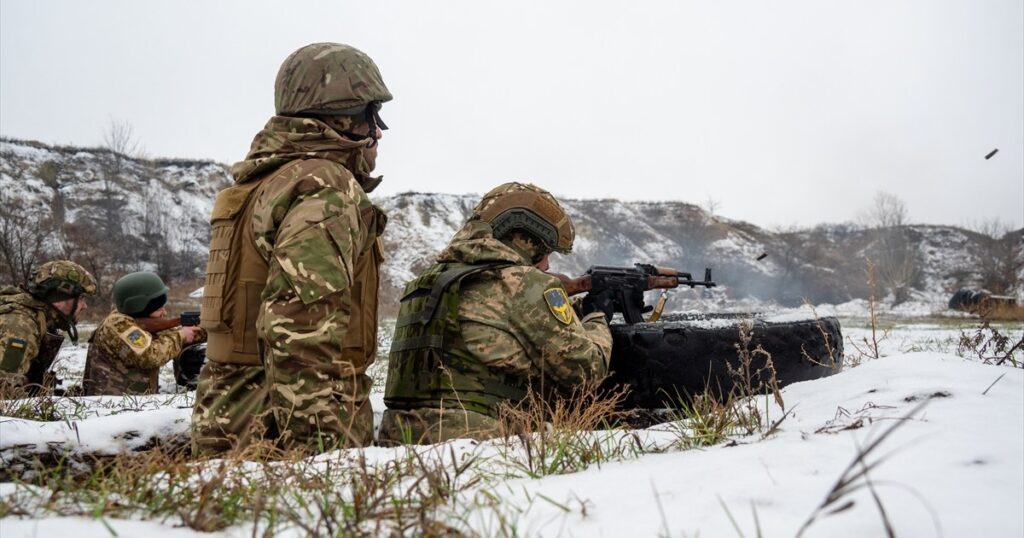
Here are the key developments on the 1,020th day of the Russia-Ukraine war. Here is the situation on Tuesday, December 10: Military President Volodymyr Zelenskyy issued orders to increase funding for equipping Ukraine’s brigades with new drones. “We recently approved a decision about the amount of such direct funds. But now I see that the amount is insufficient,” Zelenskyy said in his nightly address. “I instructed the prime minister to increase financing for brigades in the coming days, to increase several times over.” About 800,000 Russian soldiers are currently deployed in Ukraine, the Interfax-Ukraine news agency reported, citing Zelenskyy. Diplomacy At a joint news conference with German opposition leader Friedrich Merz, President Zelenskyy made the case for a diplomatic settlement to the war and raised the idea of foreign troops being deployed in Ukraine until it could join the NATO military alliance. Merz, a frontrunner in the race to become Germany’s next chancellor, condemned his country’s policy on arming Ukraine as akin to making it fight with one arm tied behind its back. Ukraine aims to hold a meeting of its key European allies in December to coordinate a joint position and ensure Kyiv is in a strong position for any potential talks and on the battlefield, a presidential spokesman said. Ukraine will soon get another 4.2 billion euros ($4.4bn) in funds after the European Union’s member states approved the planned payment of the money, the EU Council announced. The EU needs common instruments to fund defence spending amid a protracted war in Ukraine and calls from the United States for NATO members to increase such expenditure, Portugal’s Finance Minister Joaquim Miranda Sarmento said. Five Ukrainian children sent away or placed in care since Russia’s February 2022 invasion returned to their homeland, Ukrainian officials said, as part of a long-running campaign to bring home more than 20,000 children deported by Russian authorities from occupied regions of Ukraine. Ukraine’s Defence Minister Rustem Umerov said he discussed planning for the next meeting of the Ramstein Group – an alliance of NATO, the EU and other countries that back Kyiv against Russia’s invasion – with US Secretary of Defense Lloyd Austin. Austin reportedly reaffirmed the “readiness of the United States to provide Ukraine with everything it needs to effectively fight the enemy”. Europe needs to find ways within the next year to fund hundreds of billions of euros in extra military spending to defend against any attack from Russia, the EU’s new defence commissioner, Andrius Kubilius, told the Reuters news agency. Advertisement Adblock test (Why?)
Israel launches large-scale attack on Syria
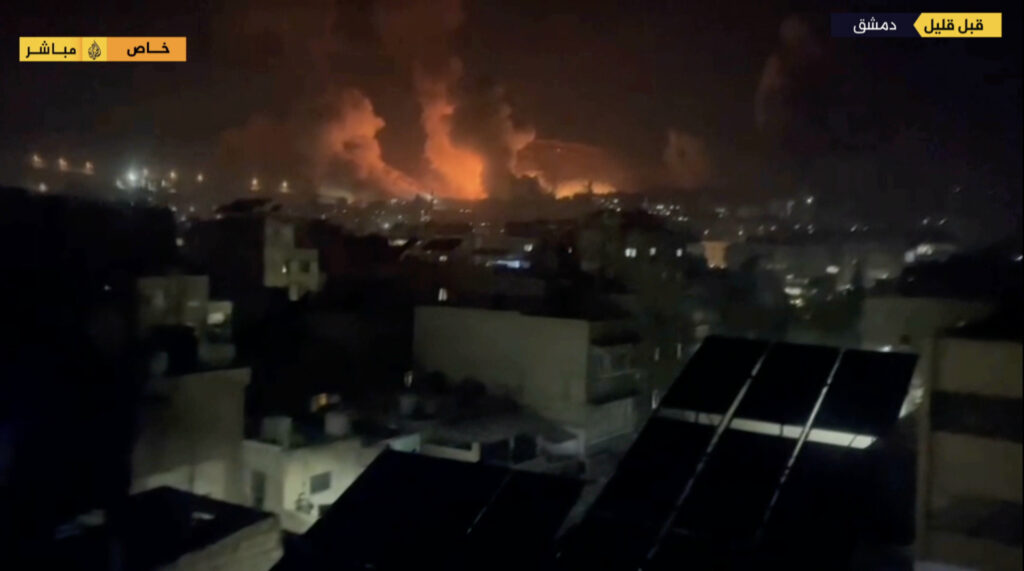
NewsFeed The Israeli military launched a large-scale attack on Syria on Monday, striking what it called military and strategic sites after the overthrow of President Assad. Published On 10 Dec 202410 Dec 2024 Adblock test (Why?)
Barrage of Israeli attacks destroys ‘important military sites in Syria’
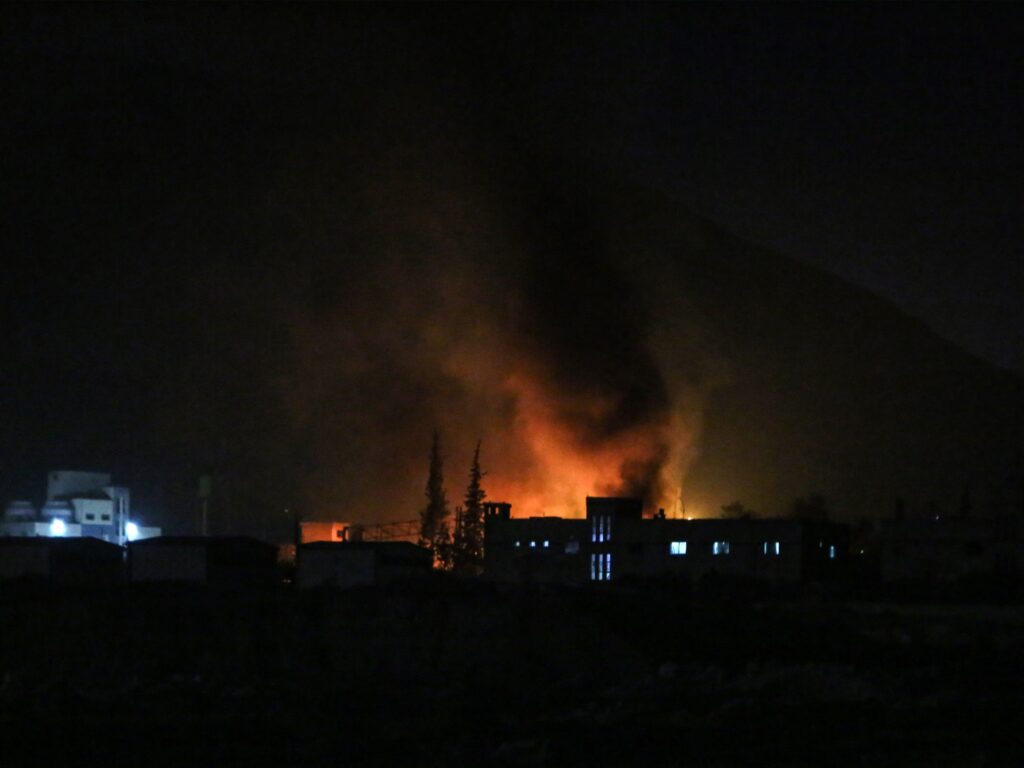
Some 250 Israeli air strikes have hit Syria in 48 hours, reports the Syrian Observatory for Human Rights. Israel has unleashed a barrage of aerial attacks across Syria, battering key military sites amid a security vacuum after opposition forces ousted President Bashar al-Assad. Near the port city of Latakia, Israel targeted an air defence facility and damaged Syrian naval ships as well as military warehouses. In and around the capital, Damascus, strikes targeted military installations, research centres and the electronic warfare administration. The Syrian Observatory for Human Rights (SOHR), a war monitor, said Israel had “destroyed the most important military sites in Syria, including Syrian airports and their warehouses, aircraft squadrons, radars, military signal stations, and many weapons and ammunition depots in various locations in most Syrian governorates”. Israel, which borders Syria, sent troops into a buffer zone on the east of the Israeli-occupied Golan Heights after al-Assad’s fall, in what Foreign Minister Gideon Saar described as a “limited and temporary step” for “security reasons”. It has also carried out “about 250 air strikes on Syrian territory” over the last 48 hours with the aim of destroying the former regime’s military capabilities, according to SOHR. Advertisement Israel media, quoting a senior security source, described the attacks as the largest air operation carried out by its Air Force in its history. “Israel’s attacks on Syria are systematic,” said Al Jazeera’s Resul Serdar, reporting from Damascus. “They are aiming to destroy Syria’s defence bases”. Serdar said Israel’s latest raids targeted three major airports – in Homs, Qamishli and Damascus – as well as weapons depots and other strategic military sites. “Israel claims it is doing this because it is concerned that these strategic facilities and military equipment could fall into the hands of the opposition,” said Serdar. There was no immediate reaction from Syria’s incoming Salvation Government, which al-Assad’s Prime Minister Mohammad Ghazi al-Jalali agreed on Monday to hand power to. The Council on American-Islamic Relations (CAIR), a US Muslim group, blasted the US government for its continued support to Israel despite its escalating attacks in the region, saying the “Syrian people deserve to rebuild their country free from foreign occupation and violence”. Pushing ‘beyond’ the Golan The flurry of air strikes came after Israeli troops also seized more territory in a buffer zone near the occupied Syrian Golan heights. The incursion trampled on a 50-year ceasefire agreement with Syria, which established the buffer zone, according to United Nations peacekeepers. Al Jazeera’s senior political analyst Marwan Bishara said “Israel has taken the opportunity of Damascus being preoccupied with a change of regime to expand their presence in the Golan Heights and perhaps beyond”. Advertisement Israel “called it temporary, but we know the implications when Israel says temporary,” Bishara said. “In the occupied West Bank, for example, it’s been almost six decades”. While Syria had been at war for more than 13 years, the al-Assad government’s collapse came in a matter of days in a lightning offensive led by the opposition group Hayat Tahrir al-Sham (HTS). Syria’s parliament, formerly pro-al-Assad like the PM, said it supports “the will of the people to build a new Syria towards a better future governed by law and justice”. The Baath party said it will support “a transitional phase in Syria aimed at defending the unity of the country”. Adblock test (Why?)
Deadly Israeli air strikes target Nuseirat camp in Gaza
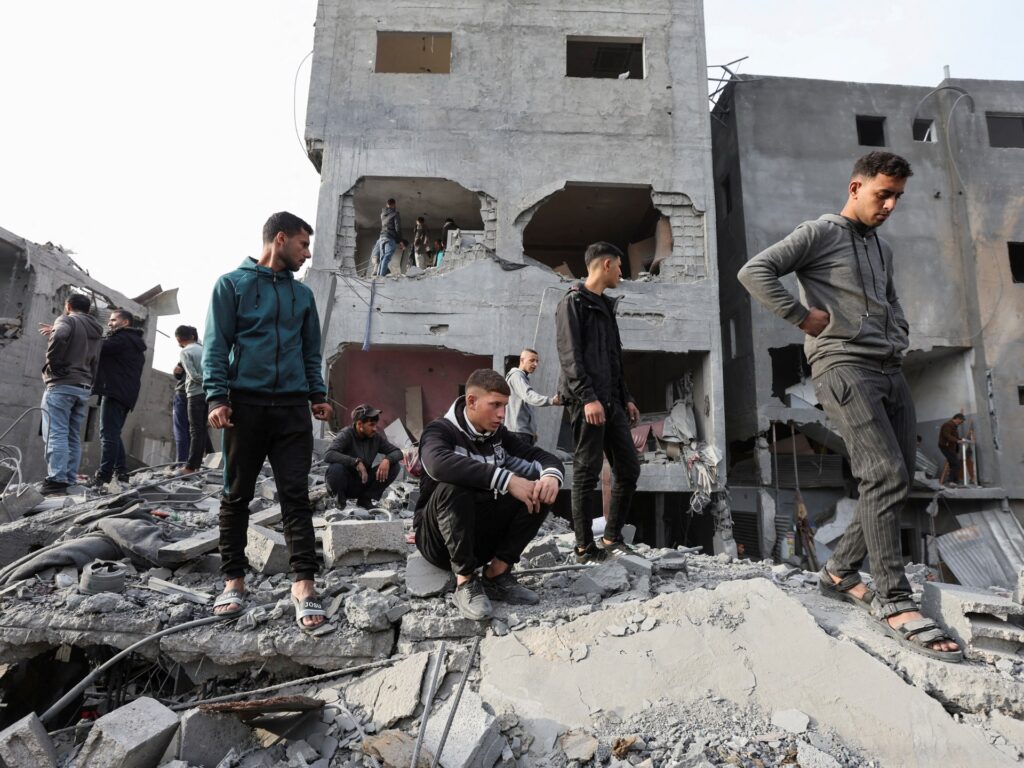
At least seven people have been killed and many wounded by an Israeli air attack on a house in central Gaza’s Nuseirat camp. The house was targeted on Tuesday morning, the Palestinian Civil Defence said in a statement, adding that its teams recovered seven bodies and rescued a number of wounded people from the site of the attack. Anadolu Agency quoted a medical source at al-Awda Hospital as saying that the victims included a woman and three children. The report added that the Israeli strikes severely damaged surrounding buildings as well. Meanwhile, Quds News Network reported that Palestinian footballer Mohamed Khalifa was among the victims of the attack. Medical sources have told Al Jazeera that at least 13 people were killed in the coastal enclave today. On Monday night, one Palestinian was killed and many were wounded by an Israeli air strike that targeted the home of the Meqdad family in Sheikh Radwan neighbourhood, north of Gaza City. In addition, nearly two dozen people were killed on Monday evening in an attack on a building sheltering displaced people in northern Gaza. Advertisement “Twenty people from one displaced family from Beit Lahiya and Jabalia, who were making their way to Beit Hanoon city, were killed,” Al Jazeera’s Hani Mahmoud, reporting from Deir el-Balah, said. “That includes men, women, children, as well as elderly Palestinians.” Footage shared on social media, and verified by Al Jazeera, shows residents on Tuesday collecting the bodies and lining them up on the street. In central Gaza’s Deir el-Balah, Israeli naval forces detained six Palestinian fishermen who tried to sail into the Mediterranean Sea earlier on Tuesday, Reuters news agency reported. Since early October, Israeli forces have laid a deadly siege in areas in northern Gaza, including Jabalia and Beit Lahiya. Israel’s war on Gaza has killed at least 44,758 Palestinians and wounded 105,834 since October 7, 2023. Netanyahu promises to continue war on Gaza Meanwhile, Israel’s Prime Minister Benjamin Netanyahu said he would not stop the war in Gaza “now”, despite reports of renewed efforts towards talks on a ceasefire. Speaking at a news conference in Jerusalem, Netanyahu said “if we end the war now, Hamas will return, recover, rebuild and attack us again”. Last month, the International Criminal Court issued arrest warrants for Netanyahu and former Defence Minister Yoav Gallant for war crimes and crimes against humanity in Gaza. On Tuesday, Netanyahu was at a court in Tel Aviv to take the stand for the first time in a long-running corruption trial, adding to his legal woes. Advertisement Charged with bribery, fraud and breach of trust, Netanyahu will testify three times a week, the court said. Netanyahu was indicted in 2019 in three cases involving gifts from millionaire friends and for allegedly seeking regulatory favours for media tycoons in return for favourable coverage. A few dozen protesters gathered outside the court building, some of them supporters and others demanding he do more to negotiate the release of some 100 captives still held by Hamas in Gaza. Adblock test (Why?)
Dozens kidnapped by rifle-wielding men in northwest Nigeria village

Residents said men carrying assault rifles went door to door, kidnapping people in the northwestern town of Kakin Dawa. Armed men have abducted dozens of women and children in northwestern Nigeria, the latest in a spate of kidnappings that have plagued the region. Police said the incident took place on Sunday in the village of Kafin Dawa in Zamfara State. Residents reported men carrying assault rifles going door to door, kidnapping people. “We found out that they kidnapped more than 50 women, including married women and girls,” said Hassan Ya’u, a resident who managed to escape but had his younger sister kidnapped. “The entire village was gripped by fear as gunshots echoed throughout the operation,” said another resident cited by Nigeria’s Daily Trust news site, which reported 43 people were kidnapped. Zamfara police said they have deployed additional security forces to the area. Kidnapping for ransom by armed men, known locally as bandits, is rife in northwest Nigeria due to high levels of poverty, unemployment and the proliferation of illegal firearms. In March this year, gunmen abducted more than 130 students in the northwestern town of Kuriga for ransom. Advertisement The students were freed “unharmed” several weeks later after intensive “backchannel” negotiations, the government said at the time. Women react as children, released after being kidnapped by gunmen in Kuriga, reunite with their families, March 28, 2024 [Emmanuel Buba/AFP] Abductions from Nigerian schools were first carried out by the armed group Boko Haram, which seized 276 students from a girls’ school in Chibok in northeastern Borno State in 2014. Some of the girls were never released, with most of them forcefully married to the fighters. In another mass kidnapping in July 2021, armed men took more than 150 students in a raid. The students were reunited months later with their families after they reportedly paid ransoms. At least 1,400 children have been abducted since 2014. Adblock test (Why?)
South Korean parliament passes bill seeking counsel probe of Yoon
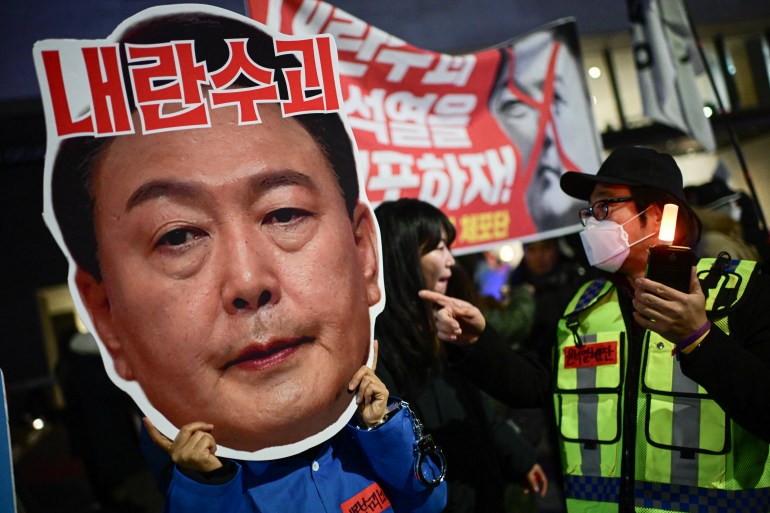
The governing party is also discussing Yoon’s potential resignation as early as February and holding a snap election in April or May. South Korea’s opposition-controlled parliament has passed a bill that seeks to appoint a special counsel to investigate President Yoon Suk-yeol over failed martial law as the governing party discussed his potential resignation in the coming months. The bill, passed on Tuesday, requests the appointment of a special prosecutor to “determine the truth about the internal rebellion through the unconstitutional declaration of martial law”, according to the Yonhap news agency. At least 210 lawmakers voted in favour and 63 against, while 14 members abstained out of 287 who attended the session. The bill came after Yoon survived the first impeachment motion last week when the 300-seat parliament fell short of a quorum of 200 lawmakers. A widespread investigation was launched into the Yoon administration after he imposed martial law, only to be forced into reversing that decision by the country’s parliament just hours later. A protester holding a cardboard reading ‘Leader of insurgents’ on an image depicting the face of President Yoon Suk-yeol takes part in a protest calling for his ouster outside the National Assembly in Seoul, December 8, 2024 [Philip Fong/AFP] The bill also calls for investigating other officials, including former Defence Minister Kim Yong-hyun and Army Chief of Staff General Park An-su, Yonhap reported. Advertisement The Seoul Central District Court said it was reviewing a request from prosecutors for a warrant to arrest Kim, who has been accused of recommending martial law to Yoon and sending troops to the National Assembly to block lawmakers from voting on it. In a statement later on Tuesday, the former defence minister said he “deeply apologises for causing significant anxiety and inconvenience”, adding that all responsibility for the imposition of martial law rests solely with him. South Korean authorities have also banned more top officials from leaving the country a day after Yoon was hit with a travel ban. On Tuesday, Cho Ji-ho, commissioner general of the Korean National Police Agency, and two other top police officials became the latest to be barred from foreign travel, the AFP news agency reported. Yoon to resign? Meanwhile, the embattled governing party said it was discussing Yoon’s potential resignation as early as February, and holding a snap election in April or May. Lee Yang-soo, who chairs a People Power Party task force constituted on Monday to map out Yoon’s eventual and “orderly” departure, said his team proposed the idea of having Yoon resign in February or March and holding an election two months later. South Korea’s constitution requires an election within 60 days of the president’s departure. Yoon’s five-year term ends in May 2027. “We’ve not yet reached a conclusion partywide and will have another meeting with all our members of parliament in the afternoon to discuss that plan,” Lee told reporters. A caricature depicting President Yoon in front of the People Power Party’s head office in Seoul [File: Lee Jin-man/AP Photo] Budget passed Advertisement Tuesday also saw parliament passing a budget bill for 2025 that was slashed from the government’s proposal and triggered the short-lived martial law decree. The 300-member parliament voted 183-94 to pass a 673.3 trillion won ($470.6bn) budget for 2025, which was cut by the Democratic Party from the government’s proposed 677.4 trillion won ($473.5bn) without reaching an agreement with the PPP and the government. It was the first time the parliament passed a budget trimmed down without consent from government ministries or between rival parties. President Yoon had cited opposition obstructionism over government budgets as one justification for his martial law decree. Adblock test (Why?)
Murdoch fails to amend family trust in court succession saga: Report
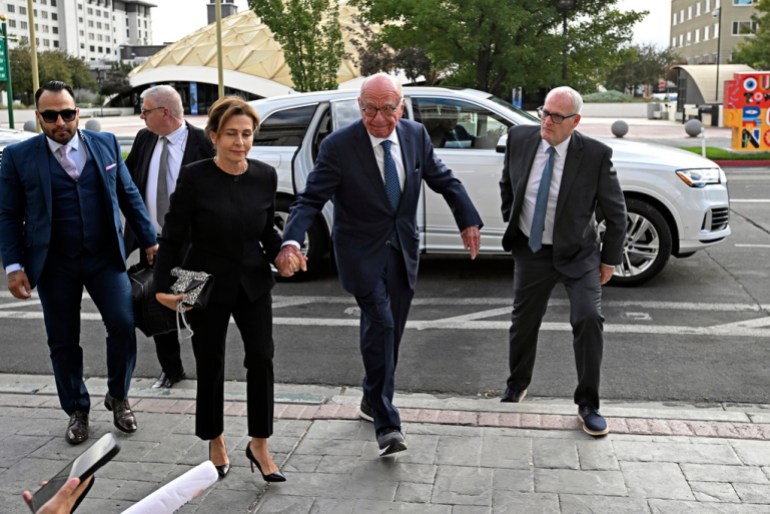
Rupert Murdoch, owner of Fox News and the Wall Street Journal, is seeking to put his son Lachlan in control of the media empire. A United States probate commissioner has ruled against billionaire media baron Rupert Murdoch‘s bid to change his family trust to put his global television and publishing empire under the control of his eldest son Lachlan, The New York Times has reported. Nevada commissioner Edmund Gorman concluded that Murdoch and his son Lachlan, who run Fox Corp and News Corp, the owners of Fox News and The Wall Street Journal, had acted in “bad faith” in their effort to amend the irrevocable trust, the Times reported on Monday, citing a sealed court document. The trust currently would divide control of the company equally among Murdoch’s four oldest children – Lachlan, James, Elisabeth and Prudence – after his death. In his opinion, Gorman said the plan to change the trust was a “carefully crafted charade” to “permanently cement Lachlan Murdoch’s executive roles” inside the empire “regardless of the impacts such control would have over the companies or the beneficiaries” of the family trust, the Times said. Advertisement A lawyer for Rupert Murdoch, Adam Streisand, said they were disappointed with the ruling and intended to appeal, the Times reported. The Murdochs’ conservative media empire is poised to play an important role in the political future of the US as President-elect Donald Trump is set to return to the White House in January. Fox News has bounced back after losing an $800m defamation lawsuit last year due to its handling of the 2020 election results. Rupert Murdoch was one of the most prominent Trump detractors to line up behind the former president during the recent election campaign, with the full-throated support of Fox News. Rupert Murdoch, centre, and his wife, Elena Zhukova Murdoch, arrive at the Second Judicial District Court in Reno, Nevada, on Monday, September 16 [Andy Barron/AP Photo] The succession battle for control of Murdoch’s media holdings has been going on behind closed doors for three months in a Reno, Nevada, courtroom. Married five times, the 93-year-old Murdoch retired last year and is attempting to change the terms of the family’s trust to ensure that after he dies, the media companies remain under the control of Lachlan Murdoch. Rupert Murdoch’s proposed amendment would block any interference by three of Lachlan’s siblings, who are more politically moderate, The New York Times has reported. Lachlan Murdoch already runs Fox and is the sole chair of News Corp. Lachlan Murdoch is viewed as ideologically aligned with his conservative father. James Murdoch, who has donated to progressive political groups, resigned in 2020 from the News Corp board, citing disagreements over editorial content. Advertisement The Murdoch trust was formed around the time of Rupert Murdoch’s divorce from his second wife, Anna, in 1999. The trust is the vehicle through which the elder Murdoch controls News Corp and Fox, with roughly a 40 percent stake in voting shares of each company. Adblock test (Why?)
What are Israel’s plans in Syria?
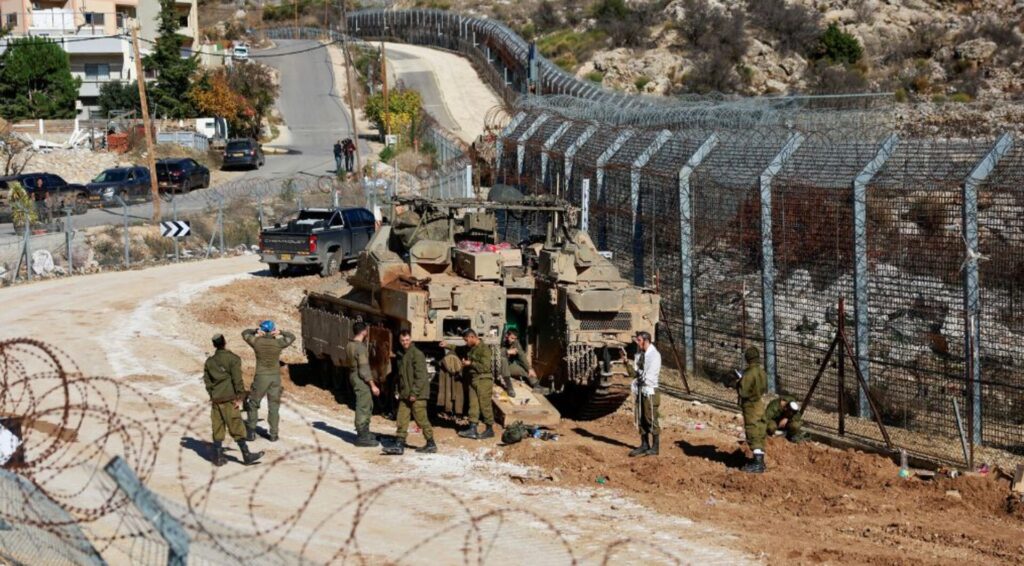
Israel moves to seize more Syrian land near the Golan Heights after opposition forces topple former President Bashar al-Assad. As former Syrian President Bashar al-Assad’s government falls, Israel seizes more territory in Syria’s Golan Heights. That move tears up a 50-year-old ceasefire agreement. But Israeli far-right ministers say their country’s borders should extend further – to Damascus. So what are Israel’s plans in Syria? Presenter: Dareen Abughaida Guests: Robert Geist Pinfold – lecturer in international peace and security at Durham University Akiva Eldar – political analyst and veteran journalist Salma Daoudi – Syria researcher and policy analyst, and non-resident fellow at the Tahrir Institute for Middle East Policy Adblock test (Why?)