

Cuba extends workplace, school shutdowns in wake of power blackouts
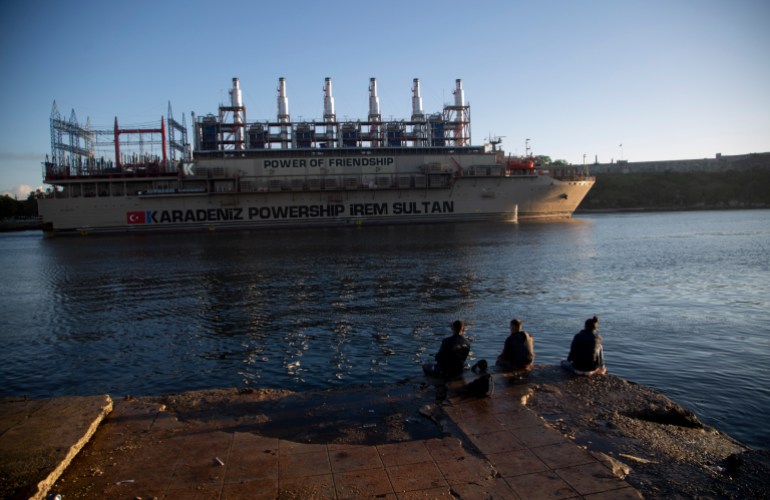
The energy-saving measures come as government struggles to restore grid and surveys hurricane that killed seven. Cuba will keep all non-essential workplaces and schools closed through Sunday as it battles a crippling island-wide electricity shortage and recovers from a deadly hurricane. Cuba’s National Defence Council announced the prolonged shutdowns on Wednesday, saying only vital services such as hospitals will stay open. The energy-saving measures come as the government scrambles to restore power across the nation, which went dark Friday after its largest power plant collapsed and fuel failed to reach other plants, causing the entire energy grid to collapse. The crisis was compounded by the passage of Hurricane Oscar over the weekend, which flooded rivers and tore down power lines across eastern Cuba, killing at least seven people, including one child. Originally, the government said workplaces and schools would reopen on Thursday. By Tuesday, Cuba announced its grid was back online and power had been restored to 70 percent of the country, although many outside the capital Havana were still cut off. The power grid still had a 30-percent energy deficit during evening peak hours, state media reported on Wednesday morning, citing data from the state electric company, Union Electrica (UNE). Visiting the southeastern town of San Antonio del Sur, which was clobbered by a flash flood caused by the hurricane, President Miguel Diaz-Canel told residents Wednesday, “You are not alone or abandoned.” Cuba’s electricity is generated by eight ageing, oil-fired thermoelectric plants, some of which are broken down or under maintenance, seven floating plants leased from Turkish companies that have faced fuel shortages, and many diesel-powered generators. People watch the Turkey-flagged power ship arrive in Havana Bay in Cuba, Tuesday, November 15, 2022 [Ismael Francisco/AP] “Bands-aids” The large thermoelectric plants were built in the 1970s and have a lifespan of between 25 and 30 years, according to Jorge Pinon, a Cuban-born energy expert at the University of Texas at Austin. “They’re breaking down all the time,” he told Al Jazeera, comparing them to the classic old US cars that are a popular tourist attraction in the capital, Havana. “They have a structural problem and they need to recapitalise the whole system,” he added. The country’s waning energy resources are a symptom of its worst economic crisis in decades, also marked by soaring inflation and shortages of medicine, food and water. “Turn on the lights” Concerned about social unrest and sporadic street protests, Díaz-Canel has warned that his government will not tolerate attempts to “disturb public order”. In July 2021, blackouts sparked an unprecedented outpouring of public anger, with thousands of Cubans taking to the street and chanting slogans including “Freedom!” and “We are hungry.” Dozens of people took to the streets over the weekend in one neighbourhood, banging pots and pans and shouting “Turn on the lights.” Cuban police and military stand next to debris used to block a street during a protest against a blackout, October 19 [Norlys Perez/Reuters] The Cuban government and its allies blame the United States’s 62-year-old trade embargo on the island for its economic and energy problems, including the sanctioning of oil tankers that deliver fuel from Venezuela. White House press secretary Karine Jean-Pierre said Monday that the Cuban government’s “long-term mismanagement of its economic policy and resources has certainly increased the hardship of people in Cuba”. Adblock test (Why?)
Bank of Canada cuts interest rates, says fight against inflation ‘worked’
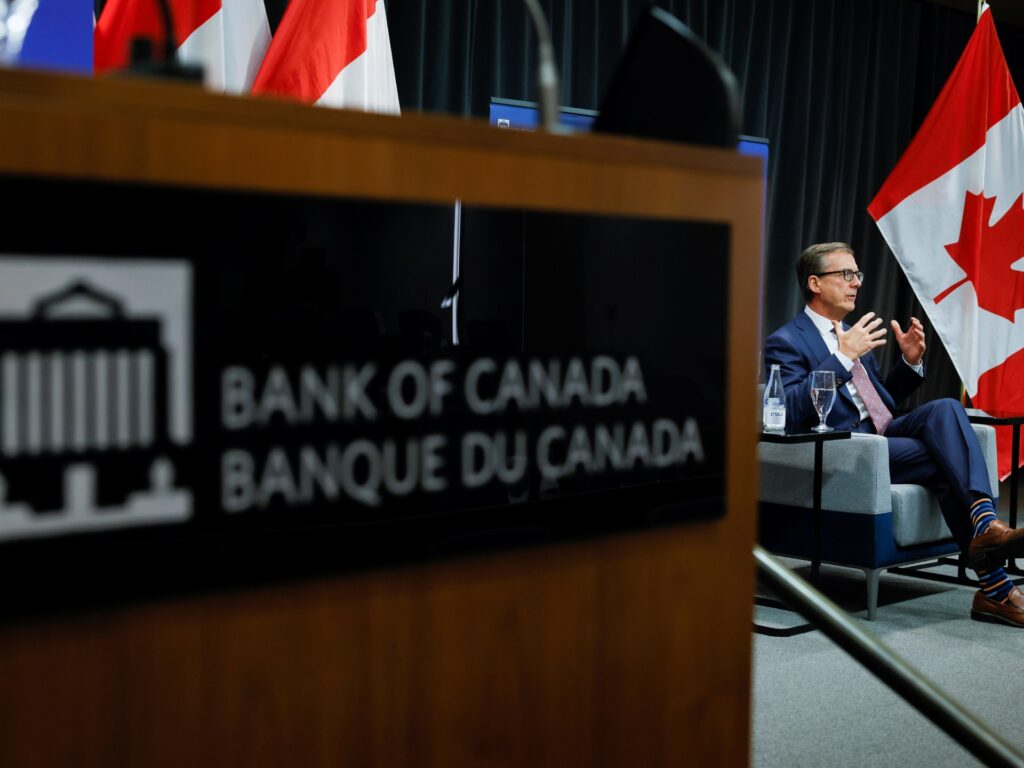
The cut on Wednesday, the fourth in a row, was bigger than expected as September inflation sank below target. The Bank of Canada on Wednesday reduced its key benchmark rate by 50 basis points to 3.75 percent, its first bigger-than-usual move in more than four years, and hailed signs that Canada has returned to an era of low inflation. The country’s central bank, which hiked rates to a 20-year high to fight soaring prices, has now cut benchmark rates four times in a row since June. Inflation in September sank to 1.6 percent, below the 2 percent target. “Canadians can breathe a sigh of relief. It’s a good news story,” Bank of Canada (BoC) Governor Tiff Macklem said during a press conference after the rate announcement. “It’s been a long fight against inflation, but it’s worked, and we’re coming out the other side.” Despite three previous cuts totaling 75 basis points, demand has been muted, sales at businesses are sluggish and consumer sentiment is tepid, hurting economic growth. “Today’s interest rate decision should contribute to a pickup in demand,” Macklem said, adding that the BoC would like to see growth strengthen. The United States Federal Reserve last month started its own rate reduction cycle with a similar-sized move. Economists and analysts now see a possibility of another jumbo cut building up in December. “Based on the logic offered to justify today’s decision, it would take a significant turn of events to stand in the way of another cut of that magnitude in December,” CIBC Chief Economist Avery Shenfeld wrote in a note. ‘Maintain low, stable inflation’ The last time the Bank of Canada cut rates by 50 basis points at a scheduled meeting was in March 2020. The headline September inflation rate of 1.6 percent underscored concerns that the high cost of borrowing might have suppressed the rise in prices more than the economy needed. “Now our focus is to maintain low, stable inflation. We need to stick the landing,” Macklem said. Money markets are fully pricing in a 25-basis-point cut in the final monetary policy decision announcement of the year on December 11. They are seeing an over 25 percent chance of another 50-basis-point cut. “Another 50 [basis points] in December is not a slam dunk. It will depend on where the BoC thinks neutral is,” said Kyle Chapman, forex markets analyst at Ballinger Group. The central bank said it sees the neutral rate – where the monetary policy is not considered to be restricting growth but also accelerating growth – between 2.25 percent and 3.25 percent. Macklem reiterated that if the economy continues to evolve broadly in line with forecasts, the bank would cut rates again, with the timing and pace depending on the latest data. Canada’s economic growth has sputtered under the impact of high rates. July gross domestic product (GDP) grew by just 0.2 percent on a monthly basis and provisional data suggest August growth will likely stall. The bank revised its forecast for quarterly and annual growth in its latest monetary policy report (MPR) released along with the rates announcement on Wednesday. It now expects annualised GDP growth in the third quarter to be 1.5 percent, down from the 2.8 percent it predicted in July, but kept its full-year forecast unchanged at 1.2 percent. The overall annual inflation rate this year is seen at 2.5 percent, falling to 2.2 percent in 2025 and 2 percent in 2026, the MPR showed. The bank, however, is still concerned about inflation coming in higher or lower than expected going forward. “The economy functions well when inflation is around 2 percent,” Macklem said. Adblock test (Why?)
Israeli strikes pound Lebanese southern coastal city of Tyre
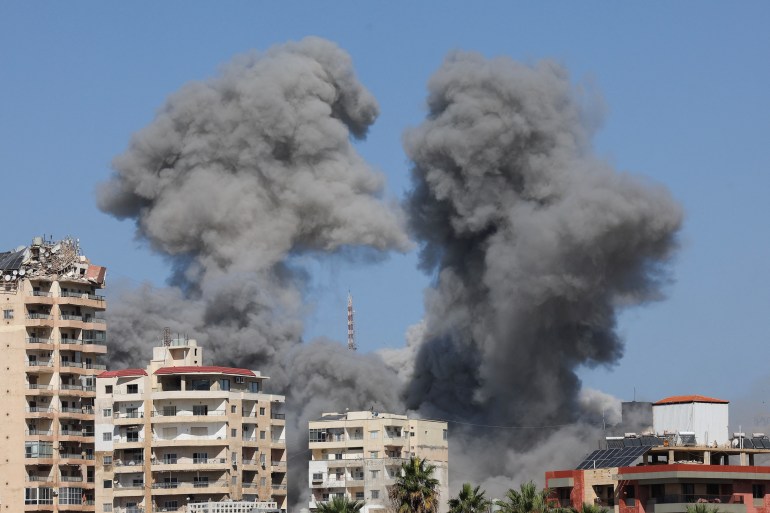
Israeli warplanes have attacked multiple buildings in Lebanon’s southern coastal city of Tyre, sending up large clouds of black smoke, as the Lebanese armed group Hezbollah confirmed that a top official widely expected to be the group’s next leader had been killed in an Israeli strike. There were no reports of casualties in Tyre, where the Israeli military had issued evacuation warnings ahead of the strikes. The Lebanese state-run National News Agency reported on Wednesday that an Israeli strike on the nearby town of Maarakeh had killed three people. Meanwhile, Hezbollah fired a new barrage of rockets into Israel, including two that set off air raid sirens in Tel Aviv before being intercepted. The group also confirmed the death of Hashem Safieddine, who had been widely expected to take over the leadership of Hezbollah following the killing of Hassan Nasrallah last month. Israel said on Tuesday that it had killed Safieddine in a strike earlier this month in Beirut’s southern suburbs. “We pledge to our great martyr and his martyred brothers to continue the path of resistance and jihad until achieving its goals of freedom and victory,” Hezbollah said in a statement. Safieddine, a powerful cleric within the party ranks, was the head of Hezbollah’s highest political decision-making body, the executive council. He was widely expected to succeed Hassan Nasrallah, one of the group’s founders and longtime leader, who was killed in an Israeli airstrike last month. Hezbollah began firing rockets towards Israel on October 8, 2023, after Israel launched its ongoing deadly assault on the besieged Gaza Strip in response to a Hamas-led attack on southern Israel. The exchanges of fire continued on a near-daily basis for months, but Israel’s military drastically escalated the fighting last month, killing much of Hezbollah’s senior leadership and launching air raids across Lebanon. Earlier this month, it sent ground troops into areas in the south of the country. Tyre, a provincial capital, had largely been spared in the war, but strikes in and around the city have intensified recently. The 2,500-year-old city, about 80km (50 miles) south of Beirut, is known for its pristine beaches, ancient harbour, Roman ruins and hippodrome, a UNESCO World Heritage Site. It is among Lebanon’s largest cities and a vibrant metropolis popular with tourists. The buildings struck on Wednesday were between several heritage sites, including the hippodrome and a cluster of seaside sites associated with the ancient Phoenicians and the Crusaders. The Israeli military told residents to move north of the Awali River, dozens of kilometres to the north, claiming there were Hezbollah assets in the evacuation warning area without elaborating or providing evidence. ‘You can’t bomb your way to safety’ Israel’s attack on Tyre is reminiscent of its attacks on Gaza, Mohamad Bazzi, an Associate Professor from New York University, said. “We’ve seen Israel use the same playbook in Gaza, these two strategies of massive bombardment, displacing civilians and the so-called evacuation orders. Lebanon is a sovereign country, and Israel has no basis for issuing evacuation orders in a foreign, sovereign country,” Bazzi told Al Jazeera. “In the long-term, I’d argue it’s a failed strategy because you can’t bomb your way to safety and peace on the Israel-Lebanon border. You have to have a diplomatic settlement, and Israel’s leadership has shown no interest in this so far.” First responders from Lebanon’s Civil Defense used loudspeakers to warn residents to evacuate the area and help older adults and others who had difficulty leaving. Ali Safieddine, the head of the Civil Defense, told The Associated Press (AP) news agency there were no casualties. Smoke billows after an Israeli strike in Tyre, southern Lebanon [Aziz Taher/Reuters] Wissam Ghazal, a health official in Tyre, said the strikes hit six buildings, flattening four approximately two hours after evacuation warnings were issued. People displaced by the strikes could be seen in parks and sitting on the sides of nearby roads. The head of Tyre’s disaster management unit, Mortada Mhanna, told AP that although many people had fled the city, thousands of residents and displaced individuals from other areas have chosen to stay. Many people, including hundreds of families, previously fled villages in south Lebanon to seek refuge in Tyre. An estimated 15,000 people remain in the city out of a pre-war population of about 100,000, Mhanna said. “It’s very difficult for many to leave. They’re worried about being subjected to further chaos and displacement,” he said, adding that he and his team had chosen to stay in the city, but “it’s a big risk. It’s not safe here anymore.” More than 2,500 people have been killed in Israeli attacks on Lebanon since October last year, according to the Lebanese Health Ministry, and more than a million people have fled their homes since September. Adblock test (Why?)
Taiwan says blockade would be act of war as China holds more drills
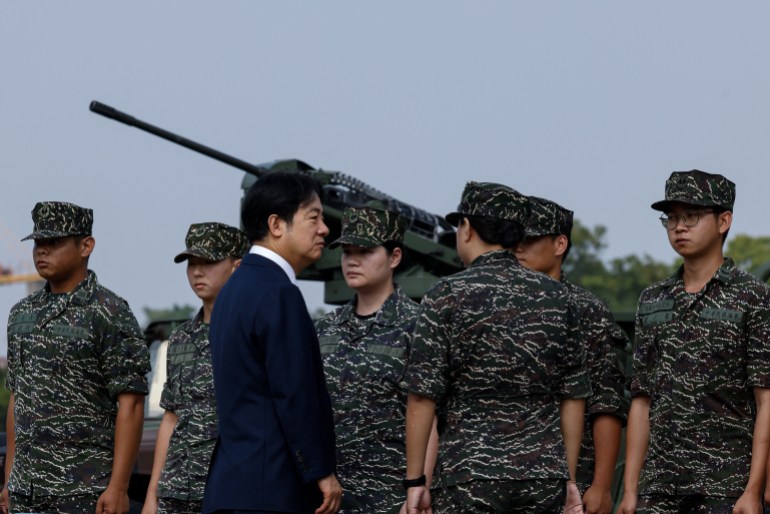
Taiwanese defence chief says a blockade would have far-reaching consequences for international trade. Taiwan’s defence chief has warned that a Chinese blockade would be an act of war and have far-reaching consequences for international trade after Beijing held military exercises to encircle the self-governed island. Taiwanese Defence Minister Wellington Koo made his comments on Wednesday as the Chinese People’s Liberation Army (PLA) continued exercises near the democratically-ruled island after last week carrying out war games that included a simulated blockade. “If you really want to carry out a so-called blockade, which according to international law is to prohibit all aircraft and ships entering the area, then according to United Nations resolutions it is regarded as a form of war,” Koo said in remarks to reporters at parliament. “I want to stress that drills and exercises are totally different from a blockade, as would be the impact on the international community,” Koo added. China claims Taiwan as its territory and has said it reserves the right to use force to bring it under its control, with the PLA regularly holding drills – including simulating blockading key ports and assaulting maritime and ground targets – around the island. Taiwan, also known by its official name the Republic of China, has never been ruled by the People’s Republic of China and rejects Beijing’s sovereignty claims. Beijing also asserts jurisdiction over the entirety of the Taiwan Strait, a 180km-wide (110-mile) waterway separating mainland China from Taiwan. Taiwan and other members of the international community reject Beijing’s claim, with the United States, Japan and several European countries asserting its status as an international waterway. The US navy, in particular, regularly sails through the strait to maintain freedom of navigation rights. Taiwanese President William Lai Ching-te visits a military base in Taoyuan in response to Chinese military drills on October 18 [Tyrone Siu/Reuters] Koo, who noted that one-fifth of global freight passes through the strait, said that the international community “could not sit by and just watch” if China were to impose a blockade. Taiwan’s defence ministry announced earlier on Wednesday that Chinese aircraft carriers, led by the Liaoning carrier, travelled north through the waterway after passing through waters near the Taiwan-controlled Pratas islands. During the previous 24 hours, Taiwan’s military detected 15 Chinese military aircraft and six navy vessels in the skies and waters around the island, the defence ministry said. “The Liaoning is passing through the Taiwan Strait now, sailing north along the west of the median line and we are closely monitoring it,” Koo said. Taiwan has reported almost daily Chinese military drills around the island for the past five years, but activity has intensified since April’s election of outspoken President William Lai Ching-te, whom Beijing has labelled a “dangerous separatist”. On October 14, Beijing launched large-scale military drills – code-named “Joint Sword-2024B” and involving the army, navy, air force and rocket force – in the Taiwan Strait and areas to the north, south and east of Taiwan. Beijing said the drills, which came soon after Lai delivered his National Day speech on October 10, were issued as a “stern warning to the separatist acts of ‘Taiwan Independence’ forces”. Adblock test (Why?)
Russia-Ukraine war: List of key events, day 971
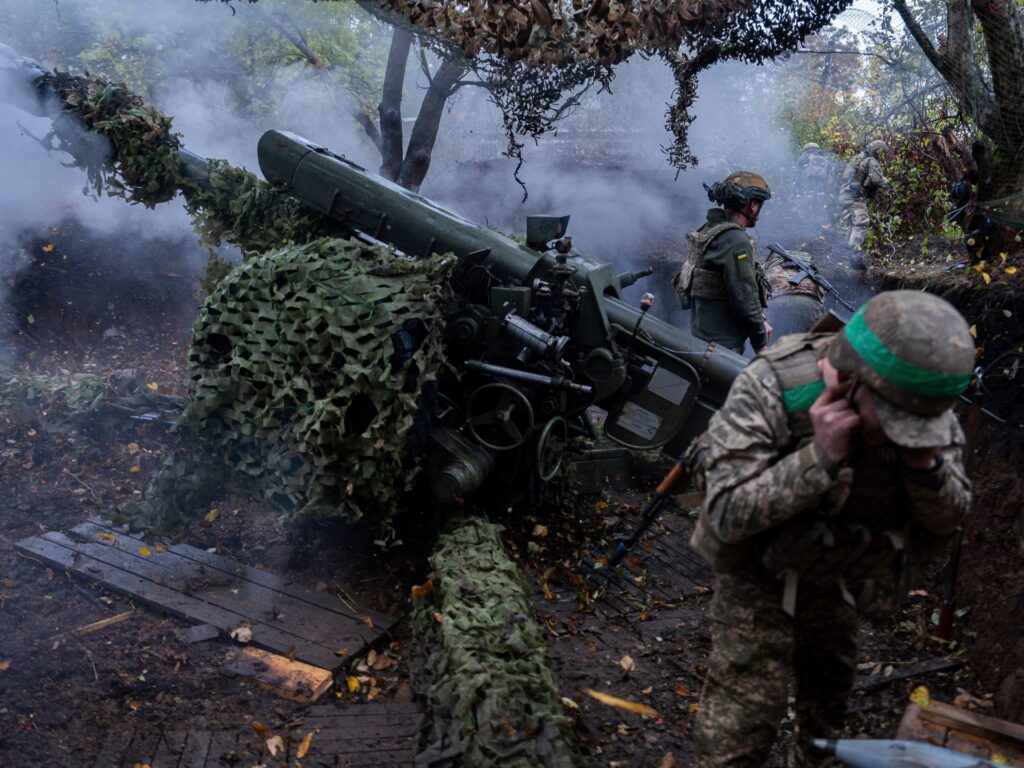
As the war enters its 971st day, these are the main developments. Here is the situation on Wednesday, October 23, 2024: Military Ukrainian President Volodymyr Zelenskyy called on allies “not to hide” in the face of evidence of North Korea’s involvement in Russia’s war in Ukraine, as Kyiv claimed to have information about two North Korean units – up to 12,000 troops – set to take part in the war. The head of Ukraine’s Main Directorate of Intelligence said that Kyiv expected North Korean forces to arrive on Wednesday in Russia’s southern Kursk region, where Ukrainian forces launched an incursion in August. Ukrainian Prosecutor General Andriy Kostin has announced his resignation amid a scandal involving dozens of officials alleged to have abused their position to receive disability status and avoid military service. Finances Kremlin spokesman Dmitry Peskov said Russia hopes for increased financial cooperation with BRICS members – which account for 45 percent of the world’s population and 35 percent of the global economy – as a meeting of nearly two dozen world leaders kicked off in the Russian city of Kazan on Tuesday. Estonian Prime Minister Kristen Michal has called on NATO to raise the alliance’s defence spending target to at least 2.5 percent of gross domestic product (GDP) by 2025, saying the current 2 percent no longer fits the “reality of today’s security situation”. The European Parliament has voted to use frozen Russian assets to lend more than 35 billion euros ($38bn) to Ukraine, clearing the last legislative hurdle before the funds are handed over. A total of 518 members of parliament supported the plan, while 56 voted against and 61 abstained. Moscow has accused the European Union – which holds about 210 billion euros ($227bn) of frozen Russian money under sanctions imposed since its war on Ukraine started – of committing an economic crime on a global scale. United States Treasury Secretary Janet Yellen has announced that Washington plans to contribute $20bn to a $50bn G7 loan package for Ukraine and could soon announce new sanctions targeting Russian weapons procurement. G7 leaders are close to finalising the plan, with policymakers set to meet later this week. Diplomacy Indian Prime Minister Narendra Modi told Russian President Vladimir Putin ahead of the BRICS summit that he wanted peace in Ukraine and that his country was ready to help achieve a truce. United Kingdom Prime Minister Keir Starmer has accused Putin of “harming millions of vulnerable people”, as new British intelligence suggests Russian attacks on ships carrying food are causing delays to vital supplies reaching Palestinians and the Global South generally. Poland has said it is closing the Russian consulate in the city of Poznan and expelling its staff after Polish investigators discovered Russia’s secret service was recruiting people to conduct arson attacks in the EU and US. Adblock test (Why?)
LeBron and Bronny James share court, make NBA history as Lakers beat Wolves

LeBron James shared the court with his 20-year-old son Bronny and later called the moment ‘one of the greatest gifts’. LeBron James and his son Bronny have made history by becoming the first father-son duo to play together in a regular season NBA game in the Los Angeles Lakers’ season-opening win over the Minnesota Timberwolves. The sold-out crowd let out a roar when 20-year-old Bronny came on alongside LeBron, who was reentering with four minutes to play in the first half of the game on Tuesday. Bronny, who like many first-year players is not expected to see significant floor time this season, grabbed a rebound in his three minutes of action while LeBron contributed 16 points in the Lakers’ 110-103 win. “It’s always been family over everything,” LeBron said alongside Bronny after the game. “I lost a lot of time because of this league … so to be able to have this moment where I am working still and I can work alongside my son, it’s one of the greatest gifts I’ve ever got from the man above and I’m going to take full advantage of it.” No father-son duo has ever played during the same NBA season, let alone on the same team. The pair appeared together during a preseason game earlier this month. LeBron, 39, had long said one of his remaining goals in basketball was to play with his son, a guard selected with the 55th pick of the NBA Draft in June after one season at the University of Southern California. History & a W pic.twitter.com/zKwrxGjjv3 — NBA (@NBA) October 23, 2024 LeBron, the NBA’s all-time leading scorer, a four-time champion and three-time Olympic gold medallist, is now in his 22nd NBA season and has yet to say when he plans to call time on his career. Bronny, meanwhile, is looking to make a name for himself in the league he has grown up around with a father who has also played for the Cleveland Cavaliers and Miami Heat. “Going up to the scorer’s table and checking in for the first time was a crazy moment I will never forget,” Bronny said. “I’m just extremely grateful for everything. I was given an amazing opportunity to come into this league and get better every day and learn every day.” LeBron said he reminds his eldest son how fortunate they are to play in the NBA. “This is not promised every day that you get to play in this beautiful league,” he said. “There’s only 450 of us and you have to understand it’s not given to you, you have to earn every moment. I think he knows that and he looks forward to the process of getting better every single day to be the player he ultimately wants to be. “I’m super proud of him. He’s my lifeline, that’s for sure.” Adblock test (Why?)
Russia’s Putin welcomes world leaders for three-day BRICS summit
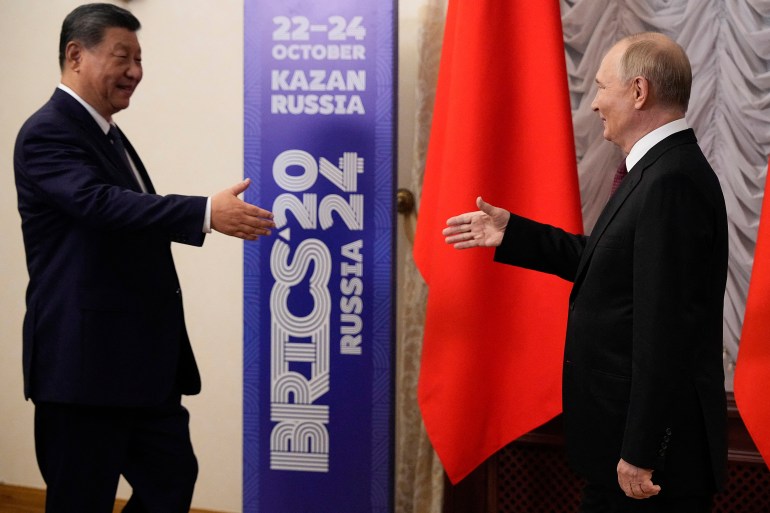
China’s Xi Jinping, India’s Narendra Modi and other global leaders have arrived in the Russian city of Kazan for a summit of the BRICS bloc of developing economies that the Kremlin hopes to turn into a rallying point for defying what some see as the Western liberal order. For Russian President Vladimir Putin, the three-day meeting that got under way on Tuesday also offers a powerful way to demonstrate the failure of United States-led efforts to isolate Russia on the international stage over its 2022 invasion of Ukraine. Kremlin foreign affairs adviser Yuri Ushakov touted the summit as “the largest foreign policy event ever held” by Russia with 36 countries attending and more than 20 of them represented by heads of state. BRICS – which initially comprised Brazil, Russia, India, China and later South Africa – has expanded rapidly to embrace Iran, Egypt, Ethiopia, the United Arab Emirates and Saudi Arabia. Turkey, Azerbaijan and Malaysia have formally applied to become members, and a few other countries have expressed interest in joining. Observers see the BRICS summit as part of the Kremlin’s efforts to showcase support for it on the international stage amid spiralling tensions with the West and to help expand economic and financial ties. Proposed projects include the creation of a new payment system that would offer an alternative to the global bank messaging network SWIFT and allow Moscow to avoid Western sanctions and trade with its partners. Putin is set to hold about 20 bilateral meetings on the sidelines of the summit, including Tuesday’s encounters with Chinese President Xi, Indian Prime Minister Modi and South African President Cyril Ramaphosa. Putin meets fellow BRICS leaders Xi told Putin there was a “profound friendship” between their two countries. “The world is undergoing profound changes unseen in a century, and the international situation is chaotic and intertwined,” Xi said. China and Russia “have continuously deepened and expanded comprehensive strategic coordination and practical cooperation”, he added. Ties have “injected strong impetus into the development, revitalisation and modernisation of the two countries”, the Chinese leader said. They have “made important contributions to upholding international equity and justice”, he added. Xi and Putin announced a “no-limits” partnership weeks before Russia invaded Ukraine in 2022. They had met at least two other times this year, in Beijing in May and at a Shanghai Cooperation Organisation summit in Kazakhstan in July. Russian President Vladimir Putin meets with Chinese President Xi Jinping on the sidelines of the BRICS summit in Kazan, Russia [Alexander Zemlianichenko/Reuters] Russia’s cooperation with India has also flourished as New Delhi considers Moscow a time-tested partner since the Cold War era despite Russia’s close ties with Indian rival China. Western allies want India to be more active in persuading Moscow to end the war in Ukraine, but Modi has avoided condemning Russia while emphasising a peaceful settlement. Modi, who last visited Russia in July, said this visit reflects the close friendship between the countries. Speaking at the start of his meeting with Putin, he also reaffirmed New Delhi’s push for peace in Ukraine. Putin hailed what he described as a “privileged strategic partnership” between Russia and India. Ramaphosa, who has also urged an end to the conflict, praised Moscow as a “valued ally” and friend in his meeting with Putin. “We continue to see Russia as a valued ally, as a valued friend, who supported us right from the beginning: from the days of our struggle against apartheid, right through to now,” Ramaphosa said. On Thursday, Putin is also set to meet with United Nations Secretary-General Antonio Guterres, who will be making his first visit to Russia in more than two years. Guterres has repeatedly criticised Russia’s actions in Ukraine. Adblock test (Why?)
Video shows Israeli strike collapse multi-storey building in Beirut
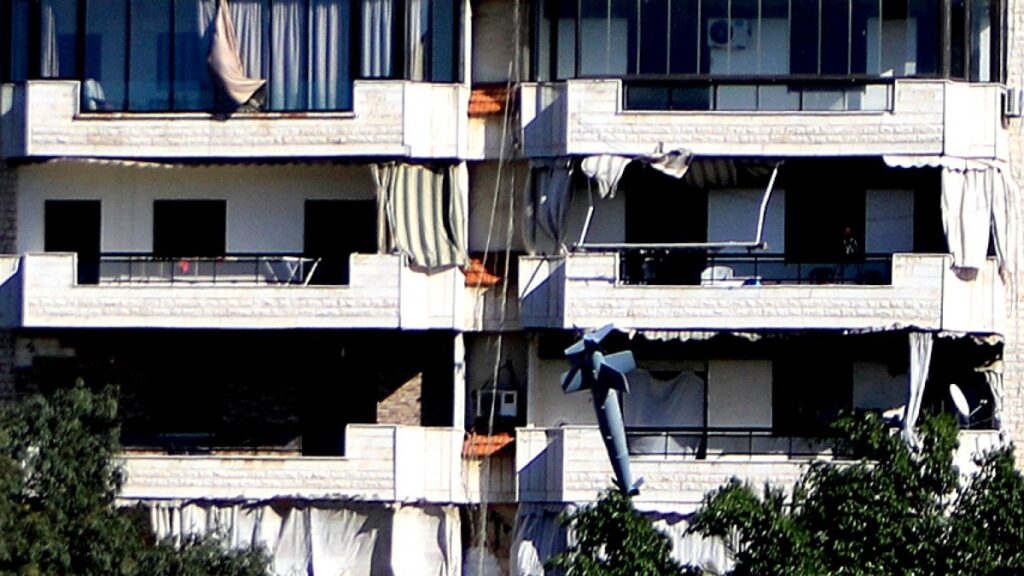
NewsFeed Video captured the moment an Israeli missile attack collapsed a multi-storey apartment building in southern Beirut. Published On 22 Oct 202422 Oct 2024 Adblock test (Why?)
How India and China pulled back from a border war — and why now
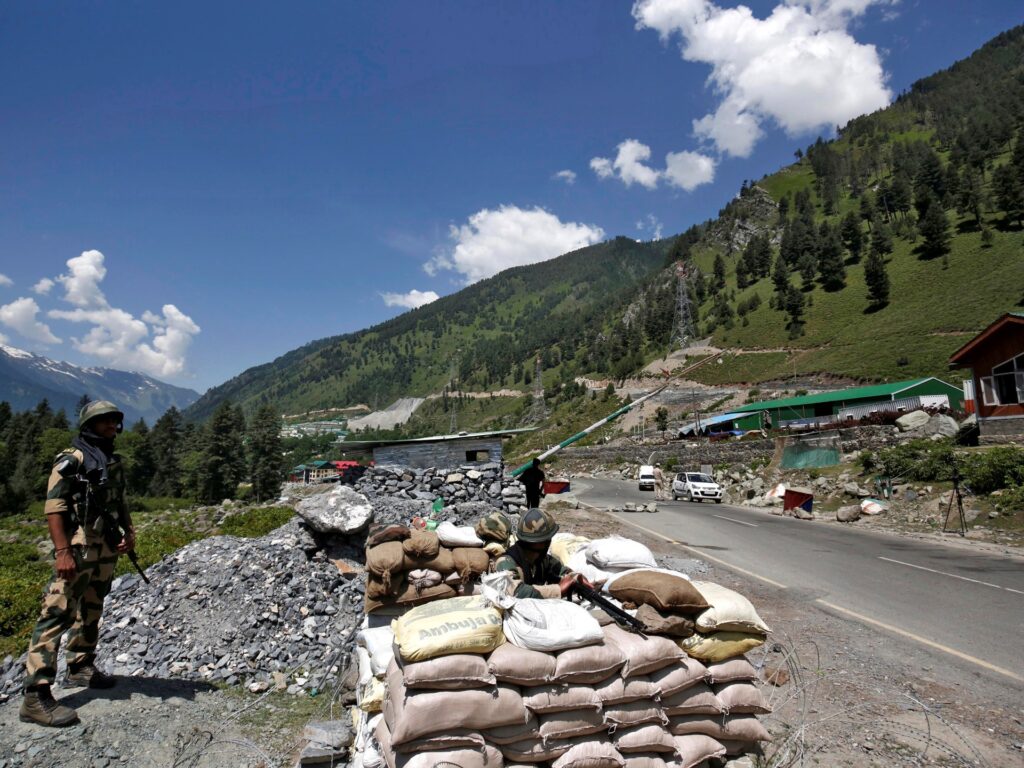
India and China have reached a deal to end a military standoff at their disputed frontier, four years after a deadly clash along their border in the western Himalayas plunged ties to their lowest point in decades. Indian External Affairs Minister S Jaishankar told an Indian TV channel on Monday that the agreement on border patrols signalled that “the disengagement process with China has been completed.” While the larger border dispute remains unresolved, the deal allows for the resumption of patrols along the border in the Ladakh region by soldiers of both countries – allowing them to underscore their respective territorial claims while ensuring that the other side is following the agreement arrived at on Monday. The announcement was made on the eve of Indian Prime Minister Narendra Modi’s visit to the Russian city Kazan for the BRICS summit, in which China is also participating. The pact paves the way for improved political and business ties between the Asian giants, analysts say. It could also clear the path for a potential meeting between Modi and Chinese President Xi Jinping, which would be the first since 2020. What is in the deal? The agreement has not been made public, and few details are known. Indian Foreign Secretary Vikram Misri said the pact is aimed at the “disengagement” of troops at the Line of Actual Control, or LAC, which separates Chinese and Indian-held territories. The LAC stretches from Ladakh in the west to India’s eastern state of Arunachal Pradesh, parts of which are also claimed by China. It spans 3,488km (2,167 miles). As its name suggests, the LAC divides the areas of physical control rather than territorial claims. Misri did not specify whether the deal would mean the withdrawal of the tens of thousands of additional soldiers stationed by the two countries in the Ladakh region. China on Tuesday confirmed the deal on military patrols along the frontier but did not explain whether the pact covered the length of the border or just hotspots that have seen clashes. A senior military officer told the Reuters news agency that both sides would pull back their troops a little from current positions to avoid face-offs but would be allowed to patrol according to a schedule that is being worked out. Monthly review meetings and regular monitoring of the contested areas by both countries would ensure there are no violations, he added. Manoj Joshi, an analyst at the New Delhi-based Observer Research Foundation, told Al Jazeera the lack of information provided by authorities suggests negotiations may be ongoing. “If there is a formal agreement and that agreement is publicised, then we may [have a clearer idea of] what is going to happen,” he said. Many questions remain unanswered, including whether “buffer” zones that had been demarcated along the LAC and which neither side is supposed to patrol will now be abolished, he said. How did we get here? India and China have disputed their border for the past seven decades. The two countries fought a brief and bloody war over the demarcation of the border in 1962. India suffered a humiliating defeat and lost a chunk of territory in Aksai Chin, in the extreme northeast of Ladakh, which has remained a point of contention between the two countries. Diplomatic relations recovered after a series of border agreements in the 1990s. While the 1993 and 1996 agreements are often regarded as milestones, the border arrangement between India and China — which allowed them to avoid any casualties along the border for more than half a century after 1962 — has increasingly come under stress in recent years. Their troops faced off in local incidents in 2013, 2014 — when Xi was visiting India — and 2017. In 2019, India repealed Article 370 of its constitution, which guaranteed a measure of autonomy to Indian-administered Kashmir, which also included the disputed areas of Ladakh. China saw India’s move as unilaterally affecting its territory and denounced the move at the United Nations Security Council. But the 2020 clash — and the resulting deaths — took the relationship to a breaking point. Michael Kugelman, director of the Washington, DC-based Wilson Center think tank’s South Asia Institute, said this week’s deal is significant but its importance should not be overstated. “It does not end the border dispute,” Kugelman told Al Jazeera. “This is an agreement that will allow things to return to how they were in Ladakh before that crisis.” “It does not appear to call for troop disengagement in the areas where mobilisations had taken place during the Ladakh crisis,” Kugelman said. “That’s why we need to be cautious about this new agreement.” What have been key moments in the India-China relationship since 2020? June 2020: Twenty Indian soldiers and four Chinese soldiers were killed in hand-to-hand fighting with clubs and staves in the Galwan Valley in Ladakh in the first deadly clashes in nearly 60 years. The deaths triggered outrage and street protests in India. The heightened tensions between the two nuclear-armed countries drew international concerns with the UN urging both sides “to exercise maximum restraint”. New Delhi restricted investments from China, banned dozens of popular Chinese mobile apps, including TikTok, and severed direct flights. The number of banned Chinese apps eventually rose to 321. January 2021: Indian and Chinese soldiers engaged in what the Indian army described as a “minor face-off” along their frontier in the northeast Indian state of Sikkim. December 2022: Minor border scuffles broke out in the Tawang sector of India’s northeastern state of Arunachal Pradesh, parts of which are also claimed by China. Beijing accused Indian forces of obstructing a routine patrol while New Delhi said Chinese soldiers encroached upon Indian territory and tried to “change the status quo”. August 2023: Modi and Xi agreed to intensify efforts to disengage and de-escalate when they met briefly on the sidelines of the BRICS summit in Johannesburg. June: Jaishankar met Chinese Foreign Minister Wang Yi on the sidelines of the Shanghai Cooperation Organisation summit in
Peruvian ex-president sentenced to more than 20 years in bribery case
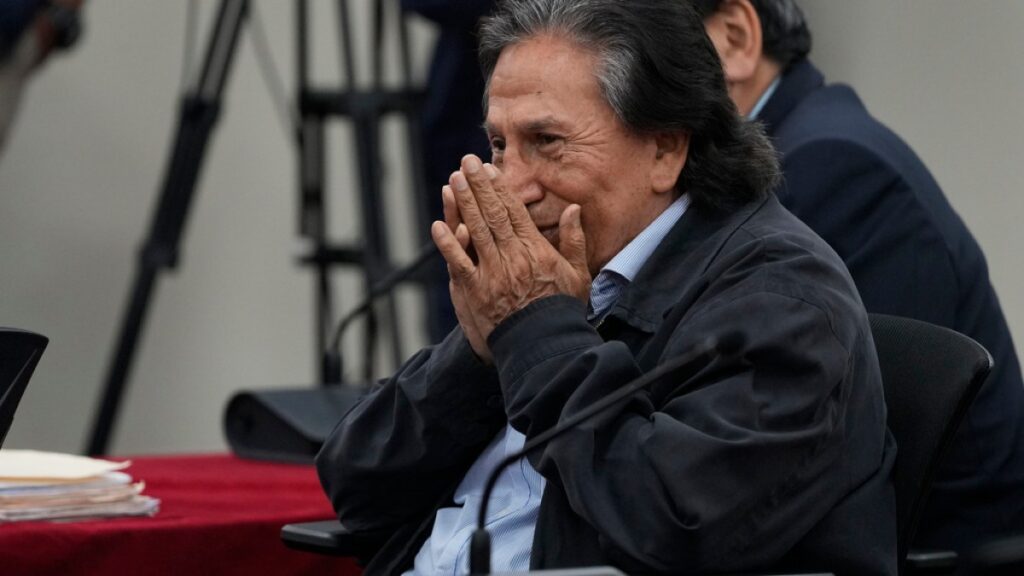
Alejandro Toledo is the latest Latin American leader to be implicated in the Odebrecht corruption scandal. Peruvian ex-President Alejandro Toledo has been sentenced to more than 20 years in prison, the latest Latin American leader to be jailed in connection with the Odebrecht construction firm corruption scandal. Toledo was convicted of taking $35m in bribes from the Brazilian construction firm in exchange for a freeway construction contract, and was sentenced to 20 years and six months in prison on Monday. “I want to go to a private clinic. I ask you please to let me get better or die at home,” Toledo said at a hearing last week, saying that he was dealing with health issues stemming from cancer. The 78-year-old former leader of the Andean nation, who served in office from 2001 to 2006, received one of the harshest sentences yet handed out in connection to Odebrecht’s campaign of bribery in exchange for political favours across the continent. During a yearlong trial, Toledo consistently denied charges of money laundering and collusion levelled against him by prosecutors. He was first arrested in the United States in 2019 after Peru requested his extradition, and was sent back there in 2022 after years of legal debate over his potential extradition. Odebrecht-related scandals have led to the jailing of officials in Peru, Panama, and Ecuador. Probes of corruption by the construction giant have also occurred in countries such as Guatemala and Mexico. The company has since changed its name to Novonor. In 2019, Peru jailed 14 top lawyers while they were investigated for allegations of providing the firm with preferential treatment in public works contracts. Toledo will serve his sentence in a prison on the outskirts of the Peruvian capital of Lima, specially constructed to house former presidents. He may soon have additional company. Two more ex-presidents, Pedro Pablo Kuczynski and Ollanta Humala, are under investigation in similar cases related to Odebrecht. Former President Pedro Castillo is also being detained as he faces charges of “rebellion” after a failed attempt to dissolve Congress in 2022. Adblock test (Why?)