

Southeast Asia deepening dependence on fossil fuels, report warns
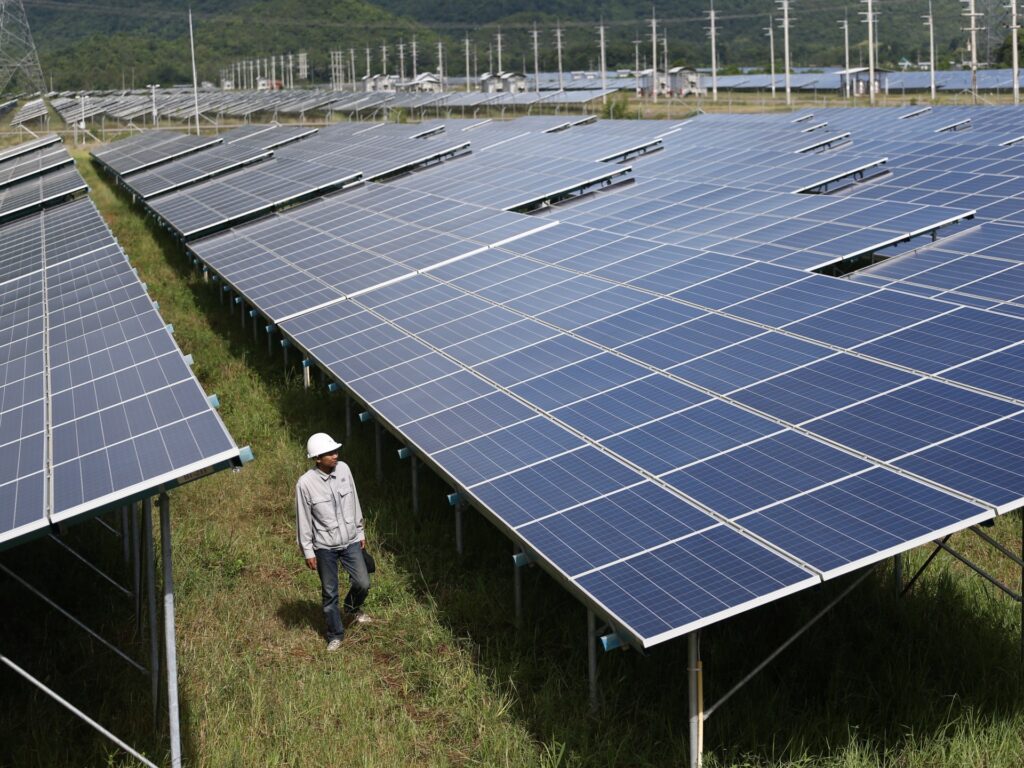
ASEAN’s 10 members met the entirety of region’s rise in electricity demand last year through fossil fuels, report says. Southeast Asia is at risk of deepening its dependence on fossil fuels as it tries to meet surging demand for electricity, an environmental think tank has warned. The 10 nations of the Association of Southeast Asian Nations (ASEAN) met the entirety of the region’s 3.6 percent rise in electricity demand last year through fossil fuels, the United Kingdom-based think tank Ember said in a report released on Tuesday. ASEAN’s share of energy generated by renewables, meanwhile, fell to 26 percent compared with 28 percent in 2022 amid a decline in hydropower production due to droughts and other extreme events, the report said. Carbon emissions grew by 6.6 percent last year, representing an additional 44 million tonnes of CO2 in the atmosphere, according to the report. Top coal polluters included Vietnam, Malaysia and the Philippines, while Singapore and Thailand’s emissions mostly came from natural gas, according to the report. Ember said the region’s slow energy transition means it is missing out on the benefits of renewables, including the declining cost of solar and wind power, which are now cheaper than fossil fuels. “Continuing at this pace of transition risks ASEAN becoming more dependent on fossil fuels, missing opportunities presented by emerging clean energy technologies and economics, and failing to meet climate targets,” the think tank said in its report. “Meanwhile, electricity demand continues to grow rapidly, making it more important than ever to meet this demand with clean energy.” Ember said two of the most promising long-term solutions are solar power and wind power, as hydropower faces increasing reliability issues due to droughts and changing rain patterns. The report came as the International Energy Agency (IEA) on Tuesday warned that Southeast Asia would need to invest $190bn – or five times its current rate of investment – to achieve its climate goals by 2035. Even with clean energy sources projected to meet more than one-third of the growth in energy demand, the region is still on track to increase its carbon emissions by 35 percent between now and 2050, the Paris-based intergovernmental organisation said in a report. Demand for electricity in Southeast Asia is set to grow at an annual rate of 4 percent, according to the IEA report. “Clean energy technologies are not expanding quickly enough and the continued heavy reliance on fossil fuel imports is leaving countries highly exposed to future risks,” the IEA’s executive director, Fatih Birol, said. Courtney Weatherby, the deputy director of the Stimson Center’s Southeast Asia programme, said that renewables like solar power have great potential but there are still many institutional roadblocks in the way. Many ASEAN countries are trying to modernise and expand their energy generation capacity at the same time, leading to conflicting priorities, Weatherby said, while renewables still face problems like storage, grid management and the inability to produce power on demand during peak hours. “Most countries in ASEAN are coming from a relatively low starting point for solar/wind deployment and this means that even rapid expansion will not lead to a full transition in a timely manner,” Weatherby told Al Jazeera. “More importantly, the mandate for power utilities is to ensure that the power supply is stable and reliable in order to ensure both access to power for consumers and also support ongoing economic development through attracting investment, often in manufacturing,” she added. Adblock test (Why?)
Harvey Weinstein diagnosed with bone marrow cancer, reports say
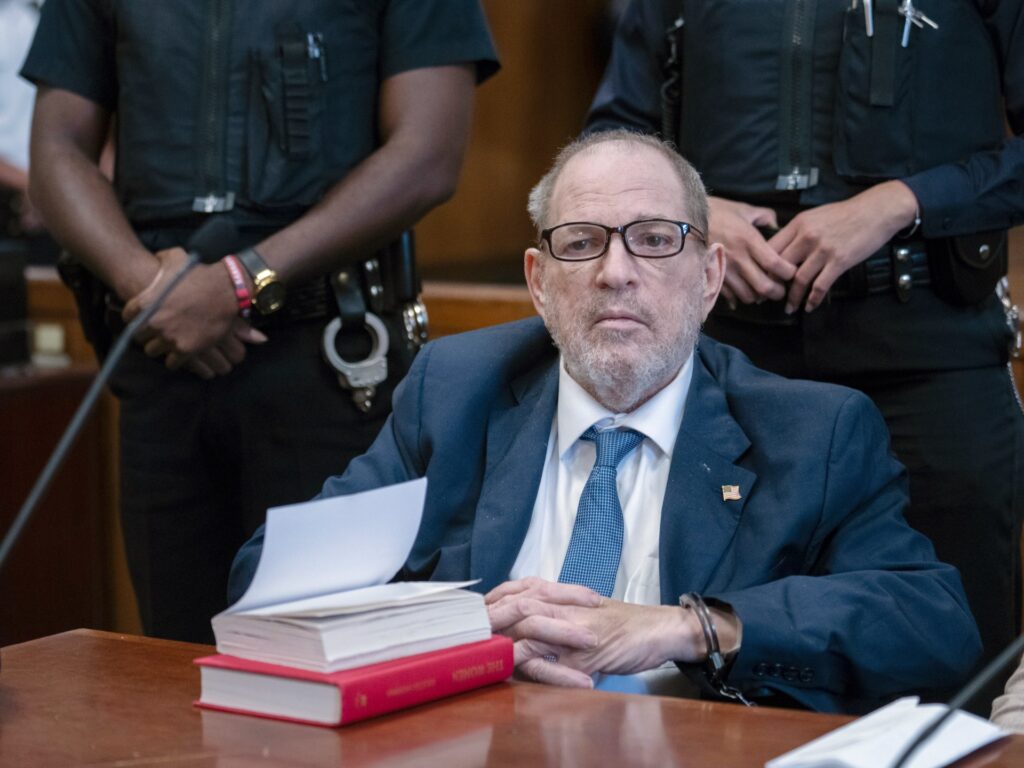
Jailed Hollywood producer is being treated in prison for chronic myeloid leukaemia, US media outlets report. Hollywood producer Harvey Weinstein has been diagnosed with bone marrow cancer, media outlets in the United States have reported. Weinstein, who became the most infamous face of the #MeToo era after dozens of women accused him of sexual harassment and assault, is being treated in prison for chronic myeloid leukaemia, NBC News and ABC News reported on Monday, citing unnamed sources. Chronic myeloid leukaemia, also known as chronic myelogenous leukaemia, is a type of cancer that starts in the blood-forming cells of the bone marrow and invades the blood, according to the American Cancer Society. It makes up about 15 percent of leukaemia cases in adults, according to the organisation. The reports come as Weinstein is awaiting a new trial in New York after an appeals court threw out his 2020 convictions for rape and sexual assault. The New York State Court of Appeals ruled 4-3 that the judge in the original case had wrongly allowed prosecutors to present allegations that were not part of the charges. Weinstein was not released from prison after the decision as he is also serving a 16-year prison sentence in Los Angeles for rape and sexual assault. He is also being prosecuted over a newer allegation that he sexually assaulted a woman at a Manhattan hotel in 2006. The 72-year-old film mogul last month pleaded not guilty to one count of criminal sex act in the first degree in that case. He has insisted that all sexual encounters he was involved in were consensual. Weinstein, whose production house Miramax released blockbusters such as Shakespeare In Love and Pulp Fiction, has reportedly faced a myriad of health issues since his imprisonment. Last month, he underwent emergency heart surgery to remove fluid in his lungs and heart, according to his representatives. In July, the once-powerful film executive was hospitalised for a range of conditions including COVID-19 and double pneumonia, according to his representatives. Adblock test (Why?)
Does Musk’s daily $1m giveaway constitute election interference?
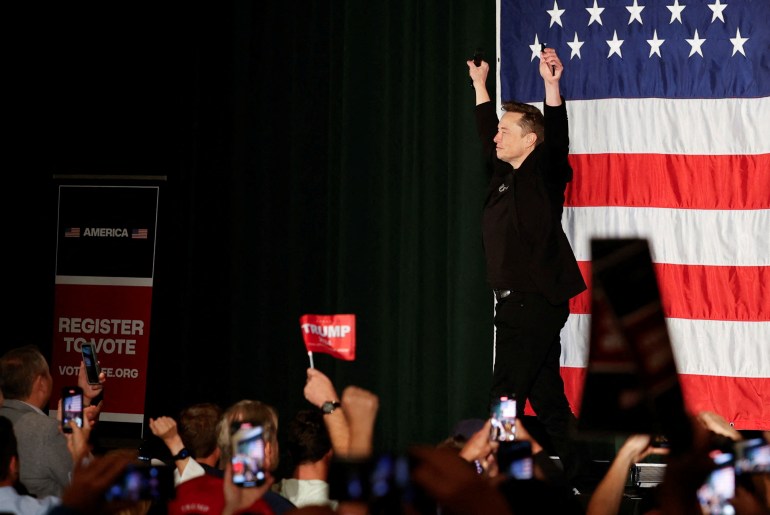
Billionaire Elon Musk has pledged to award $1m every day until election day in the United States on November 5 to randomly selected registered voters who sign a petition to “support the constitution” launched by his pro-Donald Trump America Political Action Committee (PAC). Musk announced the giveaway on Saturday at an America PAC-hosted rally in Harrisburg, Pennsylvania. The scheme has come under scrutiny by legal experts as well as Pennsylvania’s Democratic governor, Josh Shapiro, who on Sunday asked law enforcement to launch an investigation into potential election interference. Here is more about Musk’s giveaway: Tesla CEO and X owner Elon Musk, who supports Donald Trump, appears on stage during an America PAC town hall in Folsom, Pennsylvania, on October 17, 2024 [Rachel Wisniewski/Reuters] Why is Elon Musk giving away money? From October 17 to November 5, Musk said he will give $1m to a randomly selected winner each day if: He or she is a registered voter. He or she is from one of the following swing states: Pennsylvania, Georgia, Nevada, Arizona, Michigan, Wisconsin or North Carolina. He or she has signed an online petition created by America PAC. Musk, 53 – who is a founder and the CEO of the electric car company Tesla and rocket producer SpaceX and owns the social media network X – has a net worth of $274.4bn, according to the Forbes real-time billionaires list. What is in the America PAC petition? Musk has repeatedly called the petition one that “upholds the US Constitution”. More precisely, the petition on a webpage belonging to the America PAC website, says: “The First and Second Amendments guarantee freedom of speech and the right to bear arms. By signing below, I am pledging my support for the First and Second Amendments.” The webpage states, “EARN 1,000,000” in big, bold letters, flanked by two money bag emojis. Individuals who sign are supposed to enter their first name, last name, email address and cellphone number. Next to the cellphone number field in the form, a note says the number is required only to confirm that the petition signee is a legitimate voter and “no other purpose”. “Our goal is to get 1 million registered voters in swing states to sign in support of the constitution,” the website added. On Friday, the day before the giveaway announcement, the Reuters news agency reported that Alysia McMillan, who canvassed for America PAC in Wisconsin, said field organisers had reported they were missing their daily goals in terms of enlisting voters and were expecting to fall short of their ultimate goal of contacting 450,000 voters by election day. In Pennsylvania, each registered voter who signs the petition will automatically receive $100 as compensation, and an additional $100 is paid for each person who signs upon their referral. In other swing states, individuals will get $47 per successful referral. The date the petition was created and the number of signatures amassed so far were not visible on the America PAC webpage. What is America PAC? PACs raise and spend money to advocate for or against a candidate in an election. Musk formed America PAC in May to support former President Trump’s election bid this year. On October 16, it was reported that Musk had poured $75m over three months into America PAC. Originally from South Africa, Musk obtained US citizenship in 2002. For years, he voted for Democratic Party candidates. However, the relationship between Musk and the Democrats has soured during President Joe Biden’s time in office. Musk did not immediately become a Trump supporter. Instead, he threw his weight behind one of Trump’s competitors for the Republican presidential nomination, Ron DeSantis, in 2022. Trump has a vacillating history with X, formerly known as Twitter. His tweets made the news regularly leading up to his first campaign for president in 2016, which he won. He was banned from X on January 8, 2021, two days after the US Capitol was attacked by Trump supporters over the results of the 2020 election, which Biden won. However, Musk bought Twitter in October 2022. The next month, Trump’s account was reinstated. Musk posted a supportive message of Trump on X, stating: “I fully endorse President Trump and hope for his rapid recovery,” after an assassination attempt during a campaign rally in Butler, Pennsylvania, in July. Musk attended a Trump rally on October 5, wearing a black cap saying, “Make America Great Again” (MAGA), which is Trump’s campaign slogan. Why has Musk rolled out this prize scheme? Musk said the reason he is giving away the money is to generate more awareness about the America PAC petition. “The legacy media won’t report on it. Not everyone’s on X,” he said in a video of the Harrisburg rally posted on the X account of America PAC. “I think this news is going to really fly.” “You don’t even have to vote, you just have to sign a petition,” Musk said in another video posted on the same account. Is Musk’s $1m plan legal? Making a payment to someone “for registering to vote or for voting” is a federal crime, according to a document published by the US Department of Justice in December 2017. It adds that this payment does not have to be money but can also be other valuables like liquor or lottery tickets. Brendan Fischer, a campaign finance lawyer, told The Associated Press that Musk’s giveaway approaches a legal boundary. That’s because the PAC is requiring registration as a prerequisite to become eligible for the $1m prize. “There would be few doubts about the legality if every Pennsylvania-based petition signer were eligible, but conditioning the payments on registration arguably violates the law,” Fischer told the news agency. “It’s not quite the same as paying someone to vote, but you’re getting close enough that we worry about its legality,” Michael Kang, an election law professor at Northwestern University’s Pritzker School of Law, told AP. “Though maybe some of the other things Musk was doing were of murky legality, this
US veteran Daniel Penny on trial in New York for fatal subway chokehold
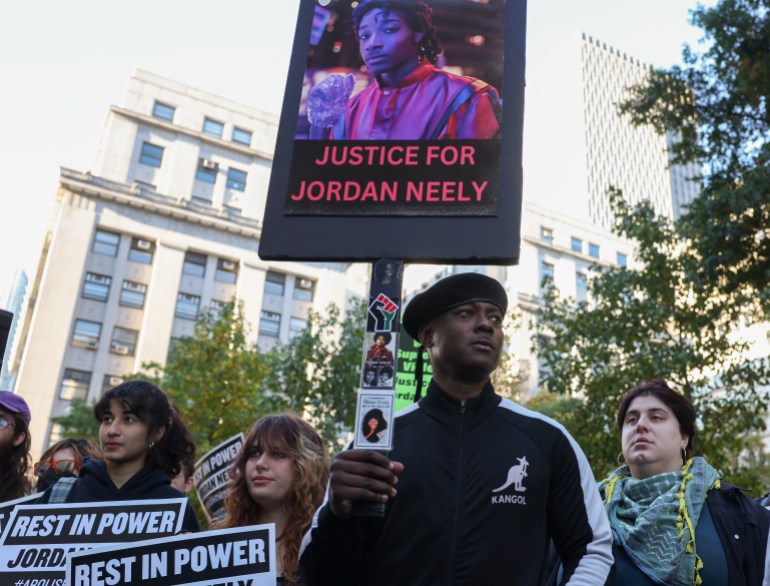
Penny faces up to 15 years in prison for manslaughter in the racially-charged trial. A former United States Marine is set to go on trial for putting a man in a deadly chokehold while riding a New York subway in 2023. The veteran, 25-year-old Daniel Penny, faces up to 15 years in prison if convicted of manslaughter and four years if found guilty of the lesser offence of criminally negligent homicide. Jury selection for the high-profile trial begins Monday and could last up to a week. The trial itself could last six weeks, legal experts say. The court proceedings are putting a spotlight back on a case that sparked a national debate about race and criminal justice. Protesters gather outside the Manhattan Criminal Court on the first day of former US Marine Daniel Penny’s trial for the death of Jordan Neely in New York City, US, October 21, 2024 [Caitlin Ochs/Reuters] Homeless man Penny, who is white, is accused of “recklessly causing the death” of Neely, a black homeless street performer who witnesses say was acting erratically on a subway train on May 1, 2023, when Penny tried to restrain him. Witnesses to the incident said Neely – who relatives say had struggled with drug addiction and mental illness – was shouting and demanding money when Penny approached him. Penny pinned Neely to the ground with the help of two other passengers and placed him in a chokehold for more than three minutes until Neely’s body went limp. The medical examiner’s office ruled the death a homicide caused by compression of the neck. Penny’s lawyers argued that he didn’t intend to kill Neely, just to hold him down long enough for police to arrive. Penny, who is from Long Island to the east of the city, has claimed Neely shouted, “I’m gonna’ kill you” and that he was “ready to die” or go to jail for life. Penny’s attorney, Steven Raiser, said the defence plans to offer up other potential causes for Neely’s death, including high levels of the synthetic cannabinoid known as K2 found in his body. They’ll also argue that footage shared widely on social media proves Penny was not applying pressure consistently enough to render Neely unconscious, let alone kill him. Prosecutors, in their court filings, have argued that Penny’s actions were reckless and negligent, even if he didn’t intend to kill Neely. After Neely’s death in 2023, protesters took to the streets demanding that authorities arrest Penny, while others gathered outside the courthouse to show their support once he was charged. Police officers operate as people protest the death of Jordan Neely in New York City, US, May 8, 2023 [Andrew Kelly/Reuters] Numerous right-wing US politicians took up Penny’s cause, with Florida governor and failed Republican presidential candidate Ron DeSantis saying: “We stand with Good Samaritans like Daniel Penny. Let’s show this Marine … America’s got his back.” The New York City subway system is one of the world’s largest public transit systems, with 472 stations and 399km (248 miles) of routes, and a daily ridership of approximately 3.6 million people. Penny, who served four years in the Marines, has been free pending his trial on a $100,000 bond. Neely’s uncle, Christopher Neely, said he and his other family members are hopeful about the outcome of the trial. “Justice for Jordan is all we think about,” he said. Adblock test (Why?)
Seoul demands ‘immediate withdrawal’ of North Korean troops in Russia
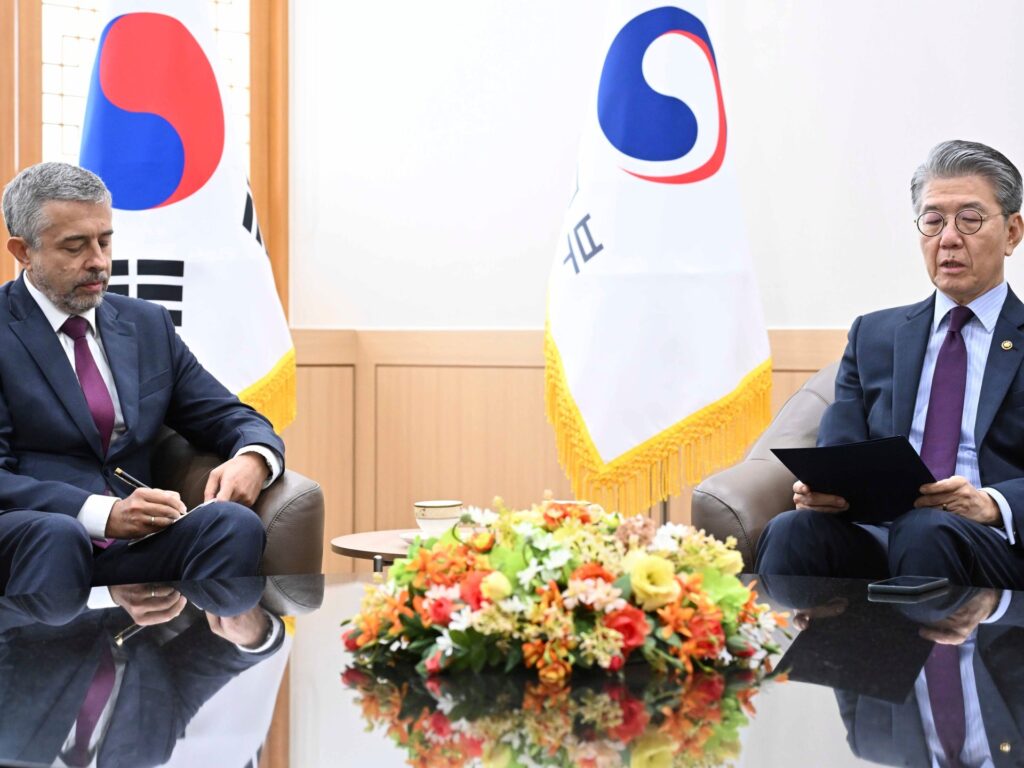
South Korea summons Russian ambassador over Pyongyang’s alleged dispatch of soldiers to support Moscow’s war in Ukraine. South Korea has summoned the Russian ambassador to criticise Pyongyang’s decision to send hundreds of soldiers to support Moscow’s war in Ukraine, the Ministry of Foreign Affairs says as it calls for their immediate withdrawal. In Pyongyang’s first such deployment overseas, about 1,500 special forces soldiers have arrived in Russia and are likely to head to the front lines after acclimatising, Seoul’s spy agency said Friday, adding that additional forces are set to depart soon. South Korea has long accused the nuclear-armed North of supplying Russia with weapons for use in Ukraine, and the North’s leader, Kim Jong Un, signed a military deal with Russian President Vladimir Putin in June. Seoul expressed its “grave concerns regarding North Korea’s recent dispatch of troops to Russia and strongly urged the immediate withdrawal of North Korean forces”, Vice Foreign Minister Kim Hong-kyun told Russian Ambassador Georgiy Zinoviev on Monday. Seoul’s spy agency released detailed satellite images showing what it said was the first batch of 1,500 North Korean special forces from the elite “Storm Corps” to arrive in Vladivostok on Russian military vessels. Any military cooperation between the two countries violates multiple United Nations Security Council resolutions, Vice Foreign Minister Kim said. “We condemn North Korea’s illegal military cooperation, including its dispatch of troops to Russia, in the strongest terms,” the Foreign Affairs Ministry quoted him as saying. “We will respond jointly with the international community by mobilising all available means against acts that threaten our core security interests.” Zinoviev “stressed that cooperation between Russia and North Korea … is not directed against the interests of South Korea’s security”, the Russian embassy said in a statement. Kremlin spokesperson Dmitry Peskov also said on Monday that Moscow will “continue developing this cooperation further”. “North Korea is our close neighbour and partner, and we develop relations in all areas, and it’s our sovereign right,” he told journalists in Moscow while declining to comment on whether Russia is using North Korean troops. Later on Monday, South Korean President Yoon Suk-yeol spoke to NATO chief Mark Rutte, urging the alliance to take “concrete countermeasures” against growing Russian-North Korean cooperation. NATO has not yet confirmed the North Korean troop deployment, but Rutte said in a post on X that it “would mark a significant escalation” in the conflict. British Foreign Secretary David Lammy, who was in Seoul on Monday, called Russia’s actions “reckless and illegal” and added that London would work with Seoul to respond, according to Yoon’s office. Ukrainian President Volodymyr Zelenskyy has accused Pyongyang of preparing to send 10,000 soldiers to Russia and on Sunday called for a strong international reaction. The United States said on Friday it could not confirm reports that North Korean troops were fighting but said, if true, it would be a “dangerous development” in Russia’s war against Ukraine. Adblock test (Why?)
Israel ‘demolished’ watchtower in latest attack on UN Lebanon peacekeepers
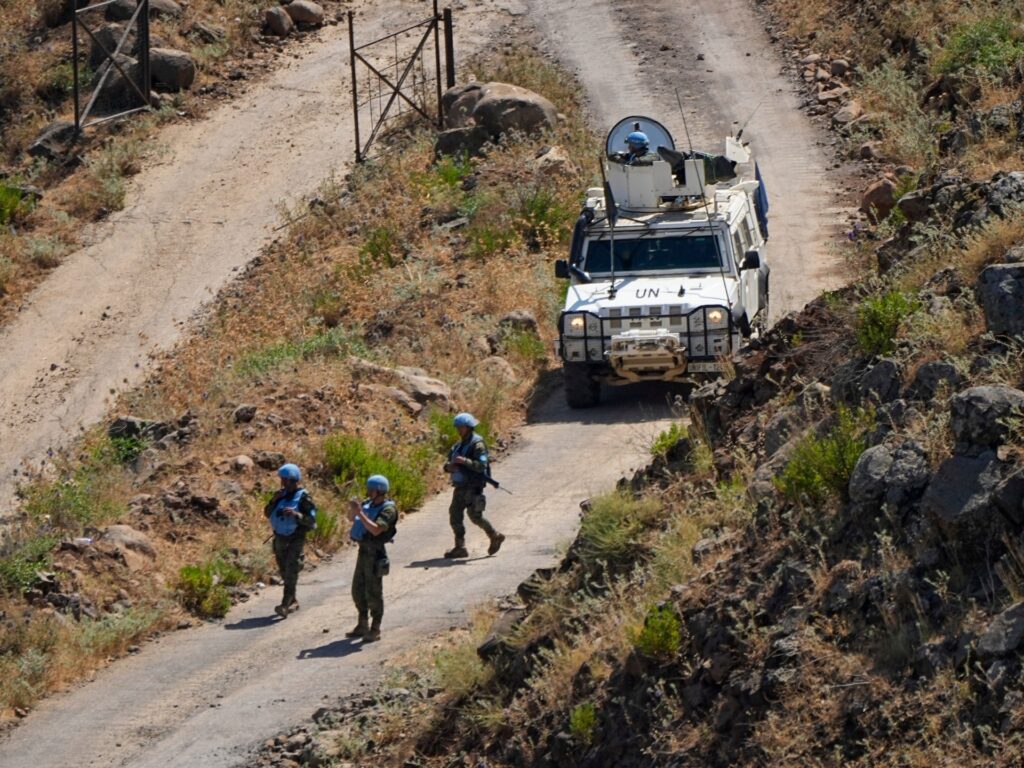
UNIFIL says Israeli forces ‘deliberately’ damaged one of its positions in southern Lebanon. United Nations peacekeepers in Lebanon have said the Israeli army “deliberately” damaged one of their positions in southern Lebanon, in the latest incident reported by the force that remains deployed in all of its positions. An Israeli “army bulldozer deliberately demolished an observation tower and perimeter fence of a UN position” in southern Lebanon, the UN Interim Forces in Lebanon (UNIFIL) said in a statement, adding that its forces remain in all positions “despite the pressure being exerted”. “We remind the [Israeli forces] and all actors of their obligations to ensure the safety and security of UN personnel and property and to respect the inviolability of UN premises at all times,” the statement said. It called on Israel to stop breaching UN positions, which is considered “a flagrant violation of international law”. Israel had recently claimed that the Lebanese armed group Hezbollah was attacking Israel from positions located in close proximity to posts of the UN peacekeeping forces in southern Lebanon – an accusation that Hezbollah denies. On Wednesday, UNIFIL said that an Israeli tank had fired on one of its watchtowers in southern Lebanon. This came after UN peacekeepers in Lebanon had come under fire several times days before, with at least four soldiers injured. Last week UNIFIL said two Israeli tanks “destroyed” the main gate at one of its positions in southern Lebanon and “forcibly entered the position”. Israel has fired on several front-line UNIFIL positions since it launched a ground incursion into southern Lebanon in early October, claiming it aims to dismantle the infrastructure of Hezbollah, an Iranian-backed Lebanese group that has been trading fire with the Israeli army in solidarity with Palestinians in Gaza. Israel’s strikes have been widely condemned, including by UN Secretary-General Antonio Guterres, who said that attacks against UN peacekeepers were a violation of international law and “may constitute a war crime”. Last week, Israeli Prime Minister Benjamin Netanyahu said that he demands Guterres get UNIFIL troops out of “combat zones”, alleging that their presence was providing a “human shield” for Hezbollah. But the UN maintains that the mission – with members from 50 countries – is not going anywhere. UNIFIL has monitored the border region between Israel and Lebanon since 1978. More than 10,000 troops from more than 50 countries have been deployed to the mission. Netanyahu has been pushing for the removal of UN peacekeepers as Israel escalates its attacks in southern Lebanon. Adblock test (Why?)
Priest shot dead in southern Mexico after leaving Sunday service
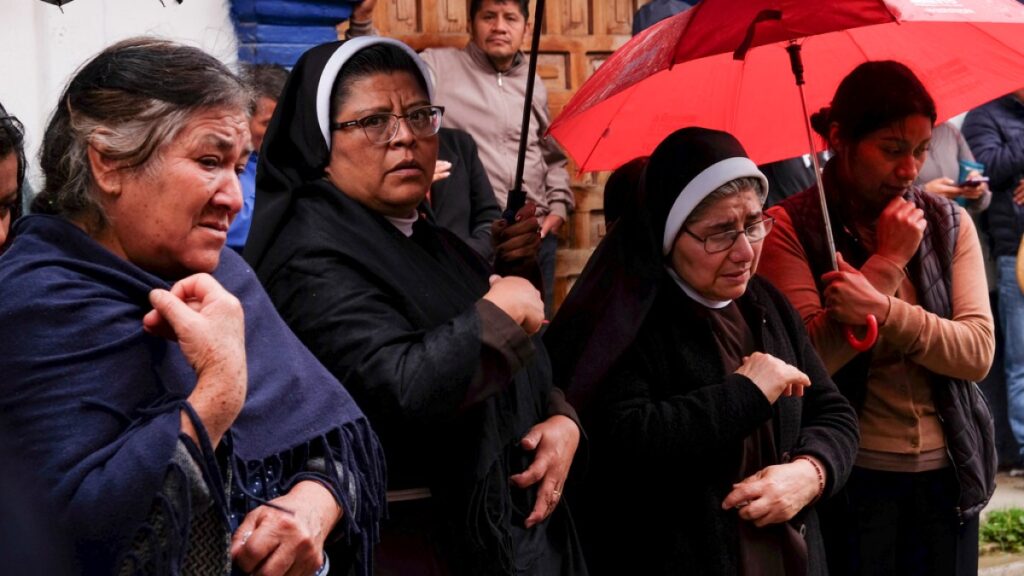
Community remembers Marcelo Perez as outspoken champion of Indigenous, labour rights in Mexican state of Chiapas. A priest known for his activism in defence of Indigenous and labour rights in Mexico has been killed after leaving church services, local authorities said. Catholic priest Marcelo Perez was returning home from church on Sunday when two men on a motorcycle pulled alongside his vehicle and shot him, prosecutors in the southern state of Chiapas said. “Father Marcelo has been a symbol of resistance and has stood alongside the communities of Chiapas for decades, defending the dignity and rights of the people and working toward true peace,” the Jesuits, Perez’s religious order, said in a statement. The killing comes amid a period of heightened violence in the southern state, which recorded about 500 murders between January and August this year. Along with the rights of Indigenous people and farmworkers, the Jesuits said Perez was also a vocal critic of organised criminal groups. “This region doesn’t just suffer from murders, but also forced recruitment (into criminal groups), kidnappings, threats and ransacking of its natural resources,” the religious order said. Mexican human rights activists and environmental defenders have long condemned violent harassment and intimidation by criminal groups and state security forces. Perez was himself a member of the Tzotzil Indigenous peoples and had served the community in Chiapas for two decades, developing a reputation as someone who could help settle disputes, especially over land. “We will collaborate with all the authorities so his death doesn’t go unpunished and those guilty face the courts,” Chipas Governor Rutilio Escandon said in a social media post, calling the assassination “cowardly”. But in Mexico, accountability for murder is the exception rather than the rule, with about 95 percent of all homicides going unsolved. Rights activists and Indigenous land defenders face high levels of violence and intimidation in Mexico. A 2023 Amnesty International report found that those groups face high levels of criminalisation and persecution as part of a “broader strategy of disincentivizing and dismantling advocacy for land, territorial and environmental rights”. The rights group also said Mexico “ranks among the countries with the highest number of murders of environmental defenders”. On Sunday, the United Nations human rights office in Mexico said “several national and international organizations had publicly warned about the growing number of threats, attacks and acts of criminalization against” Perez, the priest. It said those threats “have intensified in recent years due to his tireless work in favor of justice and the rights of Indigenous peoples”. Adblock test (Why?)
Trump visits McDonald’s as Harris speaks to churchgoers in swing state push
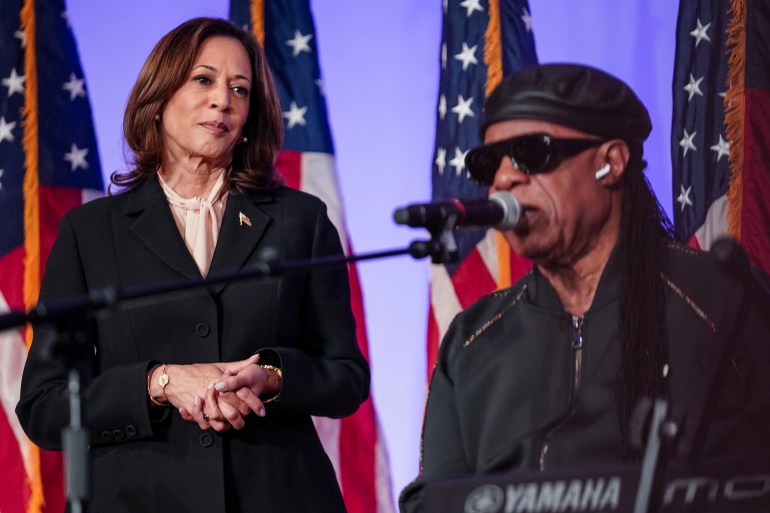
United States presidential candidates Donald Trump and Kamala Harris have spent the day rallying supporters in battleground states that will be critical in deciding who wins the White House, a little more than two weeks from Election Day. Former Republican President Trump made his push for voters in the state of Pennsylvania on Sunday while US Vice President Harris, a Democrat, spent the day in Georgia. At a McDonald’s in suburban Philadelphia, an employee showed Trump – a well-known fan of fast food – how to dunk baskets of fries in oil, salt them and put them into boxes using a scoop. “It requires great expertise, actually, to do it right and to do it fast,” Trump said, putting away his suit jacket and wearing an apron over his shirt and tie. “I like this job,” he added. The visit came as Trump has tried to counter Harris’s accounts of working at the fast-food chain while in college, an experience that Trump has claimed – without offering evidence – never happened. Reporting from Washington, DC, Al Jazeera’s Phil Lavelle said the McDonald’s stop was a “photo op” that allowed him to “needle” Harris over the issue. “It really gave him a chance to just go after her in that way,” Lavelle said. Harris looks on as Stevie Wonder sings Happy Birthday to her during a service at a church in Jonesboro, Georgia, October 20 [Elijah Nouvelage/Reuters] For her part, Harris, who marked her 60th birthday on Sunday, participated in two worship services outside of Atlanta. At Divine Faith Ministries International in Jonesboro, Georgia, music icon Stevie Wonder performed, singing his hit Higher Ground and a version of Bob Marley’s Redemption Song. He also sang Happy Birthday to Harris. Earlier, the Democratic candidate spoke at New Birth Missionary Baptist Church in Stonecrest, Georgia, where she drew a sharp contrast to the harsh and divisive rhetoric of the current political climate. “At this point across our nation, what we do see are some trying to deepen division among us, spread hate, sow fear and cause chaos,” Harris said, without mentioning Trump by name. “At this moment, our country is at a crossroads and where we go is up to us.” Democrats have long sought to portray Trump as a threat to democracy, particularly after a mob of his supporters stormed the US Capitol on January 6, 2021, in an effort to prevent Congress from certifying the results of the 2020 election. Trump and his allies have falsely claimed that the 2020 contest, which the Republican lost to Democrat Joe Biden, was marred by widespread fraud. On Sunday, the ex-president told reporters in Pennsylvania that he would respect the results of next month’s vote “if it’s a fair election”. Experts have raised concerns that Trump is laying the groundwork to contest the November election results should he lose to Harris. Recent polls suggest the two presidential candidates are neck-and-neck as Election Day nears, with the race expected to come down to how they fare in key swing states such as Pennsylvania, Georgia, North Carolina and Arizona, among others. Later on Sunday, Trump held a town hall in Lancaster, Pennsylvania. He was then expected to attend a Pittsburgh Steelers game. Harris said she would campaign on Monday with former Republican Congresswoman Liz Cheney – a staunch Trump critic – in the suburbs of Pennsylvania, Michigan, and Wisconsin. Adblock test (Why?)
Libyan arrested in Germany on suspicion of planning Israeli embassy attack
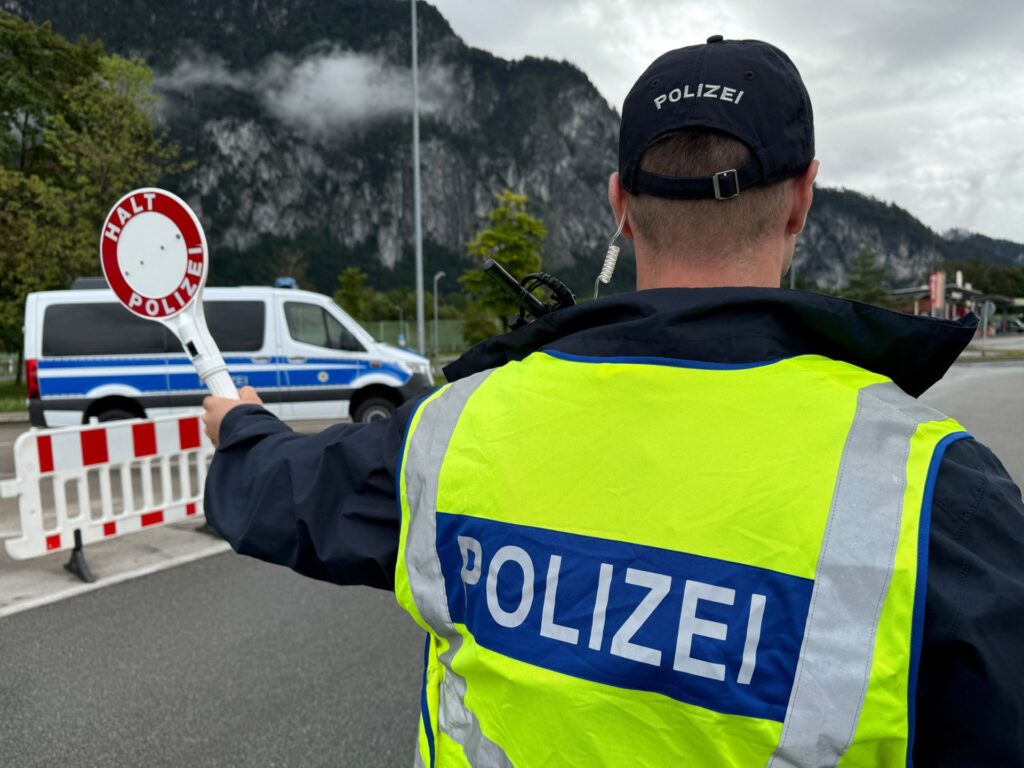
Prosecutors said the accused exchanged information with a member of ISIL in a messenger chat and was planning to use firearms in his assault. A Libyan national with suspected ties to the ISIL (ISIS) group who was planning an attack on the Israeli embassy in Berlin has been arrested in Germany, the authorities said. Police and other security forces arrested the man on Saturday evening in Bernau, a town just outside the capital, Berlin, and searched his home, the Federal Prosecutor’s Office said in a statement on Sunday. The prosecutor’s office identified the 28-year-old man only as Omar A in keeping with Germany’s strict privacy laws. “He intended to carry out a high-profile attack with firearms on the Israeli Embassy in Berlin,” the statement said. “The accused exchanged information with a member of [ISIL] in a messenger chat.” Security forces also searched the home of another person near the city of Bonn, who was considered a witness but not a suspect, the statement said. German newspaper Bild said the Libyan man was believed to have entered Germany in November 2022 and to have made a request for asylum the following January, which was rejected in September 2023. Interior Minister Nancy Faeser said German security authorities “struck in time to thwart possible plans to attack the Israeli Embassy in Berlin”. The suspect is expected to be brought before an investigating judge at the country’s highest court, the Federal Court of Justice in Karlsruhe, on Sunday, the prosecutor’s office said. The authorities acted after receiving a tip-off from an unspecified foreign intelligence agency, local media reported, with a heavily armed elite police unit storming the suspect’s home in Bernau. “We are acting with the utmost vigilance and attention in view of the high threat posed by Islamist, anti-Semitic and anti-Israel violence,” Faeser said. Justice Minister Marco Buschmann warned on Sunday about the threat of such acts. “Israeli institutions are particularly often the target of terrorists,” he told the German news agency dpa. Tensions between supporters of Israel and those incensed at Israel’s war on Gaza over the past year have flared in Germany for months. Pro-Palestine demonstrators say they have faced repeated violence from police and counterdemonstrators. Adblock test (Why?)
Video: See the moment a seven-storey building collapses in Nairobi, Kenya

NewsFeed Video shows the moment a multi-storey building collapses in Kenya’s capital, Nairobi. Local media says residents were warned to leave due to the weakened structure, but it’s unclear whether it had been fully vacated. A search and rescue mission is under way. Published On 20 Oct 202420 Oct 2024 Adblock test (Why?)