

Israel releases footage of its military rounding up Palestinians in Gaza
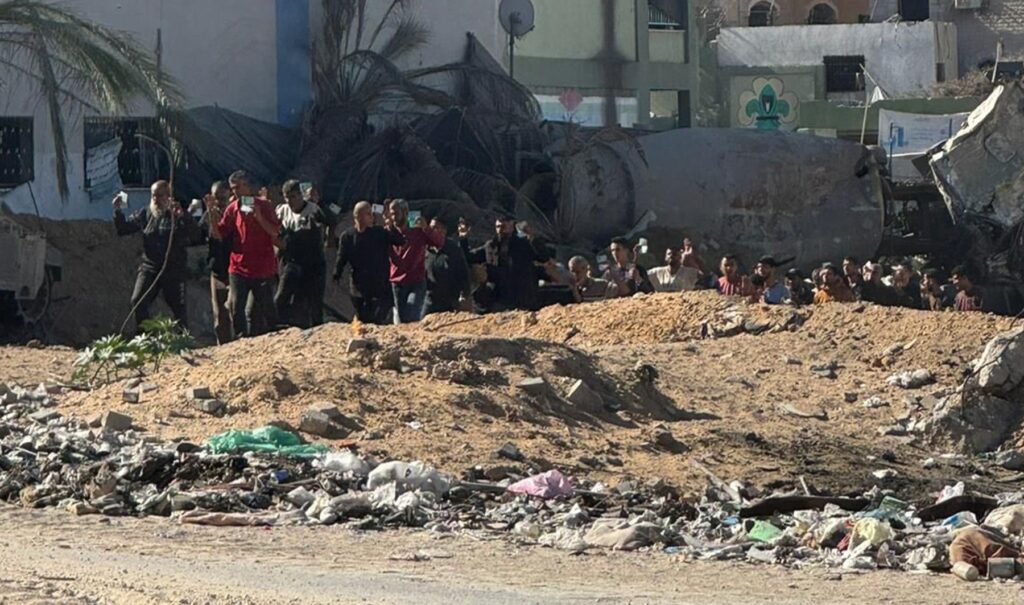
NewsFeed The Israeli army has released footage showing dozens of Palestinians being rounded up in besieged northern Gaza, near the Indonesian Hospital where many had taken shelter. Published On 20 Oct 202420 Oct 2024 Adblock test (Why?)
Is the Western push for a post-war Gaza hasty and unrealistic?
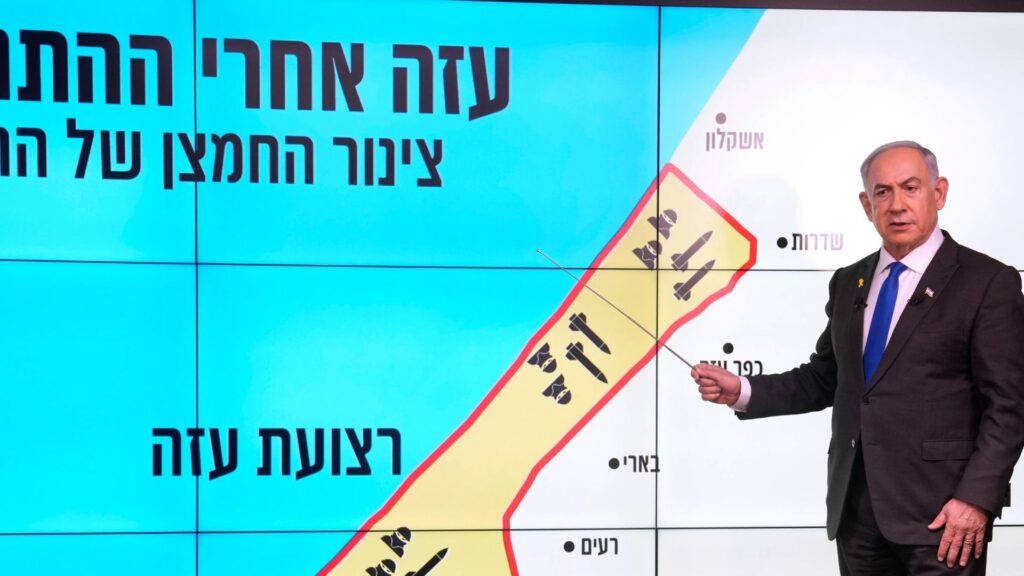
World leaders examine the future of Gaza after Israel’s killing of Hamas leader Yahya Sinwar. Western leaders say Hamas leader Yahya Sinwar’s death could open the door for a possible ceasefire in Israel’s war on Gaza. But Israeli Prime Minister Benjamin Netanyahu says the war is not over, and Hamas has ruled out the release of Israeli captives until the war ends. So is the Western push for a post-war Gaza hasty and unrealistic? Presenter: James Bays Guests: Said Arikat – Washington bureau chief, Al Quds newspaper Brian Finucane – senior adviser, US Programme, International Crisis Group Benoit Muracciole – president, Action Securite Ethique Republicaines Adblock test (Why?)
Cuba struggles to get energy grid back online after nationwide blackout
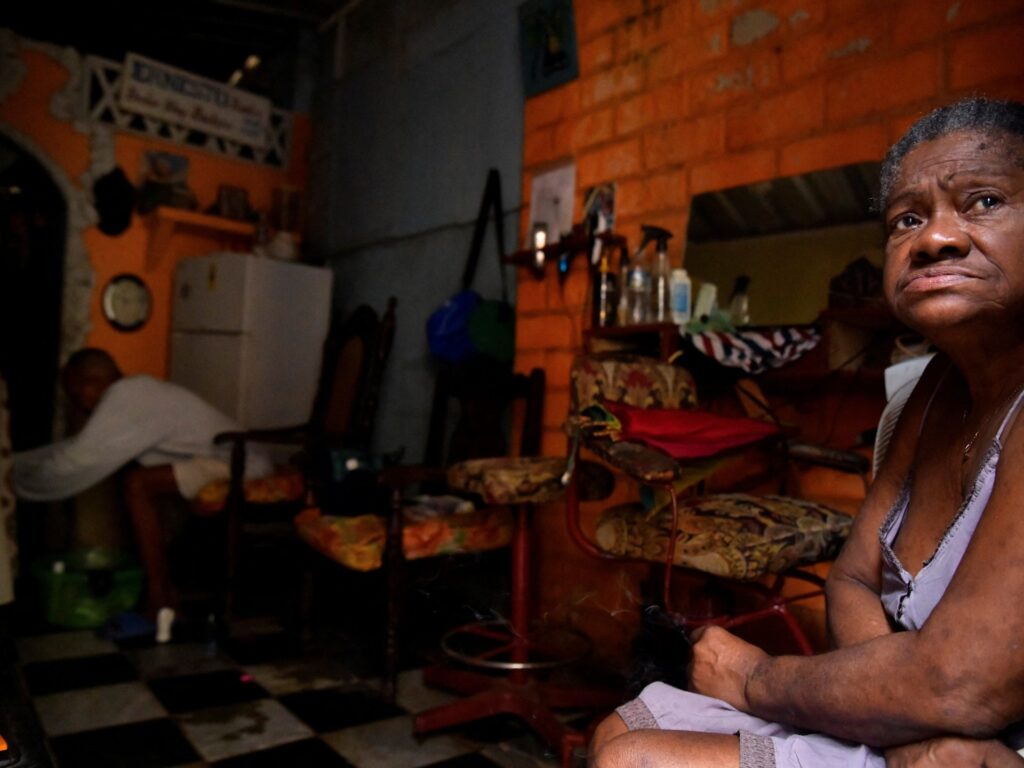
The Cuban government has started to restore power to the millions of residents left in the dark during a nationwide power outage this week. On Saturday, Cuban President Miguel Diaz-Canel sought to reassure the country, amid the continuing struggles with the electrical grid. “We are working hard and tirelessly to recover the electrical system, according to priority, in order to achieve stability,” he wrote on the social media platform X. He also praised community leaders during the crisis. “It’s admirable, the wisdom and poise of those who are heroes in these complicated hours, many of them young.” The president’s comments come after the entire country was plunged into darkness on Friday, in what experts called the worst blackout in two years. It was the culmination of several days of flickering power, starting on Thursday. Authorities at the time warned the electrical system was overloaded, and they called on nonessential activities to stop. Schools were closed until Monday, and certain state workers were sent home. By Friday, however, one of the primary power plants — the Antonio Guiteras plant in the western part of the island — had failed. That caused the power grid to collapse, leaving the entire country without electricity. State-run media reported on Saturday that there was a second collapse, but that crews had begun reconnecting the three major power plants. “I cannot assure you that we will be able to complete linking the system today, but we are estimating that there should be important progress today,” Lazaro Guerra, Cuba’s top electricity official, told a morning news programme, according to the Reuters news agency. The Ministry of Energy and Mining also acknowledged the Saturday morning hiccups in a statement. “Due to the technical complexity of the electrical system restoration process, disconnections of the subsystems may occur, as happened in the west,” it said. “Work is being done on their restoration.” President Diaz-Canel visited the National Electricity Office on Saturday to show his support for the recovery efforts. “We will emerge from this difficult situation,” his administration wrote on social media. Energy Minister Vicente de la O Levy also offered updates about the progress. “Generation will gradually continue to increase,” he said, explaining that they “already have 500 megawatts in the system” and “various substations in the west have energy”. Cuba has long struggled with blackouts and instability in its electrical grid, as the result of ageing infrastructure, fuel shortages and a floundering economy. Officials also pointed to the recent ravages of Hurricane Milton, which struck the country with heavy winds and flooding on October 9. Critics, however, have also blamed mismanagement in the Cuban government for the energy crisis. Just this year, in March, hundreds of protesters demonstrated in the capital Havana against food and fuel shortages, as the country’s economy suffers one of its worst crises since the 1990s. United States sanctions have exacerbated the situation, as has instability in countries like Venezuela, one of Cuba’s top petrol suppliers. Adblock test (Why?)
Kamala Harris’s campaign flexes celebrity support in Detroit and Atlanta
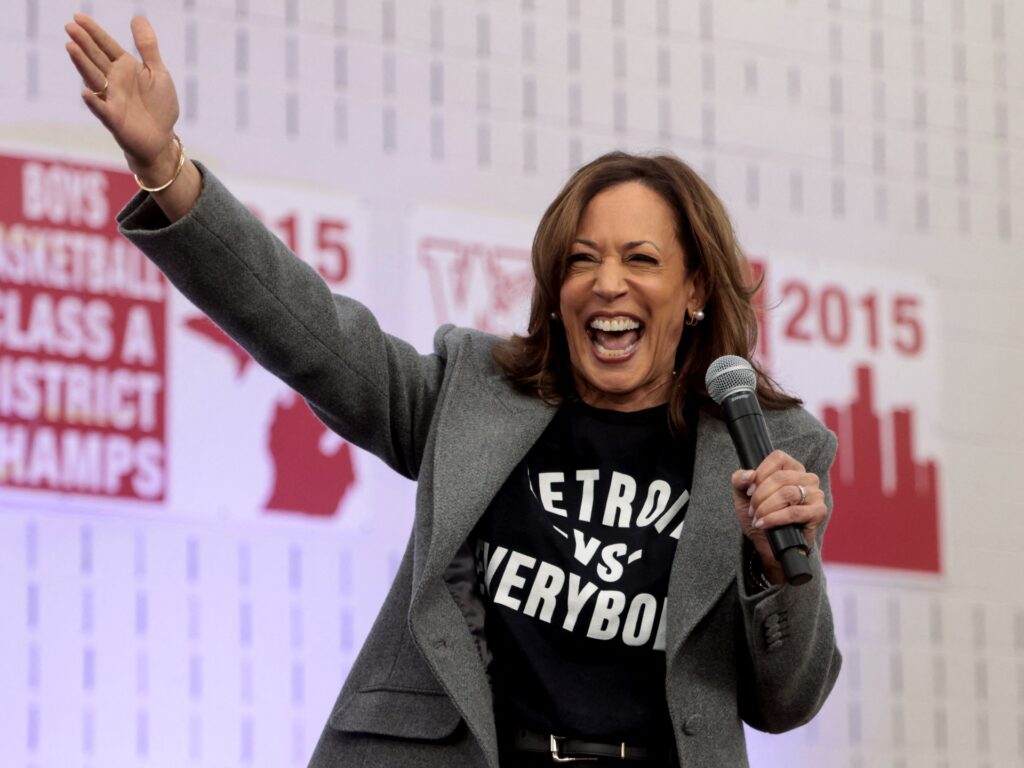
United States Vice President Kamala Harris has deployed some of the music industry’s star power to rally voters in the final weeks before November’s presidential election. On Saturday, two of the Democratic nominee’s events were headlined by prominent musicians. At her first stop, in Detroit, Michigan, the singer and rapper Lizzo warmed up the crowd with a passionate on-stage endorsement. “I already voted early and I voted for Harris,” the musician, a Detroit native, told a cheering crowd. Michigan is one of about seven key swing states in the presidential race, which could tilt either towards the Democrat or her Republican rival, former President Donald Trump. Later in the day, Harris visited another pivotal battleground: the southern state of Georgia. There, she had also lined up another hometown hero, the musician Usher, who began his music career in Atlanta, the state’s capital. Usher sang a few bars with the crowd before starting his speech. “It’s really great to be home. I’m here, home, for my Past Present Future Tour but took a quick break from that to come here, share a few words with you about the significance of this moment,” he said. “I feel that this is a momentous opportunity for each and every one of us. It’s just 17 days away from a very important election, as we all know, and we have the opportunity to choose a new generation of leadership for our country.” Record early voting Harris’s visit to Michigan on Saturday coincided with the first day of in-person early voting in Detroit. Absentee voting by mail had already begun in the state. Michigan’s online “voting dashboard” indicated that, by Saturday morning, more than 1 million mail-in ballots had been received. It was one of several strong showings across the country, indicating a possible surge in voter enthusiasm. States like North Carolina and Georgia have notched records for early-voting turnout this week, according to officials. The chief operating officer for Georgia’s secretary of state, Gabriel Sterling, posted on social media that turnout continues to be high. Georgia’s first day of early voting was Tuesday. “Congratulations to the counties and especially our great Georgia voters. Y’all have broken another RECORD. Biggest turnout ever for a General Election Saturday,” Sterling wrote. While experts caution against extrapolating too much from the numbers, political analysts note that Democrats have traditionally seen a boost from large early turnouts. Harris sought to build on this year’s momentum during her weekend campaign stops. “Georgia started early voting, broke historic records. North Carolina started early voting, broke historic records in North Carolina. Now, who is the capital of producing records?” she told supporters in Detroit, with a winking reference to the city’s music industry. “So we are going to break some records here in Detroit today.” Addressing war in Gaza During her visit to Michigan, Harris also took the opportunity to repeat her call for a ceasefire in Gaza, where Israel has led a yearlong military campaign, killing more than 42,500 Palestinians. US support for Israel and its war has eroded support for Democrats among Arab and Muslim Americans in Michigan. The state boasts the largest concentration of Arab Americans in the country, and it also the home of a national protest movement against the administration of President Joe Biden over its stance on the war. Harris, who has also been a recipient of that criticism, voiced hope that the killing of Hamas leader Yahya Sinwar in Gaza might usher in an end to hostilities. “This creates an opening that I believe we must take full advantage of — to dedicate ourselves to ending this war and bringing the hostages home,” Harris told reporters in Detroit. She added that Middle East policy has long been a difficult issue for the US. “It has never been easy,” Harris said. “But that doesn’t mean we give up.” Razzing Trump At her campaign rally in Detroit, Harris addressed supporters in front of “Detroit Votes Early” signs — and she and other speakers used their platform to slap back at Republican criticisms of the city. Earlier in the month, Trump cast Detroit in an unflattering light, telling the Detroit Economic Club that another Democratic president would render the entire country like the “Motor City”. “Our whole country will end up being like Detroit if she’s your president,” Trump said of Harris, calling Detroit “a mess”. Harris, by contrast, took the stage on Saturday in a T-shirt that read “Detroit vs Everybody”, a slogan that has adorned clothing lines and rap songs. Lizzo, meanwhile, addressed Trump’s comments more bluntly. “I’m so proud to be from this city,” she told the crowd. “You know, they say if Kamala wins, then the whole country will be like Detroit. Proud like Detroit. Resilient like Detroit.” “Put some respect on Detroit’s name,” she added. Celebrity support Analysts in general say that the Democratic Party has been more successful in rallying star power to its cause this election cycle. Harris not only enjoys the endorsement of figures like Lizzo and Usher, but celebrities like Taylor Swift, Oprah and George Clooney have also announced their support for her since she became the presidential candidate in July. It is not clear, however, if celebrity support actually makes a difference in a campaign. More than 76 percent of voters polled recently by Quinnipiac University said Swift’s endorsement would not affect their ballots. The same goes for Republicans. Two-thirds of those surveyed said entrepreneur Elon Musk’s recent support for Trump would not affect their vote either. But Democrats are nevertheless banking on the glitter of its star power. This upcoming week, for instance, former President Barack Obama and his wife Michelle Obama are hitting the campaign trail, with only two weeks to go before the election. It will be the first time Michelle has done the rally circuit. Barack, meanwhile, made his first campaign-trail appearance in Pittsburgh, Pennsylvania, earlier this month. Both Harris and Trump are trying to squeak ahead in the crucial last weeks of campaigning.
Russia, Ukraine each bring home 95 prisoners of war in UAE-mediated swap
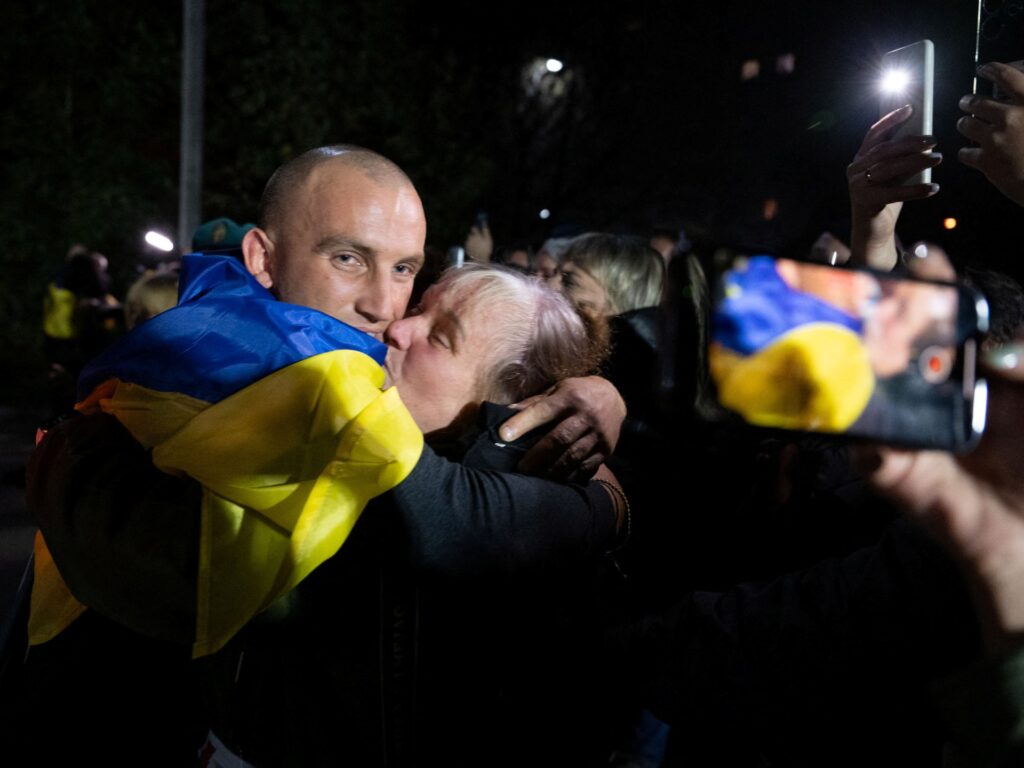
The exchange was the 58th to take place since the beginning of the war, Ukraine says. Russia and Ukraine have swapped 190 prisoners of war under a deal brokered by the United Arab Emirates. The exchange late Friday saw each side release 95 prisoners. Russia’s Ministry of Defence stated that returning Russian service members were undergoing medical checks in Belarus, one of Russia’s closest allies throughout the two-and-half-year conflict. A Russian military video showed smiling soldiers boarding buses. A video posted on Ukrainian President Volodymyr Zelenskyy’s Telegram account, meanwhile, showed men, some wrapped in the Ukrainian flag, getting off a bus and hugging loved ones. “Every time Ukraine rescues its people from Russian captivity, we get closer to the day when freedom will be returned to all who are in Russian captivity,” the president said. The UAE Ministry of Foreign Affairs described the exchange as “a reflection of the cooperative and friendly relations between the UAE and both countries”. It was its ninth time mediating such an exchange between Moscow and Kyiv. The Ukrainian president said the freed prisoners had served on various fronts, including those who had defended the port city of Mariupol for nearly three months in 2022. There, they defended Mariupol and the Azovstal steelworks, which was widely viewed as a stealthy instance of resistance against Russia’s war. Mariupol has since been under Russian occupation. “Ninety-five of our people are home again. These are the warriors who defended Mariupol and ‘Azovstal,’ as well as the Donetsk, Luhansk, Kharkiv, Kyiv, Chernihiv, and Kherson regions,” Zelenskyy wrote in a post on X. Ukrainian media and human rights organisations reported that Ukrainian rights activist and service member Maksym Butkevych, who was convicted by a Russian court of shooting at Russian forces, was among those freed. Forty-eight of the returnees had been handed sentences by the Russian judicial system, according to the body coordinating the affairs of prisoners of war. Dmytro Lubinets, the Ukrainian parliament’s commissioner for human rights, said the latest exchange was the 58th since Russia launched its full-scale invasion of Ukraine in February 2022, and brought to 3,767 the total number of prisoners returned home. The swap follows the repatriation of the bodies of 501 soldiers to Ukraine earlier on Friday in what appeared to be the biggest repatriation of those killed during the conflict since the war broke out. Most of those soldiers died while in action in the eastern Donetsk region of Ukraine, according to Ukraine’s Coordination Headquarters for the Treatment of Prisoners of War. Adblock test (Why?)
For US universities, Arab and Muslim lives do not matter
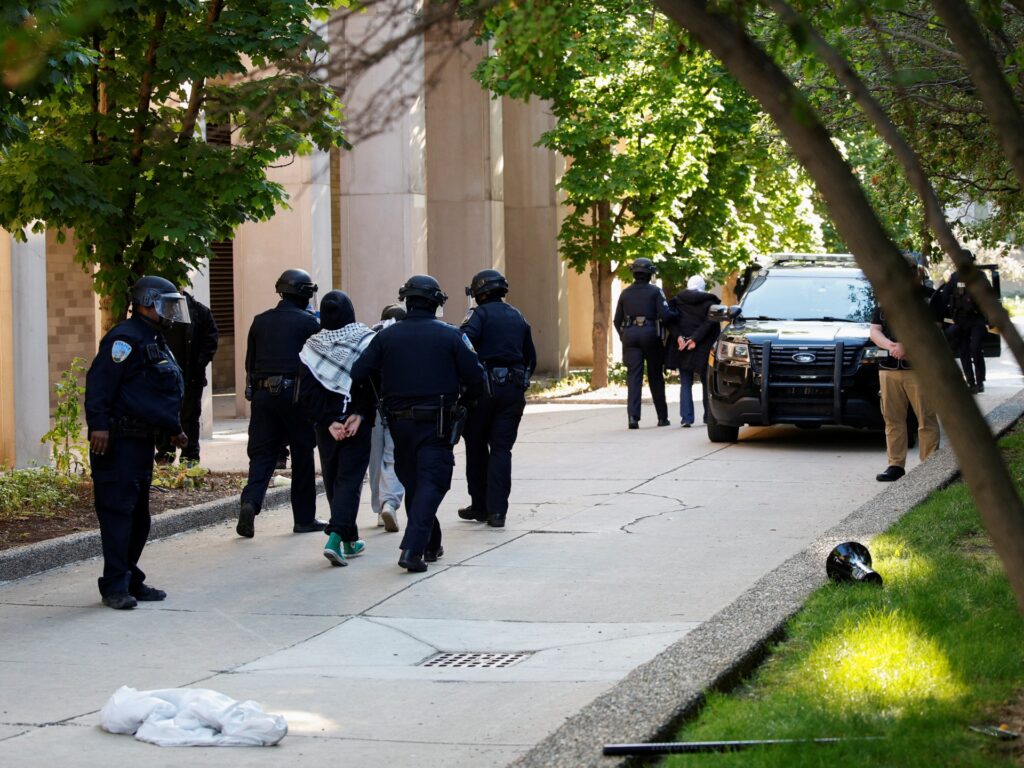
On October 7, the Tahrir Coalition, a union of pro-Palestinian organisations at the University of Michigan, posted on social media what it said was a recording of the university’s president, Santa Ono. In the audio file, a man’s voice can be heard talking about pressure from “powerful groups” and the threat of withholding federal funding if the university administration does not focus almost exclusively on combating anti-Semitism. He states: “The government could call me tomorrow and say, in a very unbalanced way, the university is not doing enough to combat anti-Semitism. And I could say it’s not doing enough to combat Islamophobia, and that’s not what they want to hear.” Although the Tahrir Coalition did not explain how they obtained the recording or when and where it was made, neither Ono, nor the university disputed its authenticity. Instead, the university administration issued a statement to the local newspaper Metro Times, saying: “The University of Michigan is steadfastly committed to ensuring our community remains a safe and supportive environment, where all students – regardless of race, religion, ethnicity or other identities – have the opportunity to learn and thrive.” The problem is that the university is not committed to the safety and support of Muslim and Arab students. Of course, we did not need the leaked recording to know that, but it does provide the general public with an explanation of the university’s utter failure to support marginalised students. Over the past year, we have watched in shock as mass slaughter has unfolded in Palestine – and, since September, in Lebanon. Israel has killed more than 42,000 Palestinians, including more than 16,000 children, and more than 2,300 Lebanese, including more than 120 children. For Palestinian and Lebanese students, the pain is acute. We have watched our homelands destroyed, our people slaughtered, tortured and starved. Yet, as we, along with many allies, have tried to process this trauma and advocate for human rights, we have been vilified and silenced on campus. Our existence has been reduced to a problem, our grief weaponised, our calls for justice criminalised. The same cannot be said about students who have actively advocated for Israel’s “right to self-defence” – a right that Israel does not have when it comes to resistance from a population it is occupying. The effect of this “unbalanced” approach is that today Muslim and Arab students face increased harassment and discrimination, and their attackers are only emboldened because they know there will be no consequences for what they do. The university’s hypocrisy became apparent to me and other Palestinian students almost immediately after October 7, 2023. On October 9, students at the Michigan Law School used the public law-open server, an email chain that connects everyone at the law school, to describe Palestinians as “animals” and their Muslim and Arab classmates as “rejoic[ing] in mass murder” and supporting rape. This language was reported to the administration, who took no action. As the greater Michigan student body started organising and protesting on campus, the university’s discrimination against marginalised students became even more apparent. It repeatedly sent campus police to disperse our protests and sit-ins, with students being physically assaulted, pepper-sprayed and arrested, while hijabs of female students were ripped off. It also ramped up surveillance. Police presence and the number of surveillance cameras around the Arab lounge on campus noticeably increased. The administration never issued any apology for nor condemnation of the extreme acts of police violence against students who were protesting a genocide that the university funds. It also did not act as accusations of anti-Semitism started being weaponised against us. It did not step in to differentiate between hatred against the Jewish people and the legitimate criticism and denunciation of genocidal Israel. It did not protect our right to protest and freedom of expression. Instead, it seemingly accepted the false equivalence of anti-Semitism and anti-Zionism. Over the summer, the Department of Education released a report about the supposed “failure” of the university to act on accusations of anti-Semitism. Among them were claims that anti-genocide protests created a “hostile environment” which the university did not investigate. The university easily succumbed to pressure and unilaterally changed campus policies to facilitate its crackdown on students engaging in pro-Palestinian activism. It did not consult faculty or the student body about them. The university administration has gone out of its way to address the sentiments of Jewish students on campus but has yet to utter one word to us, the Palestinians. One has to wonder how many more Palestinians have to be exterminated before Ono and the rest of the university leadership recognise our suffering, or if they even see us as human at all? Muslim, Arab and Palestinian students increasingly feel that our administration is fully comfortable with our people being slaughtered and our land being carpet-bombed. This attitude isn’t unique to the University of Michigan. Nationwide, more than 3,000 people have been arrested for pro-Palestine advocacy on college campuses in just six months. Universities that once championed free speech have become hostile environments for Muslim and Arab students and their allies. The chilling effect this has had is palpable. Many Muslim and Arab students now feel unsafe expressing their identities or views, fearing academic, legal and job prospect repercussions. For Palestinian students, this silencing is particularly traumatic – we are denied the right to mourn publicly or call for justice. Adding to our pain is the fact that our tuition dollars are invested in companies supporting violence against Muslims and Palestinians abroad. Despite protests, the University of Michigan maintains investments in companies linked to Israel, even though it was quick to divest from companies linked to Russia after its invasion of Ukraine. In response to the leaked audio, the Council on American-Islamic Relations Michigan Chapter (CAIR-MI) filed a complaint with the Department of Education Office of Civil Rights. The complaint calls for an investigation into whether the University of Michigan has followed “its obligations under Title VI of the Civil Rights Act as well as its
Gunmen kill two Mozambique opposition officials before election protests
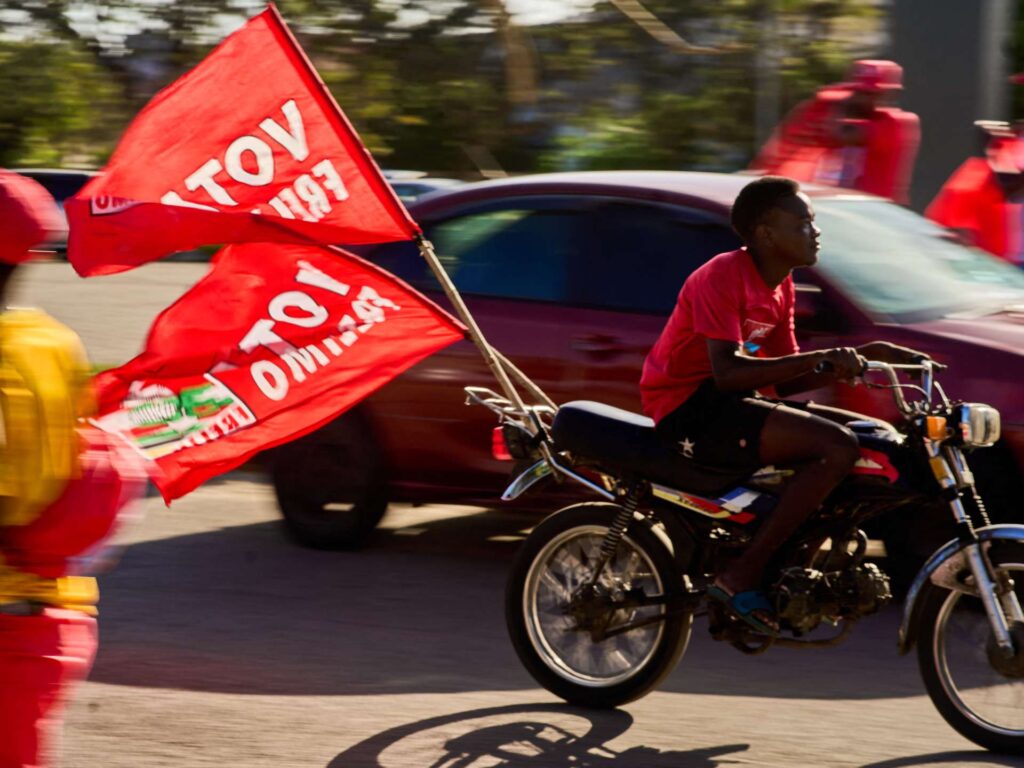
Podemos party’s lawyer Elvino Dias and party representative Paulo Guambe killed before protests against the disputed vote. Gunmen in Mozambique have killed a leading opposition politician’s lawyer and another opposition official, according to their party, before protests against a disputed election result. The attackers chased the car of Podemos party’s lawyer Elvino Dias and party representative Paulo Guambe and fatally shot them late on Friday night in the capital Maputo, the party said on Saturday. Videos on social media showed a BMW SUV in the middle of the road with numerous bullet holes in the bodywork. Some of the videos showed what appeared to be the bodies of two men, one with blood on his chest, in the front seats. The other body was slumped over. The killings came with tensions already high in the southern African country as it waits for the results of an October 9 election that has drawn more allegations of vote-rigging and clamping down on dissent against the 49-year rule of the Front for the Liberation of Mozambique (Frelimo) party. Podemos has rejected provisional results showing a win for Frelimo and called for a nationwide strike on Monday. Although Venancio Mondlane ran for president as an independent, he was supported by Podemos. The killings are “further clear evidence of the lack of justice that we are all subjected to”, Podemos stated. “They were brutally assassinated [in a] cold-blooded murder,” Adriano Nuvunga, director of Mozambique’s Center for Democracy and Human Rights (CDD), told the Reuters news agency by telephone. “The indication [is] that around 10 to 15 bullets were shot, and they died instantly.” Human Rights Watch also issued a statement confirming the attack. According to the latest election tally, Frelimo is leading in all 11 provinces and its candidate Daniel Chapo is widely expected to win the election. Chapo is expected to be announced as successor to President Filipe Nyusi, who has served a maximum of two terms. Podemos and other opposition parties have accused Frelimo of electoral fraud. Western observers have also cast doubt on the polls, citing reports of vote-buying, intimidation, and inflated voter rolls in Frelimo strongholds. Mozambique has struggled with these issues since Frelimo first introduced democracy in 1994 after two decades in power. The election’s final results are expected on October 24, but there are fears Monday’s protest could be violent. Mozambique’s security forces have opened fire on political protesters in the past, including after last year’s local elections, according to rights groups. Nuvunga, the NGO director, wrote on social media that the killing of Dias was a “political assassination”. Adblock test (Why?)
How Israel is trying to generate civil strife in Lebanon
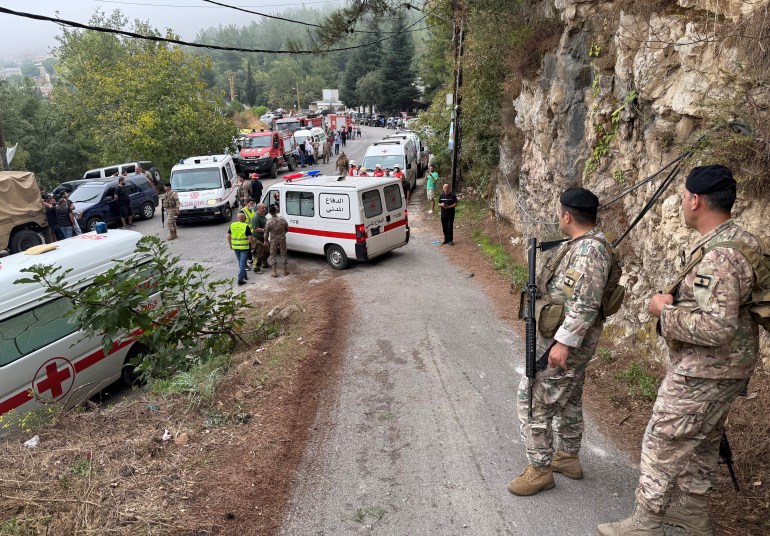
Beirut, Lebanon – On October 14, Israel killed 22 people in the northern Lebanese village of Aitou in an air attack. Israel claimed it struck a “Hezbollah target” but the attack on a predominantly Christian town has made many wonder if Israel is expanding its war to chase down Hezbollah members and mainly Shia Hezbollah supporters wherever they may have fled to. “I can only guess Israel’s motives, but obviously they are trying to make the Shia community toxic by trying to isolate them completely,” said Michael Young, a Lebanon expert for Carnegie Middle East Center. Fragile system Lebanon runs a confessional system, with political posts reserved for members of specific religious sects. The fragile system has been historically exploited by regional states for their own geopolitical goals, by dividing the country’s political factions and religious communities. In addition, each religious community typically lives in relatively segregated areas and neighbourhoods in Lebanon – largely an outcome of previous violent conflicts that degenerated into sectarian violence and led to the mass displacement of communities. The attack on Aitou harks back to Lebanon’s 15-year civil war (1975-1990) when the country got dragged into the broader Israeli-Palestinian conflict and descended into multi-faceted fighting. Now, Israel’s war – ostensibly against Hezbollah – is threatening to destabilise the entire country again as a pattern emerges, beyond the Aitou attack, where Israel attacks neighbourhoods and communities that have absorbed thousands of displaced people. Analysts believe this trend reflects a sinister motive of collectively punishing Hezbollah’s Shia support base, psychologically tormenting the Lebanese populace and triggering sectarian violence. “When [Israel] is hitting [these people] in areas that are largely not Hezbollah-controlled, then more and more people from these areas will be reluctant to receive displaced Shia because they fear Israel will attack them,” Young told Al Jazeera. Lebanese army soldiers stand guard near a site of an Israeli air raid in the Christian-majority region of Aitou in north Lebanon, October 14, 2024. REUTERS/Omar Ibrahim (Reuters) Psychological warfare? The terrifying prospect that Israel could continue flattening districts across Lebanon is a clear form of psychological warfare, according to Maha Yahiya, an expert on Lebanon and the director of Carnegie Middle East Center. “This is a message to Hezbollah and to the broader [Shia] community that says: ‘We will get you wherever you are,’” Yahiya said. “On the flip side, it is aggravating sectarian tensions and triggering almost panic among the broader Lebanese populace, who are terrified of having neighbours they don’t know and who Israel may decide to target.” According to Ori Goldberg, an Israeli commentator on political affairs, Israel appears to be applying the same open-ended discourse and military tactics in Lebanon as it has done in Gaza. “Israel feels like it can target anything it regards as a military position, irrespective of who may be there, just like in Gaza. Just like what we saw in Nabatieh,” he told Al Jazeera. Nabatieh is a provincial capital in south Lebanon that Israel has indiscriminately carpet-bombed, effectively reducing it to wasteland. On October 16, an Israeli airstrike hit Nabatiyeh’s municipal headquarters, killing 16 people including the mayor. It was the largest attack on a state building since Israel first escalated its bombing campaign against Hezbollah on September 22. “[Israel thinks] that if people are near where we’re bombing, we don’t care. That’s their problem,” Goldberg told Al Jazeera. Aggravating sectarian tensions Karim Emilie Bitar, a professor of international relations at the Saint Joseph University of Beirut, believes that the areas Israel is hitting outside of south Lebanon do not have any military or strategic importance. “There seems to be an intention to foster civil strife in Lebanon,” he told Al Jazeera. “The way we can read these attacks is… that it is a message sent to Christians in particular to be careful and do not welcome these [Shia] refugees. “If [Israel] continues along this path, then it could lead to a deepening of the fault lines in Lebanon. People will become increasingly cautious, and it could sooner or later provoke serious incidents and civil strife.” In many predominantly Christian quarters of Beirut, residents and sectarian factions have begun monitoring guests and visitors in their neighbourhood, often doing background checks. In many cases, displaced people have been prohibited from moving into buildings or evicted from areas they recently moved into, according to Yahiya from the Carnegie Center. She added that people in various communities are increasingly “terrified” of having neighbours they do not know and who may be targeted by Israel. “[Israel’s tactics] have created a politics of fear,” she told Al Jazeera. “And it is stoking sectarian fire by trying to basically make other communities reject the displaced wherever they are.” epa11660666 Displaced people sit on a street in Beirut, Lebanon, 15 October 2024. The International Organization for Migration (IOM) has recorded over 600,000 internally displaced people (IDPs) in Lebanon since the start of hostilities between Israel and Hezbollah. EPA-EFE/WAEL HAMZEH (EPA) Grand strategy? Israel’s Prime Minister Benjamin Netanyahu made his intentions known during his televised address to the Lebanese people on October 8, warning that they could face “destruction like Gaza” unless they acted now to “save Lebanon” from Hezbollah. His remarks indicated that Israel aims to reshape the politics of Lebanon, belying his earlier claims that Israel would launch a limited operation in south Lebanon to allow thousands of displaced Israelis to return to their homes in north Israel across the border. Goldberg, the commentator from Israel, believes it does not have realistic political objectives in the country. “What’s worrying is I don’t think there is an end game. Officially, [Israel] wants to establish a 10-km [6.2-mile] buffer, with 7km [4.3 miles] being held by the Lebanese Armed Forces and 3km [1.9 miles] by the Israeli army, but I don’t think that’s credible,” he told Al Jazeera. Worse yet, Goldberg believes Israel’s government is quite comfortable maintaining an indefinite war on Lebanon, just as it is doing in Gaza. “Israel wants to bomb,” he said.
Is Sudan’s army regaining ground lost in the civil war?

The war in Sudan is entering a new phase as the Sudanese army and its rival, the paramilitary Rapid Support Forces (RSF) fight over the capital, Khartoum, and the last contested state in the sprawling western region of Darfur. The RSF has controlled most of Khartoum ever since the war erupted in April 2023. Here’s what we know about the situation today: What was life in Khartoum like under the RSF? The armed group, headed by Mohamed Hamdan “Hemedti” Dagalo, has looted and confiscated homes and warehouses across the capital. Whoever could flee Khartoum, has, but many others had to stay under the mercy of the RSF, which has subjected women to sexual violence and randomly rounded up and detained men for days or months. Those who lived under RSF rule say the paramilitary often killed families for refusing to hand over their daughters or mothers, as well as their homes and belongings. Has the army retaken Khartoum? On September 26, the army, which has also been criticised for human rights abuses and failure to protect civilians from the RSF, launched a sweeping offensive to retake the city. As warplanes and troops descended on Khartoum, the army finally recaptured some territory in the capital, according to local sources and reporters on the ground. The army has reportedly captured three bridges, including Halfaya, which allowed it to break an RSF siege on its military facilities in Kadroo, a nearby neighbourhood. Sudanese fighters from the Rapid Support Forces secure an area in East Nile province, Sudan, on June 22, 2019 [Hussein Malla/AP Photo] How are people reacting to the army’s advance? Most people are welcoming the army as liberators, relieved to have a semblance of stability return to their neighbourhoods. Yet despite the jubilation, the army is reportedly committing summary executions as it retakes territory – targeting people it perceives as affiliated with the RSF, according to analysts, the United Nations and local monitors. “These [executions] are definitely verified,” according to Hamid Khalafallah, a Sudan expert and PhD candidate at the University of Manchester. Al Jazeera sent written questions to Sudanese Armed Forces spokesperson Nabil Abdullah asking him to comment on the accusations. No response had been received by time of publication. Can the army retake all of Khartoum? This may be its best shot, but the battle is far from over. The army is trying to take the capital in hopes of securing leverage for future peace talks, Suliman Baldo, executive director of the Sudan Transparency and Policy Tracker think-tank, said. “[A situation] where the army controls Khartoum would boost its morale and it may have them believe that they made enough military progress to go towards negotiations,” he told Al Jazeera. However, Khalafallah stressed, the army is still far from controlling the entire city, despite its recent advances. “It is not clear how far the army is able to advance but they are putting up a big fight,” he said. Plumes of smoke rise during clashes between the paramilitary Rapid Support Forces and the army in Khartoum, Sudan, on September 26, 2024 [Stringer/Reuters] What about Darfur? The RSF is also fighting the army and its allied armed groups in el-Fasher, the capital of North Darfur. While the paramilitary controls four out of five Darfur states – East, West, Central and South – it has struggled to conquer North Darfur, which has put up fierce resistance. As fighting intensifies, the UN estimates that some 700,000 internally displaced people are at severe risk of being harmed in North Darfur, either from armed attacks or famine. The RSF has maintained a five-month siege on el-Fasher, which has wrought devastating suffering on civilians, according to aid groups. The aid groups added that about 2.8 million people live in and around el-Fasher, but have no means to escape. What’s more, they noted that boys were joining armed groups to earn a meagre salary, while families were marrying off young girls to have fewer mouths to feed. An internally displaced woman carries aid in sacks at a camp in Gadarif on May 12, 2024 [AFP] What’s next? The battle for Khartoum may determine the direction of the war in Sudan, according to experts. Baldo said he believes the army is trying to recapture Khartoum, as well as other major cities in north and central Sudan so it can then shift the focus of the conflict to Darfur. That’s where the RSF enjoys support from its “Arab” tribal base – a name that refers to pastoralist communities as opposed to sedentary farming communities that are often referred to as “non-Arabs”. Baldo added that the army would then try to destablise its foe. “I think the army may push for infighting [within the RSF] in Darfur,” he told Al Jazeera. Adblock test (Why?)
What is gerrymandering in US elections? What to know in 500 words
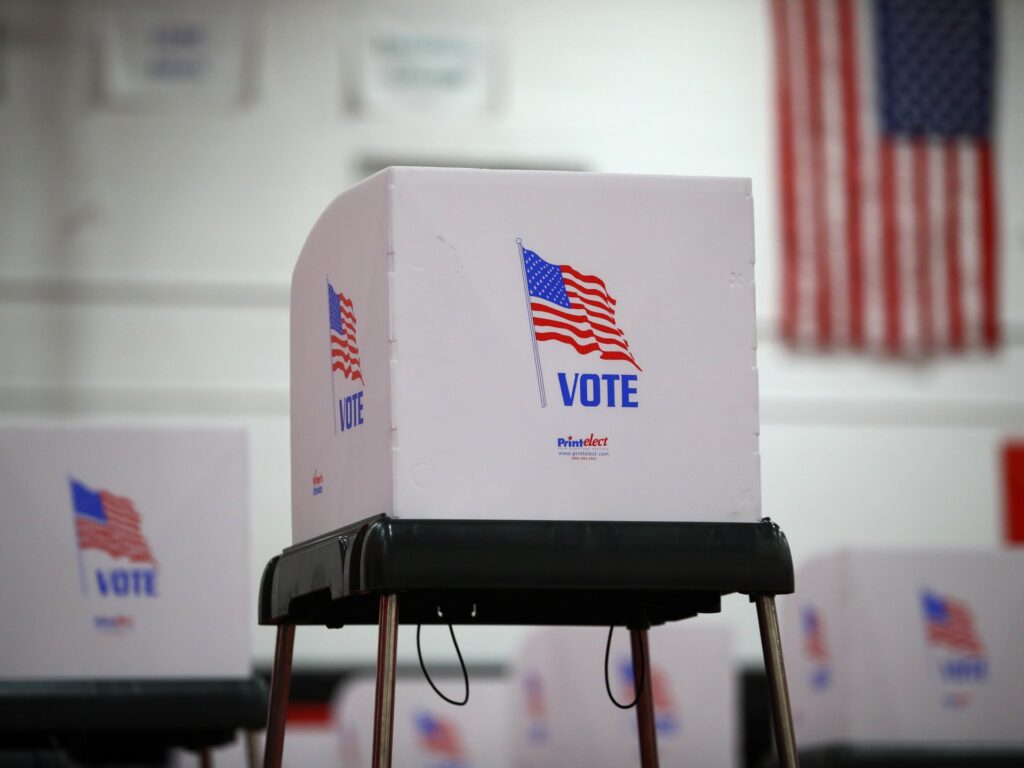
EXPLAINER Gerrymandering, the partisan redrawing of voting districts, is as old as the US and yet is still a controversial part of its elections. It’s been called vote-rigging, a power grab and just plain sneaky. But it’s legal, and both Republicans and Democrats do it. Gerrymandering, the process of redrawing voting districts to favour political parties, is almost as old as the United States and yet still very much part of the modern political process. In this year’s general election, it could affect the outcome of crucial races for the US House of Representatives as well as state legislatures. How does gerrymandering work? Generally, once a decade, states update their voting districts to reflect population changes. That’s where gerrymandering creeps into the process. Political parties try to redraw the electoral maps to give their side the greatest number of seats in state legislatures and Congress. The district boundaries are manipulated to put like-minded voters together or to split them apart, either amplifying or diluting their voting power. The results are often contorted districts with meandering boundaries drawn to include some voters and leave others out. Essentially, gerrymandering allows politicians to choose their voters instead of the other way around. The word was invented in 1812 when the governor of Massachusetts, Elbridge Gerry, redrew the electoral map for the state Senate to benefit his party. The result was an oddly shaped district that looked like a salamander. It inspired cartoonist Elkanah Tisdale to draw a mythical creature for the Boston Gazette, calling it the “Gerry-mander”. The name stuck. Forging complacent politicians? Gerrymandering is controversial — and not just because it’s a blatant grab for votes. Critics claim it can dilute the voting power of racial minorities and undermine democracy. A 2023 study by Harvard University researchers found that gerrymandering often creates “safe” seats for politicians, meaning their races are less competitive. In turn, those politicians become less responsive to the needs of their constituents, who become discouraged about voting as a result. At least eight states have clear language in their constitutions against the partisan redrawing of voting districts. Others use independent commissions to make the changes. But the majority of states lack safeguards. National efforts in the last Congress also failed to ban partisan gerrymandering. In 2019, the US Supreme Court ruled it’s up to state courts to deal with legal battles over voting maps. So now, it’s a state-by-state fight over the role of partisan politics in voting districts — with some recent rulings potentially affecting the outcome of the 2024 election. For example, in South Carolina, a new voting map has turned a swing district into a safer Republican one, causing outrage among voting rights advocates. In Louisiana and Alabama, meanwhile, newly drawn maps could mean at least one more House seat in each state for Democrats. And in North Carolina, the state supreme court ruled in favour of a gerrymandered congressional map, possibly giving Republicans three more House seats. Each of those races is significant: Control over the US House of Representatives is decided by district-level votes, with the fate of national legislation hanging in the balance. Adblock test (Why?)