

Muslims join Buddhist, Christian fighters to topple Myanmar’s military
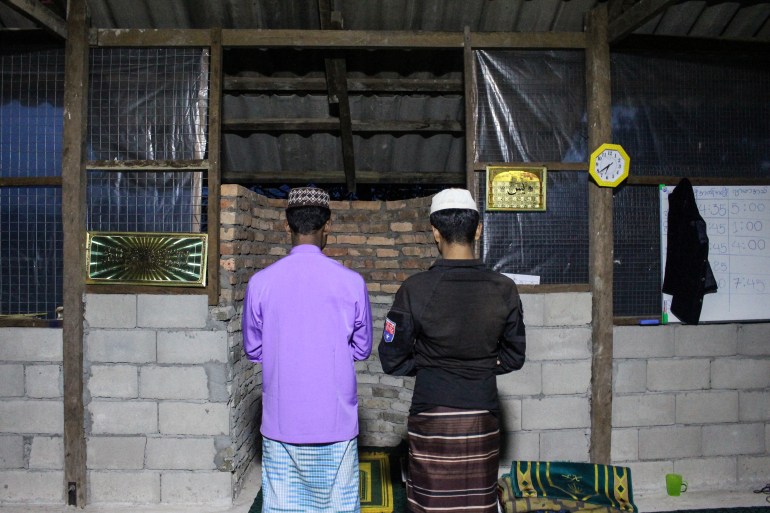
Myanmar – Scattered across the lush, rolling hills of southern Myanmar’s Tanintharyi region, rebel fighters stationed at checkpoints inspect cars and trucks traveling towards a nearby town still under the control of the Myanmar military – their adversary. While this is a familiar sight in the region, where the struggle against the military waged by disparate armed groups has intensified since the 2021 coup, what sets these rebels apart is their faith. These are members of the little-known “Muslim Company”, who have joined the struggle for democracy in Myanmar as part of a Christian- and Buddhist-dominated armed group – the Karen National Union (KNU). Officially named 3rd Company of Brigade 4 in the KNU, the 130 soldiers of the Muslim Company are just a fraction of the tens of thousands fighting to overthrow the country’s military rulers. With their story largely untold, Al Jazeera visited the company’s headquarters, nestled between the ridges of jungle-clad mountains at an undisclosed location in Myanmar’s south, to piece together an almost forgotten thread in the intricate tapestry of Myanmar’s conflict. “Some areas are focused on ethnicities having their own states,” Muslim Company leader Mohammed Eisher, 47, explained, referring to the armed resistance movements who have long fought against Myanmar’s military. In Tanintharyi, Eisher said, no one group dominates the land and, besides, the military’s repression affects all groups. “As long as the military remains in place, Muslims, and everybody else, will be oppressed,” he said. Fighters in 3rd Company pray at the mosque in their main camp in southern Myanmar [Lorcan Lovett/Al Jazeera] While Eisher said he hopes the acceptance of diversity within the anti-military forces would help ease cultural and regional tensions that have previously led to conflict in Myanmar, scholars say the embrace of the Muslim Company underlines the inclusive nature of the historic uprising taking place, and the incorporation of previously marginalised groups into the struggle. Diverse lines of descent Myanmar’s Muslims trace diverse lines of descent. They include the Rohingya in the west of the country, Muslims with Indian and Chinese heritage, and the Kamein, whose ancestors are believed to have been archers of a Mughal prince seeking refuge in the Arakan kingdom in the 17th century, and which is now part of Myanmar. In Tanintharyi, where the Muslim Company is based, some Muslims are descended from Arab, Persian and Indian traders, while others are Burmese Malays, known as Pashu. The region’s ethnic diversity also includes Karen and Mon, as well as Bamar sub-ethnicities from the cities of Dawei and Myeik, among others. While their uniforms bear the KNU insignia, the Muslim soldiers of 3rd Company carry a star and crescent moon badge in their bags, symbolizing their lineage from the All Burma Muslim Liberation Army (ABMLA) – the country was called “Burma” before it was re-named “Myanmar”. Soldiers in 3rd Company, known as ‘Muslim Company’, rest while recovering from illness at their barracks in Myanmar’s Tanintharyi region [Lorcan Lovett/Al Jazeera] In their main camp, hijab head coverings and thobes – long-sleeved ankle-length traditional robes often worn by men and women in Muslim countries – are common attire. Recitals of Quranic verses ring out from a mosque, while prayer mats are laid out at remote rebel outposts. Throughout the holy month of Ramadan, the company’s fighters observe fasting and attend daily prayers. Successive military-led governments in Myanmar, together with hardline nationalist monks, have portrayed Muslims as a grave threat to Burmese Buddhist culture. That has resulted in Muslim communities, with roots spanning more than a millennium in Myanmar, facing scapegoating, religious suppression and denial of citizenship. “It’s dangerous to generalize, but Muslims in Myanmar are highly vulnerable and have been exposed to significant violence,” Myanmar scholar Ashley South said. “In Karen areas, however, one often finds communities living peacefully – and it is significant that Muslim refugees moved tentatively to KNU-controlled areas, sometimes in preference to other groups,” South said. He added that the inclusion of groups previously alienated by Myanmar’s fractious politics is a defining trait of the current revolution, which has made strong gains against the military since it grabbed power in 2021. History of Muslim resistance The Muslims who resisted the military following its overthrow of Myanmar’s elected government three years ago and then found their way to 3rd Company, are not the first to rise against repression. Among those fleeing the anti-Muslim riots of August 1983 in what was then Moulmein – now called Mawlamyine – in lower Burma, a small group of refugees formed the Kawthoolei Muslim Liberation Front (KMLF) in KNU-held territory. The KNU trained about 200 KMLF fighters, but disputes between Sunni and Shia leaders eventually fragmented the group. In 1985, some KMLF fighters moved south to Tanintharyi, founding the ABMLA. After decades of sporadic clashes with the military, they officially became 3rd Company, known colloquially as the “Muslim Company”. That was about 2015, after the KNU’s ceasefire with the military ended, according to an administrator who has been with the group since 1987. With military atrocities having devastated families across Myanmar since the recent takeover, Myanmar’s army is now anathema not only to Muslims and ethnic minorities but to most of the population, the administrator said. “The [2021] coup opened a path to freedom for everybody,” he added, speaking to Al Jazeera as he sat on a hammock above a pair of military boots taken from a captured government base. About 20 women serve in 3rd Company, including 28-year-old Thandar*, a medic who joined in October 2021. After completing combat training under the KNU, Thandar told how she heard about the Muslim force and decided to sign up. Thandar has served in 3rd Company since October 2021 [Lorcan Lovett/Al Jazeera] “I’ll work here until the revolution is over,” she said, smiling at their commander, Eisher. “He’s like my new father now,” she said. Among other things, belonging to a like-minded company of fighters “made it easier to have a halal diet”, she said. “Plus, I’m with fellow Muslims,” she added. “It’s
Newspaper offices hit by gunfire in Mexico’s Sinaloa state capital
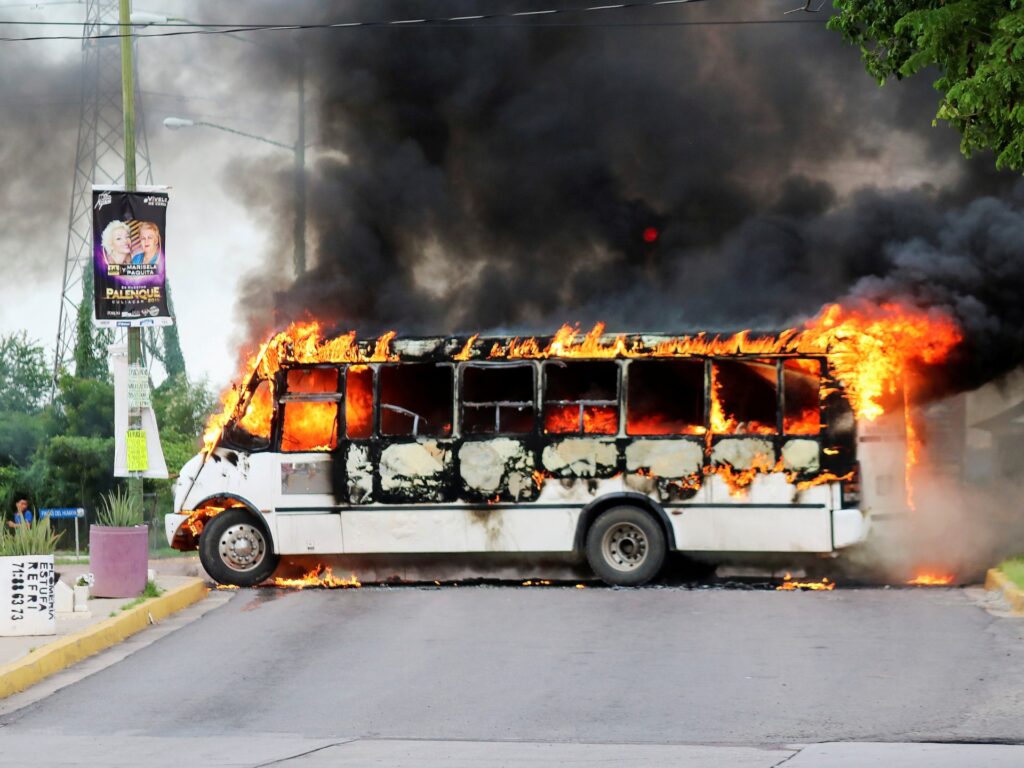
Gunmen shoot at office building of respected Mexican newspaper in Sinaloa capital Culiacan. Gunmen have fired on a building housing the respected Mexican media outlet El Debate as part of an ongoing drug cartel battle. The media building was sprayed with gunfire on Friday and several cars outside were also damaged. The paper said no one was injured in the attack. The El Debate newspaper is based in the state capital Culiacan, where there has been a surge in violent gun battles between rival gangs of the Sinaloa Cartel since September. The newspaper has been publishing stories about the gang attacks in the northwestern state. El Debate said the assailants arrived in two vehicles and stopped briefly in front of the building. One gunman got out and opened fire with a rifle before they sped off. Journalists threatened Threats against journalists and their sources have increased since the latest round of fighting broke out. Journalists have reported being stopped by gunmen on roadways outside Culiacan and told they could not cover the continuing gun battles happening on the outskirts. The Mexican Media Alliance, a press freedom group, calls this shooting “a direct attack against press freedom and right of the public to be informed”. Being a journalist in Mexico is dangerous business, according to Reporters Without Borders. The organisation has documented the death and disappearance of reporters in the country. In the last six years alone, 37 have been killed and five have disappeared. Mexican President Claudia Sheinbaum has said she “condemns” the attack against El Debate. Her government has sent military personnel with armoured vehicles and high-powered weapons to Sinaloa to protect the population, but the troops have struggled to quell the violence. Adblock test (Why?)
Justin Trudeau is a nauseating hypocrite
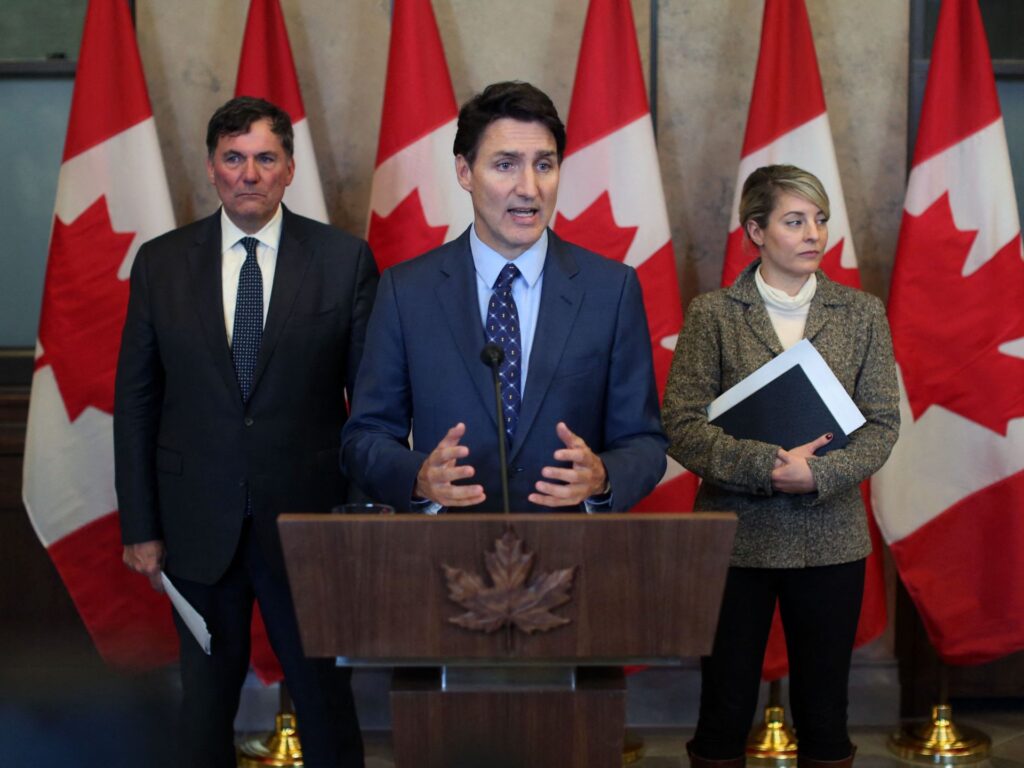
You know it’s bound to be serious when one politician holds a news conference and orders two other politicians to stand slightly behind him like mannequins while he reads from a prepared statement. That bit of staged solemnity took place earlier this week at the home of staged solemnity – Ottawa – when Canadian Prime Minister Justin Trudeau was flanked by two mute, grim-looking cabinet ministers, Foreign Minister Melanie Joly and Public Safety Minister Dominic LeBlanc. All the choreographed scene was missing was a drum roll or a fanfare commensurate with the affected profundity of the occasion. The Liberal Party’s former prince is facing a mutiny organised by a host of anxious backbenchers worried about losing their jobs – in light of public opinion polls suggesting that Trudeau’s government is listing so badly that much of the caucus is reportedly grasping for the nearest life jacket or, preferably, a large lifeboat to accommodate them all. So, in a likely futile attempt to resuscitate his on-life-support political prospects and prove to Canada’s largely white, male cognoscenti that he still has the right stuff to remain prime minister – for the time being, at least – charming, effervescent Trudeau has channeled in tough, resolute Trudeau. In effect, the prime minister declared diplomatic war on India – an emerging superpower and a supposed ally – based on “evidence” gathered by the country’s dysfunctional, scandal-racked police force, the Royal Canadian Mounted Police (RCMP). That “evidence,” Trudeau said, allegedly establishes that Indian “agents” have orchestrated a clandestine campaign “that pose[s] a significant threat to public safety”. For its part, the RCMP claims that India’s covert schemes amount to “serious criminal activity in Canada” involving coercion, threats, and the murder of Canadian citizens on Canadian soil. Aside from a bunch of cops and politicians, no one has seen so much as a morsel of the “evidence” to assess its strength – but I digress. Trudeau said he asked New Delhi to play nice and help the RCMP out by cooperating with its ongoing probes. New Delhi, unsurprisingly, told Trudeau and company to take a long, lonely hike – to put it charitably. Cue the diplomatic war. Trudeau kicked out six Indian diplomats posted in Canada, including India’s high commissioner. India, in a predictable retort, ordered six Canadian diplomats to pack their bags and head promptly home. The aforementioned white, male cognoscenti – who cheer on wars of any sort – applauded Trudeau for standing up to state-sanctioned “terrorism” and insisted that India would “pay a heavy price” for doing what the prime minister and the RCMP believe New Delhi’s agents are doing to Canadians in Canada – even though none of them are privy to the shrouded-in-secrecy “evidence”. As I said, Canada’s white, male cognoscenti just love war – diplomatic or otherwise. But here is the nauseating rub. Trudeau, his cabinet, and the familiar roster of obsequious columnists and on-TV-all-the-time commentators are rank hypocrites. They will, of course, refuse to acknowledge this because they are incapable of introspection, let alone recognising the blaring, prima facie proof of their rank hypocrisy. In defending his decision to expel India’s diplomats, Trudeau said “Canada is a country rooted in the rule of law, and the protection of our citizens is paramount.” Sure it is. Trudeau’s I’m-going-to-hold-the bad-guys-who-do-bad-things-to-Canadians-to-account tough-guy strutting is limited, apparently, by geography and which close “ally” is responsible for harming citizens he is charged, as prime minister, with protecting. Canada’s white, male cognoscenti did not bother to listen carefully to all Trudeau said before reaching for their pom poms. “We will never tolerate the involvement of a foreign government in threatening and killing Canadian citizens on Canadian soil – a deeply unacceptable violation of Canada’s sovereignty and of international law,” Trudeau said. Let me paraphrase Trudeau for the hard of hearing. If any country, especially Israel, threatens, coerces or kills Canadians in Lebanon or what remains of the human hellscape known as occupied Gaza, I’m not going to do a damn thing about it. Oh sure, I might have my inconsequential foreign minister write a tweet or two “condemning” the killing by Israel of an elderly Canadian couple as they sought safe haven and approve of her making a short phone call to offer condolences to the surviving family. Beyond that farcical bit of performative nonsense, my government and I have, in fact, enshrined Israel’s licence to kill Canadians with impunity because our dear beloved friend, Prime Minister Benjamin Netanyahu, would never, ever break the rules of war or international law. Despite my tough-guy talk, Foreign Minister Joly and I will indeed “tolerate” the killing of Canadians by a “foreign government” as long as it doesn’t perpetrate its [war] crimes “on Canadian soil”. You see, in our duplicitous view, that doesn’t constitute an “unacceptable violation” of “international law”. Remember, Israel has the absolute, unquestionable right to defend itself and a few dead Canadians – blown into charred, unrecognisable bits that require DNA testing to confirm their identities – won’t change our myopic minds. Goodness knows, we can’t risk having the usual apoplectic suspects inside and outside Parliament accusing my prostrate government of being anti-Semites or siding with “terrorists”. De facto: We won’t be summoning Israel’s ambassador to Canada to Global Affairs HQ for a stiff talking-to or kicking out Israeli diplomats in response to the killing of three Canadians in Lebanon by its military over the past few weeks. Is that clear, everyone? If my rendering of the true meaning of Trudeau’s cynical, calibrated remarks offend his soon-to-be-unemployed toadies or any member of Canada’s white, male commentariat, then I urge them to speak with Kamal Tabaja, the eldest son of 74-year-old Hussein and 69-year-old Daad Tabaja, who were incinerated by an Israeli missile fired by an Israeli pilot in late September. That’s a rhetorical request because Trudeau has already forgotten about their killing. And the columnists rushing to pen pieces excoriating India’s alleged crimes have never, and will never, demand that Israel “pay a heavy price” or denounce its documented crimes – whether the victims are
South Korea’s spy agency says North Korea sending troops to Russia
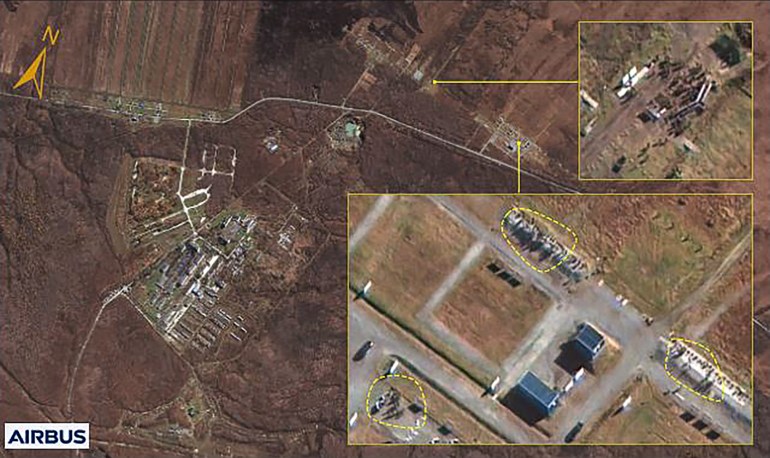
Russian navy ships moved 1,500 North Korean soldiers to Vladivostok, South Korea’s National Intelligence Service confirmed. North Korea has dispatched troops to support Russia’s war against Ukraine, South Korea’s spy agency has said. The National Intelligence Service (NIS) confirmed in a statement on Friday that Russian navy ships transferred 1,500 North Korean special operations forces to the Russian port city of Vladivostok from October 8 to October 13. It said more North Korean soldiers are expected to be sent to Russia soon. The development could draw a third country into the conflict and further escalate tensions between North Korea and the West. The NIS reported that North Korean soldiers sent to Russia have been provided with Russian military uniforms, weapons and forged identification documents. Currently stationed at military bases in Vladivostok and other locations such as Ussuriysk, Khabarovsk and Blagoveshchensk, they are expected to be deployed to combat zones once their training is complete. The spy agency posted on its website satellite and other photos showing what it called Russian navy ship movements near a North Korean port and suspected North Korean mass gatherings in Ussuriysk and Khabarovsk in the past week. At a news conference on Friday, NATO Secretary-General Mark Rutte said he “could not yet confirm North Korea is sending troops to Russia”. South Korean media, citing the NIS, also reported that Pyongyang has decided to dispatch a total of 12,000 soldiers in four brigades to Russia. The NIS did not immediately confirm those reports. This handout from the National Intelligence Service released on October 18, 2024, shows a satellite image by Airbus Defence and Space of Russia’s Khabarovsk military facility, where the agency said North Korean personnel gathered within the training ground on October 16, 2024 [Handout/AFP] ‘Serious security threat’ South Korea’s President Yoon Suk-yeol convened an emergency security meeting on Friday on the move, where it was acknowledged that the close military ties between Russia and North Korea had gone “beyond the transfer of military supplies”. “The current situation, in which the rapprochement between Russia and North Korea has led to the delivery of military equipment and the actual deployment of troops, poses a serious security threat not only to our country but also to the international community,” his office said in a statement. Ukrainian media reported that six North Korean soldiers were killed in a Ukrainian missile attack on Russian-occupied territory near Donetsk on October 3. Russia has denied using North Korean troops in the war, with Kremlin spokesman Dmitry Peskov describing the claims as “another piece of fake news” during a news conference last week. On Thursday, Ukrainian President Volodymyr Zelenskyy said his government has intelligence indicating that 10,000 North Korean soldiers are being prepared to join Russian forces in the fight against Ukraine. He warned that the involvement of a third nation could escalate the conflict into a “world war”. The United States-based Institute for the Study of War think tank also said that several thousand North Korean soldiers had arrived in Russia and were being prepared for their deployment in Ukraine. Pyongyang and Moscow have been allies since North Korea’s founding after World War II and have drawn even closer since Russia’s full-scale invasion of Ukraine in 2022. South Korea, backed by the US, claims that Pyongyang has become a major supplier to Russia of weapons being used in Ukraine. The two countries have denied the allegations. During a meeting in Pyongyang in June, North Korean leader Kim Jong Un and Russian President Vladimir Putin signed a pact stipulating mutual military assistance if either country is attacked, in what was considered the two countries’ biggest defence deal since the end of the Cold War. Tensions on the Korean Peninsula have risen in recent months amid weapons tests in North Korea and large-scale military exercises in South Korea. Adblock test (Why?)
Why almost eight million Venezuelans have fled their country
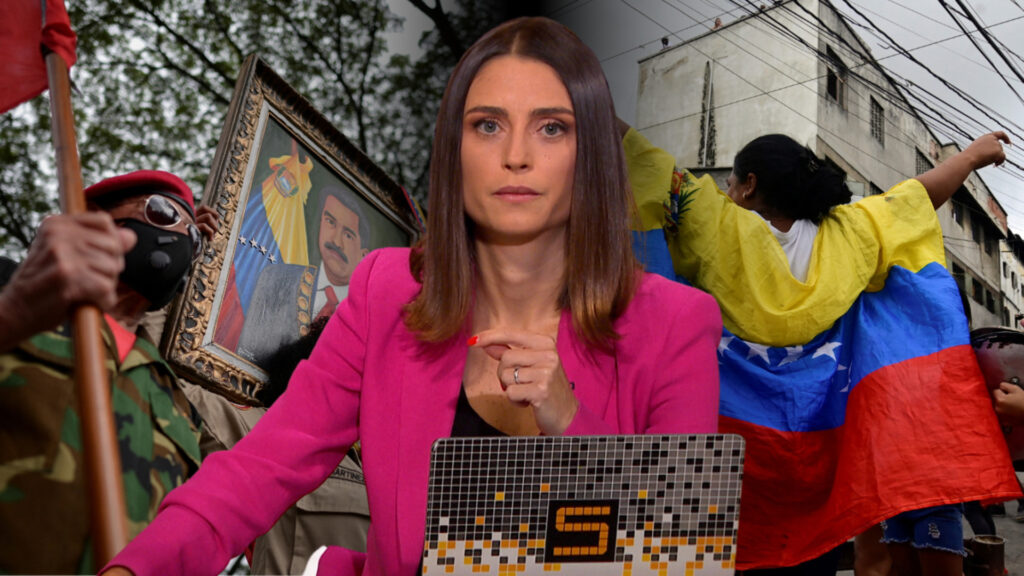
We speak with young Venezuelans about life in the country and their hopes for the future. In this episode of The Stream, we look into Venezuela’s displacement crisis (almost eight million people have left the country in the past decade) through the perspective of young Venezuelans who stayed behind. We discuss life under President Nicolas Maduro, re-elected in July, and the nation’s struggles with hyperinflation and economic collapse. While some blame Maduro for the crisis, others point to foreign intervention. We hear from young Venezuelans about their hopes for the future and what changes are needed for the country to thrive. Presenter: Anelise Borges Guests:German Rodriguez – Universidad Central de Venezuela studentSamuel Urbina – DiplomatCamila Godoy – Psychologist Adblock test (Why?)
Former Canadian Olympian charged in major US cocaine-smuggling case
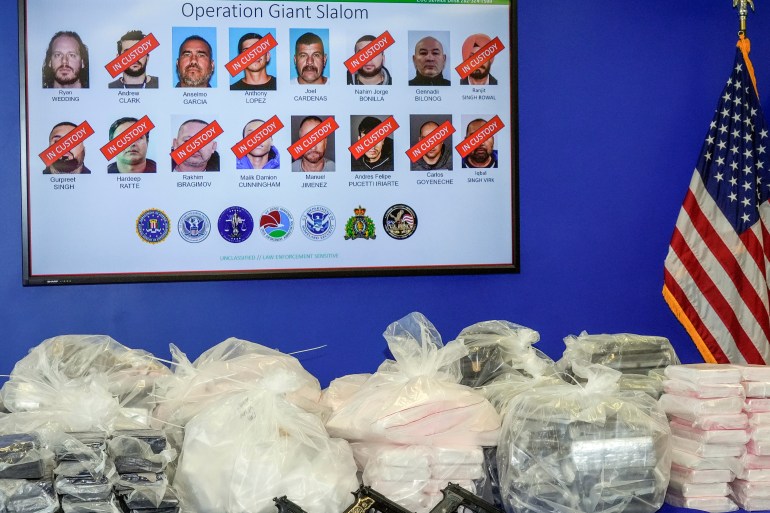
Snowboarder Ryan Wedding and 15 others are accused of shipping 60 tonnes of cocaine a year to the US and Canada. United States prosecutors in Los Angeles, California, have charged a former Olympic snowboarder with allegedly running a large and violent cocaine smuggling operation out of Mexico. On Thursday, the Department of Justice unveiled a 52-page indictment accusing the 43-year-old Canadian athlete, Ryan James Wedding, and 15 other people, of shipping 60 tonnes of cocaine a year from Colombia to Canada and the US using long-haul semi-trucks. The FBI is offering a $50,000 reward for information leading to the arrest and extradition of Wedding, who is considered a fugitive and uses the aliases El Jefe, Giant and Public Enemy. Agents also raided a $5m luxury mansion near Miami in South Florida and arrested its owner, 36-year-old music executive and restaurant owner Nahim Jorge Bonilla, who was also named in the indictment, The Miami Herald reported. Bonilla allegedly received 12 kilogrammes (about 44lbs) of cocaine from Wedding and his co-defendant Andrew Clark to distribute. According to the indictment, Bonilla was in debt to Clark and Wedding, and the two men threatened to kill Bonilla’s mother if he did not repay what was owed. At a news conference on October 17, prosecutors displayed bricks of cocaine and other evidence of an alleged drug-trafficking operation, helmed by snowboarder Ryan Wedding [Damian Dovarganes/AP Photo] Wedding, who competed in the 2002 Winter Olympics in Salt Lake City, also faces charges in Canada in a separate drug case. He was previously convicted in the US of conspiracy to distribute cocaine and was sentenced to prison in 2010, federal records show. US authorities believe that, after Wedding’s release, he resumed drug trafficking for the notorious Sinaloa Cartel in Mexico. “He chose to become a major drug trafficker, and he chose to become a killer,” Martin Estrada, the US attorney in Los Angeles, told reporters on Thursday. Authorities also explained that they seized cocaine, weapons, ammunition, cash and more than $3m in cryptocurrency in connection to their investigation. “Wedding, the Olympian snowboarder, went from navigating slopes to contouring a life of incessant crimes,” said Matthew Allen, the special agent in charge of the Drug Enforcement Administration (DEA) in Los Angeles. Of the 16 people accused in the drug trafficking conspiracy, four remain fugitives, Estrada said. A dozen others were arrested in Florida, Michigan, Canada, Colombia and Mexico in connection with the case. The criminal enterprise was also allegedly responsible for the murders of two members of an Indian family on November 20, 2023, in Ontario, Canada, who were killed in retaliation for a stolen drug shipment. At least one other person was also killed by the group. Wedding’s co-defendant Clark, 34, is also a Canadian citizen. Known by the alias “The Dictator”, he was arrested by Mexican authorities on October 8, according to the Justice Department. Adblock test (Why?)
Preview: New Zealand vs West Indies – Women’s T20 World Cup 2024 semifinal
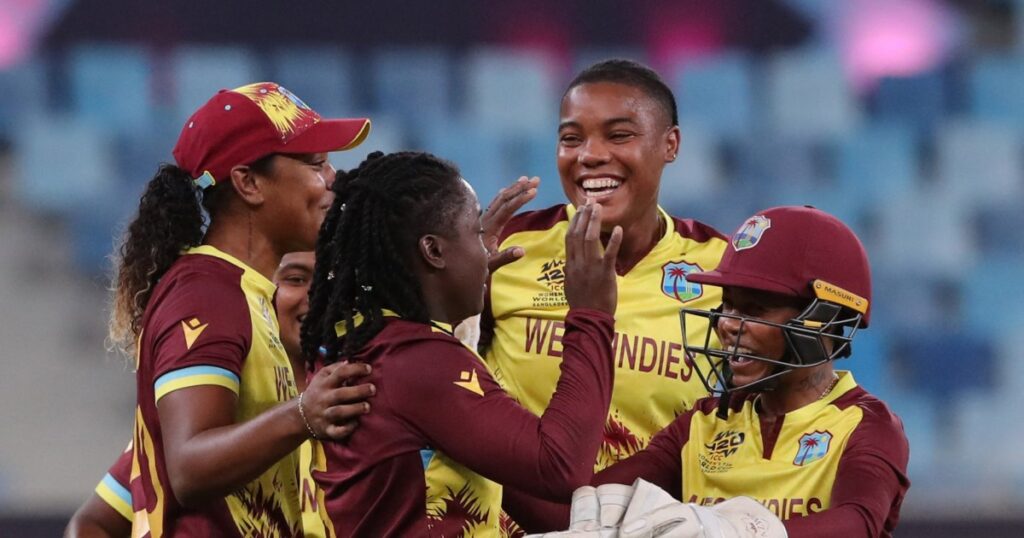
Who: New Zealand vs West IndiesWhat: Second semifinal, ICC Women’s T20 World Cup 2024When: Friday, October 18, 6pm (14:00 GMT)Where: Sharjah Cricket Stadium, Sharjah, United Arab EmiratesHow to follow: Al Jazeera’s live text coverage begins at 10:30 GMT West Indies and New Zealand meet in a semifinal befitting of a tournament that has defied the odds. Australia, the record six-time winners and current holders, were eliminated on Thursday by a South Africa side given little hope of exacting revenge on the team that defeated them on home soil in the final of the last edition. The Australians had been on a 14-game winning streak at T20 World Cups. The three teams most fancied to stop Australia’s defence, England, India and Asia Cup winners Sri Lanka didn’t even make it out of the group stage. New Zealand had lost 10 T20 internationals in a row before their shock 58-run victory against India in their opening game. A result the Indians, arguably, never recovered from. West Indies, meantime, have one of the stars of the tournament in their captain Hayley Matthews, but they, like their Kiwi opponents, were regarded as long shots to make it out of their group. “No one had us to get to this stage,” Matthews said ahead of the semifinal. “So, we’re all pretty happy that we’ve made it here, but … the job’s just not finished. We’re … hopefully ready to play a really big game because we don’t want to just come to this World Cup to say, ‘Hey we’ve made the semifinals and we’re happy with that’.” West Indies’ only previous appearance in the final came in 2016 but that did result in a win. That too went against the grain, as they beat an Australian side searching for a fourth consecutive title. “We’re always at our best when we’re enjoying ourselves and being really vibrant in the field,” Matthews added. “I’m just encouraging every one of the youngsters to go out and enjoy themselves. Yeah. it’s a World Cup semifinal, and it’s a huge game, but we’re still playing the same game that we learned in the back yards of our homes and also on the streets in the Caribbean – so, just enjoy it.” Since New Zealand’s wretched run came to an end with their opening win against India, only Australia have taken the wind out of the Kiwis’ sails. It was, however, a chastening experience for New Zealand, who were bowled out for 86 in an 80-run defeat. Indeed, Sophie Devine’s side were the favourites to finish bottom of a group of death, which also included Sri Lanka and Pakistan. “We don’t want to get too high or too low, and that’s really key for us to make sure that we play with that level of emotions,” said Devine, who could become the first Kiwi captain to lift a Women’s World Cup. “It is another game and we’re trying to keep things really similar in terms of the build-up and the preparation we’re doing.” New Zealand vs West Indies: Head-to-head record New Zealand enjoy a 17-5 advantage over the West Indies in their 23 T20 encounters, including two Super Over wins. One match ended in a “no result” due to a washout. New Zealand’s best result at T20 World Cup Runners-up: 2009, 2010 West Indies’s best result at T20 World Cup Champions: 2016 Form guide: New Zealand The White Ferns opened their World Cup campaign with a win over pre-tournament favourites India, and closed their group phase by knocking them out with a win over Pakistan. Their only loss in the tournament came against Australia. Last five matches: W W L W L Form guide: West Indies The West Indies will look to continue their three-match winning streak in the tournament and go all the way to the final. Last five matches: W W W L L Toss and pitch condition In the eight group-stage matches played in Sharjah, teams winning the toss have batted first on eight occasions. Five of those eight games have ended in a win for the team batting first. One match saw the toss-winning captain choosing to bowl first and win the match. Weather forecast Sharjah will be hot, humid and somewhat unforgiving in the early part of the match. The temperature is expected to hover around 36 degrees Celsius (96.8F) with 50 percent humidity, making the real temperature feel a bit higher. Team news: New Zealand New Zealand have been spared from major injuries to their usual playing XI and are expected to field the same side that beat Pakistan in their last game. Squad: Sophie Devine (captain), Suzie Bates, Eden Carson, Isabella Gaze (wicketkeeper), Maddy Green, Brooke Halliday, Fran Jonas, Leigh Kasperek, Amelia Kerr, Jess Kerr, Rosemary Mair, Molly Penfold, Georgia Plimmer, Hannah Rowe, Lea Tahuhu. Team news: West Indies The West Indies will hope their star batter Stefanie Taylor, who missed the game against England, is fit for the big match and take her place in the XI. Squad: Hayley Matthews (captain), Aaliyah Alleyne, Shamilia Connell, Deandra Dottin, Shemaine Campbelle (wicketkeeper), Ashmini Munisar, Afy Fletcher, Stafanie Taylor, Chinelle Henry, Chedean Nation, Qiana Joseph, Zaida James, Karishma Ramharack, Mandy Mangru, Nerissa Crafton. Adblock test (Why?)
US charges Indian government employee in foiled Sikh separatist murder plot
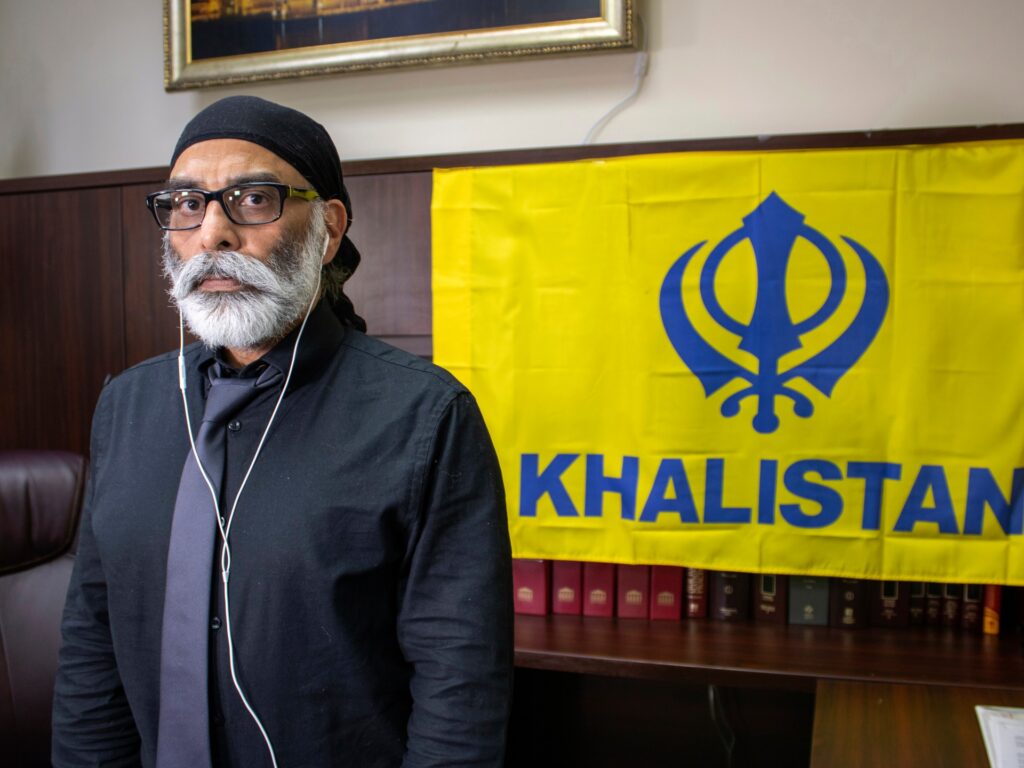
The United States has filed charges against an Indian government employee it says was involved in a failed plot to kill an American citizen, who is a prominent advocate for Sikh separatism, in New York. The US Attorney’s Office for the Southern District of New York announced on Thursday that it filed “murder-for-hire and money laundering charges” against Vikash Yadav. Another suspect in the case, Nikhil Gupta, was extradited to the US earlier this year to face charges while Yadav remains at large, according to US authorities. “The defendant [Yadav], an Indian government employee, allegedly conspired with a criminal associate and attempted to assassinate a US citizen on American soil for exercising their First Amendment rights,” Christopher Wray, the director of the Federal Bureau of Investigation (FBI), said in a statement. “The FBI will not tolerate acts of violence or other efforts to retaliate against those residing in the US for exercising their constitutionally protected rights.” The Indian government did not immediately comment on the allegations on Thursday. It has previously rejected accusations that a government agent was involved in the murder plot as “unwarranted” and “unsubstantiated”, according to media reports. The case revolves around an alleged scheme to kill Sikh American activist Gurpatwant Singh Pannun. Pannun, the legal adviser for the group Sikhs for Justice, is a vocal member of a Sikh campaign for a sovereign state in India’s Punjab region, known as the Khalistan movement. India views Sikh separatism as a threat to its sovereignty. Over the past few years, the country has been increasingly vocal in demanding that allied countries with sizable Sikh populations — notably Canada, the US and the United Kingdom — do more to crack down on the movement. Sikhs for Justice is banned in India, and Pannun — a vocal critic of Indian government policies — has been accused (PDF) by New Delhi of being “involved in terrorism”. But Sikh community leaders have accused India’s Prime Minister Narendra Modi, a Hindu nationalist, of trying to stifle dissent, both in India and abroad. In the hours before Thursday’s charges were announced, the Sikh American Legal Defense and Education Fund (SALDEF), a nonprofit, called on Washington to take “urgent action” to address a campaign of “transnational repression”. “In the United States, Sikh Americans and other diaspora communities continue to face the threat of transnational repression,” the group said in a statement. “Whether it be surveillance, intimidation, or targeted violence, foreign governments have sought to stifle free speech and political dissent within our borders. This is unacceptable in a country that stands for freedom and human rights.” ‘Freedom of expression’ In a statement on Thursday evening, Sikhs for Justice — Pannun’s group — said the new US indictment demonstrated Washington’s “commitment … to protect the life, liberty and freedom of expression of the US Citizen at home and abroad”. The organisation promised to continue to advocate for Khalistan, including by organising non-binding votes in the Sikh diaspora on the question of a sovereign state in Punjab. “Despite India’s use of violence against pro Khalistan Sikhs, [Sikhs for Justice] is committed to democratically resolve the dispute over the sovereignty of Indian occupied Punjab through the means of Referendum,” the statement said. The US State Department said earlier this week that an Indian committee of inquiry, tasked with investigating the foiled murder plot, had travelled to Washington, DC, to discuss the case and receive an update from American officials. “India has informed the United States they are continuing their efforts to investigate other linkages of the former government employee and will determine follow-up steps, as necessary,” the department said on Tuesday. The new charges in the US case come just days after the Canadian government said it had uncovered “clear and compelling evidence” that Indian government agents were involved in activities that threatened public safety in Canada. “This includes clandestine information-gathering techniques, coercive behaviour targeting South Asian Canadians, and involvement in over a dozen threatening and violent acts, including murder,” Canadian Prime Minister Justin Trudeau said on Monday. India-Canada relations have been tense since September 2023, when Trudeau said Canada had credible evidence to link Indian government agents to the assassination of a Canadian Sikh leader, Hardeep Singh Nijjar, earlier that year. Nijjar, who served as president of a Sikh temple in Surrey, British Columbia, where he was killed, also advocated for Khalistan and had been dubbed a “terrorist” by New Delhi. India has rejected the allegations it was involved in Nijjar’s killing, accusing Trudeau of harbouring a vendetta against the country. “There is a deliberate strategy of smearing India for political gains,” the Indian Ministry of External Affairs said in a statement, as the two countries announced they were expelling their respective diplomats amid the worsening row. The ministry also said it “reserves the right to take further steps” against Canada. Adblock test (Why?)
Bangladesh court seeks arrest of ex-PM Hasina for ‘crimes against humanity’
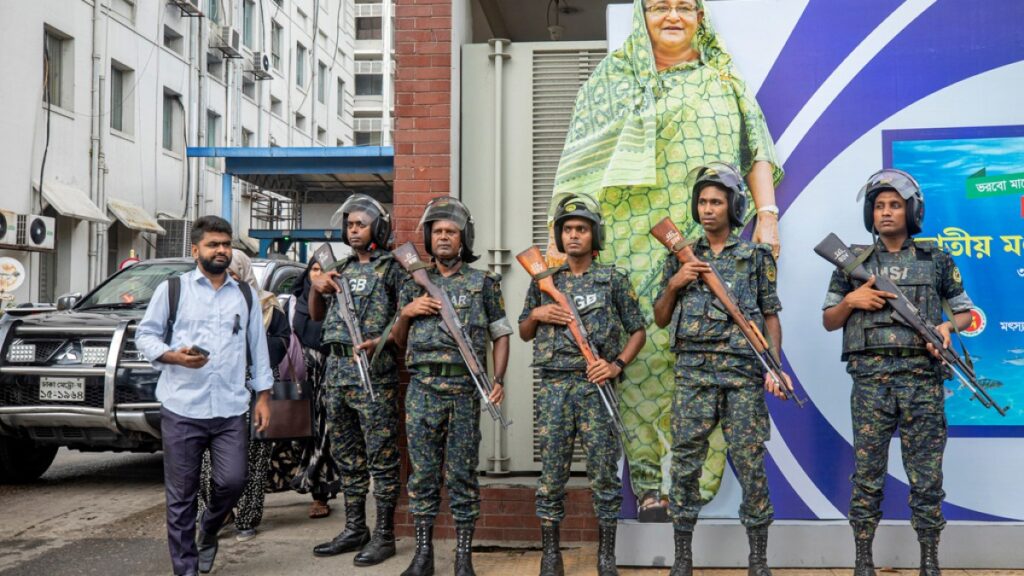
Toppled leader is in India, which has bilateral extradition treaty with Bangladesh – though loophole could prevent her return. A Bangladeshi court has ordered the arrest of self-exiled former Prime Minister Sheikh Hasina, who fled to India more than two months ago after being toppled in a student-led uprising. Mohammad Tajul Islam, chief prosecutor of Bangladesh’s International Crimes Tribunal (ICT), said on Thursday the court had issued arrest warrants for Hasina and 45 others, ordering that they attend court by November 18, according to The Daily Star local newspaper. “Sheikh Hasina was at the helm of those who committed massacres, killings and crimes against humanity in July to August,” Islam said, referring to a crackdown on student protests, which killed more than 1,000 people, according to the interim Health Ministry. The student-led movement began with demonstrations demanding the government abolish its practice of reserving a third of civil service jobs for relatives of war veterans, before spiralling into wider protests calling for Hasina’s resignation. Human rights groups accused the prime minister of using excessive force against protesters, a charge she denied. After weeks of nationwide unrest, Hasina resigned and fled to India in early August. She was replaced by Nobel Peace Prize-winning economist Muhammad Yunus, who is currently leading the country’s interim government. Hasina has not been seen in public since leaving Bangladesh. The 77-year-old’s last official whereabouts is a military airbase near India’s capital, New Delhi. Her presence in India has infuriated Bangladesh, which has revoked Hasina’s diplomatic passport. The two countries have a bilateral extradition treaty which could theoretically compel her to return to face criminal trial. However, a clause in the treaty says extradition might be refused if the offence is of a “political character”. It is not clear whether the former pro-democracy icon, who critics say had become increasingly autocratic during her 15-year reign, will remain in India or head elsewhere. It was Hasina’s government that created the deeply contentious ICT in 2010 to probe atrocities during the 1971 independence war from Pakistan. The United Nations and rights groups have criticised its procedural shortcomings, with the court often seen as a means for Hasina to eliminate political opponents. Several cases accusing Hasina of orchestrating the “mass murder” of protesters are being investigated by the court. Adblock test (Why?)
One Direction’s Liam Payne dead in Buenos Aires: What we know

Liam Payne, a former member of the hit band, One Direction, has died at the age 31 in an incident in Buenos Aires, Argentina. Payne is understood to have fallen from his third-storey balcony of CasaSur Hotel in the Palermo neighbourhood of the city. According to authorities, it is as yet unknown whether Payne’s death was accidental, down to foul play or suicide. Local emergency services confirmed his death, which has left fans and fellow artists in shock. One Direction, which disbanded in 2015, had 29 hits on Billboard’s Hot 100 and, as of 2020, had sold more than 70 million records worldwide, making it one of the best-selling “boy bands” in history. Who were Liam Payne and One Direction? Payne, the youngest of three siblings, was born in Wolverhampton in the West Midlands area of the United Kingdom. He studied music technology at the City of Wolverhampton College, laying the foundation for his future career in the music industry. At the age of 14, Payne made his debut on the reality music competition TV show, The X Factor, in the UK in 2008 but did not make it past the initial stages. Undeterred, he returned two years later, delivering a powerful rendition of “Cry Me A River” that won the judges over. One Direction was formed on that X Factor show in July 2010, brought together by one of the judges, Simon Cowell, later famous for being a ruthlessly critical judge on the TV reality show, American Idol. All the group members had initially auditioned for The X Factor as solo artists, with the group consisting of Harry Styles, Niall Horan, Liam Payne, Louis Tomlinson and Zayn Malik. Harry Styles, Liam Payne, Louis Tomlinson and Zayn Malik from Group One Direction X factor finalists are seen leaving ITV Studios on October 7, 2010, in London, UK [Danny Martindale/FilmMagic via Getty Images] Their achievements solidified their position as one of the most commercially successful boy bands in music history, known for hits like “What Makes You Beautiful” and “Story of My Life”. The band’s debut album, Up All Night, released in 2011, made history by becoming the first album by a UK-based group to debut at number one on the US Billboard 200. First-week sales hit 500,000 digital copies. In 2013, they released their third album, Midnight Memories, which became one of their most successful albums, selling 4 million copies in less than two months. Their “Where We Are” tour in 2014 was one of the highest-grossing tours for a vocal group, earning revenues of $290m. Following the announcement of an indefinite hiatus in 2015, the members of One Direction have since primarily focused on developing individual solo careers. [embedded content] Payne released his debut solo single “Strip That Down” featuring US rapper Quavo in 2017. His solo debut album, LPI, released in December 2019, peaked at number 17 on the UK Albums Chart. Payne has a seven-year-old son named Bear Grey Payne with his former British girlfriend, Cheryl Fernandez-Versini, who goes by the musician name Cheryl. Fernandez-Versini, 41, first met Payne in 2008 when he auditioned on The X Factor. Cheryl was a judge at the time alongside Simon Cowell, Dannii Minogue and Louis Walsh. Fernandez-Versini was also an X Factor judge at One Direction’s appearance on the show in 2010. After her split from ex-husband Jean-Bernard Fernandez-Versini, Cheryl reconnected with Payne in 2016. In 2017, they had their son, Bear Grey Payne, but split the following year. Payne had openly addressed his struggle with alcohol addiction. In a July 2023 video, he shared his progress, stating that he had maintained sobriety for six months following a period of rehabilitation. In March 2024, Payne released his last single, Tearsdrop, on which he collaborated with Jamie Scott and JC Chasez of N*SYNC. He shared footage of some emotional moments during the development of Tearsdrop on TikTok. Hours before his death, Payne posted a Snapchat video in which he can be seen having breakfast with his girlfriend, Kate Cassidy. He begins the video saying: “Morning everybody, lovely day here in Argentina.” He continues with light banter with Cassidy, smiling at times, as he talks about riding horses, playing polo and returning home to see his dog, Stan. He closes the video with: “So, it’s going to be a nice day.” Liam Payne had posted on Snapchat in the hours before his death, sharing photos of himself with his partner Kate Cassidy as well as videos in which he said it was a “lovely day here in Argentina”. Full story: https://t.co/0WBug7BvAp pic.twitter.com/Wbn7LrE4xt — Sky News (@SkyNews) October 17, 2024 Last month, Netflix announced it had signed up Payne to be a judge for its new reality TV competition, Building the Band. Other judges include Destiny’s Child alum Kelly Rowland, Nicole Scherzinger of the Pussycat Dolls, and Backstreet Boys member AJ McLean as the host. Payne is survived by his parents, Geoff and Karen Payne, and his two older sisters, Ruth and Nicola. Why did he go to Argentina? Payne travelled to Buenos Aires at the end of September to support his former One Direction bandmate, Niall Horan, at a concert that formed part of his tour, The Show Live On Tour, and featured his third studio album, The Show, which was released in June 2023. This visit came after Payne’s appearance at Horan’s show at the Movistar Arena in Buenos Aires on October 2, where he watched the performance with fans in attendance. How did Payne die? According to local authorities, Payne fell from the third-storey balcony of CasaSur Hotel in Buenos Aires, Argentina. According to the recording of a 911 call to police obtained by The Associated Press news agency, the manager of CasaSur Hotel told police that there was “a guest who is overwhelmed with drugs and alcohol”. Referring to Payne’s hotel room, the manager said: “He’s destroying the entire room and, well, we need you to send someone, please.” On Wednesday, Buenos Aires emergency medical services (SAME) chief Alberto