

Fuel tanker explosion kills more than 150 people in Nigeria
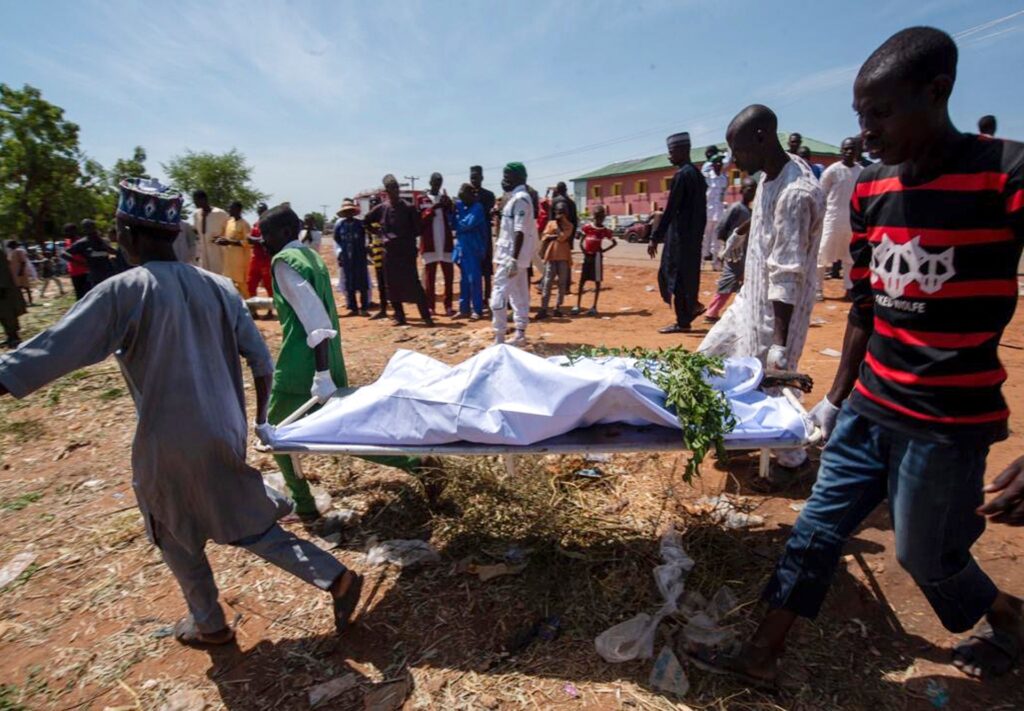
More than 150 people, including children, were killed and dozens of others wounded after an overturned fuel tanker exploded in northwestern Nigeria. The crash took place on an expressway in Jigawa State. People then rushed to the vehicle to collect the fuel, police spokesman Lawan Shiisu Adam said. Deadly tanker accidents are common in Nigeria, Africa’s most populous country, which lacks an efficient railway system to transport cargo. People often salvage fuel with cups and buckets – especially because of soaring fuel prices, which have tripled since the government ended costly gas subsidies last year. The latest accident occurred at midnight on Tuesday in Majiya town when the driver lost control of the vehicle on a highway, Adam said on Wednesday. Residents rushed to the scene before the “massive inferno.” Most of the bodies were unrecognisable, emergency services said. As mass burials were held on Wednesday and Thursday, Dr Haruna Mairiga, head of the Jigawa emergency services, said most of the victims were “burned to ashes” at the scene. More than 1,500 accidents involving fuel tankers occurred in Nigeria in 2020, resulting in 535 deaths, according to Nigeria’s Federal Road Safety Corps. At least 48 people were killed in September when a fuel tanker collided with another truck in north-central Nigeria. The latest accident revived questions about the implementation of safety measures and traffic regulations in the country. Adblock test (Why?)
How does restitution of cultural artefacts affect Western museums’ futures?

Many African, Latin American and Asian nations are demanding that their former occupiers return historical objects and artworks. It’s given rise to a global debate: Can developing nations, short of funds, preserve the centuries-old artefacts they are reclaiming? Presenter: James Bays Guests: Karen Byera Ijumba – Senior Researcher, Open Restitution Africa Jos Van Beurden – Senior researcher on colonial cultural collections and restitution and founder of Restitution Matters Barnaby Phillips – Author Adblock test (Why?)
Columbia University suspends outspoken pro-Israel professor for harassment

A divisive and outspoken pro-Israel professor at Columbia University in New York City was temporarily suspended after the prestigious school said he “repeatedly harassed and intimidated University employees in violation of University policy”. Shai Davidai, an assistant professor in the business school, has become a fixture on campus and on social media for his aggressive, pro-Israel advocacy and criticism of pro-Palestine students and faculty, whom he regularly accuses of supporting “terrorism”. Davidai announced his temporary suspension on his Instagram account on Tuesday. In an expletive-laden video, he said “the university has decided to not allow me to be on campus anymore. My job. Why? Because of October 7. Because I was not afraid to stand up to the hateful mob”. He said he was suspended in retaliation for posting multiple videos online of his conversations with university public safety officials last October 7, during a protest by the pro-Palestine Columbia University Apartheid Divest student group. He suggested he would sue the university over the suspension and said that he was “not going anywhere”. “I don’t care about my future”, he later wrote on X. “I care about what this acceptance of anti-Jewish, anti-Israeli, and anti-American terrorism means for the students on campus”. https://x.com/ShaiDavidai/status/1846347729355559296 Davidai has recently used his X account, which has more than 100,000 followers, to accuse prominent Columbia professor Rashid Khalidi of being a “spokesperson for Hamas”, and to share the name and email of another professor he suggested was “OK with rape, murder, torture and kidnapping”. Students complaints Davidai has also harassed and doxxed countless students, many of whom have denounced his abuse over the last year. Some of those students took to social media after Davidai’s suspension to criticise the university for belatedly taking action against him. “I have been reporting him nonstop since October 2023 for many things including making video edits of me and only now that he absolutely lost his mind at Columbia administrators did they finally take action against him,” one student wrote on X on Wednesday. “The Columbia business professor who has: targeted me for months, retweeted inappropriate comments about my body, and claimed I was part of Hamas as we evacuated my family from Gaza (we’re Palestinian Christians) is now banned from Columbia’s campus for harassment,” wrote another. She added that Davidai had, among other things, made a video saying the US National Guard should be called in against student protesters and called campus security officers “members of Nazi Germany”. https://x.com/itslaylas/status/1846329303006695454 Despite the many reports accusing him of harassment, it’s Davidai’s intimidation of Cas Holloway, the university’s chief operating officer, that appears to have crossed a line for the university’s administration. ‘Threatening behaviour’ “Columbia has consistently and continually respected Assistant Professor Davidai’s right to free speech and to express his views. His freedom of speech has not been limited and is not being limited now,” university spokesperson Millie Wert wrote in a statement to the Columbia Daily Spectator, the university’s student-run newspaper. “Columbia, however, does not tolerate threats of intimidation, harassment, or other threatening behavior by its employees”. Davidai was restricted from entering campus but the suspension won’t impact his compensation or status as a faculty member, and the university offered him alternative office space off campus. He will be allowed back on campus once he “undertakes appropriate training on our policies governing the behavior of our employees”, the spokesperson added. Davidai was denied access to campus last spring after he announced that he planned to enter the “Gaza Solidarity Encampment”, a protest camp set up by students, and called on his supporters to join him. Last April, Columbia University suspended a student activist after video emerged in which the student said “Zionists don’t deserve to live”. Three university deans also resigned after exchanging texts during a meeting about anti-Semitism on campus that the university said “disturbingly touched on ancient anti-Semitic tropes”. The university suspended another student and former Israeli soldier accused of spraying chemicals on pro-Palestine protesters. At the height of the protests last year, administrators twice called police to break up student demonstrations, leading to dozens of arrests. Columbia University’s protest encampment inspired dozens of others on campuses across the US last year. The university was widely criticised for its suppression of the protests, but also came under intense pressure from donors and legislators accusing it of supporting anti-Semitism on campus, leading to Columbia President Minouche Shafik’s resignation over the summer. Adblock test (Why?)
Texas man faces execution after clemency plea fails

Texas is due to execute a man for murdering his two-year-old daughter, despite doubts about his guilt. Robert Roberson is scheduled to receive a lethal injection on Thursday after Texas’s Board of Pardons and Paroles rejected his plea for clemency. If the execution proceeds, he will be the first person in the United States to face capital punishment for a murder conviction linked to the controversial shaken baby syndrome diagnosis. Roberson has maintained his innocence in the death of his daughter, Nikki Curtis, and the lead detective investigating the case has also come to his defence, urging the state to call off the execution. Texas’s governor, Greg Abbott, could grant a one-time 30-day reprieve for Roberson’s set execution, but he cannot give full clemency without the board of parole’s recommendation. Gretchen Sween, one of Roberson’s lawyers, urged the governor to grant the reprieve “so we can continue to pursue Mr Roberson’s innocence claim”. “We pray that Governor Abbott does everything in his power to prevent the tragic, irreversible mistake of executing an innocent man,” Sween said. In his nearly 10 years as governor, Abbott has halted only one imminent execution. ‘System failed’ Calls have grown to stop Roberson’s execution due to questions about the evidence of his daughter suffering shaken baby syndrome, a brain injury caused by shaking or violent impact. Roberson’s supporters say doctors misdiagnosed Curtis’s injuries as being related to shaken baby syndrome and that new evidence shows the girl died not from abuse but from complications related to severe pneumonia. Roberson’s lawyers also suggest that his autism, which was undiagnosed at the time of his daughter’s death, was used against him as authorities grew suspicious because of his lack of emotion over what had happened to his daughter. One prominent voice that has come to Roberson’s defence is conservative activist Doug Deason, who wrote on Tuesday in a post on X: “I believe he is innocent”. Another advocate is the lead detective in Roberson’s case, Brian Wharton, who has expressed regret for playing a role in his conviction. “Knowing everything that I know now, I am firmly convinced that Robert is an innocent man,” Wharton said at a recent news conference organised by Roberson’s supporters. “The system failed Robert.” The Anderson County District Attorney’s Office, which prosecuted Roberson, has said in court documents that, after a 2022 hearing to consider the new evidence in the case, a judge rejected the theories that pneumonia and other diseases caused Curtis’s death. ‘Rise in the rate of executions’ Roberson is one of several men scheduled to be executed in the next month in the US, where laws on capital punishment are decided by individual states. Derrick Ryan Dearman, convicted of murdering five people in a 2016 home attack in Alabama, will face lethal injection the same day as Roberson. Thomas Eugene Creech, convicted of six murders, including the beating of a fellow inmate to death in 1981, is set to receive a lethal injection on November 13, some nine months after the state botched its first attempt to put him to death, failing to find a viable vein to deliver the lethal drug into. UN human rights spokesperson Seif Magango issued a statement expressing concern about the “rise in the rate of executions” in the US, which put to death six people in a 12-day window last month. One of those executed was Emmanuel Littlejohn, who was killed by lethal injection last month despite a parole board in Oklahoma recommending his life be spared. Another man, Marcellus Williams, whose murder conviction was called into question by a prosecutor, was also executed by lethal injection in September. “We urge the United States to join the growing global consensus towards universal abolition of the death penalty – beginning by promptly imposing a moratorium on executions,” said Magango. Adblock test (Why?)
Legends League allows long deprived fans to enjoy cricket again in Kashmir
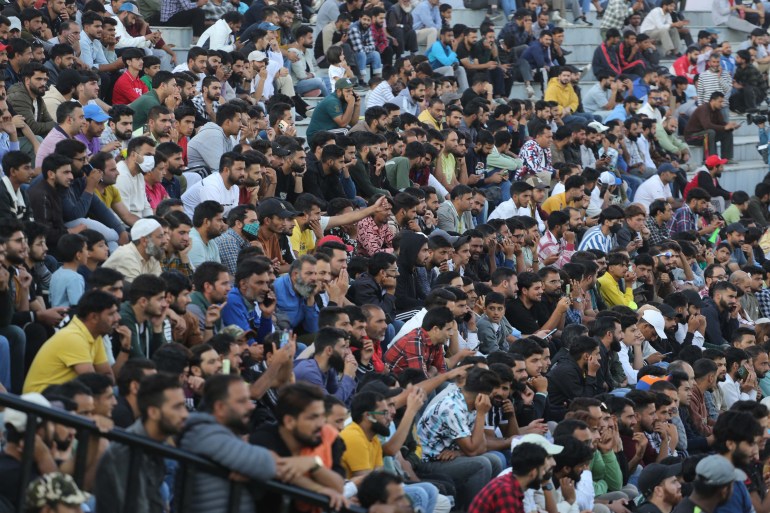
Srinagar, Indian-administered Kashmir – When Wasif Ahmad, a 34-year-old shopkeeper from Srinagar, saw a billboard announcing the arrival of international cricket stars in his hometown, he promptly bought tickets and decided to shut his business on the day of the match. Ahmad, like thousands of cricket-mad Kashmiris, cared little for the lack of glitz and glamour in the Legends League Cricket (LLC) – a franchise-based T20 cricket league involving former international cricketers – he simply couldn’t miss an opportunity to watch a live cricket match. With the arrival of the LLC’s seven matches in Srinagar from October 9 to 16, cricket finally returned to Indian-administered Kashmir – one of the world’s most heavily militarised regions and synonymous with uprisings against the central Indian government’s control. Ahmad, an avid cricket fan, grew up playing the game and listening to his father’s tales about the two international cricket matches that Kashmir hosted in the 1980s – but had never been to one. “Seeing international cricketers play live [in Kashmir] felt like a distant dream to me,” Ahmad told Al Jazeera while watching the Gujarat Greats take on the Konark Suryas Odisha at Bakshi Stadium, the region’s oldest sports venue in the heart of Srinagar. Cricket fans of all age groups formed long snaking queues outside the stadium under the stern glare of security personnel. Families with young children and groups of women flocked to watch their first live cricket match. Inside the stadium, a vibrant crowd packed the stands ahead of the 7pm (13:30 GMT) game that stretched late into the night – a rarity in a city where nightlife has been non-existent amid decades of turmoil. Floodlights illuminated the ground and cast a glow over the nearby streets as loud music from the stadium’s public address system, coupled with the roaring chants of the crowd, filtered out of the 30,000-capacity venue. The presence of hundreds of armed security personnel in camouflaged uniforms and dozens of patrolling vehicles provided a stark reminder of everyday life in Kashmir – where peace and hostility often co-exist. Despite the challenges, the weeklong cricket extravaganza seemed to have brought a temporary escape from the region’s complex and often violent history. The Legends League Cricket tournament, which brought international cricketers back to Indian-administered Kashmir after 39 years, saw thousands of fans attend the matches at Bakshi Stadium in Srinagar [Shuaib Bashir/Al Jazeera] Cricket’s fractured history in Kashmir Kashmir hosted its first international cricket match in October 1983, when some of cricket’s biggest names arrived in the valley as newly crowned world champions India hosted the then mighty West Indies in a one-day international (ODI) match at the Sher-e-Kashmir Stadium in Srinagar. The game was rocked by protests and ugly scenes as the spectators cheered for the West Indians in a mark of dissent. Some protesters entered the ground during the innings break and damaged parts of the pitch but the match was completed as the visitors won by 28 runs. In 1986, India hosted Australia in an ODI. The visitors also found unexpected support in the Kashmiri capital and beat the hosts by three wickets. Three years later, an anti-India armed rebellion erupted in the valley. The central government deployed nearly 700,000 troops to suppress the movement, making the region as one of the world’s most heavily militarised conflict zones. The Muslim-majority Himalayan region is split between nuclear-armed rivals India and Pakistan, which rule over parts of the territory but claim it in its entirety and have fought three of their four wars over it. Tens of thousands of people have been killed in the decades-old conflict, most of them civilians. Hundreds of security checkpoints are spread across the valley to monitor locals’ movements. In August 2019, India scrapped a law that granted special status to the region, stripping Kashmir of the significant autonomy it had enjoyed for seven decades. The move was followed by an indefinite lockdown and a significant troop deployment to suppress protests. International cricket’s decades-long absence from Kashmir, then, is as unremarkable as the presence of hundreds of gun-toting security personnel in the environs of Bakshi Stadium. Students walk towards Bakshi Stadium under the gaze of security personnel in Srinagar, Indian-administered Kashmir [Shuaib Bashir/Al Jazeera] ‘A superficial attempt to showcase normalcy’ Bakshi Stadium, named after Jammu and Kashmir’s former prime minister Bakshi Ghulam Mohammad, has been a politically significant venue since its inauguration in the 1950s. In addition to hosting high-profile sports events, the stadium has also served as a venue for political rallies, but the armed rebellion that began in 1989 rendered the stadium non-functional and all sport events were suspended. When India’s Prime Minister Narendra Modi visited Kashmir in March, he addressed a large crowd at Bakshi Stadium and promised a slew of developmental projects in the region. While the LLC’s seven matches have attracted thousands of entertainment-deprived cricket fans, many locals see the tournament’s presence in Kashmir through the prism of “enforced normalcy”. Kashmiris believe that Modi’s government has employed sport as a tool to project a peaceful image of the region, despite its fractious reality. Indian-administered Kashmir’s Chief Minister-designate Omar Abdullah, whose National Conference emerged as the single largest winning party in the recent elections, was also present at Bakshi Stadium and insisted he would encourage the upliftment of sport. For the thousands of cricket fans queueing at the stadium’s ticket booth, such as Seeban Farooq, the tournament’s popularity was a testament to the region’s “craze” for cricket but would do little to promote local cricketers. “These events have little to do with the upliftment of local talent,” he said. A young cricketer, who requested anonymity, told Al Jazeera that the LLC could “fuel the dreams” of aspiring Kashmiri cricketers – only to be crushed by the harsh reality. “Substandard infrastructure, lack of proper pitches and minimal facilities raise serious concerns about the future of cricket development in the region,” said the young player dressed in his all-white cricket attire. “It’s a superficial attempt to showcase normalcy while
Israel resumes Beirut strikes despite US ‘opposition’
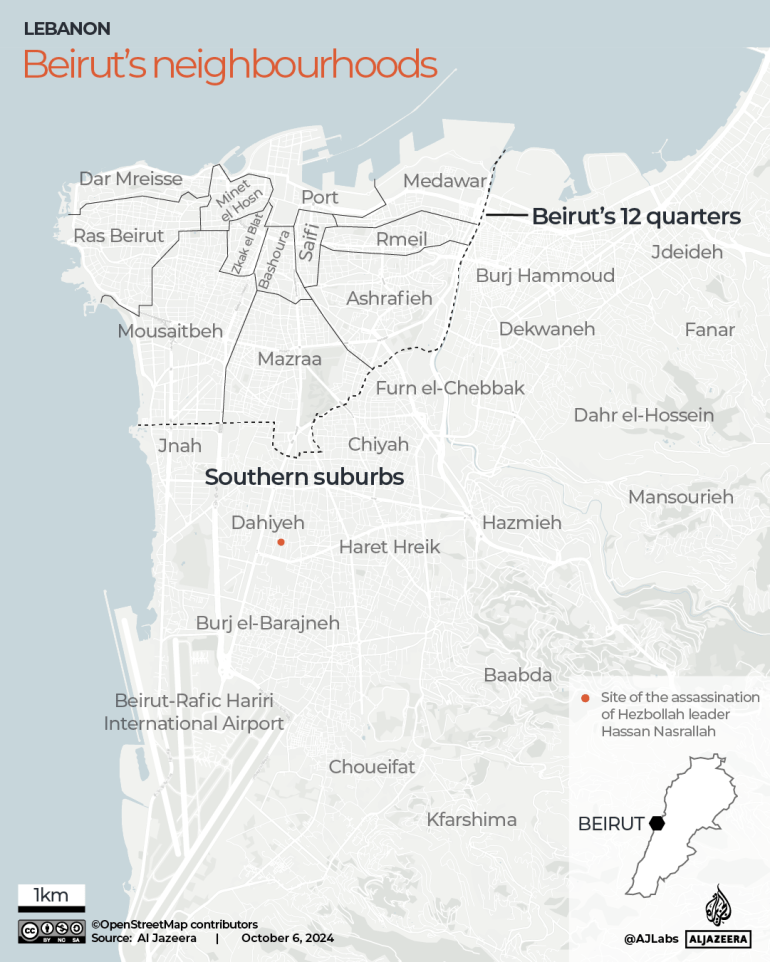
Israeli air strikes have hit Beirut’s Dahiyeh area despite US assurances Israel would scale back its attacks. Israel has resumed air strikes on Beirut despite objections from the United States over the way it is conducting its campaign in Lebanon. Israeli military jets targeted the capital early on Wednesday for the first time since October 10. Three strikes were reported to have hit the southern suburbs of the city. The attack came despite Washington having expressed concern over the scope of Israeli attacks on Beirut. At the same time, the US continues to support Israel’s wars in Lebanon and Gaza, in which it says it aims to destroy Hezbollah and Hamas. The Israeli military stated on social media that Wednesday’s strikes targeted “combat equipment that was stored inside an underground warehouse”. A warning had been issued earlier that an attack on the Dahiyeh suburb was imminent, with residents warned to flee the vicinity of a building marked on a map. According to Al Jazeera reporters in Beirut, three strikes were heard at about 6:50am in the Dahiyeh area. The number of casualties remains unclear. (Al Jazeera) Al Jazeera’s Imran Khan, reporting from Hasbaiyya to the south, suggested that the damage resulting from the strikes “doesn’t really suggest that it was an arms dump” that was hit. Amnesty International and others have said that warnings from the Israeli military are often issued too late to allow people to escape and do not exonerate Israel from responsibility for civilian casualties. ‘Opposed’ The resumption of strikes on Beirut came shortly after a spokesperson for the US government expressed concern over the conduct of Israel’s military campaigns in Lebanon and Gaza, using stronger language than he had previously. “When it comes to the scope and nature of the bombing campaign that we saw in Beirut over the past few weeks, it’s something that we made clear to the government of Israel we had concerns with and we were opposed to,” State Department spokesperson Matthew Miller said late on Tuesday. The US had previously expressed open criticism of Israeli air strikes that struck residential buildings in central Beirut on October 10, killing 22 people. Al Jazeera’s Khan noted: “This has been a period of relative calm in the Lebanese capital … But after five days it’s now back to Beirut and a very serious attack against that southern suburb.” The same day, Lebanon’s caretaker Prime Minister Najib Mikati said that US officials had provided assurances that Israel would reduce its attacks on the capital city, and that Washington was “serious about pressuring Israel to reach a ceasefire”. It has also been reported that the US has threatened to withhold weapons deliveries unless more humanitarian aid reaches Gaza. However, the US continues to send weapons worth billions of dollars to Israel, including a missile system and troops to operate it. No ceasefire At least 1,350 people have been killed in Lebanon since Israel escalated its attacks last month. Israeli Prime Minister Benjamin Netanyahu has dismissed the possibility of a ceasefire, insisting that would leave Iran-backed Hezbollah too close to Israel’s northern border and that a buffer zone is vital. Hezbollah’s deputy leader Naim Qassem said on Tuesday that a ceasefire is the only solution to the conflict, but also threatened to expand the scope of its missile strikes across Israel. Early on Wednesday Israel’s military said about 50 projectiles were fired from Lebanon. No casualties have been reported. Meanwhile, Israeli attacks continue across southern and eastern Lebanon. At least five people were killed as missiles struck the town of Nabatieh, according to the Lebanese Health Ministry. Another 15 at least were reported to have been killed in the town of Qana. Adblock test (Why?)
Global conflicts driving up to 21,000 deaths daily from hunger: Report
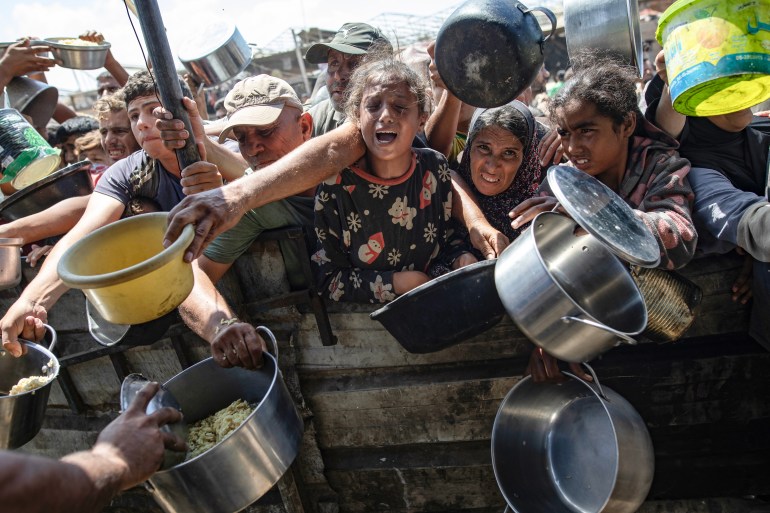
Oxfam finds most food crises are ‘largely manufactured’ in new report published on World Food Day. Hunger caused by conflicts around the world has reached record high levels, a new report by Oxfam has found, which accuses warring parties of weaponising food and blocking aid. Between 7,000 to as many as 21,000 people are likely dying each day from hunger in countries affected by conflict, according to the report, published by the United Kingdom-based charity on World Food Day on Wednesday. Titled Food Wars, it examined 54 countries experiencing conflict, revealing that they account for nearly all of the 281.6 million people facing acute hunger today. Conflict has also been a major driver of forced displacement in these countries, which has now reached a record 117 million people. Oxfam emphasised that conflict not only fuels hunger, but that warring parties are actively using food as a weapon by targeting food, water and energy infrastructure, as well as blocking food aid. Palestinians receive food donated by a charity, in Khan Younis in the southern Gaza Strip [File: Haitham Imdad/EPA-EFE] In September, three humanitarian agencies warned of “a starvation crisis of historic proportions” amid Sudan’s civil war, while the proportion of households affected by high levels of acute food insecurity in Gaza has been the largest ever recorded globally since the end of last year. “As conflict rages around the world, starvation has become a lethal weapon wielded by warring parties against international laws,” said Oxfam’s Emily Farr, who works in the area of food and economic security. “Today’s food crises are largely manufactured. Nearly half a million people in Gaza – where 83 percent of needed food aid is currently not reaching them – and over three-quarters of a million in Sudan are starving as the devastating effects of wars on food are likely to persist for generations.” The analysis revealed that the crises of war, displacement and hunger occur in countries heavily reliant on primary product exports. For instance, 95 percent of Sudan’s export earnings come from gold and livestock. Mining operations have led to violent conflicts, forcing people from their homes as the degraded and polluted environments become unliveable. According to Oxfam, this underscores the failures of peace-building efforts that rely on an economic liberalisation model focused on attracting foreign investment and promoting export-driven economies, which often exacerbates inequality instead. “Large-scale private investment – both foreign and domestic – has often exacerbated political and economic instability, as investors seize control over land and water, displacing local populations,” Farr said. Conflict frequently intensifies other crises like climate shocks, economic instability and inequality. Climate-related disasters such as droughts and floods, combined with rising global food prices due to pandemic shutdowns and disruptions from the Russia-Ukraine war, have escalated hunger crises in East and Southern Africa, it said. Oxfam warned that the global commitment to “zero hunger” by 2030 is becoming increasingly unattainable. It called on the international community, including the United Nations Security Council, to hold accountable those responsible for “starvation crimes” under international law. “To break the vicious cycle of food insecurity and conflict, global leaders must confront the root causes of conflict: colonial legacies, injustices, human rights abuses and inequalities – rather than offering superficial solutions,” Farr said. Adblock test (Why?)
Palestinian man burned alive after Israeli strike on hospital courtyard
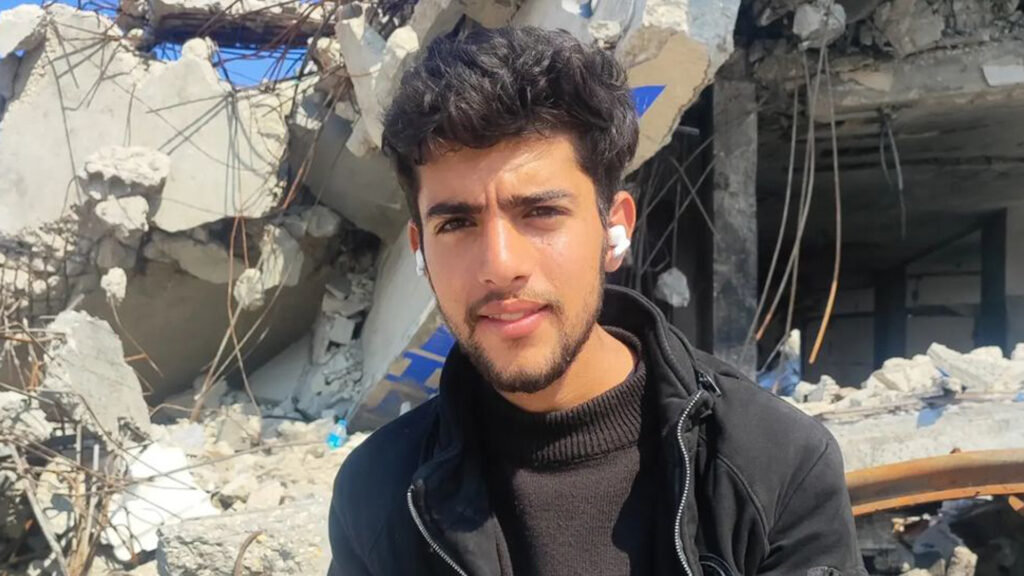
NewsFeed A 20-year-old Palestinian man who was confined to a hospital bed and connected to an IV drip burned to death after an Israeli strike on a Gaza hospital courtyard where displaced people had been seeking shelter. Here’s what we know about Shaaban al-Dalou. Published On 15 Oct 202415 Oct 2024 Adblock test (Why?)
Shaban al-Dalou: The Palestinian teen burned to death in Israeli bombing
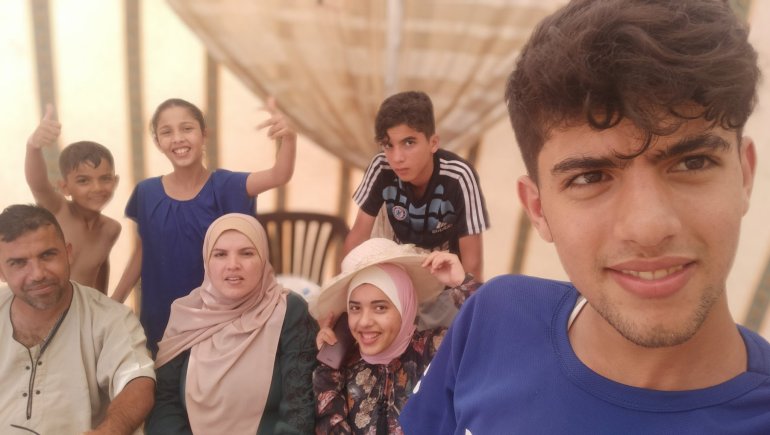
He was 19-years-old, a software engineering student, and displaced from his home, trying to survive in central Gaza. He was a few days away from his 20th birthday. Shaban al-Dalou wouldn’t make it. He had struggled for months to get help for his family, recording videos describing his family’s plight and their life under Israel’s bombs. But he wasn’t able to get enough money to get his family out of Gaza. The world finally paid attention to Shaban when his last moments were filmed this week. Connected to an IV drip, he was burned alive along with his mother after Israeli forces bombed the Al-Aqsa Martyrs Hospital complex in Deir el-Balah in the early hours of Monday. In the videos Shaban recorded in the weeks and months before his death, he talks about the reality of living in Gaza, a premonition of the horror he faced at the end of his short life. “There is no safe place here in Gaza,” Shaban says in one video, speaking into a phone camera from the makeshift tent where he had been living since fleeing his home. In another video, Shaban talks about the difficulties of finding food “because the Israeli occupation managed to separate the middle area from the rest of Gaza and the people here are struggling to [meet] their basic needs”. He also filmed himself donating blood at Al-Aqsa Martyrs Hospital, which Israel had already bombed several times in the last year before the bombing that killed him. “We saw so many injuries, many children are in dire need of blood”, Shaban said. “All we demand is a ceasefire and for this tragedy to end”. In some videos, Shaban asked for donations to help his family evacuate to Egypt. “165 days of the continuous genocide against us”, he said in one. “Five months we have lived in a tent.” “I’m taking care of my family, as I’m the oldest,” he said in another, adding that his parents, two sisters and two brothers were displaced five times before finding refuge on the hospital’s grounds. “The only thing between us and the freezing temperatures is this tent that we constructed by ourselves.” Shaban al-Dalou with his parents and siblings. [Courtesy of the al-Dalou family] ‘The fire just engulfed everything’ Tents used for shelter in the hospital effectively became coffins on Monday, when it was set ablaze by Israeli bombs, trapping Shaban and his relatives in the flames. His father, Ahmad al-Dalou, who was severely burned, told Al Jazeera that the impact of the strike pushed him out of the tent, where he quickly realised that the fire had engulfed his children. He was able to save two of them. “After that, the fire just engulfed everything. I couldn’t rescue anyone”, he said. “I did what I could”. Ahmad said that Shaban had hoped to study abroad to become a doctor, but that he had wanted to keep his son closer to home. “Now, I wish I had sent him”, he said. Shaban was a studious boy who had memorised the entire Quran. Even during the war he would often take out his laptop to study, his father added. “He loved his mother the most”, Ahmad said. “Now, he’s been martyred in her arms. We buried them in each other’s embrace”. The attack that killed Shaban and his relatives tore through a makeshift camp set up by displaced people in the hospital’s courtyard, injuring at least 40. “I looked out and saw flames devouring the tents next to ours”, Madi, a 37-year-old mother of six, told Al Jazeera from the charred remains of her tent. “My husband and I carried the kids and ran towards the emergency building”. “People – women, men and children – were running away from the spreading fire, screaming,” she added. “Some of them were still burning, their bodies on fire as they ran.” ‘Where are we supposed to go?’ Like the al-Dalou family, many of those seeking refuge by the hospital have been displaced many times over. “Where are we supposed to go?” said Madi. “It’s nearly winter. Is there no one to stop this holocaust against us?” The hospital bombing came as Israel continues to escalate its attacks on Gaza. Just days earlier, another strike on a school turned shelter, in Jabalia, killed at least 28 people. Horrific images of the fire at the Al-Aqsa Hospital that killed Shaban earned a rare rebuke from US officials. “The images and video of what appear to be displaced civilians burning alive following an Israeli air strike are deeply disturbing and we have made our concerns clear to the Israeli government,” a spokesperson for the Biden administration said in a statement on Monday. “Israel has a responsibility to do more to avoid civilian casualties — and what happened here is horrifying, even if Hamas was operating near the hospital in an attempt to use civilians as human shields.” Israel has regularly made that accusation with little evidence. The end result of the Israeli bombing was the fire that devastated the al-Dalou family. “We are people that only ask for peace and freedom,” Ahmad told Al Jazeera, mourning his son and wife. “We want basic rights, nothing else. May God take care of our oppressors”. Adblock test (Why?)
US threatens Israel but deploys troops, revealing policy inconsistency
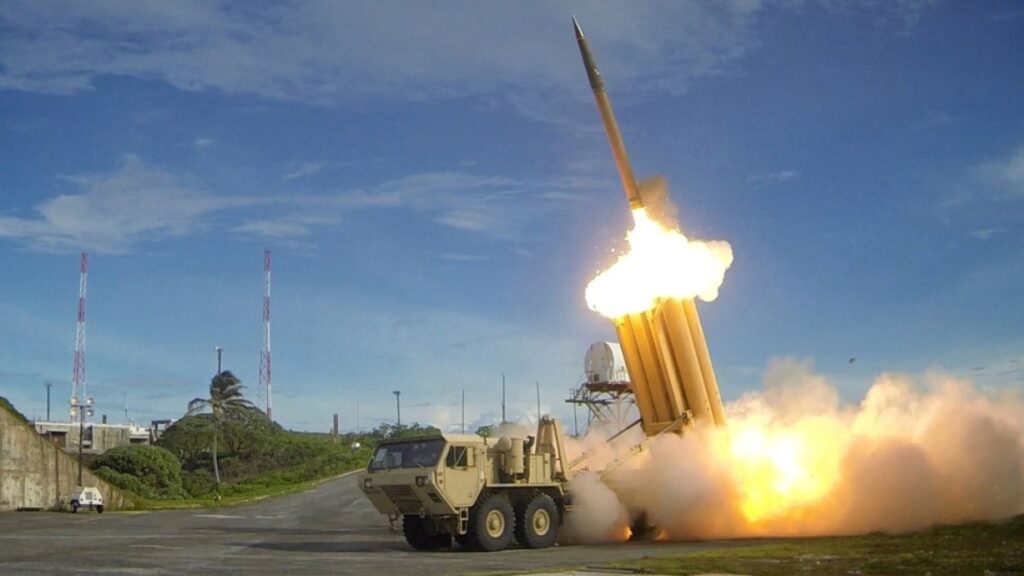
The deployment of an advanced United States anti-missile system to Israel, along with 100 troops to operate it, marks a significant escalation in US entanglement with a widening Israeli war that Washington has already heavily subsidised. But the deployment – in anticipation of an Iranian response to an expected Israeli attack on Iran – also raises questions about the legality of US involvement at a time when the administration of US President Joe Biden is facing growing backlash over its unwavering support for Israel. It also comes as US officials are seeking to project authority and threatening to at last enforce US law prohibiting military aid to countries that block humanitarian aid, as Israel has regularly done in Gaza. Two recent developments — the Sunday announcement that the US would deploy troops to Israel and a letter sent by US officials the same day calling on Israel to improve the humanitarian situation in Gaza or face unspecified consequences — underscore the inconsistent approach of an administration that has effectively done little of substance to rein in Israel’s ever-widening war. At a press briefing on Tuesday, State Department spokesman Matthew Miller declined to say what the consequences of Israel failing to comply with US requests would be, or how this differs from an earlier, unfulfilled threat by the Biden administration to withhold military aid to Israel. “I’m not gonna speak to that today,” Miller told reporters when pressed for details of how the US would respond to Israel’s failure to comply. Empty threats In the private letter, which was leaked on Tuesday, US Secretary of State Antony Blinken and Secretary of Defense Lloyd Austin called on Israeli Defence Minister Yoav Gallant and Minister of Strategic Affairs Ron Dermer to implement a series of “concrete measures”, with a 30-day deadline, to reverse the deteriorating humanitarian situation in Gaza. The US briefly paused the delivery of thousands of bombs to Israel earlier this year as Israeli officials planned to expand their operations in southern Gaza, but it quickly resumed and continued supplying Israel with weapons even as it escalated its assault in Gaza and later in Lebanon. “A letter jointly signed by both the secretary of state and secretary of defence indicates a heightened level of concern, and the not-so-subtle threat here, whether the administration carries through with it or not, is that they will actually impose consequences under these various legal and policy standards,” Brian Finucane, a former legal adviser to the US State Department and senior adviser with the US programme at the International Crisis Group, told Al Jazeera. Whether the administration would carry through with it remained very much in question. “It’s important to note that there were legal standards during the entire course of this conflict, and the Biden administration has just not enforced them. It may be the situation is so dire in northern Gaza that the political calculations have changed, and that they may actually finally decide to implement US law. But it’s really long past the point at which they should have done so,” Finucane said. Finucane also noted that the 30-day deadline would expire after the US presidential election next month. “So they may feel that whatever political constraints the administration may have felt it was operating under, they may feel less constrained by,” he said. Miller, the State Department spokesman, told reporters on Tuesday that the election was “not a factor at all” — but Annelle Sheline, a former State Department official who resigned earlier this year in protest of the administration’s Israel policy, disagrees. “I interpret it as being intended to try to win over Uncommitted [National Movement] voters and others in swing states who have made clear that they are opposed to this administration’s unconditional support for Israel,” Sheline told Al Jazeera. “I do not expect to see consequences.” Deeper entanglement Whether the US would carry through with its threats, the deployment of troops to Israel sent a much more concrete message of ongoing US support no matter how dire the humanitarian situation. The US-made Terminal High Altitude Area Defense system, or THAAD, an advanced missile defence system that uses a combination of radar and interceptors to thwart short, medium and intermediate-range ballistic missiles, adds to Israel’s already extraordinary anti-missile defences as it weighs its response to an Iranian missile attack earlier this month. Biden said its deployment is meant “to defend Israel”. The announcement of the deployment came just as Iranian officials warned that the US was putting the lives of its troops “at risk by deploying them to operate US missile systems in Israel”. “While we have made tremendous efforts in recent days to contain an all-out war in our region, I say it clearly that we have no red lines in defending our people and interests,” Iran’s Foreign Minister Abbas Aragchi wrote in a statement on Sunday. In practice, the deployment further drives the US into war at a time when US officials continue to pay lip service to diplomacy. “Rather than force de-escalation or act to rein in Israeli officials, President Biden is redoubling efforts to reassure Israeli leaders that he is in lockstep with them as they deliberately barrel towards regional war and escalate a genocidal campaign against Palestinians,” Brad Parker, a lawyer and associate director of policy at the Center for Constitutional Rights, told Al Jazeera. Parker and other lawyers argue that the Biden administration is relying on narrow and stretched legal arguments in an attempt to justify a seemingly unilateral move under US law. The US is also already implicated under international humanitarian law for the support it has given Israel as it violated the laws of war. “So far, the Biden administration has tried to characterise the fortification of existing deployments and authorisation of new deployments as fragmented or individual incidents. However, what emerges is a comprehensive and robust introduction of US forces into situations where involvement in hostilities is imminent without any congressional authorisation as required by the law,” Parker said. “All