

Taiwan reports surrounded by 153 Chinese military aircraft during drills
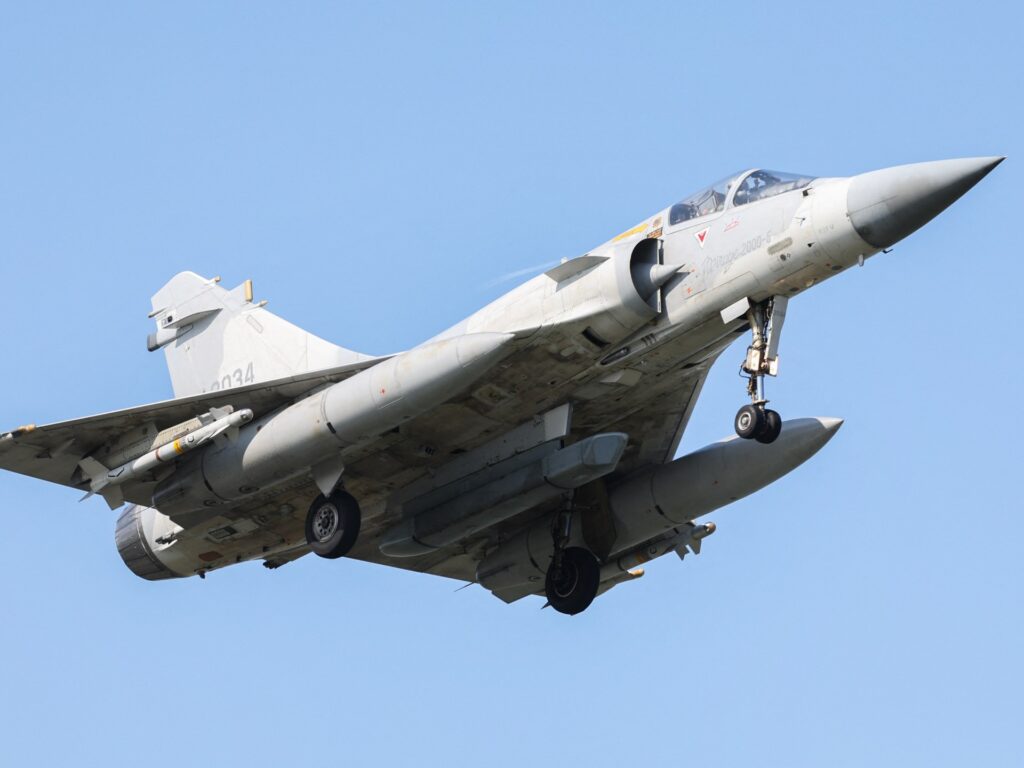
Exercises raise regional tension warns Taipei; US slams war games as it launches drills with Philippines. Taiwan detected 153 aircraft surrounding its territory as China carried out massive military exercises, according to the self-ruled island’s defence ministry. The “surge in warplane activity” saw a record number of aircraft spotted in the 25 hours to 6am on Tuesday (22:00 GMT, Monday), the Ministry of National Defense said in a statement. China’s war games have once more raised tensions with the island and across the region, it noted. Beijing deployed fighter jets, drones, warships and coastguard ships to encircle Taiwan on Monday. Taipei said it responded by dispatching “appropriate forces” and placing its outlying islands on heightened alert. The defence ministry said 90 of the Chinese aircraft were spotted within Taiwan’s air defence identification zone. ‘Nonsense’ Beijing considers Taiwan part of its territory and has said it would never rule out using force to take it. China said the one-day drill, designated “Joint Sword-2024B”, was a warning against “separatist acts”. The war games followed a National Day speech last week by Taiwan President William Lai Ching-te that Beijing had denounced. Lai said in the speech that China has no right to represent Taiwan and declared his commitment to “resist annexation or encroachment”. “This is a resolute punishment for Lai Ching-te’s continuous fabrication of ‘Taiwan independence’ nonsense,” China’s Taiwan affairs office said in a statement. Attracting attention Taiwan’s Premier Cho Jung-tai stated that the manoeuvres were not only a concern for Taipei, but for the entire region. “Any drills without prior warning will cause great disturbance to peace and stability in the entire region,” he told reporters. “China’s drills not only affect Taiwan’s neighbourhood, but also seriously affect the entire international navigational rights and air and sea space, so attracted the attention of other countries.” Taiwan’s Office of the President called on China to “cease military provocations that undermine regional peace and stability and stop threatening Taiwan’s democracy and freedom”. The United States, an ally to the self-ruled island, noted its concern, even as it launched its own war games in the disputed South China Sea. The Pentagon slammed China’s drills as “irresponsible, disproportionate, and destabilising”. However, thousands of US and Philippine marines launched 10 days of joint exercises in the Philippines, which is also locked in dispute with China, on Tuesday. The exercises are focused on defending the north coast of the main Philippine island of Luzon, which lies about 800km (500 miles) from Taiwan. Adblock test (Why?)
To boost Ukraine’s army, feared patrols hunt for potential conscripts
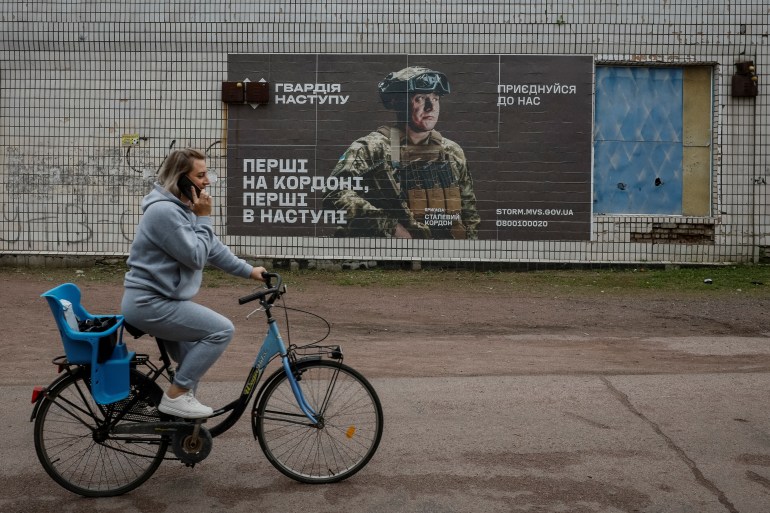
A stone’s throw from advancing Russian troops, Volodymyr refuses to leave his eastern Ukrainian town. The daily Russian pummelling has killed some of his neighbours and destroyed buildings around his house, but the 34-year-old does not want to move to a safer area because he would be forcibly conscripted. “I’ll be herded back home but with a gun in my hands,” he told Al Jazeera as fighting raged just 10km (6 miles) away. He has no qualms about what Ukrainian generals might call unpatriotic behaviour. “Way too many guys” he knows have been killed, wounded and incapacitated since 2014 when Russia-backed separatists sparked a conflict in eastern Ukraine that killed more than 13,000 people, about a quarter of them civilians, and displaced millions. A local resident rides a bike near a recruitment advert for the Ukrainian army, amid Russia’s attack on Ukraine, in the village of Hrushivka, in Ukraine’s Dnipropetrovsk region [File: Alina Smutko/Reuters] Casualties soared after Russia’s full-scale invasion began in 2022. Russian army chiefs have no misgivings about the loss of tens of thousands of their servicemen for each Ukrainian town they take, mostly in the Donetsk region, where Volodymyr lives. But he accused Ukraine’s top brass and front-line officers of adopting a somewhat similar approach. “The commanders care about their bosses’ opinion, not about the men serving under them,” he said, citing conversations with his enlisted friends. He and other men interviewed for this story asked for their last names and personal details to be withheld because they fear reprisals. Feared patrols search for conscripts About 1.3 million Ukrainians serve in the military. At least 80,000 soldiers of eligible age, 25 to 60, have died since 2022, according to Western estimates. President Volodymyr Zelenskyy’s government does not divulge the official death toll. He has said the army needs to enlist 500,000 out of about 3.7 million men of fighting age who are eligible for service. These days, many potential recruits all over Ukraine think twice before leaving their homes. If they do, they look over their shoulder for “man-hunting” patrols. Each patrol consists of police and conscription officers, groups of four to six officials that comb public areas such as subway stations, bus stops, shopping malls, city and town centres. They have also operated at rock concerts, nightclubs and pricey restaurants. Al Jazeera has witnessed the work of several such patrols. Each time, the officers refused to comment and be photographed. They approach any man in sight to check his ID and conscription document, a printout or a scan in a mobile phone that has a QR code. The code gives access to the man’s “conscription status” in a central database. That status had to be updated by mid-July when a conscription law took effect after months of deliberations and thousands of amendments. Every potential conscript had to provide details on his address, contacts, health, prior military service, and ability to handle weaponry, military equipment and vehicles. At the time, hours-long lines formed in front of conscription offices where staff were often interrupted by air raid sirens and blackouts caused by Russian strikes on energy infrastructure. In May, the government launched Reserv+, an app allowing Ukrainians to update their conscription status from their mobile phones. Those who did not now face punishment – their driving licences could be revoked or bank accounts frozen. If potential conscripts live abroad, consular services could be denied. ‘They round people up randomly’ Vitaly, a 23-year-old Kyiv native who studies engineering at a German university, was denied services at a Ukrainian consulate, his mother told Al Jazeera. He was told to ignore the app and return to Kyiv to “personally” update his status, she said. “Of course, he didn’t because they wouldn’t let him go back” to Germany, she said. “That’s how Ukraine lost one more national” because her son now plans to apply for German citizenship after graduation, she said. Back in Ukraine, the patrols are feared by some. “They round people up randomly, pack them into minibuses,” Boris, a 31-year-old man from the northeastern city of Kharkiv, told Al Jazeera. He said the patrols are able to detain men without checking their papers. “Five or six [officers] twist one’s arms and, oops, tomorrow you’re at the Desna boot [camp]” in the northern region of Chernihiv, he said. Boris could be immune to conscription if he becomes a legal carer for his disabled father, who had a heart attack this year. But he is afraid to even set foot in a conscription office with the paperwork. “People walk in there and end up in Desna a day later,” he said, referring to the camp Russian forces struck in May 2022 with two missiles, killing at least 87 conscripts. In late August, an official on patrol detained Andriy, a 27-year-old resident of Kyiv, as he was entering a subway station. A doctoral student who cannot be drafted, Andriy showed his QR-coded card. But he was forcibly taken to the nearest conscription office, where officers told him he would be on his way to a boot camp “within an hour”, he told Al Jazeera. “They pressured me skillfully,” he said. “It’s an assembly line of coercion.” But then a medical doctor refused to sign Andriy off because of myopia and astigmatism, and he was let go to get “additional paperwork”, he said. “It was a miracle,” he said. Violence and corruption There have also been multiple reports of violence towards potential conscripts. In late May, Serhiy Kovalchuk, a 32-year-old man, was beaten in a conscription office in the central city of Zhitomir and died in hospital six days later, his family told the Suspilne television network. Officials said Kovalchuk suffered a head trauma during an epileptic fit after several days of heavy drinking. Frequent violent detentions and the denial of access to the lawyers of potential conscripts constitute human rights abuses, according to Roman Likhachyov, a lawyer and member of the Center for Support for Veterans and Their Families, a group in
Families want justice, ‘blood money’ for AU peacekeeper killings in Somalia
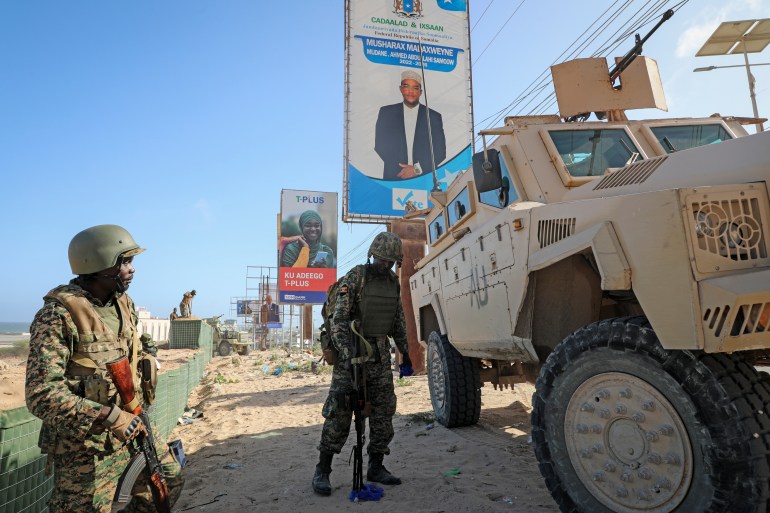
Omar Hassan Warsame was a larger-than-life figure in the Somali town of Golweyn, where his sizeable farm provided maize, bananas and jobs that helped sustain the community. The 65-year-old and a contingent of up to a dozen of his employees would tend to crops on the plot in the Lower Shebelle region, some 110km (68 miles) southwest of the capital Mogadishu – which helped spare locals from the effects of the region’s recurring droughts. On August 10, 2021, African Union (AU) peacekeepers from Uganda converged on the farm. Renowned as a community representative, it was not uncommon for businessmen or officials to approach Omar. But, for reasons that remain unclear, the soldiers opened fire on him and four of his employees. “They killed them in cold blood,” Mohamed Abdi, a nephew of Omar’s, told Al Jazeera. “He was a community leader. A kind, charitable man who provided for the poor and cared for all his neighbours. The whole city mourned with us.” Seven civilians were killed in the Golweyn massacre, which prompted outrage across Somalia. Demonstrators took to the streets in Mogadishu and towns in Lower Shebelle demanding the withdrawal of foreign peacekeepers from the country. Eventually, a Ugandan court martial sentenced two soldiers to death and three others to lengthy prison terms, before a Ugandan court threw out the death sentences. The peacekeepers belonged to the African Union Mission in Somalia, or AMISOM. They were first deployed in 2007 to prevent a takeover of the country by al-Qaeda affiliate al-Shabab, which seeks to overthrow Somalia’s government. While al-Shabab frequently engages in battles with peacekeepers and government forces, civilians have borne the brunt of its attacks. The armed group is estimated to have killed around 4,000 civilians in shootings, suicide bombings and other forms of violence between 2008 and 2020. AMISOM peacekeepers – composed of troops from countries in the region – were primarily tasked with countering al-Shabab’s influence, providing security in government-held areas and coordinating with fledgling Somali security forces. Backed by the United Nations, United States and other donor states, the AU peacekeepers have played a critical role in countering threats posed by the armed group. Ugandan peacekeepers with the African Transition Mission in Somalia (ATMIS) in Mogadishu, in May 2022 [File: Farah Abdi Warsameh/AP] But reports about their involvement in abuses against civilians can be traced back to their initial years in the country. Rebranded as ATMIS (African Union Transition Mission in Somalia) in 2022, and now planning an end-of-the-year withdrawal from the country, families of victims say the AU owes them justice and “blood money” – financial compensation for their suffering. “They’re supposed to be peacekeepers, but they murder civilians,” Omar’s nephew Mohamed told Al Jazeera. “What makes them different from al-Shabab then?” Compensation for victims Since the overthrow of President Siad Barre in 1991, Somalia has been plagued by internal fighting between rival strongmen, with a weak central government. Following the rise of the Islamic Courts Union (ICU), a political and military entity established by local Islamic law courts to govern the country, troops from neighbouring Ethiopia entered Somalia and drove the ICU from power in late 2006. The splintering of the ICU and the presence of Ethiopian troops, widely unpopular among Somalis for war crimes committed during fighting, fomented resistance. Eventually, hardliner elements of the former ICU went on to establish al-Shabab. International efforts to stabilise the country led to the establishment of the AU’s peacekeeping mandate in 2007. Ethiopian troops withdrew the bulk of their forces by early 2009 but always maintained a troop presence in Somalia, before merging them with the AMISOM force by 2014. Somalia’s international partners have invested billions into upgrading the country’s security apparatus. The national army’s ability to independently take on al-Shabab has increased over time, and the once-looming threat of an al-Shabab takeover of the capital Mogadishu has diminished considerably. But despite the nearly two-decade-long presence of African peacekeepers whose numbers have previously reached 20,000, swaths of the country remain under al-Shabab control, and government security forces struggle to expand their reach. The group’s capacity to carry out deadly attacks on civilian and military targets has hardly waned. In August, a suicide bombing and gun attack targeted beachgoers at the popular Lido Beach in Mogadishu, killing at least 32 people. With little in terms of concrete results on the ground, donor fatigue has led to cutbacks, including a reduction of $60m last year by the European Union. Funding shortages are reportedly among the reasons ATMIS plans to depart Somalia by the end of this year. Despite the financial woes, the EU successfully delivered $200m in funds meant to compensate the families of the estimated 3,500 AU peacekeepers who have died in Somalia since 2007. Mohamed El-Amine Souef, the current head of ATMIS [File: Fethi Belaid/Pool/AFP] But there is nothing earmarked for victims of peacekeeper violence, something ATMIS officials have tried to explain to the families. “Out of courtesy, I met with [family members] and explained that the consensus is that ATMIS is struggling financially to the point where we had to consider terminating the mission,” Comorian diplomat and current ATMIS political head Mohamed El-Amine Souef explained in a voice message sent to Al Jazeera. “As such, the matter of compensation is being jointly dealt with by Addis Ababa and Mogadishu and a technical team that deals with judicial and compensation-related matters.” Souef did not respond to follow-up questions on how a joint initiative between two governments whose bilateral ties are currently at their lowest in decades – over Ethiopia’s controversial plans to recognise the breakaway republic of Somaliland – was made possible. Last year, Souef told Voice of America that ATMIS needed at least $2m from donors to cover compensation requests in almost 80 cases of peacekeeper violence against civilians. These cases include killings, as well as critical and minor injuries, but the AU has not specified how many of each. Who can be held accountable? On August 12, 2017, following a battle with al-Shabab in the
An Israeli attack on Iran’s nuclear facilities could backfire
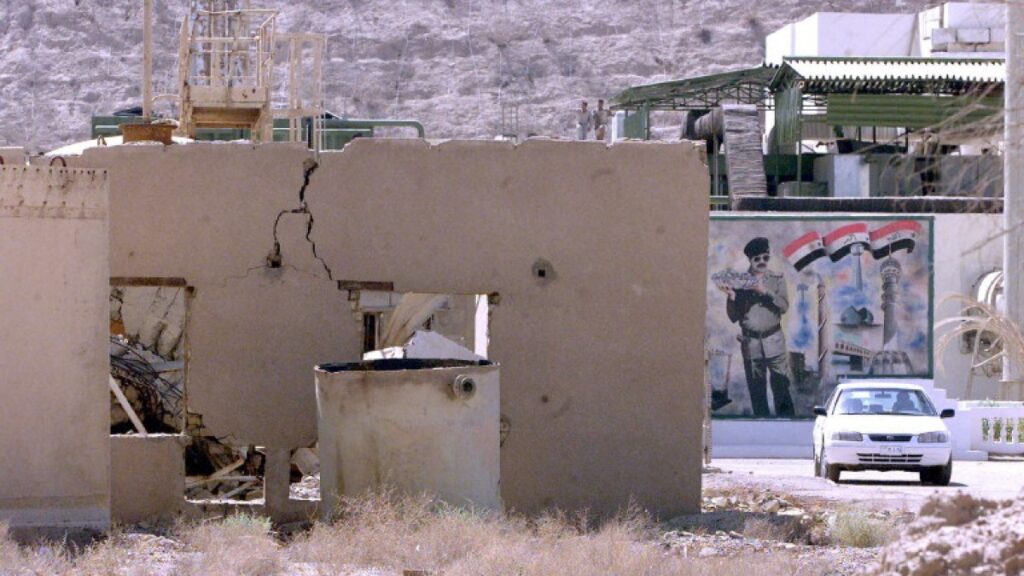
Since Iran’s October 1 missile attack on Israel in response to the killing of Hezbollah leader Hassan Nasrallah in Beirut and Hamas leader Ismail Haniyeh in Tehran, there has been much speculation about how Tel Aviv will retaliate. Some observers have suggested that it could hit Iranian oil installations, and others, its nuclear facilities. US President Joe Biden’s administration seems to oppose both options, but it has approved the deployment of a Terminal High Altitude Area Defense (THAAD) missile defence system and United States troops to Israel, possibly in anticipation of an Iranian response to an Israeli strike. Meanwhile, Biden’s political adversary, Republican presidential candidate Donald Trump, has egged on Israel to “hit the nuclear first”. Trump’s son-in-law Jared Kushner has also suggested the same. While Trump, Kushner and other staunch Israel supporters are happy to cheer on an Israeli strike on Iran’s nuclear facilities, they likely know very little about the consequences of another such Israeli attack that targeted an Iraqi nuclear site. Israel’s destruction of Iraq’s French-built Osiraq nuclear reactor in 1981 actually pushed what was largely a peaceful nuclear programme underground and motivated Iraqi leader Saddam Hussein to invest in the pursuit of a nuclear weapon. An aggressive act against Iran’s nuclear programme will likely have a similar effect. A ‘pre-emptive’ strike Iraq’s nuclear programme started in the 1960s with the USSR building a small nuclear research reactor and providing it with some know-how. In the 1970s, Iraq purchased a bigger reactor from France – called Osiraq – and expanded its civilian nuclear programme with significant French and Italian assistance. The French government had made sure that technical measures were in place to prevent any possible dual use of the reactor and it shared this information with the US, Israel’s closest ally. Iraq, which was a signatory to the Nuclear Non-Proliferation Treaty and had its nuclear sites inspected regularly by the International Atomic Energy Agency (IAEA), was not “on the brink of” developing a nuclear weapon, as Israel falsely asserted. Nevertheless, the Israeli government, which was facing growing discontent domestically and a potential loss at the approaching legislative elections, decided to proceed with the “pre-emptive” strike. On June 7, 1981, US-made F-15 and F-16 fighter jets flew from Israel, refuelled mid-air, and carried out a strike on the Osiraq reactor, completely destroying it and killing three Iraqi civilians and one French engineer. The attack provoked nationalist fervour among Israelis that helped Prime Minister Menachem Begin pinch a narrow victory in the elections three weeks later. A trove of declassified US documents released in 2021 demonstrates that Israel’s strike did not eliminate Iraq’s programme, but rather made Saddam more determined to acquire a nuclear weapon. It also motivated more Iraqi scientists to sign up to work on their nation’s nuclear programme. As Iraqi nuclear scientist Jafar Dhia Jafar wrote in his memoir: “the Israeli bombing of Tammuz I [i.e. Osiraq] had infuriated many, and they were practically forming a line to participate in ending the Jewish state’s monopoly of nuclear weapons in the Middle East.” They proved to be more valuable to Saddam than the hardware – the reactor – that he lost in the attack. In the following years, Saddam’s regime made nuclear activities clandestine and started reaching out to nuclear powers like Pakistan to seek assistance in developing capabilities that could be used to produce a nuclear weapon. It also tried to rebuild the destroyed reactor. These efforts slowed down only in the early 1990s due to the first Gulf War, which decimated Iraqi infrastructure, and the subsequent sanctions, which drained state coffers. The consequences of a strike on Iran Over the past few years, a number of Iranian nuclear scientists have been assassinated. Most recently, in November 2020, Mohsen Fakhrizadeh, a nuclear physicist and high-ranking member of the nuclear programme, was shot dead in an ambush near Tehran. Iran has accused Israel of carrying out this assassination and others in the past. While these assassinations may have killed key cadres, they have inspired a new generation of Iranians to pursue nuclear science, part of an Iranian “nuclear nationalism” emerging as a result of the constant attacks on Iran’s nuclear programme. The events since October 7, 2023 have further fuelled this sentiment. A poll conducted between February and May this year showed that not only has public support in Iran for a peaceful nuclear programme remained incredibly high, but that now there is a growing public consensus the country should acquire a nuclear weapon. Some 69 percent of the respondents in the survey said they would support it. Clearly, Israel’s actions so far are only increasing Iranian determination to continue its nuclear programme. A strike on any of its nuclear facilities would make that determination even stronger. And if we are to go by the Iraqi example, it may drive the Iranian nuclear programme underground and accelerate it towards the development of a nuclear weapon. Today, Israeli Prime Minister Benjamin Netanyahu finds himself in his predecessor Begin’s shoes. He is also leading a government widely criticised for various failures, including the one on October 7, 2023. He is also desperate to show the Israeli public a “victory”. But what Netanyahu is doing in Gaza and Lebanon now and will do in Iran will not bring victory to Israel. His strategy produces resentment in these countries and across the Middle East, which will help Iran and its allies rebuild swiftly whatever capabilities they lose to reckless Israeli strikes. The views expressed in this article are the author’s own and do not necessarily reflect Al Jazeera’s editorial stance. Adblock test (Why?)
Nepali teenager hailed as hero after climbing world’s 8,000-metre peaks

Cheering crowds hailed an 18-year-old Nepali mountaineer as a hero as he returned home on Monday after he broke the record to become the youngest person to summit all 14 of the world’s 8,000-metre (26,500-foot) peaks. Nima Rinji Sherpa reached the summit of Tibet’s 8,027-metre (26,335-foot) Shishapangma on October 9, completing his mission to stand on the world’s highest peaks. On Monday, he returned from China to Nepal’s capital Kathmandu, where scores of people waited to see him. “I am feeling very happy,” said the young mountaineer, draped in traditional Buddhist scarves and garlands of marigold flowers, as he emerged to loud cheers at the airport. “Thank you so much, everyone,” he said to his supporters, beaming a wide grin. Sherpa hugged his family while others rushed to offer him scarves and flowers. He later waved to the crowd out of a car sunroof, while proudly holding the national flag. Nepal’s climbing community also welcomed several others who returned after completing the summit of 14 peaks. Summiting all 14 “eight-thousanders” is considered the peak of mountaineering aspirations, with all the peaks located in the Himalayan and neighbouring Karakoram ranges, straddling Nepal, China, Pakistan, Tibet and India. Climbers cross “death zones” where there is not enough oxygen in the air to sustain human life for long periods. Italian climber Reinhold Messner first completed the feat in 1986, and only around 50 others have successfully followed in his footsteps. Many elite climbers have died in the pursuit. In the last few years, mountaineers have been expected to reach the “true summit” of every mountain, which many climbers of the previous generation had missed. Sherpa is no stranger to the mountains, hailing from a family of record-holding climbers, who also now run Nepal’s largest mountaineering expedition company. Raised in bustling Kathmandu, Sherpa initially preferred to play football or shoot videos. But two years ago, he put his camera down to pursue mountaineering. Sherpa, who already holds multiple records from his ascents of dozens of peaks, started high-altitude climbing at the age of 16, by climbing Mount Manaslu in August 2022. Nepali climbers – usually ethnic Sherpas from the valleys around Everest – are considered the backbone of the climbing industry in the Himalayas. They carry the majority of equipment and food, fixing ropes and repairing ladders. Long in the shadows as supporters of foreign climbers, they are slowly being recognised in their own right. “I want to show the younger generation of Sherpas that they can rise above the stereotype of being only support climbers and embrace their potential as top-tier athletes, adventurers, and creators,” Sherpa said in a statement soon after his final summit. “We are not just guides. We are trailblazers.” In recent years, climbers like Sherpa have set record after record, and are hopeful their feats will inspire the next generation of Nepali mountaineers. The record was previously held by another Nepali climber, Mingma Gyabu “David” Sherpa. He achieved it in 2019, at the age of 30. Adblock test (Why?)
France’s Marine Le Pen questioned in court at EU embezzlement trial

Marine Le Pen and her RN party have been accused of using European Parliament money to pay staff in France between 2004 and 2016. French far-right leader Marine Le Pen has strongly denied committing any wrongdoing at a Paris court as she and her National Rally (RN) party stand trial over the suspected embezzlement of European Parliament funds. The nine-week trial is a critical juncture for Le Pen, expected to be a strong contender in France’s next presidential election in 2027. A guilty verdict could significantly affect her political career and aspirations. Le Pen, 56, took to the stand on Monday in the first of three expected days of testimony in the trial, which comes almost a decade after initial investigations began. Le Pen, the RN itself, and 24 others – including party officials, employees, and former lawmakers – have all been accused of using European Parliament money to pay staff in France. The party leader and her co-defendants have denied the charges, saying the money was used legitimately. In court, Le Pen argued that she believed a European Parliament member’s role was as much to push their party’s politics in France as it was to work on legislation in Brussels. “I’m telling you very clearly: I absolutely don’t feel I have committed the slightest irregularity, the slightest illegal move,” she said. She detailed her vision of the role that MEPs play, including various examples such as meeting with voters and attending major events. “The aide works for his MEP and [therefore] can work for his MEP for the benefit of the party,” she explained. “I believe it’s a mistake from the European Parliament not to perceive it this way,” she added. The judge presiding over the case said she was unsatisfied with Le Pen’s answers. ‘Fake jobs’ The European Parliament has estimated the damage from the alleged crimes to be 3.5 million euros ($3.8m). The alleged fake jobs system that triggered the trial was first flagged in 2015 and covers parliamentary assistant contracts between 2004 and 2016. Prosecutors say the assistants worked solely for the party outside parliament. Many could not describe their day-to-day work, and some never met their supposed MEP boss. A bodyguard, a secretary, Le Pen’s chief of staff and a graphic designer were all allegedly hired under false pretences. If Le Pen and her co-defendants are found guilty, they could face up to 10 years in prison and fines of up to one million euros ($1.1m) each. A guilty verdict could also result in penalties including a loss of civil rights or ineligibility to run for office, which would affect Le Pen’s goal of becoming France’s president in the 2027 election. The trial is scheduled to last until November 27. Adblock test (Why?)
Kenya’s Ruth Chepngetich breaks women’s marathon world record in Chicago

Chepngetich wins the Chicago Marathon in 2:09:56, dedicating the record to Kelvin Kiptum, who died in a car crash. Kenya’s Ruth Chepngetich has put on a performance for the ages as she obliterated the women’s marathon world record in Chicago, taking nearly two minutes off the previous best to win in two hours, nine minutes and 56 seconds. Chepngetich ditched the competition by the halfway mark and ran through a chorus of cheers through the final straight as she claimed her third title in Chicago on Sunday. The 30-year-old, who became the first three-time women’s winner of the Chicago race, broke the previous world record of 2:11:53 set by Ethiopia’s Tigst Assefa last year in Berlin. Ethiopia’s Sutume Kebede crossed the line seven minutes and 36 seconds later while Kenyan Irine Cheptai (2:17:51) was third. “This is my dream that has come true,” Chepngetich said. Chepngetich, who also won in Chicago in 2021 and 2022, dedicated her latest victory to Kelvin Kiptum, who set the men’s world record at last year’s race just four months before he died in a car accident at the age of 24. “The world record has come back to Kenya, and I dedicate this world record to Kelvin Kiptum,” Chepngetich said. “I’ve fought a lot, thinking about the world record and I have fulfilled it.” Ruth Chepngetich of Kenya poses with the clock after setting a new world record at the Chicago Marathon [Michael Reaves/Getty Images via AFP] Runners remember Kiptum Runners observed a moment’s silence on the start line in honour of Kiptum. Organisers also handed out stickers displaying Kiptum’s record-breaking time of 2:00:35 for the 50,000 participants to put on their race bibs. In the absence of Olympic champion Sifan Hassan, the 2023 Chicago winner, Chepngetich set a blazing early pace and reached the halfway point in 1:04:16, the fifth-quickest time in history for a half marathon by a woman. “The weather was perfect and I was well-prepared. The world record was in my mind,” Chepngetich, who was runner-up to Hassan 12 months ago, told reporters after the race. Chepngetich ran the first 5km (3.1 miles) in 15 minutes flat and by the halfway mark she had built a 14-second cushion between herself and Kebede. Television commentators were astonished as she ground through the course, comparing her attempt at a sub-2:10 marathon to the moon landing, and she only seemed to gain momentum as she sprinted through the final 2 miles (3.2km). Chepngetich, the 2019 world champion, hunched over in utter exhaustion after breaking the tape but later said “Chicago is like home”. Her compatriot John Korir won on the men’s side in 2:02:44. The 27-year-old Korir finished ahead of Ethiopia’s Mohamed Esa (2:04:39) and another Kenyan, Amos Kipruto (2:04:50). Korir was part of a seven-man group at the head of the course 30km (18.6 miles) before he hit the accelerator and shed his rivals following a relatively conservative start. Four of the top five were Kenyans, with Vincent Ngetich and Daniel Ebenyo finishing off the podium. “It was really nice to run my PB and win in Chicago,” Korir said, adding that he too used the memory of Kiptum as a source of motivation. “Today I was thinking about Kiptum and I said, ‘Last year if he could run under 2:01, why not me?’ So I had to believe in myself and try to do my best.” Korir’s time was the second-fastest-ever run in Chicago. Adblock test (Why?)
Chinese military video shows major drill around Taiwan

NewsFeed The Chinese military has released video showing its forces conducting a mock operation against Taiwan. The war games around the island are taking place days after Taiwan’s president promised to “resist annexation” by China. Published On 14 Oct 202414 Oct 2024 Adblock test (Why?)
‘Burned and charred bodies’ as Israel hits tents at central Gaza hospital
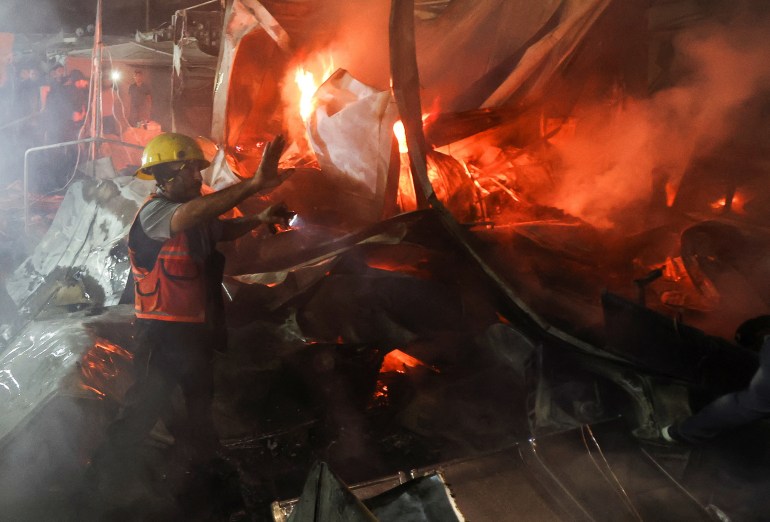
An Israeli air attack on tents for displaced Palestinians inside a hospital complex in Gaza has killed at least four people and wounded at least 70, many of them critically, as Israel’s genocide in the besieged enclave continues for a second year. The attack at Al-Aqsa Martyrs Hospital in central Gaza’s Deir el-Balah city in the early hours of Monday hit tents where many displaced Palestinians had been sheltering. Videos showed rescuers scrambling to save people as they struggled to contain a major fire. The death toll is expected to rise further. “What happened was that we woke up to smoke, flames, fire and burning pieces falling on the tents from every direction. The explosions terrified us in our tents and outside where we live behind Al-Aqsa Hospital,” Om Ahmad Radi, a survivor at the scene, told Al Jazeera. “The fire trucks couldn’t get here. There were so many burned and charred bodies all over the place. The amount of fire and explosions was enormous. We witnessed one of the most horrible and brutal nights.” A rescuer works at the site of an Israeli attack on tents sheltering displaced people at a hospital in Deir el-Balah in central Gaza [Ramadan Abed/Reuters] Gaza’s Media Office said it was the seventh time this year that Israel has hit the grounds of Al-Aqsa Hospital and the third in the past couple of weeks, killing Palestinians who were forced to flee their homes. Al Jazeera’s Hani Mahmoud, reporting from Deir el-Balah, said “some 20 to 30 tents were completely destroyed and completely burned down. “There were many people inside the tents as the fire spread, who could not be saved,” he said. “We are looking at a large number [of deaths] as these tents are close to each other, back-to-back and set up in a small space inside the hospital courtyard.” Israeli army spokesperson Avichay Adraee confirmed the Israeli air force conducted the attack, claiming, without evidence, that the hospital complex was used as a “command and control centre” by Palestinian group Hamas to carry out attacks against Israel. Israeli forces have repeatedly attacked medical facilities in Gaza since the assault began more than a year ago, with the enclave’s health sector already overwhelmed and infrastructure destroyed. Last week, a United Nations Independent International Commission of Inquiry (CoI) released a report which found Israel perpetrating “a concerted policy to destroy Gaza’s healthcare system”. Palestinians survey the damage at the site of the Israeli attack on tents at the hospital [Ramadan Abed/Reuters] Meanwhile, at least 22 more Palestinians were confirmed dead and 80 others wounded on Sunday when Israeli tanks shelled a school sheltering the displaced in Nuseirat, also in central Gaza. Israel’s genocide has destroyed large areas of Gaza and displaced about 90 percent of its population of 2.3 million people, many of them multiple times. In northern Gaza, Israeli air and ground forces have laid a siege on Jabalia for days, claiming the Hamas fighters have regrouped there. Over the past year, Israeli troops have repeatedly returned to the refugee camp in Jabalia, which dates to the 1948 war surrounding Israel’s creation. The attack on Jabalia follows Israeli orders to fully evacuate northern Gaza, including Gaza City. An estimated 400,000 Palestinians remain in the north. The UN says no food has entered northern Gaza since October 1. The military confirmed that hospitals were also included in its evacuation orders, adding that it had not set a timetable and was working with local authorities to facilitate patient transfers. But Fares Abu Hamza, an official with Gaza Health Ministry’s emergency service, told The Associated Press news agency that bodies of a “large number of martyrs” remain uncollected from the streets and under the rubble in the north. “We are unable to reach them,” he said, asserting that dogs were eating some remains. Israel has continued a brutal offensive on Gaza following a cross-border attack by Hamas on October 7 last year, despite a UN Security Council resolution calling for an immediate ceasefire. More than 42,200 people have since been killed, mostly women and children, and about 98,400 injured, according to local health authorities. Adblock test (Why?)
Prepping for the worst: Election workers anticipate threats in US vote
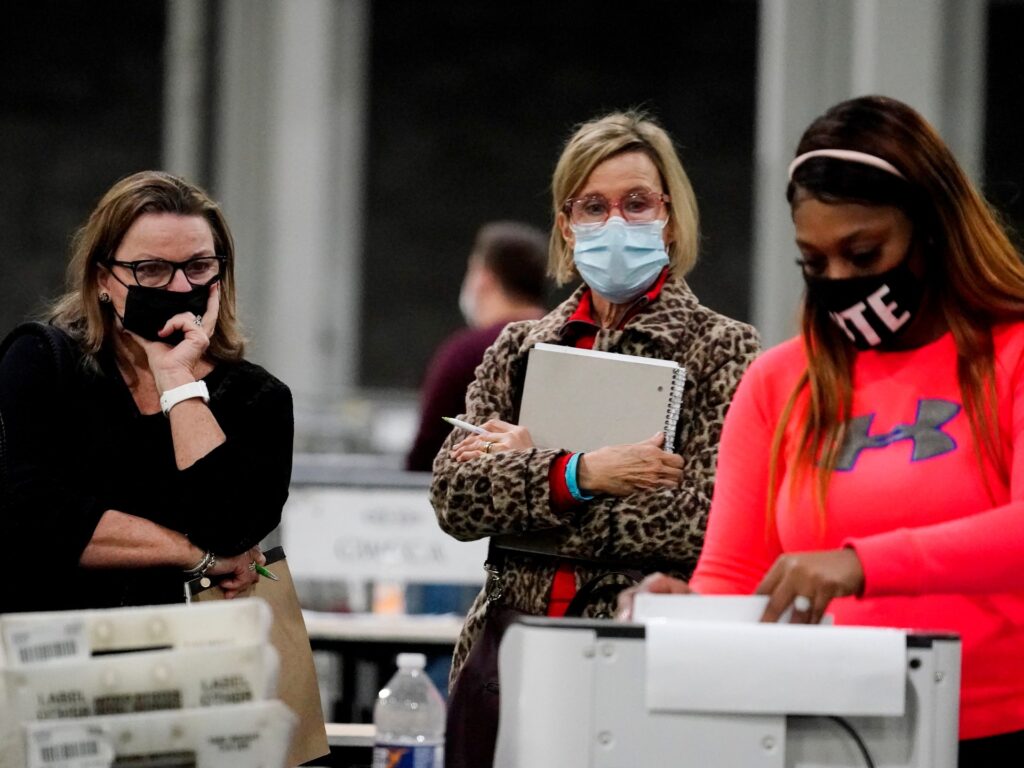
Across the country, in Rochester Hills, Michigan, Tina Barton had her own brush with election-related violence. For more than three decades, Barton, a Republican, served in government, eventually landing the role of city clerk. That office required her to administer elections and maintain voter files, among other duties. But over the years, she had seen tensions rise. There were early signs of discord in the 2000 election between Democrat Al Gore and Republican George W Bush, a race decided by a few thousand votes in Florida. Barton also noticed election denialism years later, in 2016. At the time, Green Party candidate Jill Stein pushed for long-shot recounts in three battleground states, including Michigan, after she finished fourth in the presidential race. As that effort fizzled, Stein decried, “We do not have a voting system we can trust.” In Georgia, Democrat Stacey Abrams was also defiant after her 2018 gubernatorial loss to Brian Kemp, accusing Republicans of “rigging” the system in their favour, though she acknowledged they were acting within the laws in place at the time. But those nascent signs of increased scepticism turned into something different following the 2020 vote, Barton said. “Up to that point, the attack had been more on the process and the doubts on the process and how we do elections in our country,” she told Al Jazeera. “We really hadn’t had the attention on us individually.” For Barton, that newfound spotlight on election workers came with threats. After Trump’s defeat in 2020, much of the scrutiny fell on battleground states that Republicans narrowly lost, including Michigan. Republican National Committee chair Ronna McDaniel referred to Barton by name when she falsely claimed that 2,000 votes had been wrongfully diverted to Democrat Joe Biden. In reality, Barton and her team had discovered a clerical error in the vote tally, correcting it to ensure accurate results as part of normal election procedures. But the damage had been done. Hearing Barton’s name falsely associated with election fraud sparked an onslaught of scrutiny and threats. One caller — citing Trump’s false claims about the election — even left death threats on her voicemail just a few days after the race. “I did not expect to go to my office and pick up my own phone, my own voicemail, and have someone call me by name and say: ‘When you least expect it, we will kill you,’” Barton said. Barton lost her race for city clerk that year and has since focused on training other election officials. But she has a message for powerful political figures. “When you’re an individual with a platform and who has followers … you have to take responsibility for the words that you’re saying,” Barton said. Members of the public, she underscored, “may take those words as directives to take action”. Adblock test (Why?)