

US deploying THAAD missile defence system, troops to Israel

US says move underscores ‘ironclad commitment’ to Israel’s defence against ‘further missile attacks by Iran’. The United States is sending an advanced anti-missile system to Israel, the Pentagon has announced, as President Joe Biden’s administration continues to provide “ironclad” support for one of its top allies amid mounting tensions with Iran. The US Department of Defense said on Sunday that Pentagon chief Lloyd Austin had authorised the deployment of a Terminal High Altitude Area Defense (THAAD) “battery and associated crew of US military personnel to Israel” to help boost the country’s air defences. “The THAAD Battery will augment Israel’s integrated air defense system. This action underscores the United States’ ironclad commitment to the defense of Israel, and to defend Americans in Israel, from any further ballistic missile attacks by Iran,” the Pentagon said in a statement. The announcement comes less than two weeks after Iran fired a barrage of missiles at Israel on October 1 in retaliation for the assassinations of Hamas and Hezbollah leaders and an Iranian general. Israeli leaders, including Prime Minister Benjamin Netanyahu, have vowed to retaliate — spurring fears that the Middle East could be dragged into an all-out regional war. Earlier this month, Biden suggested that Israel should refrain from striking Iran’s nuclear facilities or oilfields, but the Israeli government has repeatedly defied the US president’s public warnings in the past. It is unclear when exactly the US’s THAAD system will be deployed to Israel. An unnamed US official told CBS News that “around 100 troops” will go to the country. Earlier on Sunday, Iranian Foreign Minister Abbas Araghchi warned that Washington was “putting [the] lives of its troops at risk by deploying them to operate US missile systems in Israel”. “While we have made tremendous efforts in recent days to contain an all-out war in our region, I say it clearly that we have no red lines in defending our people and interests,” Araghchi wrote on social media. While the US has said it favours diplomacy and a de-escalation in the region, critics have noted that Washington offers Israel unwavering military and diplomatic support. The US provides Israel with at least $3.8bn in military aid annually, and the Biden administration has authorised $14bn in further assistance to its ally since the Israeli military began its war on the Gaza Strip in October of last year. Israel also recently expanded its bombing campaign in Lebanon, after exchanging fire with Lebanese group Hezbollah across the Israel-Lebanon border for months. As tensions continue to mount, the Biden administration has rebuffed calls to suspend weapons transfers to Israel to pressure the country to end the wars in Gaza and Lebanon. [Al Jazeera] Israel already uses three integrated missile defence systems to intercept incoming rockets and missiles fired towards the country. But the THAAD system that the US will deploy to Israel has a greater range than other systems and marks a “step up”, Al Jazeera’s Mike Hanna reported from Washington, DC, on Sunday. “The important point, too, is that the [THAAD] systems are so complex that it requires a crew of 94 to operate — a trained crew of 94 — and these will be US soldiers,” Hanna said. “This is a system being put in place and it is a significant step up of the US support for Israel as this crisis continues.” Speaking to Al Jazeera, military analyst Elijah Magnier said he believed the THAAD system announcement meant that the expected Israeli attack on Iran is “not imminent”, as the Israelis would want the missile defence system to be in place before any attack, which will likely be followed by another Iranian attack on Israel. The US previously deployed a THAAD battery to Israel in 2019 for training and an air defence exercise, the Pentagon said on Sunday. Biden also directed the military to send one to the Middle East “to defend American troops and interests in the region” after last year’s October 7 attacks by Hamas on southern Israel. Adblock test (Why?)
More than 60 wounded in Hezbollah drone attack on Israeli military site
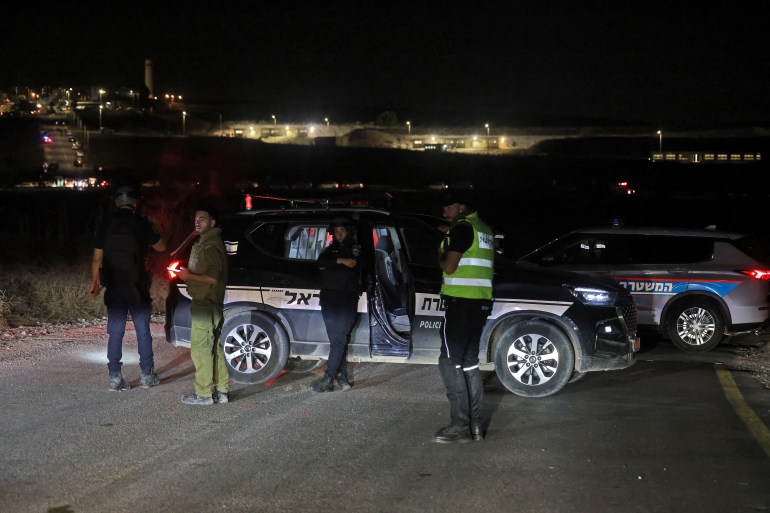
Hezbollah says it launched a ‘swarm of drones’ at an Israeli military camp in Binyamina, northern Israel. At least 67 people have been wounded in a drone attack in northern Israel, according to Israeli emergency services and local media, as the Lebanese armed group Hezbollah said it had targeted an Israeli military camp with a “swarm” of drones. Israeli Army Radio reported that at least four people were critically wounded in the attack on Sunday in the town of Binyamina, south of Haifa. According to Israel’s Channel 12, no warning sirens were heard before the attack. Hezbollah claimed responsibility for the strike. In a statement, the Iran-aligned group said it launched a “swarm of drones” at a Golani Brigade camp. The Golani Brigade is one of the five infantry brigades of the regular Israeli army and regarded as an elite unit. Members of Israel’s security forces secure the site of a drone strike near the northern Israeli town of Binyamina [Oren Ziv/AFP] In a separate statement, Hezbollah said it also targeted the Israeli Tsnobar logistics base in the Israeli-occupied Golan Heights with a missile. The Hezbollah drone strike comes on the same day that the United States announced it would send a new air-defence system to Israel to help bolster its protection against missile attacks. At the direction of US President Joe Biden, US Defense Secretary Lloyd Austin “authorised the deployment of a Terminal High-Altitude Area Defense (THAAD) battery and associated crew of US military personnel to Israel to help bolster Israel’s air defenses following Iran’s unprecedented attacks against Israel on April 13 and again on October 1”, Pentagon press secretary Pat Ryder said in a statement. Reporting from Amman, Jordan, Al Jazeera’s Nour Odeh said that though the Israeli air defence system is very sophisticated and multi-layered, drones are hard to detect. “Usually, the sirens go off when something is heading towards a location so civilians and residents of that area are told to seek shelter. That’s why there have been a very small number of injuries throughout the past year from those attacks,” she said. “But the drones are harder to detect, and because they fly at lower altitudes, they are much more difficult to intercept. Effectively intercepting them would put a lot of people in danger,” Odeh said. Sunday’s attack comes as Israel intensifies its offensive against Hezbollah in Lebanon. The conflict between Israel and Hezbollah escalated a year ago when the Lebanese group began firing rockets at northern Israel the day after Israel launched its assault on Gaza. Israel has sharply escalated the fighting in recent weeks, carrying out air raids across Lebanon and sending ground troops into the south of the country. More than 2,100 people in Lebanon have been killed since last October, the majority in the last few weeks since Israel intensified its attacks, and more than 1.2 million people have been displaced, according to Lebanese authorities. The Hezbollah attack in Binyamina shows that attacking Lebanon carries a heavy price for Israelis too, according to Gideon Levy, Israeli political analyst. “Nothing less was expected. We are at the beginning of the war in Lebanon, not at the end of it. And everyone so enthusiastic about this war should know that it will carry a very heavy price,” he told Al Jazeera. Hezbollah has said it will continue attacking Israel in solidarity with the Palestinian people in the Gaza Strip and in support of their “valiant and honorable resistance”, and in “defence of Lebanon and its people”. Adblock test (Why?)
Choosing to be child-free in an ‘apocalyptic’ South Asia
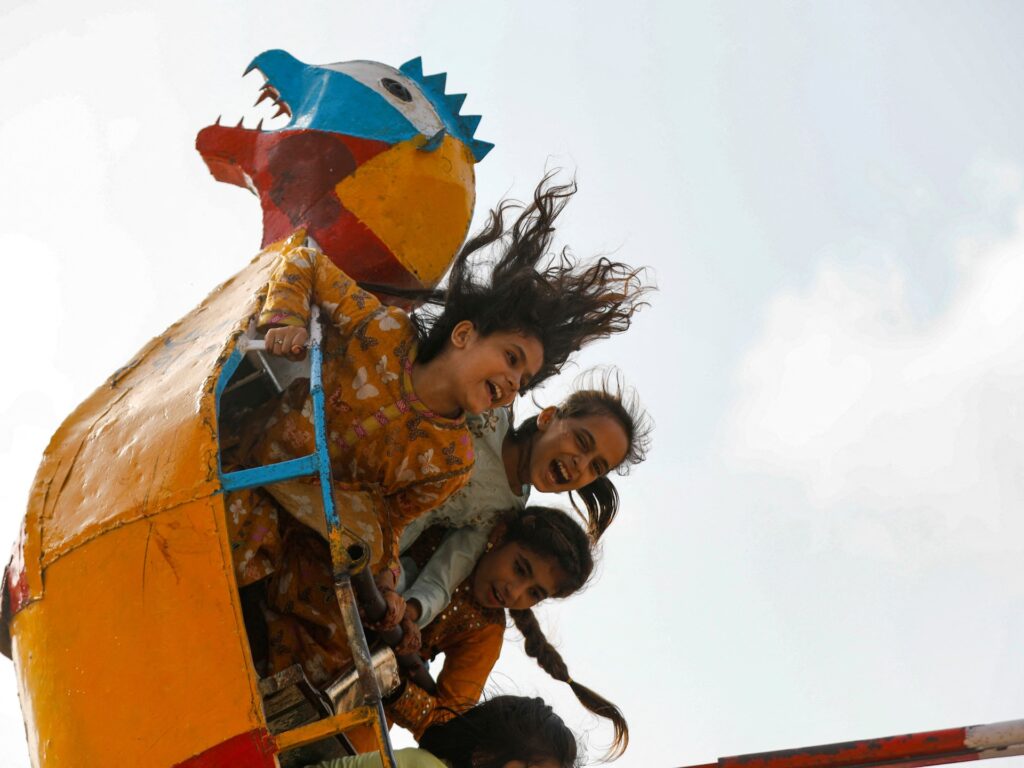
Zuha Siddiqui is currently designing her new house in Karachi, creating a blueprint for her future life in Pakistan’s largest metropolis. Her parents will live in the downstairs portion of this house, “because they’re growing old, and they don’t want to climb stairs”, she says. She will live in a separate portion upstairs, with furniture she likes. Siddiqui feels this is important because she recently celebrated her 30th birthday and wants a place she can finally call her own, she tells Al Jazeera over a phone call. Siddiqui has worked as a journalist reporting on topics including technology, climate change and labour in South Asia for the past five years. She now works remotely, freelancing for local and international publications. Despite all her plans for a family home of her own, Zuha is one of a growing number of young people in South Asia for whom the future does not involve having children. A demographic challenge is looming over South Asia. As is the case in much of the rest of the world, birth rates are on the decline. While a declining birth rate has been mostly associated with the West and Far East Asian countries such as Japan and South Korea, countries in South Asia where birth rates have generally remained high are finally showing signs of following the same path. Generally, to replace and maintain current populations, a birth rate of 2.1 children per woman is required, Ayo Wahlberg, a professor in the anthropology department at the University of Copenhagen, told Al Jazeera. According to a 2024 US Central Intelligence Agency publication comparing fertility rates around the world, in India, the 1950 birth rate of 6.2 has plummeted to just above 2; it is projected to fall to 1.29 by 2050 and just 1.04 by 2100. The fertility rate in Nepal is now just 1.85; in Bangladesh, 2.07. Declining economic conditions In Pakistan, the birth rate remains above the replacement rate at 3.32 for now but it is clear that young people there are not immune to the pressures of modern life. “My decision to not have children is purely monetary,” says Siddiqui. Siddiqui’s childhood was marked by financial insecurity, she says. “Growing up, my parents didn’t really do any financial planning for their children.” This was the case for several of her friends, women in their 30s who are also deciding not to have children, she adds. While her parents sent their children to good schools, the costs of an undergraduate or graduate education were not accounted for and it is not common for parents in Pakistan to set aside funds for a college education, she says. While Siddiqui is single, she says her decision not to have children would stand even if she was attached. She made her decision soon after she became financially independent in her mid-20s. “I don’t think our generation will be as financially stable as our parents’ generation,” she says. High inflation, rising living costs, trade deficits and debt have destabilised Pakistan’s economy in recent years. On September 25, the International Monetary Fund (IMF) approved a $7bn loan programme for the country. Like many young people in Pakistan, Siddiqui is deeply worried about the future and whether she will be able to afford a decent standard of living. Even though inflation has fallen, living costs continue to rise in the South Asian country, albeit at a slower rate than before. The Consumer Price Index (CPI) rose by 0.4 percent in August after a 2.1 percent increase in July, local media reported. Work-life (im)balance Pakistan is not alone. Most countries in South Asia are grappling with slow economic growth, rising inflation, job shortages and foreign debt. Meanwhile, as the global cost of living crisis continues, couples find they have to work more hours than before, leaving limited room for a personal life or to dedicate to children. Sociologist Sharmila Rudrappa conducted a study among IT workers in India’s Hyderabad, published in 2022, on “unintended infertility”, which examined how individuals might not experience infertility early in their lives but might make decisions that lead them to infertility later on due to circumstances. Her study participants told her that they “lacked time to exercise; they lacked time to cook for themselves; and mostly, they lacked time for their relationships. Work left them exhausted, with little time for social or sexual intimacy.” Mehreen*, 33, who is from Karachi, identifies strongly with this. She lives with her husband as well as his parents and elderly grandparents. Both she and her husband work full-time and say they are “on the fence” about having children. Emotionally, they say, they do want to have children. Rationally, it’s a different story. “I think work is a big part of our lives,” Mehreen, who works in a corporate job at a multinational company, told Al Jazeera. They are “almost sure” they will not have children, citing the expense of doing so as one of the reasons. “It’s ridiculous how expensive the entire activity has become,” says Mehreen. “I feel like the generation before us saw it [the cost of raising children] as an investment in the kid. I personally don’t look at it that way,” she says, explaining that many from the older generations saw having children as a way of providing themselves with financial security in the future – children would be expected to provide for their parents in old age. That won’t work for her generation, she says – not with the economic decline the country is undergoing. Then there is the gender divide – another major issue where the younger generation differs from their parents. Mehreen says she is keenly aware that there is a societal expectation for her to take the front seat in parenting, rather than her husband, despite the fact that both of them are earning money for the household. “It is a natural understanding that even though he would want to be an equal parent, he’s just not wired in this society to understand as
Russia-Ukraine war: List of key events, day 961
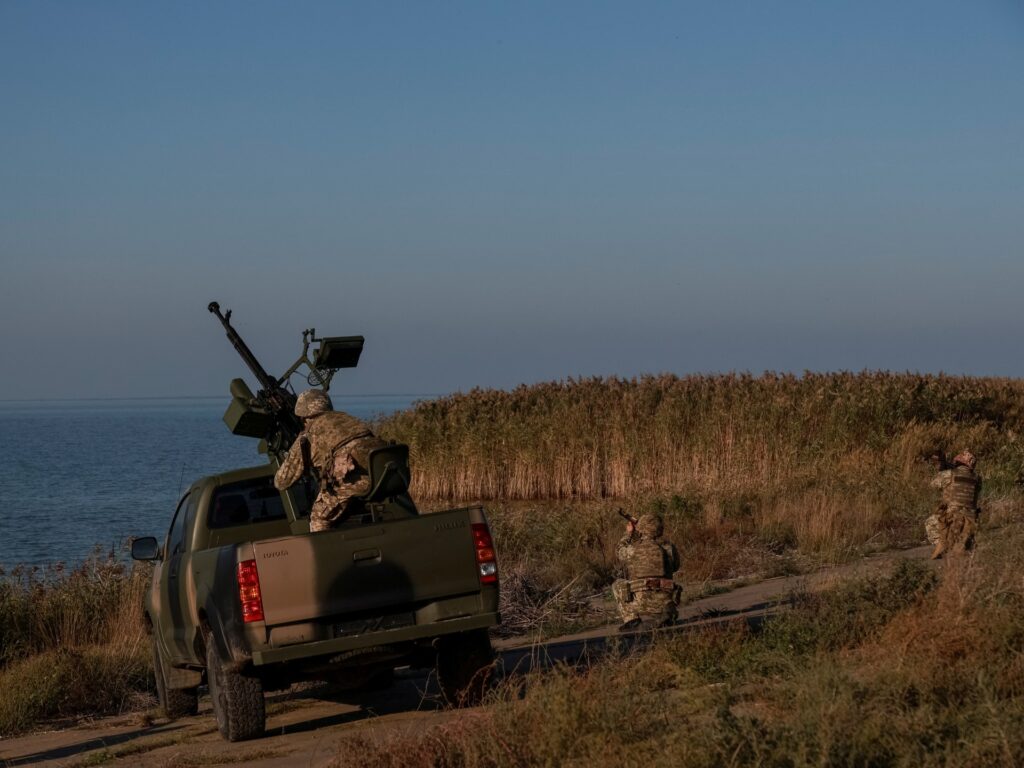
As the war enters its 961st day, these are the main developments. Here is the situation on Sunday, October 13, 2024. Fighting Kyiv said Russian attacks killed two people in the eastern Donetsk region: a 19-year-old travelling in a civilian car and an 84-year-old pensioner. One person was killed when a Ukrainian drone struck the Russian village of Ustinka in the Belgorod region close to the border with Ukraine, regional Governor Vyacheslav Gladkov said in a statement. Russia’s air defence units destroyed 13 Ukrainian drones overnight over three regions bordering Ukraine, Russia’s Ministry of Defence said. Six drones each were downed over the Belgorod and Kursk regions, while one drone was destroyed over the Bryansk region, it said. Ukrainian President Volodymyr Zelenskyy said Moscow had attempted to push back Ukrainian positions in the Russian Kursk region but that Kyiv was “holding the line”. Zelenskyy also acknowledged that the situation for Ukrainian forces in the eastern Donetsk region and southern Zaporizhia region was “very difficult”. The Ukrainian military said its forces hit a fuel depot in the Russian-occupied Luhansk region on Saturday. The facility was used to store oil and oil products for the Russian army, it said on Telegram. Politics and diplomacy Ukrainian military recruitment officers raided restaurants, bars and a concert hall in Kyiv, checking military registration documents and detaining men who were not in compliance with the compulsory military service, media and witnesses reported. Observers said it is unusual for such raids to take place in the capital, and reflects Ukraine’s dire need for recruits. All Ukrainian men aged 25-60 are eligible for conscription, and men aged 18-60 are not allowed to leave the country. Lithuanians vote on Sunday in elections likely to deliver a change of government but keep much else the same, including the NATO and European Union member’s strong support for Ukraine and moves to bolster defence policy. Polish Prime Minister Donald Tusk said he planned to partially suspend asylum rights for irregular migrants, accusing human traffickers and countries such as Russia and Belarus of abusing the system amid the ongoing war in Ukraine. Adblock test (Why?)
In a first, casino hub Macau elects chief executive born in mainland China
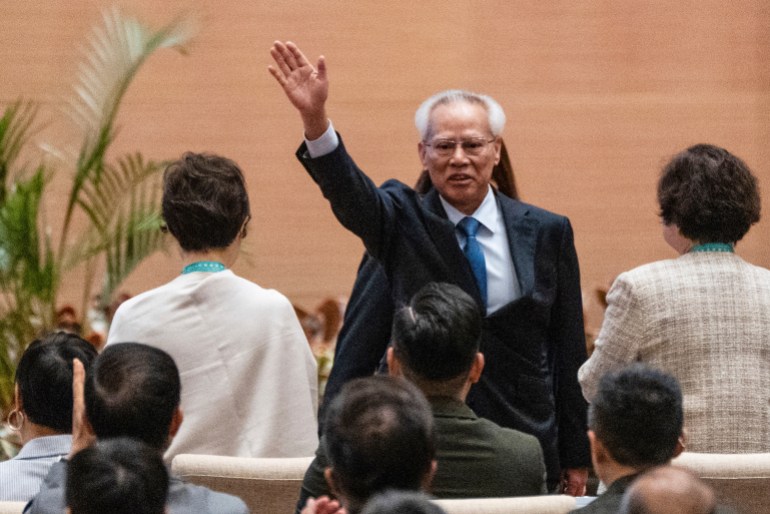
Former judge Sam Hou Fai receives 394 out of 398 votes cast in an election where he was the sole candidate. Former judge Sam Hou Fai has been elected chief executive-designate of Macau, China’s special administrative region, setting him up to be the leader of the casino-dominated area next to Hong Kong. Sam received 394 votes out of 398 ballots cast in an election that lasted about one hour and 35 minutes on Sunday, according to a statement on the government’s website. He is the territory’s first leader born in mainland China. Critics fear the move will see Beijing’s agenda take priority over business interests. After being announced as the chief executive-elect, Sam walked onto the stage to applause from the committee members. “It is the highest honour of my life,” the 62-year-old said. He pledged to uphold national sovereignty, accelerate the city’s economic diversification, and better integrate it into the national development plans. Sam celebrates after being declared the winner of Macau’s chief executive election [Bertha Wang/AP Photo] The appointment of Sam to a five-year term as chief executive must be approved by China’s central government. “This was an election with one candidate. Ordinary residents here can’t vote here,” Al Jazeera’s Laura Westbrook reported from Macau. “Some people that I have been speaking to, they weren’t even aware there was an election happening today.” Sam was born in the southern Chinese province of Guangdong in 1962. He graduated from the prestigious law school of Peking University in Beijing. He also studied the Portuguese language, culture and law at the University of Coimbra in Portugal, and once practised law in mainland China. Macau is the only place in China where casino gambling is legal. Beijing has called for the city to diversify its gambling-reliant economy. “He [Sam] is the first leader of Macau that doesn’t come from a business background, and he has had some pretty strong comments about the gambling industry here – where he says that he wants to diversify it away from gambling,” Al Jazeera’s Westbrook said. Sam has promised to accelerate the current government’s plan to boost tourism and other sectors such as traditional Chinese medicine, finance, exhibitions and commerce. However, the city will still need to rely on the gambling industry for government revenues to support the city’s welfare and accomplish other goals laid out by Beijing, analysts say. China wants Macau to develop into a world-class tourism and leisure centre and play a bigger role as a bridge for trade between China and Portuguese-speaking countries. Adblock test (Why?)
Why has Israel attacked UN peacekeepers in Lebanon?
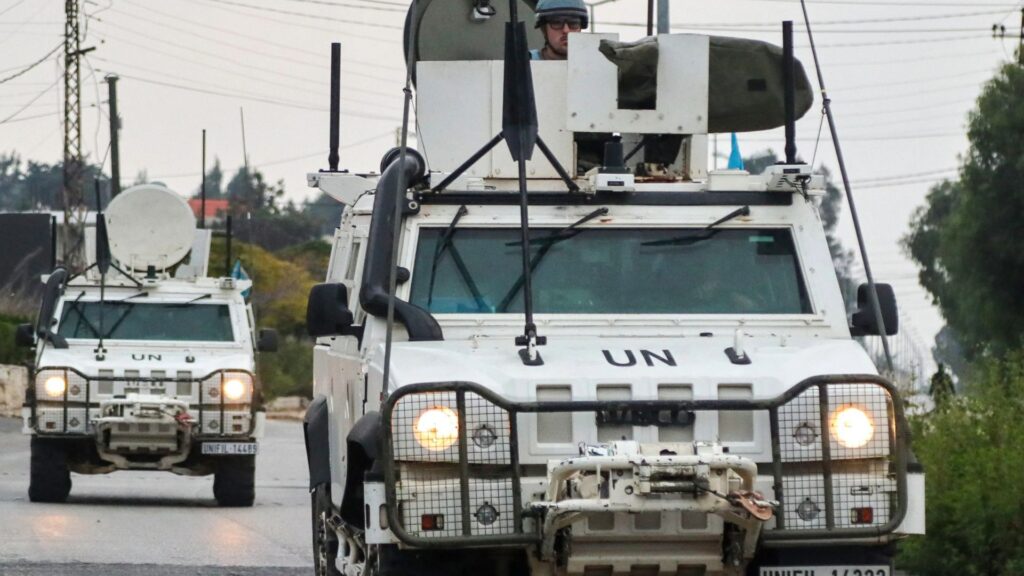
Several soldiers wounded after Israel twice attacked UNIFIL’s headquarters in southern Lebanon. Condemnation has come in from across the world after Israel twice attacked United Nations peacekeepers in Lebanon. The multi-nation UNIFIL force has been in southern Lebanon since 1978. So why is Israel targeting the mission? And can it remain in place? Presenter: Folly Bah Thibault Guests: Ali Riza – Political and security affairs analyst Rami Khouri – Distinguished public policy fellow at the American University of Beirut Raymond Murphy – Professor with the Irish Centre for Human Rights at the University of Galway and a former UN peacekeeper with UNIFIL in Lebanon Adblock test (Why?)
Will escalating violence in the Middle East affect the US elections?
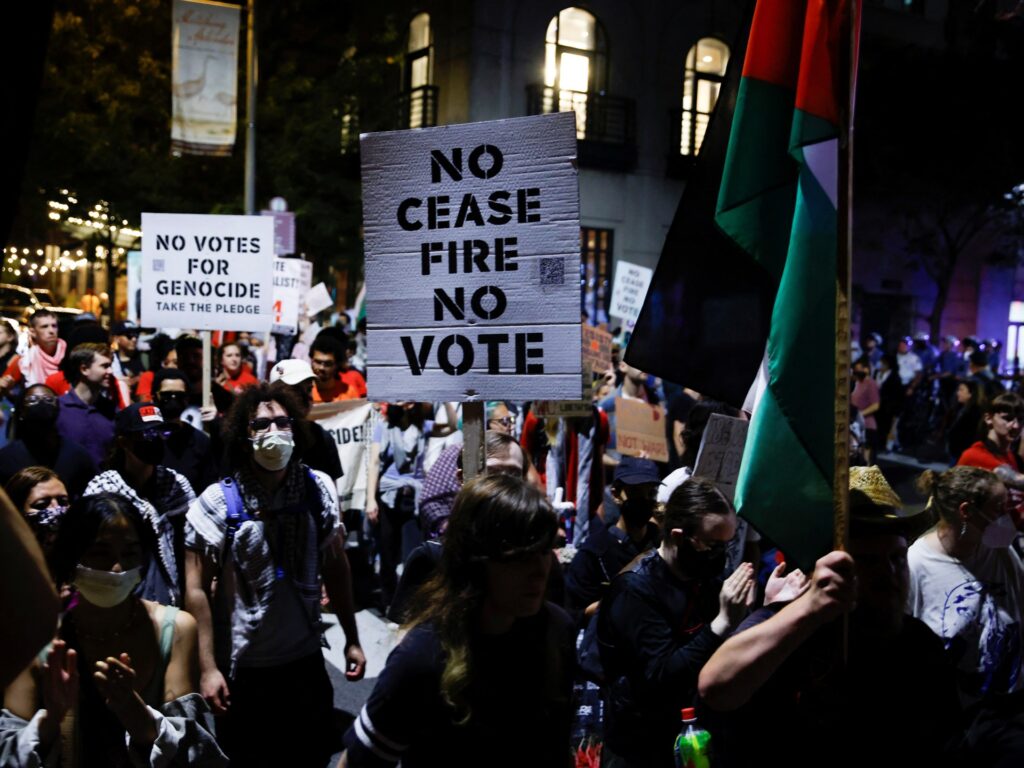
With the United States presidential election less than four weeks away, analysts caution that Israel’s expanding military campaigns across the Middle East could bruise the chances of the Democratic candidate, Vice President Kamala Harris. Foreign policy is rarely a top priority for US voters. But Israel’s yearlong war in Gaza, as well as its intense bombing campaign in Lebanon, have spurred questions about the US’s role in the conflict. The administration of President Joe Biden has been unwavering in its support of Israel, splintering the Democratic base, with some voters — particularly Arab Americans — turning against the party. With Harris in a tight race against former Republican President Donald Trump, anger towards the Biden administration could mean that Arab voters in key states like Michigan stay home in November. “This is a constituency that, by the second term of the Obama administration, identified as Democrat by a two-to-one margin,” Jim Zogby, the co-founder of the Arab American Institute, told Al Jazeera. “Now party identification is virtually tied at 38 percent each.” Much of that decrease, he said, has to do with the Biden administration’s support for the war in Gaza, which has erased entire neighbourhoods and killed more than 42,000 people, many of them women and children. That campaign has been enabled by about $20bn in US weapons assistance. “It’s less that this group of voters is getting more conservative, and more that they want to punish this administration for what they’ve allowed to happen,” said Zogby. “There’s a sense that Palestinian and Lebanese lives don’t matter.” Eroding support A September poll by the Arab American Institute found that Harris and Trump were virtually tied among Arab voters, receiving 41 percent and 42 percent support, respectively. That figure is actually a marked improvement for the Democrats. When Biden was running for re-election, his support among Arab voters cratered after the beginning of the war in Gaza, dropping to just 17 percent in October 2023. Biden previously won 59 percent of the Arab vote in the 2020 presidential race. When Biden dropped out of the 2024 race, following a debate performance that underscored concerns about the 81-year-old’s age, some voters hoped his replacement, Harris, would bring a fresh approach. But Harris has thus far refused to break with Biden or call for an end to weapons transfers, even as a series of escalatory strikes by Israel have brought the Middle East to the brink of a wider regional war. In a TV interview this week, when asked whether she would have diverged from Biden on any issues, Harris replied: “There is not a thing that comes to mind.” The Harris campaign also fielded criticism during August’s Democratic National Convention, after party officials refused to allow a Palestinian American speaker on stage to give voice to the suffering in Gaza. “People are looking for the slightest gesture of humanity, and the campaign just won’t give it to them,” said Zogby. “They’re making a mistake that will cost them votes.” Swing states While US policy towards Gaza may not be a top priority for most voters, more than 80 percent of Arab Americans say that it will play an important role in determining their vote. Many of those voters are concentrated in a small number of swing states that play an outsized role in deciding the country’s presidential elections. The Midwestern battleground state of Michigan, for instance, has the second-largest Arab population in the country. It also has the largest percentage of Arab Americans of any state: Nearly 392,733 people identify as Arab in a state of 10 million. Polling averages show Harris with a lead of only around 1.8 percent there, well within the margin of error. And her razor-thin lead in the state could be eroded by third-party candidates like Jill Stein, who has actively courted the Arab and Muslim American vote in the area. “The situation in Gaza has complicated Democratic chances in Michigan,” said Michael Traugott, a research professor at the Center for Political Studies at the University of Michigan. “Since we expect things to be close, it will hurt Harris if a large portion of the state’s Arab community stays home on election day,” he added. But Michigan’s Arab American population is no monolith, and there have been bitter divisions within the community over how best to use its electoral leverage. Some believe that a Harris loss in Michigan would send a warning to future candidates about underestimating the influence of Arab voters. Others view a second term for Trump, a pro-Israel hawk, as an unacceptable risk: the Republican has previously said that Israel should “finish the job” in Gaza and vowed to deport foreign nationals involved in pro-Palestine student protests. One group attempting to walk a tightrope between those perspectives is the Uncommitted National Movement, an organisation born of a protest movement against Biden. During primaries, the movement called on Democrats to vote “uncommitted”, rather than throwing their support behind the Democratic president. Now, as the general election approaches on November 5, the movement says it cannot support Harris — but it also opposes a second Trump presidency. “As a Palestinian American, the current administration’s handling of this genocide has been beyond enraging and demoralising,” a spokesperson said in a video released this week. “But the reality is that it can get worse. Nobody wants a Trump presidency more than [Israeli Prime Minister Benjamin] Netanyahu, because that is his ticket to wiping Palestine off the map.” Expanding fighting The final weeks of the presidential race have coincided with the looming threat of further escalation in the Middle East, adding an element of uncertainty to the final weeks of the US race. In early October, for instance, Iran launched a ballistic missile attack against Israel, in response to the assassinations of Hamas leader Ismail Haniyeh in Tehran and Hezbollah chief Hassan Nasrallah in Beirut, among others. On that same day, Israel launched a ground operation in southern Lebanon, in addition to its deadly aerial bombing campaign in the
At least 11 killed in fighting between tribes in northwest Pakistan
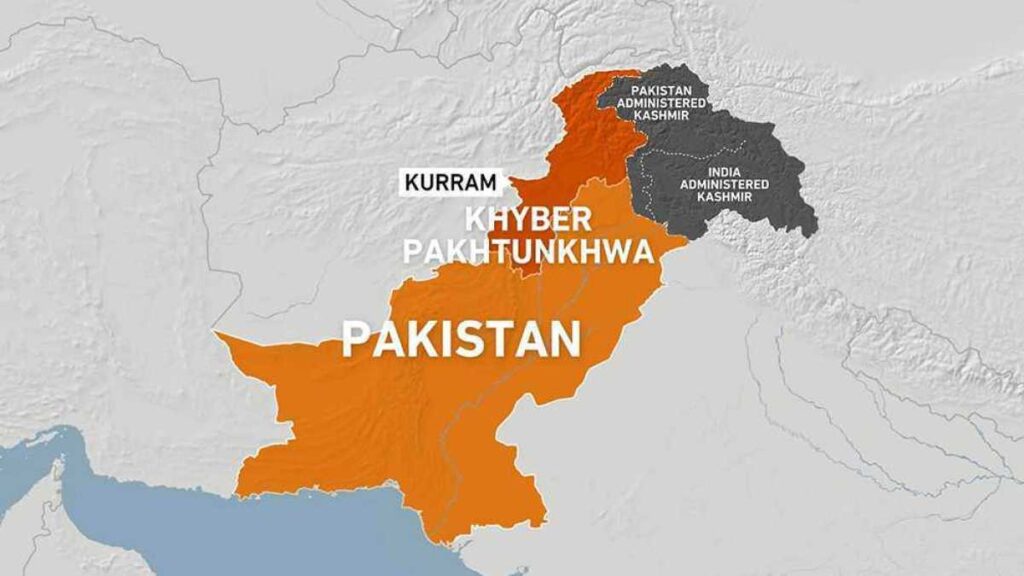
A shooting incident between rival tribes appear to have led to clashes, with woman and children among the casualties. At least 11 people have been killed and eight injured, including women and children, in tribal clashes in northwestern Pakistan, according to a local official. Tensions rose in Kurram district, Khyber Pakhtunkhwa province, on Saturday after two people were critically injured in a shooting incident between rival tribes. It was not immediately clear what caused the shooting. Vehicles were targeted in different areas of the district, leading to more casualties, said senior official Javedullah Khan. Khan said efforts were being made to secure travel routes and restore normalcy. The injured were taken to a hospital. Pir Haider Ali Shah, a former parliamentarian and member of a tribal council, said elders had arrived in Kurram to mediate a peace agreement between the tribes. “The recent firing incidents are regrettable and have hampered efforts for lasting peace,” he said. Last month, at least 25 people were killed in days of clashes between armed Shia and Sunni Muslims over a land dispute. Although both live together largely peacefully in the country, tensions have existed for decades between them in some areas, especially in Kurram, where Shia Muslims dominate in parts of the district. Balochistan Liberation Army Meanwhile, on Saturday a separatist group in the southwest of Pakistan claimed responsibility for an attack that killed 21 people. The Balochistan Liberation Army (BLA) said its fighters attacked a coal mine in Dukki district with heavy weapons, rocket launchers and grenades late Thursday night. It gave higher casualty figures of 30 dead and 18 injured. It also said that Pakistani security personnel were disguised as workers, without giving evidence. It threatened more assaults unless the military withdrew from the province. Balochistan is a hotbed of armed movements, with the BLA most prominent among them. They accuse the central government in Islamabad of exploiting the province’s rich oil and mineral resources to the detriment of the local population in the country’s largest and least-populated province, which borders Iran and Afghanistan. On Monday, the BLA – designated a “terrorist group” by Pakistan, the United Kingdom and the United States – claimed responsibility for an attack targeting Chinese nationals near Pakistan’s largest airport. The Chinese embassy in Pakistan said at least two of its citizens were killed and a third injured after their convoy was targeted with an improvised explosive device believed to have been detonated by a suicide bomber. Local media reports suggest at least 10 people were injured in total, with four cars destroyed in the explosion and 10 more vehicles damaged in the resulting fire. Adblock test (Why?)
Trump calls for death penalty for migrants who kill US citizens, police

Republican presidential candidate Donald Trump has called for the death penalty for migrants who kill United States citizens or members of law enforcement, as part of an incendiary rally in Aurora, Colorado. In his Friday night speech, Trump, a former president, repeated false and misleading claims about immigrants in the US, leaning into nativist sentiment as he campaigns for a second term. “Now America is known all throughout the world as occupied America,” he told the rally, citing a supposed “invasion” of migrants. Trump also laid out a stark vision for his first days in office, if re-elected, with policy proposals hinged on mass deportation. “To everyone here in Colorado and all across our nation, I make this pledge and vow to you: November 5, 2024, will be liberation day in America,” he said, with a reference to election day. Trump has repeatedly sought to demonise migrants in the run-up to the vote, pointing to an increase in southern border crossings under the administration of President Joe Biden, a Democrat. But critics have drawn parallels between Trump’s inflammatory rhetoric and the language used historically by white supremacist movements. A town in the national spotlight Trump’s campaign stop in Aurora was poised to drum up fears of immigration: He has long used the city as an example of the alleged lawlessness of migrants. The city has been besieged by misinformation in recent months, as rumours swirled that the Venezuelan gang Tren de Aragua had wrested control over parts of the city. Those claims were false. Media reports indicated they arose after a property management company — faced with accusations of decrepit conditions in its apartment buildings — blamed a gang presence for the lack of repairs. But Trump and his allies have nevertheless continued to repeat the false rumours, despite pushback from local officials. Ahead of Friday’s rally, Aurora Mayor Mike Coffman, a Republican, said in a statement on Facebook, “Concerns about Venezuelan gang activity have been grossly exaggerated.” Only a handful of incidents related to the Tren de Aragua gang have been reported in the city of 400,000, he added. “Former President Trump’s visit to Aurora is an opportunity to show him and the nation that Aurora is a considerably safe city — not a city overrun by Venezuelan gangs,” Coffman said. Furthermore, several studies have shown that undocumented migrants are far less likely to be arrested for felony and violent crimes than US-born citizens. Aurora Police Department statistics have also shown that major crimes in the city have dropped since last year. Preview of a second term Regardless, Trump repeated his false accusations on Friday, promising to “rescue” Aurora and other cities from an “invasion” of migrants. “We will begin the largest deportation operation in the history of the United States,” Trump said. “We will close the border. We will stop the invasion of illegals into our country. We will defend our territory. We will not be conquered.” The Republican candidate also invoked racist and xenophobic stereotypes, including that migrants were likely to carry illness. “They’re very sick, very sick. They’re coming into our country. They’re very, very sick with highly contagious disease, and they’re let into our country to infect our country,” Trump said. His speech included references to what he would do in his first days back in the White House if he wins November’s election. “I’m announcing today that, upon taking office, we will have an Operation Aurora at the federal level to expedite the removals of these savage gangs,” Trump said. Part of the plan, he explained, was to invoke the Alien Enemies Act of 1798, an antiquated law that allows the federal government to round up and deport foreigners belonging to a country with which America is at war. Trump then added he would seek harsh penalties for migrants involved in crimes. “I’m hereby calling for the death penalty for any migrant that kills an American citizen or a law enforcement officer,” he said, to cheers from the crowd. Race enters final phase The Aurora rally comes as Trump and his Democratic rival, Vice President Kamala Harris, enter the final stretch of the election season, with just 23 days until the vote. Trump has long promoted anti-immigrant sentiment, even before his first successful run for office in 2016. In the early and mid-2010s, he spread conspiracy theories about former President Barack Obama’s citizenship and whether the Democratic leader was secretly Muslim. When he announced his bid for the presidency in 2016, Trump campaigned in part on depictions of Mexican immigrants as “rapists”. That rhetoric continued throughout his term in office, which ended in 2021. Experts have warned that dehumanising language about migrants and foreigners can increase the likelihood of violence. But polls consistently show immigration as one of the top election issues in the US, making it fertile ground for politicians. Trump and his running mate, Senator JD Vance, have focused intensely on the issue as the November election approaches. They have sought to paint Harris as a “border czar” — a false designation — who left the US with “open borders” vulnerable to mass immigration. While southern border crossings did spike under Biden — reaching 250,000 crossings in the month of December 2023 — they have since returned to numbers similar to those seen during Trump’s term. Speaking to Latino voters during a Univision town hall on Thursday, Harris defended the Biden administration’s policy on immigration. She pointed to a recent bipartisan bill that would have toughened restrictions on the border. The bill was reportedly scuttled by Republicans loyal to Trump, reportedly at the former president’s behest. Still, critics say Harris has lurched further to the right on immigration issues. During a visit to Arizona last month, she promised to impose tougher restrictions on asylum than Biden, who has already taken action to limit asylum claims. Trump and Vance, meanwhile, have zeroed in on communities in cities like Aurora and Springfield, Ohio, to advance apocalyptic claims about immigration. Last month, for instance, the
Caught in India-China clashes, Ladakh’s nomadic herders fear for future
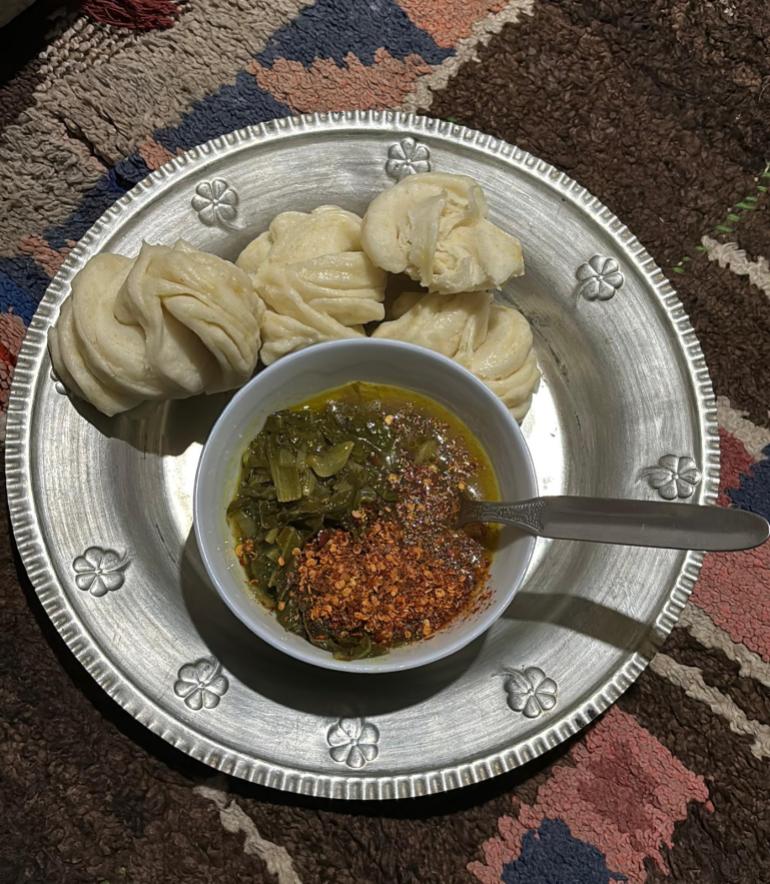
Chushul, Ladakh, India – The bubbling sound of water boiling on the stove and the aroma of spinach dal fill the air in Tashi Angmo’s kitchen as she rolls dough to make a type of Tibetan bread. “This is a dish which we call timok in Ladakh and tingmo across the border in Tibet,” she says as she prepares the apparatus to steam the dough she has rolled into balls resembling dumplings. “It’s a delicious meal after a hard day’s work.” Angmo, 51, lives in Chushul, a village which sits at an altitude of 4,350 metres (14,270 feet) in India’s Ladakh, one of the highest regions in the world, known for its pristine rivers and lakes, high valleys and mountains and clear skies. Chushul also lies about 8 kilometres (5 miles) from India’s Line of Actual Control with China, the disputed, de facto border between the two countries. A type of Tibetan bread called timok in Ladakh and tingmo across the border in Tibet [Priyanka Shankar/Al Jazeera] “I was around 11 years old when I realised that my family and I lived very close to the Chinese border. Back then, we used to be a family of shepherds, and I often went near the border with my father, to take our sheep herding,” Angmo says. She now works as a labourer doing a variety of tasks from cleaning roads to helping with construction and cooking meals for other workers, for the Border Roads Organisation – the Indian Defence Ministry’s initiative to maintain roads in the subcontinent’s border areas. Tashi Angomo lives in Chushul, a village which borders China in India’s Ladakh [Priyanka Shankar/Al Jazeera] “We even used to trade apricots and barley which grew in our village with the Chinese shepherds. In return, we brought back chicken, some Chinese cookies and also teapots!” she exclaims and points to the teapots which she still keeps in her kitchen cabinet. Even the Sino-India war in 1962 over border and territorial disputes between the neighbours, after New Delhi had given shelter to the Dalai Lama and other Tibetan refugees, did not undo that delicate balance. What did was a deadly clash in the summer of 2020. As the world was absorbed in its battle against the COVID-19 pandemic, Indian and Chinese soldiers fought with sticks, stones and their bare hands along the Line of Actual Control in Ladakh’s Galwan valley. Each side claimed that the other’s troops had crossed into their territory. The close combat fighting led to the death of 20 Indian soldiers and at least four Chinese soldiers. These were the first deaths along the border in decades. The Indo-China border seen from Chushul, which lies about 8 kilometres (5 miles) from India’s Line of Actual Control with China [Priyanka Shankar/Al Jazeera] Since then, both sides have stepped up border patrols and moved troops to the region, and their troops have occasionally engaged in standoffs. In many Ladakhi villages bordering China, grazing and farming close to the frontier has now been restricted by the Indian military. Boating in the pristine Pangong Tso lake, parts of which are claimed by both New Delhi and Beijing, has also been restricted to only military boats. “We can’t go near the border any more or trade with Chinese people. Shepherds – most of whom are nomads – have also lost land close to the border since the Indian military oversees the area,” she says. The land has largely been swallowed by military buffer zones on both sides of the border, with rich pasture land for 2km in either direction now a no-go zone for the herders. Young nomads and farmers moving away Donning a pink scarf and a grey sweater, Kunjan Dolma, who is in her late 30s, belongs to the Changpa community – seminomadic Tibetan people who live in the Changtang plateau in eastern Ladakh. She lives in Chushul during the winter months and is nomadic throughout the rest of the year. Dolma tells Al Jazeera that the land near the Chinese border is an important winter pasture for their animals. “But if we take our sheep and goats near the Chinese border, the military stops us and advises us to find grazing lands elsewhere. We have lost important pastures in recent years, but we have begun adjusting to the restrictions,” she says as she milks her sheep in an open-air shed built with stones and surrounded by the low-lying mountains. “In a way, the military restrictions also make sense. They protect us from the Chinese soldiers who I fear might take away our sheep in case we go very close to the border.” Dolma lives with her husband and teenage daughter and the family has about 200 sheep whose wool they sell to make pashmina shawls. It is an important source of income, she explains. She spends days in the mountains to ensure their yaks and sheep have access to the best grazing lands during the warmer months of the year. The Changpa community retreats to the villages in the lower-lying hills of Ladakh during winter. She earns her living selling pashmina wool, and yak meat and milk. Kunjan Dolma, who belongs to the Changpa community – seminomadic Tibetan people who live in the Changthang valley in eastern Ladakh – tends to her sheep with her family [Priyanka Shankar/Al Jazeera] But Dolma’s daughter, like many young people from the nomadic families of the Changtang plateau, has begun turning to other professions to earn a living. Dolma added that military restrictions on grazing land have also increased the momentum of young nomads turning away from this traditional way of life. Sipping on a cup of warm water before she heads to the mountains to make her cattle graze, Dolma reminisces about her younger days when border tensions did not exist in their lands. “I’ve spent many joyful days in these mountains with my sheep and when there were no border restrictions, it was very easy for us to take our cattle across pastures.