

Gaza has become a ‘graveyard’ for children amid Israeli attacks: UN
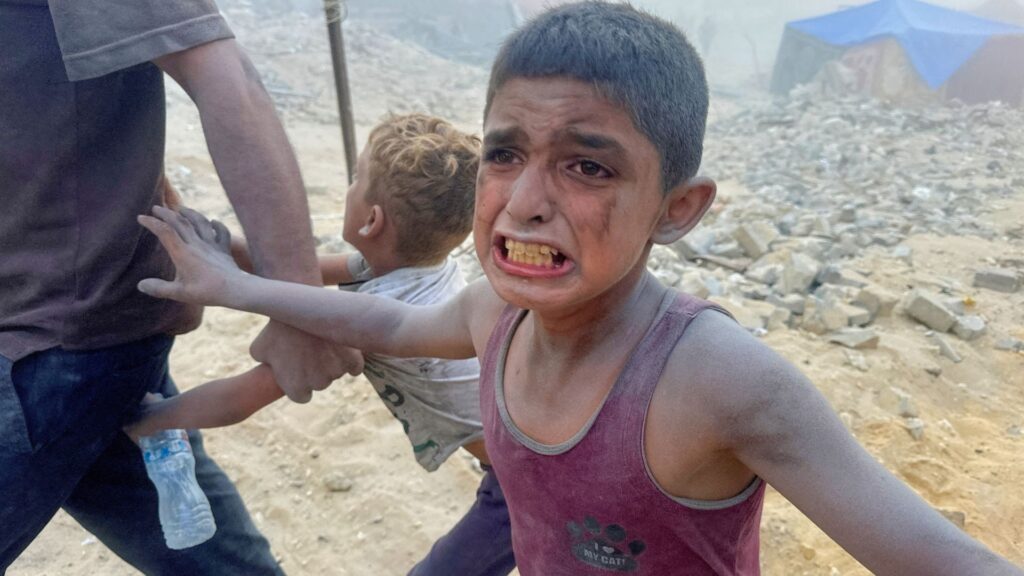
NewsFeed Violence, fear, displacement, hunger, loss and for 16,891 children in Gaza, death. These children are not numbers, they have a story, parents who loved them, grandparents who spoiled them and siblings who played with them. Their faces are now a memory etched in the hearts and minds of those who love them. Published On 9 Oct 20249 Oct 2024 Adblock test (Why?)
Where are the Israeli captives taken in the Hamas-led October 7 attack?
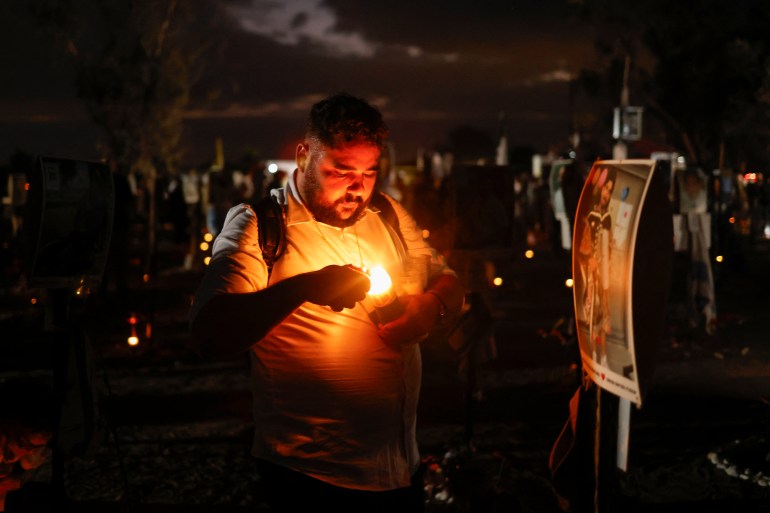
EXPLAINER Despite pressure to agree to a deal that would see captives released, Israeli PM Benjamin Netanyahu has not budged. It has been a year since the Hamas-led attack on Israel in which 1,139 people were killed and about 250 captured and taken to the Gaza Strip. Since October 7, 2023, Israel has killed more than 41,900 people in its genocide of the Palestinians in Gaza. Here’s what to know about what happened to the captives taken from Israel: What happened on October 7 last year? Palestinian armed groups led by Hamas’s armed wing attacked several areas in southern Israel. Israeli officials said 251 people were taken captive, including women, men, children and the elderly. Among them were 23 Thai nationals, one Nepali national and one Filipino national who were working or studying in Israel. Several were dual nationals. It is unclear how many of the captives hold dual citizenship. However, at least 15 of those released were from Mexico, Germany, Argentina, Ireland, the United States and South Africa. The US says 12 Americans were taken captive and seven are still in captivity. The captives were believed to have been taken to different locations in the Gaza Strip by fighters from different Palestinian groups. What happened to the captives? Nearly half the captives have been released. Others are still in captivity with some confirmed or feared dead. Israeli officials said 117 have been returned to Israel. Israeli and US officials say 101 people are still in Gaza. At least 33 bodies have been recovered by Israeli forces as of September 1, according to the Israeli government. Relatives and supporters of captives taken by Palestinian fighters on October 7, 2023, mourn at a memorial at the site of the Nova music festival on the first anniversary of the Hamas-led attack [John Wessels/AFP] Who did Hamas release? Some of the captives were unilaterally released by Hamas from October 20 to October 23, based on “humanitarian grounds”. Those released include: Natalie, 17, and Judith Tai Raanan, 59, (released on October 20) as well as Yochevid Lifshitz, 85, and Nurit Cooper, 79, (released on October 23). One hundred and five captives were released as part of a prisoner exchange mediated by the Qatari government from November 24 to December 1. They were 81 Israelis, 23 Thai workers and one person from the Philippines. In return, Israel freed about 240 Palestinians imprisoned in Israel, many of whom were minors and many more who had not been convicted of a crime. Within the first four days of the temporary ceasefire, Israel arrested more than 130 Palestinians in the occupied West Bank and East Jerusalem. Did Israel get any captives out of Gaza? Eight people have been rescued alive from Gaza by Israeli forces, often during heavy shelling that kills scores of Palestinians: On October 31, Israeli forces rescued a female soldier, 18-year-old Ori Megidish, from northern Gaza. On February 12, two Argentinian-Israeli men – Louis Har, 70, and Fernando Marman, 60 – were rescued in Rafah in a raid that reportedly killed 100 Palestinians. On June 8, Israeli soldiers killed more than 270 people and injured 700 in a raid to rescue four captives from the Nuseirat refugee camp: Noa Argamani, 25; Andrey Kovlov, 27; Shlomi Ziv, 40; and Almog Meir Jan, 21. One man, Kaid Farhan Elkadi, 52, was found in southern Gaza on August 24 by Israeli soldiers. Israelis chant during an antigovernment protest calling for the release of Israeli captives in front of the Israeli Ministry of Defence in Tel Aviv on September 28, 2024 [Jack Guez/AFP] Who’s still captive and alive? As of September 1, about 101 captives were believed to still be in Gaza, according to Israeli military spokesman Daniel Hagari. They include more than 30 people Israeli officials said are likely dead. On August 12, Abu Obeida, a spokesperson for Hamas’s military wing, the Qassam Brigades, confirmed that Hamas guards had killed a male captive and seriously wounded two female captives in separate incidents. On Monday, the Israeli group Hostages and Missing Families Forum said in a statement on X that officials informed the family of Idan Shtivi, a 28-year-old male captive, of his death. At least 33 bodies have been recovered, according to Israeli forces, including: Three captives who were killed by Israel on November 10 in an air raid that Israel said targeted a tunnel where Hamas commander Ahmed Ghandour operated. Officials initially denied Israel was responsible for the killings but admitted that it was “likely” last month. Three men who had escaped their captors and were killed by Israeli forces on December 15 in the Shujayea area of Gaza. The soldiers opened fire even though the three men waved white flags and spoke in Hebrew to the soldiers. Six captives who were found dead in a tunnel complex in Rafah on September 1. Hamas said they had been killed by Israeli bombs. Israel said they were shot by Hamas members. Irena Tati holds a picture of her grandson Alexander, held by Hamas in Gaza, at a demonstration to call for the release of the captives at the Museum of Art in Tel Aviv on December 2, 2023 [Ariel Schalit/AP Photo] What’s next? Despite pressure from families of the remaining captives to accept a ceasefire Hamas proposed that would see all of them freed, Israeli Prime Minister Benjamin Netanyahu is insisting that Hamas must release the captives before any ceasefire can be negotiated. Netanyahu has faced even more pressure from the families as Israel has widened its war by attacking Lebanon last week. Some accuse Netanyahu of not prioritising the captives but focusing instead on starting wars with Israel’s neighbours for political gain. A captive deal “has certainly fallen off the table when it comes to this government”, Al Jazeera’s Stephanie Dekker said. Demonstrations demanding the release of the captives have been held weekly in Israeli cities in recent months. Hamas, meanwhile, has maintained it will not release the captives unless Israel agrees to and implements a complete ceasefire in
Brazil lifts ban on Elon Musk’s X platform

The platform formerly known as Twitter was suspended in Brazil, one of its largest markets, at the end of August. Brazil’s Supreme Court has lifted a ban on Elon Musk’s X after the platform was blocked amid a dispute over disinformation. “I authorise the immediate return of the activities” of X, Judge Alexandre de Moraes said in his ruling, after the company paid millions of dollars in fines for failing to comply with a series of court orders. He gave Brazil’s communications regulator 24 hours to make the platform accessible again. Musk, the world’s richest man and a self-declared “free speech absolutist“, has yet to react to the decision. Through its Global Affairs account, X said it was proud to return to Brazil, adding that it would “continue to defend freedom of speech, within the boundaries of the law” in the countries where it operates. The platform formerly known as Twitter was suspended in Brazil, one of its largest and most-coveted markets, at the end of August in a standoff over online disinformation related to Brazil’s 2022 election campaign. X had also failed to name a legal representative in the country, as required by law. After Moraes blocked X, Musk lashed out at the judge, calling him an “evil dictator” and dubbing him “Voldemort” after the villain from the Harry Potter series. Moraes, for his part, accused the platform of undermining democracy by allowing disinformation to flourish – a position backed by Brazilian President Luiz Inacio Lula da Silva, who declared that the state would not “be intimidated by individuals, companies or digital platforms that believe themselves to be above the law”. X eventually complied with all of Moraes’s demands in order to have the suspension lifted. Last week, the judge confirmed that the company had also settled fines amounting to about $5.2m. The Brazil dispute was one of a series of recent face-offs between Musk, and governments including Australia and the United Kingdom seeking to prevent the spread of online misinformation. X had 22 million users in Brazil before it was blocked. Adblock test (Why?)
Duterte legacy in the balance as he seeks return to Davao stronghold
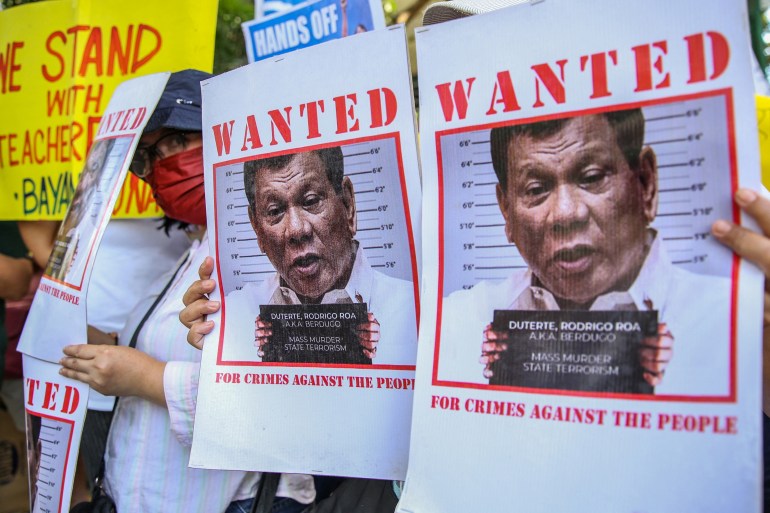
Davao, Philippines – Former President Rodrigo Duterte has registered to run for his past position as mayor of the southern Philippine city of Davao, in a potential last-ditch effort to save his family’s faltering political dynasty. The influence of the former president, notorious for his brutal “war on drugs” that saw thousands of extrajudicial killings, has waned in recent months after his family’s alliance with President Ferdinand Marcos Jr began to unravel. Duterte’s son, current Davao Mayor Sebastian Duterte, will be his father’s running mate. The powerhouse political family supported Marcos Jr’s successful presidential bid in 2022, but the alliance between the two families has unravelled in recent months. Vice President Sara Duterte, once seen as a probable successor to her father, resigned from her post of education secretary in June and has lost influence within the Marcos administration. The decision by her 79-year-old father to run for mayor comes as he faces an investigation by the International Criminal Court (ICC) into extrajudicial killings during the drug war. Lawyer Kristina Conti said last month that the ICC could file a warrant of arrest later this year. Duterte remains popular in Davao, long the family stronghold, but even there, his influence may be waning. Former President Duterte has come under pressure for his drug war and threats to opponents [File: Earvin Perias/AFP] Last month, Philippine authorities arrested religious leader and longtime Duterte ally Apollo Quiboloy, who faces child sex trafficking charges in the Philippines and the United States and had been hiding in a compound in the city. The arrest was seen as a strike by Marcos Jr against the Dutertes. Quiboloy, who calls himself the “Appointed Son of God,” announced on Tuesday that he would run for Senate in next year’s election. “After Quiboloy’s arrest, the possibility of arresting [Duterte] through Interpol and local police that is outside the control of the Dutertes seems more likely,” said Tyrone Velez, a columnist for the local publication MindaNews. Failed drug war In March, Sebastian Duterte announced he would continue the drug war started by his father, who had been Davao mayor for some 20 years before he became president and earned the nickname “The Punisher” for his brutal policies. In the ensuing days, at least seven drug suspects were killed in police encounters. The revival of the drug war was seen as an act of defiance by the Dutertes and it was not long before Marcos Jr responded. In May, the president removed Davao police chief Richard Bad-ang – a close Duterte ally who had been appointed to the post just before the killings – and dozens of other police officers. The Davao regional police office also announced a probe into the seven deaths. In July, a new police chief was finally appointed after being replaced three times in one day in a process Sebastian Duterte said was politically motivated. Drug killings have decreased – but have not stopped – in the Philippines since Marcos Jr took power, and in recent months, he has called for a “bloodless” drug war. Sixty-three people were killed in the central region of Cebu during anti-drug operations in 2024, according to the Dahas Project, an initiative of the University of the Philippines that tracks extrajudicial drug killings. Davao police killed a suspected drug dealer in a shootout on September 17, the first drug killing in the city since March, according to the Dahas Project. The alliance between the Dutertes and the Marcoses made them unstoppable in the last presidential election but the relationship has since unravelled [File: Eloisa Lopez/Reuters] Sebastian Duterte probably wanted to resume the drug war to solidify his support within Davao, Velez said, following criticism over his “lackadaisical leadership” and frequent absences from City Hall. “His camp must have thought restarting the drug war could make him a Digong 2.0 and make him relevant,” Velez said, using a popular nickname for Rodrigo Duterte. “But it was called off after a week.” The killings also took place as news of a potential ICC arrest warrant began to swirl. Duterte withdrew the Philippines from the ICC in 2019. But the court has said it still has jurisdiction over alleged crimes before that time, meaning Duterte could still face prosecution for thousands of killings. Closing in Removing pro-Duterte police officials has given Marcos Jr tighter control over anti-drug operations and taken power away from the Dutertes, even within Davao, Velez said. “The Marcoses want police directors in both the city and the Davao region who are not under the influence of the Dutertes.” The Marcos administration has also pushed out members of government loyal to Quiboloy, said Aries Arugay, chairperson of the Department of Political Science at the University of the Philippines, causing his national influence to “wane” in recent months. Quiboloy, who was Duterte’s spiritual adviser during his presidency, is himself a longtime player in Philippine politics. He supported Duterte’s 2016 campaign, lending the candidate his private jet, and supported Marcos Jr in 2022. Apollo Quiboloy, pastor and founder of the Kingdom of Jesus Christ (KOJC) church, is running for senator in the May 2025 elections [Jam Sta Rosa/AFP] But as the Duterte-Marcos alliance frayed, Quiboloy used his television network, Sonshine Media Network International (SMNI), to broadcast misinformation and attack the Dutertes’s critics. In 2023, SMNI’s YouTube channel was taken down by Google and its broadcast licence suspended by the Philippines’s telecommunications commission. SMNI’s Facebook page was also no longer available. Earlier this year, Quiboloy claimed without evidence that Marcos Jr and his wife, Liza, were conspiring with Washington to assassinate him. Marcos rejected the allegations. Quiboloy, 74, was finally arrested after a weeks-long operation in which hundreds of his supporters formed human barricades to block authorities from searching inside the compound of his church, the Kingdom of Jesus Christ. Marcos Jr has indicated he is open to extraditing Quiboloy to the United States after the completion of domestic criminal proceedings. The Marcos administration wants to “communicate that they are serious in working with
Mexico’s security minister says beheaded mayor asked for no protection

The Mexican government has revealed new details in the grisly murder of a mayor, Alejandro Arcos, who was found decapitated over the weekend. Arcos’s murder came nearly a week after President Claudia Sheinbaum took office, ramping up pressure on her administration to tamp down on cartel-related violence in the country. On Tuesday, Security Minister Omar Garcia Harfuch told reporters that Arcos, a prominent opposition figure, had not requested any security escorts on the day of his killing. “The mayor was going to Petaquillas for a meeting alone,” Garcia Harfuch said, referring to a town in the coastal state of Guerrero. “We know that he was going to a specific meeting, he was not accompanied, communication was lost in the community, and the discovery [of his body] was made hours later.” When pressed by journalists, the minister emphasised that Arcos had approached neither the Ministry of Security nor the National Guard for assistance, despite reports that the mayor had told local media he wanted extra protection. Garcia Harfuch also underscored that the investigation into Arcos’s death was ongoing. “There is a lot of information on this subject that we must guard for the sake of the investigation,” he said. Mourners pay their respects during the funeral service for Alejandro Arcos on October 7 [Oscar Ramirez/Reuters] A week into office Arcos’s death comes less than a week after he took office on September 30 as mayor of Chilpancingo, Guerrero’s capital city. With its isolated mountains and temperate Pacific climate, Guerrero has long been a hub for the production of opium poppies, the key ingredient in heroin. As many as 16 drug-trafficking gangs operate in the state, vying for control over the lucrative region. The armed gangs have openly challenged the local government too, most prominently in 2023. When two alleged members of the Los Ardillos gang were arrested, thousands of protesters took to the streets on the gang’s behalf to push for their release. They clashed with National Guard members and police in Chilpancingo, even using an armoured vehicle to smash through the gates of the state legislature. Multiple officials were taken hostage during the unrest. Arcos was headed to meet members of the Los Ardillos gang on Sunday, the day of his death, according to Reforma, a Mexican news outlet. But images soon emerged on social media showing Arcos’s severed head perched atop what appeared to be his pick-up truck. It was the second time in less than a week that a member of the municipal government had been found dead. Just three days prior, Francisco Tapia, another newly minted member of the city government, was shot to death. Elections marred by violence On Tuesday, Garcia Harfuch revealed that four other mayors — from Guerrero and another state, Guanajuato — had appealed for protection following Arcos’s death. Mexico has long grappled with political violence, as cartels and other gangs seek to exert influence over government affairs. This year, the country held its largest election in history, with nearly 20,000 public offices up for grabs, including local, state and federal positions. But the proceedings were marred by violence: An estimated 37 candidates were killed in the lead-up to the vote, many of them seeking local office. In other cases, the relatives of candidates were killed, in apparent intimidation attempts. The violence forced some candidates from the race. Others were assigned National Guard members for protection. In the wake of Arcos’s death, public officials voiced frustration and anger at the ongoing violence. “I strongly condemn the murder of the Municipal President of Chilpancingo, Alejandro Arcos Catalán,” Guerrero Governor Evelyn Salgado Pineda wrote on social media. “His loss grieves the entire Guerrero society and fills us with indignation.” Alejandro Moreno, the head of Arcos’s conservative-leaning party, the Institutional Revolutionary Party (PRI), said on Monday, “We will not allow his death to go unpunished.” Secretary of Security and Citizen Protection Omar Garcia Harfuch speaks alongside President Claudia Sheinbaum at the unveiling of her security strategy on October 8 [Henry Romero/Reuters] Sheinbaum’s security strategy As government officials grappled with the fallout from Arcos’s death on Tuesday, President Sheinbaum — herself inaugurated on September 30 — revealed her proposals to bolster Mexico’s security. A member of the left-leaning Morena Party, she ruled out a return to hardline tactics. “The war on drugs will not return,” she said, citing a controversial United States-led initiative. Sheinbaum echoed her predecessor, the popular Morena leader Andres Manuel Lopez Obrador, in calling for measures that address the root causes of crime, like poverty. She also asserted that her government would not resort to excessive force to tackle crime. Mexico’s military and law enforcement have long been accused of committing extrajudicial killings — and even collaborating with the cartels. “We are not looking for extrajudicial executions, which is what was happening before,” Sheinbaum said. “What are we going to use? Prevention, attention to the causes, intelligence and [law enforcement] presence.” Lopez Obrador, Sheinbaum’s political mentor, had been criticised for his “hugs, not bullets” approach to tackling crime — something Sheinbaum herself was accused of embracing on the campaign trail. Adblock test (Why?)
Party opposed to India’s stripping of Kashmir’s autonomy wins election
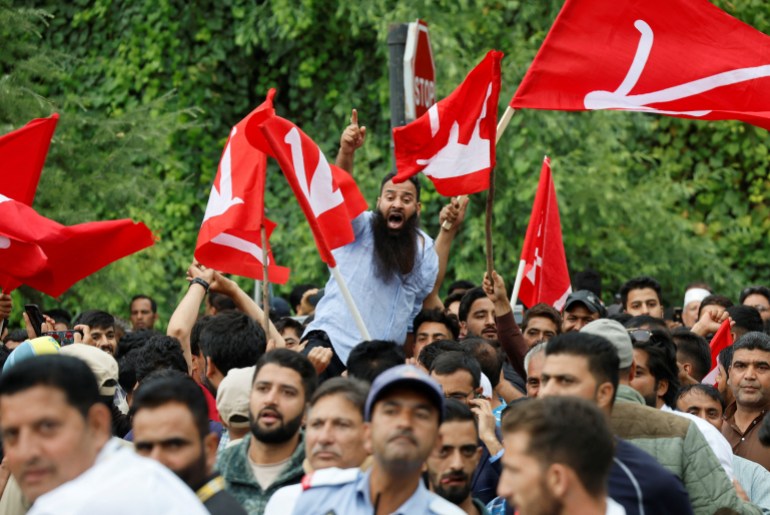
National Conference-led alliance wins 48 seats in 90-seat assembly in first state legislative elections in a decade. India-administered Kashmir’s biggest political party opposed to India’s stripping of the region’s semi-autonomy has won the most seats in the first legislative elections since the move by Prime Minister Narendra Modi’s government five years ago. The Jammu and Kashmir National Conference, or NC, won 42 seats in the 90-seat Legislative Assembly, the Election Commission announced on Tuesday. The BJP secured 29 seats while the country’s main opposition Indian National Congress party, which fought the election in alliance with the NC, succeeded in six constituencies. Polling took place over three phases starting on September 18. “People have supported us more than our expectations. Now our efforts will be to prove that we are worth these votes,” Omar Abdullah, the NC leader and the region’s former chief minister, told reporters in the main city of Srinagar. His father and president of the party, Farooq Abdullah, said its mandate was to run the region without “police raj” rule and try freeing people from jails. “Media will be free,” he said. Supporters of the Jammu and Kashmir National Conference party celebrate outside the vote-counting centre in Srinagar [Sharafat Ali/Reuters] Hundreds of NC workers gathered outside counting centres and at the homes of the winning candidates to celebrate the party’s victory. Kashmir has been at the centre of a dispute with neighbouring Pakistan since 1947. India and Pakistan both claim the region in full but rule it in part after having fought two of their three wars over the region. Restoration of ‘political rights’? Some saw the vote as a de facto referendum on the federal government’s decision to repeal the territory’s special status. The move downgraded and divided the former state into two centrally governed union territories, Ladakh and Jammu-Kashmir. “The people have given their judgement against what New Delhi did,” social activist Iqbal Ahmad Bhat told the AFP news agency. Resident Jahangir Ahmad told AFP that he hoped “political rights will be restored” in the state after the NC-led alliance’s victory. Nevertheless, critics said the assembly has only nominal powers over education and culture. New Delhi also has the power to override legislation and will continue to appoint the governor. The BJP won all its seats in the southern Hindu-majority region of Jammu. Modi said he was “proud” of the BJP’s performance, saying that enthusiasm for the election was reflective of “the people’s belief in democracy”. BJP victory expected in Haryana In legislative elections held on Tuesday in the state of Haryana, the BJP appeared to be heading for victory, according to preliminary results shared by the Election Commission. The BJP was leading in 50 constituencies and the Congress in 35 out of 90. So far in the vote counting, the BJP has won 18 seats and is leading in 32 constituencies while the Congress has won 15 seats and is leading in 20, according to the commission. A victory would give the BJP a record third win in the state, which it is set to govern for the next five years. The results in Haryana state are a surprise because most exit polls had predicted an easy victory for the Congress party. Adblock test (Why?)
MI5 chief says Russia and Iran behind rise in assassination plots in UK
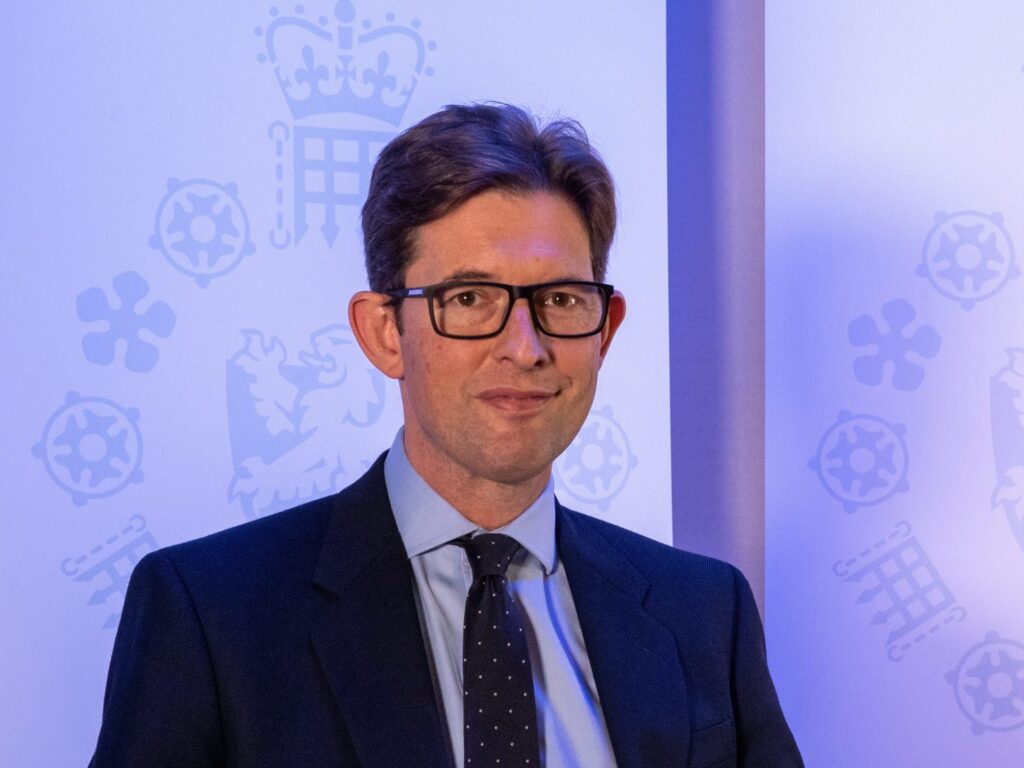
Ken McCallum said the number of state-threat investigations undertaken by MI5 has risen by 48 percent in the past year. The United Kingdom is facing a “staggering rise” in assassination attempts on its soil by Russia and Iran as the hostile states recruit criminals to “do their dirty work” for them, the head of the UK’s domestic intelligence agency has said. In a rare public speech on Tuesday setting out the major threats to the UK from both hostile states and terror groups, MI5 director Ken McCallum said the number of state-threat investigations undertaken by MI5 has risen by 48 percent in the past year, with Iran, Russia and, China the main perpetrators. “The first 20 years of my career here were crammed full of terrorist threats,” McCallum said. “We now face those alongside state-backed assassination and sabotage plots, against the backdrop of a major European land war.” “It will be clear to you that MI5 has one hell of a job on its hands,” McCallum told journalists at the UK’s counterterrorism command centre in London. Charting out threats from Iran, he said that his agents and police have tackled 20 Tehran-backed plots since 2022 and warned that Iran could expand its targets in the UK if Israel attacks in response to Iran’s missile barrage. The spy chief also noted that the widening conflicts in the Middle East raise the risk “of an increase in – or broadening of – Iranian state aggression in the UK.” With respect to threats from Russia, McCallum said that despite the expulsion of more than 750 Russian diplomats from Europe since Moscow invaded Ukraine and the ejection of the last Russian military intelligence officer from the UK earlier this year, it was “eye-catching” how Russian state actors were turning to proxies to do their work. “The GRU in particular is on a sustained mission to generate mayhem on British and European streets: we’ve seen arson, sabotage and more. Dangerous actions conducted with increasing recklessness,” he said, declining to give further details. Both Russia and Iran often turn to criminals, “from international drug traffickers to low-level crooks,” to carry out attacks, he added. The UK’s official “terror” threat level stands at “substantial,” the middle of a five-point scale, meaning an attack is likely, and since 2017 MI5 and the police have disrupted 43 late-stage “terror” plots. McCallum also said there was worrying signs that the ISIL group is back, despite the collapse of its self-declared caliphate in Iraq and Syria. He said the internet was the “biggest factor” driving the rise, describing how easily youngsters can access “inspirational and instructional material” from their bedrooms. He said the intelligence service was seeing “far too many cases where very young people are being drawn into poisonous online extremism” and singled out “canny” internet memes. “Extreme right-wing terrorism in particular skews heavily towards young people, driven by propaganda that shows a canny understanding of online culture,” he added. Adblock test (Why?)
Kosovo to start trial for Banjska attack by Serb group: Why it matters
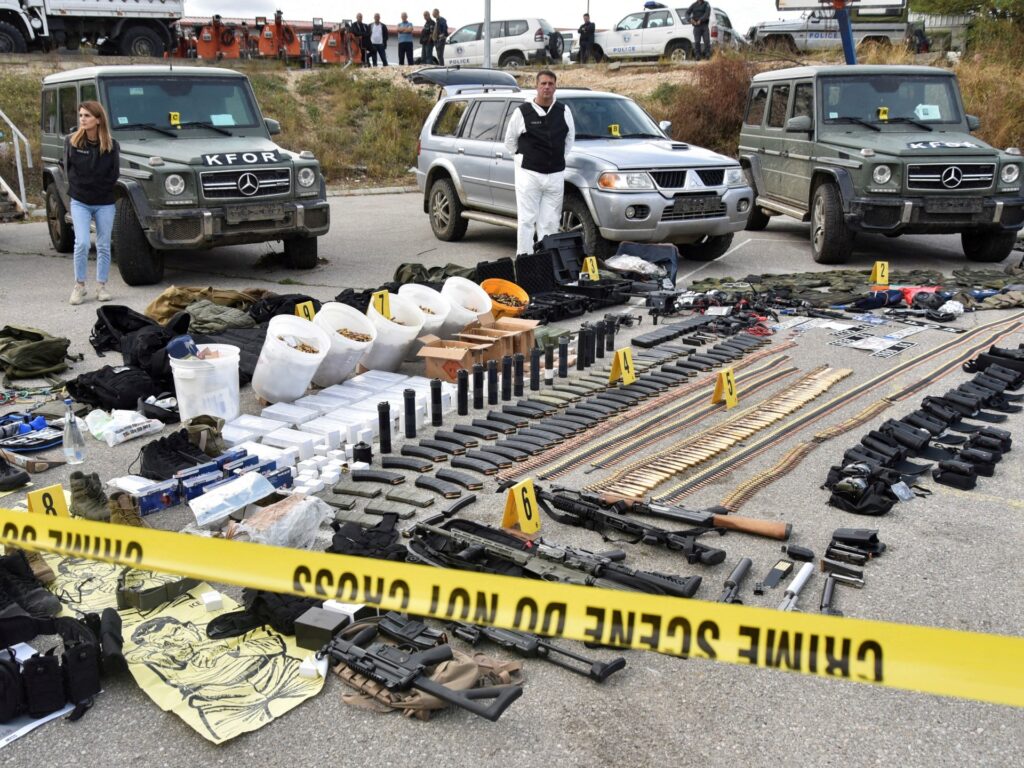
A year after an attack by a Serbian armed group in northern Kosovo’s Banjska killed a police officer, the trial is expected to begin on Wednesday at the Pristina Basic Court. In all, 45 suspects have been indicted for the attack in September 2023, which Kosovo Serb businessman and politician Milan Radoicic later said he led and organised after he was identified in drone footage by Kosovo security officials. The attack aggravated tensions between Kosovo and Serbia, and experts fear the trial could be complicated by the difficult nature of the relationship between the two. Here’s what happened in Banjska and why the trial matters: What happened in Banjska? A group of Serbs, armed and masked, killed Kosovo police Sergeant Afrim Bunjaku and wounded two others when they ambushed a Kosovar police patrol in the village of Banjska near the Serbia-Kosovo border on September 24, 2023. The group then fled to a nearby Orthodox monastery, and its members barricaded themselves in. A gun battle ensued with Kosovo police that lasted for hours. Three of the Serb assailants were killed, and dozens of the attackers fled to Serbia. The police confiscated more than 1,000 of their weapons and pieces of equipment valued at more than 5 million euros (more than $5.5m). Kosovar officials said the confiscated weapons were produced in Serbia and cannot be found on the open market. Based in part on the alleged origins of the weapons, Kosovo Prime Minister Albin Kurti and other Kosovar authorities have accused Serbia of masterminding the attack. Who are the suspects and what are the charges against them? The 45 defendants have been charged with “terrorism” and crimes against Kosovo’s constitutional order and security. The central accusation against them is that they were aiming to take over the northern part of Kosovo with the intent of annexing it to Serbia, according to the indictment filed in September. Prosecutor Naim Abazi called the gunmen a “well-structured group” and said the investigations into the case were “one of the most complex that the prosecution has ever worked on”, according to the Balkan Insight news website. Only three of the suspects remain in custody in Kosovo. The rest, including Radoicic, remain in Serbia. On October 3, 2023, Serbian authorities arrested Radoicic for questioning. He denied guilt in his testimony to the Serbian prosecutor’s office. But previously in a letter read by his lawyer, he had admitted to personally organising the attack and denied the involvement of the Serbian government. Why was the attack so significant? The Banjska attack is one of the most violent incidents to occur in Kosovo since it declared independence from Serbia in 2008, a decade after a war between Serbian forces and ethnic Albanian secessionists that saw an Albanian Kosovar uprising against Belgrade’s rule. The majority Serb population that lives in northern Kosovo does not recognise the country as a sovereign nation and views Belgrade as its capital. Over the years, there have been numerous clashes between Serbs on the one hand and Kosovo police and NATO-led peacekeepers on the other. Since 2012, Belgrade and Pristina have been holding normalisation talks mediated by the European Union with the goal of joining the bloc, but the talks have broken down mostly over a deal to create an association of Serb-majority municipalities in northern Kosovo as some fear it would only create another mini-state. Kosovo political leaders have accused Serbia of being behind the Banjska attack politically, materially and logistically. Kurti said Serbian President Aleksandar Vucic planned and ordered the attack “to destabilise” Kosovo with the goal of starting a war for more territorial gain. Speaking to the media at a commemoration ceremony last month at the scene of the attack, Kurti maintained that Radoicic – who was at the time vice president of the Serb List, a Belgrade-supported political party in Kosovo – “was trained in Serbia and financed by Belgrade”. Experts said the attack suggests a possible hardening in Serbia’s approach towards resolving differences with Kosovo. The attack showed that “Serbia and its proxy groups have abandoned peaceful dialogue and have chosen hybrid warfare to achieve their political goals”, Gezim Visoka, associate professor of peace and conflict studies at Dublin City University, told Al Jazeera. Those goals, Visoka said, are to “force Kosovo and the international community to make further concessions in the EU-led talks for normalisation of relations, which have reached a stalemate due to fundamental disagreements”. What has Serbia said? Serbia has denied any role in the attack, and Radoicic has insisted that the Serbian government was not involved. Vucic has instead accused Kurti of wanting to expel Serbs from Kosovo. After the attack, he said Kurti’s refusal to form an Association of Serb Municipalities – as part of a 2013 agreement between Belgrade and Pristina that would allocate Kosovo Serbs more autonomy – is what fuelled tensions leading to the violence in Banjska. Journalist Branislav Krstic, a Serb from northern Kosovo, described the Banjska attack to Al Jazeera as “a gift for Pristina” — in that it helps strengthen Kosovo’s argument for keeping control over the Serb-majority north. The case, he said, adds to the “loss of sovereignty of Serbs in northern Kosovo”. What’s expected during the trial? Prosecution lawyers told the Kosovo daily Koha last month that they feared the trial would be prolonged, in part because most of the suspects are in Serbia. Lawyer Kadri Osaj told Koha that their extradition from Serbia was unlikely due to a lack of legal cooperation between the two governments. “The authorities of Serbia were directly and indirectly involved in the case, so I do not expect that these persons will be extradited to Kosovo,” Koha quoted Osaj as saying. Visoka also said the fact that most suspects won’t physically be brought to trial complicates the process. Without Serbia’s cooperation and pressure from the West, it’s unlikely that Kosovo will be able to bring to justice the perpetrators of the attack, Visoka said. “The trial is likely to reveal more about the
‘They tried to murder everyone’: Haiti reels after deadly gang attack
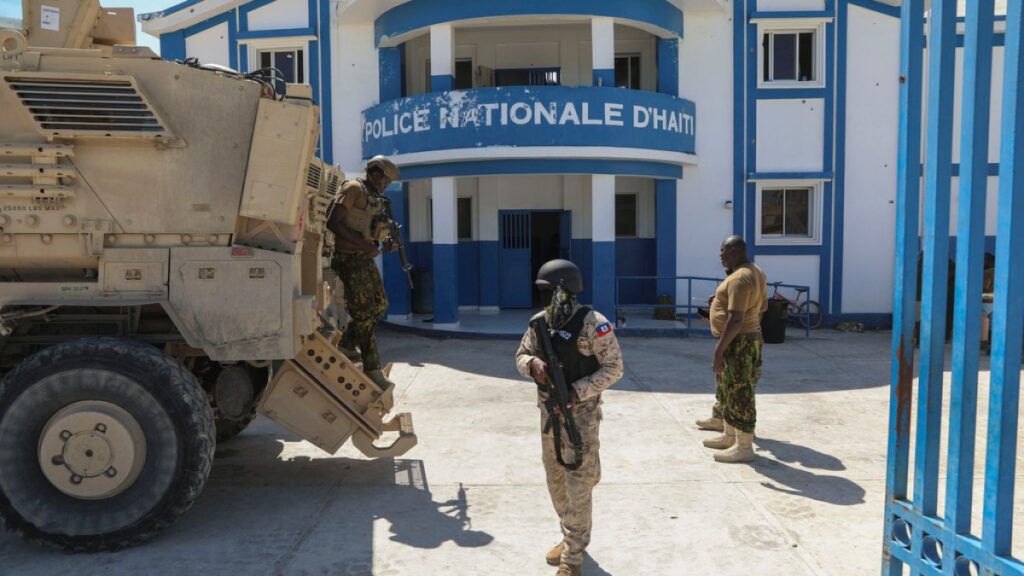
More than 6,200 people are staying with relatives or in makeshift shelters after massacre in central Haiti town. Survivors of a deadly gang attack in central Haiti last week have described waking up to gunfire and walking for hours in search of safety, as the country continues to grapple in the aftermath of the assault that killed at least 70 people. Dozens of Gran Grif gang members armed with knives and assault rifles killed infants, women, the elderly and entire families in their attack last Thursday on Pont-Sonde, about 100km (62 miles) northwest of Port-au-Prince in the Artibonite region. “They tried to murder everyone,” Jina Joseph, a survivor, told The Associated Press news agency. Jameson Fermilus, who had crouched in a corridor next to his house as smoke and gunfire filled the air, was among thousands of survivors who walked for hours, looking for safety. “We don’t know what we are going to do,” said another resident who joined them, 60-year-old Sonise Morino. “We have nowhere to go.” The massacre has underscored the deadly violence and instability gripping Haiti, where powerful armed groups have carried out attacks and kidnappings across the capital of Port-au-Prince and in other parts of the country. The International Organization for Migration (IOM) said at least 6,270 people were displaced in the attack on Pont-Sonde. The vast majority have sought refuge with relatives and friends in nearby communities. Others with nowhere to go have crowded into a church, a school and a public plaza shaded by trees in the coastal city of Saint-Marc. “These deaths are unimaginable,” Mayor Myriam Fievre said as she met with survivors. The attack – retribution for self-defence groups trying to stop the gang from erecting a toll on a nearby road – was the largest massacre in central Haiti in recent years. It came just days after the United Nations reported that at least 3,661 people had been killed in Haiti in the first half of 2024 amid the “senseless” gang violence that has engulfed the country. “To those who sow terror, I say this: You will not break our will,” Haiti’s interim Prime Minister Garry Conille said in a statement following the Pont-Sonde attack. “You will not subjugate this people who have always fought for their dignity and freedom. We will never abandon our right to live in peace, security and justice.” More than 6,000 people have been displaced following armed attacks in Pont-Sondé, a locality in Haiti situated in the commune of Saint-Marc, in the Artibonite department. The majority have taken shelter with relatives in nearby localities. 👉 https://t.co/oBLDDVMoWI pic.twitter.com/AhA3d8iW0H — IOM Haiti (@IOMHaiti) October 5, 2024 Yet, despite the defiant rhetoric, Conille late last month acknowledged that Haiti was “nowhere near winning” the battle against the gangs. The UN Security Council recently extended the mandate of a Kenya-led policing mission meant to help restore security in the Caribbean nation, but the force has struggled to wrest control from the gangs. Funding for the deployment – formally known as the Multinational Security Support Mission (MSS) – has lagged, and a UN expert said last month that the force remains under-resourced. Conille has travelled to Kenya and the United Arab Emirates this week to push for additional help. Adblock test (Why?)
Russian court jails US citizen for nearly seven years on ‘mercenary’ charge
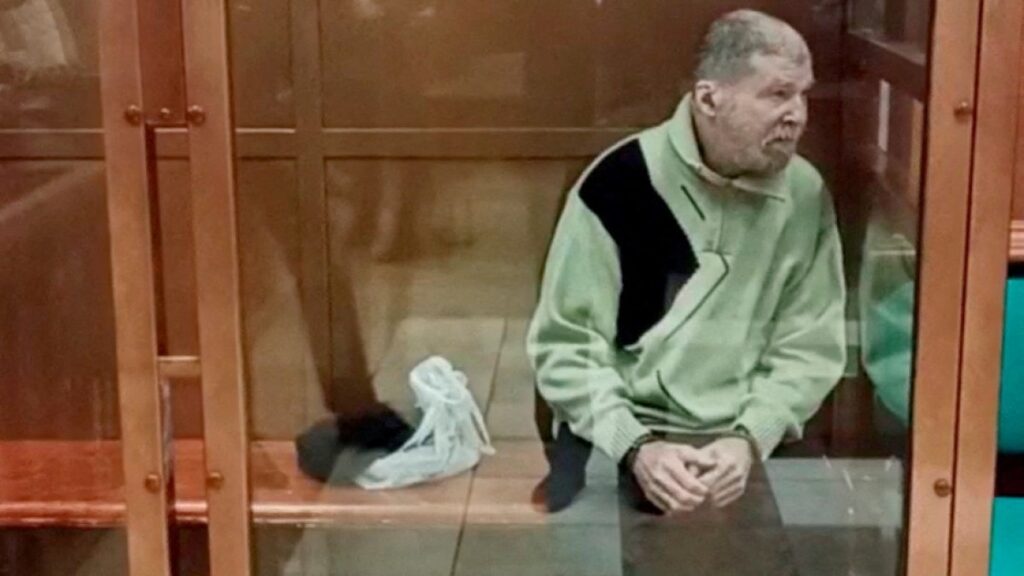
Stephen Hubbard, 72, was detained in eastern Ukraine in April 2022 and accused of fighting for Ukraine. A Russian court has jailed a United States citizen for six years and 10 months after convicting him in a closed-door trial of fighting for Ukraine as a mercenary. Investigators said Stephen Hubbard, who is originally from the US state of Michigan, was paid $1,000 a month to serve in a Ukrainian territorial defence unit in the eastern city of Izyum, where he had been living since 2014. They alleged the 72-year-old signed up in February 2022, just before Russia launched its full-scale invasion, and was provided with training, weapons and ammunition. Hubbard was detained by Russian soldiers two months later. Hubbard’s case first became public late last month when his trial began and he entered a guilty plea. At a hearing last week, the court granted the prosecutors’ request for the proceedings to be held in secret without the media. Hubbard, who was handcuffed, shuffled slowly into the Moscow City Court and stood with difficulty as Judge Alexandra Kovalevskaya read out the sentence, according to journalists from the Reuters and AFP news agencies who were in the court. Russia’s state news agency RIA reported that Hubbard’s lawyer planned to lodge an appeal. US State Department spokesperson Matthew Miller said that Washington had limited information about the case because Russia had refused to grant consular access to Hubbard. He confirmed that Hubbard had been arrested two years ago in Ukraine. “We’re disappointed, as we often are, when they refuse to grant consular access,” Miller told reporters in Washington. “They have an obligation to provide it and we’re going to continue to press for it. We’re looking at the case very closely and considering our next steps.” Hubbard’s sister Patricia Hubbard Fox and another relative have cast doubt on his reported confession, telling Reuters he held pro-Russian views and was unlikely to have taken up arms given his age. In interviews, Fox and the other relative portrayed Hubbard as an isolated figure who had grown estranged from some family members during decades abroad teaching English, including in Japan and Cyprus. Fox said Hubbard moved to Ukraine in 2014 and lived there for a time with a Ukrainian woman, surviving off a small pension of about $300 a month. He never learned Russian or Ukrainian, she said. Hubbard is one of at least 10 Americans behind bars in Russia, nearly two months after a prisoner swap between Moscow and the West freed three Americans, including Wall Street Journal reporter Evan Gershkovich, and dozens of others. Adblock test (Why?)