

Russia-Ukraine war: List of key events, day 956
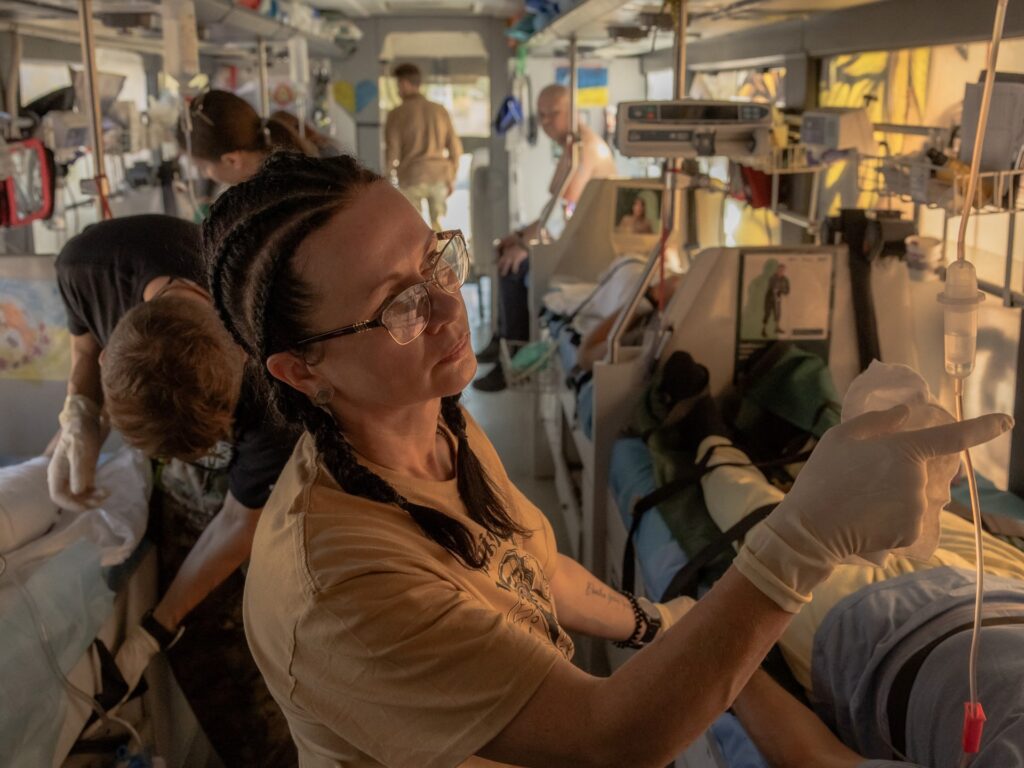
As the war enters its 956th day, these are the main developments. Here is the situation on Tuesday, October 8, 2024. Fighting At least one person was killed and six injured in Russian shelling in the eastern Ukrainian city of Sloviansk. Vadym Filashkin, the governor of the Donetsk region, said six multistorey apartment blocks were among the buildings damaged and that two children were among the injured. One Ukrainian port worker was killed and five other people injured, including foreign nationals, after a Russian missile struck a Palau-flagged ship in Ukraine’s southern port of Odesa, in the second such attack in as many days. Ukrainian Minister for Foreign Affairs Andrii Sybiha condemned the attacks on the two ships. Ukraine’s Ministry for Restoration said the ship attacked on Sunday was the Saint Kitts and Nevis-flagged Paresa, which had a cargo of 6,000 tonnes of corn. Russia’s Ministry of Defense claimed its forces captured the village of Hrodivka, close to the strategically important city of Pokrovsk in eastern Ukraine. Ukraine said its forces struck an oil terminal on the Crimean Peninsula, which was seized and illegally annexed by Moscow in 2014. Russian-installed authorities in Crimea said there had been a fire at an oil depot in the Black Sea port town of Feodosia and there were no casualties. The GRU, Ukraine’s military spy agency, said it “seriously damaged” the Alexander Obukhov, an Alexandrit-class Russian minesweeping vessel, in Russia’s Kaliningrad region in a sabotage operation. There was no immediate comment from Russia. Ukraine said a Russian hypersonic missile struck the “area” of Ukraine’s major Starokostiantyniv airbase on Monday morning. The air force did not say whether the attack caused any damage. Local governor, Serhii Tyurin, said there were no civilian casualties or damage to critical infrastructure. Two Russian Kinzhal missiles were also shot down in the Kyiv region, the Ukrainian air force said. Debris came down in three districts of the capital, but no major damage or casualties were reported. Ukrainian air defences shot down 32 Russian drones and a further 37 were lost on military radars, suggesting they had been disabled by electronic warfare systems, the air force said. Politics and diplomacy Ukrainian President Volodymyr Zelenskyy said the war had entered “a very important phase” and that Ukraine needed to “put pressure on Russia in the way that’s necessary for Russia to realise that the war will gain them nothing”. Speaking in a video statement, Zelenskyy added: “Only through strength can we bring peace closer”. The United States criticised Russia for withholding consular access for detained US citizen Stephen Hubbard after a court jailed the 72-year-old for six years and 10 months. Russia detained Hubbard in April 2022 and accused of being a “mercenary” for Ukraine. A court in Russia’s Kursk region ordered the arrest in absentia of two Italian journalists for reporting from the Ukrainian-occupied part of Kursk. The court demanded Simone Traini and Stefania Battistini, journalists from Italy’s RAI public broadcaster, be extradited for “illegally crossing” the border from Ukraine. A Ukrainian government source told the Reuters news agency that Ukrainian hackers were behind a large-scale cyberattack on Russian state media company VGTRK on Monday. Adblock test (Why?)
Paul Pogba drug ban reduced to 18 months, can play football from March
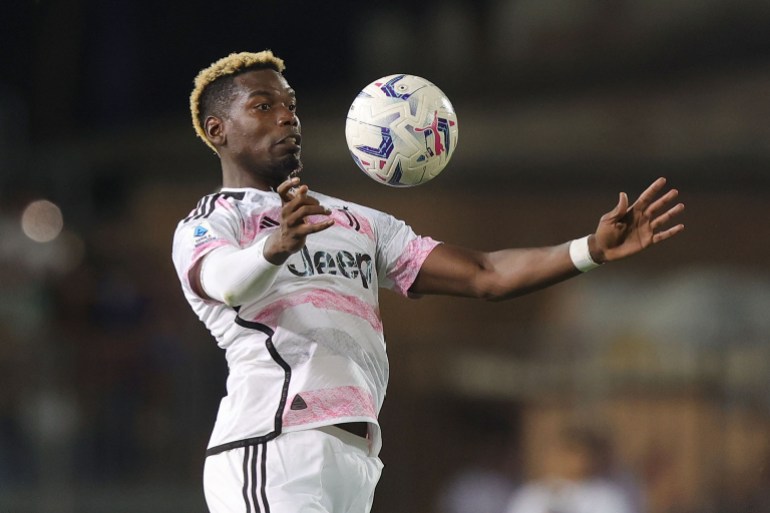
Pogba’s four-year doping ban is slashed on appeal, opening the door to the French star signing with a new club. Paul Pogba’s doping suspension has been cut from four years to 18 months after experts supported the French football player’s insistence that he had unintentionally ingested a banned substance, the Court of Arbitration for Sport (CAS) says. The France international was provisionally suspended by Italy’s anti-doping organisation, NADO Italia, in September 2023 after testing positive for DHEA, a banned substance that raises levels of testosterone. CAS reduced the sentence last week with Pogba saying his “nightmare is over”. The 31-year-old, who has a contract with Italy’s Juventus until June 2026, will be eligible to return to football in March. In a statement released on Monday, CAS said Pogba had argued that his ingestion of DHEA was not intentional and had occurred after he consumed a supplement prescribed to him by a doctor in Florida. “Mr Pogba had been given assurances that the medical doctor, who had claimed to treat several high level U.S. and international athletes, was knowledgeable and would be mindful of Mr Pogba’s anti-doping obligations under the World Anti-Doping Code,” CAS added. “Mr Pogba’s case was supported by several experts. Much of the evidence provided by Mr Pogba was unopposed. “The CAS Panel determined, however, that Mr Pogba was not without fault and that, as a professional football player, he should have paid a greater care in the circumstances.” Pogba last played for Juventus in a 2-0 win at Empoli more than a year ago. The midfielder had a disappointing second spell with Juve due to injuries since he returned to the Turin-based club after his departure from Manchester United on a free transfer in 2022. Pogba and Juventus are open to the prospect of the Frenchman restarting his career elsewhere, according to ESPN. Pogba’s last competitive match for Juventus was on September 3, 2023, in Empoli, Italy, in the Serie A match against Empoli FC at Stadio Carlo Castellani [Gabriele Maltinti/Getty Images] Adblock test (Why?)
Indian club Mohun Bagan out of AFC competition after missing match in Iran
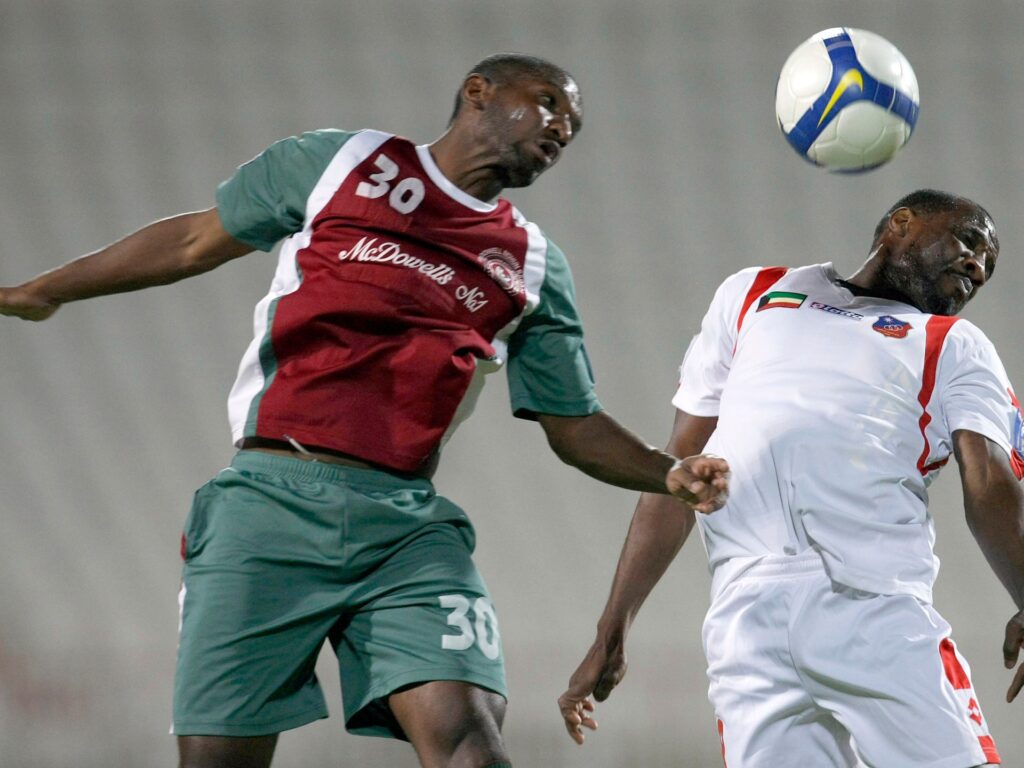
The club did not travel to Tabriz for a group stage match on October 2, the day after Iran launched missiles on Israel. Indian football club Mohun Bagan Super Giant are out of the second-tier regional club competition for the Asian Football Confederation (AFC) after not travelling to Iran for a group stage match. The Kolkata-based Indian Super League (ISL) club, placed in Group A of the AFC Champions League Two, were scheduled to play Iranian club Tractor SC in Tabriz on October 2, the day after Iran launched ballistic missiles towards Israel amid soaring violence in the region. However, several Mohun Bagan players wrote to the club’s management voicing concerns over security if they travelled to the Persian Gulf Pro League team’s home city in northwestern Iran, which was one of the sites from which the missiles were launched, according to reports in Indian media. The match was cancelled after Mohun Bagan did not travel to Tabriz. “Mohun Bagan Super Giant are considered to have withdrawn from the AFC Champions League Two”, the AFC said in a statement on Monday. “All matches played by Mohun Bagan Super Giant are cancelled and considered null and void. For the avoidance of doubt, no points and goals in the club’s matches shall be taken into consideration when determining the final rankings in Group A.” The regional football body said it would refer Mohun Bagan’s matter to the continental body’s relevant committees for further decisions. 🇮🇳 Mohun Bagan Super Giant considered to have withdrawn from #ACLTwo after failure to report to Tabriz for Group A fixture against Tractor FC on October 2.https://t.co/gPXaeOmmgE — #ACLElite | #ACLTwo (@TheAFCCL) October 7, 2024 Mohun Bagan Super Giant have not responded to their ouster from the regional club competition. However, fans of the Indian club have criticised the decision and have called on officials to appeal it in the Court of Arbitration for Sport. “Player and staff safety is paramount,” football agent Baljit Singh Rihal wrote on X. “Punishing teams for refusing to travel to a war-torn country by removing them from the competition is absurd,” he added. Absolutely ridiculous! Player and staff safety is paramount. Punishing teams for refusing to travel to a war-torn country by removing them from the competition is absurd. This decision must be overturned immediately, as it defies all common sense. ⚽️ #MohunBagan https://t.co/osbElHQcvE — Baljit Singh Rihal (@BaljitRihal) October 7, 2024 Mohun Bagan are one of the oldest football clubs in Asia and the current champion of the ISL. They are currently coached by former Spanish football player and coach Jose Francisco Molina. Adblock test (Why?)
Why Palestinians won’t leave their land
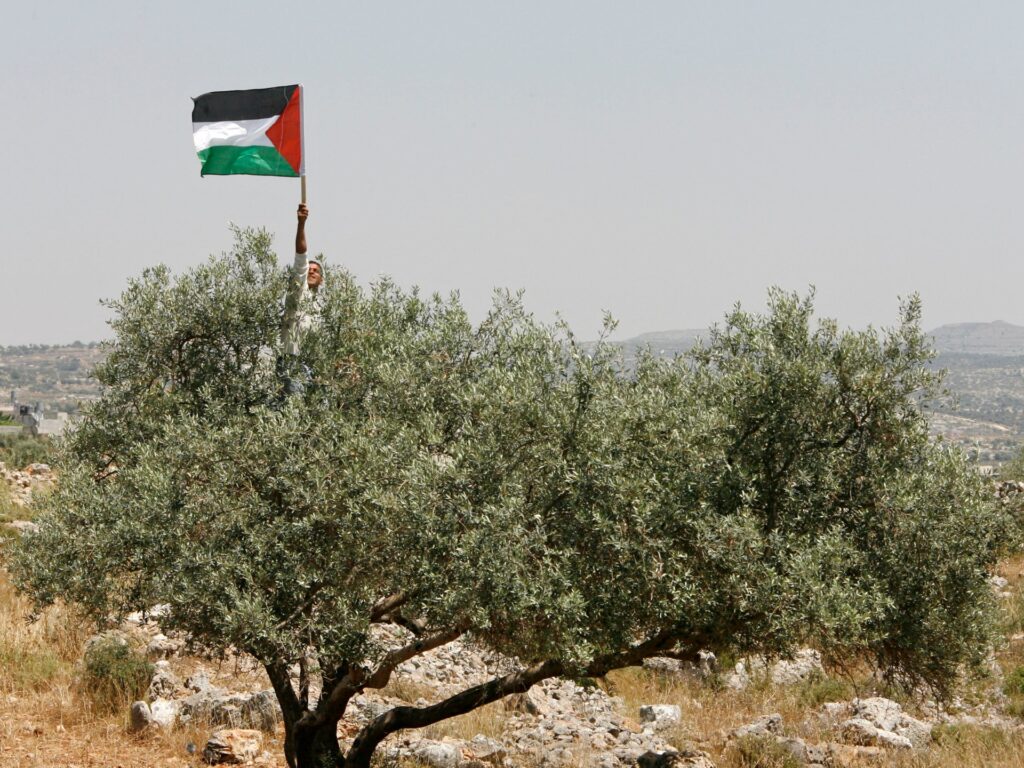
Over the past year, Israel’s genocidal violence has officially killed nearly 42,000 Palestinians in Gaza. Estimates put the real death toll at more than 180,000. Simultaneously, the Israeli occupation forces have repeatedly carried out bloody assaults on the West Bank, massacring more than 740 Palestinians. Last month, the colonial regime expanded its violence into Lebanon, where on September 23, more than 500 people were killed. In two weeks, Israel has murdered more than 2,000 Lebanese people. The Israeli army has flattened whole neighbourhoods in Gaza, digging out roads with bulldozers, bombing infrastructure and utility installations, and pulverising residential buildings. Health and educational facilities have been obliterated – water stations, electricity plants and solar panels destroyed. In short, Israel has tried to wipe out all that sustains life in Gaza. Palestinians have been ordered to “evacuate” the vast majority of the strip and are being crowded into 16 percent of its territory. This same strategy to empty the land has been applied to some areas of the West Bank and now in Lebanon. People are told they can return once Israel’s “military operations” are done. But we all know that the slaughter is meant to clear the land for colonisation. It happened before – during the Nakba of 1948 – and the Palestinians were never allowed to return to their homes despite a United Nations resolution demanding it. That is why Palestinians will not leave. To some outsiders, the enduring Palestinian attachment to their land may seem difficult to understand. It is especially incomprehensible to the Zionists who expelled so many of us, hoping we would just move elsewhere in the Arab world and assimilate. But the Palestinian people have not given up their rightful claim to their land for more than seven decades now. The question of why Palestinians refuse to leave their homes and ancestral lands, even in the face of relentless bombardment, raids, settler encroachment and economic dispossession, is one that is deeply personal and fundamental to Palestinian identity. It is not simply a matter of geography or property ownership but a profound connection to the land that is woven into the fabric of Palestinian history, culture and collective memory. There is a stubbornness to this decision, yes, but also a deep understanding that to leave would be to sever a connection that has been in place for generations. As an agrarian society, the Palestinians have a special place for land in their culture and collective consciousness. The olive tree is the perfect symbol of it. Olive trees are ancient, resilient and deeply rooted – just like the Palestinian people. Families tend to these trees the way they tend to their heritage. The act of harvesting olives, pressing them into oil and sharing that oil with loved ones is an act of cultural preservation. That is why the Israeli army and settlers love to attack Palestinian olive groves. Destroying an olive tree is more than an attack on Palestinian livelihood. It is an attack on Palestinian identity. Israel’s attempt to wipe it out is reflected in its relentless war on Palestinian olive trees. From 1967 to 2013, it uprooted about 800,000 of them. The attachment to the homeland is there even among us, the diaspora Palestinians. I myself was born in Nablus in the occupied West Bank but grew up outside Palestine. Even when far away, I never stopped feeling a connection to the Palestinian land. My family was forced to flee during the second Intifada. My father had watched the Israeli army steal his father’s land and turn it into a military checkpoint, and my mother was being shot at by settlers on her way to work. Theirs was not a decision to voluntarily emigrate; it was an act of survival. Over the past two decades, I have gone back to Palestine regularly, watching settlers steadily encroach on Palestinian land, trying to displace more Palestinians from their homes. What I remembered as a child as clusters of illegally built houses grew to become whole cities – besieging Palestinian towns and villages from all sides. But as I saw Palestinian olive trees burned, Palestinian water rerouted and stolen, and Palestinian homes demolished, I also witnessed resistance and defiance. Palestinians were setting up water tanks to make it through periods of water cut-offs by the Israelis. They were rebuilding their homes at night after a demolition, and they were rushing to help communities like Huwara when a settler raid would take place. In the past year, Israeli violence has become genocidal, but Palestinian “sumud” – steadfastness – has not been diminished. From Jenin to Gaza, Palestinians – under relentless Israeli attacks and bombardment – have not stopped resisting the colonial onslaught through the simple act of living and surviving. The more the occupier tries to make Palestinian life impossible, the more Palestinians come up with makeshift solutions to make it possible – whether it is a washing machine powered by a bicycle, a clay oven made from mud and straw to bake bread or an electricity generator assembled from random machine parts. These are just a few acts of stubborn perseverance, of sumud, crystallised. Meanwhile, in the diaspora, our hearts and minds have never left Palestine. We have watched in pain and in terror as the genocide has unfolded and as the leaders of the countries where we have sought refuge have turned a blind eye. Many in the West do not believe Palestinian life has value. They do not see us as human beings. This relentless dehumanisation of Palestinians has spread despair and hopelessness among our communities. But we have no right to give up when the people of Gaza carry on amid the horrors of genocide. We have to awaken Palestinian sumud within us and mobilise to tell other societies that we are here, we exist and we will persevere in a world bent on erasing us. The metaphor of “we are the land” is not just poetic. It is a lived reality for the Palestinian people. When Palestinians are asked, “Why don’t
Explosion kills one, injures several, near Pakistan’s Karachi airport
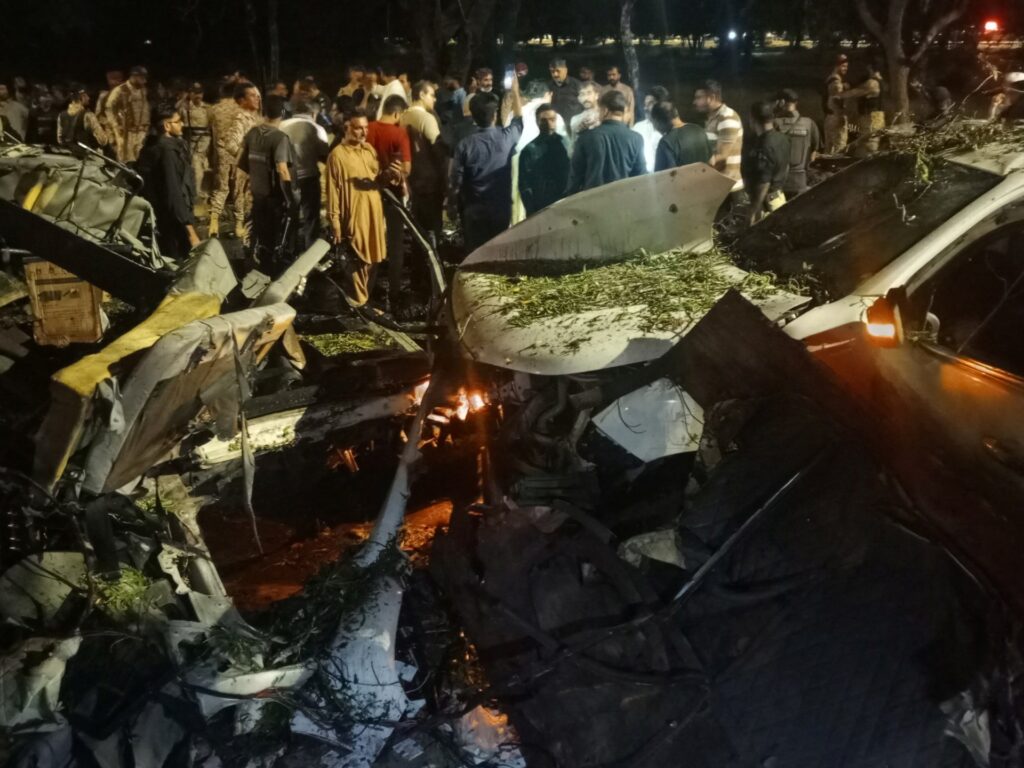
Pakistani secessionist group Balochistan Liberation Army has claimed responsibility for the blast. At least one person has been killed and 10 others injured in an explosion near the international airport in the Pakistani port city of Karachi, local broadcaster Geo News reported, less than two weeks before a regional summit slated to be held in the capital Islamabad. Citing a provincial official, Geo News added that at least one foreigner was among the injured. The nature of the blast, which took place on Sunday night, was not immediately clear. Television footage and videos on social media showed large plumes of smoke at the site on Model Colony Road, though airport buildings and installations were safe. According to the Pakistan daily Dawn News, airlines’ schedules at the Jinnah International Airport have not been affected by the incident. The Sindh province’s home minister, Ziaul Hasan Lanjar, told Geo News that the explosion was caused by a suspected improvised explosive device (IED). Earlier, a statement from his office had said that the blast was due to an oil tanker explosion. A massive explosion struck a high-security convoy near Karachi airport, engulfing multiple vehicles, including those of security forces, in flames. pic.twitter.com/dymz0D8kXd — Mamoon Durrani 🇦🇫 مامون دُرانی (@MamoonDurrani) October 6, 2024 In a statement emailed to journalists, the armed group Balochistan Liberation Army (BLA) claimed responsibility for the explosion, saying the attack was carried out using a vehicle-borne improvised explosive device targeting Chinese nationals, including engineers. BLA is a banned secessionist armed group that is part of a broader rebellion in Balochistan, Pakistan’s largest and least populated province, which borders Iran and Afghanistan. In August, it launched coordinated attacks in the province, in which more than 70 people were killed. Similar past attacks in Balochistan have been claimed by the BLA, such as the killing of seven barbers in Gwadar in May, or the April killings of several people abducted from a highway. The BLA specifically targets Chinese interests – in particular the strategic port of Gwadar on the Arabian Sea – accusing Beijing of helping Islamabad exploit the province. The group has also killed Chinese citizens working in the region and attacked Beijing’s consulate in Karachi. Adblock test (Why?)
Russia-Ukraine war: List of key events, day 955
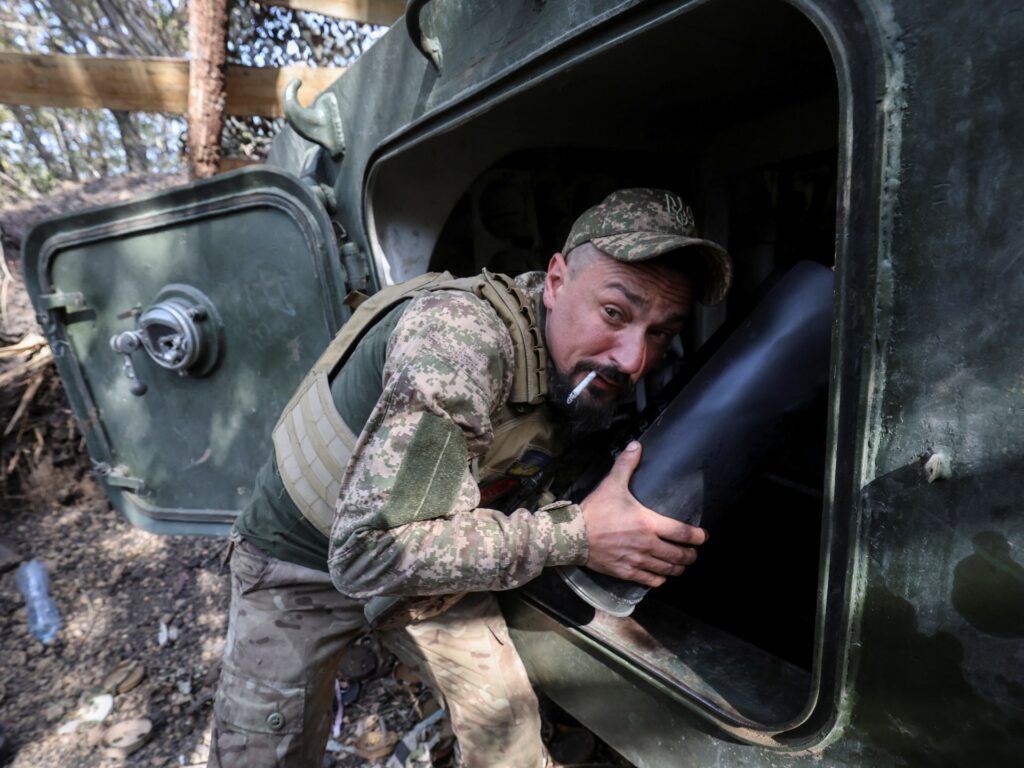
As the war enters its 955th day, these are the main developments. Here is the situation on Monday, October 7, 2024. Fighting Russia unleashed an overnight drone attack across Ukraine targeting the capital Kyiv and hitting infrastructure in the Black Sea port of Odesa, Ukrainian officials said. The State Emergency Service said one person was injured and warehouses and cargo trucks damaged in Odesa during the multi-wave attack, which kept much of the country under air-raid alert for several hours. The Ukrainian Air Force said the Russian attack involved 87 attack drones and four missiles. Air defence units destroyed 56 of the drones and two of the missiles, the Air Force said. Anti-Kremlin activist Ildar Dadin, who was jailed in Russia for protesting against President Vladimir Putin, was killed on the front line in Ukraine where he was fighting alongside Kyiv’s forces, his relatives and Russian media said. Ukraine’s military intelligence agency said one of its units destroyed a Russian automated air defence unit with a first-person view drone. The agency released video of the attack but did not say where or when it took place. Politics and diplomacy Ukraine may be offered “more concrete steps” towards joining NATO at the Ramstein summit that starts in Germany on October 12, The Washington Post reported, citing a diplomat it did not name. Russia arrested Yegor Guzenko, the administrator of the Telegram channel Thirteenth, who has previously criticised the Kremlin and Russia’s Ministry of Defence for not being tough enough in Ukraine. The arrest was reported by military bloggers and opposition media, some of whom said the ultranationalist had been detained after refusing to take a drug test following an altercation with police. Weapons Dutch Minister of Defence Ruben Brekelmans made a surprise visit to Kyiv and announced that the Netherlands would invest 400 million euros ($440 million) in advanced drone development with Ukraine. He said he could also confirm that the country had delivered its first F-16 fighter jets to Kyiv and more would be sent in the coming months. For the first time, I can officially announce that the first Dutch F-16s have been delivered to Ukraine. This is urgently needed. In Kharkiv, I saw the damage from Russian airstrikes and heard frequent air raid alarms. The rest of the 24 jets will follow in the coming months. pic.twitter.com/Oq6IbxQyWP — Ruben Brekelmans (@DefensieMin) October 6, 2024 Adblock test (Why?)
China says two citizens killed, one injured, in Pakistan ‘terrorist attack’
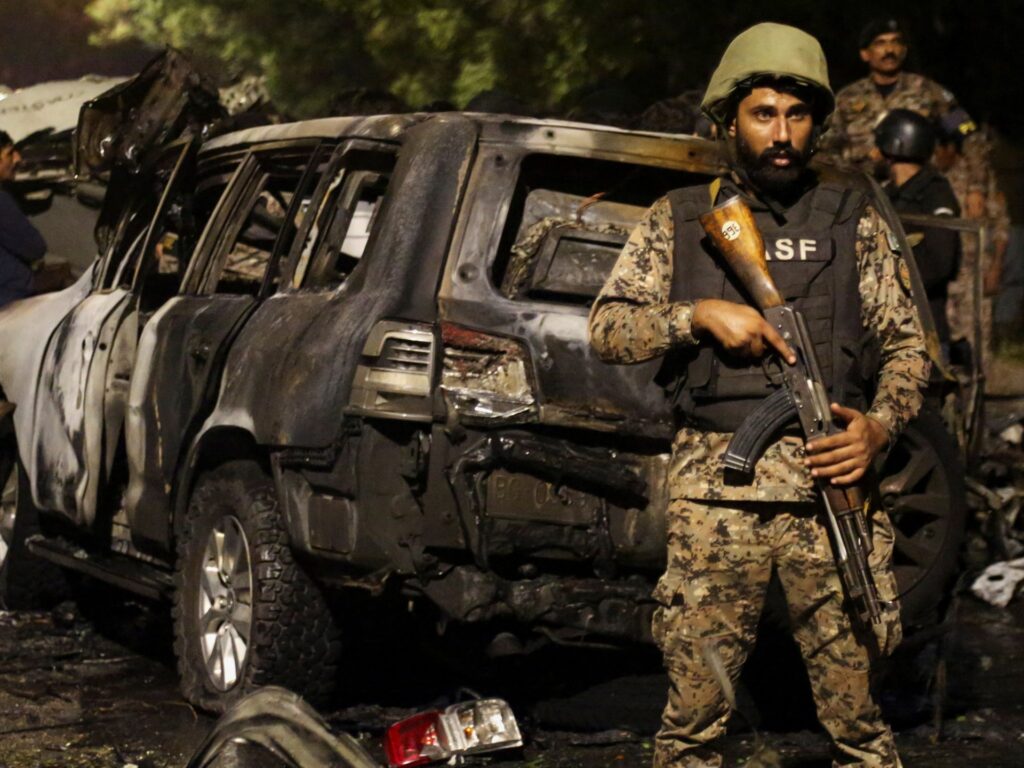
At least 10 people were hurt after a convoy from the Port Qasim Electric Power Company was attacked near Karachi airport. The Chinese Embassy in Pakistan has said at least two of its citizens were killed and a third injured after their convoy was attacked near Karachi airport. The embassy said the attack took place at about 11pm on Sunday (18:00 GMT) close to the Jinnah International Airport, and targeted the Chinese staff of the Port Qasim Electric Power Company. Geo News, a Pakistani news broadcaster, reported at least 10 people were injured. In the statement early on Monday, the Chinese Embassy said it strongly condemned the “terrorist attack” and requested “the Pakistani side to thoroughly investigate the attack, severely punish the perpetrators, and take all necessary measures to protect the safety of Chinese citizens, institutions and projects in Pakistan”. Hassaan Khan, a rescue official, told Dawn.com that 10 vehicles were damaged in the fire caused by the explosion and that four cars were completely destroyed. In a statement emailed to journalists earlier, the armed group the Balochistan Liberation Army (BLA) said it was behind the attack, which involved an improvised explosive device (IED). The BLA wants independence for Balochistan and is part of a broader rebellion in Pakistan’s largest and least-populated province, which borders Iran and Afghanistan. It has been banned by the government in Pakistan. In August, the BLA launched coordinated attacks in the province, in which more than 70 people were killed. It has claimed attacks in Balochistan including the killing of seven barbers in Gwadar in May and the April killings of several people abducted from a highway. The BLA specifically targets Chinese interests – in particular the strategic port of Gwadar on the Arabian Sea – accusing Beijing of helping Islamabad to exploit the province. In March this year, five Chinese engineers and a Pakistani national were killed in an attack near the China-backed Dasu hydropower project. Nine Chinese engineers were killed in a similar attack near Dasu in 2021. The BLA has also attacked Beijing’s consulate in Karachi. The Port Qasim project involves the construction of two power plants near Karachi and is funded by China. The Chinese Embassy statement reminded its citizens, companies and projects to “be vigilant, pay close attention to the security situation, strengthen security measures, and make every effort to take safety precautions”. Pakistan is due to host the summit of the Shangai Cooperation Organisation (SCO) in two weeks’ time. Adblock test (Why?)
Boy ‘stabbed 50 times’, burned alive in suspected drug turf war in France
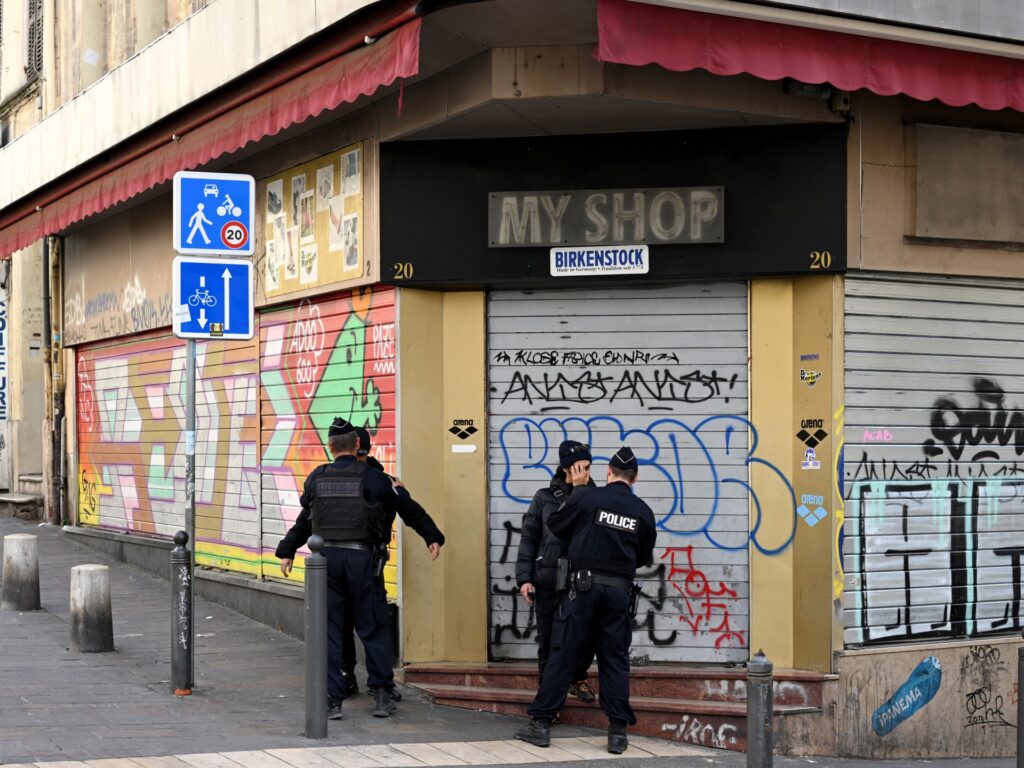
Prosecutor says slain teenager in the city of Marseille was allegedly hired by a 23-year-old prisoner to intimidate a member of a rival gang. A 15-year-old boy was “stabbed 50 times” and burned alive earlier this week in southern France, in an apparent case of drug-related violence that appeared to be linked to a second murder case, according to prosecutors in the city of Marseille. Speaking to reporters on Sunday, Marseille prosecutor Nicolas Bessone said the teenager was murdered on Wednesday, describing the case as one of “unprecedented savagery”. Marseille, France’s second-largest city but also one of its poorest, has been plagued in recent years by drug-related violence described in the French media as “narco-homicide”. The city has in recent years witnessed a turf war for control of the highly profitable drug market between various clans, including DZ Mafia. According to Bessone, the slain teenager had been hired by a 23-year-old prisoner to intimidate a competitor by setting fire to his door, adding that he had been promised 2,000 euros ($2,200). The L’Yonne Republicaine newspaper identified the mastermind as a detainee at the Aix-Luynes penitentiary near Aix-en-Provence and a member of the DZ Mafia group. Before carrying out the attack, however, the armed teenager was spotted by members of a rival gang, who then stabbed him repeatedly and set him on fire, the prosecutor said. After his original plot failed following the death of the teenager, the same prisoner in Luynes then recruited a second minor, a 14-year-old, to carry out a revenge attack and kill a member of the rival gang, promising to pay the boy 50,000 euros ($55,000). Having been ordered to carry out his mission, the teenager and another individual boarded a taxi to the location of the revenge attack. The teenager then reportedly asked the unnamed 36-year-old driver to wait for him. When the driver refused his request, the would-be teenager killer got enraged and shot the driver dead, using a 357 Magnum revolver, before fleeing, according to the Le Monde newspaper. The suspects and victims of the killings have not been named by the prosecutor. The two latest cases bring the number of drug-related killings in Marseille to 17 this year. A total of 49 people were killed in drug-related violence in Marseille in 2023. Bessone, the prosecutor, noted that the victims and perpetrators of recent violence in the city were becoming increasingly younger. Adblock test (Why?)
Rwanda begins vaccination drive to curb Marburg virus outbreak

Government to prioritise those ‘most at risk’ and ‘most exposed healthcare workers’ following the deaths of 12 people. Rwanda has announced that it has started administering vaccine doses against the Marburg virus to try to combat an outbreak of the Ebola-like disease in the East African country. “The vaccination is starting today immediately,” Health Minister Sabin Nsanzimana said at a news conference on Sunday in the capital, Kigali. The Marburg virus has killed 12 people in Rwanda since it was declared an outbreak on September 27. Authorities said at the time that the first cases had been found among patients in health facilities. There is still no confirmation of the source of the outbreak. The minister said the vaccinations would focus on those “most at risk, most exposed healthcare workers working in treatment centres, in the hospitals, in ICU, in emergency, but also the close contacts of the confirmed cases”. “We believe that, with vaccines, we have a powerful tool to stop the spread of this virus,” the minister said. The country has already received shipments of the vaccines including from the Sabin Vaccine Institute. The Marburg virus has a ‘filamentous’ structure and is transmitted by fruit bats [Shutterstock] The government said there were 46 confirmed cases, with 29 of them in isolation. Health authorities have identified at least 400 people who came into contact with confirmed cases of the virus. Like Ebola, the Marburg virus is believed to originate in fruit bats and spreads between people through close contact with the bodily fluids of infected individuals or with surfaces, such as contaminated bedsheets. Without treatment, Marburg can be fatal in up to 88 percent of people who fall ill with the disease. Its symptoms include fever, muscle pains, diarrhoea, vomiting and, in some cases, extreme blood loss, often leading to death. There is no authorised vaccine or treatment for Marburg. Marburg outbreaks and individual cases have in the past been recorded in Tanzania, Equatorial Guinea, Angola, the Democratic Republic of the Congo (DRC), Kenya, South Africa, Uganda and Ghana, according to the World Health Organization. Adblock test (Why?)
Video: Tunisia votes in election slammed as unfair by the opposition
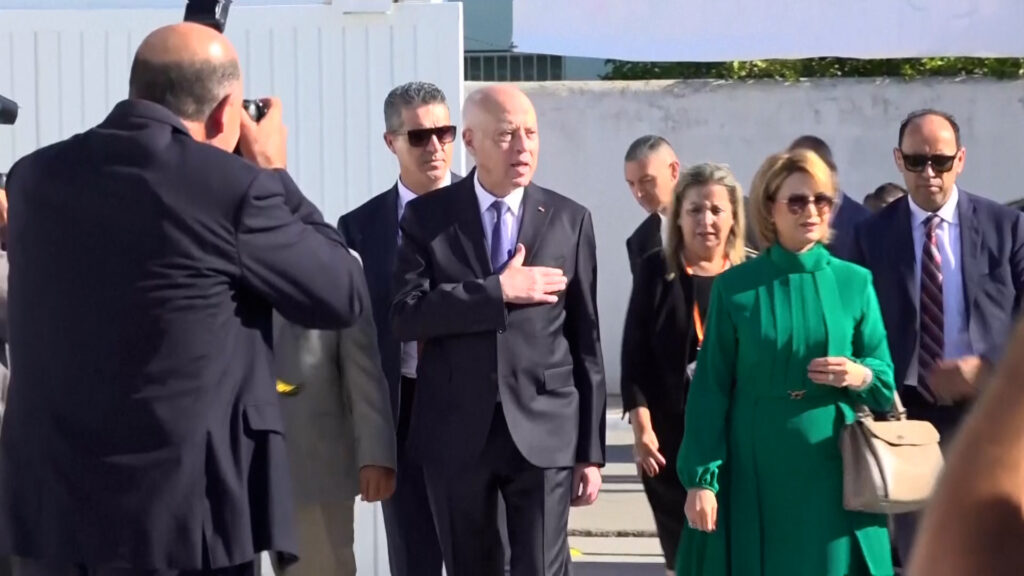
NewsFeed Tunisians are voting in an election that few doubt will return President Kais Saied to power for a second term. The vote, widely regarded by observers as not fair, is the first since Saied assumed executive authority in a 2021 constitutional coup. Published On 6 Oct 20246 Oct 2024 Adblock test (Why?)