

Trump rallies in Butler, Pennsylvania, site of attempted assassination

Former United States President Donald Trump – the Republican candidate in the presidential election – has returned to Butler, Pennsylvania, where he survived an assassination attempt in July. Supporters on Saturday gathered for the rally, which came just a month before the November 5 election as Trump remains neck-and-neck with Democratic candidate Vice President Kamala Harris. “Exactly 12 weeks ago this evening, on this very ground, a cold-blooded assassin aimed to silence me and to silence the greatest movement – MAGA – in the history of our country,” Trump told the crowd, referring to his Make America Great Again movement. He said he returned to Butler to show his supporters “stand stronger, prouder, united, more determined and nearer to victory than ever before”. He then praised Corey Comperatore, a rally attendee who was fatally shot in the July 13 attack. Comperatore’s family were among those in attendance on Saturday, as were other victims injured in the shooting, Trump’s running mate, Senator JD Vance, and billionaire Elon Musk, who endorsed Trump moments after the assassination attempt. During the July attack, Trump narrowly avoided a bullet fired by a man perched on a nearby roof. The former president briefly went to the floor as Secret Service agents rushed towards him. He then stood up, his ear bloodied, and pumped his fist in the air chanting “fight, fight, fight” as he was moved off stage. The shooting transformed the election season, briefly giving Trump a bump in support as his campaign portrayed the incident as a showcase of Trump’s resiliency. Still, the close call was largely overshadowed by US President Joe Biden’s decision to drop out of the race in July and make way for Harris’s rise. Speaking during the rally, Lara Trump, the co-chair of the Republican National Committee and Trump’s daughter-in-law, sought to again harness the post attack momentum. She framed Trump’s survival as divine intervention. “If you had any question whether God exists and performs miracles we got our answer here July 13 in Butler, Pennsylvania,” she said. “He spared Donald Trump’s life because he wasn’t finished with Donald Trump.” The assassination attempt also raised the spectre of political violence in the US, with Trump briefly pledging to take a more unifying approach before returning to the charged rhetoric that has defined his political career. In September, Trump had another brush with an attempted assassin as he golfed at his resort in Florida, further charging the political climate. Trump has broadly blamed the violence on Democrats’ claims that he poses an existential threat to US democracy. The former president had pushed a series of falsehoods surrounding the 2020 election. His supporters later stormed the US Capitol in an attempt to overturn Biden’s victory. Experts have warned Trump is laying the groundwork to repeat the effort if he loses this time around. Speaking at the rally, vice presidential candidate Vance decried Democrats – and Harris – for arguing the former president could again undermine Democratic norms. “I think you all will join me in saying to Kamala Harris, how dare you call [Trump] a threat to Democracy?” Vance said to cheers. “Donald Trump took a bullet for Democracy.” ‘Strength and resiliency’ For his part, Trump’s son, Eric Trump, lumped the assassination attempts with the legal actions and criminal indictments Trump has faced since leaving office, as well as attempts by lawmakers to impeach Trump while he was in the White House. The younger Trump claimed, baselessly, that Trump has been the subject over a wider coordinated effort to bring him down. “They tried to get my father every second since he went down that golden escalator,” he said, referring to his father’s 2016 campaign launch. The rally came as the US Secret Service continues to face questions over the security breach that allowed 20-year-old gunman Thomas Matthew Crooks to escape detection ahead of the July attack. Crooks was able to take a position on a roof with a direct line of sight on Trump. He was fatally shot at the scene after opening fire. The head of the Secret Service, Kimberly Cheatle, stepped down in the days after the attack, which prompted both internal investigations and a Congressional probe. Anthony Guglielmi, the Secret Service’s chief spokesman, told NBC News that “our people are being pushed to the limit” as they have sought to assure another attack does not happen. “We recognise that this is not sustainable, and we cannot risk another mission failure,” he said. Adblock test (Why?)
Supporters of jailed ex-PM rally in Pakistan despite police crackdown
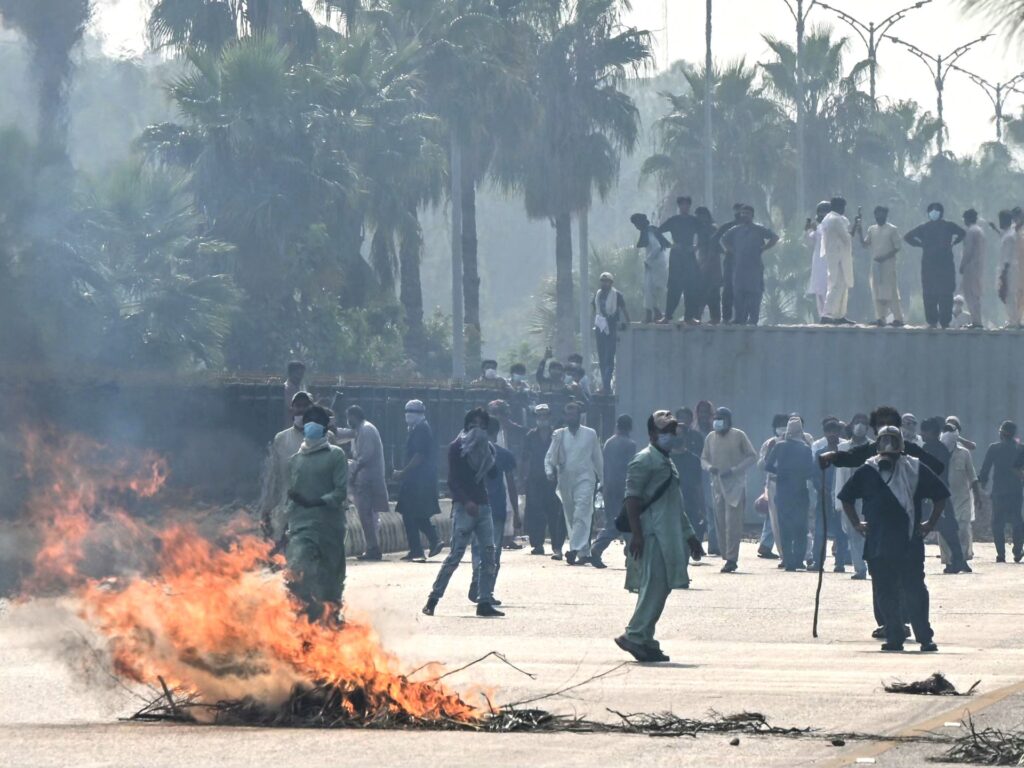
Demonstrators rally, demanding Imran Khan be released from jail despite a ban on protests and police crackdown. Supporters of former Pakistan Prime Minister Imran Khan have rallied in Islamabad to push for Khan’s release as the police blocked roads, cut off mobile internet and fired tear gas to deter the protesters. Pakistan Tehreek-e-Insaf (PTI) party on Saturday claimed that the party leader from Khyber Pakhtunkhwa (KPK) Province, Ali Amin Gandapur, has been abducted and unlawfully detained. But Al Jazeera could not independently verify the claim. Gandapur, the chief minister of the Khyber Pakhtunkhwa province, was leading thousands of protesters who camped on Islamabad-Peshwar highway on Friday overnight. Police used teas gas as they attempted to enter the city. This is the latest in a series of protests held by supporters of the opposition Pakistan Tehreek-e-Insaf (PTI) party, which has faced a crackdown from authorities. The PTI, which says the Islamabad protest is just for one day, also held a gathering in the eastern city of Lahore on Saturday, where a lockdown of roads was in place. “I am so proud of all our people,” said a message from Khan posted on the social media site X on Saturday afternoon. Interior Minister Mohsin Naqvi accused the protesters of clashing with police. “Over 80 police officers have been injured in the clashes,” he said. Naqvi had previously called on the PTI to delay any gathering until after diplomatic engagements in the city, including a Shanghai Cooperation Organisation (SCO) meeting on October 15-16 which will be attended by delegations, including from China, Russia and India. PTI activists began driving to Islamabad on Friday from his powerbase in northwestern Khyber Pakhtunkhwa province, but encountered shipping container roadblocks and volleys of tear gas. Naqvi said the authorities had intelligence that the protesters planned to disrupt the SCO conference in a bid to gain attention. “We can’t allow this. I will say to them again, to not cross more red lines – don’t make us take extreme steps,” Naqvi said. ‘Worrying clampdown’ Amnesty International said the communications cuts and road blockades “infringe on people’s right to freedom of expression, access to information, peaceful assembly and movement”. “These restrictions are part of a worrying clampdown on the right to protest in Pakistan,” the rights group said. The social media site X has also been blocked across Pakistan since after the election in February, when mobile internet was likewise cut on polling day and PTI has alleged widespread vote-tampering took place. The 72-year-old Khan served as prime minister from 2018 to 2022, when he was deposed in a parliamentary no-confidence vote after falling out with the powerful military establishment, widely considered Pakistan’s political kingmakers. He was imprisoned in August last year on several charges. Though his conviction in most cases has either been overturned or suspended, he continues to remain in jail, facing trial in other cases he claims have been orchestrated to prevent his return to power. Khan was barred from standing in the February elections, which the PTI alleges were rigged. Several other countries had raised “serious concerns” about the fairness of the vote, but election authorities in Pakistan have denied the charges. Last month, several PTI lawmakers were arrested on the premises of Pakistan’s parliament. Adblock test (Why?)
DRC launches first mpox vaccination drive in efforts to curb outbreak
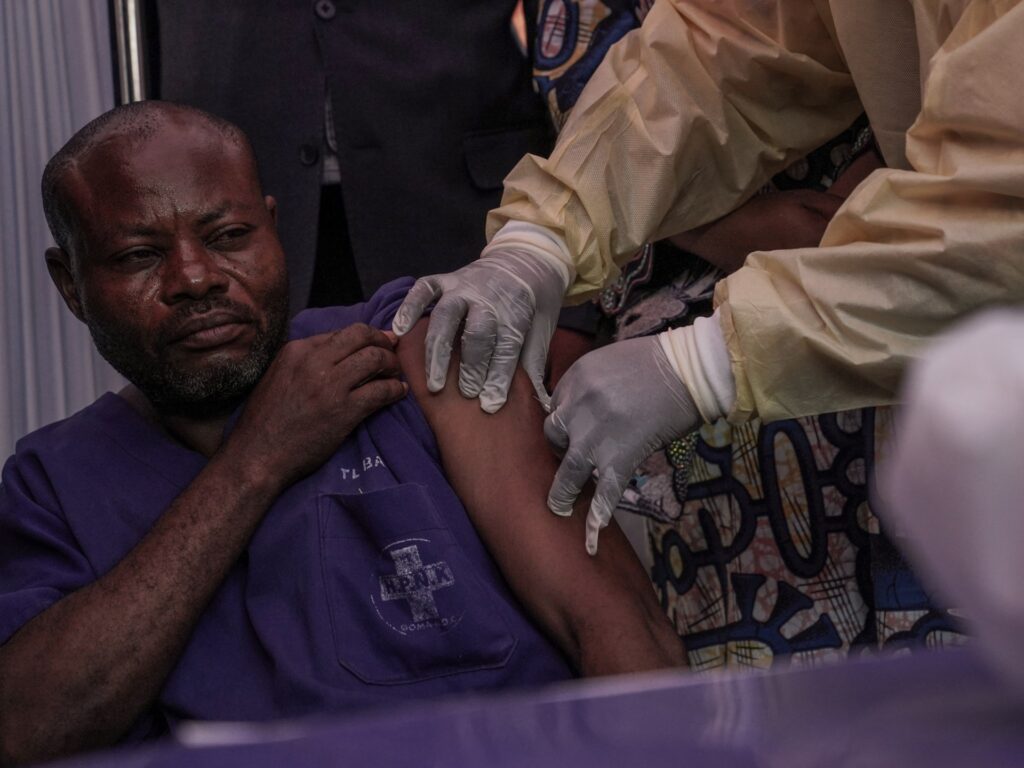
The vaccine will first be given to health workers and those with existing health issues. The Democratic Republic of Congo has launched its first vaccination campaign against mpox in the eastern city of Goma, which was hit the hardest by an outbreak. Vaccines were first administered to hospital staff on Saturday, with the wider vaccine drive due to start on Monday in the east of the country, where the current outbreak began last year. On Friday, the DRC Ministry of Public Health warned that the vaccine campaign would be limited due to few resources. So far, only 265,000 doses are available. “As you can imagine, in a country of 100 million people, we’re not going to solve the problem with 265,000 doses,” Health Minister Samuel-Roger Kamba told a news conference on Friday. He added that the aim of the drive was to target priority groups, including those with existing health issues and health workers. More doses of the vaccine are expected to arrive from France, Japan and the United States. Last month, US President Joe Biden said Washington plans to donate one million doses of the mpox vaccine to African nations. World Health Organization’s Africa Director Matshidiso Moeti said in a statement that the vaccine rollout marks “an important step in limiting the spread of the virus and ensuring the safety of families and communities”. Since the start of 2024, the DRC has reported more than 30,000 suspected and confirmed cases of mpox, and 900 deaths, the World Health Organization said. The virus can spread through close contact with an infected person or animal. Once contracted, the virus typically causes flu-like symptoms and pus-filled lesions on the body. In August, the WHO declared mpox a public health emergency after discovering a new, more infectious variant, named clade Ib. According to the Africa Centre for Disease Control and Prevention, mpox has been detected in 16 African countries so far this year. On Friday, the WHO announced that it had approved a PCR test to detect mpox by swabbing skin lesions. Kamba said the WHO pledged about 4,500 tests for the DRC but did not provide an arrival date. Adblock test (Why?)
Rescuers in Bosnia search for people missing in deadly floods
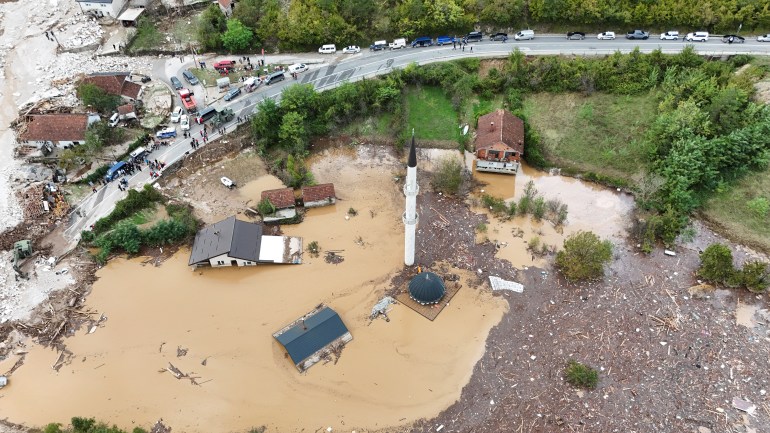
At least 13 people have been killed in the Jablanica area due to flash floods and landslides. Rescue teams are digging through rubble and searching for people missing after the worst flash floods and landslides in years hit parts of Bosnia and Herzegovina, killing at least 13 people and injuring dozens. The spokesperson for the government of Herzegovina-Neretva Canton, Darko Juka, said on Saturday that 13 people were killed in the Jablanica area due to the collapse of a hill, landslides and floods in the region. “On Friday, we reported a figure of 16, but after reviewing the data and assessing the situation on the ground, the number has been corrected to 13,” Juka said at a news conference. The Jablanica area is 70km (43.5 miles) southwest of the capital, Sarajevo. Earlier on Saturday, N1 TV had reported 21 people had died and dozens were missing. A spokesperson for the Mountain Rescue Service, whose teams are involved in the searches, said some villages were still inaccessible and “we don’t know what we will find there.” Heavy rain overnight halted rescue efforts before they resumed on Saturday, Bosnian media reported. Al Jazeera’s Arduana Pribinja, reporting from the village of Donja Jablanica, said people in the area were in “deep shock”, adding that the floods and landslides that hit on Friday had caught many by surprise. “People here told me that everything happened too fast and they didn’t have time to evacuate,” she said. A drone view shows a flooded residential area and mosque in Donja Jablanica on October 4, 2024 [Amel Emric/Reuters] In Donja Jablanica, many houses were under rubble. Alka Glusic, 74, lost a brother and his three immediate family members. She had stayed in another house with her sister. “That house [her brother’s] is gone now. There is no one there,” Glusic told the Reuters news agency. Pribinja said public anger is now shifting towards the government because some suspect “human factors” contributed to the tragedy. “There is a quarry here, … and it seems that the sudden rainfall stripped the stone and rubble that triggered the landslide,” she said. Bosnia’s Central Election Commission decided to postpone local elections this weekend in municipalities affected by the floods but to carry on with voting elsewhere. The Bosnian Football Association has postponed all matches across the country. Meteorologists say extreme weather can be attributed to climate change. Human-caused climate change, for example, increases the intensity of rainfall because warm air holds more moisture. This summer, the Balkans were also hit by long-lasting record temperatures, causing a drought. Scientists said the dried-out land has hampered the absorption of floodwaters. Flooding was also reported in Croatia and Montenegro this week but caused less damage and no fatalities. Adblock test (Why?)
Israel issues new evacuation order in Gaza as attacks on Nuseirat kill 12
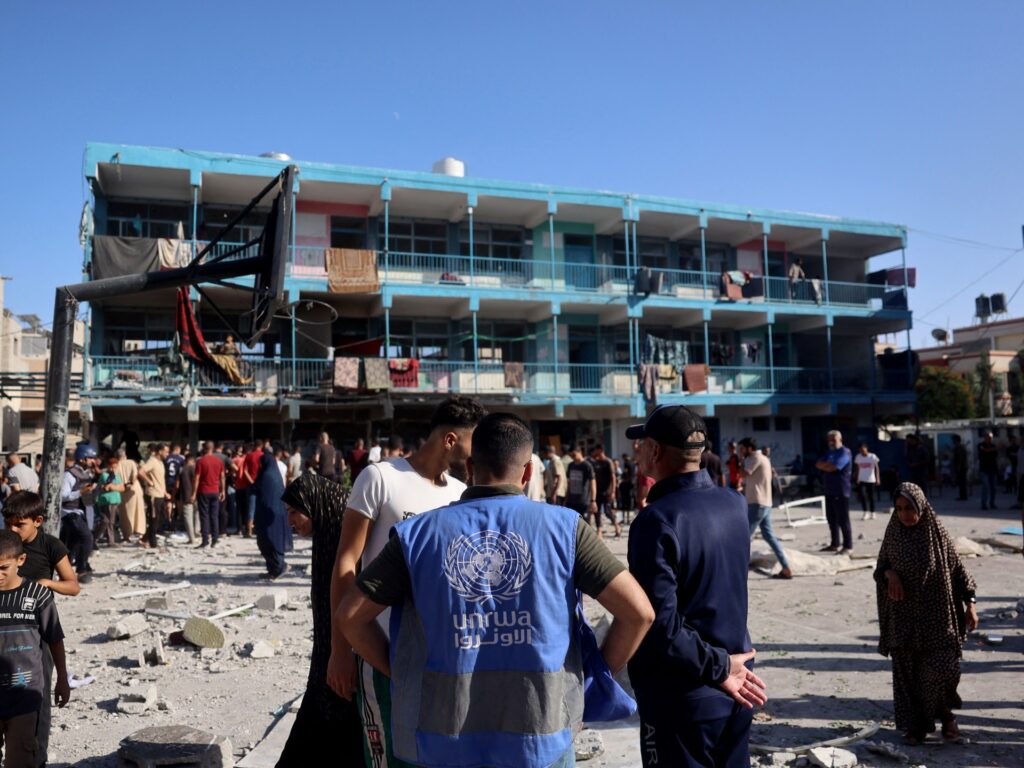
Palestinians living near Netzarim Corridor in central Gaza told to leave as Israel prepares to use ‘great force’ against Hamas. Israel has issued a new warning to thousands of displaced Palestinians sheltering in central Gaza, saying its military is preparing to use “great force” against Hamas in the area as it continues to pummel the besieged strip with attacks that have killed at least 12 people since Saturday morning. The evacuation call issued on Saturday is the first in weeks for Gaza, signalling another possible humanitarian crisis with a new wave of mass displacement as Israel’s war approaches its one-year mark, having killed at least 41,825 Palestinians, mostly women and children, and wounded at least 96,910. A map showing the areas to be evacuated was attached to the order posted on the social media platform X by the Israeli army. They are near the Netzarim Corridor, a strip of land that Israeli forces occupy and that separates northern Gaza from southern Gaza. The area has been previously evacuated due to deadly Israeli attacks. Al Jazeera’s Hind Khoudary, reporting from Deir el-Balah in central Gaza, said that before the warning, Israel carried out deadly bombardments of the area. In the Nuseirat refugee camp, Israel hit a home and killed six members of a family, Khoudary reported. She said another attack hit tents belonging to displaced Palestinians in Deir el-Balah, resulting in more fatalities, including a 13-year-old boy. “Beit Hanoon in the northern Gaza Strip has also been targeted by Israeli forces,” Khoudary said, adding that ground operations were also under way in the eastern part of the Palestinian territory. “Everyone here is traumatised. Everyone here is drained and exhausted. Everyone here is sad,” Khoudary said. Israeli army now ordering new forced evacuation pic.twitter.com/pE603GCdZv — Hind Khoudary (@Hind_Gaza) October 5, 2024 As the latest evacuation order was issued, Iranian Foreign Minister Abbas Araghchi renewed his call for ceasefires in both Gaza and Lebanon, where fighting continues to rage between Israeli forces and Hezbollah, as he held talks with officials from Iran’s ally Syria on Saturday. “The most important issue today is the ceasefire, especially in Lebanon and in Gaza,” he told reporters. “There are initiatives in this regard. There have been consultations that we hope will be successful.” Nearly all of Gaza’s 2.3 million residents have been displaced at least once since Israel began its war on Gaza on October 7 after deadly Hamas-led attacks on southern Israel. Hundreds of thousands of people have been displaced several times. The Israeli military has often returned to areas where it has previously conducted operations in response to reports of Hamas activity. Cultural sites in the Palestinian territory have also paid a heavy price in the war, the United Nations cultural organisation said. On Saturday, UNESCO said it has verified damage to 69 sites in Gaza over the past year: 10 religious sites, 43 buildings of historical and artistic interest, two depositories of moveable cultural property, six monuments, one museum and seven archaeological sites. Adblock test (Why?)
One Year in Gaza: Nowhere Safe

Palestinian stories of survival during Israel’s war on Gaza. A doctor, first responder, social media content creator and a child share their experiences of the war on Gaza. From October 2023, they survive under Israeli bombardment, revealing moments of strength and vulnerability. They are all displaced because their homes have been destroyed by Israeli air strikes. As the doctor flees south, contact is lost. For the others, impossible choices must be made under unimaginable circumstances as the months passing turn into a year. As the war intensifies, nowhere is safe. While sheltering in makeshift tents, schools and refugee compounds, they do not know if they or their loved ones will live to see another day. All of their stories reveal their humanity in times of war. Adblock test (Why?)
Biden unsure if Netanyahu holding up Gaza deal to influence US election
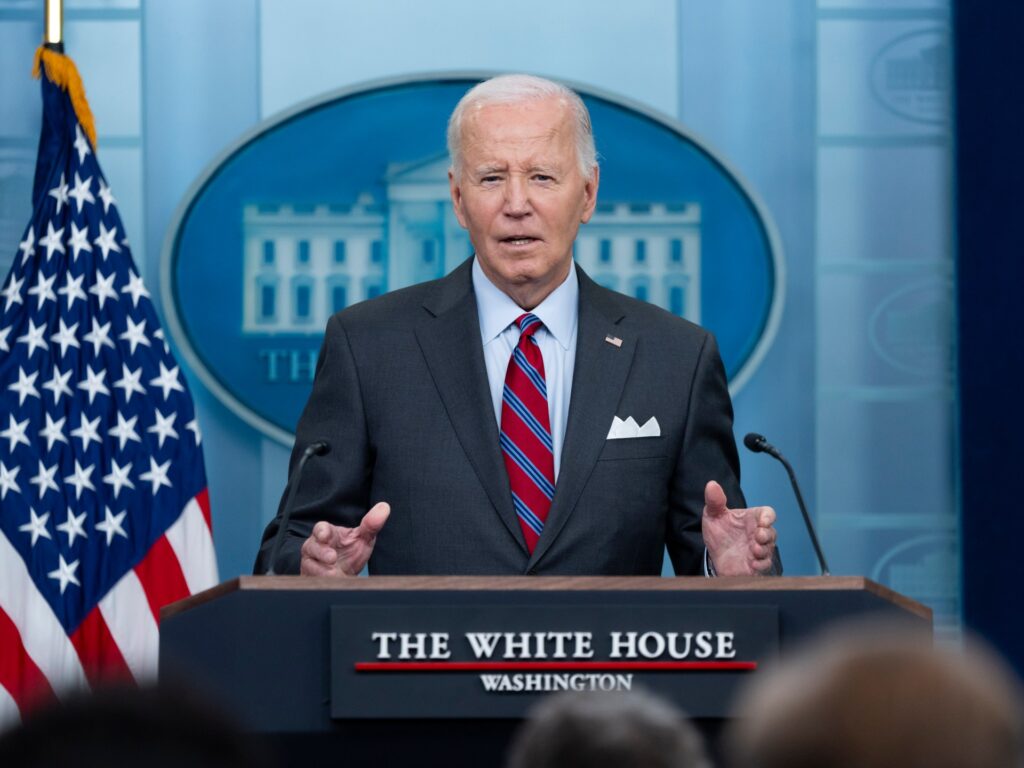
United States President Joe Biden has said he does not know if Israeli Prime Minister Benjamin Netanyahu has been dragging his feet on a ceasefire deal in Gaza in order to influence the US election in November. Biden was asked the question directly during a news conference at the White House on Friday, just days ahead of the one-year anniversary of the war, in which at least 41,802 Palestinians in Gaza have been killed. “No administration has helped Israel more than I have. None. None. None. And I think Bibi should remember that,” Biden said, referring to the Israeli leader by his nickname. “And whether he’s trying to influence the election, I don’t know, but I’m not counting on that.” The Biden administration has for months downplayed the prospect that Israel could be intentionally holding up such a deal, instead regularly laying the blame for breakdowns in talks on Hamas. It has done so despite repeated reports indicating that Netanyahu’s position had shifted throughout the talks, precluding any breakthroughs. Still, some top Democrats have increasingly questioned whether Netanyahu could have an eye on the US election – and the possible victory of former President Donald Trump – in his military calculation. Trump has long been Netanyahu’s preferred occupant of the White House. On the campaign trail, the Republican has attacked the Democratic nominee, Vice President Kamala Harris, over the Biden administration’s inability to reach a deal. “I don’t think you have to be a hopeless cynic to read some of Israel’s actions, some of Prime Minister Netanyahu’s actions, as connected to the American election,” Senator Chris Murphy, a close ally of Biden, told CNN earlier this week. US officials also told The Wall Street Journal in September they did not believe a deal would be reached during Biden’s presidency, which ends in January of 2025. Continued military aid Biden had initially said that Israel supported a ceasefire plan he introduced in May, despite Netanyahu appearing to swiftly contradict the claim. In September, the Israeli prime minister pushed back on a claim from a Biden administration official that 90 percent of the deal had been completed. Later that month, Israel surged its attacks on Lebanon shortly after meeting with US officials pushing for de-escalation. Since then, Netanyahu’s government has ignored appeals from US officials for a pause in fighting as it has upped its operations – including limited ground incursions – in Lebanon. Biden has also opposed Israel striking Iran’s nuclear facilities following an Iranian attack earlier this week. On Friday, he indicated he also opposed any strikes on Iran’s oil facilities, saying: “If I were in their shoes, I would be thinking about other alternatives than striking Iranian oil fields.” Despite Israel continuing to flaunt Washington’s public appeals, the Biden administration has for months avoided leveraging the military aid it provides to its “ironclad” ally. Transfer of power may not be ‘peaceful’ Speaking during the news conference on Friday, Biden also warned that Trump and his running mate, JD Vance, could refuse to accept the outcome of the election on November 5. Trump had spread false claims the 2020 vote was marred by election malfeasance. The statements culminated in his supporters storming the US Capitol on January 6, 2021, in an attempt to overturn Biden’s victory. Trump has continued to cast unfounded doubt that the upcoming election would be fair. Biden said it was notable that Trump’s running mate, Vance, would not confirm during this week’s vice presidential debate that he would accept the outcome of the vote next month. “I’m confident it will be free and fair. I don’t know whether it will be peaceful. The things that Trump has said, and the things that he said last time out when he didn’t like the outcome of the election, were very dangerous,” Biden said. Adblock test (Why?)
Elon Musk to join Trump for rally at site of first assassination attempt
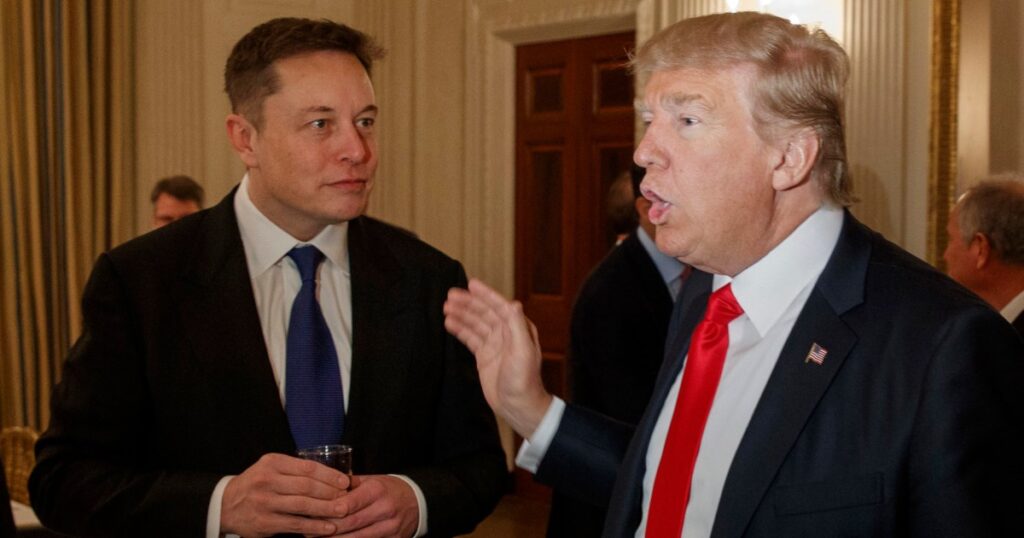
Elon Musk has said he is going to join Donald Trump for an election rally at the site of a July assassination attempt on the former president’s life. Musk, 53, announced on Friday that he will appear at the event in Butler, Pennsylvania, the following day. Trump, who served as the United States president from 2017 to 2021, is in the midst of a tight race for a second term in November, and Pennsylvania is a key swing state. Also due to attend on Saturday are Trump’s running mate, Senator JD Vance, and his son, Eric Trump. “I will be there to support,” Musk wrote on his social media platform X, retweeting Trump’s own promotion of the rally. The SpaceX and Tesla CEO has become increasingly close to Trump in recent months. After Trump, 78, was shot at by a gunman — the bullet grazing his ear — Musk announced he would be supporting the Republican in his bid to win a second term. “I fully endorse President Trump and hope for his rapid recovery,” Musk wrote after the incident. He later posted: “The martyr lived.” The shooting on July 13, however, killed a Trump supporter, Corey Comperatore, who was listening to the former president speaking. Several others were injured. Musk’s increasing influence Musk has become more politically engaged as the November election approaches, frequently posting about his support for Trump and attacking Democrats. Last month, Musk deleted one of his posts saying “no one is even trying” to assassinate President Joe Biden or Vice President Kamala Harris, the former and current Democratic candidates, respectively. Amid the ensuing outcry, Musk dismissed his comment as a joke. “Turns out that jokes are way less funny if people don’t know the context and the delivery is in plain text,” he said. Earlier this year, Musk said he was contributing $45m to a political action committee, America PAC, that was supporting Trump’s run. Trump has often spoken warmly of Musk, even saying he backs the billionaire’s electrical vehicle production, despite having long attacked the industry by claiming it harms workers in traditional car plants. In August, Trump agreed to be interviewed by Musk on X. During their hour-long conversation, the former president said he admired the fact that Musk fired some of his employees after they complained about working conditions. “I love it,” Trump said. “I look at what you do. You just walk in, and you just say, ‘You wanna quit?’ They go on strike. I won’t mention the name of the company, but they go on strike and you say, ‘That’s OK. You’re all gone … Every one of you is gone.’” Trump also pledged to make Musk the head of a proposed “government efficiency” office that would slash regulations and audit other branches of the government. Musk’s backing of Trump is not his first foray into politics. Musk has publicly feuded with Brazilian Supreme Court Justice Alexandre de Moraes, and in May 2023, he hosted Florida Governor Ron DeSantis as the Republican politician announced his short-lived bid for the presidency. As with Musk’s August conversation with Trump, that conversation with DeSantis was broadcast on X and marred by glitches. I will be there to support! https://t.co/nokR0g3dn1 — Elon Musk (@elonmusk) October 4, 2024 Butler rally a rebuke to ‘evil assassin’ July’s assassination attempt in Butler has spurred ongoing discussions about political violence in the US, as well as questions about the staffing and training of the Secret Service agents tasked with protecting Trump. The shooter, 20-year-old Thomas Matthew Crooks, was killed at the scene when snipers returned fire. Last month, Trump was the target of a second assassination plot as well. The attempt was foiled by a Secret Service agent who was escorting the former president as he played at his private golf course in Florida. The agent reportedly saw the barrel of a rifle pointing through a fence and opened fire. The suspect, Ryan Routh, 58, has pleaded not guilty to five charges including “attempted assassination of a presidential candidate”. Several members of Comperatore’s family, as well as other people who had attended the original rally in Butler and emergency personnel who responded, will also attend Saturday’s rally. “President Trump’s return to Butler will stand as a tribute to the American spirit,” his campaign said in a statement. “In America, we do not let monsters like that evil assassin have the last word.” Adblock test (Why?)
Social media site X attempts to pay fine in bid to resume service in Brazil

Brazil, home to more than 21 million users, suspended X after it failed to comply with court orders and pay fines. The social media site X, formerly known as Twitter, has attempted to pay fines owed to the Brazilian government in a bid to resume services in the country. But the Reuters news agency reported on Friday that Brazil’s Supreme Court has yet to lift the site’s suspension, saying the fees were deposited into the wrong bank account. “The deposit of the amount of 28,600,000 reais [$5.24m] was not made correctly in the account linked to these proceedings,” Supreme Court Justice Alexandre de Moraes said. The announcement was the latest hiccup in an ongoing spat between X owner Elon Musk and the Brazilian government. Earlier in the day, X had filed a request to resume operations in Brazil, on the basis that it had paid its fines. “X Brasil requests that the platform be unblocked for free access by its users in national territory,” the filed document states. The site was suspended in August after it failed to comply with court orders regarding content moderation and in-country legal representation. The case has sparked debate over free speech and what steps can be taken to address the spread of false claims online. The payment, however, is the latest sign that X may be relaxing its opposition to the requirements for operating in Brazil, one of the site’s largest sources of users. The data firm Statista says that X had more than 21 million users in Brazil as of April. X faced fines of more than $5m for its failure to comply with the court orders earlier this year. The Supreme Court had requested the social media company take action to restrict accounts linked to misinformation and far-right figures accused of undermining Brazil’s elections. It also said X failed to appoint a legal representative in the country, a requirement for companies based abroad. At first, Musk and X appeared poised to resist the suspension, denouncing it as censorship and accusing de Moraes of issuing “illegal orders”. Musk, who has embraced far-right politics, also called de Moraes an “evil dictator cosplaying as a judge” after X was ordered to increase its moderation of false claims on its site. The billionaire entrepreneur has previously weighed in on Brazilian politics, expressing support for former right-wing President Jair Bolsonaro — another figure who has clashed with de Moraes over false election claims. While Musk has portrayed himself as a champion of free speech, X has generally become more accommodating to government requests to take down content since the billionaire bought the social media site. Reports indicate X complied with nearly 99 percent of requests from countries like Turkey and India during the first six months of Musk’s ownership, spurring fears that governments could be silencing their critics on the platform. In recent weeks, X has made overtures to the Brazilian government in a bid to lift its suspension. In September, the site restricted access to a series of accounts linked to misinformation and took steps to appoint legal representatives in the country, asking for user access to be reinstated in return. Adblock test (Why?)
No place for foreign workers being displaced in Lebanon
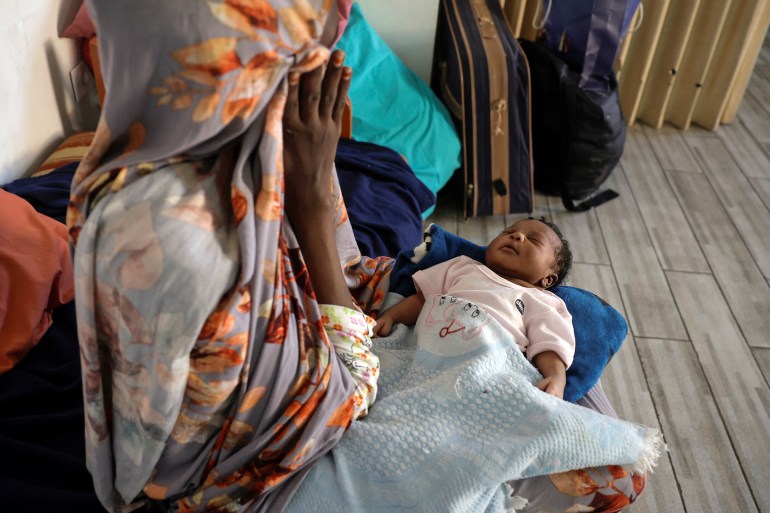
Beirut, Lebanon – Over the last 11 months, as air raids hit villages near their home, Lakmani and her mother Sonia decided to stay in their south Lebanese village of Jouaiya, about a 25-minute drive east of Tyre and a little under an hour from the southern border. “There were some raids not far away,” Lakmani, 26, said. “And they broke the sound barrier a few times,” her 45-year-old mother Sonia added. Sonia came from Sri Lanka to Lebanon to work as a cleaner shortly before giving birth to Lakmani, who has lived her whole life in Lebanon and works as a private tutor. “But then Monday bombs started falling and we said: ‘OK, we should go,’” Lakmani told Al Jazeera, sitting on a park bench in downtown Beirut, where she and her mother now sleep. That day, September 23, would go on to become the deadliest day since the end of the country’s civil war in 1990. Israeli bombs rained down on villages in the south and the Bekaa Valley in the east of Lebanon, killing at least 550 people. Lakmani and Sonia gathered a few belongings, mostly clothes, and fled to Tyre, thinking they would be safe there. But after three days, the air raids around Tyre were so violent that they decided to move north to Beirut. On Friday, September 27, the Israeli military sent evacuation orders for large parts of Beirut’s southern suburbs, creating a displacement crisis in the capital. They, like other foreign workers in Lebanon, are now sleeping rough. Lakmani and her mother found space in a small, grassy public garden with a few trees next to a busy street in Saifi, near Martyrs’ Square in downtown Beirut. About 102,000 people had already been displaced in the last 11 months. Now that figure is about one million, according to the United Nations Office for the Coordination of Humanitarian Affairs (OCHA). A gross underestimation The Education Ministry opened shelters for the displaced in schools around the country but limited them to displaced Lebanese citizens. Those without Lebanese nationality, and many with it, have taken refuge by Beirut’s seaside or in public spaces. Zeinab from Sudan holds her newborn baby girl in a temporary shelter for migrants at St Joseph Church in Beirut on October 1, 2024 [Louisa Gouliamaki/Reuters] The International Organization for Migration estimates about 176,500 migrants live in Lebanon, though the real number is thought to be much higher. A regularly cited figure is about 200,000 but even that is a “gross underestimation”, according to experts and activists in the sector. Many of them work as cleaners or nannies and are beholden to the country’s kafala labour system, which binds a foreign worker to a local sponsor and often results in the labourer being abused. The recent Israeli attacks have highlighted the vulnerability of these foreign workers. Activists who specialise in working with them told Al Jazeera that the war has left them in a variety of troubling situations. “Some of them were left behind in their [employers’] houses in targeted areas, mainly in south Lebanon or the Bekaa region and they had to find their way back to safe areas often without passports or papers,” Diala Ahwash, a Lebanese migrant rights activist, told Al Jazeera. Others were brought to safe areas by their employers but then left on the streets, being forced to sleep rough in parks or by Beirut’s seaside. Some were taken to temporary shelters but then expelled when administrators decided to give places to Lebanese instead. “There’s no understanding that these women have rights. [This situation] goes back to kafala and how it operates, turning migrant domestic workers into an accessory or commodity,” Salma Sakr, of the Anti-Racism Movement (ARM), told Al Jazeera. “And when you don’t need this commodity you throw it away in the street.” “Basically the majority of migrant workers are now facing a precarious situation in varying degrees but it’s a disaster in a general sense,” Ahwash said. There’s no place without war As the war expanded, some embassies began extracting their citizens. The Philippines embassy repatriated its citizens without charging them. Others are making their citizens pay, and many foreign labourers are on low wages and cannot afford expensive plane tickets home. Then there are citizens of countries that have an honorary consulate instead of an embassy in Lebanon. Many embassies do not want to pay to repatriate their citizens, demanding that the people pay for their evacuations themselves [Courtesy of Dara Foi’Elle, Migrant Workers’ Action] “These consulates are completely useless and some exploit workers in this situation and make them pay more,” Sakr said. “With the embassies, there’s a higher-level response.” But, Sakr added, many embassies still require citizens to pay their way home. In the park in Saifi, Rose, 30, sat with two of her Ethiopian compatriots. All were living in Beirut’s southern suburbs until last Friday when Israel began sending evacuation orders. Rose has been in Lebanon for 12 years. She works as a freelancer and lives in her own place with her Sudanese husband and two children. “Everyone comes here to speak to us but what do we benefit from these interviews?” she said, her fatigue showing through. She said she could not afford to pay for evacuation but even if she could, “My husband is from Sudan and I’m from Ethiopia. There’s no place without war.” Some nationals from countries enduring ongoing conflicts – Syria, Sudan, Ethiopia, and others – can register with UNHCR and apply for resettlement, though “the process takes years and years and serves a very small population,” Sakr said. “So it’s not really a sustainable situation.” The Lebanese government has also been of little help, according to activists. In some cases, Lebanon’s General Security, which is responsible for border control, has levelled fines in the hundreds or thousands of dollars on workers with expired papers. Most workers make at most a few hundred dollars a month. “As Lebanon is facing relentless, indiscriminate attacks, it is