

Khamenei says Iran and its allies will not back down from Israeli attacks
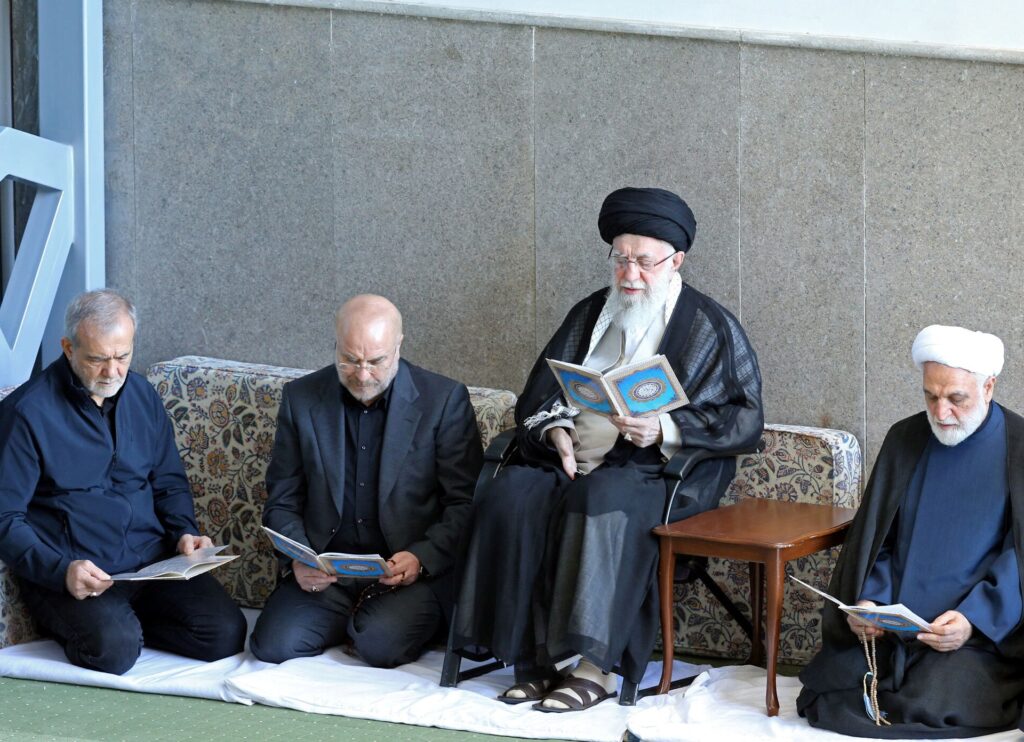
Iran’s Supreme Leader Ayatollah Ali Khamenei has said Iran and its regional allies will not back down against Israel and called for unity among Muslim nations as he delivered a rare Friday sermon. Khamenei led prayers at the Imam Khomeini Grand Mosalla mosque in central Tehran in his first public appearance since Iran launched a massive barrage of some 200 ballistic missiles at Israel on Tuesday. That attack was in retaliation for Israel’s killings of senior Hezbollah, Hamas and Iran’s Islamic Revolutionary Guard Corps (IRGC) figures, including Hezbollah leader Hassan Nasrallah, and escalating attacks in Lebanon. “The resistance in the region will not back down even with the killing of its leaders,” Khamenei said, calling Iran’s attack on Israel “legal and legitimate”. “The operations were … in return for the heinous crimes committed by this bloodthirsty criminal entity,” he said. He said Iran would fulfil its “duty” to allies in a considered manner. “We will not act irrationally … not act impulsively”, he said, adding that the country would follow decisions “handed down by our political and military leadership”. Reporting from Tehran, Al Jazeera’s Resul Serdar said the event was being held at a “delicate and intense time”. Khamenei’s sermon sent a message to Israel that the Iranian authorities “are not hiding, they are not seeking shelter, they are not going underground”, Serdar said. It was the supreme leader’s first such sermon in more than four years, coming just before the first anniversary of Hamas’s October 7 attack on Israel, which led to a war that has so far killed more than 41,700 Palestinians and recently spilled over into Lebanon. Iran’s proxies in its “axis of resistance” – Hezbollah, Yemen’s Houthis and armed groups in Iraq – have carried out attacks in the region in support of the Palestinians in the Gaza war. Addressing massive crowds, Khamenei issued a rallying call to Muslim nations – “from Afghanistan to Yemen, from Iran to Gaza and Lebanon” – saying they should unite against common “enemy” Israel, which he claimed had deployed “psychological”, “economic” and “military” warfare against them. “Our enemy is one,” he said. “If their policies are sowing the seeds of division in one country, they may prevail and once they seize control of one country, they move to the other.” Al Jazeera’s Serdar said that the message of unity countered “criticism over the past decade” that Iran had been isolating itself from the region. “His speech was focused on unity because he has seen now that the possibility of a regional war is real and that’s why he is asking Muslims to be united, to somehow eliminate this threat as a common action, so a regional war can be aborted.” Khamenei last led Friday prayers after the United States killed revered general Qassem Soleimani in Baghdad in 2020. His speech on Friday was preceded by a commemoration for Nasrallah, killed last week in the southern suburbs of Beirut in an Israeli strike, alongside Abbas Nilforoushan, a general from the Islamic Revolutionary Guard Corps. On Tuesday, Israel launched a ground offensive in southern Lebanon, an expansion of the war that has seen it repeatedly bomb Beirut and its southern suburbs. Later that same day, Iran made a retaliatory attack on Israel, its second this year. In April, it had sent a volley of missiles following a deadly Israeli strike on Iran’s consulate in Damascus. In both attacks, nearly all missiles were intercepted by Israel or its allies, according to Israeli authorities. Early on Friday, Israel hit Beirut with a barrage of attacks reportedly targeting senior Hezbollah figure Hashem Safieddine, a putative successor to Nasrallah. There was no comment from Israel or Hezbollah on his fate. Tehran has told the US via an intermediary that any Israeli attack against Iran would meet an “unconventional response” that includes targeting infrastructure, according to an Iranian official who spoke to Al Jazeera. US President Joe Biden said on Thursday that Israel’s response could include a strike on Iran’s oil facilities. Adblock test (Why?)
Was Bruce Willis right? Could a nuclear blast save us from killer asteroid?

It’s been almost 25 years since Bruce Willis, playing the fictional character Harry Stamper in the blockbuster movie, Armageddon, saved Earth from an asteroid careering towards the planet. In true Hollywood fashion, he did this by detonating a nuclear bomb implanted in the asteroid, preventing what scientists call a “mass extinction event”. The whole world cheered (at least in the movie). The world might be able to cheer for real now. In a study published in Nature Physics, physicists at Sandia National Laboratories in New Mexico, US, say they have simulated a nuclear X-ray pulse directed onto the side of an asteroid to change the trajectory of the asteroid and avoid a collision with the Earth. How did the experiment work? In a recent experiment conducted at Sandia National Laboratories, researchers used a Z machine to generate the X-ray pulses. This is one of the world’s most powerful radiation machines that can generate magnetic fields and X-rays. To generate the X-ray pulse, an intense electrical burst is directed at a pocket of argon gas. This triggers an implosion of the argon gas and turns it into plasma. The plasma emits a powerful surge of X-rays towards the target, effectively mimicking a nuclear detonation in space. The world’s largest pulse-powered accelerator – the Z Machine housed at Sandia [Handout/Sandia National Laboratories] Scientists used an X-ray pulse inside a vacuum to simulate a nuclear explosion on the surface of an asteroid-like rock in space-like conditions. The pulse created a vapour plume which pushed the rock away. “The vaporised material shoots off one side, pushing the asteroid in the opposite direction,” Dr Nathan Moore, the lead author of the new study, said in a press statement. In an interview with Space.com, an online publication focused on space exploration and astronomy, Moore said: “You have to concentrate a lot of power, about 80 trillion watts, into a very small space, the size of a pencil lead, and very quickly, about 100 billionths of second, to generate a hot enough argon plasma, several millions of degrees, to make a powerful enough X-ray burst to heat the asteroid material surface to tens of thousands of degrees to give it enough push.” He also explained that creating an environment that replicates one in which asteroids move freely through space without anchoring the asteroid-like rock used for the experiment was a challenge. The solution was to use what they called “X-ray scissors”. This involved hanging the rock using extra thin foil wires about one-eighth the thickness of a human hair. “A key fact was that asteroids in outer space aren’t attached to anything. But in a lab, everything is pulled down by Earth’s gravity, so everything is held in place by its gravitational attachment to something else. This wouldn’t let our mock asteroid move with the freedom of one in outer space. And mechanical attachments would create friction that would perturb the mock asteroid’s motion,” Moore said in a press statement. This method allowed the scientists to simulate the effects of a nuclear explosion in a controlled environment. Although only a simulation, the outcome of the experiment suggests that using a nuclear X-ray pulse on an asteroid could potentially change its trajectory enough to prevent a collision with the Earth. “I knew right away that this was a huge success,” said Moore. Does a nuclear X-ray pulse have the same effect as a nuclear blast? There is a significant difference between planting a nuclear bomb on an asteroid and directing a nuclear X-ray pulse to part of an asteroid to nudge it onto a different trajectory. If a space agency were to successfully detonate a nuclear bomb on an asteroid, scientists have cautioned that the asteroid would be likely to break into smaller chunks, potentially causing multiple asteroid impacts on Earth instead of just one. Even if the trajectory of the biggest chunk of the asteroid was changed, there would be no guarantee that the other fragments of the asteroid would travel away from Earth. Using an X-ray pulse, scientists can generate energy to vapourise enough material from the surface of the asteroid to result in a push that would change the trajectory of the asteroid rather than blasting it into smaller fragments. Have we tried to change the trajectory of an asteroid before? Changing the trajectory of an asteroid might appear more fiction than science, but in November 2021, the Double Asteroid Redirection Test (DART) mission by NASA crashed a spacecraft into the asteroid Dimorphos and successfully changed the asteroid’s orbital path. Fortunately, the Dimorphos asteroid was no threat to Earth. It was selected to test whether an impact from another object could be a viable method for deflecting an asteroid. How close do asteroids come to Earth? Last week, 2024 ON asteroid, a Near-Earth Object (NEO) measuring 290m (950 feet) in length, safely passed Earth at a distance of almost 1 million km (621,000 miles), about 2.5 times the distance between the Earth and the moon. NEOs are asteroids or comets that are monitored by ground-based and space-based telescopes to identify potentially hazardous objects, especially those that have the potential to impact Earth. On June 19, 2004, the asteroid 99942 Apophis, appropriately dubbed “God of Destruction”, measuring 370m (1,210 feet) in length, was spotted by astronomers Roy A Tucker, David J Tholen and Fabrizio Bernardi from the Kitt Peak National Observatory in Arizona. At the time, the scientists predicted that Apophis would eventually hit Earth on April 13, 2029. However, new research suggests that the asteroid will do a close fly-by the same day and is expected to pass about 32,000km (19,800 miles) from Earth, closer than some satellites that orbit the planet. On February 23, 2012, asteroid Duende, a NEO roughly 30m (98 feet) in diameter, was discovered by astronomers at the La Sagra Observatory in Spain. Duende made a close approach to Earth, passing at about 27,700km (17,200 miles), even closer than Apophis asteroid. What are the ethical implications of using nuclear energy
Form, teams, head-to-head: India vs New Zealand – Women’s T20 World Cup
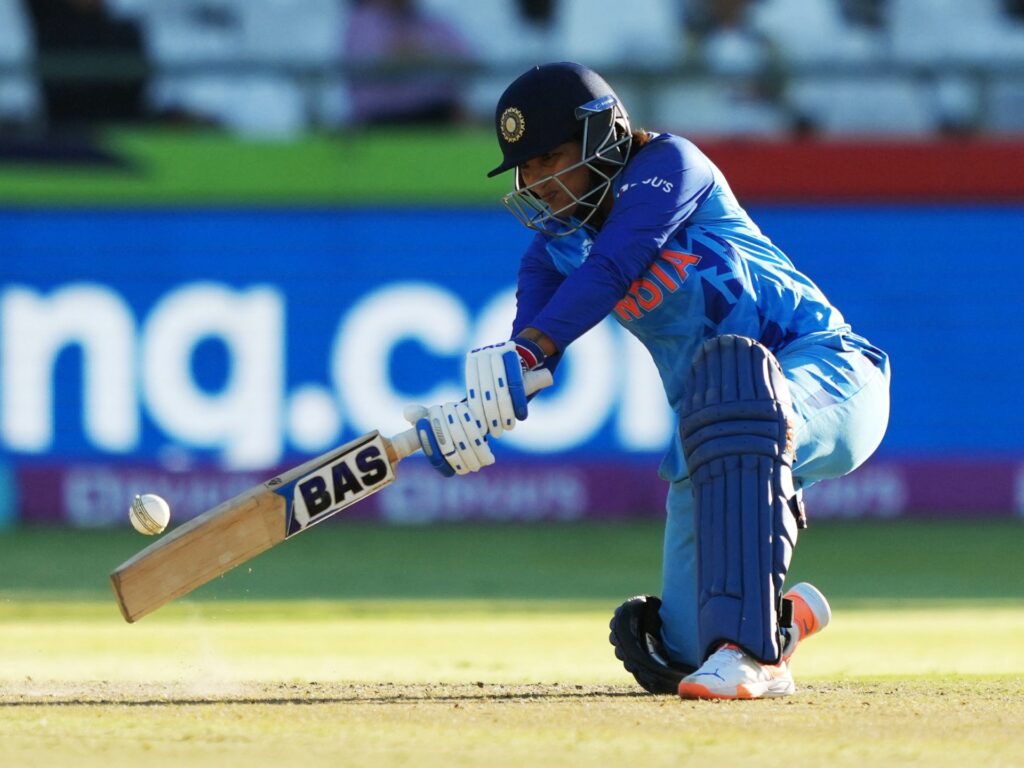
Who: India vs New ZealandWhat: ICC Women’s T20 World Cup 2024 Group A matchWhen: Friday, October 4 at 6pm (14:00 GMT)Where: Dubai International Cricket Stadium, Dubai, United Arab EmiratesHow to follow: Al Jazeera’s live text coverage begins at 11:30 GMT India will begin their search for a maiden ICC Women’s T20 World Cup title when they face New Zealand in a crucial Group A match on Friday. Harmanpreet Kaur’s team are placed third, just above their opponents, in the ICC women’s T20 international rankings but will be wary of the threat posed by an experienced side led by Sophie Devine. India’s head coach Amol Muzumdar believes his team head into the tournament with plenty of self-belief and experience. “We have had a fantastic season leading up to the World Cup,” he told reporters on Thursday. Muzumdar said the team management and captain have been working on finding the right mix for the playing 11 ahead of the first match. “We have figured out the right combination that we are going to play tomorrow,” he said. New Zealand captain Devine will hope that her team will be able to shake off the recent back-to-back series losses against Australia and England. Devine will hold the key to New Zealand’s chances with the bat, but Suzie Bates and Amelia Kerr are also capable of taking on the best bowling attacks in the world. Placed in the tougher of the two groups – along with holders Australia, Asian champions Sri Lanka, and the unpredictable Pakistan – both teams will look to get points in the bag in the first game. Form guide: India India’s last T20 international outing resulted in a loss – and a costly one – when they were beaten by Sri Lanka in the final of the Women’s Asia Cup in July. Prior to the final, they had won all their games in the tournament in Dambulla, Sri Lanka. Last five T20 results: L W W W W Form guide: New Zealand New Zealand, too, enter the tournament on the back of a string of losses in the T20 format. They were beaten 3-0 by the current champions Australia. Their tour of England ended in a series loss as well. Last five T20 results: L L L L L India vs New Zealand: Head-to-head The head-to-head record in T20 matches favours New Zealand, who have won four of their five meetings, including the last one in February 2022. India’s only win came at the T20 World Cup 2020 in Australia, where the women in blue were the losing finalists. India team news India are a settled team and one that brims with experience with the likes of Kaur, Smriti Mandhana, Verma, Singh and Yadav. Squad: Harmanpreet Kaur (captain), Smriti Mandhana, Shafali Verma, Deepti Sharma, Jemimah Rodrigues, Richa Ghosh (wicketkeeper), Yastika Bhatia (wicketkeeper), Pooja Vastrakar, Arundhati Reddy, Renuka Singh Thakur, Dayalan Hemalatha, Asha Sobhana, Radha Yadav, Shreyanka Patil, Sajeevan Sajana New Zealand team news New Zealand will be confident that their experienced top-order batting lineup will cope with the threat posed by India’s strong bowling attack. Squad: Sophie Devine (captain), Suzie Bates, Eden Carson, Isabella Gaze (wicketkeeper), Maddy Green, Brooke Halliday, Fran Jonas, Leigh Kasperek, Amelia Kerr, Jess Kerr, Rosemary Mair, Molly Penfold, Georgia Plimmer, Hannah Rowe, Lea Tahuhu Are tickets for the Women’s T20 World Cup still available? Yes. Tickets for the tournament went on sale on September 25 on the tournament’s website. They will also be available at kiosks at both venues. The ICC has announced free entry for fans under the age of 18. The price for tickets ranges between 5 UAE dirhams ($1.36) and 550 dirhams ($150). How to watch the Women’s T20 World Cup? The ICC has allotted rights to various broadcasting and online streaming outlets across the world. Adblock test (Why?)
Is Hezbollah still able to fight Israel after its leadership has weakened?
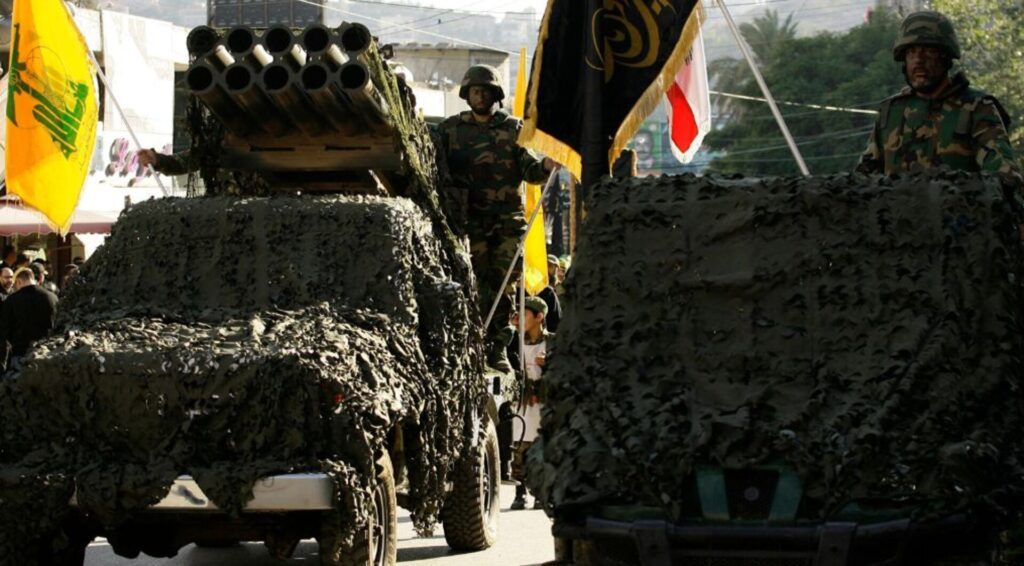
Armed group says fighters have inflicted damage to Israeli troops in southern Lebanon. Hezbollah chief Hassan Nasrallah is dead, along with several other senior leaders. But the Lebanese armed group says it will continue the fight. And despite the setbacks, the Iran-aligned group has demonstrated its capabilities to Israeli troops. The Israeli military has confirmed the killing of several soldiers since a ground operation in Lebanon began on Tuesday. So, is Hezbollah prepared for a long battle with Israel? And how will it face discontent among Lebanese civilians at the prospect of another war? Presenter: Hashem Ahelbarra Guests: Sami Atallah – Founding director of The Policy Initiative, an independent Lebanese think tank Yezid Sayigh – Senior fellow at the Malcolm H Kerr Carnegie Middle East Center Joseph Daher – Visiting professor at Lausanne University Adblock test (Why?)
At least 78 people killed after boat capsizes in DRC
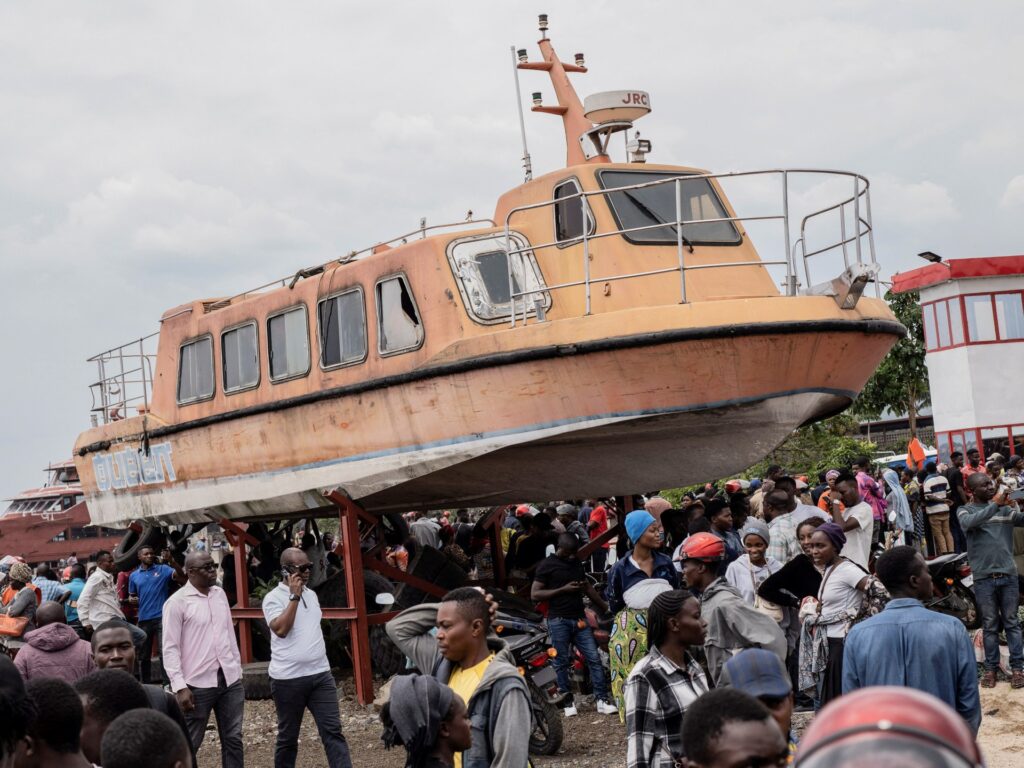
At least 58 rescued, as official warns death toll could rise after boat carrying 278 people sinks. At least 78 people have died after a boat capsized in Lake Kivu in the eastern Democratic Republic of the Congo, a provincial governor said. Governor of South Kivu province Jean Jacques Purisi told the Reuters news agency on Thursday that 278 people had been on board the boat before it overturned. “It’ll take at least three days to get the exact numbers, because not all the bodies have been found yet,” Purisi told Reuters. The governor of the neighbouring North Kivu province said at least 58 people had been rescued. The boat, which had come from the town of Minova in South Kivu province, sank on Thursday morning, only 100 metres (328 feet) from its destination at the shore of Goma. An increasing number of people have opted to cross the northern tip of Lake Kivu by boat to reach Goma in often overcrowded vessels to avoid land travel in an area prone to fighting between Congolese government forces and M23 rebels. Reporting from Goma, Al Jazeera’s Alain Uaykani said there was frustration among residents over the road closures. “Many people here are already complaining about the fact that this is the only possibility to travel between the province of North Kivu to the neighbouring province of South Kivu, even different villages along the lake here because many roads are closed due to the fighting,” he said. Uaykani said those rescued were receiving treatment. ‘I saw people sinking’ One survivor told Reuters that as he struggled to stay afloat in the lake, others around him were drowning. “I saw people sinking, many went under. I saw women and children sinking in the water, and I myself was on the verge of drowning, but God helped me,” said 51-year-old Alfani Buroko Byamungu from his hospital bed. Mushagulua Bienfait, a Goma resident who lost three family members in the incident, blamed the war for his loss. “All of this is part of the consequences of the war … They no longer make an effort to clear the enemies off the road so that it can become operational again,” he shouted. Since M23 launched an offensive in late 2021, the group has seized large parts of territory in the eastern DRC, increasing its military presence and the number of armed groups in the area. Adblock test (Why?)
Video: Israel bombs Lebanon escape route after issuing evacuation orders
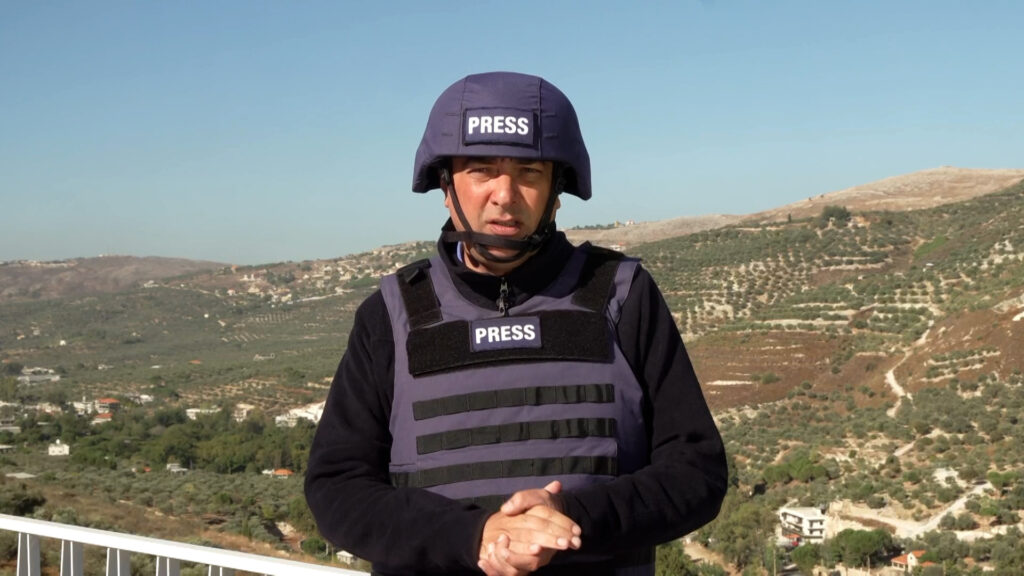
NewsFeed Al Jazeera’s Imran Khan reports on how Israel has repeatedly attacked a main escape route for people in south Lebanon after issuing evacuation orders for dozens of towns and villages, forcibly displacing those who had not already left due to attacks against Hezbollah. Published On 3 Oct 20243 Oct 2024 Adblock test (Why?)
The maps that help explain the Israel-Hezbollah conflict
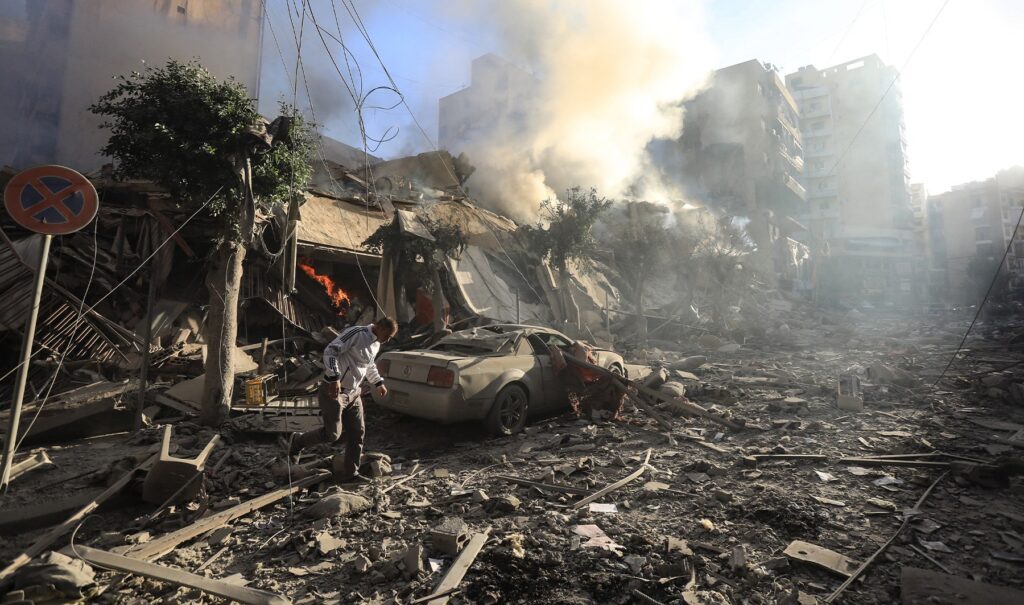
NewsFeed Israel is once again fighting Hezbollah in southern Lebanon, nearly two decades after a UN resolution that was meant to bring peace to the area. Al Jazeera’s Virginia Pietromarchi looks at some of the history that’s shaping the conflict today. Published On 3 Oct 20243 Oct 2024 Adblock test (Why?)
UK agrees to give sovereignty of the Chagos Islands to Mauritius

BREAKINGBREAKING, The deal includes the tropical atoll of Diego Garcia, which is used by the United States as a military base. The United Kingdom says it is giving up sovereignty of the Chagos Islands to Mauritius, in a deal that ends decades of negotiations over the remote but strategically important Indian Ocean archipelago. The announcement over one of the last British overseas territories, made in a joint statement by the British and Mauritian Prime Ministers on Thursday, includes the tropical atoll of Diego Garcia, which is used by the United States as a military base for naval ships and long-range bomber aircraft. More to come… Adblock test (Why?)
‘Deadly cycle of tit for tat must stop’ says Guterres
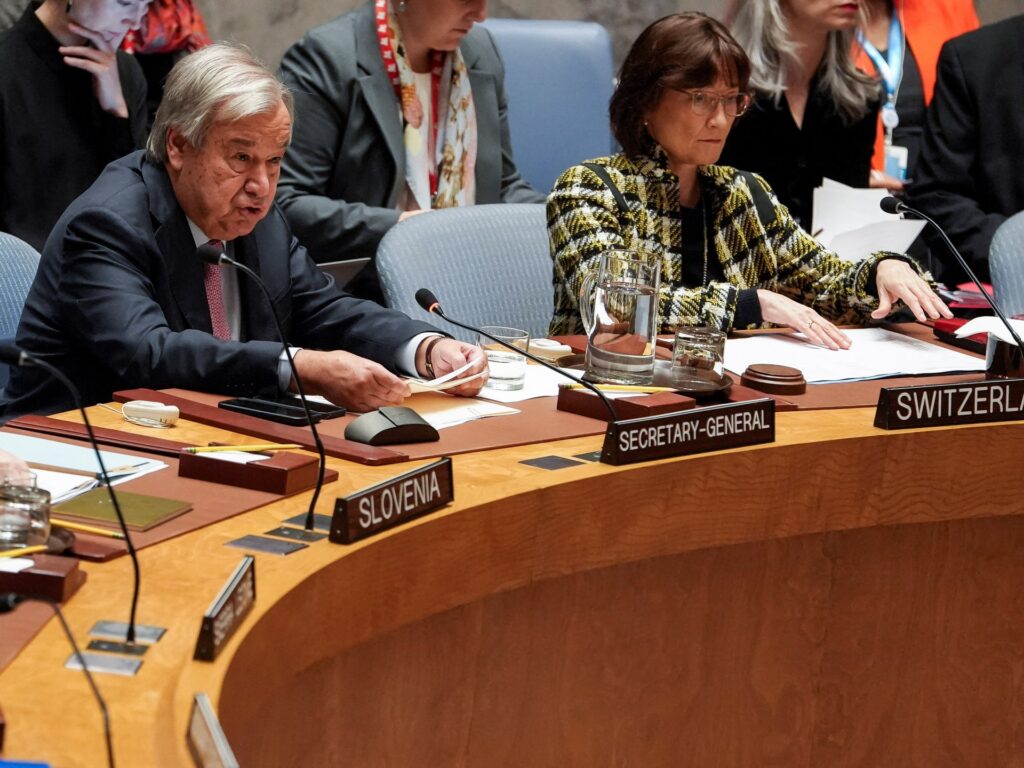
NewsFeed ‘It’s high time to stop the sickening cycle of escalation after escalation that is leading the people of the Middle East straight over the cliff,’ warned Antonio Guterres at a UN Security Council meeting on the Middle East on Wednesday. Published On 2 Oct 20242 Oct 2024 Adblock test (Why?)
Is the Middle East inching closer to full-blown war?

Israel’s Netanyahu says Iran will pay for missile attack, as Tehran threatens a crushing response if Israel hits back. Iran has carried out a major missile attack on Israel – in retaliation, it says, to the killing of the leaders of Hezbollah and Hamas, as well as a senior commander of Iran’s Islamic Revolutionary Guard Corps (IRGC). Israel says it intercepted most of the approximately 200 missiles, with the help of the United States. World leaders are urging both sides to step back from the brink of a regional war. But Israel has promised to respond, warning Iran will pay for its “big mistake”. So, what would that response look like? And after nearly a year of war on Gaza and a campaign of air raids in Lebanon, is Israel able to fight on a third front? Presenter: Nick Clark Guests: Dan Perry – Journalist and author of the book, Israel and the Quest for Permanence Roxane Farmanfarmaian – Professor of modern Middle East politics at the University of Cambridge Julien Barnes-Dacey – Director of the Middle East and North Africa Programme at the European Council for Foreign Relations Adblock test (Why?)