

Flares and explosions as Israel announces Lebanon offensive
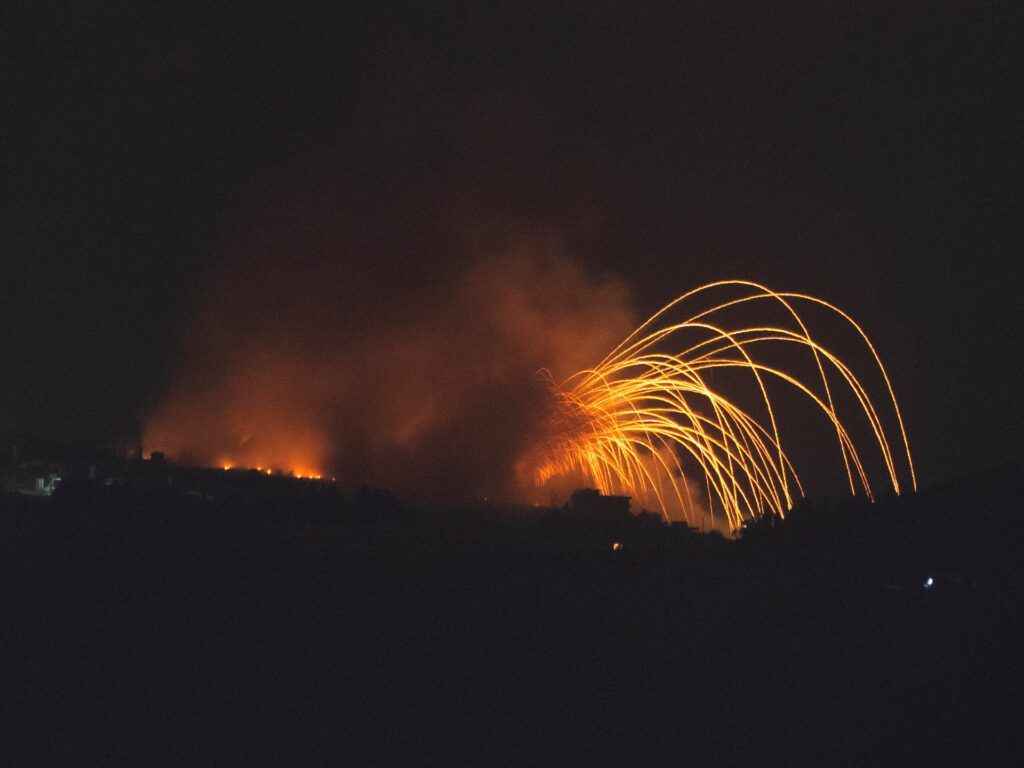
NewsFeed Flares and explosions were seen across the Israel-Lebanon border as the Israeli military announced the start of a ground offensive in southern Lebanon on Monday. Published On 1 Oct 20241 Oct 2024 Adblock test (Why?)
Video: Israel’s army reports ‘intense fighting’ in southern Lebanon
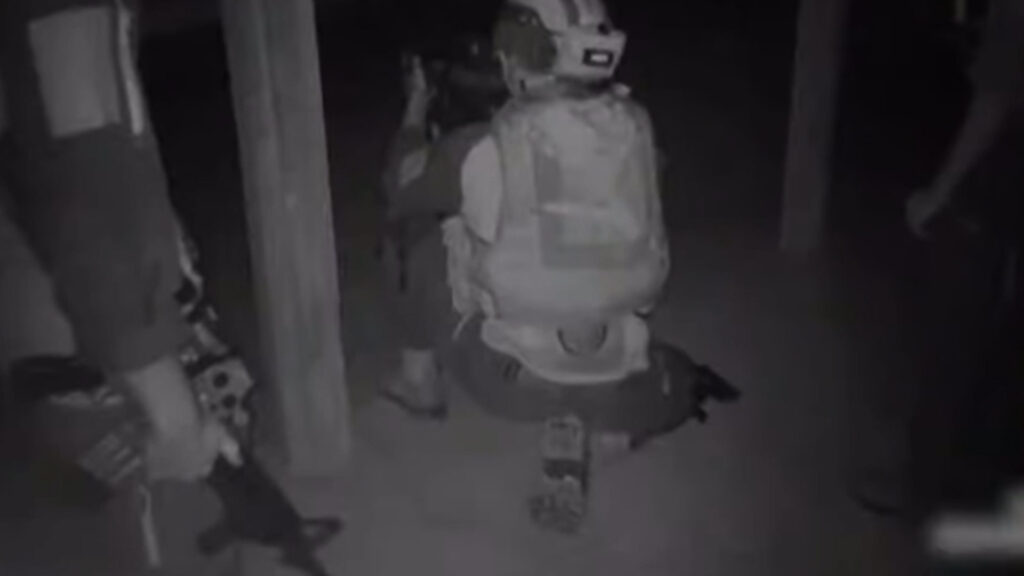
NewsFeed An Israeli army spokesperson says intense fighting is taking place against Hezbollah in southern Lebanon, where Israel’s military earlier said it had begun a ground offensive. Published On 1 Oct 20241 Oct 2024 Adblock test (Why?)
Massive search and rescue operation in wake of Hurricane Helene
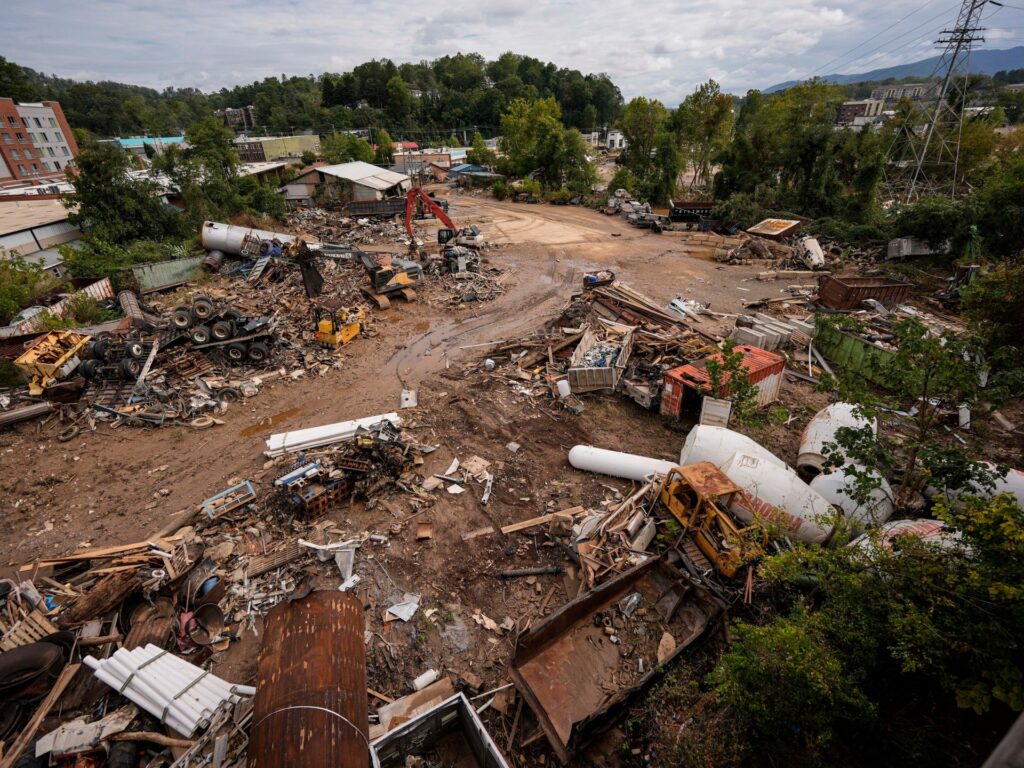
Crews have airlifted emergency food and water into remote North Carolina towns that were cut off and devastated as tropical storm Helene turned the western part of the state into a “post-apocalyptic” landscape. A hurricane when it slammed into the Florida Gulf coast on Thursday, Helene tore a destructive path through southeastern US states, ripping up roads, tossing homes about and severing lines of communication. The storm killed more than 100 people in North Carolina, South Carolina, Georgia, Florida, Tennessee and Virginia. The death toll is expected to rise once rescue teams reach isolated towns and emergency telecommunications assets come online. Throughout North Carolina, some 300 roads were closed, more than 7,000 people have registered for United States Federal Emergency Management Agency assistance, and the National Guard was flying 1,000 tonnes of food and water to remote areas by plane and helicopter, officials told a news briefing. Among the demolished towns was the tiny hamlet of Bat Cave, about 100 miles (160km) west of Charlotte, where the Broad River – in what climate scientists called a 1,000-year event – rose to unprecedented levels, washed away homes and broke through the town bridge. The US government, states and localities are engaged in a massive recovery effort throughout the southeast. People were stranded without running water and 1.8 million homes and businesses remained without power on Monday, according to the website Poweroutage.us. Georgia Governor Brian Kemp said at least 25 people in his state had died, including a firefighter responding to emergency calls during the storm and a mother and her one-month-old twins who were killed by a falling tree. South Carolina has reported at least 29 dead. In North Carolina’s mountainous Buncombe County, which includes the tourist destination of Asheville, 40 people died, the county manager said. North Carolina Governor Roy Cooper took an aerial tour of the damage and said “significant resources” would be needed in the short and long term. “The devastation was beyond belief, and even when you prepare for something like this, this is something that’s never happened before in western North Carolina. Search and rescue teams are continuing to work,” Cooper told a news briefing. Some 1,200 federal personnel are on the ground, in addition to state and local responders. The US Army Corps of Engineers is planning major debris removal. Adblock test (Why?)
Israel says ‘next phase’ of war with Hezbollah in Lebanon to ‘begin soon’
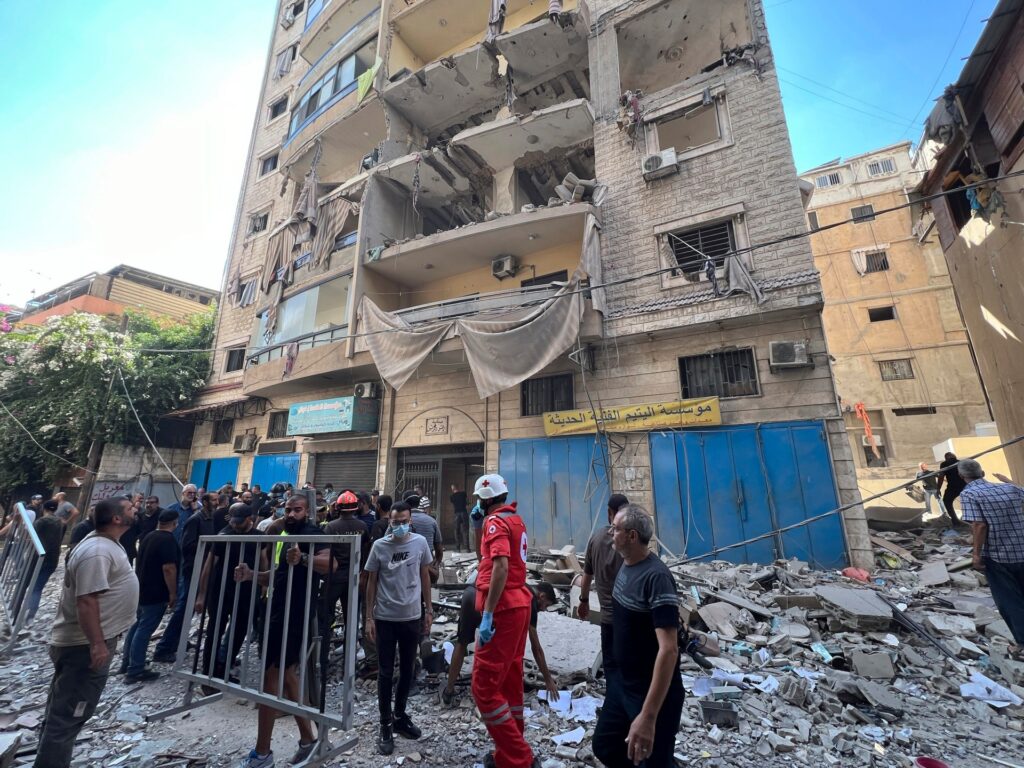
Israel has warned that it will use “all the means” at its disposal to attack the Lebanese armed group Hezbollah amid growing fears of a ground assault on Lebanon. “The next phase in the war against Hezbollah will begin soon,” Israeli Defence Minister Yoav Gallant told a meeting of local council heads in northern Israel on Monday, according to a statement from his office. Earlier, Gallant told troops that Israel would “use all the means that may be required … from the air, from the sea, and on land.” To allow displaced residents of the border area to return safely home, “we will employ all of our capabilities, and this includes you,” Gallant told troops. Hezbollah began low-intensity strikes on Israeli troops a day after Israel launched its assault on Gaza last October in response to an attack by the Palestinian group Hamas. Israel and Hezbollah have traded near-daily fire across the Israel-Lebanon border for almost a year, prompting tens of thousands of people on both sides to flee their homes. Israel’s military escalated the fighting this month, leaving people across the region fearful of even more violence to come. Some Israeli forces have already conducted small-scale ground operations in Lebanon, several international media outlets reported, and Israel’s air force has bombarded targets across the country in recent days. Israel has killed Hezbollah leader Hassan Nasrallah and several of the group’s top commanders in strikes on the southern suburbs of Beirut, and continued a campaign of air attacks on Hezbollah sites in eastern and southern Lebanon. More than 1,000 people have been killed since Israel escalated its attacks. Hezbollah has continued to fire rockets and missiles at Israeli targets. On Monday, the Lebanese-armed group said its fighters targeted northern Israel’s Gesher Haziv settlement with a “salvo of rockets”. In a statement, the Lebanese group said it also fired rockets at Israeli military positions in the occupied Golan Heights and fired a long-range anti-ship cruise missile at Kfar Giladi, a rural cooperative community known as a kibbutz. In a separate statement, Hezbollah said it fired Fadi 1 missiles at areas in northern Haifa. In the group’s first broadcast address since Nasrallah’s assassination, Hezbollah deputy chief Naim Qassem said it is prepared for any potential ground incursion and a long war. When asked about reports that Israel is preparing for a “limited” ground invasion of Lebanon, US President Joe Biden called for a ceasefire. Asked if he was comfortable with Israel’s plan, Biden replied: “I’m comfortable with them stopping.” However, he did not elaborate on any plans to halt the conflict, or discuss US supplies of weapons and military aid to ally Israel. Israel has told the US about a number of operations, the State Department said on Monday. “I know I’ve seen reports about ground operations. We’ve had some conversations with them about that. They have at this time told us that those are limited operations focused on Hezbollah infrastructure near the border. But we’re in continuous conversations with them about it,” State Department spokesperson Matthew Miller told reporters. Yossi Beilin, Israel’s former justice minister, told Al Jazeera that neither Hezbollah nor Israel “wants a ground battle” because “there is always a lethal price on both sides, people will be killed, and it should be prevented”. He said that both sides need to renegotiate UN Resolution 1701, referring to the 2006 resolution to end the Israel-Hezbollah conflict at the time and pave the way for improved security along the border. “I think we should rebuild the relations between Israel and Lebanon”, Beilin added. Reporting from Marjayoun in southern Lebanon, Al Jazeera’s Imran Khan said that since the morning, Israeli air strikes have pounded the south of the country. He added that the Bekaa Valley, eastern Lebanon, as well as Baalbek and the road towards Syria have been hit. “The death toll is climbing as well: 136 people killed in the last 24 hours, and that is something that is putting a tremendous amount of pressure on the emergency services. They’re simply running out of people and ambulances to be able to service the entire area,” he said. Among those killed were three members of the Popular Front for the Liberation of Palestine group, who were targeted in the Kola area of Beirut in Israel’s first attack on the Lebanese capital beyond the southern suburbs. Fatah Sharif, a Hamas top commander in Lebanon, was also killed along with his wife, son and daughter in an air strike on El Buss refugee camp, one of 12 dedicated to Palestinian refugees in Lebanon, in the southern port city of Tyre on Monday. The Israeli military confirmed it had targeted him. Sharif was also an employee of the United Nations Relief and Works Agency for Palestine Refugees (UNRWA), and was suspended from the agency earlier this year following allegations regarding his politics. The UNRWA chief has denied knowing that Sharif was a Hamas commander. “I never heard the word ‘commander’ before,” Philippe Lazzarini told reporters in Geneva. “What’s obvious for you today, was not obvious yesterday.” More than 100,000 people have fled to Syria from Lebanon since the escalation of the conflict between Israel and Hezbollah this month. About 118,466 new displacements have occurred between September 23 and 27, the UN’s World Health Organization said in a situation report. The agency added that Lebanon’s health system also remains impacted and overstretched by a new escalation of violence in the country. Lebanon’s acting Prime Minister Najib Mikati has said that the government is ready to fully implement the 2006 UN Security Council Resolution 1701 that aimed to end Hezbollah’s armed presence south of the Litani River as part of an agreement to stop war with Israel. Adblock test (Why?)
More than 100 killed by Hurricane Helene
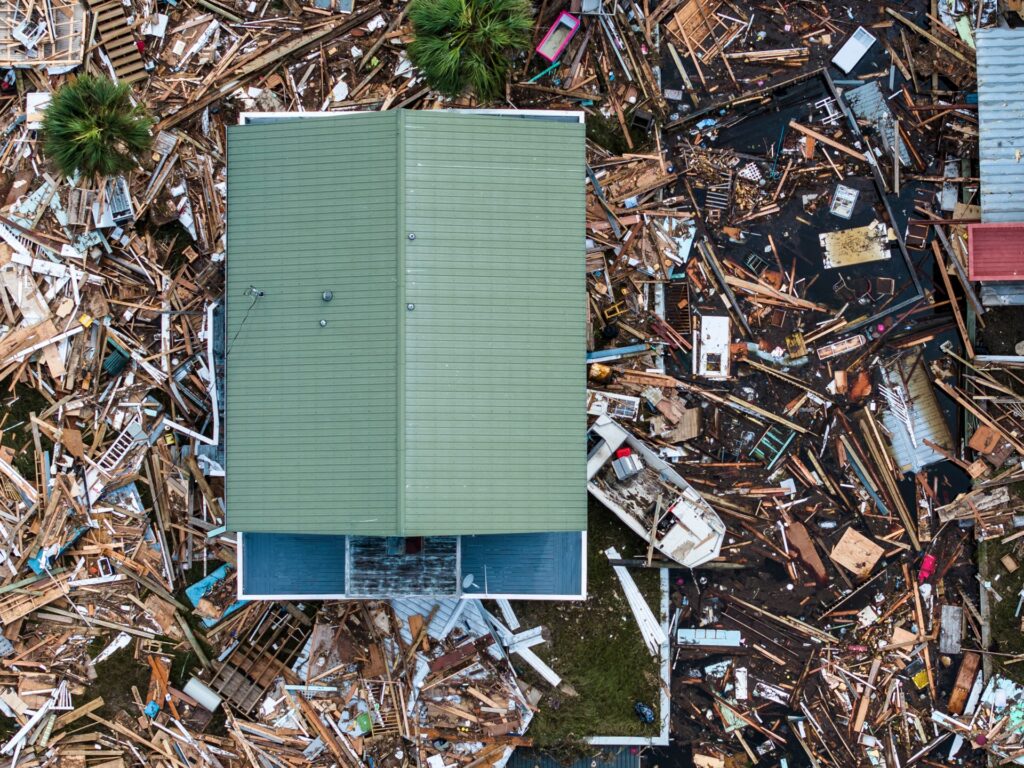
NewsFeed Clean up and rescue efforts are underway after Hurricane Helene wrought havoc across 5 states in the US. More than a 100 people have been killed and hundreds more are missing. Published On 30 Sep 202430 Sep 2024 Adblock test (Why?)
‘Cruel’: Biden administration toughens asylum restrictions at US border

US President Joe Biden’s administration is toughening asylum restrictions at the United States-Mexico border, as the Democrat tries to show voters that his party is taking a harder stance on immigration in the lead-up to November’s election. The new rules announced on Monday, which expand on restrictions announced in June, bar migrants from being granted asylum when US officials deem that the southern border is overwhelmed. “This action has been taken in parallel with other Administration actions that have both increased enforcement and delivered to asylum seekers safe and lawful pathways to humanitarian relief,” Homeland Security Secretary Alejandro Mayorkas said in a statement. Under the previous rules, the US government could restrict asylum access when the number of migrants and asylum seekers trying to enter the country between official border crossings hit 2,500 per day. The daily numbers had to average below 1,500 per day for a week in order for the restrictions to be lifted. But under the new regulations, which come into effect just after midnight on Tuesday, the daily numbers will have to be below 1,500 for nearly a month before the restrictions can be lifted. The administration also is now counting all children towards that number, whereas previously only migrant children from Mexico were counted. The changes will make it much more difficult to lift the curbs and allow people entering the country between official border crossings to apply for asylum in the US — and Monday’s announcement was slammed by migrant rights advocates. “This policy bolsters xenophobic and racist rhetoric that falsely portrays immigrants as threats. It will also leave a permanent stain on President Biden’s legacy,” said Eleanor Acer, senior director for refugee protection at Human Rights First. Amy Fischer, director of refugee and migrant rights at Amnesty International USA, accused the administration of “clinging to policies of cruelty when there are solutions on the table”. “Instead of spending billions of taxpayer dollars to fuel cruel border policies that create heartbreaking human rights and humanitarian crises, the United States must invest in a coordinated welcome and reception system that meets the immediate and long-term needs of people seeking safety,” Fischer said. The American Civil Liberties Union (ACLU) also slammed the new rules as illegal. “The asylum law Congress enacted recognizes that people fleeing danger should not be forced to wait and try to secure an appointment to seek asylum. This restrictive rule is not just immoral but illegal,” the group said in a social media post on Monday afternoon. Under US immigration law, any non-citizens on US soil must be granted due process to seek asylum if they fear for their lives or freedom “on account of race, religion, nationality, membership in a particular social group or political opinion”. The asylum law Congress enacted recognizes that people fleeing danger should not be forced to wait and try to secure an appointment to seek asylum. This restrictive rule is not just immoral but illegal. https://t.co/zUP4tbnkbl — ACLU (@ACLU) September 30, 2024 Last week, the United Nations High Commissioner for Refugees (UNHCR) also issued new legal guidance for countries on the issue of asylum. Elizabeth Tan, UNHCR’s director of legal protection, noted that Article 31 of the UN Refugee Convention states that countries are barred from penalising asylum seekers for entering the country irregularly in search of protection. “That article is there because many people flee life-threatening situations and they have no other choice but to take irregular manners of travel, and they often don’t have the opportunity to obtain a travel document or a visa before they’ve fled their country,” Tan told reporters. Election issue Immigration remains a divisive issue in the US, and it has been used as a way to gain leverage against political opponents. Republicans and right-wing media outlets have routinely accused Democrats of being lax on border security, despite the Biden administration enacting a slew of restrictions such as the asylum curbs. Republican presidential candidate and former US President Donald Trump – who pursued stringent, anti-immigration measures while in office – continues to hit out at his Democratic rival, US Vice President Kamala Harris, on immigration ahead of November’s election. Trump and his running mate JD Vance have promised to carry out the largest deportation campaign in US history if elected. They have also amplified and spread false rumours about Haitian migrants, drawing widespread condemnation. Last week, Harris pledged to continue the Biden administration’s crackdown on irregular crossings at the country’s southern border with Mexico. “The United States is a sovereign nation,” Harris said during a visit to Arizona on Friday. “And I believe we have a duty to set rules at our border and to enforce them.” The Biden administration has defended its policies as helping to stem a surge in irregular border crossings. US border authorities have apprehended roughly 54,000 migrants and asylum seekers so far in September, down steeply from a peak of 250,000 in December, a Department of Homeland Security official said. Adblock test (Why?)
Modi’s Kashmir statehood promise. Poll rhetoric or genuine outreach?
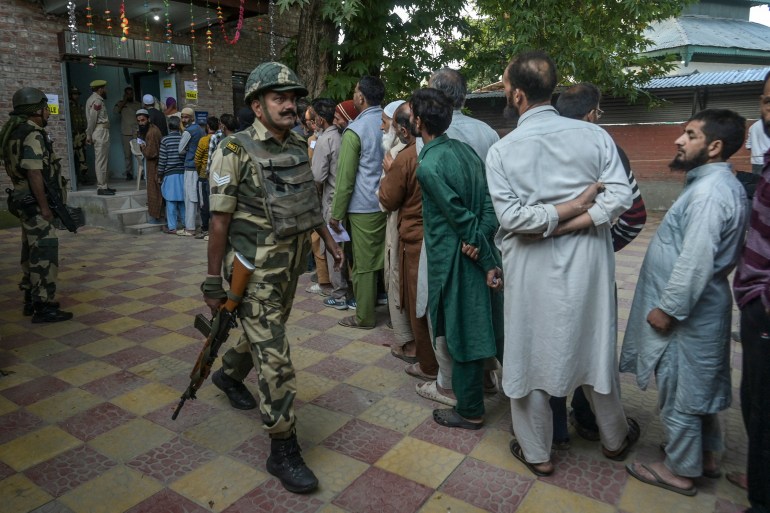
Srinagar, Indian-administered Kashmir – As Kashmir gears up for the last phase of local elections due on Tuesday, Indian Prime Minister Narendra Modi has promised to restore the disputed territory’s “statehood” that was stripped five years ago by his Hindu nationalist government. “We had promised in the parliament that Jammu and Kashmir [official name of Indian-administered Kashmir] will again be a state,” Modi said, addressing a rather dull crowd in Srinagar, the main city in the disputed Muslim-majority territory. Only the Bharatiya Janata Party (BJP) “will fulfil this commitment”, he said without elaborating further. Modi’s latest election pitch comes amid widespread anger in Kashmir at the BJP for scrapping the region’s limited autonomy and demoting it into a federally run territory in 2019. The move is also aimed at blunting attacks from Kashmir-based parties, who have made the restoration of the special status and statehood their main poll agenda. The ghost of New Delhi’s unilateral decision to scrap the region’s special status, aimed at safeguarding local culture and demography, still looms large over the poll campaigns. Anti-India sentiment runs deep in the disputed Himalayan region, which has witnessed decades of armed rebellion. India has accused Pakistan of backing rebels – a charge denied by Islamabad. Both the South Asian neighbours claim Kashmir in full but have governed parts of it since their independence from Britain in 1947. So, what will be the nature of the promised state? What powers will the newly elected assembly wield? And can Kashmir’s unionist political parties, technically, deliver on their poll promises? How does India’s federal structure function? Where does Kashmir fit in? Late Professor Kenneth Clinton Wheare, an Australian academic and expert on constitutions of the British Commonwealth, described India as a “quasi-federal” state. “Almost devolutionary in character: a unitary state with subsidiary federal features rather than a federal state with subsidiary unitary features,” he observed, implying that while power is centred in New Delhi, states are allowed to govern and legislate in accordance with regional contexts. The Indian constitution defines the country as a “Union of States”, and then breaks down the power-sharing, legislative structure into three lists: the Union List, including remits such as defence and currency that are exclusive to the parliament; the State List, including powers such as police and public health that can be drafted by the states; and the Concurrent List, including areas such as marriage, education, and forests, which can be legislated by both. But Kashmir’s relationship with New Delhi has been unique and complex as it joined the Indian union in 1947 with a set of conditions, which were enshrined in Article 370. Under the terms of the instrument of accession, Kashmir gave India the power to manage matters of foreign affairs, defence, and communications — and left New Delhi with limited legislative powers. While successive governments in New Delhi gradually eroded those powers, Kashmir still flexed its separate constitution, flag, and freedom to make laws on permanent residency and property ownership, and reserve government-sponsored opportunities exclusively for the state’s subjects. Indian security personnel stand guard as voters queue up to cast their ballots at a polling station during the first phase of assembly elections in Pulwama, south of Srinagar on September 18, 2024. [Tauseef Mustafa/AFP] What happened to special status? On August 5, 2019, the Modi government removed Article 370, fulfilling BJP’s decades-long promise to remove the special status, which it said was responsible for the region’s political crisis and separatism. New Delhi also bifurcated the region into two federally governed territories: Jammu and Kashmir bordering Pakistan in the west, and Ladakh bordering China in the east. On the same day, Amit Shah, India’s home minister and Modi’s confidante, informed the parliament that, unlike Ladakh, “statehood” will be restored to Jammu and Kashmir. To prevent the outbreak of protests, authorities arrested thousands of Kashmiri leaders and activists and imposed a months-long communication blockade – a move denounced by the opposition and international rights observers. The decision was also immediately challenged in India’s top court, which eventually upheld the move in December last year and called for the restoration of the same statehood as any other Indian state – with no separate autonomy rights – “at the earliest and as soon as possible”. But just weeks before the region’s first assembly elections, the Modi government gave its handpicked administrator more powers, further shrinking the scope of the incoming legislature. “For the last five years, all Kashmiris have seen is an arrogant bureaucracy and the important missing layers of a local government,” said Anuradha Bhasin, editor of Kashmir Times and author of A Dismantled State: The Untold Story of Kashmir after Article 370. “New Delhi has suppressed this area that has a history of turmoil. It has worrying, ominous signs,” she told Al Jazeera. Speaking at a poll rally in the Jammu region, Rahul Gandhi, leader of the opposition in parliament, took a dig at the local administration saying “non-locals are running Jammu and Kashmir”. “Your democratic right was snatched. We have given priority to the demand for restoration of statehood,” he said, addressing the crowd. “If [the BJP] fails to restore statehood after the elections, we will put pressure on them to ensure it.” What power will the elected government have in Kashmir? Political observers and Kashmiri analysts see the elections as a referendum on the BJP’s controversial decision –– and reflect upon the unchartered duality of running a legislature subservient to the central government. While Kashmir parties have tried to realign their politics along the calls for restoration of special autonomy and “dignity”, experts told Al Jazeera that the newly elected government will have to work at the mercy of the Lieutenant Governor (LG), a constitutional head appointed by New Delhi under the current setup. Under the flipped framework after August 2019, the LG will sway more influence than the elected assembly and will retain control over issues of “public order and police”. The government will also be unable to introduce any financial bill
Punish violent fans and the players inciting them: Atletico manager Simeone

Atletico Madrid manager Diego Simeone says fans who hurled objects onto the pitch, causing their Spanish football league match against Real Madrid to be suspended for more than 20 minutes, should be punished along with the players who he suggested encourage such action. The city derby was interrupted on Sunday after Atletico fans threw objects onto the field, prompting the referee to stop the game and send the players to the dressing rooms around the 70th minute at the Metropolitano Stadium. While Real players celebrated Eder Militao’s opener in the 64th minute, Atletico ultras Fondo Sur, who are located in the south lower stands, threw objects towards visiting keeper Thibaut Courtois, who alerted the referee, leading to the decision to halt the match. After the delay, Angel Correa equalised deep in added time as the game ended with a 1-1 draw. “My opinion is that people who have committed incidents should be sanctioned by the club. We don’t need these people. We need the people who accompany and support us. They harm the club, but be careful: that does not justify generating situations that we, the protagonists, generate,” Simeone told DAZN Sport. Atletico defender Jose Maria Gimenez and midfielder Koke Resurreccion went to talk to the fans in the section behind Courtois’s goal. Atletico Madrid’s midfielder Koke asks supporters to stop throwing items on the pitch after Eder Militao’s goal at the Metropolitano Stadium in Madrid [Oscar Del Pozo/AFP] Simeone also asked several times for the fans to behave. “We all have to help,” he said. “The people who have thrown those lighters, it’s not right. But maybe it doesn’t help when us, the protagonists, undermine people, charge against people, provoke people and then people get angry. “People have no other way of doing it, in a bad way, which is not right, but we also have to try to be calm, to understand the situations, that you can celebrate a goal by celebrating it, but not by celebrating it by staring at the stands, charging against the stands, making gestures … because then people get angry. “Of course it’s not justified, but neither is the initial thing justified because otherwise, we’ll always be victims. The one who throws the cigarette lighter should be sanctioned and the one who provokes should also be sanctioned. This way there is no more laughter and things like that, as you are not sanctioned, you are allowed to do things.” Atletico Madrid players leave the pitch after the match was suspended by the referee [Oscar Del Pozo/AFP] A message on the stadium’s loudspeaker said the match was being interrupted for 15 minutes, adding it would be suspended if the problem continued. Atletico Madrid released an official statement in the early hours of Monday saying they had already identified one of the fans who hurled objects onto the pitch and are working with police to identify others, who will be disciplined. “Atletico de Madrid wishes to express their rejection of the throwing of objects from a section of the south stand in the 68th minute of the match against Real Madrid. The club’s security department has been working together with the police to locate those involved, one of whom has already been identified,” the club said in a statement. “The club will apply the internal regime foreseen for very serious cases to the people involved in this incident. These attitudes have no place in football and tarnish the image of a stadium that has experienced a spectacular atmosphere with more than 70,000 spectators in the stands, the vast majority of whom have shown exemplary behaviour.” Atlético de Madrid wishes to express its rejection of the throwing of objects that took place from a section of the south stand in the 68th minute of the match vs Real Madrid. The club’s Security Department has been working with the police to locate those involved, one of whom… pic.twitter.com/bqFaRfoWhe — Atlético de Madrid (@atletienglish) September 29, 2024 The interruption came a day after the Spanish league said it would ask the police to act against the promoters of a social media campaign that the league said was aimed at promoting racist acts against Vinicius Junior at the derby. The social media campaign was based on a hashtag encouraging Atletico fans to wear face masks, apparently to make it more difficult for authorities to identify individuals who participate in racist chants or insults. Social media videos showed Atletico fans before the match chanting “Vinicius is different”. Adblock test (Why?)
Video: Aftermath of deadly flooding and landslides in Nepal

NewsFeed Rescue teams have been looking for people stuck in their homes or under mud after floods and landslides in Nepal that have killed at least 160 people. Published On 30 Sep 202430 Sep 2024 Adblock test (Why?)
‘We lost a great supporter’: Palestinians in Gaza mourn Hassan Nasrallah
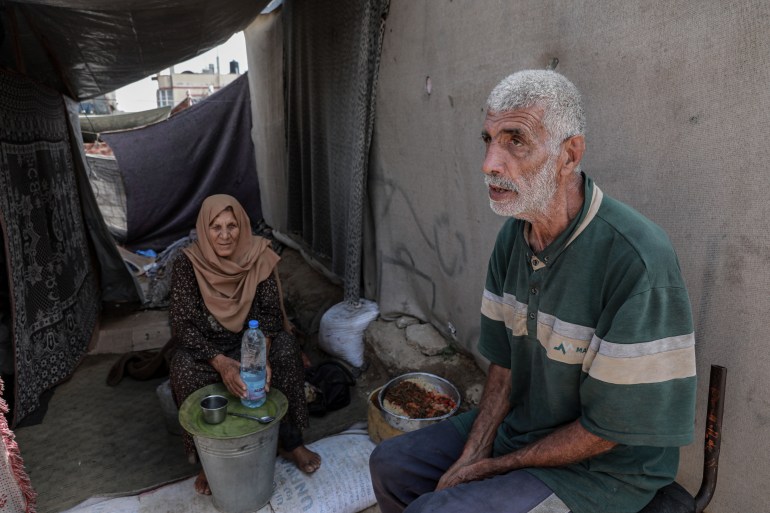
Deir el-Balah, Gaza – In a tattered makeshift tent in Deir el-Balah, in the central Gaza Strip, Basma al-Helou and her husband were preparing their morning tea. “We wouldn’t wish this life [in tents] on anyone, let alone our brothers in Lebanon,” the 74-year-old said, her voice filled with sorrow. “War is unbearable, and we have felt its horrors all year. I was devastated when Israel started bombing Lebanon.” Her grief deepened, she said, upon hearing of the assassination of Hassan Nasrallah, the Hezbollah chief who was killed on Friday night during a huge Israeli attack on southern Beirut. “I was heartbroken when I heard. Everyone around me, my neighbours – we all hoped it wasn’t true.” As a Palestinian, al-Helou says she will never forget Nasrallah’s unwavering support for her people. “Nasrallah stood with us throughout his life, always defying Israel. I remember his speeches on TV. They were a source of strength. His loss is immense. “We don’t know what they want to stop the war. They killed Ismail Haniyeh, they killed many leading figures.” Now, she says, “We feel that we are alone in the face of a tyrannical war machine.” Basma al-Helou and her husband live in a makeshift tent in Deir el-Balah. Of Nasrallah, she said: ‘His loss is immense’ [Abdelhakim Abu Riash/Al Jazeera] ‘Nasrallah was with us’ Zaki Sheikh Khalil, 64, shared similar sentiments. “Nasrallah was with us when others abandoned us,” he said. “Anyone who stood by us, regardless of their nationality or religion, we will mourn their loss or death.” He acknowledged that not everyone in the region feels the same way. “Some say that Nasrallah is Shia, and not Sunni, and that he caused some differences and divisions in Syria, but whatever the differences are, we will continue to remember Nasrallah who stood in the face of Israel as a support for Gaza,” he said. “The enemy is one and Israel is our enemy and Nasrallah’s killing is a victory for it,” he added. Reflecting on Israel’s attacks on Lebanon, Khalil, who has been displaced five times, expressed profound sadness. “What’s happening in Lebanon mirrors our suffering in Gaza – bombing, destruction, displacement. Watching them endure what we’ve endured is unbearable. Worse is the world’s indifference. “It is unbearable for us to see a defenceless civilian people subjected to the same calamities that we have been subjected to,” he said. “We are very sad for Lebanon that it is facing the same fate because it stood with Gaza and said ‘no’ to Israel.” Zaki Sheikh Khalil says he would mourn anyone who stood with the Palestinians in Gaza, including Hassan Nasrallah [Abdelhakim Abu Riash/Al Jazeera] ‘Numb towards everything’ For Hiba Murad, a 36-year-old mother of five, Nasrallah’s death left her feeling numb. “The war has made my feelings numb towards everything,” she said, smiling broadly. “I have lost my feelings towards many things. My life is unbearable.” Murad stressed that her indifference does not mean that she is not sad about Nasrallah’s death – she is truly sad about everything that is happening around her, she explained – but she has a feeling of helplessness. “I spend my day laughing at everything. Everything around me is ridiculous and pitiful. We live in a world without morals or feelings,” she said. When asked about Israel’s actions, Murad remarked: “They claim to target leaders like Haniyeh and Nasrallah to defeat Hamas and Hezbollah, but they continue attacking civilians. We’re the ones suffering, not just the leaders. “What is left for Israel now? Israel is only using some names and captives in Gaza as an excuse to continue its killing and crimes against people, and in the end, we are the victims.” After Nasrallah’s killing, Murad said she no longer rules out the possibility that Israel knows the location of Yahya Sinwar, the Hamas leader in Gaza, but is delaying targeting him to reap more destruction under the pretext of searching for him. “Unfortunately, Israel enjoys political and international immunity to do anything. We have lost hope in anyone who supports us in Gaza, because the price is known. “Whoever supports Gaza will meet the same fate as Nasrallah and Lebanon.” Hiba Murad said she feels ‘numb’, helpless and sad about Nasrallah’s killing and everything happening around her [Abdelhakim Abu Riash/Al Jazeera] Adblock test (Why?)