

Former Netanyahu rival Gideon Saar joins Israeli cabinet
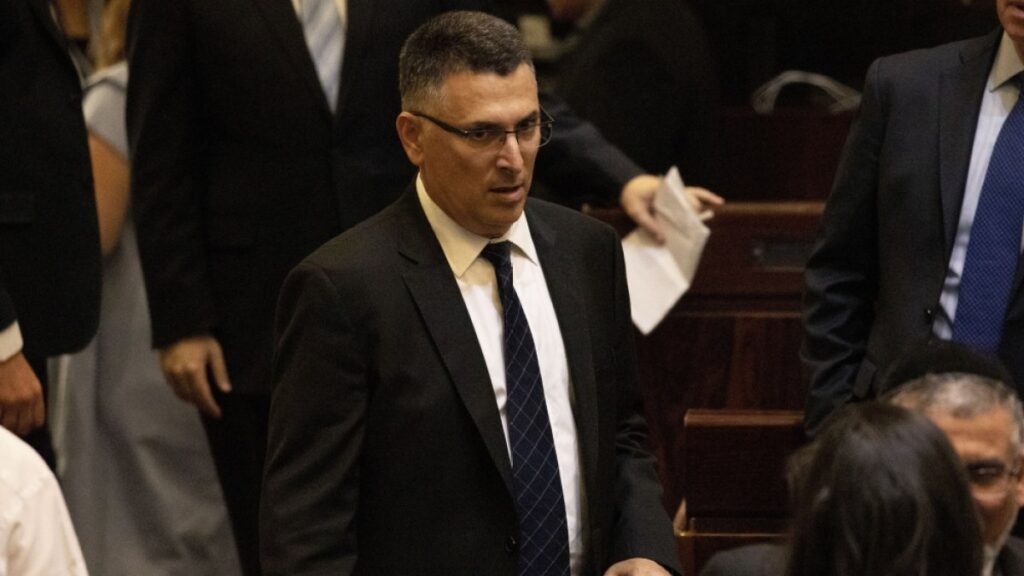
The move will boost the prime minister’s governing coalition domestically as Israel attacks countries across the region. Israel’s Prime Minister Benjamin Netanyahu has announced that his former rival Gideon Saar is joining the Israeli cabinet, a move that will boost the government coalition and bolster its support in the country’s parliament. The hawkish Saar will serve as a minister without a portfolio, the prime minister said on Sunday. Saar’s inclusion in the government coalition takes its support in the 120-seat Israeli parliament from 64 to 68, weakening the de facto veto power that far-right parties have over the cabinet. The move comes as Israel intensifies its attacks on Lebanon, Gaza and across the Middle East in what is increasingly looking like a wider regional war. Saar had been one of Netanyahu’s most vocal critics in recent years, but the Israeli prime minister suggested that the two politicians have been on the same page since the start of the war on Gaza. “Gideon accepted my request and agreed to return to the government,” Netanyahu said in a joint statement, as reported by the Israeli newspaper Haaretz. “During security cabinet discussions, I was deeply impressed by Saar’s broad vision and his ability to offer creative solutions to complex problems. On more than one occasion, we have seen eye to eye on the necessary actions. It’s no secret that we’ve had our differences in the past, but since October 7, we have both put all past grievances behind us.” For his part, Saar said described the decision to join the government as “the patriotic and right thing to do now”. “At this time, it is crucial to strengthen Israel, its government, and the unity and cohesion within it,” he said. Earlier this month, Israeli media reported that Netanyahu was considering replacing Defence Minister Yoav Gallant with Saar. Haaretz and Ynet also reported that Saar and Netanyahu were jointly going to pick the new Israeli army chief to replace Herzi Halevi. A former lawyer and journalist, Saar was first brought into politics 20 years ago by Netanyahu, who made him his cabinet secretary during his first term in office. He was considered a rising star in Netanyahu’s Likud Party and one of the few independent voices in a party that has largely been synonymous with the prime minister and his policies. Saar defected from Likud after unsuccessfully challenging Netanyahu for the party’s leadership. Late in 2020, Saar formed his own political movement – dubbed New Hope. Expanding the government will likely strengthen Netanyahu by making him less reliant on other members of his coalition. Adblock test (Why?)
What’s behind recent false claims about immigrants and crime in the US?
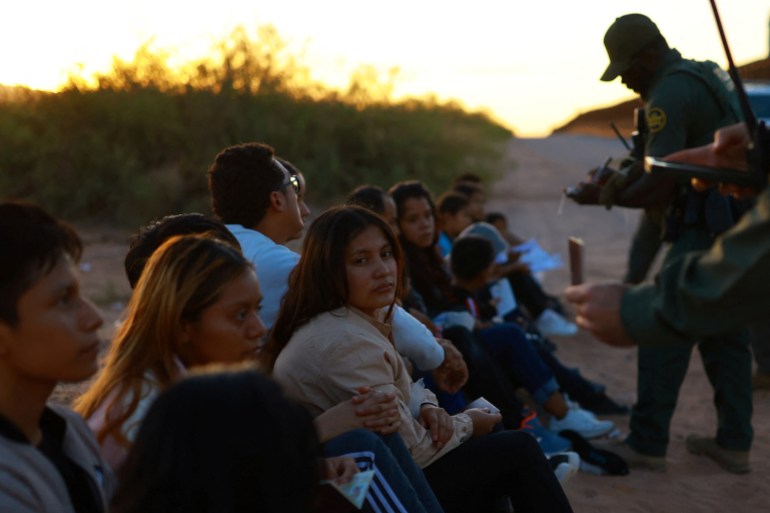
Sign on to social media these days and you’ll soon find posts warning about the threat of immigrants to your family’s – and your pets’ – safety. Immigrants are eating the dogs, cats and geese in Springfield, Ohio, some posts have claimed. (They’re wrong.) They’re also taking over apartment complexes in Colorado and Chicago, or hijacking school buses in California, others have said. (No, they’re not. That’s false.) Much of the rhetoric about a purported immigrant crime wave has stemmed from or was amplified by former President Donald Trump, the Republican presidential candidate, his supporters and other high-profile conservatives on social media, such as X owner Elon Musk. Trump has said immigrants “are poisoning the blood” of our country. He recently said in Wednesday’s campaign rally in Mint Hill, North Carolina, if Vice President Kamala Harris had closed the border years ago, “we wouldn’t have hostile takeovers of Springfield, Ohio, Aurora, Colorado, where they’re actually going in with massive machine-gun type equipment. They’re going in with guns that are beyond even military scope.” Violent crimes in which immigrants are suspects have fueled the rhetoric, such as the slaying of Georgia college student Laken Riley, whose death came up in President Joe Biden’s State of the Union speech in March. There are also real concerns about a growing presence of Venezuelan gangs in the US, say federal and local law enforcement. But experts told PolitiFact – and crime statistics and studies show – that the rhetoric about immigrants and crime is often exaggerated or false. Such rhetoric is nothing new, especially during a political campaign, experts said. “Ever since the US has had migrants, a subset of them have been vilified,” Alex Piquero, a University of Miami criminology professor and former director of the Bureau of Justice Statistics, said. The same thing is happening elsewhere, including the United Kingdom and Sweden, he added. PolitiFact has debunked numerous claims about immigrants and crime: There’s no evidence Haitian immigrants are eating pets, wildlife in Springfield Perhaps no claim about immigrants and crime has garnered more attention than this one. In early September, social media posts flooded the internet with claims that Haitian immigrants, thousands of whom have flocked legally to Springfield in recent years, were eating residents’ pets and ducks and geese at local parks. The claim is baseless, Springfield officials told PolitiFact and have said repeatedly. It stemmed from a fourthhand account in a private Facebook group that went viral after a screenshot of the post was shared by the verified X account End Wokeness, whose post received nearly 5 million views. The Facebook post said a neighbour’s daughter’s friend came home from work to find a pet cat butchered and hanging from a tree in a Haitian neighbour’s yard. The post’s author said Haitians were doing the same to dogs and ducks and geese at a local park. The woman behind the original post later told NBC News she had no firsthand knowledge of immigrants eating pets, and that she regrets the fallout from sharing the post. The neighbour referenced in her post told NewsGuard she also had no proof of the rumour. The claims about eating pets and birds were further amplified on X and in interviews by Ohio Senator JD Vance, Trump’s running mate. Trump repeated the baseless claim in his September 10 debate with Harris in Philadelphia, saying “They’re eating the dogs, the people that came in, they’re eating the cats. They’re eating, they’re eating the pets of the people that live there.” The Trump-Vance campaign persisted with their claims, pointing to a Federalist report about a person calling the Clark County Communications Center claiming to have seen four Haitians carrying geese. PolitiFact reported that the Ohio Department of Natural Resources followed up on the report but found no evidence to support the claim. The claims have had a lasting impact on Springfield’s Haitian immigrants, many of whom told PolitiFact that they now fear for their safety. A Venezuelan gang takeover in Aurora, Colorado? City officials, residents say no After surveillance video showing what appears to be armed, Spanish-speaking men entering an Aurora, Colorado apartment complex, fears were stoked online about a Venezuelan gang seizing control of the building. Social media posts said the men were part of Tren de Aragua, a Venezuelan gang. The claims were amplified on X by Elon Musk and Trump, who said in a September 6 interview that noncitizens “took over buildings” in Aurora. Tren de Aragua formed in the Venezuelan state of Aragua more than a decade ago. It does have a presence in the US, but Aurora city officials and apartment residents at The Edge, the apartment building seen in the video, disputed claims that the gang took over the building, PolitiFact reported. Residents at The Edge blamed poor conditions there on the landlord. Reports about 32 Venezuelan armed migrants taking over a Chicago building are fake As social media posts warning of migrants taking over neighborhoods across the country proliferated online, an audio recording of a police dispatcher in Chicago had high-profile accounts sharing the news that Venezuelan migrants had purportedly taken over a building there. “Caller says 32 Venezuelans are trespassing the building, showing guns in the courtyard,” the dispatcher said. PolitiFact reported that the Chicago Police Department said it received a service call about Venezuelans with guns trespassing, but the incident reported in the call was “not bona fide”. The alderperson who represents the area where the incident was reported said the reports were untrue. So did migrants living in the building and residents in the area. Two school buses filled with children weren’t hijacked by migrants in San Diego Incidents involving two San Diego-area school bus routes sparked misinformation on social media that armed migrants were trying to hijack the buses, PolitiFact reported. In separate incidents, groups of people approached two Jamul-Dulzura Union School District buses on Highway 94 in Dulzura, an unincorporated part of San Diego County. On August 27, three men walked into the
US political leaders rally behind Israel after Nasrallah killing
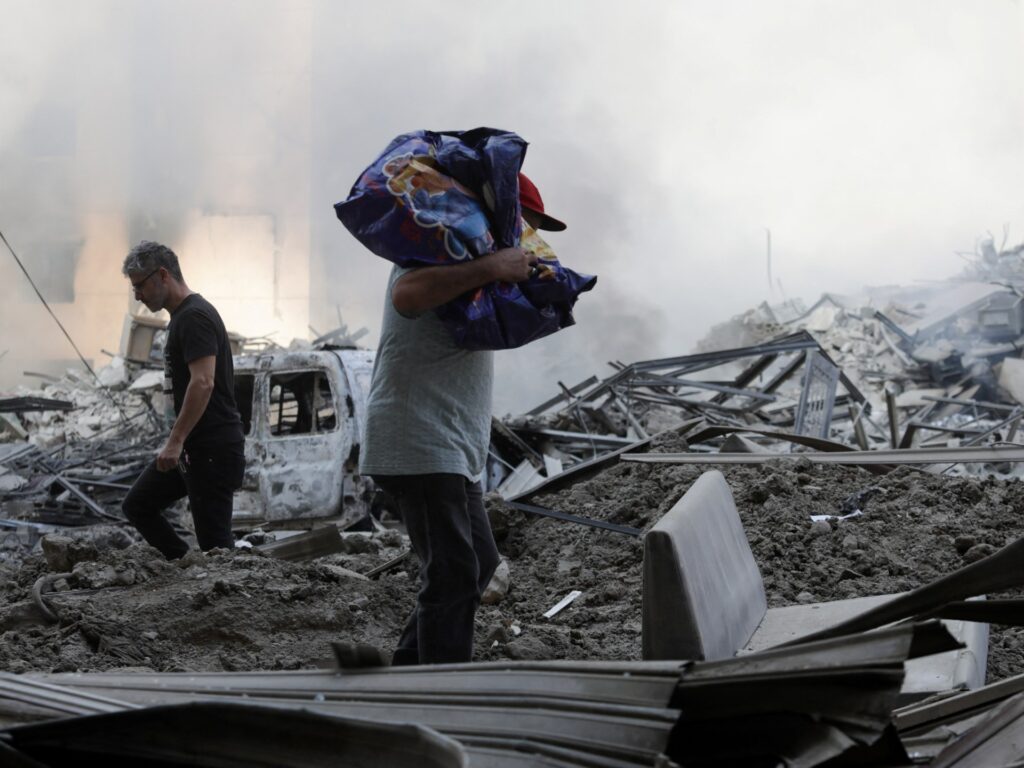
President Joe Biden and Vice President Kamala Harris express support despite threat of regional war. Political leaders in the United States have rallied behind Israel after massive Israeli air strikes in Beirut levelled residential buildings and killed the powerful Hezbollah chief Hassan Nasrallah. President Joe Biden, Vice President Kamala Harris – both Democrats – and Republican House Speaker Mike Johnson have expressed support for the Friday attack, despite what is expected to be a substantial civilian death toll. Former Republican President Donald Trump does not appear to have commented yet on the killing of Nasrallah. “Hassan Nasrallah and the terrorist group he led, Hezbollah, were responsible for killing hundreds of Americans over a four-decade reign of terror,” Biden said in a news release on Saturday. “His death from an Israeli air strike is a measure of justice for his many victims, including thousands of Americans, Israelis, and Lebanese civilians.” The Biden administration has called for a lowering of tensions in the region, but shown little interest in using leverage such as the suspension of weapons sales to restrain Israel following a series of increasingly escalatory attacks in Lebanon in recent weeks. Israel has waved aside calls for a diplomatic agreement and pledged to press forward with continued strikes. “President Biden and I do not want to see conflict in the Middle East escalate into a broader regional war,” Vice President Kamala Harris, who is the Democratic candidate for president, said in a statement on Saturday. “Diplomacy remains the best path forward to protect civilians and achieve lasting stability in the region.” Israeli attacks inside Lebanon have killed at least 1,030 people since September 16, including 56 women and 87 children. A final death toll from the massive Israeli strikes that killed Nasrallah and destroyed several large residential buildings on Friday is not yet known, as rescue workers try to find bodies in the rubble. The killing of Nasrallah, which follows the killing of a series of senior Hezbollah officials by Israel in recent weeks, is a body blow to the Lebanese group and a network of Iran-backed groups across the region. It remains unclear what response the group and its allies in the region, such as Iran-backed militias in Iraq and the Houthis in Yemen, will pursue. US Defense Secretary Lloyd Austin told Israeli counterpart Yoav Gallant that the US “remains postured to protect US forces and facilities in the region and committed to the defence of Israel” in a phone call on Friday. The Biden administration has been criticised by activists and analysts who say that his unconditional support for Israel has resulted in a trend of perpetual escalation and Israeli attacks that include large civilian death tolls and violations of international law. While Trump has yet to comment on the killing of Nasrallah, conservative lawmakers have rejected the Biden administration’s call for a ceasefire and urged stronger support for Israel’s campaigns in Lebanon and Gaza. “We call on the Biden-Harris Administration to end its counter-productive calls for a cease-fire and its ongoing diplomatic pressure campaign against Israel,” Republican House Speaker Mike Johnson said in a statement on Saturday. Adblock test (Why?)
‘He was like a father to us’: Hezbollah supporters mourn Hassan Nasrallah
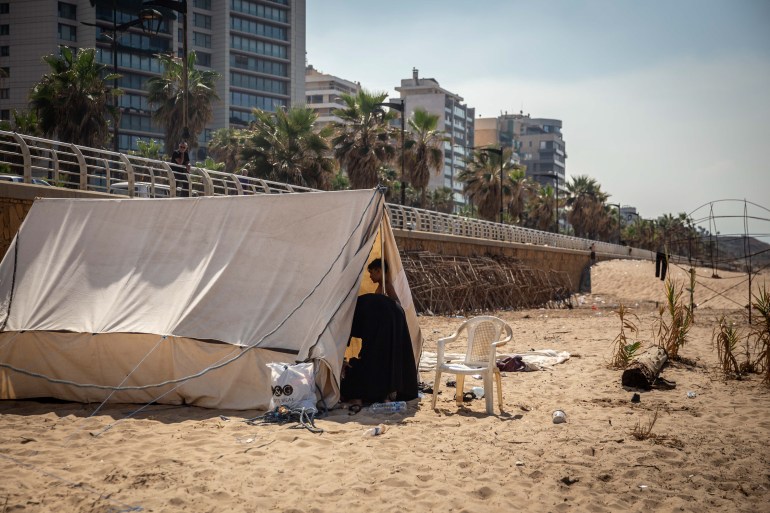
Beirut, Lebanon – On Friday evening, Mariam* was in her apartment with her teenage daughter and mother when her building began rumbling and shaking. Agonising screams and the buzzing of Israeli warplanes soon followed. Israel had just launched a major air attack that killed Hezbollah’s leader Hassan Nasrallah, as well as an unknown number of civilians in Dahiyeh, the southern suburb of Lebanon’s capital Beirut. Shortly after the strike, Israel called on thousands of civilians to “evacuate” from Dahiyeh, claiming they were living near Hezbollah operation centres. Mariam quickly packed a few bags of clothes and fled to downtown Beirut, where she is now sleeping on the steps of a mosque with hundreds of other people displaced from her community. But while Israel has upended her life, she said that nothing compared to the anguish of losing Nasrallah. “When I first heard the news, I thought it was a lie. I thought, ‘It can’t be true’,” she told Al Jazeera, holding back her tears. “Nasrallah was our brother and we always felt safe with him. Now, we don’t know what will be our fate.” A tent installed by the scouts on Beirut’s Ramlet el-Bayda beach hosts people displaced by Israeli air strikes on Beirut’s southern suburbs [Philippe Pernot/Al Jazeera] A brother, a father Nasrallah became Hezbollah’s leader after Israel assassinated his predecessor, Abbas al-Musawi, in 1992. Al-Musawi, his wife and five-year-old son were killed by an air strike on their home. Once Nasrallah took over, he quickly began expanding Hezbollah from a rebel movement to one of the most powerful armed groups in the world as well as a formidable bulwark against Israeli aggression. Under his stewardship, Hezbollah liberated south Lebanon from Israel’s 18-year occupation, lending him the status of a hero throughout the region. His charisma and shrewdness made him one of the most respected – and feared – leaders in the Middle East. He then became a polarising figure – in Lebanon and the region – after Hezbollah intervened in Syria’s civil war to rescue President Bashar al-Assad from a pro-democracy uprising that quickly turned into an armed conflict after al-Assad’s forces turned their guns on protesters, leading to the deaths of hundreds of thousands. Throughout the war, the Syrian government and Hezbollah committed atrocities, according to news reports and rights groups. These reports damaged Nasrallah’s popularity across the region but his most fervent supporters stood by him out of fear that nobody else would be able or willing to protect Lebanon from Israel. Many Lebanese Shia Muslims are now mourning a man they call a “brother” and even a “father” to their people. In downtown Beirut, displaced families from Dahiyeh described Nasrallah as a “martyr” who gave his life to stand up to Israel. “I just want to listen to his voice again. He was like a father to us. He wasn’t just a politician,” said Nivine, a Hezbollah supporter and Dahiyeh resident who has been uprooted by the strikes. “But we will continue on [Nasrallah’s path]. We will continue to fight to bring down Israel, which was always his wish,” she told Al Jazeera. Nivine, who has fled Israeli air strikes on Beirut’s southern suburbs, distributes Lebanese manakish to other displaced people at Beirut’s central Al-Amin Mosque [Philippe Pernot/Al Jazeera] Lack of protection? With Nasrallah gone and Hezbollah reeling from losing scores of senior commanders in recent days, many Lebanese Shia Muslims fear they have nobody to protect them. “Don’t you see all the crimes of Israel? They are bombing and destroying everything, killing women and children. And no Arabic or Western country is intervening to stop it,” Nivine said. But Nivine, like other residents from Dahiyeh, believes that Hezbollah will ultimately survive the recent blows from Israel. Hassan, 25, spoke matter-of-factly about Nasrallah and the “resistance” – a term commonly referring to Hezbollah and other Iran-aligned armed groups that oppose Israel and the US role in the region. “We will continue and the movement will continue. People will be martyred, but [the resistance] will continue,” he told Al Jazeera. Hassan added that he was particularly upset about Nasrallah’s death because he was such a major symbol of defiance. In his view, Nasrallah was the only world leader to help Palestinians in Gaza by opening a “support front” against Israel from southern Lebanon. Hezbollah has said that its aim is to relieve pressure on Hamas, which is fighting for its survival after launching an attack on southern Israel on October 7, which killed 1,139 people. Israel responded by attacking Gaza and killing more than 40,000 people since October. Nasrallah’s decision to support Hamas cost him his life. “He stood up for Gaza,” Hassan said with resignation on the steps of a mosque. “I know he died. But he’s in a better place now than the one we are all living in.” Children play on their family’s luggage in Beirut’s central Al-Amin mosque, where they found refuge from Israeli air strikes on Beirut’s southern suburbs [Philippe Pernot/Al Jazeera] Uncertain future Mohamad, a Syrian national who has been living in Lebanon since 2009, said that he fled from south Lebanon to Dahiyeh after Israel and Hezbollah began to exchange fire on October 8, 2023. He said the bustling neighbourhood welcomed him, his daughter and his wife to the community soon after they arrived. He, too, is mourning Nasrallah. ‘I was in shock when I heard the news. We will remember him as the one that stood up to the Zionists and went to war with Israel,” he told Al Jazeera. “But now that he’s gone, there is fear and uncertainty. We don’t know what will happen. Will there be more bombing now across Beirut? Will the situation get worse? Or will it stop? Nobody knows.” Mariam, who fled with her mother and daughter, expressed the same ambivalence about her life and the fate of Lebanon. Everything dear to her has been torn apart due to Israel’s relentless bombing of Dahiyeh in the last 24 hours, she said.
Is the killing of Hassan Nasrallah a game changer?
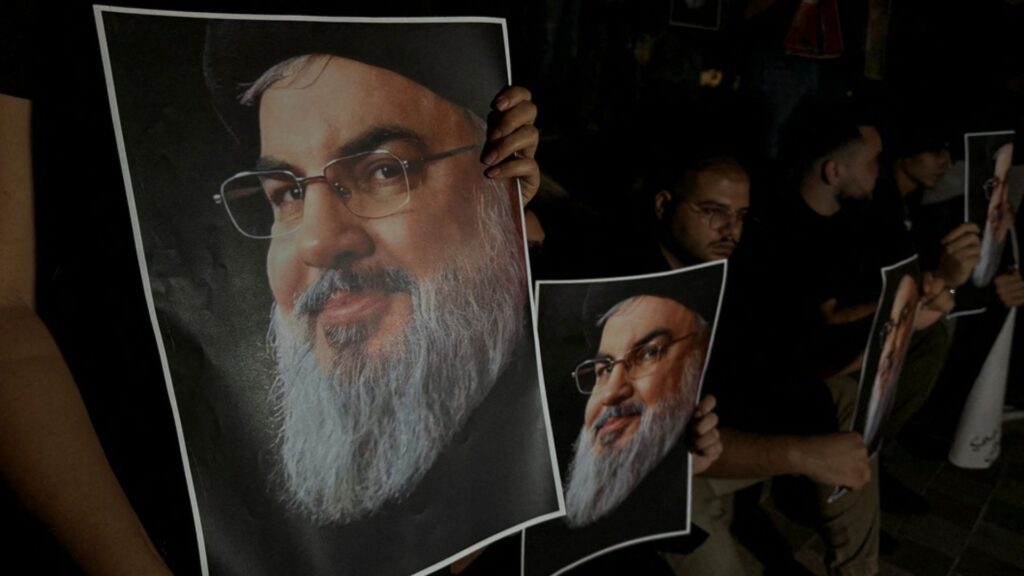
Assassination of Hezbollah head is the culmination of a series of major Israeli attacks on the group’s leaders. He led Hezbollah for more than three decades and made it into a military and political force to be reckoned with in the longrunning conflict in the Middle East. Hassan Nasrallah’s killing in a massive Israeli air attack in a southern suburb of Beirut is sure to open a new page in the war. Israel is on high alert and says it is prepared for all options after it announced his death. But will Hezbollah respond – and if so, how? And how will the latest development shape the future of the armed group and its role in the region? Presenter: Hashem Ahelbarra Guests Nicholas Noe – Editor-in-chief of Beirut-based Mideastwire.com Stephen Zunes – Professor of politics and founding chair of Middle Eastern Studies at the University of San Francisco Gideon Levy – Columnist with the Haaretz Newspaper and author of the book, The Punishment of Gaza Adblock test (Why?)
Who was Hassan Nasrallah?
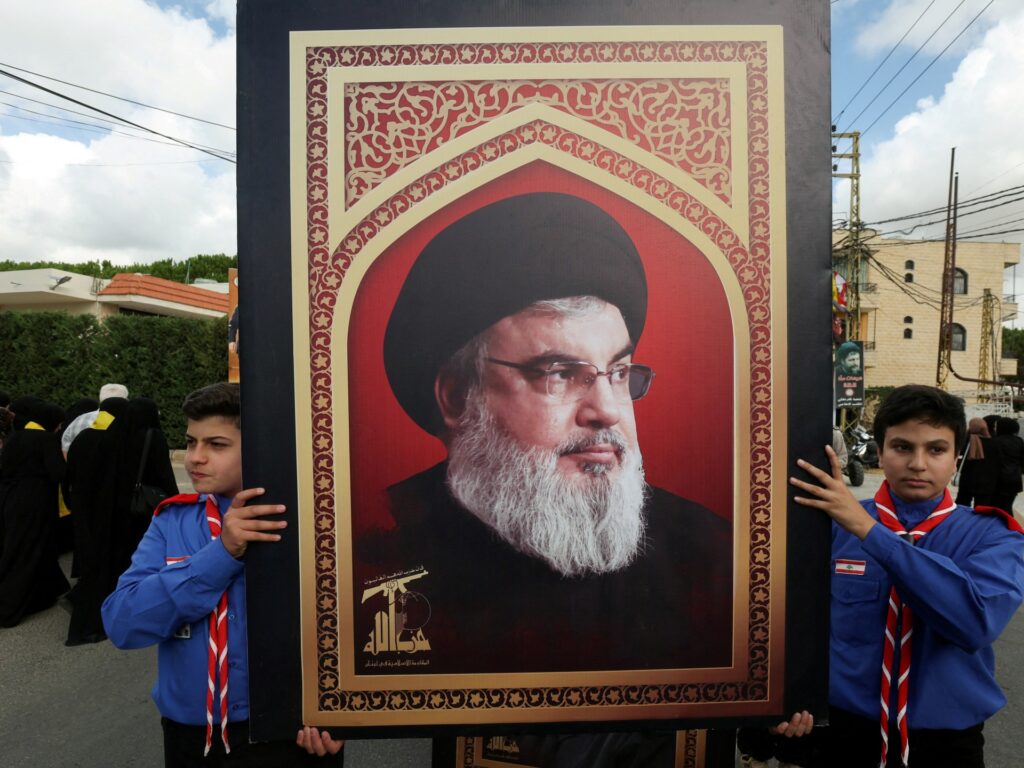
NewsFeed Hassan Nasrallah, the Hezbollah leader killed by Israel, has a mixed legacy; revered by many for standing up to Israel for decades, but loathed by others for fighting the Syrian opposition to Assad’s rule. Here’s how his life and death unfolded. Published On 28 Sep 202428 Sep 2024 Adblock test (Why?)
At least 17 killed in mass shooting in South African town
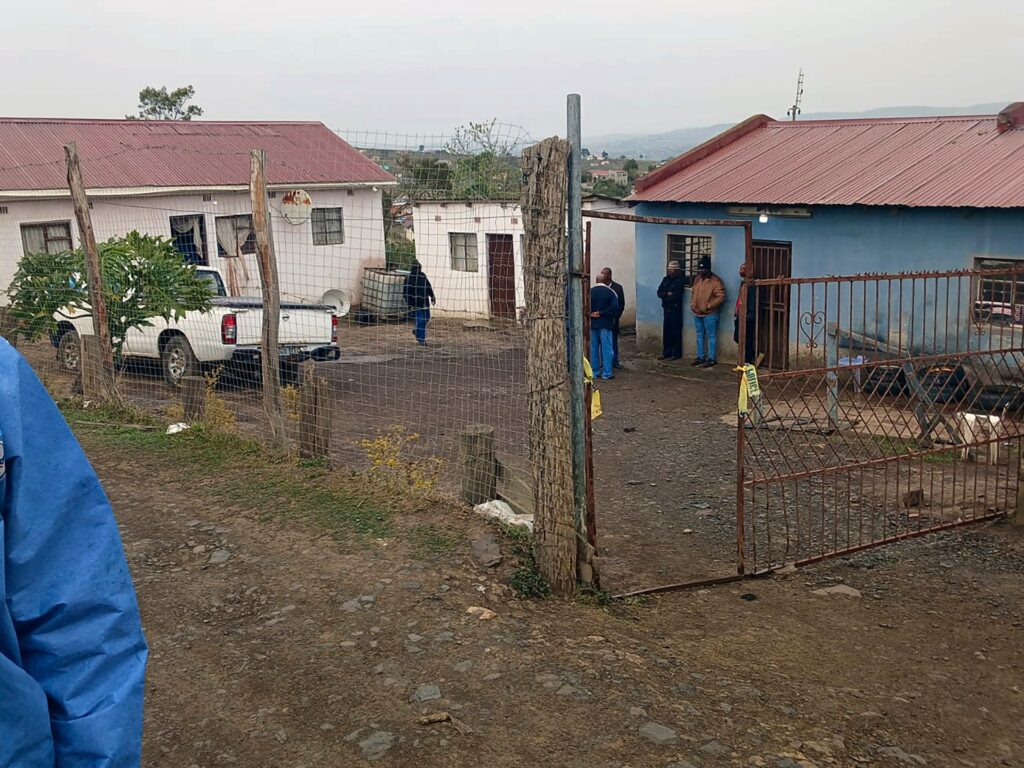
Police say a manhunt has been launched after the attack in the southeast of the country, were mass shootings have lately become common. Seventeen people, including 15 women, have been killed in two houses in close proximity to each other in a rural town in South Africa, according to the police. A search was under way for the suspects, national police spokesperson Athlenda Mathe said in a statement on Saturday. The shooting took place on Friday night in the town of Lusikisiki in Eastern Cape province in southeastern South Africa. Video released by police showed the shooting occurred at two houses in the same neighbourhood, which is a collection of rural homesteads on the outskirts of the town. Twelve women and a man were killed in one house and three women and a man were killed in the other house, police said. Four women, one man and a two-month-old baby survived. Local media reported that the people were attending a family gathering at the time of the shooting, but the motives for the killing remains unknown. Manhunt under way Police minister Senzo Mchunu told a media briefing on Saturday that a team of detectives and forensic experts had been deployed. “We have full faith and confidence in the team that has been deployed to crack this case and find these criminals. Either they hand themselves over or we will fetch them ourselves,” Mchunu said. “We do not know the motive” and “we do not know if there is one or several suspects on the run”, national police chief Fannie Masemola said on SABC public television. South Africa, a country of 62 million, recorded 12,734 homicides in the first six months of this year, according to official crime statistics from the police. That is an average of more than 70 a day. Firearms are by far the biggest cause of death in those cases. Mass shootings have also become increasingly common in recent years, sometimes targeting people in their homes. Ten members of the same family, including seven women and a 13-year-old boy, were killed in a mass shooting at their home in the neighbouring KwaZulu-Natal province in April 2023. Firearm laws are reasonably strict in South Africa, but authorities have often pointed to the large number of illegal, unregistered guns in circulation as a major problem. Adblock test (Why?)
Israel kills Hassan Nasrallah in Beirut: What does this mean for Hezbollah?

Hezbollah’s leader for the past 32 years, Hassan Nasrallah, has been killed in an Israeli air strike on Lebanon’s capital Beirut on Friday evening. Ali Karki, the commander of Hezbollah’s southern front, and other Hezbollah commanders were also killed in the massive air attack on Beirut’s southern suburb of Dahiyeh, the Israeli military claimed. Just more than a week ago, Israel also killed senior Hezbollah commander Ibrahim Aqil in Beirut. These events come just two months after Hamas’s political bureau chief, Ismail Haniyeh, was killed by Israel in Iran. The deaths of Nasrallah and other leaders in these unprecedented attacks on Lebanon and during the mass detonation of pagers and handheld radios belonging to Hezbollah commanders earlier this month have left the group facing a potential power vacuum. Israel has claimed this as a huge victory, but observers fear an escalation in the conflict between Israel and Iran, backs Hezbollah. So what will happen next? Who was Hassan Nasrallah? Nasrallah, 64, became Hezbollah’s third secretary-general in 1992, after his predecessor, Abbas al-Musawi, was killed by Israeli missiles. Hezbollah (Party of God in Arabic) is an Iran-backed group formed in 1982 to fight Israel’s occupation of southern Lebanon. It finds most of its support among Shia Muslims. Nasrallah reached the peak of his popularity in Lebanon and beyond in 2006 after a war with Israel. His speeches, which combined political and religious elements, also contributed to his widespread appeal. Critics, however, have also viewed Nasrallah as a leader of a Shia party fighting for Iranian interests, particularly after he sent fighters to help crush a 2011 uprising in Syria against Iran’s ally, President Bashar al-Assad. Since Israel’s war on Gaza began in October 2023, Nasrallah has given televised speeches extending support for Hamas, while Hezbollah has exchanged cross-border missiles with Israel. In his last speech on September 19, he addressed the pager attacks in Lebanon. What do we know about Israel’s attack on Nasrallah? On Friday evening, Israel carried out a wave of air raids on the densely populated Haret Hreik neighbourhood in Dahiyeh, southern Beirut. These continued through to early on Saturday, forcing thousands of residents to flee the area. On Saturday, Israeli forces said they had targeted Hezbollah’s headquarters and killed Nasrallah. Following hours of speculation, Hezbollah confirmed Nasrallah’s death. At least 11 people were killed and 108 wounded in the attacks, according to Lebanon’s Ministry of Public Health. Israel media says about 85 so-called “bunker-buster” bombs were used in Friday’s attack. Also known as “ground penetration munition”, these missiles burrow deep into the ground before they detonate and weigh between 2,000 to 4,000 pounds (900-1,800kg) each. The Geneva Convention has outlawed their use in densely populated areas. Dahiyeh is a densely packed Beirut neighbourhood, and the Israeli missiles flattened multiple residential buildings. Who will succeed Nasrallah and how will this be decided? Hezbollah’s seven-to-eight-member shura council is expected to convene to decide who will now lead the party. Hashem Safieddine, head of Hezbollah’s executive council, is believed to be among the choices as the group’s new secretary-general. As executive council head, Safieddine oversees Hezbollah’s political affairs. He also sits on the Jihad Council, which manages the group’s military operations, and is Nasrallah’s maternal cousin. Following Israel’s recent pager explosions, Safieddine said Israel had initiated a “new confrontation” and the response to the attack would be a “special punishment”. How has Hezbollah responded to the latest attacks? In a statement on Saturday, in which it confirmed the death of Nasrallah, Hezbollah said it would continue its military operation in support of Gaza and the defence of Lebanon. It launched five rocket attacks into northern Israel following the announcement that Nasrallah had been killed, according to Al Jazeera correspondent Imran Khan, reporting from Marjayoun, Lebanon. Will Nasrallah’s killing weaken Hezbollah? While Hezbollah has been hit hard in the short term, analysts say it is unlikely that the group will be badly affected in the long run as one leader can be replaced with another and the group maintains its vast military arsenal and strength. Beirut is considered to be Hezbollah’s “weakest point” as it is also where Western embassies and people who are affiliated with Western intelligence agencies are, said Mohammad Marandi, a professor at the University of Tehran. Overall, however, “Israel does not have the capability to defeat Hezbollah militarily”, Marandi told Al Jazeera. Analysts say the group now faces strategic choices amid a temporary leadership vacuum rather than a full blow to its survival. “Hezbollah is not going to disappear,” said Yezid Sayig, senior fellow at the Carnegie Middle East Programme. It will “exercise strategic patience” even if Iran does not sweep in to defend them now, he added. Experts do believe, however, that Hezbollah has made other mistakes that have weakened it relative to Israel. “The big mistake that Hezbollah has made is to allow the Iranians to use them too much as a proxy,” said Sultan Barakat, senior professor in public policy at Hamad Bin Khalifa University. “Hezbollah were very effective when they fought for the liberation of the Lebanese land – for their own people.” For the last year, however, Iran has given them little agency around how to use weapons they were given, while the group has miscalculated how much violence Israel is willing to exert, not just on the people of Gaza, but on the Lebanese people as well, he told Al Jazeera. Is this a win for Israel? At the UN General Assembly in New York on Friday – before the latest strikes – Israeli Prime Minister Benjamin Netanyahu had one main message when he told members: “We are winning.” Israel is claiming this devastating assault on Hezbollah as a major victory. Experts largely agree that Israel will continue on the offensive. “Israel views it has momentum on its side following Nasrallah’s death and would want to take maximum advantage of a leadership vacuum,” Ali Rizk, a security and policy analyst, told Al Jazeera on Saturday. The perceived success of its assault
US to end anti-ISIL operation in Iraq but unclear if troops will remain
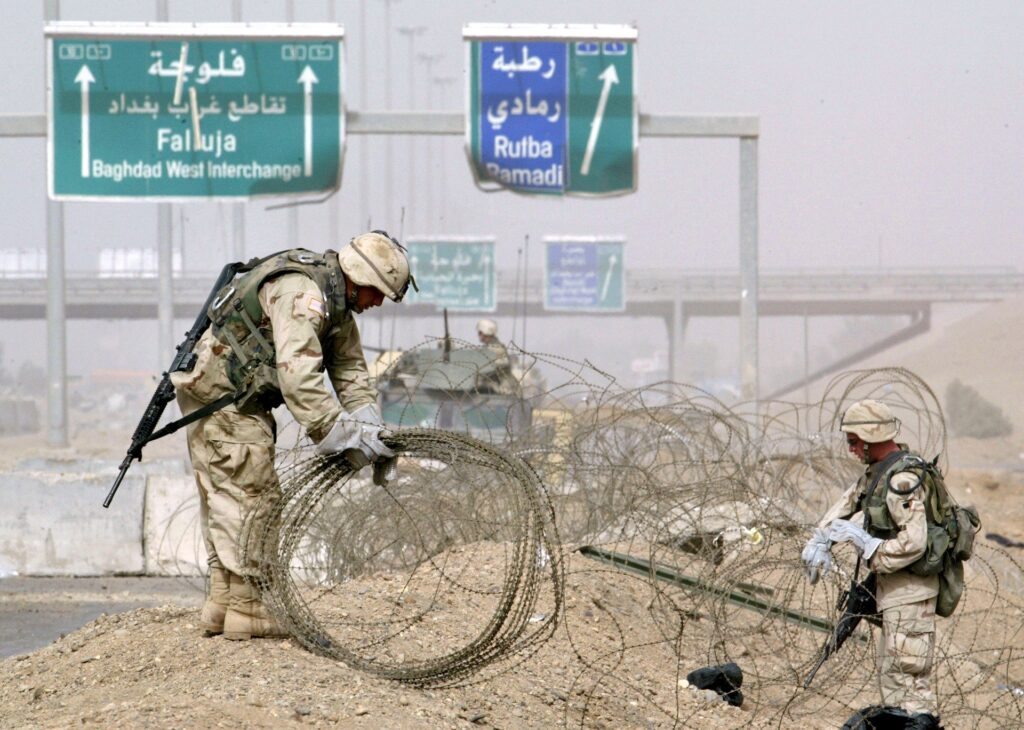
US officials offer little clarity on future of two-decade US military presence in Iraq amid ‘transition’. The United States and Iraq have said that a US-led coalition in the country to fight ISIL (ISIS) will wind down by the end of 2025, but they left the door open to a prolonged military presence. The joint announcement on Friday did not specify what the future of US troops in Iraq will be, with officials stressing that the move represents more of a “transition” than a “withdrawal”. A senior official from US President Joe Biden’s administration who briefed reporters said the wind-down would involve two phases. The first phase – expected to end in September 2025 – will include “ending the presence of coalition forces in certain locations in Iraq as mutually determined”, the official said. The second phase would see the US continue to operate in Iraq in some capacity “at least through” 2026 to support ongoing anti-ISIS coalition efforts in Syria. US-Iraq defence ties would then shift away from the coalition to “an expanded US-Iraqi bilateral security relationship”, the official said. They declined to say whether that shift would signal a full withdrawal of US troops. “We’re not in a position right now to begin to either speculate or discuss exactly where we’re going to end up on all of it,” the official said. The US initially invaded Iraq in 2003 as part of its so-called global “war on terror” in the wake of the September 11, 2001, attacks, with a peak of 170,000 troops deployed by 2007. Washington withdrew most US forces from Iraq by 2011. However, the administration of US President Barack Obama again redeployed forces to the country in 2014, as ISIL overran large swaths of Iraq and Syria. While ISIL continues to exist, the group lost control of its last pieces of territory in Iraq in 2017 and in Syria in 2019. Then, in 2021, the Biden administration ended what it described as a US “combat mission” in Iraq, with the about 2,500 US troops in the country shifting to an “advisory role”. Talks about further winding down troops began in January and included Iraqi Prime Minister Mohammed Shia al-Sudani, as well as top-ranking officials from both the Iraqi armed forces and the US-led coalition. The continued presence of US troops in Iraq has been a political thorn for Sudani and has long been opposed by influential segments of the government. Bases housing US soldiers have for years come under attack by Iran-aligned militias. Those attacks increased in the early months of Israel’s war in Gaza, which began in October 2023 but have since reduced in frequency. Adblock test (Why?)
Sombre mood after a Kolkata rape and murder dampens Durga Puja celebrations
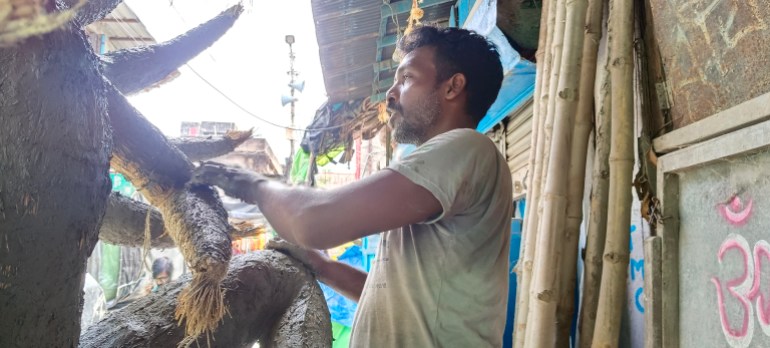
Kolkata, India: Tapas Pal has been making clay idols of various gods and goddesses for the past two decades at Kumartuli, a traditional potters’ hub in Kolkata in eastern India’s state of West Bengal. The 42-year-old, who makes six-metre (20ft) high idols from unfired clay, told Al Jazeera that he would not normally have any spare time in the two months leading up to Durga Puja, the biggest festival of the state, as he would be on deadline to deliver the idols to the festival organisers. But the situation this year is completely different, he says, with fewer orders and scaled-down budgets, as the residents of the city are in no mood for festivities after the brutal rape and murder of a 31-year-old woman doctor at the government-run RG Kar Hospital on August 9. “The festival offers [a] chunk of our annual business, and we expect high returns. But there is hardly any business this time due to the severe protests in the state,” and his business is down two-thirds, he said. Durga Puja is a 10-day worship of the Hindu goddess Durga to celebrate her victory over a shape-shifting demon and embodies joy. Durga is one of the most powerful goddesses in Hinduism. She represents woman power and her legend is centered around her ability to vanquish evil. In 2021, Durga Puja in Kolkata was added to UNESCO’s Intangible Cultural Heritage of Humanity list. In the lead-up to the festival, artisans spend months making idols of Durga – shown as a beautiful woman riding a lion or a tiger, with many arms each of which is carrying a weapon used to destroy evil. The idols, often depicting some of this battle, are intricately hand-painted, beautifully dressed in clothes, bejewelled and displayed at the pandals. The state comes to a standstill in the days leading up to the festivities, which are scheduled to start on October 9 this year. Schools and offices shut down and people pandal hop – a tradition in which people visit multiple venues where the idols are housed to offer prayers and eat prasad – as neighbourhoods compete for the biggest, fanciest idols and decorations. Last year, state Chief Minister Mamata Banerjee pegged the festival economy to be about 840 billion rupees ($10bn). Idol maker Tapas Pal in Kolkata, India, says organisers have scaled back orders [Gurvinder Singh/Al Jazeera] But it’s not clear if the numbers this year would come even close to that as people are still in shock after a trainee doctor’s dead body bearing multiple injuries was found at the government hospital. Hospital authorities initially told her parents that she had died by suicide. But an autopsy revealed she had been raped and murdered. The police have since arrested Sanjoy Roy, a civic volunteer at the hospital who had unrestricted access to the ward where the doctor worked, and four others including the former principal of the college, Dr Sandeep Ghosh, and a police officer. The brutality of the crime and allegations of apathy by the state administration have shocked citizens who have taken to the streets in protest especially as the city prided itself in being safe for women. Activists say the doctor’s rape and murder showed how women in India continue to face sexual violence despite tougher laws introduced after the 2012 gang rape and murder of a 23-year-old student on a bus in New Delhi, the national capital. Crimes against women in India rose 4 percent in 2022 from the previous year, data from the National Crime Records Bureau (NCRB), released late last year, showed. So far, Banerjee’s request urging people to return to the festivities has failed to yield any results. On the contrary, the locals have emotionally united with the victim’s family after the father broke down in a TV interview, saying that no one would want to celebrate the festival this year, and that whoever does, will not celebrate with happiness. The sombre mood has affected several hundred artisans and entrepreneurs who depend on the festival for their livelihood. The brutality of the crime and allegations of apathy by the state administration have shocked citizens who have taken to the streets in protest [File: Sahiba Chawdhary/Reuters] Business ‘ruined’ Artisans say the incident could not have come at a worse time as several organisers place orders for idols in the second or third week of August every year and have either scaled those back or paused altogether. “The incident is unfortunate and condemnable. We demand strict punishment for the perpetrators of the crime and justice for the victim’s family. But the timing badly coincided with our peak season that has completely ruined our business, this year,” Subhendu Pal, 52, an idol maker at Kumartuli, told Al Jazeera. Subhendu Porel, 35, who makes decorative polystyrene items for pandals, said that business had more than halved. “There is hardly any enthusiasm among the people for the festival. We usually go to other states during this season to make the decorative items as there is a huge demand for us. But this time, people from other states have not come to take us for their work fearing [the] deteriorating law and order situation here. It seems that the festival is just a formality this year and nothing else,” Porel said. Prabhakar Porel, 32, an artisan who designs the bamboo structures used to hold up the pandals, said: “We make tents that go up to the height of 60ft [18 metres], but the organisers are scaling down orders to 30ft [nine metres] and even less as budget constraints are an issue this time. Sponsors are not willing to spend whole-heartedly sensing the dull mood in the state,” he said. State grants declined In West Bengal, about 43,000 Durga Pujas are held by community clubs every year, 3,000 of which are held in Kolkata alone. The state government offers 70,000 rupees ($840) to the clubs to organise the festival every year, which was increased to 85,000 rupees ($1,013) this year. But several