

Israel ‘escalates to de-escalate’ with Hezbollah
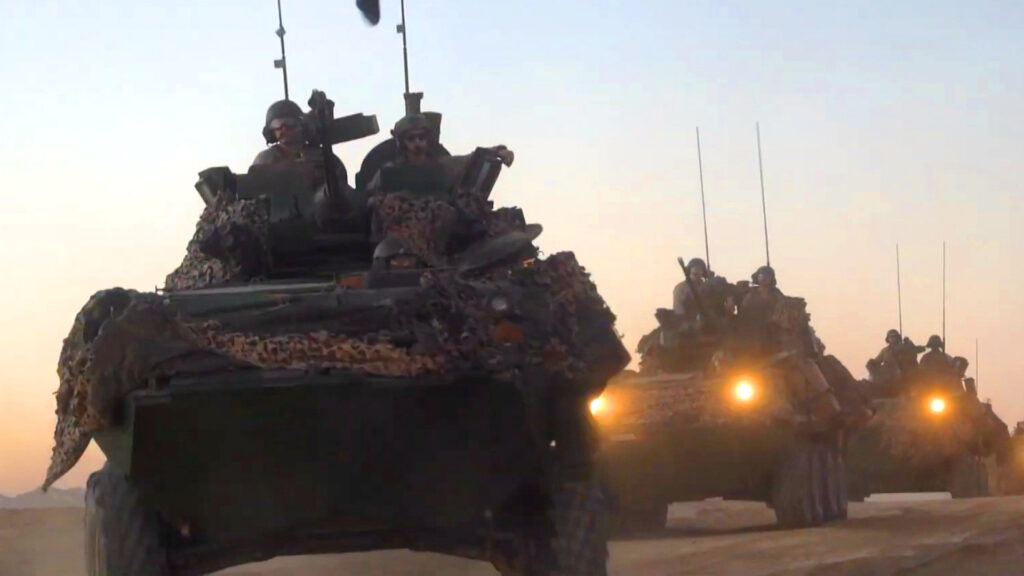
Israel reverts to its wartime playbook as it manufactures consent for all-out war on Lebanon. In the past couple of weeks, the low-intensity war that Israel and Hezbollah have been fighting across the Lebanon-Israel border for a year has metastasised. Thousands of Lebanese have been forced from their homes as Israeli bombardment has intensified. More than 600 have been killed. Alongside air raids and preparations for a land invasion, there is an element of psychological pressure Israel exerts too, designed to terrorise people and manufacture consent for war. Contributors:Habib Battah – Founder, Beirut ReportOri Goldberg – Academic and political commentatorZahera Harb – Senior lecturer in journalism, City UniversityAssal Rad – Author, State of Resistance On our radar: A terrifying new plan to ethnically cleanse North Gaza has made its way onto Netanyahu’s desk. Tariq Nafi looks at the man behind the “The Generals’ Plan” and the support he has received across the Israeli political spectrum. Online Zionist Influencers “Hasbara” – the Hebrew word that translates to “explanation”, “persuasion” – has been a central strategy of the Zionist movement. It’s taken the form of media-trained government spokespeople delivering soundbites on TV, PR campaigns advertising the Israeli army not just as moral but also cool, and extensive messaging on social media. Nicholas Muirhead reports on the work of online hasbarists and how the genocide in Gaza has made their jobs a lot more challenging. Featuring: Hen Mazzig – Israeli author, commentator and influencerSaree Makdisi – Professor of English and comparative literature, UCLATamara Nassar – Associate editor, Electronic IntifadaMatt Lieb – Host, Bad Hasbara Adblock test (Why?)
Netanyahu attacks UN as “anti-Israel Flat Earth Society”
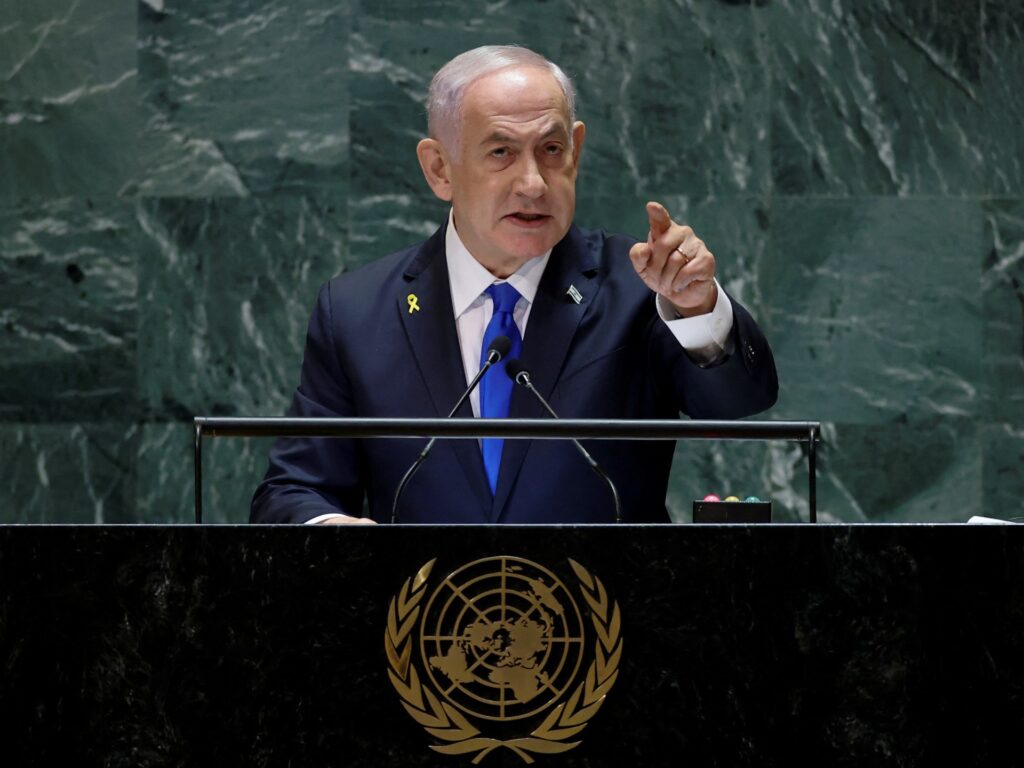
NewsFeed Israeli Prime Minister Benjamin Netanyahu attacked the United Nations as an “antisemitic swamp” and an “anti-Israel Flat Earth Society” during his address to the UN General Assembly, defending his government’s bombardment of both Gaza and Lebanon. Published On 27 Sep 202427 Sep 2024 Adblock test (Why?)
NYC mayor Adams to be arraigned on federal corruption charges

Eric Adams says he will fight charges stemming from alleged illegal campaign contributions from Turkish sources. New York City Mayor Eric Adams has arrived at the federal court in Manhattan, where he is set to be arraigned on corruption charges stemming from alleged bribes taken from Turkish diplomats and businesspeople. The court appearance on Friday comes three days after a grand jury moved to indict Adams, a former police officer. The indictment, unsealed on Thursday, said Adams received campaign funding and luxury travel perks – including rooms at opulent hotels and meals at high-end restaurants – in exchange for pressuring city officials to allow Turkey’s new 36-storey consulate to open despite safety concerns. Speaking at a news conference on Thursday, Adams pledged to fight the charges and said he would not respond to calls from some of his fellow Democrats to step down as the top elected official in the largest city in the US, with a population of 8 million people. “I will continue to do my job as mayor,” he said. Prosecutors allege the scheme in question dates back to 2014, when Adams became Brooklyn borough president. The alleged illegal campaign contributions later helped finance his 2021 campaign for mayor. He faces five criminal charges and could face decades in prison if found guilty. Among those calling for Adams to resign is US Congresswoman Alexandria Ocasio-Cortez, who represents New York’s 14th congressional district. New York City Mayor Eric Adams speaks during a news conference outside Gracie Mansion [Yuki Iwamura/AP Photo] House Minority Leader Hakeem Jeffries and Senate Majority Leader Chuck Schumer, two influential Democrats from New York, have stopped short of joining that appeal. For her part, New York Governor Kathy Hochul – who has the power to remove Adams from office through a complicated process – said in a statement she would “review my options and obligations as the Governor of New York”. “I expect the Mayor to take the next few days to review the situation and find an appropriate path forward to ensure the people of New York City are being well-served by their leaders,” Hochul said. Hiding campaign funds The indictment alleged Adams hid campaign contributions from Turkish sources by funnelling them through US citizens. That allowed him to receive an additional $10m in public matching for his campaign. US law forbids foreign contributions to American political campaigns. Adams also repeatedly accepted free flights from a Turkish airline, worth tens of thousands of dollars, while staying at luxury hotels at far below market rate. Meanwhile, Adams, at the behest of a Turkish diplomat, pressured city safety inspectors to allow Turkey’s new consulate to open in time for a September 2021 visit by Turkish President Recep Tayyip Erdogan, the indictment said. That came even though the building would have failed a fire inspection at the time, the indictment said. Amid the pressure campaign from Adams, a senior Fire Department official told a subordinate he would lose his job if he did not allow the consulate to open, according to prosecutors. Adblock test (Why?)
‘Long arm of Israel’ can reach anywhere in Iran, Netanyahu tells UNGA
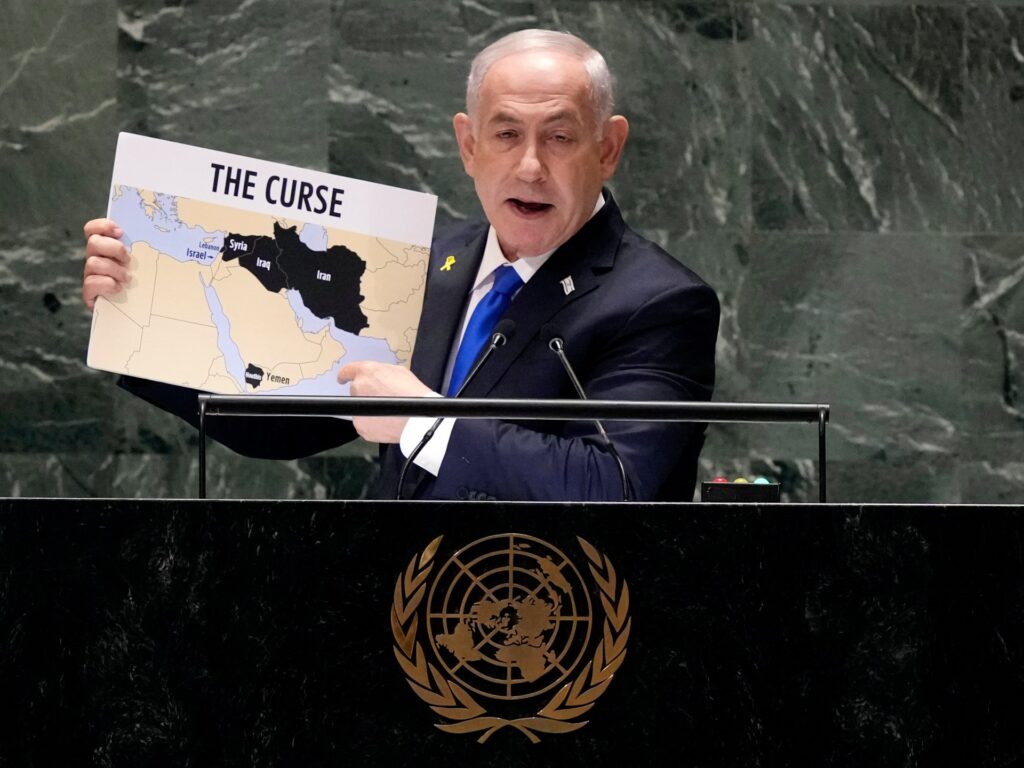
NewsFeed The “long arm of Israel” can reach the “tyrants of Tehran” anywhere in Iran and the Middle East, Israeli Prime Minister Benjamin Netanyahu told the UN General Assembly. Published On 27 Sep 202427 Sep 2024 Adblock test (Why?)
Who’s in the running to be Japan’s next prime minister?
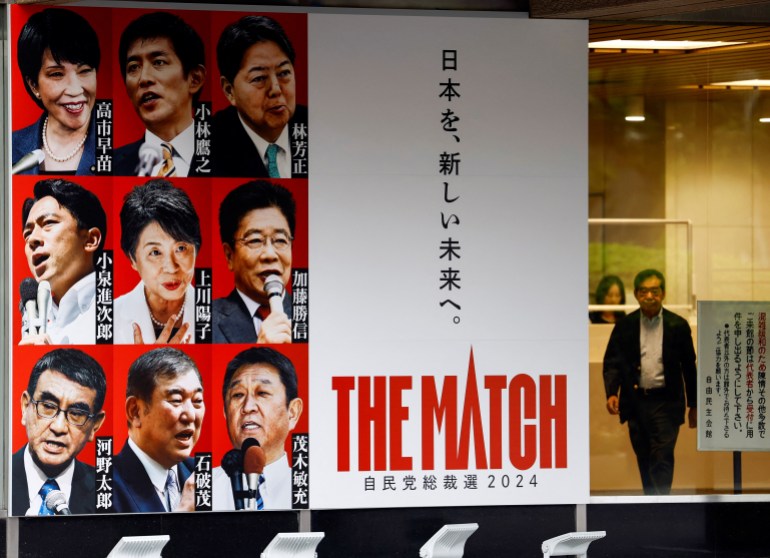
Japan’s governing party will choose a new leader on Friday to replace Fumio Kishida who announced his resignation in August. The winner of the contest for leadership of the Liberal Democratic Party (LDP), the largest in parliament, will become the country’s next prime minister. Most analysts expect the new leader to call a snap election to secure a mandate from voters. A record nine candidates have been campaigning and the break-up of the LDP’s usual power structures as a result of a series of corruption scandals have made it harder to predict the outcome. Many candidates “have claimed that ‘I’m the one who can handle Trump’ or ‘I’m the one who can stand up to China’”, Jeffrey J Hall, a lecturer at Kanda University of International Studies, told the AFP news agency. But there are significant differences in their approach to such issues, and although some of the nine have “no hope whatsoever”, the race remains “a toss-up”. “This is the most unpredictable that an LDP election has been in many years,” Hall said. The first round of voting starts at 1pm (04:00 GMT) with the eventual winner expected to hold a news conference at about 6pm (09:00 GMT). The contest might also produce Japan’s first woman or youngest-ever prime minister. Candidates will go through several rounds of voting to whittle down the field [Issei Kato/Reuters] Here are some of the more prominent contenders: Shigeru Ishiba, 67 A former defence minister, Shigeru Ishiba is popular with the public but has failed four times to secure the post of party leader. Ishiba’s campaign has focused heavily on security issues, and he has indicated he will push for more oversight over Washington’s use of its bases in Japan, and also for Japan to have a say in how the US might use its nuclear weapons in Asia. Other suggestions have included the creation of an ‘Asian NATO’. On the economy, the 67-year-old has questioned the Bank of Japan’s maverick interest rate policy. A former agriculture minister, he has also called for more efforts to address rural depopulation. Takeshi Iwaya, one of the LDP legislators supporting Ishiba’s candidacy, describes the veteran politician as a man with a “sincere and honest attitude towards politics”. Ishiba graduated from Keio University with a law degree. He enjoys making military models, including one of a Soviet aircraft carrier for the visit of a Russian defence minister, as well as trains and 1970s pop idols. Shinjiro Koizumi, 43 The 43-year-old son of popular former Prime Minister Junichiro Koizumi has positioned himself as the change candidate, with the vision and charisma to help the party rebuild after its recent scandals. Koizumi was first elected to parliament in 2009 and established his credentials by working on reconstruction in eastern Japan following the devastating 2011 earthquake. He was environment minister under the administration of Shinzo Abe who was assassinated in July 2022, as well as that of his successor Yoshihide Suga. Koizumi has supported the development of renewables. Unusually, he also took paternity leave for the birth of his children. He has promised to hold a snap election if he wins the party leadership. “With the rapidly declining birthrate and ageing population, we need leaders who have the antennae and sensibility to pick up on diverse voices, including those of young people and women,” said Ayuko Kato, an LDP legislator backing Koizumi’s candidacy. Shinjiro Koizumi is positioning himself as the change candidate. His sign reads ‘Political Reform’ [File: Takashi Aoyama/Pool Photo via AP Photo] Koizumi has an economics degree from Kanto Gakuin University, and a master’s from Columbia University, He also spent time working at the US think tank Center for Strategic and International Studies (CSIS). He enjoys surfing and in July spent a day at the beach with US ambassador to Japan, Rahm Emanuel. Sanae Takaichi, 63 Sanae Takaichi, whose hero is former British Prime Minister Margaret Thatcher, could follow in her idol’s footsteps to become her country’s first woman prime minister. A vocal nationalist popular with the LDP’s conservative faction, Takaichi was close to Abe, whose supporters within the party remain powerful. She has aroused controversy with her promise to visit the Yasukuni Shrine, which honours Japan’s war dead including a number of convicted war criminals. Japanese leaders stopped going to the shrine in 2013 amid criticism from the US and condemnation from South Korea, China and other nations that see it as a symbol of Japan’s wartime aggression. The 63-year-old, who is currently the minister of state for economic security, also supports a strong military and nuclear power and is against social change on issues such as same-sex marriage. She previously ran for leadership in 2021 when she had Abe’s support. Takaichi is a graduate of the Matsushita Institute of Government and Management. The Yasukuni Shrine honours Japan’s war dead, but is controversial because it also includes several war criminals [File: Hiro Komae/AP Photo] Taro Kono, 61 Taro Kono, currently minister for digital transformation, is an experienced and outspoken reformist who also ran for leadership in 2021. Kono has held multiple jobs at ministerial level, including foreign affairs and defence, and is seen as one of the more liberal candidates. The 61-year-old has amassed 2.5 million followers on social media platform X. Opposed to nuclear power after the 2011 quake and nuclear disaster, he has since softened his stance amid growing demands for energy from AI data centres. Kono was first elected to parliament in 1996. He graduated from Georgetown University in the US. Yoko Kamikawa, 71 Currently foreign minister, Yoko Kamikawa was the last to join the race for the presidency, announcing her candidacy on September 11. She is serving her seventh term in the House of Representatives and was appointed to her first cabinet post in 2006 under Abe. The 71-year-old has won plaudits for her work on the international stage, including a visit to Kyiv, but reportedly struggled to secure the support she needed to run as a candidate. Kamikawa graduated from the University of
Lebanese FM says Israeli occupation is root cause of current crisis
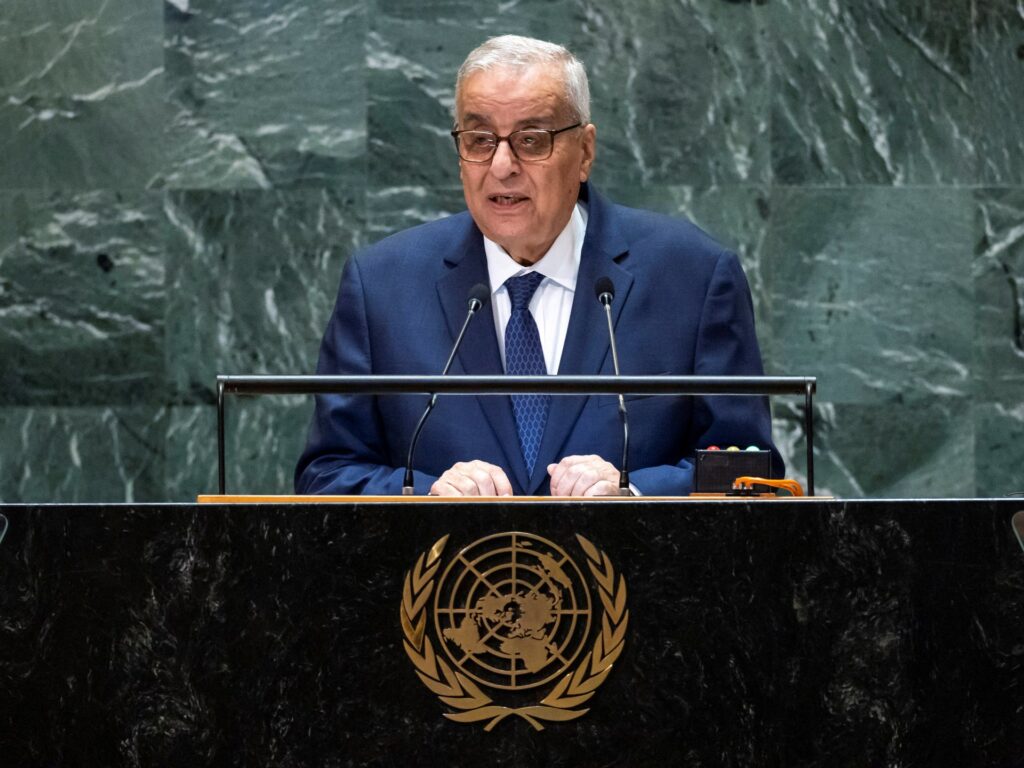
NewsFeed “There will be instability and there will be war” as long as the Israeli occupation continues, Lebanese Foreign Minister Abdallah Bou Habib told the UN General Assembly while also saying he welcomed a US and French ceasefire proposal. Published On 27 Sep 202427 Sep 2024 Adblock test (Why?)
Russia-Ukraine war: List of key events, day 945
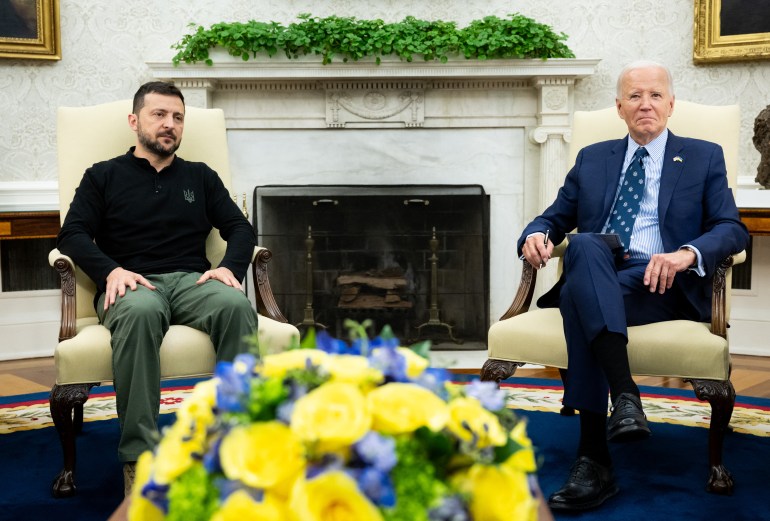
As the war enters its 945th day, these are the main developments. Here is the situation on Friday, September 27, 2024. Fighting Ukraine’s military said Russian forces fired 78 attack drones and six missiles over various regions during an hours-long attack from Wednesday into Thursday. Air defences destroyed 66 drones and four missiles, it added. Prime Minister Denys Shmyhal said the attack targeted Ukraine’s energy infrastructure. One woman was killed in a missile strike on Ukraine’s Black Sea port of Odesa, while 10 people were injured in a guided-bomb attack on the southern city of Zaporizhzhia, officials said. At least one person was killed and one injured after Russian forces repeatedly shelled a village west of the Ukrainian-held city of Kherson, Regional Governor Vyacheslav Prokudin said. A local official in the town of Slatyne in northeastern Kharkiv said rescuers were searching for people who might have been hurt after a fire triggered by a Russian rocket attack engulfed six houses. Russia’s Defence Ministry said its forces captured Ukrainsk in Ukraine’s eastern Donetsk region. The town, about 30 kilometres (18 miles) west of the city of Donetsk, was home to more than 10,000 people before the war. Politics and diplomacy Ukrainian President Volodymyr Zelenksyy met United States President Joe Biden at the White House. Biden promised that the US would “stand by” Ukraine and that Kyiv would “prevail” in the war that began when Russia launched its full-scale invasion in February 2022. He also announced a high-level summit of 50 allies of Ukraine would convene in Germany next month. Democratic presidential candidate Kamala Harris also met Zelenskyy and promised her “unwavering” support for Ukraine. She also criticised her Republican rival Donald Trump for what she said was his “surrender” policy on Ukraine. Trump, who has said Ukraine should have “made a deal” with Russia, confirmed he would meet Zelenskyy in New York on Friday. The foreign ministers of China and Ukraine met on the sidelines of the United Nations General Assembly. Ukrainian Foreign Minister Andrii Sybiha said they discussed ways to achieve “a comprehensive, fair and lasting peace for Ukraine based on the UN Charter”. Chinese Foreign Minister Wang Yi earlier held talks on Ukraine with his Russian counterpart Sergey Lavrov. Wang said Russia-China ties would “move forward” while Russia’s Foreign Ministry described the discussions as “constructive”. US President Joe Biden and Ukraine President Volodymyr Zelenskyy met at the Oval Office in the White House in Washington, DC [Saul Loeb/AFP] Kremlin spokesman Dmitry Peskov said Russia’s move to broaden its nuclear doctrine was a “signal” to Western countries that there would be consequences for attacks on Russia. Russia’s security service said it had arrested six people, including three teenagers, for allegedly setting fire to railway and communications equipment on orders from Ukrainian intelligence. Officials in Qatar said Ukraine and Russia will exchange 13 children following mediation by the Gulf state. Nine children and teenagers as well as a 19-year-old sibling will be reunited with their families in Ukraine, while four children will go to Russia, the officials said. A Polish court jailed a 23-year-old Ukrainian national and a 30-year-old Belarusian citizen after they were found guilty of spying for Russia, state news agency PAP reported. The two men were among 16 citizens of Belarus, Ukraine and Russia arrested as part of an investigation into a spy ring whose activities included collecting information on the transportation of military equipment to Ukraine. Balazs Orban, a senior adviser to Hungary’s nationalist Prime Minister Viktor Orban, told a pro-government newspaper that it was “irresponsible” for Ukraine to have responded to Russia’s invasion of its sovereign territory. Orban, who is no relation to the prime minister, said Hungary would probably not have defended itself if the same thing happened given Moscow’s brutal crackdown on the 1956 anti-Soviet uprising. Orban’s comments fuelled outrage on social media in Hungary. Weapons Biden announced nearly $8bn in new military aid for Ukraine, including Joint Standoff Weapon (JSOW) munitions to “enhance Ukraine’s long-range strike capabilities” and to “win this war”. Lithuania’s Foreign Minister Gabrielius Landsbergis told the Reuters news agency that Ukraine should be able to freely use the weapons that it has been given and that he hopes Kyiv would be able to target sites further into Russia with the latest weapons being delivered by the US. Adblock test (Why?)
Will Israel’s onslaught on Lebanon force Iran to shift its approach?
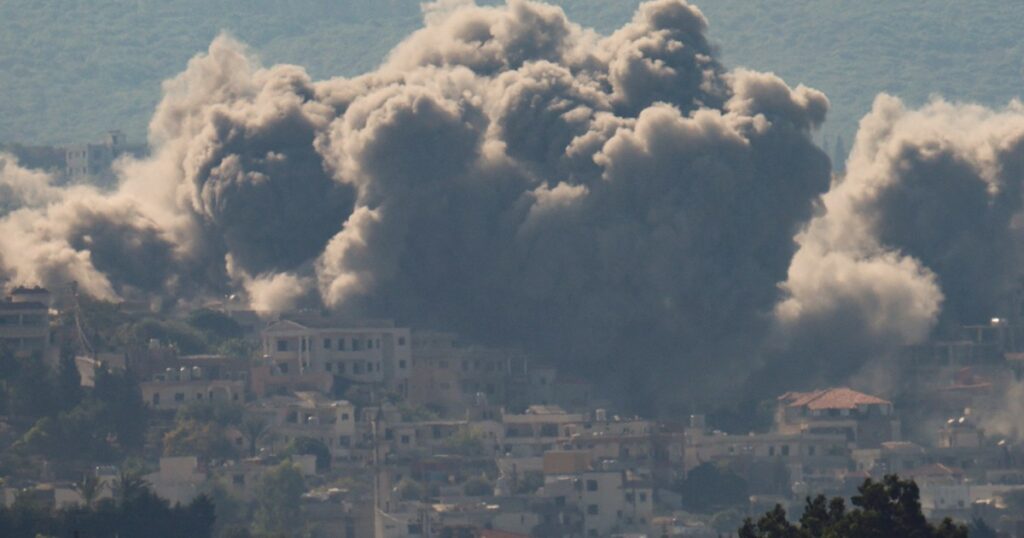
Tehran, Iran – Iran has been biding its time since the July 31 assassination of Hamas politburo chief Ismail Haniyeh in Tehran. The high-profile assassination will beget Israel vengeance, Supreme Leader Ayatollah Ali Khamenei and other top political and military officials have promised, as a “guest” dear to Iran and its “axis of resistance” was killed on Iranian soil. The manner of Haniyeh’s and his bodyguard’s killing also raised many eyebrows, as they are believed by Iranian armed forces to have been targeted with a projectile – likely a relatively small, anti-armour guided missile – fired from not too far outside their residence for foreign dignitaries in affluent northern Tehran. The fact that Israel is now pounding Lebanon, its civilians and infrastructure to devastating effect, supposedly only to target Hezbollah, a prominent member of the Iran-led “axis of resistance”, merely ramps up pressure on Iranian leaders to take a more direct retaliatory approach. The Israeli military has killed at least 620 people and wounded thousands more across Lebanon in the past four days, with at least 72 killed on Wednesday, according to the Lebanese Ministry of Public Health. The attacks have been the deadliest Lebanon has seen since the end of its civil war close to 35 years ago. The thousands of bombs that have been dropped over Lebanon by a fleet of Israeli aircraft have also destroyed many homes and other civilian infrastructure, displaced tens of thousands, and killed paramedics and journalists. Is Iran’s timeline changing? Iran has continued to exercise restraint as Israeli Prime Minister Benjamin Netanyahu and his government, who are still killing Palestinians in the Gaza Strip and the occupied West Bank on a daily basis, are increasingly being seen as eager to drag the region – and the United States – into an expanded conflict. But the significant increase of Israeli attacks on Lebanon “will not be without effect in accelerating Iran’s response”, according to Hadi Afghahi, a West Asia analyst and former Iranian charge d’affaires to Lebanon. He told Al Jazeera that this was especially true after the “fiery” speech delivered by the supreme leader during a meeting with military commanders on Wednesday, when he asserted that Hezbollah had not been brought to its knees despite taking considerable blows. Khamenei promised that “final victory will belong to the resistance front and the Hezbollah front”. “Iran will not wait so long as to make the enemy insolent and believe that there will be no strike back. After the supreme leader’s speech, I think a strike will take place soon,” Afghahi said. He said that the most explicit comments about the nature of the Iranian retaliation against Israel so far have been delivered by Major General Mohammad Bagheri, chief of staff of Iranian armed forces, who stated Tehran will respond decisively and independently of the “axis of resistance”. Afghahi pointed out that Hezbollah has launched a ballistic missile at Tel Aviv for the first time, the Houthis in Yemen successfully landed a hypersonic ballistic missile in central Israel, and the Islamic Resistance in Iraq is ramping up its attacks using new missiles and drones. But Iran would likely wish to further display and also evaluate the effectiveness of its weapons in independent attacks, rather than a joint attack. “And a potential war will not simply be a war of missiles and drones, it would be a hybrid war,” the former official explained. “I have heard from a military official that we might even be considering going after a number of high-ranking Israeli political or military officials amid the war and our retaliatory operation. The Zionist regime has used assassination as a method since its founding, so if there is an assassination against these war criminals, it would be considered as retaliation and self-defence.” Afghahi emphasised that the Iranian response “will be within the framework of international law”, meaning no places of worship, schools, markets or other civilian infrastructure will be attacked, making a distinction with Israel’s repeated attacks on non-military targets. ‘Maintaining the initiative’ The election of centrist President Masoud Pezeshkian could mean that Tehran will display more “flexibility and strategic patience” overall, but “there are no disagreements over the nature, legitimacy or certainty of the response” among top Iranian leadership, Afghahi explained. Pezeshkian struck a moderate tone during his first address to the United Nations General Assembly on Wednesday, including saying Iran wants to hold more talks with the West and other global powers on its nuclear programme and US sanctions. But he also railed against the “genocide” being perpetrated in Gaza and called for a ceasefire. After returning to Tehran on Thursday, he told reporters that his team spoke with 15 countries about Gaza and Lebanon, and asserted that “the Zionist regime and its supporters are the biggest terrorists” who are killing civilians while claiming to be supporters of human rights and international law. Useful talks with EU High Rep @JosepBorrellF on range of issues of mutual interest/concern—incl nuclear talks, dangerous situation in Middle East caused by Israeli aggression against Lebanon, Ukraine, and need to avoid double standard on human rights. Urged EU to stop certain… pic.twitter.com/2ivIXJH2HI — Seyed Abbas Araghchi (@araghchi) September 24, 2024 Iran wishes to reserve a legitimate right to respond to a violation of its sovereignty and territory while remaining mindful of Israel’s goals, according to Sasan Karimi, a professor at the Faculty of World Studies of the University of Tehran. He told Al Jazeera that Netanyahu is trying to protect himself politically, but Israel has adopted an overall “thousand daggers” policy since it realises it cannot defeat Iran with a single big blow. “The Islamic Republic has preferred at this stage to consciously maintain the initiative and not lose it even in response to Israeli acts of terror. In this vein, the timing, nature and scale of this reaction will be set in Tehran while maintaining a sense of agency,” Karimi said, adding that Iran will not be forced into an uncalculated response that could prompt more Western
Hezbollah rockets land in sea near Israeli city
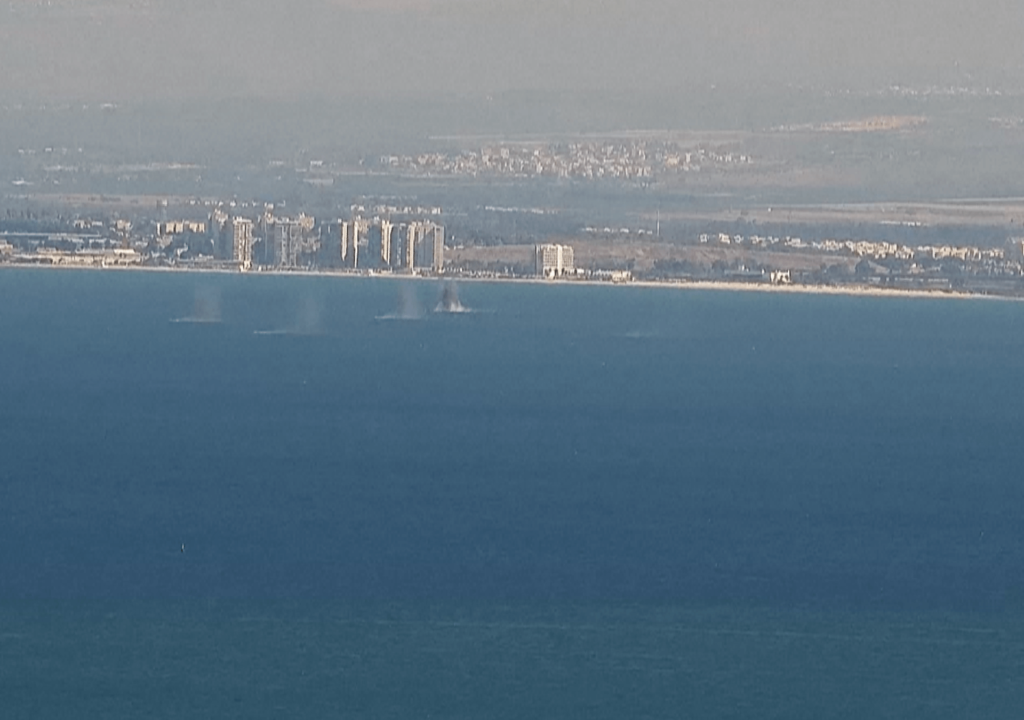
NewsFeed Explosions were seen near the city of Haifa in northern Israel as a barrage of Hezbollah rockets landed in the sea. The Israeli army reported that around 45 rockets were identified crossing from Lebanon. Published On 26 Sep 202426 Sep 2024 Adblock test (Why?)
Mass funeral for Kenya school fire victims
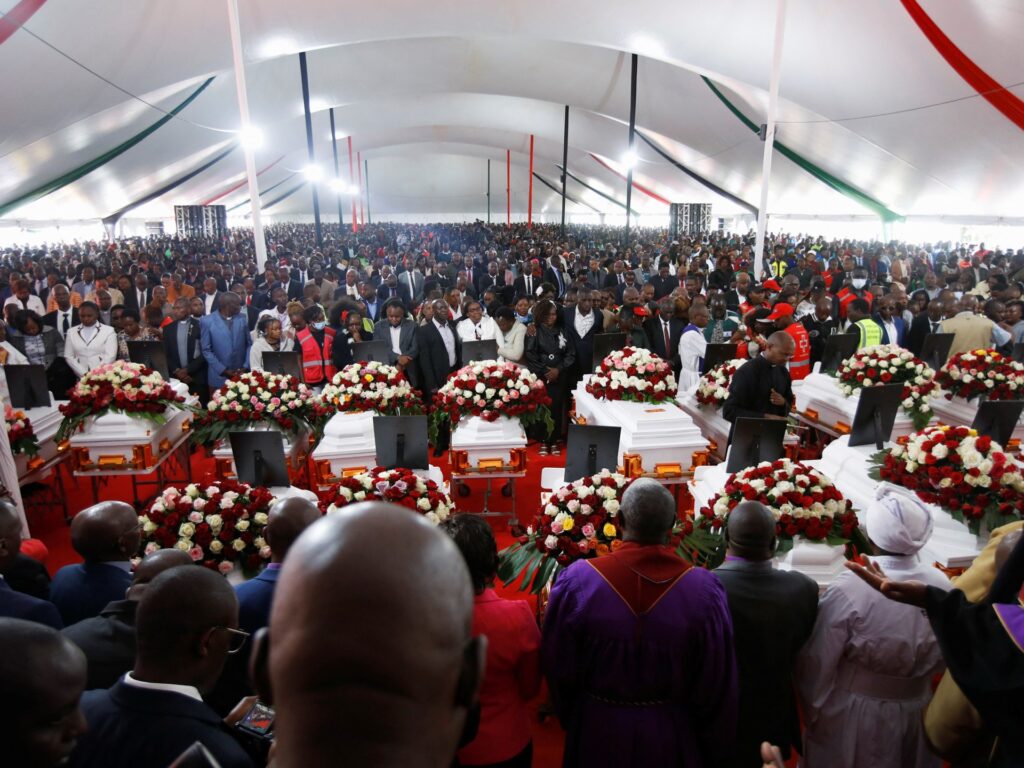
A mass funeral has been held for the 21 children who were killed in a boarding school fire in central Kenya earlier this month. Each small coffin was topped with a photograph, with most of the boys killed aged between nine and 13. Published On 26 Sep 202426 Sep 2024 Adblock test (Why?)