Plane crash at Nepal’s Kathmandu airport kills 18; pilot only survivor

Saurya Airlines plane carrying two crew members and 17 passengers crashes shortly after takeoff and catches fire. A passenger plane has crashed and caught fire shortly after taking off from Nepal’s capital, Kathmandu, killing 18 people, aviation officials say. The pilot was the only survivor of Wednesday’s crash and was being treated in hospital, the Civil Aviation Authority of Nepal said in a statement. Nineteen people were on the test flight conducted by the domestic carrier Saurya Airlines, including technical staff members and two crew members. The incident took place right after the 11:11am (05:26 GMT) takeoff of the 50-seat Bombardier CRJ200, the aviation authority said. The plane then turned right and crashed into the eastern section of the airport, the statement said. It was on its way to the resort town of of Pokhara. The cause of the crash is being investigated. A doctor at Kathmandu Medical College Hospital told The Associated Press news agency that the pilot had suffered injuries to the eyes “but is not in any danger”. Eighteen Nepalis, including one child, and a Yemeni national were on the plane, the aviation authority confirmed. The bodies were taken to the TU Teaching Hospital in Kathmandu for autopsy. Saurya Airlines 9N-AME crash@TIACAO2 Press Release – 2 pic.twitter.com/5LzBHpqhZI — Civil Aviation Authority of Nepal (@hello_CAANepal) July 24, 2024 Images of the aftermath shared by Nepal’s military showed the plane’s fuselage split apart and charred. Broadcast images showed the bodies being carried to ambulances on stretchers. Other visuals showed rescue workers rummaging through the burned remains of the plane. Poor safety record Tribhuvan International Airport, the main airport in Nepal for international and domestic flights, was closed for several hours as emergency workers and investigators began their work. The airport is located inside a valley surrounded by mountains on most sides. It is considered a challenging airport for pilots, and bigger planes have to come through an opening on a mountain to land. Nepal’s aviation industry has boomed in recent years, carrying goods and people between hard-to-reach areas as well as local and international trekkers and climbers. But the Himalayan country has a poor aviation safety record with a spate of deadly light plane and helicopter crashes over the decades. Much of this is attributed to insufficient training and maintenance, which are compounded by the country’s treacherous geography. Nepal also has some of the world’s trickiest runways to land on. Many are flanked by snow-capped peaks with approaches that pose a challenge even for accomplished pilots. The weather can change quickly in the mountains, creating dangerous flying conditions. Nepal’s last major commercial flight accident was in January 2023 when a Yeti Airlines flight crashed while landing at Pokhara, killing all 72 people on board. In 2018, at least 49 people were killed when a Bangladeshi plane carrying more than 70 people crashed and burst into flames as it landed in Kathmandu. In 1992, all 167 people on board a Pakistan International Airlines plane died when it crashed on approach at Kathmandu airport. Earlier that same year, a Thai Airways aircraft had crashed near the same airport, killing 113 people. Adblock test (Why?)
Typhoon Gaemi brings flood chaos to Philippines capital

NewsFeed Roads and neighbourhoods in Manila and across the Philippines have been left under water after heavy rain from Typhoon Gaemi, forcing many people out of their flooded homes. Published On 24 Jul 202424 Jul 2024 Adblock test (Why?)
US regulators investigate Delta as it struggles to recover from outage

The collapse at Delta is stunning for an outfit that was widely viewed as the best big US airline. United States regulators are investigating how Delta Air Lines is treating passengers affected by cancelled and delayed flights as the airline struggles to recover from a global technology outage. Transportation Secretary Pete Buttigieg announced the Delta investigation on the X social media platform on Tuesday “to ensure the airline is following the law and taking care of its passengers during continued widespread disruptions”. “All airline passengers have the right to be treated fairly, and I will make sure that right is upheld,” Buttigieg said. Delta and its Delta Connection partners cancelled about 500 flights on Tuesday by midday on the East Coast, accounting for about two-thirds of all cancellations in the United States, according to tracking platform FlightAware. The outage began Thursday night into Friday morning, after a faulty software upgrade from cybersecurity company CrowdStrike to more than 8 million Microsoft computers around the world. The Atlanta-based carrier has cancelled more than 6,600 flights since the outage started, far more than any other airline, according to figures from FlightAware and travel-data provider Cirium. Delta said it was cooperating with the investigation. “We remain entirely focused on restoring our operation after cybersecurity vendor CrowdStrike’s faulty Windows update rendered IT systems across the globe inoperable,” an airline spokesperson said in a statement. “Across our operation, Delta teams are working tirelessly to care for and make it right for customers impacted by delays and cancellations as we work to restore the reliable, on-time service they have come to expect from Delta.” Delta has said upward of half its technology systems run on Microsoft Windows, including a tool the airline uses to schedule pilots and flight attendants. The systems could not keep up with the high number of changes triggered by the outage. The collapse at Delta is stunning for an outfit that was widely viewed as the best big US airline – the most profitable before and after the pandemic, and the best-run operation. Delta has almost always ranked near the top among all US carriers for on-time performance. The Department of Transportation said it launched the investigation after seeing Delta’s continued widespread flight disruptions “and reports of concerning customer service failures”. The department said the investigation will evolve as it “processes the high volume of consumer complaints we have already received against Delta”. Last week’s outage impacted air travel globally [File: Miguel J Rodriguez Carrillo/Getty Images via AFP] Senators weigh in Investigators are likely to focus on whether Delta is complying with federal rules and offering prompt refunds to passengers whose flights are cancelled or significantly delayed. In a text provided to The Associated Press, a Delta passenger whose flight was cancelled on Saturday was told, “If you prefer not to rebook your trip, your ticket value will automatically be available as an eCredit that can be used towards a future Delta ticket.” In Washington, lawmakers are beginning to weigh in. Senator Maria Cantwell, Democrat from Washington and chair of the Senate committee that oversees airlines, said in a letter to Delta CEO Ed Bastian that she is “concerned” that Delta is not complying with passenger rights contained in a law that Congress passed in May. “While the technology outage was clearly not caused by Delta or any airline, I am nevertheless concerned that Delta is failing to meet the moment and adequately protect the needs of passengers,” Cantwell wrote. Delta’s meltdown mirrors that of Southwest Airlines, which cancelled nearly 17,000 flights over 15 days in December 2022. A Transportation Department investigation ended with Southwest agreeing to pay a $35m fine as part of a $140m settlement. Southwest blamed its breakdown on a winter storm, but other airlines recovered in a couple of days while Southwest did not. Consumer advocates see the same pattern with Delta this month — the airline continues to blame the CrowdStrike outage while rivals such as American recovered quickly. Even United Airlines, the second-worst at cancellations, was back on track Monday. “It’s not about the thing that caused the problem, it’s about how you recover from the problem. That’s the test of an airline,” said William McGee, a former aircraft dispatcher who is a consumer advocate at the American Economic Liberties Project, a group critical of large corporations. Adblock test (Why?)
US Capitol Police arrest Jewish activists calling for Israel arms embargo

Washington, DC – The rotunda of an office building in the United States Capitol complex filled in minutes with hundreds of people who appeared as if from nowhere, as part of a surprise protest against Israel’s war in Gaza. “Let Gaza live,” they chanted in unison inside the Cannon House Office Building, removing their outer garments to reveal matching red T-shirts. One side of the shirt read, “Jews say stop arming Israel.” The other side: “Not in our name.” Tuesday’s coordinated protest, led by Jewish Voice for Peace (JVP), took Congressional staffers and law enforcement agents aback, as it came together within minutes. But the crackdown started almost immediately after the protesters assembled. Capitol Police quickly declared the area a closed “zone” and arrested hundreds of demonstrators who refused to leave. “This is a moment in history where we have to say we stood up for Palestinian freedom. We stood up to end this genocide,” said protester Liv Kunins-Berkowitz. “For so many of us, we are the descendants who survived ethnic cleansing and genocide. Our ancestors and grandparents taught us that the worst thing to do in these moments is to be a bystander.” Police moved quickly to disperse the protest at the House office building [Ali Harb/Al Jazeera] Kunins-Berkowitz added that the protest is part of a tradition of peaceful civil disobedience. “It’s what we have to do when our government refuses to listen to the people,” she told Al Jazeera. The demonstration on Capitol Hill comes a day before Israeli Prime Minister Benjamin Netanyahu is set to deliver a speech to Congress at the invitation of top legislators from both major parties. Netanyahu’s government has overseen more than nine months of death and devastation in Gaza, with experts and rights advocates warning of “genocide” in the Palestinian territory. Since the war began, the Israeli offensive has killed more than 39,000 Palestinians, many of them women and children. Nevertheless, the US government has remained uncompromising with its support for Israel. The administration of President Joe Biden has authorised more than $14bn in military aid to Israel, while also maintaining a steady flow of weapons and bombs. In addition, the US has vetoed three ceasefire United Nations Security Council resolutions that would have called for a ceasefire. Biden called for an end to the war in May as part of a deal that would see the release of Israeli captives in Gaza, but he has pressed on with support for Israel, as the country’s leaders pledge to continue to fight until “total victory”. Protesters sat on the floor of the Capitol Building in Washington, DC, as Capitol Police approached from the sidelines [Ali Harb/Al Jazeera] Abby Stein, a rabbi and activist, said that while US officials are paying “lip service” to the ceasefire, protesters are calling for an actual end to the war and an arms embargo against Israel. “I know that none of us will be safe while the US sends billions of dollars in weapons to Israel,” Stein told Al Jazeera. “This is one of the worst atrocities we are watching unfold before our eyes. We are here today to make sure that we do everything we can to stop this.” Progressive Jewish groups have been organising protests across the country, including a similar demonstration on Capitol Hill in October last year, as well as rallies on roads, inside train stations and even at political offices. Asked whether such direct action is effective, Stein was unequivocal: “Yes.” She argued that protests raise awareness about the situation in Gaza and give exposure to the demands of the demonstrators. “I think it definitely helps,” Stein added. “The action that happened in October is a good example. It really put us in the media to show that there are tens of thousands of Jews who are opposing what the Israeli government is doing.” Activist Tal Frieden said that, as the grandchild of Holocaust survivors, he grew up hearing stories about the importance of ensuring that genocide does not happen again. “I’m here today to demand that the US stop sending weapons to Israel,” he told Al Jazeera. At the protest on Tuesday, demonstrators held firm and refused to leave as their colleagues faced arrest. Law enforcement agents moved in quickly and discarded banners decrying the “genocide” in Gaza. Then, they started arresting people from the outer edges, making the circle of activists smaller, as if peeling it layer by layer. Capitol Police arrest progressive Jewish activists demonstrating at the Cannon House Building on Capitol Hill in Washington, DC, on July 23 [Ali Harb/Al Jazeera] For more than an hour, officers steadily detained the activists and led them to an elevator away from the rotunda and to the underground halls of Congress. Many zip-tied demonstrators continued to chant, “Stop arming Israel” and “Free, free Palestine”, as they were being taken away. But the chants grew fainter and fainter as the last demonstrators were taken out. “We are arresting a group that is illegally demonstrating inside the Cannon Rotunda. Demonstrations are not allowed inside the Congressional Buildings,” Capitol Police said in a statement. “We told the people, who legally entered, to stop or they would be arrested. They did not stop, so we are arresting them.” A JVP organiser told Al Jazeera that the group was told the protesters “are being processed and released on their own recognizance with a post and forfeit”, suggesting they will not face charges. JVP said 400 people were arrested, but Capitol Police has not released official figures. [Ali Harb/Al Jazeera] “For nine months, we’ve watched in horror as the Israeli government has carried out a genocide, armed and funded by the US Congress and the Biden administration have the power to end this horror today,” JVP executive director Stefanie Fox said in a statement. “Instead, our president is preparing to meet with Netanyahu and Congressional leadership has honored him with an invitation to address Congress. Enough is enough. Biden and Congress must listen to the people:
Who is Israel targeting in its attacks on the West Bank?

The Israeli army killed three Palestinian military commanders – including one from Hamas’s Qassam Brigades and two from Fatah’s Al-Aqsa Martyrs Brigades – and a mother and her child during a raid in the occupied West Bank on Monday, according to Palestinian and Israeli officials. Several army convoys and bulldozers also stormed Tulkarem refugee camp, where the five were killed, to destroy homes, markets and entire neighbourhoods during the attack. Like all of the West Bank, Tulkarem has been subjected to Israeli army raids and settler attacks that intensified following the return of Prime Minister Benjamin Netanyahu at the helm of a far-right government at the end of 2022. The devastation brought on by these raids intensified further after the Hamas-led attack on southern Israel on October 7. Israel claims that its nearly daily raids are necessary to capture Hamas cells and ensure Israeli security. But critics say that raids are exacerbating the root causes that fuel armed resistance – in particular, Israel’s decades-long occupation – declared last week as unlawful by the International Court of Justice. According to the UN Office for the Coordination of Humanitarian Affairs, Israel has killed 203 people in the West Bank between January and June 6 this year. That’s 75 more people killed by Israeli soldiers or settlers compared to the same period last year. Activists and experts believe that Israel is playing up the threat of what it calls “terrorism” to justify the increasing violence, which leads to mass displacement and the expansion of illegal settlements. Here is all you need to know about the uptick in violence as a result of operations in the West Bank. How many raids have there been and who are they targeting? Israel conducts military raids into the occupied West Bank on a near-daily basis, predating the current war on Gaza. Israel says the raids are in the name of upholding security, but locals say that they serve little purpose except to remind them of the realities of living under occupation. Towns such as Jenin, Tulkarem, and the Nur Shams refugee camp are frequently targeted, and firefights with Palestinian armed men are frequent. Shadi Abdullah, an activist from the Tulkarem refugee camp, told Al Jazeera that the Israeli army typically fires missiles at residential areas, bulldozes education centres and hospitals, cuts the electricity and kills or wounds civilians during nearly every raid. These same tactics have been reported widely across the West Bank and particularly in Jenin, where much of the camp has been reduced to rubble. Al Jazeera correspondent Shireen Abu Akleh was killed in the camp during one such raid in May 2022. “The Israelis don’t distinguish between resistance fighters and civilians,” Abdullah told Al Jazeera “They are also trying to make the areas unliveable so that Palestinians migrate from one Palestinian town to another … it’s a form of forced displacement,” he added. An Israeli army bulldozer manoeuvres on a road during a raid in Jenin in the Israeli-occupied West Bank on December 12, 2023 [File: Raneen Sawafta/Reuters] Who are the Palestinian armed groups in the West Bank? Israel has long claimed to be targeting Hamas and Palestinian Islamic Jihad factions in the West Bank, as well as new independent armed groups that have emerged in recent years. It recently arrested a number of students from Birzeit University who it said were plotting a “significant terror attack” against Israeli forces or settlers, according to Shin Bet, the Israeli security agency tasked with monitoring and foiling domestic threats. “There was word that the student movements were going to start something in the West Bank, but the Israelis don’t care if this was popular resistance or armed resistance. They are not interested in any escalation,” said Tasame Ramadan, a Palestinian activist from the West Bank city of Nablus. “[Israel] wants [Palestinians] to feel like they are controlled and they want them to feel afraid for their lives,” she added. Tahani Mustafa, senior Palestine analyst for the International Crisis Group (ICG), explained that many young men pick up arms or join armed factions to protect themselves and their communities from settler violence – which is increasing without much in the way of pushback from the military – and army raids. “Whether it is student movements or armed groups, there are pockets of resistance in the West Bank and the idea that they are Hamas affiliated or Iranian-backed is [something Israel plays up] because it fits into notions of what counts as legitimate violence,” she said. “Frankly, it doesn’t work well for the Western narrative if they learn that the majority of these fighters are just disenfranchised and disillusioned Fatah constituents.” Fatah is a major Palestinian faction that controls the Palestinian Authority (PA), the entity tasked with governing most of the West Bank. A boy walks past debris of a heavily damaged building after an Israeli forces raid in the West Bank city of Jenin, Thursday, May 23, 2024 [File: Leo Correa/AP Photo] Are settlers involved? Yes, and often. Jewish settlers consistently attack entire Palestinian villages, as they seek to expand the territory under their possession in the West Bank. Many of the hundreds of thousands of Israelis living in illegal settlements in the West Bank see the land as an integral part of the land of Israel – and the Palestinians as an obstacle in the way. While the settlers regularly conduct attacks on Palestinians with no prior justification, they take part in particularly aggressive raids if their own settlements have been attacked. In April, an Israeli teen was found slain in the occupied West Bank, triggering a wave of vigilante and armed attacks by illegal settlers. The violence led to the death of a 17-year-old Palestinian boy and scores of injuries. “The settlers are always protected by the army,” said Abdullah. He added that the security forces and settlers invoke ‘terrorism’ as a justification to attack Palestinians, displace them from their villages and steal their land. Why is the PA not protecting its constituents? Because
All to know about the Paris Olympics 2024: Schedule, sports, venues, dates
The Summer Olympics start July 26. Here’s Al Jazeera’s concise viewer guide to the world’s largest multisport event. Paris is gearing up to host the Summer Olympics this year. The Olympics take place every four years, and the last games in Tokyo were delayed by a year due to the COVID-19 pandemic and held largely without spectators. From venues to sporting events, here is all to know about the much-anticipated Paris Olympics 2024: When are the Paris Olympics? The Olympic games this year will run from July 26 to August 11. Some sports will begin before the official opening ceremony, including football and rugby sevens which start on July 24, and archery and handball, which begin on July 25. Overall, the multisport event will take place over a 19-day period. What time is the Olympics opening ceremony? The opening ceremony is on Friday, July 26 at 7:30pm local time (17:30 GMT). How many athletes are competing in the Olympics? A total of 10,500 athletes representing 206 countries are competing in this year’s Olympics. What sports are in the Olympics 2024? Athletes will be competing for 329 gold medals across 32 sports. Where to find the schedule and results for the Olympics 2024? An overview of the Paris Olympics schedule and results can be found on a dedicated page on the official Olympics website. What are the Olympic venues? The games will open on July 26 at the Seine, where dozens of boats will carry athletes across a 6km (3.7-mile) route in the river. The Olympic Games will take place in 35 venues overall. While most of these venues are in or around Paris, a handful of games will take place in venues in other cities including Lyon Stadium, where some football games will take place, and the Marseille Marina, where sailing events will be staged. Surfing will take place in French Polynesia’s Tahiti, in a French overseas territory nearly 16,000km (10,000 miles) from the rest of the venues. Here are more details about the different Olympic venues this year. What do French politics have to do with the elections? Legislative elections in France concluded earlier this month, with no party winning a clear majority. Soon after the election results, Prime Minister Gabriel Attal of President Emmanuel Macron’s Renaissance party announced that he would resign. While Macron accepted Attal’s resignation, Attal’s government will stay in a caretaker capacity to ensure the Olympic Games run smoothly. French President Emmanuel Macron said on July 22: “We are ready and we will be ready throughout the Games [to host the event].” How to watch the Olympics 2024? The Paris Olympics 2024 will be broadcast globally. You can follow the summer games on Al Jazeera’s dedicated Paris 2024 Olympics tournament page with all the news and features, as well as event build-up and live text commentary on selected football, basketball, tennis and boxing fixtures. The Stade De France will hold the track and field events for the Paris Olympics 2024 [Richard Heathcote/Getty Images] Olympic competition dates – sport by sport: Opening ceremony: July 26, River Seine Archery: July 25 to August 4, Invalides Artistic gymnastics: July 25 to August 4, Bercy Arena Artistic swimming: August 5-10, Bercy Arena Athletics: August 1-11, Stade de France (track and field), Trocadero (race walks), Invalides (marathons) Badminton: July 27 to August 5, La Chapelle Arena 3×3 Basketball: July 30 to August 5, La Concorde Basketball: July 27 to August 11, Pierre Mauroy Stadium (group phase) and Bercy Arena (finals) Beach volleyball: July 27 to August 10, Eiffel Tower Stadium Boxing: July 27 to August 10, North Paris Arena and Roland-Garros Stadium Breaking: August 9-10, La Concorde Canoe slalom: July 27 to August 5, Vaires-sur-Marne Nautical Stadium – Whitewater Canoe sprint: August 6-10, Vaires-sur-Marne Nautical Stadium – Flatwater Cycling BMX: July 30 to August 2, La Concorde (freestyle), BMX Stadium (racing) Cycling mountain bike: July 28-29, Elancourt Hill Cycling road: July 27 to August 4, Pont Alexandre III (time trials), Trocadero (road races) Cycling track: August 5-11, National Velodrome Diving: July 27 to August 10, Aquatics Centre Equestrian: July 27 to August 6, Chateau de Versailles Fencing: July 27 to August 4, Grand Palais Football: July 24 to August 10, Bordeaux Stadium, Geoffroy-Guichard Stadium, La Beaujoire Stadium, Lyon Stadium, Marseille Stadium, Nice Stadium and Parc de Princes (finals) Golf: August 1-10, Le Golf National Handball: July 25 to August 11, South Paris Arena (group stage), Pierre Mauroy Stadium (knockout phase) Hockey: July 27 to August 9, Yves-du-Manoir Stadium Judo: July 27 to August 3, Champ-de-Mars Arena Marathon swimming: August 8-9, Pont Alexandre III Modern pentathlon: August 8-11, North Paris Arena (ranking round), Chateau de Versailles Rhythmic gymnastics: August 8-10, La Chapelle Arena Rowing: July 27 to August 3, Vaires-sur-Marne Nautical Stadium – Flatwater Rugby sevens: July 24-30, Stade de France Sailing: July 28 to August 8, Marseille Marina Shooting: July 27 to August 5, Chateauroux Shooting Centre Skateboarding: July 27 to August 7, La Concorde Sport climbing: August 5-10, Le Bourget Climbing Venue Surfing: July 27 to August 4, Teahupo’o, Tahiti Swimming: July 27 to August 4, Paris La Defense Arena Table tennis: July 27 to August 10, South Paris Arena Taekwondo: August 7-10, Grand Palais Tennis: July 27 to August 4, Roland Garros Trampoline gymnastics: August 2, Bercy Arena Triathlon: July 30 to August 5, Pont Alexandre III Volleyball: July 27 to August 11, South Paris Arena Water polo: July 27 to August 11, Aquatics Centre, Paris La Defense Arena Weightlifting: August 7-11, South Paris Arena Wrestling: August 5-11, Champ-de-Mars Arena Closing ceremony: August 11, Stade de France Adblock test (Why?)
Bangladesh curfews, internet blackout batter economy amid quota protests

Dhaka, Bangladesh – During a nationwide curfew and with the army on the streets, an unlikely group of people gathered at Bangladesh Prime Minister Sheikh Hasina’s office with demands – not student protesters who have been seeking an end to job quotas, but industry leaders. The country’s top business owners asked Hasina on Monday to withdraw the curfew and restore internet service, which has been down for days as part of a complete communications blackout. They pleaded with her to have the army provide security for the Dhaka-Chattogram highway — the economic lifeline that connects the capital to the country’s main port city — amid fears of vandalism. Hasina told them her government was forced to impose the curfew and deploy the army across the nation to “save lives and properties of people”. “It [the curfew] will be gradually relaxed,” she said. But for millions of Bangladeshi workers, business owners and thousands of companies, “gradually” might not be good enough. For nearly two weeks, student protesters and security forces have been locked in a tense standoff, and violent clashes have killed at least 146 people. The protests started out against quotas — primarily against the 30 percent of government jobs reserved for descendants of people who found in Bangladesh’s 1971 war of independence. On Sunday, the Bangladesh Supreme Court significantly shrunk the quotas, but the students have released a list of eight demands, focused on seeking justice for their comrades killed in the violence. The government-imposed curfew remains in place, as does the internet block. All of that has brought the economy to a screeching halt amid high inflation and fast-depleting foreign reserves. In the past five days, Bangladesh’s economy has suffered losses amounting to more than $1.2bn, according to an estimate by the country’s business community. Aside from the shutdown of almost all industries, there were economic losses due to vandalism and arson attacks, including on the country’s lone metro rail system in Dhaka, and the national television network’s premises. Speaking to business leaders on Monday, Hasina blamed the internet blackout on opposition parties, alleging that their activists had ruptured internet cables across the country. She promised the internet connections would be restored soon. Losses mount every day The shutdown and communications blackout have hit the readymade garment sector the hardest. It is responsible for more than 80 percent of the country’s export earnings of over $50bn. All factories have remained closed since Saturday due to safety concerns, and the sector is suffering losses of nearly $150m a day, SM Mannan Kochi, president of the Bangladesh Garment Manufacturers and Exporters Association, told Al Jazeera. “The biggest problem is that our international buyers are losing confidence — a loss whose value can’t be gauged with just money as it will have a long-term negative impact on the country’s most valuable industry,” Kochi said. Steelmakers have estimated that in the past four days, their sector has suffered a loss of nearly $110m. Suman Chowdhury, general secretary of the Bangladesh Steel Manufacturers Association, said in a statement that because of the curfew, they couldn’t release raw materials from the port, resulting in the disruption of production. “Also, we didn’t want to put the lives of our workers in risk and asked them to stay at home,” he said. Production and distribution of pharmaceutical products have also been severely disrupted as medicine makers have been unable to receive imported raw materials from the Chattogram port and Dhaka airport. “Because of the internet shutdown, we couldn’t get custom clearance to release our products,” said Jahangir Alam, chief financial officer of Beximco Pharma, a generic drugmaker. “Our productions are disrupted as we lack raw materials now.” The growing ceramics industry also fears losing export orders worth about $8m per day, a local newspaper reported, quoting Irfan Uddin, secretary of the Bangladesh Ceramic Manufacturers and Exporters Associations. Impact of internet blackout The internet blackout imposed on Thursday night has hit almost all businesses and industries. It has shut down e-commerce and f-commerce, which are Facebook-based businesses popular in Bangladesh. These sectors are estimated to be losing at least $5m in revenue per day. Shahab Uddin, vice president of the e-commerce Association of Bangladesh, told Al Jazeera that it’s not just the businesses that are taking losses. “People in the city got habituated to ordering everything online in the past few years. I also ordered most things, including groceries, online, and my daily life has become a struggle now.” Call centres are facing daily losses of at least $3m per day, Wahid Sharif, president of the Bangladesh Association of Contact Centres and Outsourcing Association, told Al Jazeera. More than two-thirds of the call centre industry’s revenue comes from serving global companies, and the reputational damage that this industry has suffered because of nearly five days of the ongoing internet blackout is “irreparable,” Sharif said. Officials at commercial banks said they might have to pay additional interest amounting to millions of dollars because of delays in scheduled payments. Zunaid Ahmed Palak, Bangladesh’s state minister for information and communication technology, told the media on Monday that the government was aware of the financial losses due to the blackout. “We are trying our best to restore the connection,” Palak said. “The repair work is going on, and it could be back at any time.” Adblock test (Why?)
US Secret Service chief faces angry questions and calls to resign

NewsFeed ‘You’re full of s***’. See some of the hostile questions faced by US Secret Service Director Kimberly Cheatle as she appeared before a Congress committee investigating the attempted assassination of Donald Trump. Published On 23 Jul 202423 Jul 2024 Adblock test (Why?)
Dozens killed as Palestinians flee Israel’s new offensive on Khan Younis

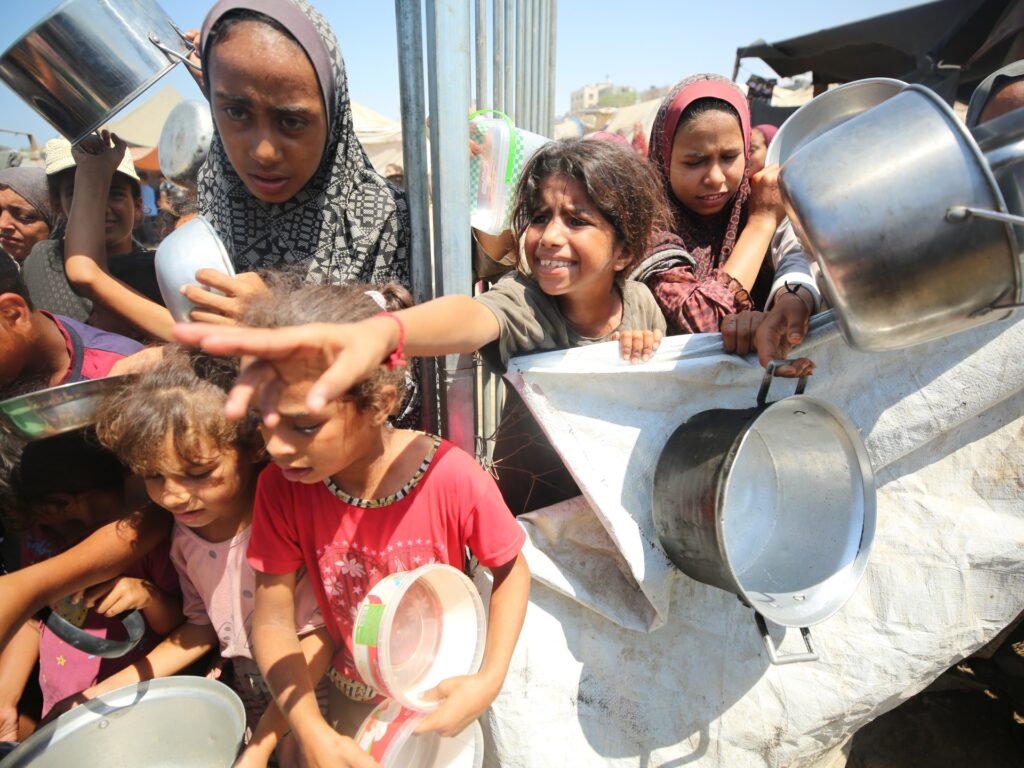
At least 70 Palestinians have been killed and more than 200 wounded in Israel’s latest assault on the Khan Younis area in southern Gaza as Palestinians fleeing Israeli tank shelling and air strikes have described the situation as “doomsday”. “Due to the Israeli occupation’s attacks and massacres in Khan Yunis governorate from the early hours of this morning until now, 70 people have been martyred and more than 200 wounded,” Gaza’s Ministry of Health said in a statement on Monday, adding that the dead included women and children. Residents of the densely built-up area of southern Gaza said the tanks advanced for more than 2km (1.2 miles) into Bani Suheila on the eastern edge of Khan Younis, forcing residents to flee under fire. Israel’s third assault on the southern city began shortly after Palestinians were ordered to leave the area, which has been designated as “safe zone”, giving little time for people to find safety. Palestinians were killed by Israeli tank salvoes in Bani Suheila and other towns just east of Khan Younis, and the area was also bombarded by air, according to medics. “It is like doomsday,” one resident who identified himself only as Abu Khaled told the news agency Reuters via a chat app. “People are fleeing under fire. Many are dead and wounded on the roads.” The Nasser Medical Complex in Khan Younis has been overwhelmed with patients, and the wounded are being treated on the floor. Medics at the medical facility said the situation was “out of control”. Palestinians flee the eastern part of Khan Younis after they were ordered by the Israeli army to evacuate [Hatem Khaled/Reuters] Palestinians displaced Earlier on Monday, the Israeli military ordered Palestinians in al-Mawasi, which is located along the Gaza coast between the cities of Khan Younis and Rafah, to leave. Israel justified its new operation there, saying Palestinian fighters have been using the area to launch attacks on Israeli forces. In a statement, it urged people to relocate from eastern Khan Younis to the west of the “adjusted humanitarian area of al-Mawasi”. However, many Palestinians are hesitant to join the swelling tent camps in al-Mawasi, declared a humanitarian zone in May, after a recent attack on the area killed at least 92 people and wounded more than 300, according to figures from the Health Ministry. That attack caused global outrage. Al Jazeera’s Tareq Abu Azzoum, reporting from Deir el-Balah in Central Gaza, said the situation is “deteriorating in the eastern areas of Khan Younis city”, where the population “has returned to live in the remnants of their destroyed houses – and, again, the military has announced that they are starting a new incursion”. “But that happened in a very short period of time, and they started to bombard residential houses. People were inside. Later, the military started to drop leaflets [to order an evacuation] in the eastern areas of Khan Younis,” he said. Some families fled on donkey carts and others on foot, carrying mattresses and other belongings. Palestinians, the United Nations and international relief agencies have said there is no safe place left in Gaza. A relative of a Palestinian killed in an Israeli strike at Nasser Medical Complex [Hatem Khaled/Reuters] Hospitals overwhelmed The Palestinian Red Crescent Society said two of its clinics located in eastern Khan Younis had been knocked out of operation because of the new Israeli offensive. At Nasser Medical Complex, some people stood outside the morgue to bid farewell to dead relatives. “We are tired. We are tired in Gaza. Every day our children are martyred – every day, every moment,” Ahmed Sammour, who lost several relatives in bombings of eastern Khan Younis, told Reuters. “No one told us to evacuate. They brought four floors crashing down on civilians, … and the bodies they could reach, they brought to the refrigerator [morgue],” Sammour added. Palestinian children flee the eastern part of Khan Younis [Hatem Khaled/Reuters] Hamas denounced the attack, stating that it would not deter Palestinians from remaining “steadfast in their land”. “We call upon the international community and the United Nations to urgently intervene to stop the systematic Zionist killing of our people, who are facing a genocide,” the group said in a statement on its Telegram channel. At least 39,006 people have been killed and 89,818 injured since Israel launched its war on Gaza in October. The death toll in Israel from Hamas-led attacks on October 7 is estimated at 1,139, and dozens of people are still being held captive in Gaza. Adblock test (Why?)
Kamala Harris hails Joe Biden’s legacy in first speech since he quit race

Kamala Harris, the vice president of the United States, has praised her boss, President Joe Biden, a day after he dropped out of the presidential race and endorsed her as his successor. “Joe Biden’s legacy of accomplishment over the last three years is unmatched in modern history,” Harris said on Monday in her first public appearance since the 81-year-old US leader abruptly announced his withdrawal from the November polls a day earlier. “In one term, he has already surpassed the legacy of most presidents who have two terms in office,” Harris said at a White House event to honour college athletes, where she was filling in for Biden, who is recovering at his home in Rehoboth Beach, Delaware, after testing positive for COVID-19 last week. In her statement, however, Harris, 59, did not specifically refer to her new status as the leading Democratic candidate to replace Biden as the party’s presidential nominee. Meanwhile, virtually all of the prominent Democrats who had been seen as potential challengers to Harris have lined up behind her, including Nancy Pelosi, the former speaker of the House of Representatives and one of the longest-serving and best known Democrats. Pelosi, who remains influential since stepping down as speaker in 2022, played a leading role in persuading Biden to end his campaign amid concerns over his mental acuity and ability to beat Republican Donald Trump or to serve another four years. “With love and gratitude, I salute President Biden for always believing in the possibilities of America and giving people the opportunity to reach their fulfillment,” Pelosi, 84, said in a statement on Monday. “We must unify and charge forward to resoundingly defeat Donald Trump and enthusiastically elect Kamala Harris as the next President of the United States.” Biden and Harris have been working together since 2020. As the US president solidified his lead in that year’s election, he promised he would select a woman as his running mate. The selection of Harris was seen as an effort to appeal to Black voters and energise the party’s base. On Sunday, while declaring he was abandoning his re-election campaign, Biden wrote on X that his endorsement of Harris has been “the best decision” he has made. Campaign officials and allies have already made hundreds of calls on Harris’s behalf, urging delegates to next month’s Democratic Party convention to join in nominating her for president in the November 5 election against Trump. The new party nominee will be chosen at the convention in Chicago next month when more than 4,000 party officials and activists will gather to vote. Harris could, however, still face challengers seeking the Democratic nomination in the coming days. Rebekah Caruthers, vice president of the Fair Elections Center, told Al Jazeera Harris has a solid record when it comes to winning elections. “She has been on the ballot many times, with being a district attorney, California attorney general. She herself ran for president during the 2020 cycle,” Caruthers said. “One thing that the Harris campaign has been putting out: Each time Kamala Harris is on the ballot, she wins her election.” But some Democrats were concerned about a Harris candidacy, in part because of the weight of a long history of racial and gender discrimination in the US, which has not elected a woman president in its nearly 250-year history. “We should all prepare for the onslaught of attacks that would face any historic candidate,” Representative Alexandria Ocasio-Cortez told reporters. “Misogyny in our politics is far from over. Racism in our politics – especially confronting Donald Trump as a an opponent – is far, far from over.” Adblock test (Why?)