

From LA to NY, pro-Palestine college campus protests grow strong in US
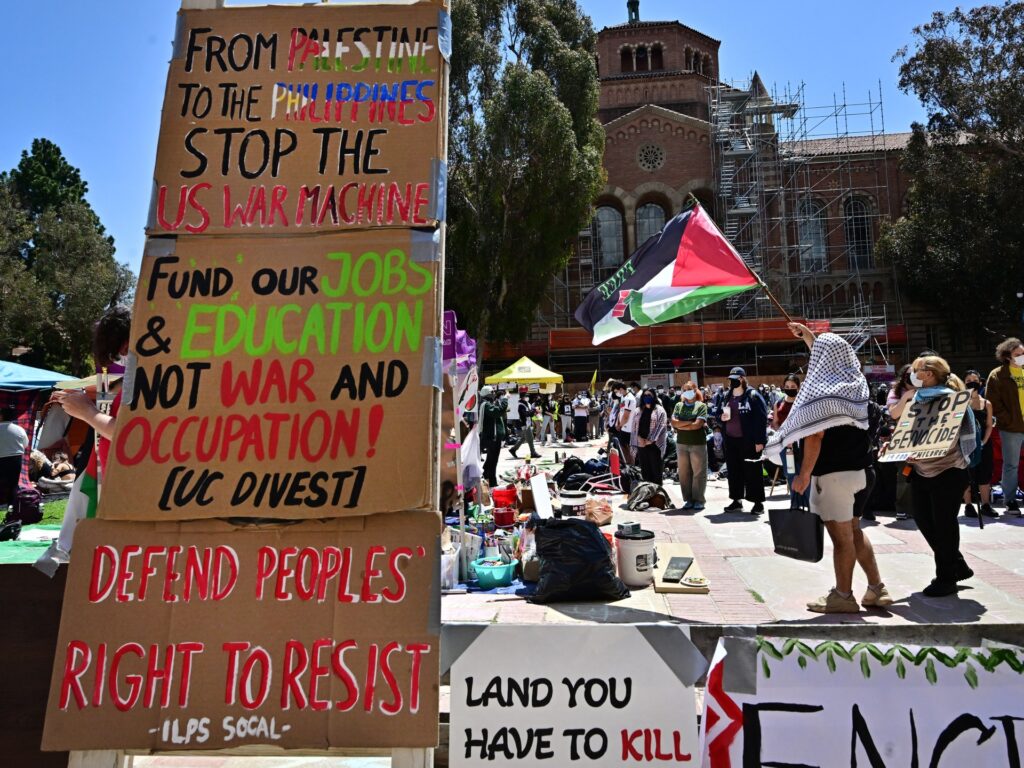
Students at US universities protesting against Israel’s war on Gaza have pledged to continue occupying school grounds despite growing efforts by university leaders and police to clear the demonstrations. As the protests that began at Columbia University in New York spread outside the United States, demonstrators nationwide are demanding that schools slash financial ties to Israel and divest from companies they say are enabling Israel’s nearly seven-month war on Gaza that has killed at least 34,388 people and 77,437 others. Decisions to call in law enforcement to remove protesters have led to hundreds of arrests in various universities. They have also prompted faculty members at California, Georgia and Texas universities to initiate or pass largely symbolic votes of no confidence in their leadership. But the tensions pile pressure on school officials, who are already scrambling to resolve the protests with graduation ceremonies set for next month. Adblock test (Why?)
Pro-Palestine student protests spread in second week of demonstrations
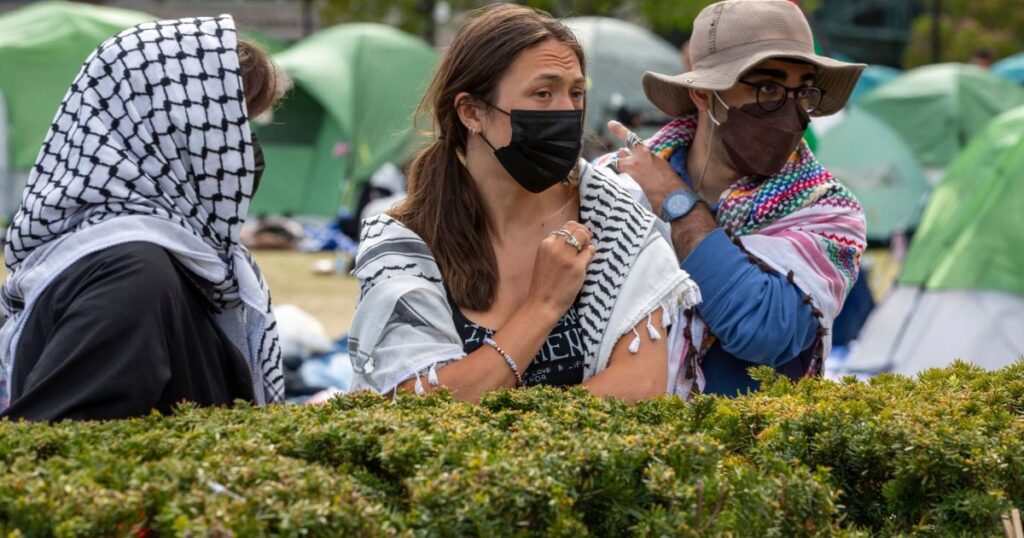
Pro-Palestinian demonstrations continue in universities across the United States, as they also spread to schools in Europe and Australia. In the second week of protests calling for a ceasefire in Israel’s war on Gaza, which has killed more than 34,000 Palestinians, thousands of students are calling on dozens of universities to divest from Israel. Some universities have been forced to cancel their graduation ceremonies, while others have seen entire buildings occupied by protesting students. One of the latest to join the movement is The City University of New York (CUNY), where hundreds of students have set up an encampment on campus with banners with slogans like “No More Investment in Apartheid”. Gabby Aossey, a student organiser at the CUNY protest told Al Jazeera the mobilisation of young pro-Palestinian people in the US is “beautiful to see”. “Young people are really starting to show up and demand that schools are held accountable for their relationship with the Israeli colonisation,” Aossey said. Across the US, university leaders have tried, and largely failed, to quell the demonstrations. The police have intervened violently, with videos emerging from different states showing hundreds of students – and even faculty members – being forcefully arrested. Early on Saturday, police in riot gear cleared an encampment on the campus of Northeastern University in Boston. Several dozen students shouted and booed at them from a distance, but the scene was otherwise not confrontational. The school said in a statement that the demonstration, which began two days ago, had become “infiltrated by professional organisers” with no affiliation to the school and protesters had used anti-Semitic slurs. “We cannot tolerate this kind of hate on our campus,” the statement posted on the social media platform X said. At Columbia University, where more than 100 pro-Palestinian activists were arrested by armed police officers on campus about a week ago, university leaders said in a statement on Friday that if the university calls the New York Police Department again, it would “further inflame what is happening on campus”. Some university leaders and state officials have strongly condemned the protests, calling them “anti-Semitic”. Demonstrators reject the accusation, with many Jewish activists and some Orthodox Jews joining the ranks. “As a child of Holocaust survivors, it disturbs me to my core to see my own people perpetrating something that we’ve been through,” Jewish antiwar protester Sam Koprak told Al Jazeera at a campus gathering. ‘End complicity with genocide’ The protests, which have sprouted all around the globe in the near seven-month period since the start of the war on Gaza, continue to spread this week outside the US as well. In Berlin, activists set up a camp in front of parliament to demand the German government stop exporting arms to Israel. At the renowned Sciences Po university in the French capital Paris, protesters on Friday blockaded a central campus building, forcing classes to be held online. The latest pro-Palestine rally in Sweden on Saturday saw people marching in the streets to chants of “Free Palestine” and “Boycott Israel”. Hundreds gathered on Saturday afternoon in central London in solidarity with Palestinians, with a smaller group organising a pro-Israel event. “People are gathering here on Parliament Square just outside the houses of parliament for the latest in a series of very major protests in the heart of London,” said Al Jazeera’s Harry Fawcett, reporting from London. Ben Jamal, director of the Palestine Solidarity Campaign, an organiser of the march, said he expected hundreds of thousands to attend from across the United Kingdom. “Once again, we are delivering a double message. One is to the Palestinian people, a message of solidarity. We see you, we hear you, we stand with you,” he said. The second message, Jamal said, is addressed to the British political establishment “to end their complicity with Israel’s genocide against Palestinian people”. Jamal dismissed critics saying that protests have been anti-Semitic. “This tactic of conflating anti-Semitism with legitimate criticism of the State of Israel is a very familiar one, and is used globally by Israel to silence those who are advocating for Palestinian rights,” he said. Meanwhile, Rina Shah, a Washington-based political strategist and former senior congressional aide, said protests in US universities are a display of democracy in action, a welcome sight in an election year marked by concerns of voter apathy chiefly due to Israel’s war on Gaza. “So when I see a movement like this of students taking peaceful, non-violent action and expressing their concern about the US government backing of Israel, of where our tax money is going, I think that’s extremely healthy,” she told Al Jazeera. “These students are out there concerned about America’s role in backing [Israeli Prime Minister] Benjamin Netanyahu. On the one hand, we are supplying weapons and funds to do what he wants to do in Gaza, while on the other we are sending humanitarian aid to Gaza. This is the hypocrisy these students are concerned about.” Adblock test (Why?)
Key takeaways from fourth day of testimony in Trump’s hush money trial
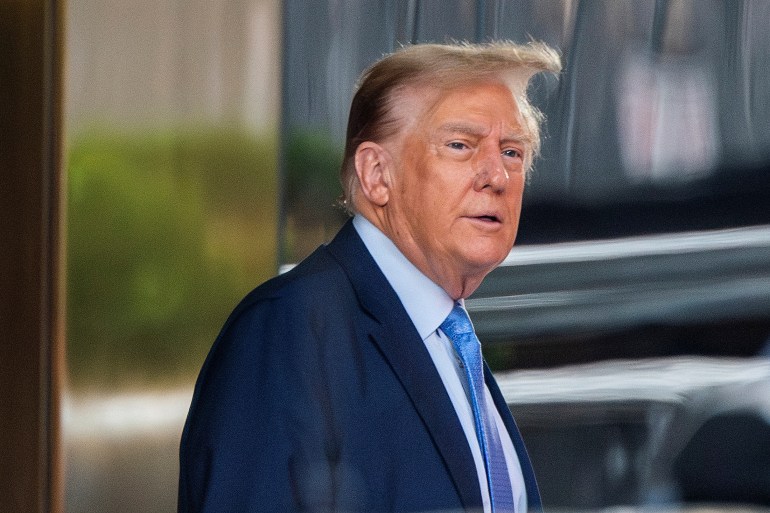
The fourth day of testimony in former United States President Donald Trump’s New York hush money trial has concluded, with former National Enquirer publisher David Pecker facing several hours of cross-examination by Trump’s legal team. Pecker answered more questions on Friday about what he has testified was a “catch-and-kill” scheme to suppress damaging information about Trump in the lead-up to the 2016 US presidential elections. The former president has been charged with 34 felony counts of falsifying business documents in connection to payments made to adult film star Stormy Daniels. Trump, the presumptive 2024 Republican candidate, is accused of mislabelling reimbursements made to his former lawyer Michael Cohen, who paid Daniels $130,000 in exchange for her silence over an alleged affair. Trump has denied that affair took place. But prosecutors have said the ex-president’s alleged misdeeds were part of a larger criminal scheme to influence the 2016 vote, which Trump won over Hillary Clinton. Friday’s hearing began with Trump lawyer Emil Bove continuing to cross-examine Pecker, one of the prosecution’s star witnesses. Two other witnesses also took the stand. Here are six takeaways from the day in court. Pecker grilled on editorial process, 2015 meeting Bove, Trump’s lawyer, on Friday asked the former National Enquirer publisher about a 2015 meeting, which he had previously testified about. Pecker had earlier said there was a discussion in that meeting about running articles about Bill and Hillary Clinton and Trump’s opponents in the Republican presidential primary. Pecker said the moves were good for the tabloid’s business. He added that the Enquirer ran negative stories about the Clintons before it began coordinating with the Trump campaign because those stories performed well. Bove also sought to show that much of the Enquirer’s negative coverage of Trump’s political opponents – which prosecutors had suggested was evidence of them being in cahoots – merely summarised news stories by other outlets. Pecker said recycling information from other outlets was cost-efficient and made business sense. Later, Bove also said the National Enquirer’s parent company – not Trump or Cohen, his then-lawyer – paid a former Trump Tower doorman $30,000 in 2015 for the rights to an unsubstantiated claim that Trump had fathered a child with an employee. Pecker testified earlier that the Enquirer thought the tale would make for a huge tabloid story if it were accurate, but eventually concluded the story was “1,000% untrue” and never ran it. Trump and the woman involved both have denied the allegations. Bove asked whether he would run the story if it were true. Pecker replied: “Yes.” Term ‘catch-and-kill’ not used in 2015 meeting Pecker also previously testified that he hatched a plan with Trump and Cohen in August 2015 for the National Enquirer to help Trump’s presidential campaign. But, under questioning by Trump’s lawyer on Friday, Pecker acknowledged there was no mention at that meeting of the term “catch-and-kill”, which describes the practice of tabloids purchasing the rights to story so they never see the light of day. Nor was there discussion at the meeting of any “financial dimension”, such as the National Enquirer paying people on Trump’s behalf for the rights to their stories, Pecker said. Karen McDougal deal The defence’s questioning then turned to a deal between the National Enquirer’s parent company, American Media Inc, and former Playboy model Karen McDougal. Bove sought to get at what both McDougal’s and the Enquirer’s objectives really were in making a $150,000 agreement in 2016. The deal gave American Media – where Pecker was CEO from 1999 to 2020 – exclusive rights to McDougal’s account of any relationship with “any then-married man”, a clause Pecker has testified was specifically about Trump. She claims they had an affair in 2006 and 2007; Trump denies it. The contract also called for McDougal to pose for magazine covers and to produce, with a ghostwriter’s help, columns and other content on fitness and aging for various American Media titles. Earlier this week, Pecker testified that the provision for content was essentially for a pact that was really about keeping McDougal’s story from becoming public and potentially influencing Trump’s chances at the presidency. But on Friday, the ex-publisher said that McDougal was looking to restart her career and that American Media had pitched itself in a video conference as a venue able to help her. The company indeed ended up running more than 65 stories in her name, he said. When American Media signed its agreement with her, “You believed it had a legitimate business purpose, correct?”, Bove asked Pecker. “I did,” the former publisher said. Rhona Graff, who started working for Trump in 1987 and left the Trump Organization in April 2021, was the next witness to testify after Pecker. She has been described as Trump’s gatekeeper and right hand. Graff testified on Friday that she once saw Daniels at Trump Tower before he ran for president. She said she heard Trump say he was interested in casting her on The Apprentice, the reality TV show he hosted. Graff also said contact information for Daniels and McDougal was maintained in the Trump Organization’s Outlook computer system. “I never had the same day twice. It was a very stimulating, exciting, fascinating place to be,” she said of her 34 years working for the Trump Organization. Graff also described Trump as a “fair” and “respectful” boss. Trial hears from third witness Gary Farro, who works at Flagstar Bank as a private client adviser and was previously at First Republic Bank, which was used by Cohen, was the trial’s third witness. Farro testified on Friday that Cohen had several personal accounts at First Republic when Farro took over the client relationship in 2015. He also detailed the banking arrangement he had with Cohen, according to US media reports of his testimony. “I was told that I was selected because of my knowledge and because of my ability to handle individuals that may be a little challenging,” Farro said. “Frankly, I didn’t find him that difficult,” he added. Trump exits Trump Tower to attend
Jobless engineers, MBAs: The hidden army of Indian election ‘consultants’
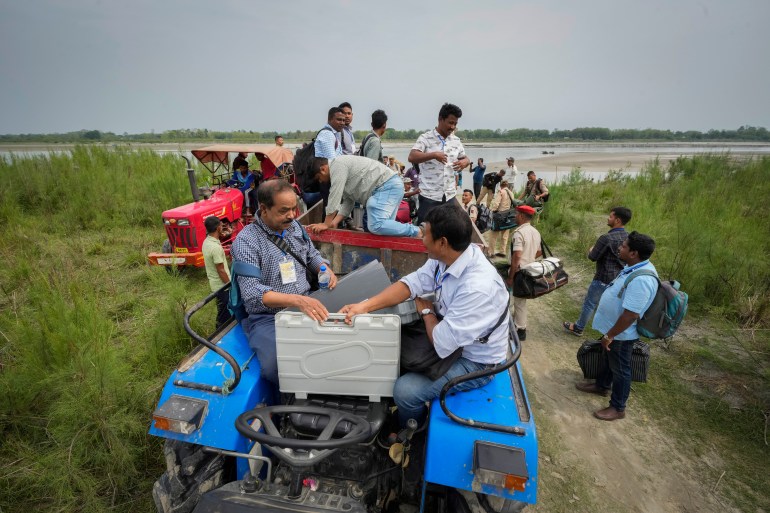
“How many tennis balls can fit in a passenger plane?” Neeraj, a young economics graduate from the premier Indian Institute of Technology (IIT), was given 15 minutes to solve this question during his interview rounds at Nation With Namo (NwN), one of the in-house political consultancies of India’s governing Bharatiya Janata Party (BJP). He got the calculation right and joined a small team of graduates from India’s top universities who were dispatched to the eastern state of Tripura to conduct surveys, collect and analyse voter data for elections that were due in February last year. Their job was to identify who was not voting for the BJP, separate them into demographic cohorts – age, gender, caste, tribe, religion – find a common concern, issue or fear and strategise how to exploit that in the BJP’s favour. And they were to do all this while staying under the radar. “All of us who go through the Joint Entrance Examination (JEE) are good at solving problems,” said Neeraj, who asked for his name to be changed as he is not authorised to speak to the media. Admission to most of India’s top government-funded engineering, law and management colleges is through all-India exams. Millions of students take these exams, including the JEE for admission to 23 IITs, but only 2-3 percent make it to the premier institutes. Neeraj is one of few who made it, and is now in the league of hundreds of graduates from India’s top engineering and business schools who have in recent years joined political campaigns, usually for short stints while they wait for lucrative corporate job offers. An engineering degree from an IIT, whose alumni include Google CEO Sundar Pichai and former Twitter CEO Parag Agarwal, or an MBA from the Indian Institute of Management, the alma mater of PepsiCo’s ex-CEO Indra Nooyi, are markers of excellence and used to be a guarantee of a good job. But that promise has been rescinded with campus recruitment drying up over the past few years and layoffs, especially at tech firms, surging. The ability of these graduates – readily available – to manage and analyse enormous amounts of voter data makes them a valuable resource for political consultancies. The latter’s market size, estimated to be about $300m, is set to grow with individual candidates and national and regional parties looking for their expertise. To attract graduates from these premier institutes, most political consultancies offer fellowships, and though the jobs are contractual and short-term, usually from three months to three years, they pay well, come with perks and the promise that their work will “shape the future”. “There’s also the attraction of being close to power centres in some way,” said Ankit Lal, a computer engineer who runs a political consultancy firm, Politique Advisors, in Delhi. In the small state of Tripura, where the BJP was seeking re-election, voter data culled and analysed by Neeraj and others in the NwN team showed that the party was in a comfortable position in the north. But in Amarpur constituency, home to a few tribal areas including Chabimura, voters were leaning towards other parties. From Tripura’s capital Agartala, the long, winding route to Chabimura – first by road and then by motor boat on the Gomati River — passes through moss-covered hills with 16th-century sculptures, legends about pythons guarding treasures in caves, and years of poverty and neglect. For centuries, members of the Jamatia tribe, who speak Kokborok, a Tibetian-Burmese language, have lived in this remote, rain-fed area known as the “Amazon of Tripura”. In Chabimura, Neeraj’s field survey found a cohort and a solution. There were a few dominant Jamatia families, and impressing them, he figured, would have a trickle-down effect on tribal voters in the area. “They are quite poor and all they wanted were boundary walls around their houses,” Neeraj said. Two to three days after he made a recommendation to the BJP’s state leadership, four-foot high mud boundary walls were constructed with great urgency about 80 houses belonging to members of the Jamatia tribe. For added incentive, pairs of male-female goats were herded inside these boundary walls, which also became a canvas for party propaganda. Portraits of Prime Minister Narendra Modi, the state’s chief minister and the local candidate were painted on them. BJP’s Tripura spokesperson did not respond to Al Jazeera’s request for comment. The BJP, which had been in power in the state for five years, could have had these walls constructed at any time. But in a country where 800 million people survive on free or subsidised food grains, a pair of goats and a boundary wall are life-changing favours that earn gratitude and votes. “In politics, vote is the only currency. Everyone has just one vote across the country. How each person spends that vote, all our effort goes into that,” another IITan, who has also worked for NwN, told Al Jazeera on the condition of anonymity. Bribing voters is a crime and a poll violation that can lead to a prison sentence and the election being nullified. But with the party hiring a vendor for the construction and not being directly involved, there’s deniability and proving the charge remains a matter of investigation. The BJP candidate won the Amarpur seat, beating his nearest rival from the Communist Party of India (Marxist) by a narrow margin. In India, polling officials carry electronic voting machines escorted by security personnel on a tractor [File: Anupam Nath/AP] Months before India began the gargantuan, 44-day exercise of conducting national general elections from April 19, armies of tech-savvy IITians, MBAs, lawyers and researchers have been busy collating, studying and analysing voter data to decide on campaign strategy, issues to highlight, where to deliver gifts and polarising speeches while pushing a glut of fake news on social media and WhatsApp aiming to convince voters for their clients. These backroom boys of Indian democracy, who have no skin in the game apart from the pay package and the thrill of a win,
Generation gap: What student protests say about US politics, Israel support
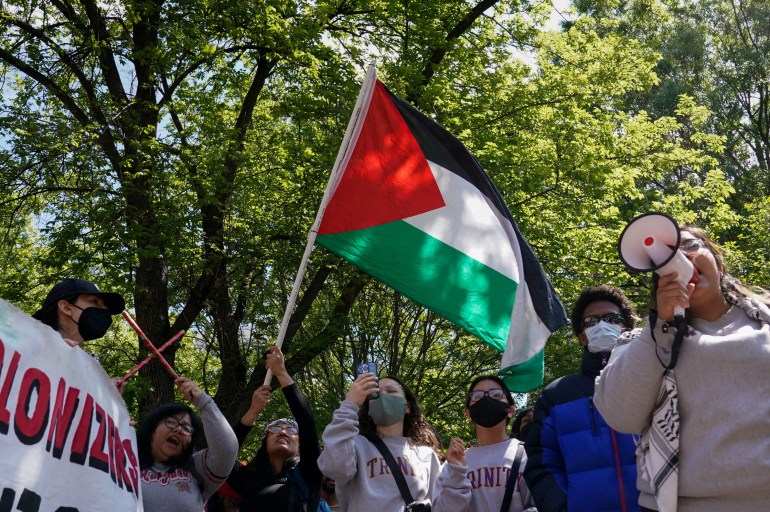
Washington, DC – A Gaza-focused campus protest movement in the United States has highlighted a generational divide on Israel, experts say, with young people’s willingness to challenge politicians and college administrators on display nationwide. The opinion gap – with younger Americans generally more supportive of Palestinians than the generations that came before them – poses a risk to 81-year-old Democratic President Joe Biden’s re-election chances, they argue. It could also threaten the bipartisan backing that Israel enjoys in Washington. “We’re already seeing evidence of a generation divide on Israel, and that is going to be a long-term issue for the Democratic Party,” said Omar Wasow, assistant professor of political science at the University of California, Berkeley. “These protests accelerate that generation gap,” Wasow told Al Jazeera. Students at Columbia University in New York set up a Palestine solidarity encampment last week, and they have since faced arrests and other disciplinary measures after the college administration called on police to clear the protest. Yet, despite the crackdown, similar encampments have sprung up across the US, as well as in other countries. Footage of students, professors and journalists being violently detained by officers on various campuses spurred outrage but has done little to slow the momentum of the protests, which have continued to spread. ‘Inflection moment’ The students are largely demanding that their universities disclose their investments and withdraw any funds from weapons manufacturers and firms involved with the Israeli military. Politicians from both major US parties, as well as the White House and pro-Israel groups, have accused the students of fuelling anti-Semitism – allegations that protesters vehemently deny. Eman Abdelhadi, a sociologist at the University of Chicago, said younger people are growing increasingly frustrated with the status quo on domestic and foreign policy issues. “I think there’s a real disaffection with the older generation, but more importantly with the system that they’re running,” said Abdelhadi. She added that the protests mark an “inflexion moment” in US public opinion more broadly. “In American history in general, usually the big shifts in public opinion have either coincided with or been triggered by large student movements,” Abdelhadi told Al Jazeera. She said campus activism can be the basis of political change. “There’s a sort of sense that this is the future.” People demonstrate at a protest near an encampment in support of Palestinians in Gaza at George Washington University in Washington, DC, April 26 [Elizabeth Frantz/Reuters] Biden’s woes For years, public opinion polls in the US suggest that younger people are more likely to be sympathetic towards Palestinians and critical of Israel. But Americans overall have grown more critical of Israel’s treatment of Palestinians, including in the ongoing war on Gaza. Multiple polls suggest that a majority of US respondents back a permanent ceasefire in the besieged Palestinian enclave, where Israel has killed more than 34,000 Palestinians since the conflict broke out on October 7. But Biden has maintained staunch support for Israel, the US’s top Middle East ally, amid the war. The 81-year-old president’s stance could be politically costly, as Biden faces a tough re-election bid in a November election that is expected to pit him against his Republican predecessor, Donald Trump. Polls suggest that Biden will need to appeal to his Democratic Party base, which is not as united in support of Israel as the Republican Party. Angus Johnston, a historian of US student activism, explained that the generational divide on Israel is especially pronounced among Democrats. “On a national level, we have seen this for a while as a disconnect between the values of young voters and most Democratic politicians,” Johnston told Al Jazeera. “And what we’re seeing now is a similar disconnect between young people on campus and many of the administrators who run these campuses, along with alumni and donors.” Abdelhadi, the sociologist, added that the heavy-handed law enforcement approach to the Gaza solidarity protests has undercut Democrats’s argument that electing Biden would protect the nation from Trump, whom they accuse of authoritarianism. “The reality is the Democrats have been telling us that young people need to save democracy and that people of colour need to save democracy and that any quibbles with this current administration need to be put aside in order to save democracy,” she told Al Jazeera. “But where’s the democracy when you have state troopers beating up students and faculty for protesting, and the White House saying nothing about that?” Wasow also said the protests and crackdown against them could add to the apathy towards Biden. “The Democrats can’t really afford to give people more reasons to vote against Biden, and this actually becomes one.” Policy change The student protesters are not getting involved in US partisan politics, however. They instead have stressed that their demands aim to help protect the human rights of Palestinians. So can the demonstrations help bring about changes to US policy and achieve their divestment demands? Johnston, the historian, said it is unlikely that US colleges will divest from large firms and the defence industry in the short term, but the call for transparency in their investments is reasonable. He added that long-term change is possible, but it will not come overnight. “We have seen over and over again that student organising does change policy, not always quickly, and not always in the ways that the students would have hoped,” Johnston said. “But we do see that when student organising rises to a certain level of intensity, it can have a significant effect.” For example, he said college activism against apartheid in South Africa began in the 1950s and grew over the years. “I think that there is no question that the anti-apartheid campus organising of the 1980s was a significant piece of what shifted American popular opinion and political opinion on the South African regime,” he said. Wasow, who studied the 1960s civil rights protests, also said demonstrations could shift public opinion, help grow political coalitions around a cause, and build civic capacity to advance an issue. “If
Ecuador spat: Trotsky to the shah, Mexico’s long history as home to exiles
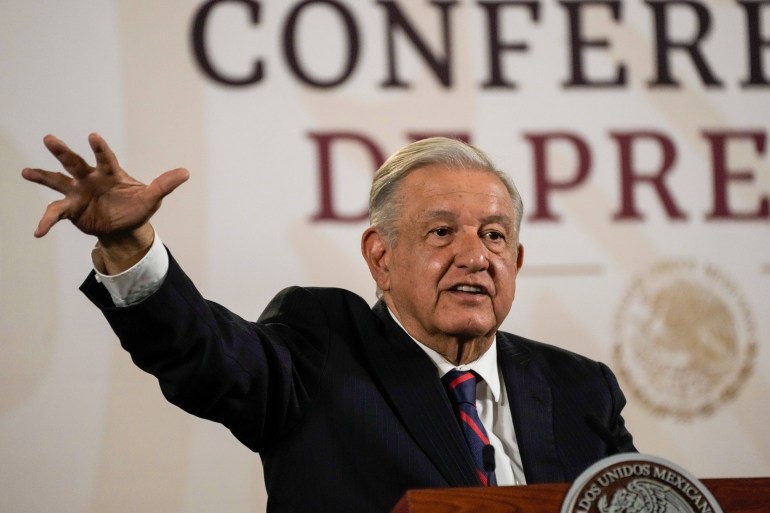
With rifles, riot shields and helmets, the Ecuadorian police scaled the white concrete gate, burst through the embassy doors and arrested Jorge Glas, a former vice president accused of corruption. The April 5 raid on Mexico’s embassy in Quito sparked a diplomatic firestorm. Experts warned the police raid was a clear violation of international laws protecting embassies. But in the lead-up to the raid, Mexico tried to invoke another safeguard enshrined in international law: the right to asylum. Mexican President Andres Manuel Lopez Obrador, known by the initials AMLO, had announced on the same day that Glas would be granted political asylum in his country after more than three months of sheltering in its embassy. But Glas was hardly the first politician Lopez Obrador had offered asylum to. In fact, experts say Mexico has a long and cherished history of granting asylum to figures fleeing persecution – from communist leaders to embattled presidents. Mexican President Andres Manuel Lopez Obrador has offered asylum to several embattled leftist leaders [Marco Ugarte/AP Photo] Why did Lopez Obrador offer Glas asylum? Throughout his tenure as Mexico’s president, Lopez Obrador has championed that tradition, offering asylum to fellow left-leaning politicians who face prosecution or turmoil at home. In most cases, he portrays them as victims of political persecution and Mexico as a safe haven. Experts and historians say Lopez Obrador uses asylum as a tool to express affinity for politicians who share a similar worldview – and to bolster his credentials as a standard-bearer for Latin America’s political left. “Lopez Obrador has a very simple framework for understanding the political divide in Latin America with conservatives on one side and then those who are closer to what he sees as the historical mission of his government on the other,” Pablo Piccato, a professor of Mexican history at Columbia University in New York, tells Al Jazeera. “He sees things in this way with the conservative forces of reaction against the progressive forces of the people.” What is political asylum anyway? Political asylum, however, is a very specific legal category. The Universal Declaration of Human Rights, adopted in 1948, lays out a right “to seek and to enjoy in other countries asylum from persecution”. Political views are one of only a handful of protected categories under international asylum law alongside race, religion, nationality and membership in a specific social group. Applicants for asylum must make the case that their involvement in one of those categories has put them at risk of persecution or some other human rights violation – and that there is no protection to be had in their home country. Former Vice President Jorge Glas of Ecuador sought refuge in Mexico’s embassy in Quito [File: Dolores Ochoa/AP Photo] Who else has Lopez Obrador offered asylum to? Glas is only the latest high-profile asylum case that Lopez Obrador has waded into. For instance, in 2019, Lopez Obrador extended asylum to former Bolivian President Evo Morales after he was removed from office by right-wing forces. Many characterised Morales’s exit from office as a coup, and Morales himself said his life was at risk. The Mexican leader also rallied behind former Peruvian President Pedro Castillo after he was impeached and arrested in December 2022. In the face of a third impeachment attempt against his presidency, Castillo appeared on TV and announced he would dissolve Congress. The move was widely denounced as illegal, and as Castillo tried to flee, he was detained on charges of rebellion. Lopez Obrador, however, repeatedly tried to offer the jailed Castillo and his family political asylum, spurring tensions with Peru’s current government. How have other leaders reacted? The Mexican president’s use of asylum as a political tool has irked conservative leaders across Latin America, including his Ecuadorian counterpart, Daniel Noboa. In Glas’s case, tensions between Ecuador and Mexico had been simmering for months. Glas had been holed up in the Mexican embassy since December after receiving two lengthy prison sentences for his participation in a bribery scandal. Noboa, a right-leaning politician, had embraced a law and order image amid an increase in violent crime at home. He insisted that he would not permit “any criminal to stay free” – not even Glas. As Mexico announced political asylum for Glas, police started to surround the embassy. Noboa has since insisted that his government did nothing wrong and he was simply exercising Ecuador’s sovereignty. He has also disputed whether Glas was eligible for political asylum under international law. Ecuadorean President Daniel Noboa, centre, has denied wrongdoing in the embassy raid [Dolores Ochoa/AP Photo] What is Mexico’s history with asylum? Mexico’s reputation as a place of refuge for those fleeing political persecution stretches back decades, well beyond the current spat with Ecuador. It has even become a point of pride in the history of the country’s foreign policy: Those seeking shelter in Mexico have often come out of the Western Hemisphere’s revolutionary or leftist traditions. Jose Marti, the foremost figure in Cuba’s struggle for independence, spent several years in Mexico in the 1870s after being expelled from Cuba, then under Spanish rule. The exiled Indian revolutionary Manabendra Nath Roy fled to Mexico to evade authorities in the United States after being arrested for his anti-colonial activities in India, where he helped found the Communist Party. He would go on to play a role in the founding of Mexico’s own Communist Party in 1917. During the 1930s, leftist President Lazaro Cardenas offered asylum to Leon Trotsky, a central figure in the Russian Revolution who later fled threats under the government of Joseph Stalin. He was eventually assassinated in Mexico City in 1940. Cardenas also opened Mexico’s doors to people fleeing the Spanish Civil War. Mexico was one of the only countries at the time to send assistance to Spain’s democratically elected and left-leaning Republican government, which was locked in battle against the forces of the far-right General Francisco Franco. That put Mexico at odds with fascist leaders like Benito Mussolini in Italy and Adolf Hitler in Germany,
Gaza baby girl saved from dead mother’s womb dies in incubator
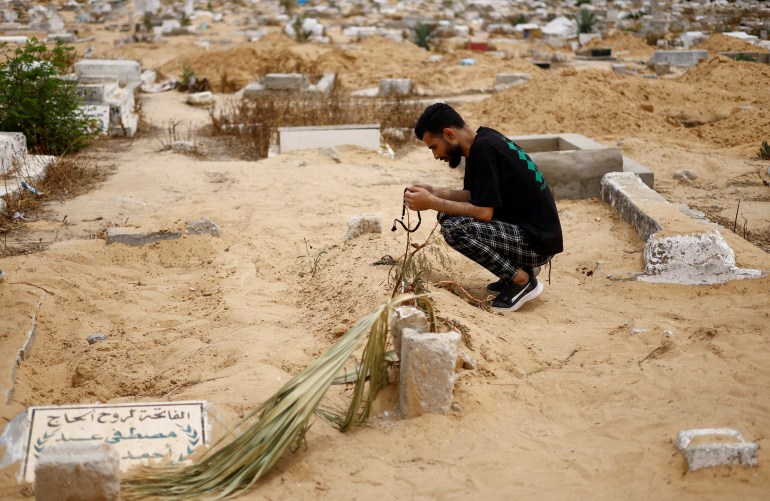
Sabreen al-Rouh Jouda dies just days after her mother, father and sister were killed in Israel attack on Rafah. A premature Palestinian baby, who was saved from her mother’s womb after she was killed in an Israeli attack in the Gaza Strip, has died after days in an incubator. Sabreen al-Rouh Jouda died in a Gaza hospital on Thursday after her health deteriorated and medical teams were unable to save her, said her uncle, Rami al-Sheikh Jouda. Dr Mohammad Salama, head of the emergency neonatal unit at Emirati Hospital in the southern Gaza city of Rafah, who was caring for the baby girl, also confirmed her death on Friday. “I and other doctors tried to save her, but she died. For me personally, it was a very difficult and painful day,” Salama told the Reuters news agency. The girl’s mother, Sabreen al-Sakani, was rushed to hospital after an Israeli air strike hit the family’s home in Rafah on Saturday. The girl, who was named Sabreen after her mother, was rescued through a Caesarean section after her mother succumbed to her injuries. Al-Sakani, who was 30 weeks pregnant, was killed along with her husband and a young daughter. The Israeli military said it was targeting Hamas fighters and infrastructure in the attack, which predominantly killed women and children. Weighing just 1.4kg (3.1 pounds), the baby was in severe respiratory distress because she was born prematurely. She was being cared for in an incubator in a neonatal intensive care unit. “She was born while her respiratory system wasn’t mature, and her immune system was very weak and that is what led to her death. She joined her family as a martyr,” said Salama, the doctor. The baby girl’s uncle told The Associated Press that she was buried next to her father on Thursday. “We were attached to this baby in a crazy way,” he said, speaking near her grave in a cemetery in Rafah. “God had taken something from us but given us something in return”, said the uncle, with the baby surviving after her family died. “But [now] he has taken them all. My brother’s family is completely wiped out. It’s been deleted from the civil registry. There is no trace of him left behind.” The baby girl’s uncle crouches next to her grave in Rafah in the southern Gaza Strip, April 26 [Mohammed Salem/Reuters] The baby is among more than 14,000 children who have been killed in Israeli attacks on Gaza since the war began on October 7. More than 34,300 Palestinians across the besieged Palestinian enclave have been killed. Despite international calls to end the conflict, Israeli leaders have said they plan to move ahead with a ground assault on Rafah. About 1.5 million Palestinians are sheltering in the southern city, which was previously designated as a “safe zone”. Adblock test (Why?)
Are US campus protests against Israel’s war on Gaza going global?
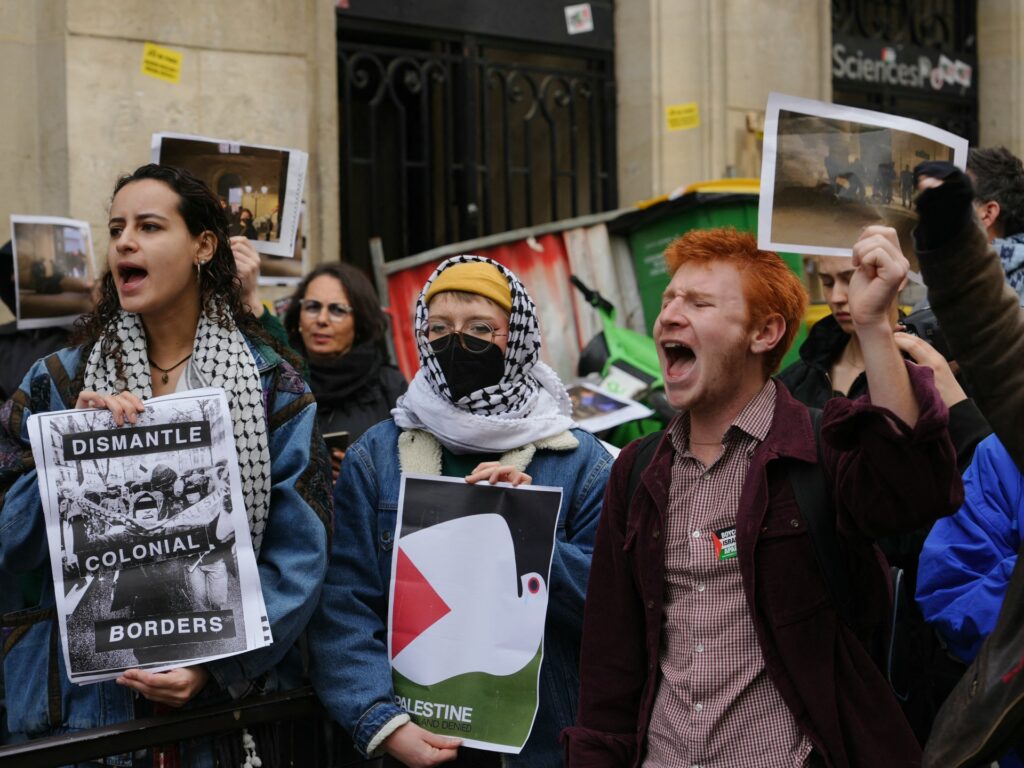
EXPLAINER From France to Australia, university students are part of pro-Palestine protests as Columbia students continue encampments. Clashes between students and police officers have been reported all over the United States during intensifying university protests. What started as the Gaza solidarity encampment at Columbia University, where students are camping inside campus to push their institute to divest from companies linked to Israel, has since spread to campuses in California, Texas and other states. Now, more than 20 universities in the US are protesting against Israel’s war on Gaza, where Israel’s military offensive has killed more than 34,000 people and its blockade has caused starvation. But the protests are not limited to the US, students worldwide have been demonstrating in support of Gaza since the outbreak of the war on October 7. Following the Columbia encampments, the protests have further spread to universities from France to Australia. Here is all you need to know about student protests for Gaza outside of the US: Which global universities are holding pro-Palestine protests? In Paris, France, Sorbonne University students have taken to the streets. Additionally, the Palestine Committee from Sciences Po, is organising a protest where students set up about 10 tents on Wednesday. Despite a police crackdown, the protesters regathered on Thursday. In Australia, students from the University of Sydney set up pro-Palestine encampments on Tuesday, and they were continuing to protest on Friday. Also, University of Melbourne students pitched tents on the south lawn of their main campus on Thursday. In Italy, Rome, students from Sapienza University organised demonstrations, sit-ins and hunger strikes on April 17 and April 18. Since April 19 night, students from the University of Warwick’s group Warwick Stands With Palestine have occupied the campus piazza located in England, United Kingdom. In Leicester, England, a protest broke out on Monday in which students from the University of Leicester Palestine Society also participated. Last month, students from the University of Leeds occupied a campus building in protest against the university’s involvement with Israel. What are the demands of student protesters outside the US? Hicham, a student protesting at Sciences Po, which is also called the Paris Institute of Political Studies, told Al Jazeera, “We have a few demands but one of them is to start investigating all of the ties they [Sciences Po] have with the state of Israel, which [are] academic and financial”. He added that it has become “extremely hard” to talk about Palestine in France due to the way police respond. The organisers additionally want Sciences Po to condemn Israel’s actions. Sorbonne students are calling on the French government to help Palestinians. The University of Sydney students are demanding that their institute cut ties with Israeli universities and arms manufacturers, the Sydney Morning Herald reported. The Warwick students have demanded that the university divest from companies that they have identified are funding “genocide” perpetrated by Israel, Warwick’s student-run newspaper, The Boar, reported. The Boar quoted an unnamed student protester saying that, while the US protests had invigorated them, they were planning to take action regardless. The protest in Leicester on Monday was outside the Elbit Systems UK drone factory, calling for the factory’s shutdown. The student protesters at Leeds last month demanded the suspension of Jewish chaplain Zecharia Deutsch who served in the Israeli army during the war on Gaza. Is there a police crackdown on pro-Palestine protesters outside the US? On Wednesday, police broke up the Sciences Po demonstration after the institute made “numerous attempts” to evacuate the students peacefully, AFP reported. The institute’s Palestine Committee released a statement on Thursday saying the protesters were “carried out of the school by more than 50 members of the security forces,” adding that “around 100” police officers were “also waiting for them outside”. Hicham said that he and his fellow students had been occupying their school for three days. “We went to one building, they [the university] called the cops on us, we had to get out, so we went to the main historical building,” he said. “But I think the more repression happens, the more people are mobilising,” he said. “We were maybe 300 people before, [but] now we’re 600.” The students at Sorbonne were also surrounded by riot police, as shown in an Al Jazeera video from Thursday. “This will continue as long as we don’t have an open and serious conversation about the issue,” a student from Sorbonne University told Al Jazeera. Adblock test (Why?)
Russia-Ukraine war: List of key events, day 792
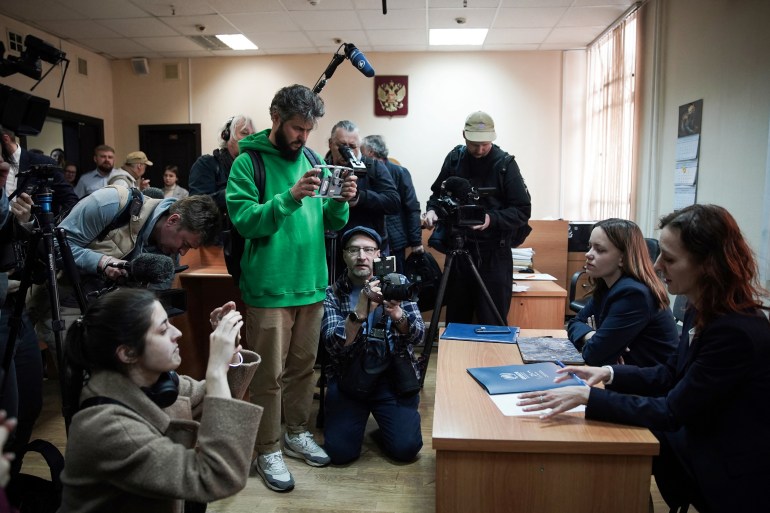
As the war enters its 792nd day, these are the main developments. Here is the situation on Friday, April 26, 2024. Fighting Politics and diplomacy NATO Secretary-General Jens Stoltenberg said China must stop supporting Russia’s war in Ukraine if it wants to enjoy better relations with the West. Beijing says it is neutral in the war. Stoltenberg, however, said it was helping prop up Moscow’s war, noting that Russia imported 90 percent of its microelectronics from China, which were then used in the production of missiles, tanks and aircraft. “China says it wants good relations with the West. At the same time, Beijing continues to fuel the largest armed conflict in Europe since World War II. They cannot have it both ways,” he said. Alexandra Bayeva, left, and Katerina Tertukhina, Oleg Orlov’s lawyers speak to the press after his hearing was postponed until late next month [Tatyana Makeyeva/AFP] Russian President Vladimir Putin said he planned to visit China in May. He did not give a date. Chinese President Xi Jinping travelled to Moscow a year ago to meet Putin, and the two men met again on the sidelines of a Beijing forum last October when Xi said the “political mutual trust” between their countries was “continuously deepening”. Mykola Solsky, Ukraine’s agriculture minister, resigned amid a corruption investigation into his alleged involvement in the illegal acquisition of state-owned land worth $7m. A court is set to decide on Friday whether Solsky should be taken into custody. Leading Russian human rights group Memorial warned that the health of Oleg Orlov, its jailed 71-year-old head, was deteriorating. Orlov was sentenced in February to two and a half years in prison for “discrediting the armed forces” after he took part in antiwar demonstrations and published an article in which he said Russia had descended into fascism. Orlov had been due in court on Thursday, but the hearing was cancelled. The Security Services of Ukraine (SBU) said a husband and wife, who had been found guilty of treason for providing information to Russia that allowed its forces to launch a rocket strike on a hospital in the southern Kherson region, had been sentenced to 15 years. The SBU said it had also detained a former soldier whom it accused of helping Russia plot attacks in the northeastern Kharkiv region. The suspect, who faces up to eight years in prison, had tried to flee to Russian-held territory, it added. Russia jailed a 26-year-old Siberian man for 10 years on charges of state treason and “terrorism” over plans to join Russian units fighting for Ukraine. The man was detained as he was making his way to Ukraine, according to state news agency TASS. US Treasury Secretary Janet Yellen said a US proposal to use the interest derived from $300bn in frozen Russian assets to aid Ukraine was building support among Group of Seven (G7) countries wary about an outright asset seizure. Moscow said it might downgrade diplomatic ties with the United States if its frozen assets were seized. Poland and Lithuania could help return Ukrainians of military age back to Ukraine, the countries’ defence ministers said. Russian celebrity blogger and TV presenter Anastasia Ivleeva, whose “almost naked” party in Moscow caused outrage, was fined 50,000 roubles ($540) for “discrediting” the country’s armed forces by calling for peace in a social media post. Belarusian President Alexander Lukashenko said that the risk of military incidents along his country’s border with Ukraine was quite high. Lukashenko also said that “several dozen” Russian tactical nuclear weapons had been deployed in Belarus. Weapons US media outlet Politico reported the US could announce as soon as Friday a new $6bn weapons package for Ukraine. Two US officials, who spoke on condition of anonymity, said the package was likely to include Patriot air defence systems, artillery ammunition, drones, counter-drone weapons and air-to-air missiles for fighter planes. Russia brushed off the potential impact of Ukraine’s new long-range weaponry on the battlefield. Kremlin spokesman Dmitry Peskov insisted such weapons would “not change the outcome of the special military operation”, as Russia terms its invasion, and would “cause more problems for Ukraine itself”. Denmark’s government said it was adding 4.4 billion kroner ($630m) to its Ukraine military aid fund. The country is the fourth-largest donor of military aid to Ukraine since the start of Russia’s 2022 invasion, according to the German-based Kiel Institute for the World Economy. Adblock test (Why?)
White nationalist rally ‘nothing’ compared with Gaza protests, Trump claims
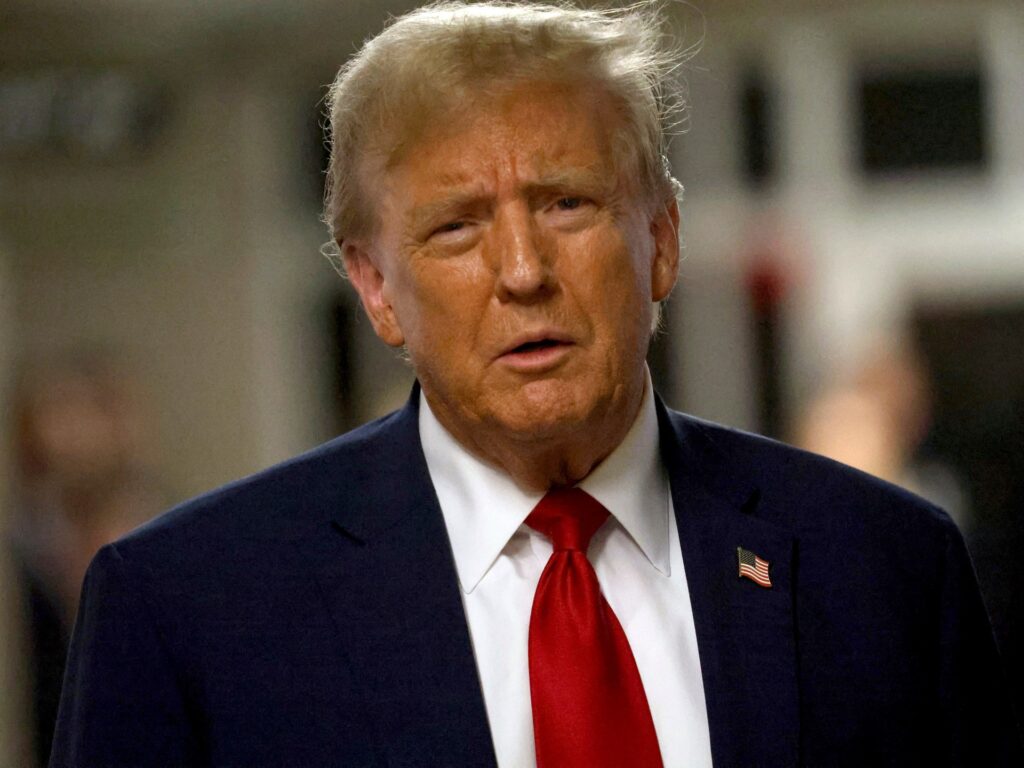
Former US president says Charlottesville rally was a ‘little peanut’ compared with pro-Palestinian student protests. Former United States President Donald Trump has claimed that pro-Palestinian protests on university campuses are more hateful than the infamous 2017 white nationalist rally in Charlottesville, Virginia. Speaking to reporters outside his hush-money trial in New York on Thursday, Trump said the Unite the Right rally was “nothing” compared with the hate being expressed at student demonstrations against the war in Gaza. “We’re having protests all over,” Trump said as he left the Manhattan courtroom where he is standing trial over alleged payments made to adult film star Stormy Daniels in the run-up to the 2016 presidential election. “Charlottesville was a little peanut, and it was nothing compared – and the hate wasn’t the kind of hate that you have here, this is tremendous hate,” Trump said. Trump’s comments follow a Truth Social post on Wednesday in which the Republican presidential contender described the Charlottesville rally as a “‘peanut’ compared to the riots and anti-Israel protests that are happening all over our Country.” The White House rebuked Trump over his comments. “Minimising the anti-Semitic and white supremacist poison displayed in Charlottesville is repugnant and divisive,” deputy press secretary Andrew Bates said in a statement. US President Joe Biden, who is expected to face off against Trump in November’s presidential election, has repeatedly invoked the Charlottesville rally as a decisive moment in his decision to run against Trump in 2020. During the event on August 11, 2017, white supremacists rallied against the removal of a statue of Confederate General Robert E Lee, chanting slogans including “You will not replace us!” and “Jews will not replace us!” A day later, James Alex Fields Jr, a self-identified white supremacist, deliberately drove his car into a crowd of counterprotesters near the rally site, killing Heather Heyer. Trump’s response to the rally, including saying that “both sides” were to blame, marked one of the most controversial moments of his presidency. There have been no comparable incidents of violence at the pro-Palestinian protests roiling multiple US universities, including George Washington University, Yale, New York University (NYU), Columbia University and the University of Texas. But reports of harassment and threats against Jewish students have prompted condemnation from officials including Biden, House Speaker Mike Johnson, New York City Mayor Eric Adams and Israeli Prime Minister Benjamin Netanyahu. Footage shared on social media last weekend appeared to show activists telling students to “go back to Poland” and that October 7 is “going to be every day for you” – referring to Hamas’s attacks on Israel in which 1,139 people were killed. Chabad at Columbia University, a chapter of an international Orthodox Jewish movement, also reported that protesters had told Jewish students, “You have no culture”, “All you do is colonise” and “Go back to Europe”. On Sunday, a group of student activists representing the protesters released a statement distancing themselves from “inflammatory individuals” and condemning “any form of hate or bigotry”. Adblock test (Why?)