

Top New York court overturns Harvey Weinstein’s 2020 rape conviction
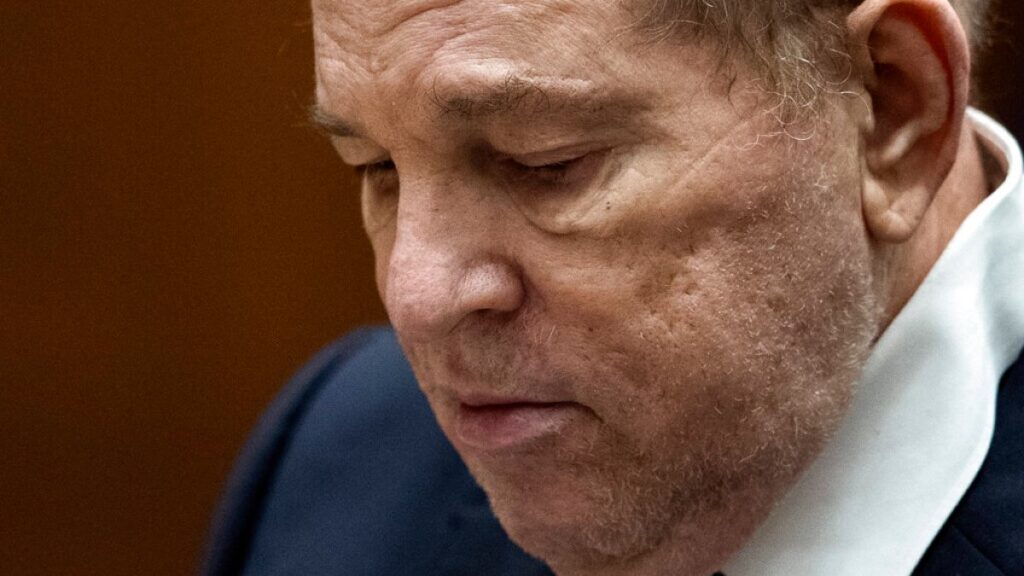
Defence and prosecution prepare for retrial of the once-powerful movie producer in a case that was a landmark for the #MeToo movement. New York’s highest court has overturned disgraced Hollywood producer Harvey Weinstein’s 2020 conviction for rape and sexual assault, highlighting the challenges of holding powerful men to account. The Court of Appeals found on Thursday that the landmark trial was unfair because the judge allowed women whose accusations were not part of the charges Weinstein faced to give evidence in court. Judge Jenny Rivera called for a new trial following the 4-3 decision. The ruling does not affect a separate 16-year rape sentence handed down in California, so the 72-year-old will remain behind bars. Bombshell allegations against the Oscar-winning producer broke into the open in 2017 and led to a flood of allegations against other powerful men as women fought back against sexual violence in what became known as the #MeToo movement. Three years later, a New York court found Weinstein guilty of sexually assaulting former production assistant Miriam Haley in 2006, and raping aspiring actress Jessica Mann in 2013. He was jailed for 23 years in a case that was considered a landmark for the #MeToo movement. Following his conviction, a civil trial awarded $17m to dozens of other women who had accused Weinstein of abuse. Many of his accusers condemned Thursday’s decision, with actress Ashley Judd calling it “an act of institutional betrayal”. The office of Manhattan District Attorney Alvin Bragg signalled it planned to put Weinstein back on trial. At a news conference, Weinstein’s lawyer Arthur Aidala called the ruling “a tremendous victory for every criminal defendant in the state of New York” and said Weinstein was ready to testify in his own defence at a retrial. “He’s been dying to tell his story from day one,” Aidala said. Weinstein has contended that any sexual activity was consensual. Any retrial would be overseen by a different judge. The term of the judge in the original trial, James Burke, expired at the end of 2022. In its ruling on Thursday, the state Court of Appeals said the trial court erred in allowing “testimony of uncharged, alleged prior sexual acts” and saying it would permit questions about Weinstein’s “bad behaviour” if he had testified. The producer did not take the stand in his own defence. In a stinging dissent, Judge Madeline Singas wrote that the court was continuing a “disturbing trend of overturning juries’ guilty verdicts in cases involving sexual violence”. She said the ruling came at “the expense and safety of women”. In another dissent, Judge Anthony Cannataro wrote that the decision was “endangering decades of progress in this incredibly complex and nuanced area of law” regarding sex crimes after centuries of “deeply patriarchal and misogynistic legal tradition”. The reversal of Weinstein’s conviction is the second major #MeToo setback in the last two years. The US Supreme Court refused to hear an appeal of a Pennsylvania court decision to throw out Bill Cosby’s sexual assault conviction. Adblock test (Why?)
Trump faces Supreme Court immunity test as ‘hush money’ trial continues
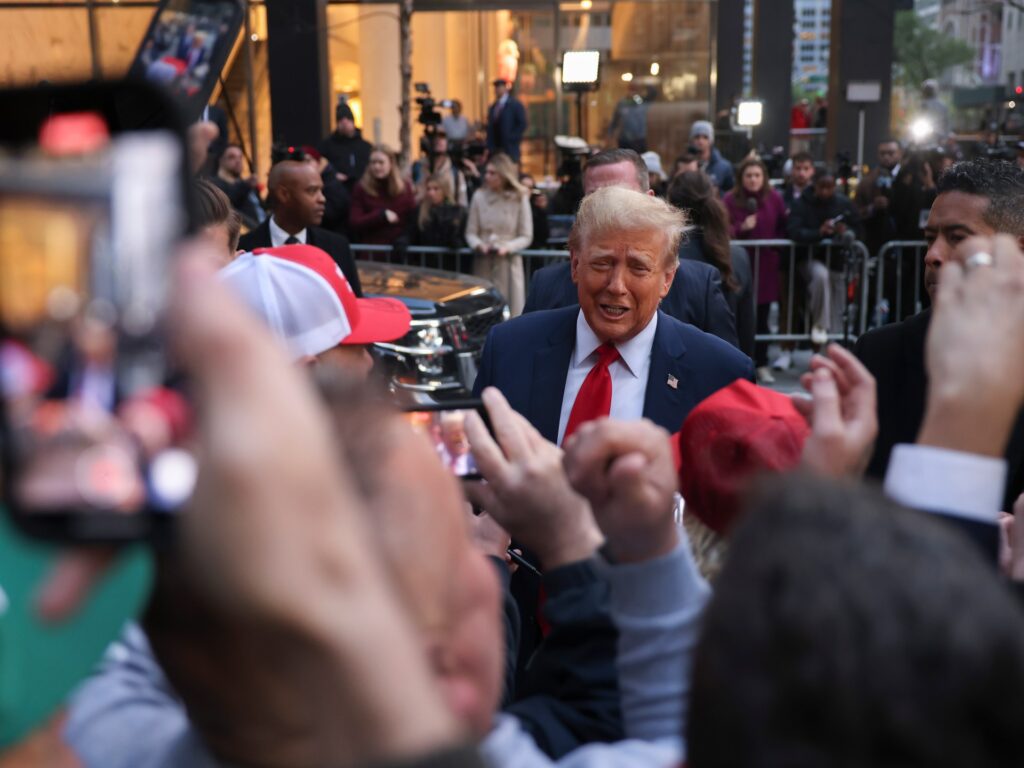
Former United States President Donald Trump faces legal tests in New York and Washington on Thursday in two separate cases that hang over his campaign to return to the Oval Office in the November election. In New York, the third day of witness testimony is to be held in a historic criminal trial, the first against a US president. Tabloid publisher David Pecker is again expected to take the stand as prosecutors seek to paint a picture of a coordinated effort to influence the 2016 presidential election through malfeasance. But Trump’s attention may be elsewhere with the US Supreme Court set to consider whether Trump can be prosecuted or claim immunity in a federal case related to his efforts to overturn the 2020 election results. Trump had requested permission to skip the New York trial for the day to sit in on the Supreme Court session, but the request was denied. “We have a big case today,” Trump told construction workers in Manhattan during a brief campaign stop before the day’s court proceedings. “The judge isn’t allowing me to go.” In New York, Trump has been charged with 34 felony counts of falsifying business documents related to payments made to adult film star Stormy Daniels. The falsification charges concern the alleged mislabelling of repayments that Trump made to his lawyer Michael Cohen, who had paid $130,000 to Daniels in return for her silence over an alleged sexual encounter with Trump. For the felony charges to stick, prosecutors must persuade the jury that the misrepresentations were done with the intent to commit or cover up another crime. In opening statements on Monday, prosecutors focused primarily on what they described as an illegal effort to “undermine the integrity” of the 2016 presidential election, in which Trump defeated former Secretary of State Hillary Rodham Clinton. Prosecutor Matthew Colangelo called the payments to Daniels “election fraud, pure and simple”. On Monday, prosecutors called their first witness, Pecker, former publisher of the National Enquirer tabloid and a longtime friend of Trump’s. They questioned Pecker on a “catch and kill” agreement reached between Trump and the publisher. Under the agreement, the tabloid would buy potentially politically damaging stories about Trump and prevent them from being published. Pecker recounted an August 2015 meeting with Cohen and Trump in which he was asked “to help the campaign”. He agreed to be the “eyes and ears” of the campaign, Pecker testified. Pecker said he agreed to help Trump’s political ambitions through both the catch and kill scheme as well as through publishing positive stories about Trump and negative stories about his competitors. He called the agreement “highly, highly confidential”. The defence has argued that Trump did nothing illegal to justify the felony charges. It has stressed that catch and kill practices and hush money payments are not in and of themselves illegal. His lawyers have so far portrayed Trump as a businessman and public figure seeking to protect himself and his family from public allegations. Legal observers say it will be up to prosecutors to fully articulate the exact laws Trump sought to violate with the payments and provide the evidence needed to support that claim. The stories purchased and stifled by American Media, the owner of the National Enquirer, included claims by model Karen McDougal that she had an affair with Trump. The company has acknowledged it paid McDougal $150,000 to acquire and kill the story. Trump has denied the affair. American Media also paid a Trump Tower doorman $30,000 for a story claiming Trump had fathered a child out of wedlock. On Tuesday, prosecutors also called on Judge Juan Merchan to punish Trump for violating a gag order that bans him from talking publicly about potential witnesses in the case. Trump’s lawyers said Trump was only responding to claims about him in the social media posts in question. Trump himself took to Truth Social during a break in the trial to criticise the judge. “Everybody is allowed to talk and lie about me, but I am not allowed to defend myself?” Trump wrote. Merchan has yet to make a decision on whether Trump’s posts were indeed in violation of the gag order. Supreme Court arguments The New York case is one of four criminal cases filed against Trump, and it is the only one expected to finish before the presidential election, in which Trump is set to face President Joe Biden in a rematch of their 2020 race. In Washington, DC, Trump faces federal charges related to allegations he conspired to overturn the 2020 election results in his final days in office. The Supreme Court will decide whether and to what extent a former president enjoys presidential immunity from criminal prosecution for conduct alleged to involve official acts during his tenure in office. The determination will have a major impact on how the federal case will proceed, but it is unlikely to have any bearing on the New York case. In Georgia, Trump faces state charges related to an alleged campaign to pressure elections officials to change the state’s vote count in the 2020 presidential election. He faces a separate federal criminal case in Florida related to classified documents he allegedly removed from the White House. Adblock test (Why?)
‘The election is a vote not for democracy, but for autocracy’
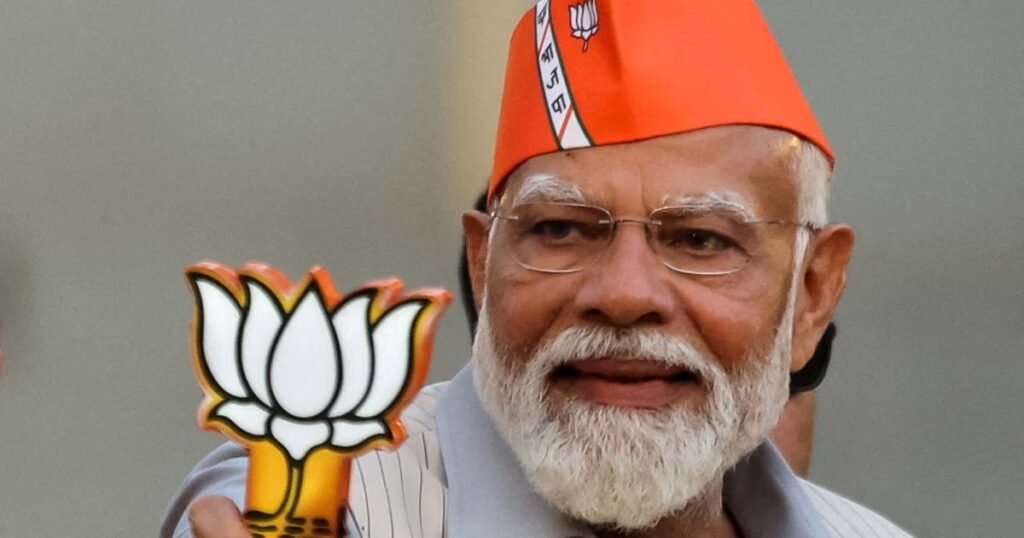
NewsFeed If the rights of minorities are not being protected, then claims of democracy are fraudulent, journalist and professor Amitava Kumar said of India’s ongoing elections. Published On 25 Apr 202425 Apr 2024 Adblock test (Why?)
US TikTok’s future in jeopardy as Biden signs ban bill: What’s next?
The US Senate has overwhelmingly approved a bill that would ban TikTok unless its Chinese owner, ByteDance, divests from the video-sharing app in nine months amid concerns that the company poses a national security threat. TikTok has denied the Chinese government could access users’ data and has dubbed the bill, which was passed by a 79-18 vote, as unconstitutional. The bill was attached to a measure to provide a $95bn emergency aid package for Ukraine, Israel and Taiwan. President Joe Biden has said he will sign it into law on Wednesday. What do we know about the TikTok ban, and what happens next? Why the ban on TikTok? How will it impact TikTok? ByteDance bought the popular karaoke app Musical.ly and relaunched it as TikTok in 2017. It is one of the fastest-growing apps in the US, and has 150 monthly subscribers, more than half of them ages 18-34. In 2023, the platform boasted more than one billion monthly active users globally and a revenue of $120bn, of which $16bn comes from the US. The app’s growing influence has drawn the attention of spy agencies and US lawmakers who have expressed fear that TikTok might share users’ data with the Chinese Communist Party (CCP), a claim the company has denied. The data, some say, could also be used by China to spread misinformation that could harm the democratic process. “For years, we’ve allowed the Chinese Communist Party to control one of the most popular apps in America. That was dangerously shortsighted,” said Senator Marco Rubio, the top Republican on the US Senate Select Committee on Intelligence. “A new law is going to require its Chinese owner to sell the app. This is a good move for America.” In December 2022, the US Congress banned the use of the app on any federally issued device or network. Several other countries have followed suit, imposing curbs on the use of TikTok in government offices. India banned the app in 2020, when there were 200 million subscribers in the wake of border skirmishes. The widely popular app has also been accused of pushing pro-Palestine content – a claim the company has denied. TikTok’s young users (ages 16-24) in the US, who form 60 percent of its total users, sympathise with Palestine, the company said last November. TikTok’s executives have been grilled during multiple congressional hearings. In March of last year, the company’s Chief Executive Shou Zi Chew assured lawmakers that TikTok had taken steps to safeguard user data. The company has also invested $1.5bn to store TikTok in the US, and Oracle, a US-based multinational corporation, would provide the cloud and storage services for the project. It has also taken measures to separate its US operations from its Chinese parent company. China’s Foreign Ministry has said that the US allegations were not backed by evidence and the ban would undermine fair competition. Several Chinese tech firms have been blacklisted by the US amid a war over the internet and technology between Washington and Beijing. Last week, Apple said Beijing had ordered it to remove Meta Platforms’ WhatsApp and Threads from its App Store in China over Chinese national security concerns. If ByteDance refuses to divest the company, the app would lose access to app stores, web hosting and network providers. Until the nine-month deadline, TikTok will remain active in the US. The US president can grant an extension of the deadline for 90 more days if the company is seen as progressing on the terms set in the law. What can TikTok do now? While TikTok is able to operate in the US, for now, the company executives and attorneys will have to fight on legal grounds. “This unconstitutional law is a TikTok ban, and we will challenge it in court. We believe the facts and the law are clearly on our side, and we will ultimately prevail. The fact is, we have invested billions of dollars to keep US data safe and our platform free from outside influence and manipulation,” TikTok said in a statement on Wednesday. TikTok is set to challenge the bill on First Amendment grounds and TikTok users are also expected to again take legal action. A US judge in Montana in November blocked a state ban on TikTok, citing free speech grounds. The US Constitution guarantees the right to free speech under the First Amendment. The American Civil Liberties Union said banning or requiring divestiture of TikTok would “set an alarming global precedent for excessive government control over social media platforms … If the United States now bans a foreign-owned platform, that will invite copycat measures by other countries.” Senator Ron Wyden, a Democrat, said he was concerned the bill “provides broad authority that could be abused by a future administration to violate Americans’ First Amendment rights”. In 2020, former US President Donald Trump attempted to legislate his own TikTok ban, but he has somewhat done a reversal on banning the popular social media app while campaigning for another term in office. On Monday, Trump posted on his Truth Social platform: “Just so everyone knows, especially the young people, Crooked Joe Biden is responsible for banning TikTok.” [embedded content] Adblock test (Why?)
What happens when activists are branded ‘terrorists’ in the Philippines?
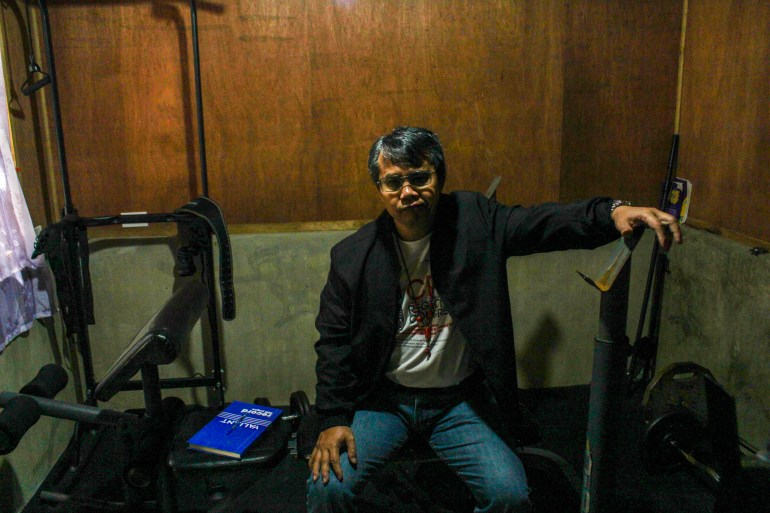
Baguio, Philippines – Inside an unlit bathroom, Windel Bolinget gently tips a pail of water over his head, careful to minimise the sound of splashing on the tiled floor. A well-known activist leader in the mountainous Cordillera region in the northern Philippines, the 49-year-old spends most of his days between several undisclosed refuges. Bolinget tries to stay invisible indoors, not leaving unless absolutely necessary and avoiding making any noise that might draw attention. “I have normal routines with some extraordinary effort,” he said. On the rare occasions that he spends with his family in their own home, he follows the same protocol. At night, whether Bolinget is there or not, his wife and four children wake up whenever any of their six dogs bark. They monitor security cameras and step into the street, worried that armed men might have come for him. Nearby households do the same, knowing that the man they’ve called a friend for decades has been branded a “terrorist” by the Philippine government, which wants him behind bars. “We need to be able to smell danger, have the emergency contacts at the ready, and be able to tell if we’re being tailed in a public place,” he said. Bolinget is chairperson of the Cordillera Peoples Alliance (CPA), an activist coalition of Indigenous people’s groups. He and three other CPA leaders Jennifer Awingan-Taggaoa, Steve Tauli, and Sarah Abellon-Alikes were designated “terrorists” by the Anti-Terrorism Council (ATC) on July 10, 2023. Citing “probable cause” of engagement in “organised violence,” the ATC, led by executive officials, claims the CPA and the four individuals are part of the country’s long-running Communist armed rebellion. Indigenous activist Windel Bolinget lives his life in the shadows after being designated a ‘terrorist’ by the government [Michael Beltran/Al Jazeera] Under the Anti-Terrorism Law (ATL) of 2020, the authorities can arrest people identified as “terrorists” without a warrant, restrict travel, freeze assets, conduct surveillance and issue new court decisions to restrict their movements without explaining why. Some individuals who have previously been labelled “terrorists”, communists or enemies of the state have later been found dead. Some 89 extrajudicial killings of activists have taken place since June 2022 when Ferdinand Marcos Jr became president. According to the human rights group Karapatan, 51 people are currently designated as “terrorists”. The designation marks a step up from the more common red-tagging, where activists are linked to the armed rebellion in a bid to justify a crackdown. In the past, all four CPA leaders have been slapped with cases relating to their alleged involvement with rebels. All of which, including a “shoot to kill” order on Bolinget, have been dismissed in court. Critics have described the ATL as the second coming of martial law in the Philippines. For the last nine months, the CPA leaders have lived in relative seclusion apart from court hearings to contest the ATC decision. “We want to prove the facts and question the basis of the designation,” said Baguio City Councilor Jose Molintas, lawyer to the four alleged “terrorists”. Karapatan’s Cristina Palabay said the law “institutionalises the ATC’s mandate to act as judge and jury in implementing its draconian crackdown. It not only threatens and harasses activists, but also puts their lives at risk.” Life in terror On social media, the Bolinget and Taggaoa families were branded terrorists as early as 2020. Pictures of their children, some of whom are under the age of 18, have been paraded as the offspring of “terrorists” by trolls and even law enforcement personnel. Taggaoa’s daughter Kara, a labour rights activist in Manila, was also arrested in 2022 over a robbery that allegedly took place during a demonstration. Jennifer Awingan-Taggaoa spent four months moving between safe houses after she was designated a ‘terrorist’ [Michael Beltran/Al Jazeera] Joel Egco, spokesperson for the National Task Force to End the Local Communist Armed Conflict, issued a warning to dissenters earlier this year: “Before we charge you (with terrorism), surrender now!” In such an atmosphere, the CPA leaders live in constant fear for their family’s safety. Bolinget says some friends and relatives have cut ties, fearful that associating with them could be considered criminal. “I’m an enemy of the state, an open target. The state wants to isolate me from the family, it’s easier for them that way,” he said. Bolinget led one of the 37 Supreme Court petitions against the ATL back in 2020, flagging potential human rights abuses. “All our fears came true and I have become a living testament that to be deemed a terrorist is to be treated worse than a criminal,” he said. The designation is also affecting their health. Bolinget and Taggaoa have been experiencing more frequent stomach trouble and must convince their doctors to see them at inconvenient times. Taggaoa feels “so sickly all the time. The doctors said it’s stress-induced.” Bolinget blames the lack of sleep for his poor health. “One-half of your brain is always awake and alert. I’m always on edge, like my temper is going to boil any minute,” he said. Constant alarm When Taggaoa was arrested in January 2023, she was not worried. She, Bolinget and five others had been charged with rebellion after allegedly joining an armed raid. “I knew right away it was fake and I could prove this in court,” she told Al Jazeera. The case was dropped that May. But a couple of months later, she discovered she had been designated by the ATC when the decision was published in a national newspaper. Taggaoa spent the next four months hopping between safehouses and reminding her family back home to lock all doors and stay vigilant. In January, Marcos Jr said he wanted the Philippines‘ swift exit from the “grey list” of the Financial Action Task Force (FATF), a global watchdog for money laundering and terrorist financing. To do this, Marcos announced accelerated “action plans to combat money laundering and counterterrorist financing, and to file cases against violators”. Living without access to personal and business funds has been
‘We need you’: Solomon Islands’ support for US agency’s return revealed
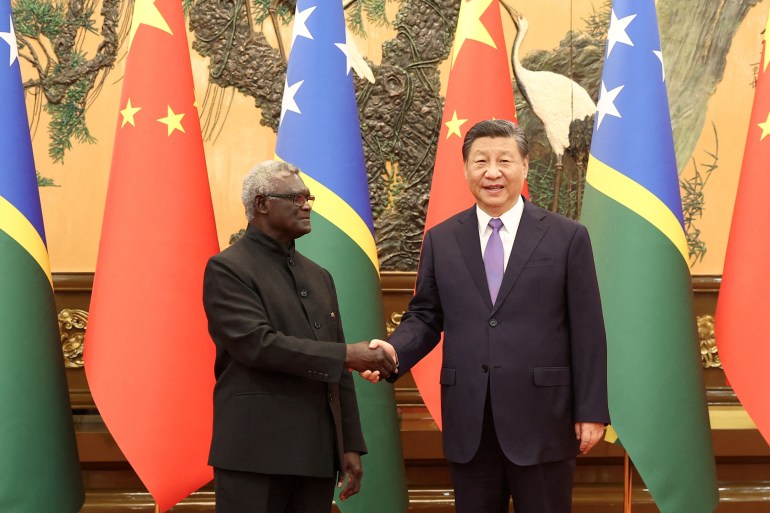
A United States development aid agency whose return to the Solomon Islands has been delayed for years without explanation found “overwhelming support and enthusiasm” for its work, with the Pacific island nation’s leader telling officials “We need you”, a previously unreleased report shows. The Peace Corps’ findings bring into focus the agency’s unexplained failure to resume operations in the archipelago nearly five years after it announced its return amid jockeying for influence between the US and China. The “Solomon Islands Re-entry Assessment Report,” obtained by Al Jazeera via a freedom of information request, paints a picture of emphatic support for the agency resuming operations in the country after a two-decade absence, both among the local population and within the government. Solomon Islands Prime Minister Manasseh Sogavare is quoted in the report telling Peace Corps representatives, “We need you,” while Attorney-General John Muria is quoted as saying the agency “really had a lasting impact on people and communities in Solomon Islands”. “On the ground, the assessment team was welcomed openly and enthusiastically by the Government of Solomon Islands at all levels from the Prime Minister to the provincial level,” the agency said in the report. “The team enjoyed support in equal measure from other development partners, non-governmental organisations, international volunteer organisations, service providers and vendors, former Peace Corps staff, and community members who were taught by Peace Corps Volunteers.” Solomon Islands Prime Minister Manasseh Sogavare has forged closer ties with China [cnsphoto via Reuters] The Peace Corps, which withdrew from the Solomon Islands in 2000 amid ethnic violence, commissioned the report to examine the feasibility of resuming operations in the country after receiving a formal invitation from Honiara to return in February 2019. In August, the assessment team submitted its report recommending the agency’s return after concluding the Solomon Islands offered an “enabling environment in which Volunteers can have meaningful work and serve safely with the necessary medical care and logistical support”. “From the Prime Minister and national and provincial government ministries to service providers, local community members, and former Peace Corps staff, the team was warmly welcomed and strongly encouraged to bring Volunteers back to the ‘Hapi Isles,’” the report said. “Peace Corps has had a lasting impact in the country and our absence is noticeable, particularly in the education sector.” The Peace Corps publicly announced the re-establishment of its Solomon Islands programme that October, with the first volunteers scheduled to arrive in mid-2021. The Solomon Islands, located about 2,000 kilometres northeast of Australia, is one of the poorest countries in the Pacific, with its population suffering from limited access to high-quality education and healthcare. While the Solomon Islands closed its borders for more than two years during the COVID-19 pandemic, the agency’s ongoing absence and the current status of its planned return have not been publicly explained. Although the Peace Corps temporarily suspended operations in the Pacific during the pandemic, its volunteers have since returned to neighbouring countries including Fiji, Tonga and Samoa. Other comparable agencies have also resumed work in the Solomon Islands, including the Australian Volunteers, the Japan International Cooperation Agency, the Korea International Cooperation Agency, and New Zealand’s Volunteer Service Abroad. The US Congress has allocated just $500 to the Peace Corps’ work in the archipelago for the fiscal year of 2024, suggesting there is little prospect of its imminent return. In December, Al Jazeera reported that opposition politicians in the Solomon Islands and US observers suspected that Sogavare’s government was deliberately stalling the agency’s return to curry favour with China, which has made major inroads in the archipelago in recent years. Sogavare severed ties with Taiwan in 2019 to recognise China and signed cooperation agreements with Beijing on security and policing in 2022 and last year, prompting alarm in the US, Australia and New Zealand. Despite being one of the world’s smallest countries with a population of about 720,000 people, the Solomon Islands has become a focal point for the heated competition for influence between Washington and Beijing due to its strategic location in the Pacific. The status of Honiara’s relations with Beijing is currently in the balance as Sogavare vies to form a government with opposition MPs after general elections this week that produced an inconclusive outcome. Sogavare is seeking a fifth term in office, but he is being challenged by at least three opposition leaders, including Peter Kenilorea Jr, who has pledged to restore ties with Taipei. The Peace Corps and the Solomon Islands government did not respond to requests for comment. Catherine Ebert-Gray, who served as US ambassador to Papua New Guinea, Solomon Islands and Vanuatu from 2016 to 2019, expressed hope the agency would be able to resume its work in the country. “I am hopeful the next parliament and government will renew their interest in returning Peace Corps volunteers to rural villages to support the nation’s environmental, health and education plans,” Ebert-Gray told Al Jazeera. Adblock test (Why?)
Russia-Ukraine war: List of key events, day 791
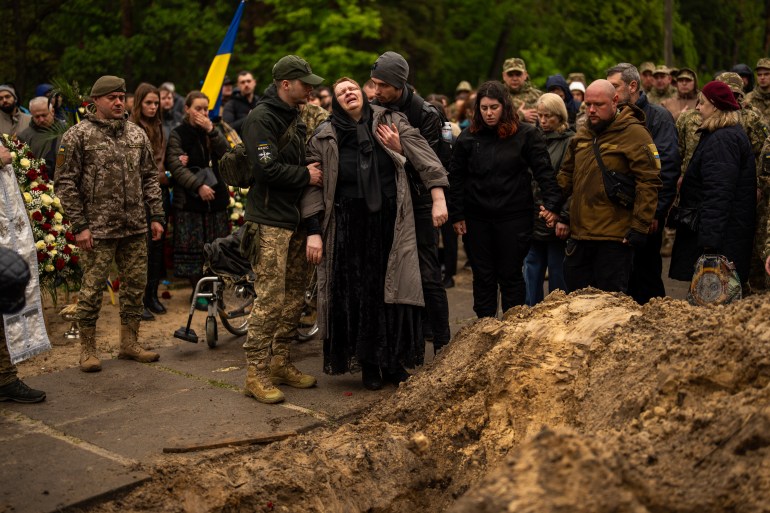
As the war enters its 791st day, these are the main developments. Here is the situation on Thursday, April 25, 2024. Fighting At least six people were injured after Russia launched a missile attack on Kharkiv, Ukraine’s second-largest city. Officials said the S-300 missiles caused damage to residential buildings, offices, a gas pipeline through the city centre and dozens of cars. Russia claimed to have struck a military dormitory. Ukrainian intelligence sources told the Reuters news agency its drones had struck two Rosneft-owned oil depots in Russia’s Smolensk region, west of Moscow, as well as a major steel factory in the southern Lipetsk region. Russian regional officials said fires had broken out at the oil facilities following the attack, while a drone had come down in an industrial zone in the Lipetsk region. They did not say whether there was any damage. Politics and diplomacy The United States Congress passed a long-delayed $61bn aid package for Ukraine that was quickly signed into law by President Joe Biden. Ukrainian President Volodymyr Zelenskyy welcomed the approval and said Ukraine would do its best to “make up” for the past six months as it has struggled to fend off better-equipped Russian forces. Zelenskyy said he was working closely with US officials to work out an incoming $1bn military package containing “exactly the weapons that our soldiers need”. He specifically mentioned Army Tactical Missile Systems (ATACMS), artillery, antitank weapons, high mobility artillery rocket system (HIMARS) and air defence. Zelenskyy said 16 Ukrainian children previously “deported to Russia” had been reunited with their families after mediation talks organised by Qatar. Kyiv has accused Russia of the forcible deportation of thousands of children from Ukrainian territories it has occupied. Family, friends and army comrades gather to mourn Ukrainian army paramedic Nazarii Lavrovskyi who was killed on April 18 while helping to evacuate wounded troops from the front line in the Kharkiv region of eastern Ukraine [Francisco Seco/AP Photo] A court in Moscow ordered Timur Ivanov, one of Russia’s 12 deputy defence ministers, to be held in custody pending trial on charges of bribery. Ivanov was in charge of military construction projects and was known for his lavish lifestyle. The 48-year-old, who wore his military uniform in court, faces up to 15 years in prison if found guilty. Ukraine’s SBU security service said it suspected Metropolitan Arseniy, a high-ranking cleric and head of the main Orthodox monastery in eastern Ukraine, of having “tipped off” Russian forces about Ukrainian army positions in the Kramatorsk district and promoted “pro-Kremlin narratives”. The priest faces as many as eight years in prison if convicted. Ukraine stopped issuing new passports to some military-aged men overseas, according to amended legislation. The exact scope and period of the measure were unclear. Ukraine is expanding conscription to boost the number of troops on the battlefield. Italian Foreign Minister Antonio Tajani said Italy will sign an agreement next month with Ukraine and the United Nations’ cultural agency UNESCO to rebuild the city of Odesa and its cathedral, which was badly damaged by a Russian attack last July. Weapons White House national security adviser Jake Sullivan confirmed that the US had sent a “significant number” of long-range ATACMS to Ukraine and would “send more”. Sullivan was responding to reports in the US media that the missiles had been sent, and used twice. The long-range ATACMS has a range of 300km (186 miles). Adblock test (Why?)
Israeli protesters call for PM’s resignation over captives
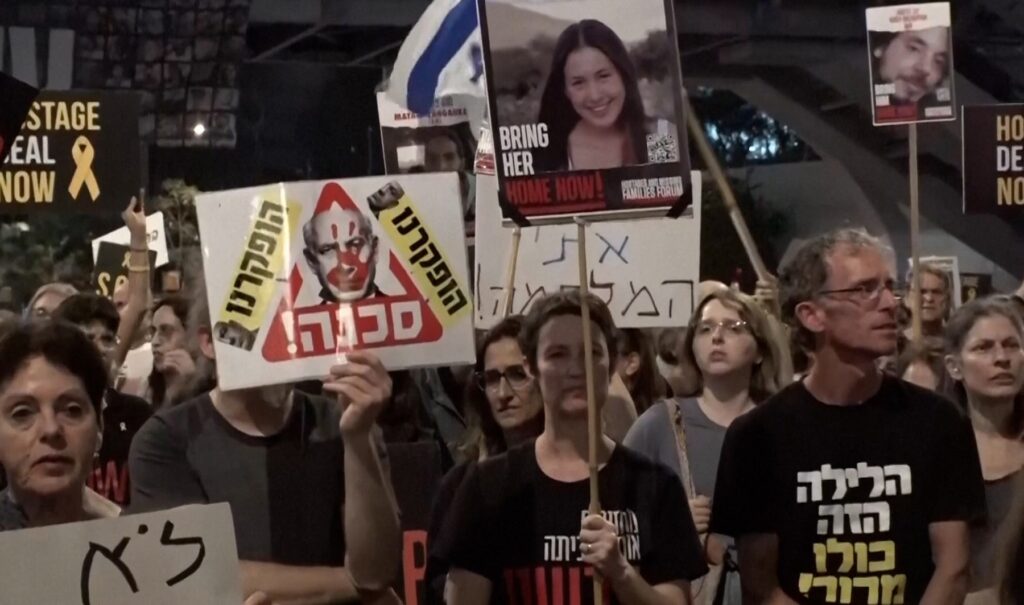
NewsFeed Families of Israelis held in Gaza staged a protest to mark 200 days since their relatives were taken and to call for the prime minister’s resignation over the failure to get a deal to free them. Published On 24 Apr 202424 Apr 2024 Adblock test (Why?)
NBA roundup: Dallas Mavericks grab vital 96-93 road win over LA Clippers

Mavericks steal home court advantage from the Clippers after winning game two in Los Angeles. Luka Doncic had 32 points and nine assists and Kyrie Irving added 23 points as the Dallas Mavericks got the best of the Los Angeles Clippers 96-93 in game two of their first-round playoff series to even it out at 1-1. PJ Washington scored 18 points and Derrick Jones Jr had 10 on Tuesday as the Mavericks recovered from a double-digit defeat in game one when they trailed by as many as 29 points and scored just 30 in the first half. Doncic and Irving combined to go 19 of 44 (43.2 percent) in the game after they struggled in the decisive first half of game one on Sunday when they combined to shoot five of 19 (26.3 percent). Irving made three of four free throws in the last 12 seconds to seal the win. James Harden and Paul George each scored 22 points as the Clippers were unable to take advantage of Kawhi Leonard’s return. Leonard, who had not played since March 31 because of right knee inflammation, scored 15 points in 35 minutes. The series moves to Dallas for game three on Friday. Pacers 125, Bucks 108 Pascal Siakam recorded 37 points, 11 rebounds and six assists as Indiana evened out its first-round Eastern Conference playoff series with an impressive victory over host Milwaukee in game two. Myles Turner added 22 points, seven rebounds, six assists and three blocked shots for the sixth-seeded Pacers, who snapped a 10-game postseason losing streak dating back to 2018. Damian Lillard scored 34 points and Brook Lopez added 22 for the third-seeded Bucks. Each player made six three-pointers. Milwaukee again was without star Giannis Antetokounmpo, who is out with a calf injury. Timberwolves 105, Suns 93 Jaden McDaniels scored 25 points on 10-for-17 shooting, and Minnesota pulled away from Phoenix in game two of their Western Conference quarterfinals series in Minneapolis. Mike Conley and Rudy Gobert finished with 18 points apiece for Minnesota, which seized a 2-0 lead in the best-of-seven series. The Timberwolves won by double digits despite a subpar night from Anthony Edwards, who shot three of 12 from the field and finished with 15 points. Devin Booker led the Suns with 20 points on six-for-13 shooting although he was one for six from three-point range. Kevin Durant finished with 18 points, and Bradley Beal scored 14, but the pair combined to shoot 12 of 32 from the field. Adblock test (Why?)
Cost of doing business with Iran? US warns Pakistan of sanctions risk
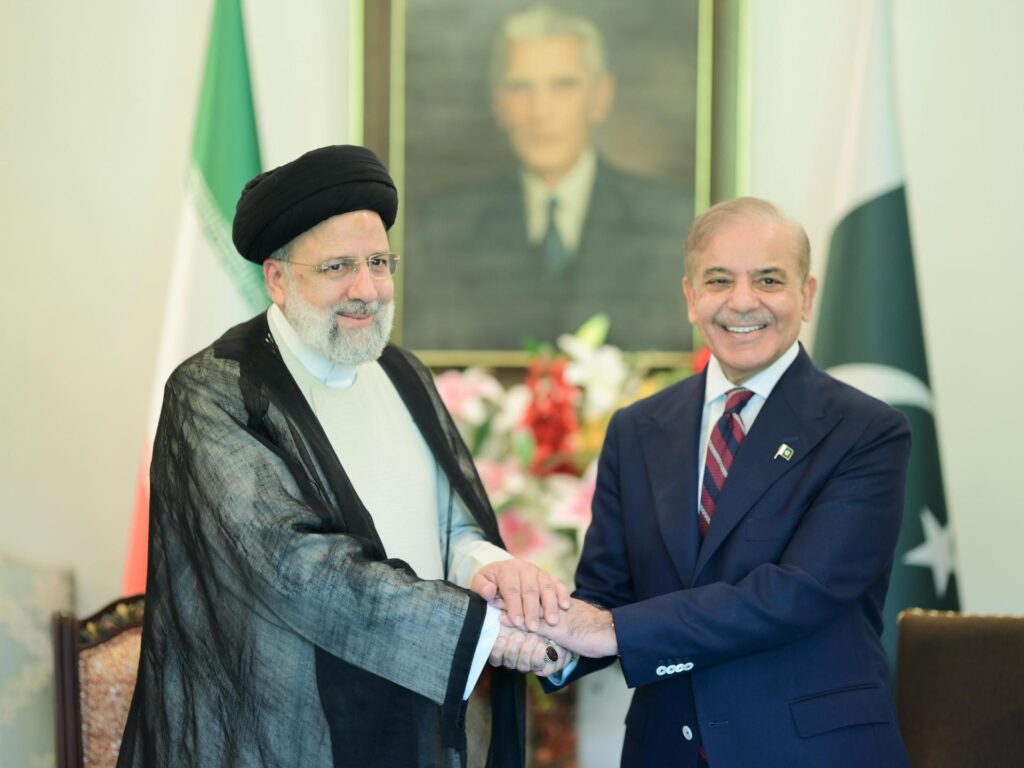
Islamabad, Pakistan – The United States has warned Pakistan of the risk of sanctions after it promised greater security and economic cooperation with Iran during a visit by President Ebrahim Raisi. The first Iranian president to visit the South Asian country in eight years, Raisi concluded his three-day trip on Wednesday as the neighbouring countries said they would increase bilateral trade to $10bn a year over the next five years, from the current $2bn. Pakistan’s foreign office said the two sides additionally agreed to cooperate in the energy sector including trade in electricity, power transmission lines and the Iran-Pakistan gas pipeline project. The gas pipeline project has languished for more than a decade because of political turmoil and international sanctions. The US Department of State on Tuesday cautioned the Pakistani government of engaging in business deals with Iran. “We advise anyone considering business deals with Iran to be aware of the potential risk of sanctions. But ultimately, the government of Pakistan can speak to their own foreign policy pursuits,” spokesperson Vedant Patel said during a news briefing. Foreign policy expert Muhammad Faisal said the United States threats of sanctions are merely meant to dissuade Pakistan and “increase the cost of doing business with Iran”. “Any expansion of formal trade and banking activity between the two nations will be slow, as Pakistani banks are reluctant to do direct business with Iranian banks,” he told Al Jazeera. A wide-ranging list of business-related activities with Iran can trigger US sanctions, and the regulations also bar business dealings with Iranian financial institutions. The pipeline was to stretch more than 1,900km (1,180 miles) from Iran’s South Pars gas field to Pakistan to meet Pakistan’s rising energy needs. Iran said it has already invested $2bn to construct the pipeline on its side of the border, making it ready to export. However, the project is yet to take off from the Pakistani side due to fears of US sanctions. Pakistan indicated last month that it will try and seek a waiver from the US to construct the pipeline on its territory. Washington’s efforts to restrict Iran’s income from oil and petroleum products go back decades. It has additionally sanctioned hundreds of entities and people in Iran – from the central bank to government officials – accused of materially supporting Iran’s Islamic Revolutionary Guard Corps and armed groups such as Palestine’s Hamas, Lebanon’s Hezbollah and Yemen’s Houthis. The US and the United Kingdom this month imposed a new round of sanctions on Iran after its unprecedented attack on Israel, but the punitive measures were limited in scope and there have been questions over how effective the sanctions regime has been overall. “Islamabad is cognisant of these constraints and both sides have been exploring ‘out-of-the-box’ solutions for expanding bilateral trade through barter system and border markets with the involvement of local chambers of commerce,” Faisal said. Pakistan has little leverage During his visit, Raisi met the country’s top leadership, including Prime Minister Shehbaz Sharif and army chief General Asim Munir. The visit came as the two countries try to repair their frayed relationship following heightened tensions in January when Iran launched attacks on Pakistani territory on what it said were bases of armed group Jaish al-Adl. In less than 48 hours, the Pakistani military carried out strikes in Iran on what it said were “hideouts used by terrorist organisations”. Yet, the implied threat of sanctions comes at a challenging time for Pakistan, which is mired in economic woes and is seeking financial help from its allies, including key partners such as Saudi Arabia, the United Arab Emirates and the US, three countries that are considered rivals of Iran. Sharif was in Saudi Arabia this month to meet Crown Prince Mohammed bin Salman and is expected to travel to the kingdom again next week. Kamran Bokhari, a senior director at the Washington, DC-based New Lines Institute for Strategy and Policy, said Pakistan cannot afford to get caught in the middle of a conflict between the US and Iran. “Those two countries are engaged in their own rivalry and Iran sees itself in ascendancy at the moment due to situation in the Middle East,” Bokhari told Al Jazeera, referring to Israel’s war on Gaza. “The US wants to contain Iran and the tools it has are sanctions. Now Pakistan needs the US and Western goodwill to help it deal with its economic crisis,” he said, adding that it should “steer clear of any move that risks it”. Pakistan must identify what’s best for its national interest if it is to successfully juggle its relationships with Iran and the US and “maintain engagement with both”, Faisal said, but it should focus on expanding trade and energy cooperation with Iran. The future of the Pakistan-Iran relationship depends on Pakistan’s ability to use its limited leverage, said Bokhari. “If the US tells Pakistan ‘You cannot do business with Iran’, then they should ask Washington ‘Could you instead help us in what we need?’” Bokhari said. Adblock test (Why?)