

Five takeaways from day two of Trump’s New York hush money trial testimony
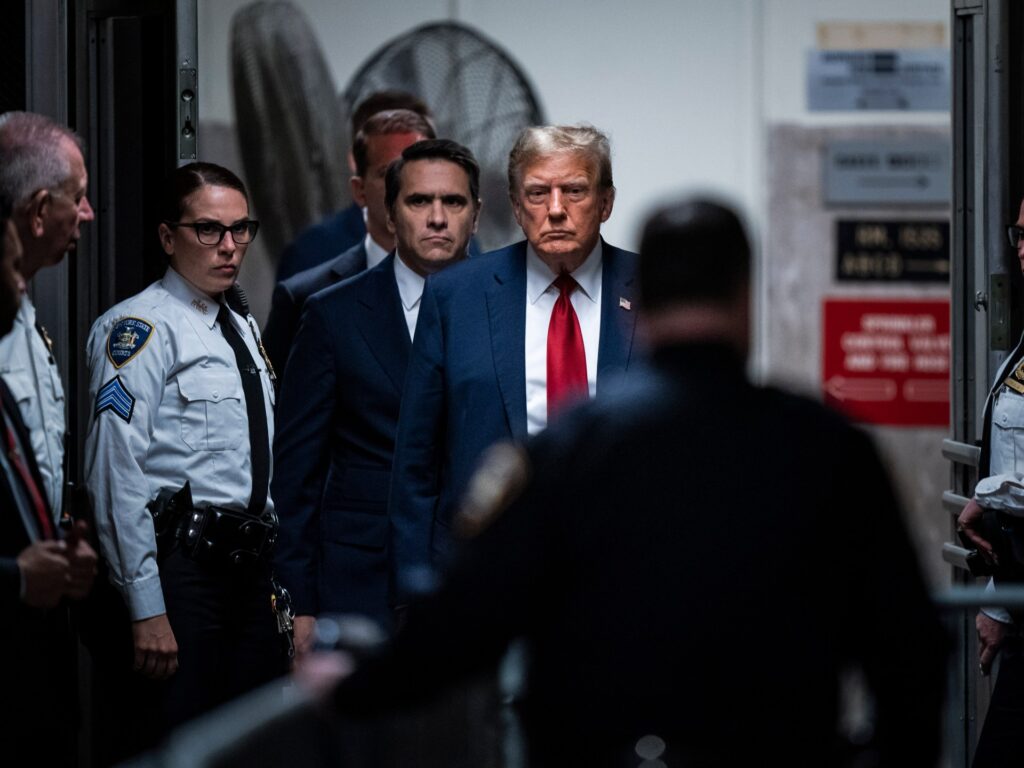
The second day of arguments in former United States President Donald Trump’s New York hush money trial has concluded with the prosecution’s questioning of former tabloid publisher David Pecker dominating much of the proceedings. Trump has been charged with 34 felony counts of falsifying business documents in connection to payments made to adult film star Stormy Daniels. The 2024 Republican presidential candidate is accused of mislabelling reimbursements made to his lawyer Michael Cohen, who paid Daniels $130,000 in exchange for her silence over an alleged affair. Trump has denied that affair took place. For the felony charges to hold, prosecutors must persuade a jury that the falsifications were done with the intent to commit another crime. They have so far focused on alleged malfeasance to influence the 2016 presidential election, which Trump eventually won. Trump’s defence has maintained he did nothing wrong. On Tuesday, prosecutors focused on a “catch and kill” agreement between Pecker and Trump, in which the publisher would buy negative stories about Trump but not publish them in the National Enquirer. Here are five takeaways from the trial: Pecker says he agreed to be “eyes and ears” of Trump campaign While describing a relationship with Trump that dated back to the 1980s, Pecker told prosecutors that Trump and Cohen pressured him to “help the campaign” at an August 2015 meeting, roughly 15 months before the 2016 presidential election. Pecker said he agreed to be the campaign’s “eyes and ears” and to notify Cohen when people were trying to sell unflattering stories about Trump to the National Enquirer. Cohen, in turn, would regularly call Pecker to ask him to run negative stories on Trump’s challengers for the Republican nomination, including primary opponents Senators Ted Cruz and Marco Rubio. Pecker initially said stopping negative stories about Trump from running benefitted both the tabloid and Trump’s campaign but later acknowledged that the strategy only benefitted the Trump campaign. ‘Catch and kill’ scheme detailed Much of Tuesday’s proceedings involved Pecker elaborating on the process that he, Trump and Cohen called “catch and kill”. He described how American Media, which owns the National Enquirer, paid a doorman $30,000 for his story alleging that Trump had fathered a child out of wedlock. The agreement included a clause that said the doorman would be liable for $1m if he still went public with the claim. Pecker called it “basically a lever” over the doorman to assure his compliance. He also described how model Karen McDougal had approached the National Enquirer about her alleged affair with Trump. The information prompted a call from Trump directly and several subsequent calls from Cohen, who seemed to be under “a lot of pressure”, Pecker said. The National Enquirer ended up buying the story for $150,000 to kill it. Pecker describes decades-long relationship with Trump Prosecutors may have focussed on the run-up to the 2016 presidential election, but Pecker’s testimony was a reminder that Trump had been a tabloid darling long before he was a political candidate. Pecker said he met Trump in the 1980s when he worked on the Trump Style magazine. He said the two men enjoyed “a great relationship” and he considered him a friend until 2017. When Trump was the host of The Apprentice reality show, Trump would tip him off to events on the show before they aired, Pecker said. Prosecutors accuse Trump of violating gag order Judge Juan Merchan prohibited Trump from making public comments about witnesses involved in the trial, but prosecutors began Tuesday’s proceeding by accusing the former president of “willful violations” of that gag order. They pushed Merchan to hold Trump in contempt of court. In sometimes tense exchanges, Trump’s lawyer Todd Blanche argued that the social media posts in question were not direct attacks, but responses to comments made about Trump. Merchan seemed sceptical about the argument with particular focus on Trump’s liability for images and sentiments he reposts on social media. At one point, Merchan warned Blanche, “You’re losing all credibility.” However, he did not make any determination regarding the gag order on Tuesday. Trump remains defiant on social media Even with the hearing on the gag order, Trump took to his Truth Social platform to criticise Merchan and the trial. During a break, he wrote: “Everybody is allowed to talk and lie about me, but I am not allowed to defend myself? This is a kangaroo court; the judge should recuse himself.” Speaking to reporters after the day’s proceedings ended, he again called the gag order “unconstitutional”. Adblock test (Why?)
US universities crackdown on pro-Palestine protests
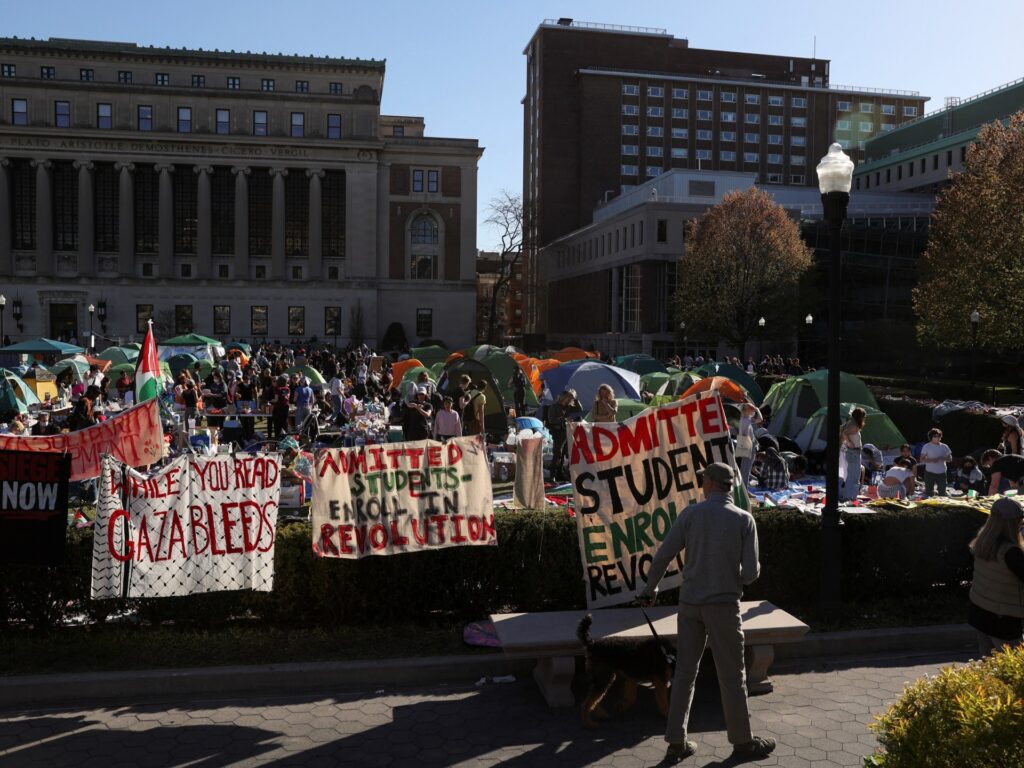
NewsFeed Pro-Palestine protests are growing in momentum, while also being accused of threatening the safety of students at US university campuses. Published On 23 Apr 202423 Apr 2024 Adblock test (Why?)
Will Israeli army intelligence chief’s resignation lead to accountability?

Major General Aharon Haliva acknowledged failure to warn of the October 7 attack. More than six months after Hamas carried out an assault on southern Israel, the Israeli military intelligence chief has resigned. In his resignation letter, Major General Aharon Haliva noted that authority comes with responsibility – and acknowledged the military intelligence directorate under his command had failed to warn of the October 7 attack. It comes as public outrage against perceived Israeli government and military failures gains momentum. What message does this send while the war on Gaza continues? Presenter: Mohammed Jamjoom Guests: Daniel Levy – President of the US/Middle East Project. Antony Loewenstein – Author, The Palestine Laboratory Gideon Levy – Columnist for Haaretz newspaper Adblock test (Why?)
What is Project Nimbus, and why are Google workers protesting Israel deal?
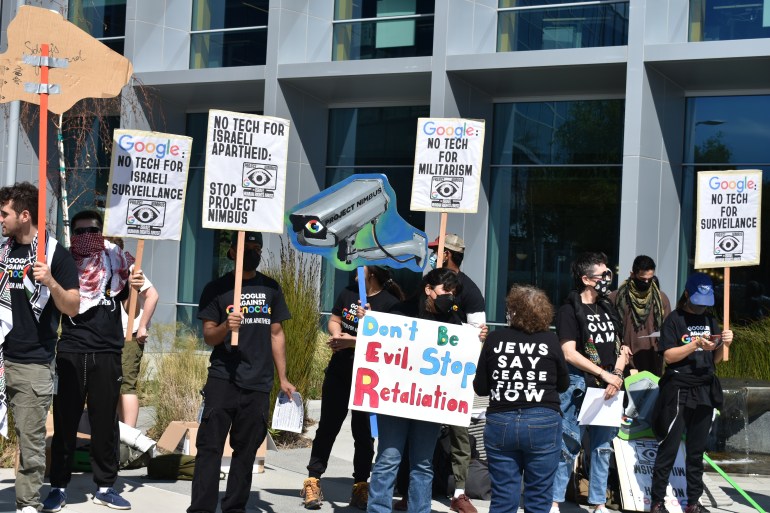
Google employees based in the United States staged protests at the tech giant’s offices in New York City, California and Seattle last week to oppose a $1.2bn contract with the Israeli government. Known as Project Nimbus, the joint contract between Google and Amazon signed in 2021 aims to provide cloud computing infrastructure, artificial intelligence (AI) and other technology services to the Israeli government and its military, which has faced condemnation for its ongoing war on Gaza. Israel has killed more than 34,000 Palestinians, overwhelmingly civilians, and destroyed vast swaths of the Palestinian coastal enclave since it launched the military offensive last October. The country has justified the offensive saying it is targeting Hamas fighters who carried out a deadly attack on October 7. Here is a look at why tech workers are opposing military collaborations amid misuse of AI and other technologies in conflicts in Gaza and Ukraine among others. Why are Google employees protesting against Project Nimbus? Last week’s sit-ins in New York and California’s Sunnyvale were led by No Tech For Apartheid, which has been organising Google employees against Project Nimbus since 2021. Employees are opposing their employer’s ties with Israel, which is facing a genocide charge for its war on Gaza at the World Court. Tech workers are demanding that they have right to know how their labour is going to be used. With little clarity about the project, they fear the technology might be used for harm. Workers at Amazon and Facebook parent Meta have also clashed with their employers over war links. “It is impossible to feel excited and energised to work when you know your company is providing the Israeli government products that are helping it commit atrocities in Palestine,” said, Tina Vachovsky, staff software engineer at Google, in a testimonial published on No Tech Apartheid website. According to a 2021 report by the US-based news outlet The Intercept, Google is offering advanced AI capabilities to Israel, which could harvest data for facial recognition and object tracking as part of Project Nimbus. Activists and academics have been alarmed by Israel’s use of AI to target Palestinians, while legal scholars say the use of AI in war violates international laws. Nine employees were arrested on April 16 for staging a sit-in at Google office in New York [No Tech for Apartheid via Anadolu] “There’s actually a shocking lack of transparency around exactly what this project covers, outside of providing interoperable, comprehensive cloud computing, which is essentially systems of data storage, data management, and sharing,” Ramesh Srinivasan, professor at the University of California, Los Angeles (UCLA), told Al Jazeera. “Data for the Israeli governments, of course, is likely to extend to the Israeli [army]. So it’s a project that marks and sort of highlights the direct connections that big technology companies in the United States have, not only to the so-called military-industrial complex, but to directly aiding and abetting the Israeli government.” In a statement, the tech giant said that the Nimbus contract “is not directed at highly sensitive, classified, or military workloads relevant to weapons or intelligence services”. The tech behemoth says it works with several governments around the world, including Israel. The company fired at least 28 employees on Tuesday for “violating Google’s code of conduct” and “policy on harassment, discrimination and retaliation” during the events on Tuesday. In addition, at least nine Google employees were arrested for the sit-ins at its offices in New York and Sunnyvale. Google CEO Sundar Pichai issued veiled a warning in a blog post last week. “We have a culture of vibrant, open discussion that enables us to create amazing products and turn great ideas into action. That’s important to preserve. But ultimately we are a workplace and our policies and expectations are clear: this is a business, and not a place to act in a way that disrupts coworkers or makes them feel unsafe, to attempt to use the company as a personal platform, or to fight over disruptive issues or debate politics. This is too important a moment as a company for us to be distracted,” he wrote. But tech workers have not been fazed by the warning. Mohammad Khatami, a Google software engineer who was arrested for participating in the sit-in in New York, told US outlet Democracy Now that workers were arrested for “speaking out against the use of our technology to power the first AI-powered genocide”. Is there a history of tech workers opposing collaborations with militaries?] This isn’t the first time Amazon and Google employees have voiced their displeasure with Project Nimbus. Last October, Amazon and Google employees expressed their concerns anonymously in an open letter published by the UK news outlet The Guardian: “We are writing as Google and Amazon employees of conscience from diverse backgrounds. We believe that the technology we build should work to serve and uplift people everywhere, including all of our users. As workers who keep these companies running, we are morally obligated to speak out against violations of these core values. For this reason, we are compelled to call on the leaders of Amazon and Google to pull out of Project Nimbus and cut all ties with the Israeli military. So far, more than 90 workers at Google and more than 300 at Amazon have signed this letter internally. We are anonymous because we fear retaliation.” In 2018, thousands of Google employees protested against a contract with the Pentagon known as Project Maven. In 2017, Google partnered with the Pentagon to use the company’s AI technology to analyse drone surveillance footage. In February, roughly 30 activists gathered around the entrance to OpenAI’s San Francisco office, due to the company quietly removing a ban on “military and warfare” from its usage policies in the previous month. OpenAI would eventually confirm it was working with the US Department of Defense on open-source cybersecurity software solutions. On March 4, at the Mind the Tech conference in New York, Google employee Eddie Hatfield stood up in a conference room and
Dramatic video of burning train in Canada

NewsFeed A train engulfed in flames rolled through a city in Ontario, Canada as passersby filmed it. No injuries were reported, but $25,000 worth of wooden beams used for railway tracks were destroyed. Published On 23 Apr 202423 Apr 2024 Adblock test (Why?)
Far-right German politician’s aide arrested for spying for China

Worries over efforts to sway upcoming EU elections rise, with MEP Krah also probed over Russian influence operation. German police have arrested an aide to a far-right Member of the European Parliament on suspicion of spying for China. Prosecutors announced on Tuesday that Jian G is believed to have repeatedly passed information on the workings of the European Parliament to China’s Ministry of State Security (MSS). The arrest spurred warnings in Europe that democracy is under threat ahead of EU elections in June, while provoking anger in Beijing. The German authorities did not specify which politician employed the arrested man. However, media reported that the German national was an aide to Maximilian Krah. The MEP is the lead candidate for the far-right Alternative for Germany (AfD) party for the upcoming European Parliament election. Jian G was arrested in Dresden late on Monday and his apartment was searched, prosecutors said. As well as reporting on negotiations and decisions of the European Parliament in January, he also allegedly spied on Chinese opposition figures in Germany. Attack on democracy Berlin’s interior minister Nancy Faeser said the spying allegations were “extremely serious”. “If it is confirmed that there was spying for Chinese intelligence from inside the European Parliament, then that is an attack from inside on European democracy,” she declared in a statement. “Anyone who employs such a staff member also carries responsibility,” she added. “This case must be cleared up precisely. All the connections and background must be illuminated.” Media reports have linked Krah to a Russian scheme to influence the vote that was uncovered by Czech intelligence earlier this month. He was also questioned by the FBI in January over suspicion that he was receiving money from Kremlin agents. The AfD said in a short statement that the arrest was “very disturbing”. “As we have no further information on the case, we must wait for further investigations by federal prosecutors,” said spokesman Michael Pfalzgraf. China’s foreign ministry dismissed the reported arrest, accusing unnamed forces of efforts to smear Beijing and wreck bilateral relations. “The intention of this kind of hype is very obvious … it is to smear and suppress China and to destroy the atmosphere of cooperation between China and Europe,” a spokesman said. Series of arrests The reports of Jian G’s detainment came hours after Germany arrested three others accused of spying for MSS. Regarding that incident, the Chinese embassy in Berlin declared that Beijing carries out no espionage activities in Germany. It accused Berlin of trying to “manipulate the image of China and defame China”. On the same day, however, the United Kingdom announced that it had arrested two men on suspicion of providing “prejudicial information” to Beijing. The series of arrests comes shortly after Chancellor Olaf Scholz visited China to discuss economic relations and to push for Beijing to drop its support for Russia and its invasion of Ukraine. Berlin has warned recently about increasing attempts by Moscow and Beijing to secure political and economic influence, and German intelligence agencies have called for broader powers. In reaction to Jian G’s arrest, MEPs called for the European Parliament to accelerate a continuing probe into foreign influence in a bid to guard against interference in early June’s vote. “We demand preliminary results before the elections,” said Green MEP Terry Reintke. “Autocracies like China and Russia are actively trying to undermine our democracies in Europe.” Adblock test (Why?)
What could be the consequences if Israel invades Rafah?

Several of Israel’s allies say they are opposed to Israeli forces launching an assault on the southern Gaza city. More than one million Palestinians have sought shelter in Rafah in southern Gaza, but there are growing fears that Israeli forces could launch an offensive on the city. Israel’s US and European allies say they are opposed. So will Israel push ahead regardless? What would be the consequences? Presenter: James Bays Guests: Kholoud Jwefil – economic justice officer at Oxfam who specialises in supporting women-led businesses and youth entrepreneurship Robert Geist Pinfold – peace and security lecturer at Durham University whose research focuses on Israeli foreign and security policy Hisham Mhanna – spokesman in Gaza for the International Committee of the Red Cross Adblock test (Why?)
Ukraine’s Zelenskyy says Russian strike collapsed Kharkiv TV tower
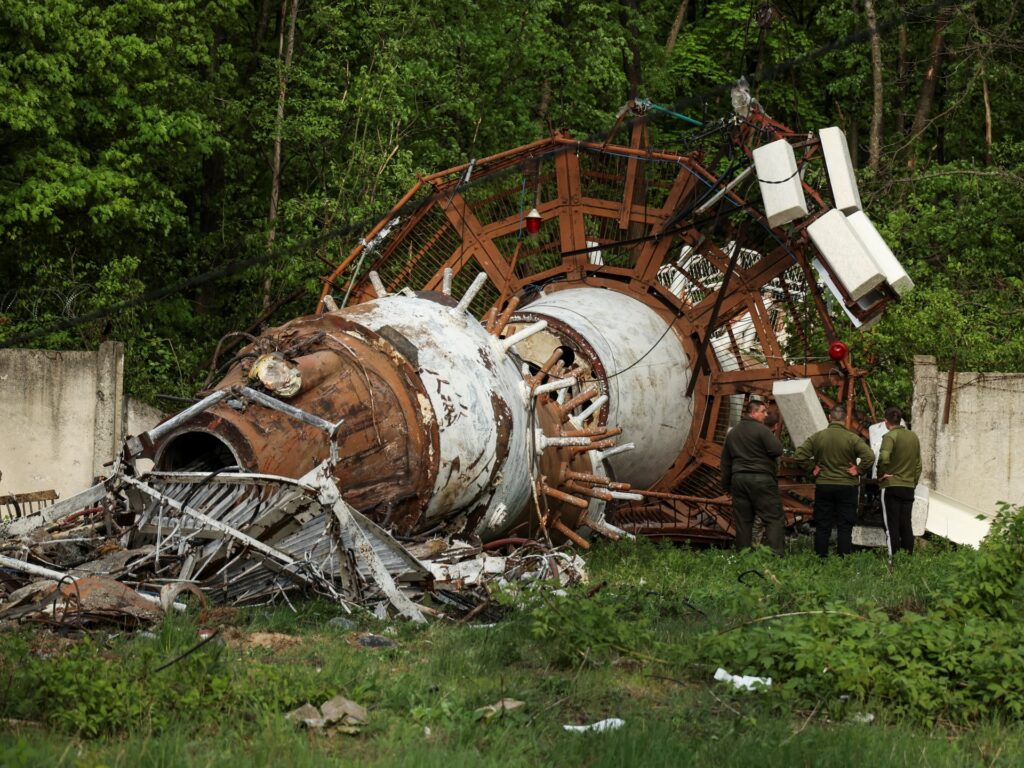
Ukrainian president tells Joe Biden that Russian attack on the tower is part of a plan to make the city ‘uninhabitable’. A Russian missile strike that broke in half a 240-metre (787-foot) television tower in Kharkiv is part of a deliberate effort by Moscow to make Ukraine’s second-largest city uninhabitable, President Volodymyr Zelenskyy has said. On Monday, dramatic video footage showed the main mast of the television tower breaking off and falling to the ground in the city, which has been pounded by missile and drone strikes for weeks. Zelenskyy said he told US President Joe Biden about the air strike that was carried out several minutes before they spoke by telephone. “It is Russia’s clear intention to make the city uninhabitable,” he said, according to a readout of the call published on the Telegram messaging application. The northeastern city of Kharkiv has a population of 1.3 million and lies just 30km (19 miles) from the Russian border, making it an easy target for ballistic missiles and other weapons as Ukraine’s air defences have dwindled. Its power facilities have been damaged particularly badly since Russia last month began targeting Ukraine’s energy infrastructure. “At the moment there are interruptions to the digital television signal,” regional Governor Oleh Syniehubov said. There were no casualties because workers at the site had taken shelter, he added. The Service for State Special Communications said the structure of the tower had been “partially damaged” in what prosecutors said appeared to have been a strike with a Kh-59 cruise missile. It said that there was “temporarily” no television signal and that they were working to restore it, urging residents of the city and region without a digital television signal to use cable or online television or the radio. Russia first attacked Kharkiv’s television tower several times in early March 2022, soon after it launched its full-scale invasion. The signal was disrupted at the time. Moscow has recently stepped up its attacks, while Ukraine is suffering a shortage of air defence capabilities. Kharkiv and the surrounding region have experienced the most intense strikes. [embedded content] Adblock test (Why?)
Jury hears opening statements at Trump’s ‘hush money’ trial
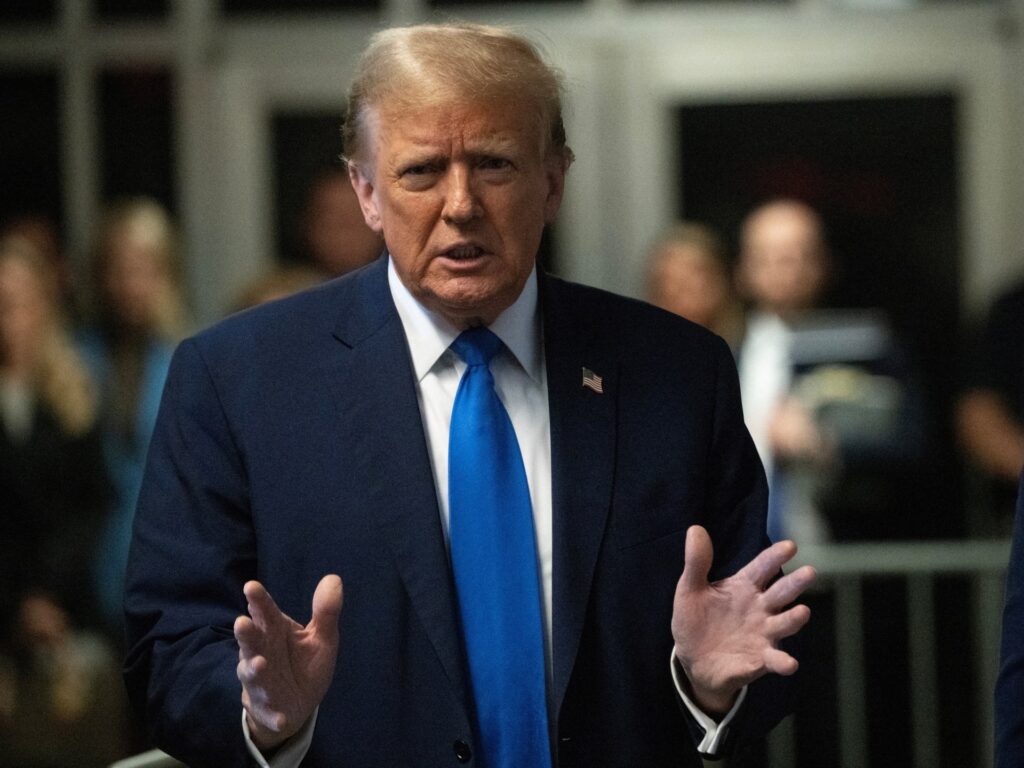
NewsFeed Opening statements and testimony from the first witness was heard by the jury at Donald Trump’s ‘hush money’ trial. Al Jazeera’s Kristen Saloomey is following the first ever criminal proceedings against a former president from New York. Published On 22 Apr 202422 Apr 2024 Adblock test (Why?)
Huge crowds protest Colombian president’s planned reforms
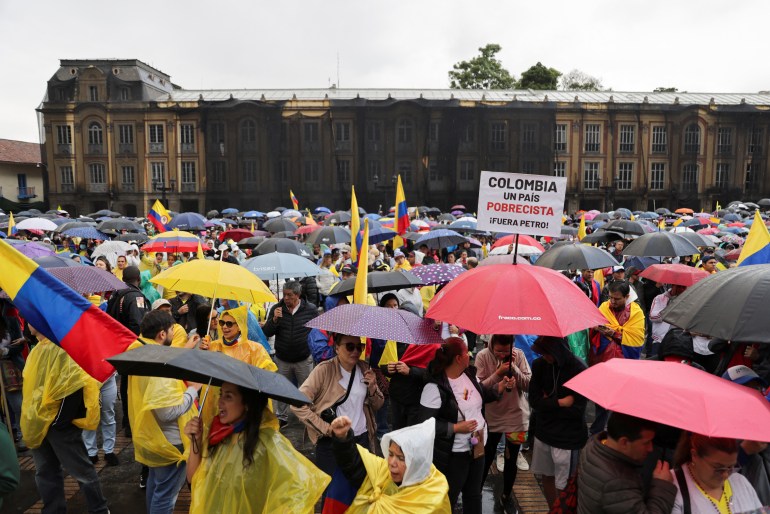
Protesters call Gustavo Petro’s policies ‘dire’ as his government attempts to reform healthcare and other sectors. Tens of thousands of Colombians have taken to the streets in several cities to protest against President Gustavo Petro’s social reform agenda. About 70,000 people demonstrated in Bogota on Sunday, according to estimates provided by the city government. Large rallies also took place in other cities across the country in opposition to Petro’s proposed economic and social reforms. Protests have been a constant since the former leftist fighter took office in 2022, but have gained momentum as Petro has floated the possibility of rewriting the constitution to spur social reforms blocked by a hostile congress and conservative business groups. A Senate committee earlier this month rejected a proposed health reform aimed at stripping power from insurers and expanding access to healthcare. The opposition has been angered by the government’s move to take control of two main insurers it said had failed to correctly care for patients. The government is expected to propose a new version of the health reform once the new legislative session begins in July. Pension and labour reforms are also being debated by lawmakers. Marches have also previously taken place in support of Petro’s reforms. “This government’s policies are dire. The health system, despite its flaws, was working and now Petro is putting an end to it by plunging patients who have no healthcare or medicine into a crisis,” Monica Leon, a 45-year-old doctor told the Reuters news agency. Demonstrators protest against Colombian President Gustavo Petro’s reforms in Bogota [Luisa Gonzalez/Reuters] ‘Topple the government’ President Petro said in a post on X that the protests were large in Medellin, Bogota and Bucaramanga but “weak” in 18 other cities. “The main goal of the marches is to shout ‘Petro Out’ and to topple the government,” Petro said, calling the protests a “soft coup” to thwart reforms. He called for a massive pro-government march on May 1. When Petro came to power two years ago he was the first leftist to govern a country traditionally run by conservative elites. However, he lost majorities in the legislature a few months after his inauguration, and his approval rating has plummeted. Seventy percent of Colombians say the situation in the country “is getting worse”, according to the Invamer polling group. Petro’s ambitious policy of “total peace” – attempting to bring an end to six decades of armed conflict – has also faced reversals. Concessions to armed groups have been controversial, with frequent violations reported. Adblock test (Why?)