

Indian teenager Gukesh to challenge China’s Ding for world chess title

Seventeen-year-old Gukesh Dommaraju sets up world title showdown after winning the 2024 Candidates Tournament. India’s Gukesh Dommaraju has become the youngest player to win the men’s Candidates chess tournament after a draw against Hikaru Nakamura on a nail-biting final day of the double round-robin event in Toronto. The 17-year-old grandmaster effectively wrapped up victory in the tournament on Sunday after American Fabiano Caruana blundered a winning position against Russian Ian Nepomniachtchi to be held to a draw. Gukesh’s draw with the black pieces put him on 9/14 with Nakamura, Nepomniachtchi and Caruana finishing on 8.5/14. Standings | After Round 14 | #FIDECandidates 🇮🇳 Gukesh D is the winner of the FIDE Candidates with a score of 9/14. pic.twitter.com/BrB7szcpbd — International Chess Federation (@FIDE_chess) April 22, 2024 With the win, Gukesh has set up a world chess title showdown against reigning champion Ding Liren of China. The grandmaster from Chennai in India’s southern Tamil Nadu state termed the final game “crazy” and said he was feeling “quite emotional” once it was over. “I am feeling quite good but the journey is only halfway through,” Gukesh said after the game, referring to his qualification for the championship qualification. Gukesh, who was one of three Indian players in the eight-man Candidates tournament, will face Ding for the title later this year. The world number 16 played down his achievement as the youngest challenger to the world title. “I’m just happy about winning and don’t really care about records,” he told reporters. The youngest winner of a Candidates tournament was Garry Kasparov, who was 20 when he prevailed in 1984, a year before sealing the world champion title against fellow Russian Anatoly Karpov. Gukesh: “It was really nice to see all the people here supporting me and cheering for chess. I usually don’t try to interact with the outside world a lot during the tournament, but surely, whenever they cheered during and after the games, it was really nice to see that. Their… pic.twitter.com/C7s6JIIyto — International Chess Federation (@FIDE_chess) April 22, 2024 Gukesh received widespread support from the Indian diaspora, a large number of whom turned up at the tournament venue. India’s Prime Minister Narendra Modi congratulated Gukesh on the win. “Gukesh’s remarkable achievement at the Candidates in Toronto showcases his extraordinary talent and dedication,” Modi wrote in a post on X. India is exceptionally proud of @DGukesh on becoming the youngest-ever player to win the #FIDECandidates! Gukesh’s remarkable achievement at the Candidates in Toronto showcases his extraordinary talent and dedication. His outstanding performance and journey to the top… pic.twitter.com/pfNhhRj7W2 — Narendra Modi (@narendramodi) April 22, 2024 World number one Magnus Carlsen, a five-time classical chess world champion, relinquished his title last year, citing a lack of motivation. Tan Zhongyi dominated the women’s tournament and will face fellow Chinese Ju Wenjun for the world title. Adblock test (Why?)
Rocket attack from Iraq targets US base in Syria
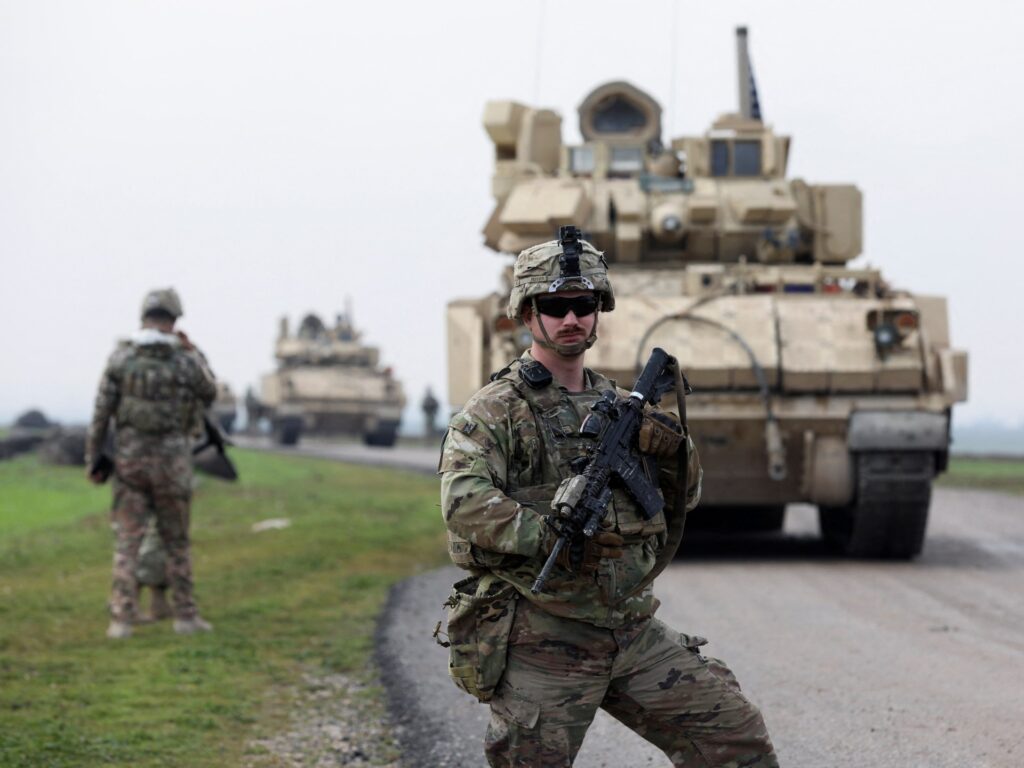
The attack was the first by Iranian-backed groups against US troops in Iraq since they halted a campaign in early February. Several rockets have been fired from Iraq towards a US military base in northeastern Syria. The attack, launched from the town of Zummar late on Sunday, was the first since early February to target US troops, when Iranian-backed groups in Iraq brought to an end a campaign that had seen regular strikes against the US-led international coalition. The resumed hostilities came a day after Iraqi Prime Minister Mohammed Shia al-Sudani returned from a visit to the United States where he met with President Joe Biden. A post on a Telegram group affiliated with Kataib Hezbollah said armed factions in Iraq had decided to resume attacks after a near-three month pause having seen little progress on talks to end the US-led military coalition in the country. However, on Monday, Kataib Hezbollah said it had issued no statement claiming a return to attacks on US forces. It called the earlier announcement “fabricated news”. A statement from the Iraqi security forces accused “outlaw elements of having targeted a base of the international coalition with rockets in the heart of Syrian territory”, at about 9:50pm (18:50 GMT). Iraqi forces launched a major search operation in northern Nineveh province and found the vehicle used in the attack, the statement added. ‘Failed attack’ A US official, speaking on the condition of anonymity, told the Reuters news agency more than five rockets were fired from Iraq towards troops at a coalition base in Rmeilan, Syria, but no US personnel were injured. The official referred to it as a “failed rocket attack”, but it was not immediately clear if the rockets had failed to hit the base or been destroyed before they reached. It was also not clear if the base was the target itself. Following that, the official said, an aircraft from the US-led coalition in Iraq and Syria carried out a strike against the launch site. Two security sources and a senior army officer in Iraq said a small truck with a rocket launcher fixed on the back had been parked in Zummar, a town on the border with Syria. An army officer said the truck was destroyed and seized for further investigation. “We are communicating with the coalition forces in Iraq to share information on this attack,” the officer added. The targeting of US forces in the region intensified after the war in Gaza began on October 7. In January, three US service members were killed and at least 34 others wounded in a drone attack in northeast Jordan near the Syrian border. Adblock test (Why?)
Zelenskyy welcomes US aid to Ukraine, urges rapid transfer of weapons
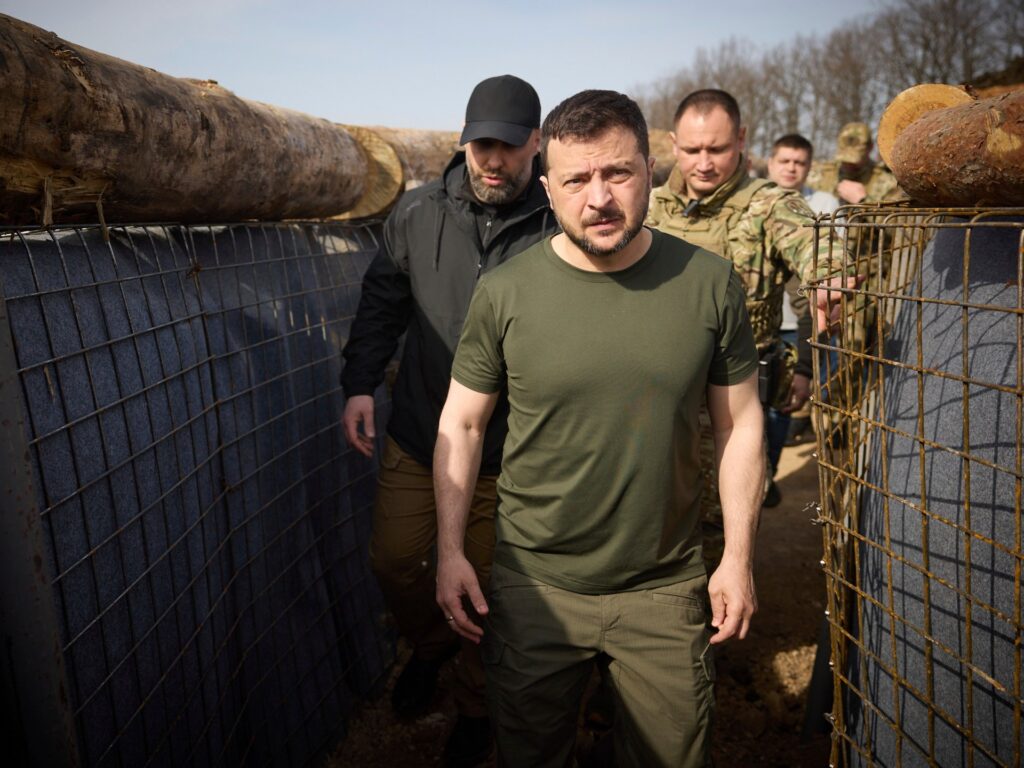
Ukraine president says the passage of the aid bill would send a powerful message to Russia that the US stands by Kyiv. Ukraine’s president has welcomed the passage of $60bn in military aid for his country by the US House of Representatives and urged Washington to quickly turn the bill into law and proceed with the transfer of weapons. “I am grateful to the United States House of Representatives, both parties, and personally Speaker Mike Johnson for the decision that keeps history on the right track,” Ukrainian President Volodymyr Zelenskyy wrote on X, formerly Twitter, on Sunday. The president said that the bill “will keep the war from expanding, save thousands and thousands of lives, and help both of our nations to become stronger”. In an interview with NBC’s Meet the Press programme, Zelenskyy said the passage of the aid bill would send a powerful message to Russia that Washington stands by Kyiv and that it would not be “a second Afghanistan”. “I think this support will really strengthen the armed forces of Ukraine and we will have a chance for victory,” Zelenskyy said through an interpreter. He repeatedly urged US lawmakers to take swift action to pass the bill in the Senate. He said Ukraine urgently needed US long-range weapons including ATACMS (Army Tactical Missile Systems) and air defence systems to fight off the invasion by Russia that began in February 2022. “This is crucial. These are the priorities now,” Zelenskyy said. On Saturday, the US House of Representatives, with broad bipartisan support, passed a $95bn legislative package providing security assistance to Ukraine, Israel and Taiwan. Aid for Ukraine had been held up for months, because of the opposition of Republican presidential candidate Donald Trump, who urged Republican lawmakers to block it. Russia has said US lawmakers’ support for Ukraine showed that Washington was wading much deeper into a hybrid war against Moscow that would end in humiliation on a par with the Vietnam or Afghanistan wars. Russian Foreign Ministry spokeswoman Maria Zakharova said it was clear that the US wanted Ukraine “to fight to the last Ukrainian” including with attacks on Russian sovereign territory and civilians. “Washington’s deeper and deeper immersion in the hybrid war against Russia will turn into a loud and humiliating fiasco for the United States such as Vietnam and Afghanistan,” Zakharova said. Russia, she added, will give “an unconditional and resolute response”. Almost 26 months since the start of the invasion, Russia is slowly advancing in eastern Ukraine and has ramped up its bombardments of cities and towns behind the front lines amid a slowdown in Western military assistance. The US legislation now proceeds to the Democratic-majority Senate, which passed a similar measure more than two months ago. US leaders, from Democratic President Joe Biden to top Senate Republican Mitch McConnell, had been urging Republican House Speaker Mike Johnson to bring it up for a vote. The Senate is set to begin considering the bill on Tuesday, with some preliminary votes that afternoon. Final passage is expected sometime next week, which would clear the way for Biden to sign it into law. Adblock test (Why?)
US set to impose sanctions on Israeli military unit over abuses: Report

Israeli prime minister says he will fight any sanctions targeting Israeli military units for alleged rights violations. Israeli Prime Minister Benjamin Netanyahu has said he would fight against any sanctions being imposed on Israeli military units for alleged rights violations, after a United States media outlet reported that Washington was planning such a step. The US-based Axios news site on Saturday reported that Washington was planning to impose sanctions on Israel’s Netzah Yehuda battalion, which has operated in the occupied West Bank, though the Israeli military said it was not aware of any such measures. Israeli media also identified the unit expected to be targeted as Netzah Yehuda – an infantry battalion founded roughly a quarter of a century ago to incorporate ultra-Orthodox Jewish men into the military. On Friday, the US announced a new series of sanctions linked to Israeli settlers in the occupied West Bank, in the latest sign of growing US frustration with the policies of Netanyahu, whose coalition government relies on settler parties. “If anyone thinks they can impose sanctions on a unit of the [Israeli army] – I will fight it with all my strength,” Netanyahu said in a statement on Sunday. Israeli war cabinet minister Benny Gantz said in a statement on Sunday that he spoke with US Secretary of State Antony Blinken and asked him to reconsider the matter. Gantz said any such sanctions would be a mistake because they would harm Israel’s legitimacy during a time of war. Blinken said on Friday that he made “determinations” regarding accusations that Israel violated a set of US laws that prohibit providing military assistance to individuals or security force units that commit gross violations of human rights. Blinken, without providing details, said his department was conducting investigations under a law that prohibits sending military aid to foreign security units that violate human rights with impunity. He then added: “I think it’s fair to say that you’ll see results very soon. I’ve made determinations; you can expect to see them in the days ahead.” Killing ‘for no real reason’ Separately, on Sunday, Israeli Labour Party leader Merav Michaeli called for dismantling the Netzah Yehuda army unit, saying it is killing Palestinians “for no real reason”. “The sanctions are an acknowledgment of the reality and an understanding that Israel’s conduct in the territories cannot continue,” Michaeli said on X. “The violent and corrupt conduct of the Netzah Yehuda battalion and those around it has been known for years, and nothing has been done to stop it.” Earlier this week, the ProPublica investigative news organisation reported that a special US Department of State panel known as the Israel Leahy Vetting Forum had recommended months ago to Blinken that multiple Israeli military and police units be disqualified from receiving US aid, after allegations of human rights violations. The incidents that were the subject of allegations took place in the occupied West Bank and mostly occurred before Israel’s war on Gaza began on October 7, the outlet said. Before the Gaza war, violence had already been surging in the West Bank, and it has risen since with frequent Israeli military raids, Israeli settler rampages in Palestinian villages and Palestinian attacks on Israeli forces and settlers. The Israeli military said the Netzah Yehuda battalion is an active combat unit that operates according to the principles of international law. The Israeli army said that “following publications about sanctions against the battalion”, it was “not aware of the issue”. “If a decision is made on the matter it will be reviewed,” it said, pledging to “continue to work to investigate any unusual event in a practical manner and according to law”. In 2022, Netzah Yehuda’s battalion commander was reprimanded and two officers were dismissed over the death of an elderly Palestinian-American who the unit’s soldiers had detained in the West Bank, an incident that stirred concern in Washington. There have been several other incidents in recent years, some captured on video, in which Netzah Yehuda soldiers were accused of or charged with abusing Palestinian detainees. Adblock test (Why?)
What will the US aid package to Kyiv mean for Russia’s war on Ukraine?
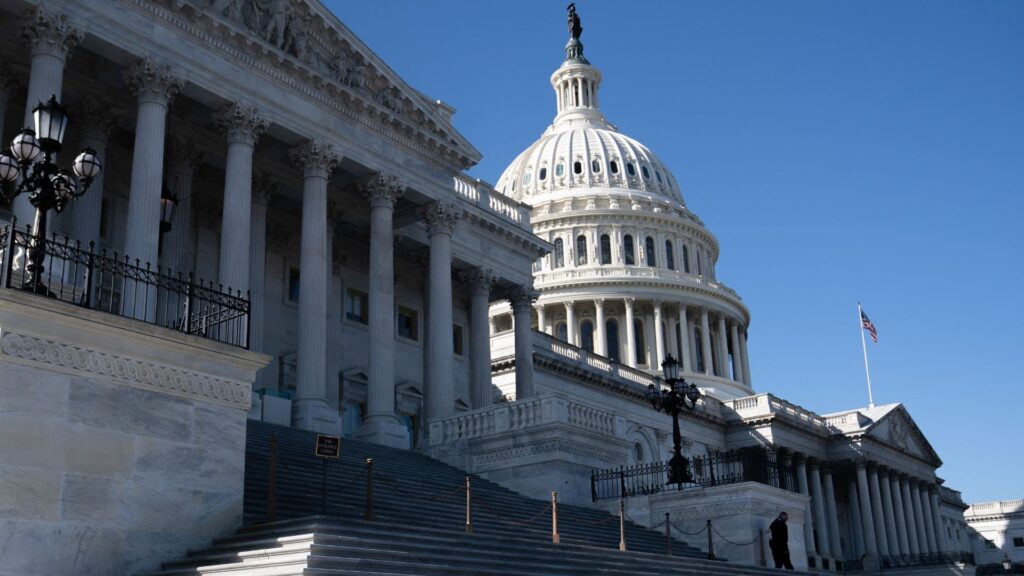
Kyiv says aid is vital as it battles Russian invaders, but Kremlin says it will prolong war. The United States House of Representatives has agreed on a $60bn aid package to Ukraine after months of political wrangling. More than one-third will go on weapons to battle Russian forces. Will this help end the war? Or will it just prolong the fighting and bloodshed? Presenter: Tom McRae Guests: Chris Hedges – Former Middle East bureau chief of the New York Times Anatol Lieven – Director of the Eurasia Program at the Quincy Institute for Responsible Statecraft Patrick Bury – Defence and security analyst; associate professor in security at the University of Bath Adblock test (Why?)
US lawmakers rebuked for waving Ukraine flags as aid bill is passed

NewsFeed This is the moment the US House of Representatives approved a military aid package worth $95 billion to support Ukraine, along with Israel and Taiwan. Lawmakers were told to stop waving Ukrainian flags on the floor of the US Congress. President Volodymyr Zelenskyy expressed his thanks. Published On 21 Apr 202421 Apr 2024 Adblock test (Why?)
Could shipping containers be the answer to Ghana’s housing crisis?

Accra, Ghana – At a construction site on the outskirts of Accra, the spirited figure of Eric Kwaku Gyimah directs the flurry of activity. Clad in sturdy work boots caked with dust from the floor, his worn jeans bear the marks of many hours spent amid the concrete and steel and a high-visibility vest drapes over his shoulders. Amid stacks of shipping containers and the hum of heavy machinery, his voice rises above the noise, issuing directives to his employees. For him, this is more than just a construction site; here, discarded shipping containers are transformed into eco-friendly homes, offering a potential solution to the West African country’s housing crisis. “This is more than a business; it’s a movement,” he declares. Eric Kwaku Gyimah with a member of staff at one of his construction sites near Accra, Ghana [Courtesy of Eric Kwaku Gyimah] Ghana’s housing crisis has been building for some time. The Ghana Statistical Service has reported that approximately six million of Ghana’s 33 million population are in urgent need of housing. Some of these people are homeless but most are living in dangerously overcrowded slums which have grown up over time on the edge of Ghana’s larger towns. The population living in slums surged from 5.5 million in 2017 to 8.8 million by 2020, the most recent count by the United Nations. One reason for this is rapid urbanisation, driven by both rural-to-urban migration and natural population growth. As more people move to urban areas in search of economic opportunities, the demand for housing surpasses the available supply, leading to the proliferation of informal settlements and slums. Additionally, economic challenges and limited access to financing have hindered many Ghanaians from buying or building homes. Eco-homes made from shipping containers under construction [Courtesy of Eric Kwaku Gyimah] This new venture aims not only to address the immediate need for housing, but also to present a more affordable and sustainable living model. “As we confront Ghana’s staggering housing deficit, it’s imperative to offer more than mere structures; we must present a vision for sustainable living,” Gyimah says. “We are not only providing shelter but also saving the environment for the future generation. While paving the way for sustainable living models, we aspire to create a lasting impact, one home at a time.” The birth of an idea Growing up with 17 siblings in Akim Swedru – 180km (112 miles) from the capital, Accra – in eastern Ghana, Gyimah says he dreamed of becoming either a banker or an artist. But Gyimah’s interest in sustainability was deeply rooted in his upbringing in a region known for its rainforests, streams, hills and rivers. He saw the rapid deforestation and destruction of wildlife habitats caused by construction and illegal mining. So, despite having studied banking and finance, he decided to pursue his passion for carpentry. His journey into home design began with a simple idea; producing stylish accommodation for pets, especially dogs – “for them to live a better life”, he says. He quickly stepped up to designing homes for people when he was struck by the idea of reusing shipping containers. The cosy interior of one of the shipping container homes made by Gyimah’s enterprise [Courtesy of Eric Kwaku Gyimah] “I settled on repurposing shipping containers, typically discarded after their maritime service life, into chic and comfortable living spaces for people to live in,” the father of three tells Al Jazeera. Affordability is paramount if his venture is to have a hope of making any sort of impact on Ghana’s need for housing. Therefore, his homes are primarily aimed at individuals and families seeking affordable yet sustainable living solutions. The cost of these homes varies depending on the design, with the simplest options ranging from $7,000 to $10,000. “This amount is just for the structure, excluding furnishing,” he adds. More complex designs with fully fitted kitchens and bathrooms, spread over several storeys, cost as much as $35,000, but, compared with a traditional bricks-and-mortar design, these homes still cost a good deal less. According to the Ghana Real Estate Developers Association, it can cost between $50,000 to $70,000 to build a new two-bedroom, bricks-and-mortar house. According to Ghana Property Centre, a one or two-bedroom house in the capital city of Accra costs about $100,000. A shipping container home, by contrast, “is cost-effective as compared to the traditional concrete structures … We want to make it possible for a lot of people to own homes in Ghana,” Gyimah says. Shipping container homes can be arranged over several storeys [Courtesy of Eric Kwaku Gyimah] By contrast to bricks and mortar, shipping container homes can be constructed quickly. While very simple shipping container home designs can be completed in a few weeks, more complex layouts can take up to a year to build. “It’s not time-consuming,” he says. “On top of it, the materials used in building these shipping houses are eco-friendly. Ultimately, it is mobile. You’d have saved 30 percent of what you would have spent on block buildings. It saves a lot of land space, too.” “Starting small with just one refurbished shipping container for my office in 2019 was just the beginning,” Gyimah says. Since then, the business, IWoodz Creation, has grown, now employing 25 local staff. As well as the 52 individual homes it has built, the group also turns decommissioned shipping containers into stores, offices and cafes. In order to use less energy, these homes use natural ventilation through more strategic placement of windows and vents which dissipate heat more efficiently, Gyimah explains, “reducing the need for energy-intensive cooling systems like air conditioners”. Moving a shipping container home into position on a site [Courtesy of Eric Kwaku Gyimah] Too little, too late? Gyimah’s approach has been criticised by some, however. While the environmental benefits are clear, planning experts say solutions such as this will likely only have a small effect on Ghana’s housing problem. It is also unclear how long these sorts of homes will last, although Gyimah says they
Maldives votes in parliamentary elections amid India-China rivalry

President Mohamed Muizzu’s moves to increasingly shift away from New Delhi has caused tension. Maldives is holding parliamentary elections in a ballot crucial for President Mohamed Muizzu, who has turned the archipelago nation away from longtime ally India since coming to power last September. Sunday’s elections are keenly watched by India and China as they vie for influence in the island country, which is known for its pristine beaches and luxury resorts and is strategically located in the Indian Ocean, where global east-west shipping lanes pass through. The rivalry between India and China sharpened following Muizzu’s election last September, with the new leader taking a pro-China stand and acting to remove Indian troops stationed on one of the country’s islets. About 284,000 people were eligible to vote on Sunday, and tentative results are expected later the same day. Six political parties and independent groups are fielding 368 candidates for 93 seats in Parliament. Splits in all the main political parties, including Muizzu’s People’s National Congress (PNC), are expected to make it hard for any single party to win an outright majority. Muizzu won last year’s presidential polls on promises to cut off Indian influence with his “India out” campaign. He was widely seen as a proxy candidate for former President Abdulla Yameen, who held power between 2013 and 2018 and whose 11-year jail term on bribery charges was overturned by a court last week. President Muizzu has accused his immediate predecessor, Mohammed Ibrahim Solih, of compromising national sovereignty by giving India too much influence. The current parliament, dominated by Solih’s Maldivian Democratic Party (MDP), has sought to stymie Muizzu’s efforts to realign the archipelago’s diplomacy. At least 75 Indian military personnel were stationed in the Maldives and their known activities were operating two aircraft donated by India and assisting in the rescue of people stranded or faced with calamities at sea. Muizzu has now taken steps to deport the soldiers and have civilians take over those activities. Relations strained further when Indian social media activists started a boycott campaign of Maldives tourism in January. The move was in retaliation for three Maldivian deputy ministers making derogatory statements about Indian Prime Minister Narendra Modi for raising the idea of promoting tourism in Lakshadweep, India’s string of islands similar to the Maldives. According to recent Maldives government statistics, the number of Indian tourists has fallen, dropping that country from being the top source of foreign visitors to the sixth. Muizzu visited China earlier this year and negotiated an increase in the number of tourists and inbound flights from China. His government has also awarded high-profile infrastructure contracts to Chinese state-owned companies. In 2013, Maldives joined China’s “Belt and Road” initiative meant to build ports and highways to expand trade – and China’s influence – across Asia, Africa and Europe. The Maldives consists of about 1,200 coral islands and atolls and has a population of about 520,000. Adblock test (Why?)
US senators call on Biden to sanction Sudan’s RSF over human rights abuses

Lawmakers say Hemedti’s and the RSF’s activities and abuses make them deserving of sanctions from the United States. United States senators have written an open letter to US President Joe Biden, calling on him to recognise Sudan’s Rapid Support Forces (RSF) and its leader, General Mohamed Hamdan ‘Hemedti’ Dagalo, as violators of human rights. The letter, dated Friday, follows the one-year anniversary of the war in Sudan between the RSF and the Sudanese Armed Forces (SAF), two rival military factions fighting for control of the country after a coup in 2021. The lawmakers cite the US’s Global Magnitsky Human Rights Accountability Act as a basis for sanctions, adding that the RSF and Hemedti’s activities include “gross violations of internationally recognized human rights committed against human rights defenders and persons seeking to expose illegal activity by government officials”. The lawmakers have given Biden 120 days to act on the request. The letter lists human rights abuses in Sudan, such as accounts of rape, extrajudicial killings, and targeting of journalists, including when Al Jazeera’s Ahmed Fadl and Rashid Gibril were detained and beaten up in Khartoum. Additionally, it makes reference to a December 2023 statement from US Secretary of State Antony Blinken that the RSF had committed “war crimes, crimes against humanity, and ethnic cleansing” since the outbreak of the war last April. The lawmakers also called on Biden to investigate the activities of the RSF to determine further sanctions that may be warranted. “We ask that you also examine the RSF’s financial networks and sources of revenue, such as gold smuggling, and relationships with the Russian Federation and Wagner Group, to assess whether they are also deserving of sanction under the Global Magnitsky Human Rights Accountability Act for acts of significant corruption by government officials.” The US Department of the Treasury imposed similar penalties in September 2023, said the senators. This includes sanctions against Hemedti’s brother and visa restrictions on RSF General Abdul Rahman Juma over the group’s violent activities, including “targeted abuses against human rights activists and defenders”, according to the US Department of State. The letter was brought forward by US Senators Ben Cardin and Jim Risch, who serve, respectively, as chair and as a ranking member of the Senate Foreign Relations Committee; and by US Representatives Michael McCaul and Gregory Meeks, chair and ranking member of the House Foreign Affairs Committee. The RSF and SAF have both been accused of attacking civilians and blocking humanitarian aid access over the past year. Ceasefire agreements have collapsed several times and international mediators are still working to achieve conclusive peace talks. Sudan has been left with a major humanitarian crisis while nearly eight million people are displaced and facing shortages of food, water, and medical supplies. Adblock test (Why?)
Will India’s election be free and fair?

Opponents and rights groups allege repression has increased in recent years. Six weeks of voting have begun in an election where India’s Prime Minister Narendra Modi is seeking a third term. Opponents say repression and sectarianism have increased under his leadership. So, what are the issues? And will the election be free and fair? Presenter: Sami Zeidan Guests: Mohan Krishna – Spokesperson for the governing Bharatiya Janata Party (BJP) Arshpreet Khadial – Chief Spokesperson for the opposition Indian National Congress Sravasti Dasgupta – Reporter for The Wire who specialises in Indian politics Adblock test (Why?)