

US imposes new sanctions on Iran after attack on Israel
[unable to retrieve full-text content] Sanctions on Iran’s missile and drone programmes come as fears mount over possibility of greater regional escalation.
Photos: The destruction of the Nuseirat refugee camp in Gaza
[unable to retrieve full-text content] The Israeli army left a trail of destruction when it withdrew from the Nuseirat refugee camp.
Students rename Canadian university buildings after Palestinian places
[unable to retrieve full-text content] Student activists at a university in Canada have ‘renamed’ dozens of campus buildings to places in Palestine.
Georgia advances ‘foreign agents’ bill as 20,000 rally against it
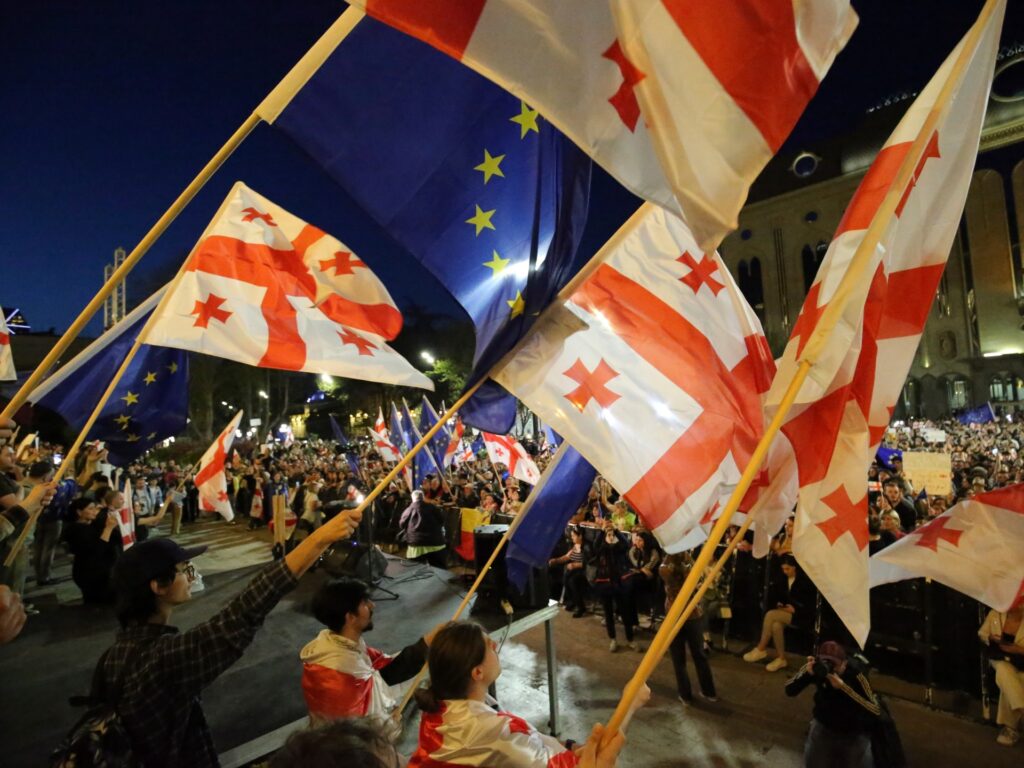
The ruling party suddenly reintroduced the bill earlier this month, after mass protests forced its withdrawal last year. The Georgian parliament has advanced a controversial “foreign influence” bill through its first reading, as thousands joined a third day of anti-government protests. The bill, first presented early in 2023 and withdrawn amid fierce public opposition, requires media and civil society groups to register as being under “foreign influence” if they get more than 20 percent of their funding from overseas. Critics say the bill mirrors a repressive Russian law on “foreign agents” that has been used against independent news media and groups seen as being at odds with the Kremlin and will undermine Tbilisi’s aspirations for closer European Union ties and, ultimately, membership. In a vote boycotted by the opposition in the 150-seat parliament, 83 politicians from the ruling Georgian Dream party backed the bill. Some 20,000 people blocked traffic in front of the parliament building in the capital, Tbilisi, to show their opposition to the measure. “No to the Russian law!” they shouted after listening to the Georgian national anthem and European Union’s Ode to Joy. Speaking at the rally, opposition member of parliament Aleksandre Ellisashvili condemned politicians who voted for the bill as “traitors” and said the rest of Georgia would show them that “people are power, and not the traitor government”. The Black Sea nation was once part of the Soviet Union but secured its independence in 1991 as the USSR collapsed. Once seen as a democratic reformer, the current ruling party led by Prime Minister Irakli Kobakhidze has been accused of trying to steer Georgia towards closer ties with Russia. “Today is a sad day for Georgia because our government has taken another step towards Russia and away from Europe,” protester Makvala Naskidashvili told the AFP news agency. “But I am also happy because I see such unity among the youth,” the 88-year-old added. “They are proud Europeans and will not let anyone spoil their European dream.” Protest rallies were also held in several other cities across Georgia, including the second largest city of Batumi, Interpress news agency reported. Derailing Georgia Thousands have been taking to the streets of Tbilisi since Monday to show their opposition to the draft law with riot police chasing demonstrators through the labyrinth of narrow streets near parliament, beating them and making arrests. Kobakhidze, known for anti-Western rhetoric while insisting that he is committed to Georgia’s European aspirations, said the law would boost the financial transparency of NGOs funded by Western institutions. The only change in wording from the previous draft says organisations that receive 20 percent or more of their funding from overseas would have to register as “pursuing the interests of a foreign power” rather than as “agents of foreign influence”. In an online statement on Wednesday, EU foreign policy chief Josep Borrell described the bill’s passage through parliament as “a very concerning development” and warned that “the final adoption of this legislation would negatively impact Georgia’s progress on its EU path”. “This law is not in line with EU core norms and values,” Borrell said, stressing that the country’s “vibrant civil society” was a key part of its bid for EU membership. Washington has also voiced concerns that the law would “derail Georgia from its European path”. Amnesty International urged Georgia’s authorities to “immediately stop their incessant efforts to impose repressive legislation on the country’s vibrant civil society.” The ruling Georgian Dream party reintroduced the bill to parliament earlier this month, in a surprise announcement ahead of parliamentary elections in October. To become law, the bill has to pass second and third readings in parliament and secure presidential backing. But Georgian Dream’s commanding majority in the legislature means it would be able to pass those further stages and vote down a presidential veto. Adblock test (Why?)
India election 2024 phase 1: Who votes and what’s at stake?
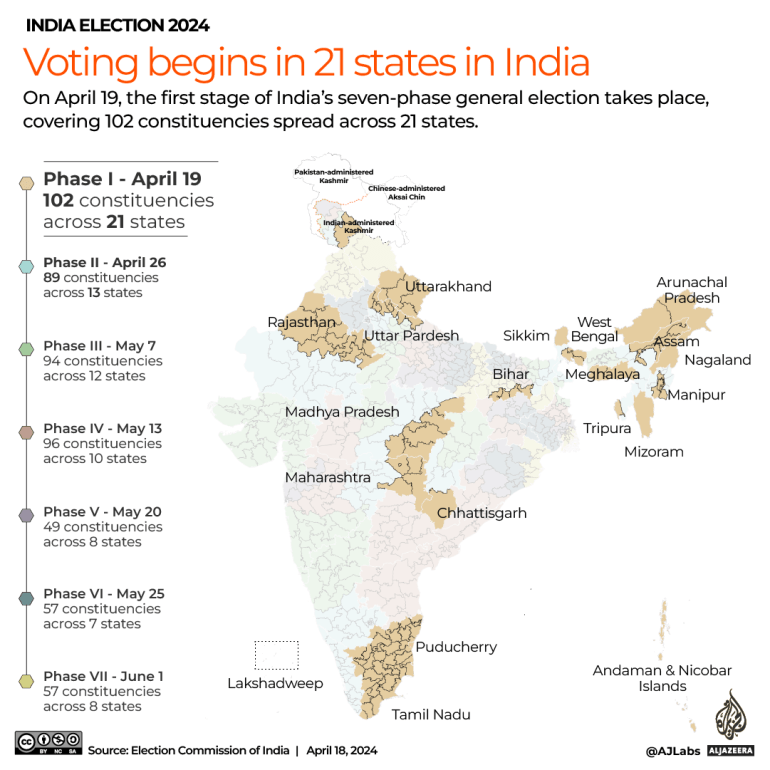
EXPLAINER A total of 102 constituencies in 21 states will vote on April 19 for the first phase of the Lok Sabha elections. The first of seven phases of the Indian national election is set to kick off on April 19. These elections are for the 543 seats of the Lok Sabha, India’s lower house of parliament. The party or coalition that secures a majority of the seats in the Lok Sabha will form the next government. It is the world’s – and history’s – largest ever democratic exercise, with 969 million registered voters eligible to cast their vote using 5.5 million electronic voting machines over 44 days. The votes will be counted and results will be announced on June 4. As a multiparty democracy, India’s elections will see a range of national and regional parties competing for votes. But two principal coalitions are directly facing off as contenders to lead the nation: the National Democratic Alliance (NDA) led by Prime Minister Narendra Modi’s Bharatiya Janata Party (BJP), and a coalition of 28 parties, called the Indian National Developmental Inclusive Alliance (INDIA), led by the main opposition, the Indian National Congress. Who votes in phase 1? In the first phase, 102 constituencies within 21 states and union territories are voting, including: Tamil Nadu: All 39 of the state’s seats Rajasthan: Twelve out of the state’s 25 seats Uttar Pradesh: Eight out of the state’s 80 seats Madhya Pradesh: Six out of the state’s 29 seats Maharashtra: Five out of the state’s 48 seats Uttarakhand: All five of the state’s seats Assam: Five out of the state’s 14 seats Bihar: Four out of the state’s 40 seats West Bengal: Three out of the state’s 42 seats Arunachal Pradesh: Both of the state’s two seats Manipur: Both of the state’s two seats Meghalaya: Both of the state’s two seats Chhattisgarh: One out of the state’s 11 seats Mizoram: The state’s sole seat Nagaland: The state’s sole seat Sikkim: The state’s sole seat Tripura: One out of the state’s two seats Jammu and Kashmir: One out of five seats Andaman and Nicobar Islands: The union territory’s sole seat Lakshadweep: The union territory’s sole seat Puducherry: The union territory’s sole seat (Al Jazeera) Which are some of the key constituencies voting on April 19? Coimbatore, Tamil Nadu: Prime Minister Modi’s BJP has traditionally struggled to break through the southern state of Tamil Nadu, where it won zero out of the 39 seats in 2019. This time, the party is betting on a rising star, the party’s state leader K Annamalai, to deliver an unlikely win from Coimbatore. Nagpur, Maharashtra: Federal transport minister Nitin Gadkari – a senior BJP leader who some political analysts view as a potential challenger to Modi – is contesting from Nagpur, a city famous for its oranges. Nagpur is also the headquarters of the Rashtriya Swayamsevak Sangh, the Hindu majoritarian umbrella group that is the ideological mentor of the BJP. Manipur: Both of the state’s two seats will vote in part in the first phase on April 19, and in part in the second phase, on April 26. The elections are being held in the backdrop of ethnic strife that has effectively fractured Manipur between its plains – where the majority Meitei community predominantly lives – and the hills – where the Kuki community lives. More than 200 people have been killed in clashes since last May between the two communities, with many blaming the state’s BJP government for a biased role and for its failure to stop the violence. Will it pay a political price? Muzaffarnagar, Uttar Pradesh: The epicentre of anti-Muslim riots in 2013 that some observers believe helped the BJP win big in India’s most populous state in 2014 (72 out of 80 seats), Muzaffarnagar votes on April 19. The constituency, and its neighbouring seats, have a significant Muslim population, but the BJP’s ability to consolidate Hindu votes helped it win in 2014 and 2019. When does voting start and end? Voting will start at 7am local time (01:30 GMT) and end at 6pm local time (12:30 GMT). Voters in the queue by closing time get to vote even if that means keeping polling booths open longer. Who rules states that vote in the first phase? Tamil Nadu is governed by an alliance led by the Dravida Munnetra Kazhagam, comprising parties from INDIA. The BJP rules in Uttar Pradesh, Madhya Pradesh, Chhattisgarh, Rajasthan, Uttarakhand, Assam, Manipur, Tripura and Arunachal Pradesh. The BJP is also in power through alliances in Maharashtra, Bihar, Meghalaya, Nagaland, Sikkim and Puducherry. Andaman and Nicobar Islands and Lakshadweep are federally governed with no democratically elected government. Jammu and Kashmir is also ruled from New Delhi, with no state elections since the Modi government scrapped its special status in 2019. West Bengal is governed by the All India Trinamool Congress Party, a part of the INDIA alliance. A coalition of six regional parties, the Zoram People’s Movement, governs Mizoram. Who won these Lok Sabha seats in 2019? In the last Lok Sabha election, the Congress-led United Progressive Alliance (UPA) – many of whose members are now part of the INDIA grouping – won 45 of the 102 seats that will vote on April 19. The BJP-led NDA won 42 of these seats. In Tamil Nadu, the biggest prize in the first phase, the NDA alliance won one seat: This went to the regional All India Anna Dravida Munnetra Kazhagam (AIADMK). The BJP itself did not win any seats. The other 38 seats in Tamil Nadu went to the UPA, with the Congress winning eight, the DMK winning 23, and other allies winning the rest. In Assam, a delimitation exercise last year changed the organisation of constituencies. This year, Kaziranga has replaced what was Kaliabor in 2019, with some changes. The Congress won this seat in 2019. Sonitpur has replaced Tezpur, which the BJP won in 2019. The second phase of voting will be on April 26. Adblock test (Why?)
Tesla asks shareholders to restore Elon Musk’s $56bn pay deal

Tesla Chair Robyn Denholm says company believes in ‘big risks for the chance of big rewards’. Tesla has asked shareholders to reapprove a record-breaking $56bn pay package for CEO Elon Musk after a US judge rejected the deal. In a filing with the Securities and Exchange Commission on Wednesday, Tesla Chair Robyn Denholm said the board of directors supported the original pay deal and believed in “big risks for the chance of big rewards”. “Elon has not been paid for any of his work for Tesla for the past six years that has helped to generate significant growth and stockholder value,” Denholm wrote. “That strikes us – and the many stockholders from whom we already have heard – as fundamentally unfair, and inconsistent with the will of the stockholders who voted for it.” Shareholders, who will gather for their annual meeting on June 13, will also be asked to approve a proposal to move the company’s corporate home to Texas. The proposals come on the heels of a difficult period for the electric carmaker. Tesla’s vehicle deliveries fell by 8.5 percent in the first quarter, and the company’s shares have fallen 37 percent so far this year even as the S&P 500 has risen about 6 percent. Musk earlier this week told staff in a memo that the company would lay off more than 10 percent of its global workforce to be “lean, innovative and hungry for the next growth phase cycle”. Judge Kathaleen McCormick of Delaware’s Court of Chancery rejected Musk’s compensation package in January, finding that the South Africa-born entrepreneur had heavily influenced the deal and granting him such “an unfathomable sum” would be unfair to shareholders. Shares of Tesla fell about 1 percent on Wednesday following the news of the proposed pay package. Adblock test (Why?)
Russia-Ukraine war: List of key events, day 784
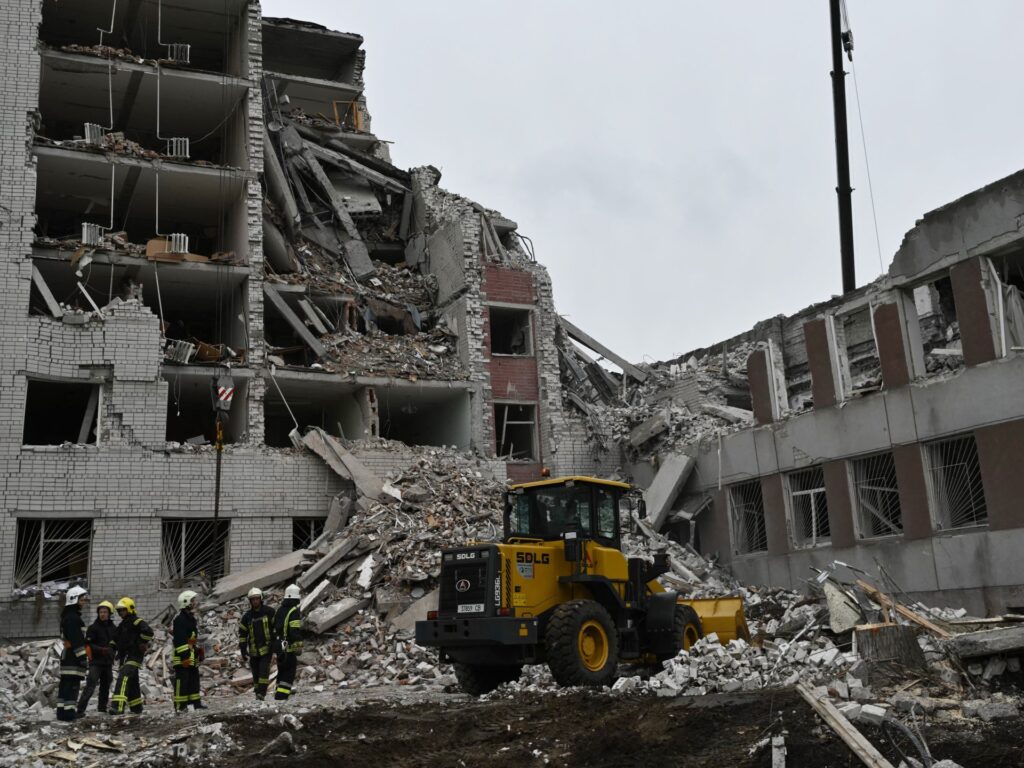
As the war enters its 784th day, these are the main developments. Here is the situation on Thursday, April 18, 2024. Fighting At least 17 people were killed in the Ukrainian city of Chernihiv after it was struck by three Russian missiles. Emergency services said 60 people, including three children, were injured. About 250,000 people live in Chernihiv, which is about 150km (90 miles) north of the capital, Kyiv. One woman was injured by falling debris after Russian forces brought down a done over the Voronezh region. Governor Vyacheslav Gladkov said air defence also destroyed 14 airborne targets over the southern Belgorod region. No injuries were reported. The BBC reported the number of Russian soldiers killed in the war in Ukraine had topped 50,000. The data was compiled by BBC Russian, independent media group Mediazona and volunteers. Colonel Serhii Pakhomov, acting head of the Ukrainian military’s atomic, biological and chemical defence forces, told the Reuters news agency that Kyiv had recorded about 900 uses of riot control agents on the front line by Russia in the past six months. The gases, banned for use on the battlefield by the international Chemical Weapons Convention, are being used to try and clear trenches, Pakhomov said. Some 500 troops had required medical help after exposure to toxic substances on the battlefield and at least one soldier died after suffocating on tear gas, he added. Ukrainian President Volodymyr Zelenskyy said the Ukrainian military attacked a large Russian airfield at Dzhankoi in the north of occupied Crimea. A series of explosions were reported at the base. There were no reports of damage. Politics and diplomacy US House Speaker Mike Johnson said the House would hold a long-delayed vote on a $60bn aid package for Ukraine on Saturday. The bill, passed by the Senate in February, has been held up amid objections from far-right members of Johnson’s Republican party. Writing in the Wall Street Journal, US President Joe Biden urged Congress to approve the package saying the conflict was at a “pivotal moment”. China said that “a lot of work” would need to be done before a planned peace conference on the Ukraine war could take place in Switzerland. It did not say whether it would attend the meeting, which is expected to take place in June. Russia’s FSB security service arrested four people, accusing them of sending money to Ukrainian armed forces and planning to join the country’s military. France appointed investigating magistrates to run a war crimes investigation into the death of Fox News cameraman Pierre Zakrzewski, a dual French-Irish national, who was killed covering the war in Ukraine in March 2022. Producer Oleksandra Kuvshynova was also killed when the news team’s vehicle came under fire in Horenka near Kyiv. Correspondent Benjamin Hall was badly injured. Cybersecurity firm Mandiant warned a cyber group known as Sandworm, with links to Russian military intelligence, is emerging as a significant global threat after playing an increasingly critical role in the ongoing conflict in Ukraine. Sandworm “is actively engaged in the full spectrum of espionage, attack, and influence operations”, Mandiant said. Weapons President Zelenskyy, addressing the European Council by videolink hours after the Chernihiv attack, pleaded for more defence systems. Zelenskyy said Ukraine should enjoy the same cover from aerial attacks as Israel, which was able to intercept a barrage of drones and missiles fired by Iran last weekend. “Our Ukrainian sky, the sky of our neighbours deserves the same level of defence,” he said. “All lives are equally valuable.” German Chancellor Olaf Scholz and other senior German officials pressed fellow European Union members to take action as soon as possible to boost Ukraine’s air defences. On Saturday, Germany announced it was sending an additional Patriot air defence system to Ukraine. NATO chief Jens Stoltenberg said the NATO-Ukraine Council will meet on Friday to discuss ways on how to provide more air defence systems for Kyiv. A crowdfunding initiative launched by a Slovak group on Monday has so far raised 750,000 euros ($798,000) from members of the public. The group, Peace for Ukraine, hopes to raise one million euros ($1.07 million) for the Czech Republic’s initiative to buy ammunition for Ukraine. Slovakia’s government has refused to send military aid to Kyiv. Adblock test (Why?)
More than 11,000 evacuated in northern Indonesia as Ruang volcano erupts
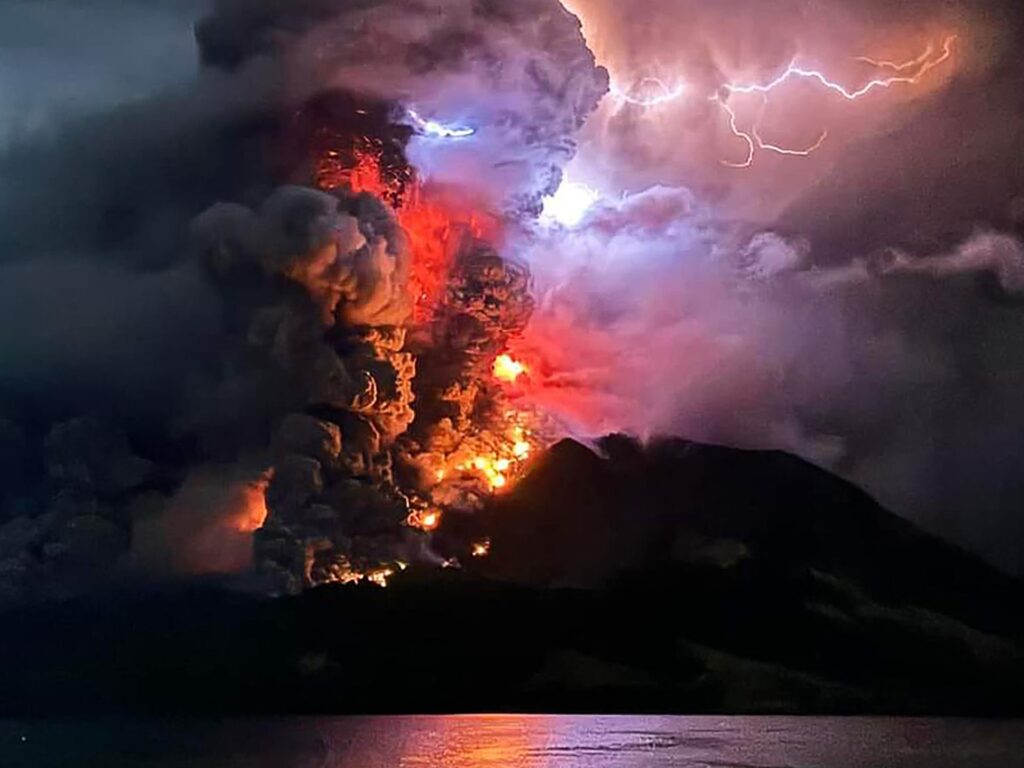
Exclusion zone extended, flights disrupted as Ruang sends ash and smoke more than two kilometres into the sky. More than 11,000 people have been told to evacuate and air travel in region has been disrupted after a volcano in northern Indonesia erupted multiple times. Mount Ruang, located in in North Sulawesi Province, first erupted at 9:45pm (13:45 GMT) on Tuesday sending billowing clouds of smoke and ash high into the sky. After four more eruptions on Wednesday, Indonesia’s volcanology agency raised the alert level for the 725-metre (2,379-foot) high mountain to four, the highest on the scale. They also widened the exclusion zone around the crater from four kilometres (2.5 miles) to six kilometres (3.7 miles). More than 800 people were evacuated initially from Ruang to nearby Tagulandang Island, which is located more than 100 kilometres (62 miles) north of the provincial capital, Manado. But officials said on Thursday morning that more people would need to be evacuated as a result of the widening exclusion zone, and would be taken to Manado. “At least 11,615 residents who are in the risk area must evacuate to a safe place,” Abdul Muhari, the head of the disaster agency’s disaster data, communications and information centre was quoted as saying by the Kompas newspaper. Officials also worry that part of the volcano could collapse into the sea and cause a tsunami as it did during a previous eruption in 1871. Video footage showed flows of red lava streaming down the mountain, reflected in the waters below, and billowing clouds of grey ash above Ruang’s crater. Important Travel Update: Malaysia Airlines has suspended several flights to/from KL International Airport (KUL) to Sabah and Sarawak today, 18 April 2024 due to the volcanic eruption at Mount Ruang, Indonesia. Our priority is your safety. We’re closely monitoring the situation… — Malaysia Airlines (@MAS) April 18, 2024 Muhammad Wafid, the head of Indonesia’s geological agency, earlier said Ruang’s initial eruption sent an ash column two kilometres (1.2 miles) into the sky, with the second eruption pushing it to 2.5 kilometres (1.6 miles). Aviation authorities announced the closure of Sam Ratulangi International Airport in Manado until at least Thursday evening “due to the spread of volcanic ash which could endanger flight safety”. The airport has connections to countries including China, Singapore and South Korea. There was also significant disruption to flights to and from Kota Kinabalu International Airport in neighbouring Malaysia. Kota Kinabalu is on the northern tip of Malaysian Borneo, just over 1,100 kilometres (688 miles) to the northwest of Ruang. The volcanology agency said activity had increased at Ruang after two earthquakes in recent weeks. Indonesia, which sits along the ‘Ring of Fire’, a horseshoe-shaped series of tectonic fault lines around the Pacific Ocean, has 120 active volcanoes. In 2018, the eruption of Indonesia’s Anak Krakatoa volcano triggered a tsunami along the coasts of Sumatra and Java after parts of the mountain fell into the ocean. Hundreds of people were killed. Adblock test (Why?)
NPR editor resigns after accusing US outlet of liberal bias
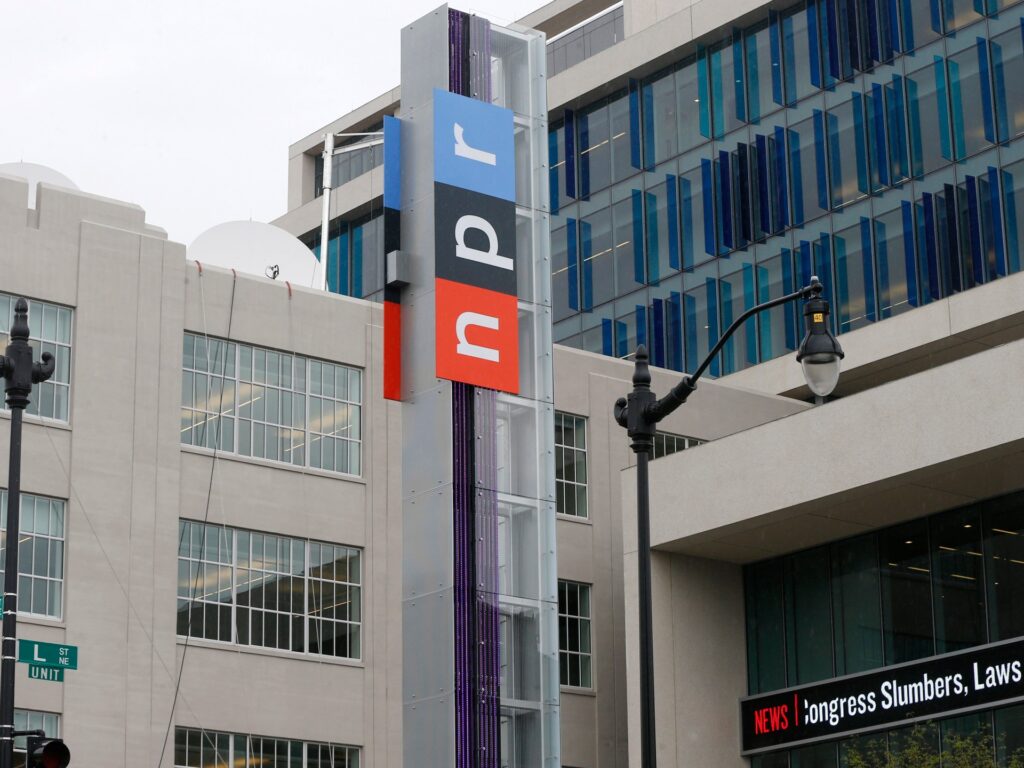
Uri Berliner quits broadcaster days after being suspended over essay accusing network of lacking viewpoint diversity. A senior editor at a public broadcaster in the United States who accused his employer of liberal bias, igniting heated debate about standards in journalism, has resigned. Uri Berliner, an editor with National Public Radio (NPR), announced his resignation on Wednesday just over a week after he published an essay accusing the outlet of being fixated on race and identity and lacking “viewpoint diversity”. “I am resigning from NPR, a great American institution where I have worked for 25 years. I don’t support calls to defund NPR. I respect the integrity of my colleagues and wish for NPR to thrive and do important journalism,” Berliner said in a resignation letter posted on X. “But I cannot work in a newsroom where I am disparaged by a new CEO whose divisive views confirm the very problems at NPR I cite in my Free Press essay.” My resignation letter to NPR CEO @krmaher pic.twitter.com/0hafVbcZAK — Uri Berliner (@uberliner) April 17, 2024 NPR did not immediately respond to a request for comment. Berliner’s resignation came after NPR on Friday slapped the editor with a five-day suspension without pay in response to his essay calling out the network. In the essay published in The Free Press, Berliner argued that the outlet had lost the public’s trust by putting a progressive slant on coverage of major news stories, including the COVID-19 pandemic and claims that Donald Trump colluded with Russia. “There’s an unspoken consensus about the stories we should pursue and how they should be framed,” Berliner wrote. “It’s frictionless – one story after another about instances of supposed racism, transphobia, signs of the climate apocalypse, Israel doing something bad and the dire threat of Republican policies. It’s almost like an assembly line.” Berlinera also cited voter registration data that he said showed there were 87 Democrats and no Republicans on staff at the outlet’s Washington, DC, headquarters. Berliner’s essay promoted public pushback from NPR employees, including recently-appointed CEO Katherine Maher, whose own views came under scrutiny after conservatives surfaced old tweets expressing progressive views. “Asking a question about whether we’re living up to our mission should always be fair game: after all, journalism is nothing if not hard questions,” Maher said in a memo to staff that was also published online. “Questioning whether our people are serving our mission with integrity, based on little more than the recognition of their identity, is profoundly disrespectful, hurtful, and demeaning.” Adblock test (Why?)
Photos: Iran shows military might as tensions with Israel soar
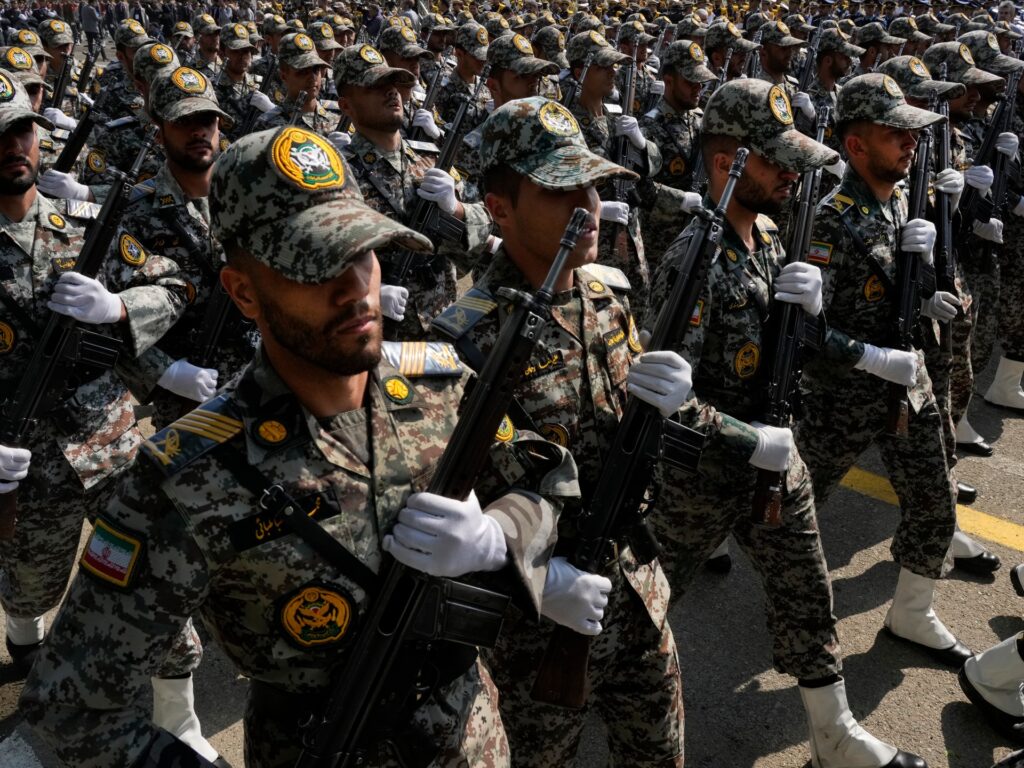
As regional tensions run high, Iran has paraded drones, missiles and soldiers to show it is ready for a response from Israel after launching an unprecedented attack on its archenemy. Iran carried out its first-ever direct attack on Israel at the weekend in response to an April 1 air strike on the consular building of Iran’s embassy in Syria. Iran’s attack “brought down the glory of the Zionist regime [Israel]”, President Ebrahim Raisi said at a military base on the outskirts of Tehran on Wednesday. “This operation showed that our armed forces are ready,” he said in a speech to the regular army and Islamic Revolutionary Guard Corps for Army Day, a national holiday. Wednesday’s parade saw the Iranian armed forces showcase a range of military equipment, including drones and long-range ballistic missiles. Among them were multiple versions of the Ababil, Arash and Mohajer drones as well as the Dezful medium-range ballistic missile and S-300 air defence missile system. Raisi reiterated warnings against “the slightest act of aggression” by Israel, saying it would lead to “a fierce and severe response”. Israel has said it will respond to the weekend attack with military spokesman Rear Admiral Daniel Hagari saying Iran will not get off “scot-free”. The Israeli army said most of the projectiles fired by Iran were shot down with the help of the United States and other allies and the attack caused only minimal damage. Iran hailed the attack as “successful” and said it “achieved all its objectives”, including inflicting damage to an airbase and intelligence centre that it said was used by Israel to carry out the strike in Damascus. On Wednesday, Iran’s air force commander, Hamid Vahedi, warned Iran’s enemies against making a “strategic error”. “We are 100 percent ready on all aerial fronts,” he was quoted as saying by the ISNA news agency. In his speech, Raisi also hit out at countries that had “sought to normalise relations” with Israel. “These countries are now humiliated in front of their own people, which constitutes a strategic failure for the regime” of Israel, he said. In 2020, the United Arab Emirates, Bahrain and Morocco normalised relations with Israel as part of the US-brokered Abraham Accords, vehemently criticised by the Palestinians. Egypt and Jordan signed peace accords with Israel in 1979 and 1994, respectively. Iran insisted its attack on Israel was limited and carried out in “self-defence” after the strike on its consular building. It said it had informed the United States and given a 72-hour warning to neighbouring countries before the attack. Adblock test (Why?)