

James to headline another US ‘Dream Team’ at the Paris 2024 Olympics

Thirty-nine-year-old LeBron James will team up with a host of other top NBA players to go for gold at the Paris games. The NBA’s all-time leading scorer LeBron James and reigning most valuable player Joel Embiid headline an all-star lineup named to the United States men’s basketball team for the Paris Olympics. James, who has won two Olympic golds and a bronze but sat out the last two Games, will be joined by Los Angeles Lakers teammate Anthony Davis, Phoenix Suns three-time Olympic champion Kevin Durant and Golden State Warriors’ Stephen Curry, USA Basketball announced on Wednesday. Also named to the squad were Bam Adebayo (Miami Heat), Devin Booker (Phoenix Suns), Anthony Edwards (Minnesota Timberwolves), Tyrese Haliburton (Indiana Pacers), Jrue Holiday (Boston Celtics), Kawhi Leonard (LA Clippers) and Jayson Tatum (Boston Celtics). All 12 members of the Paris “Dream Team” have been NBA All-Stars and include four recipients of the NBA Most Valuable Player (MVP) award and six NBA champions. “I’m grateful to these 12 men for their commitment to represent USA Basketball,” said USA Basketball men’s national team Managing Director Grant Hill in a statement. “The United States is home to some of the best basketball players in the world and I appreciate the vast interest in being part of this roster. “We have the utmost respect for the level of competition we will face this summer. The Olympics represent the pinnacle of sport and the world will be watching the USA as we play in the toughest basketball tournament in history.” The US will play in Group C with Serbia, South Sudan and the winner of a qualifying tournament in Puerto Rico on August 3. The Paris Olympics are scheduled for July 26 to August 11. Adblock test (Why?)
World’s coral reefs face global bleaching crisis
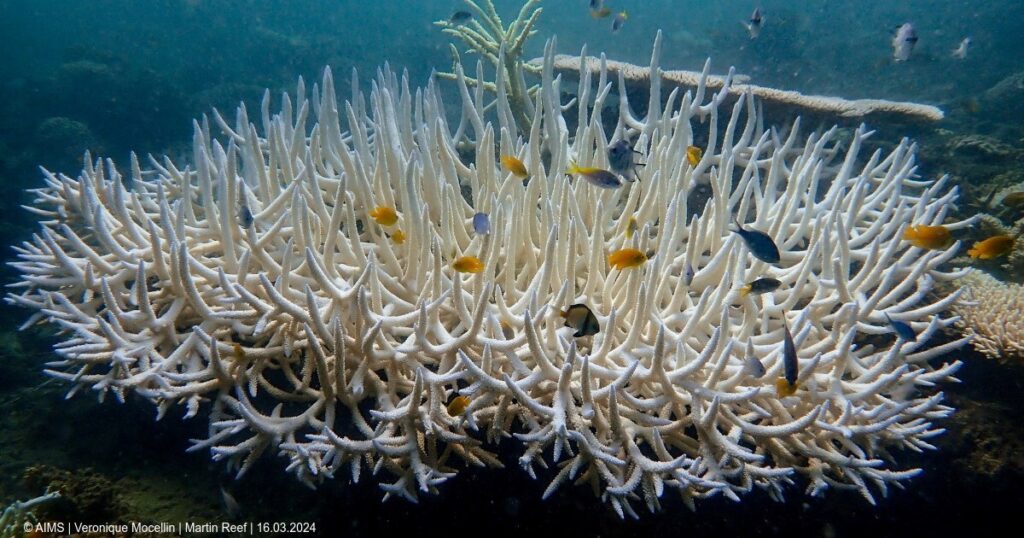
NewsFeed A mass bleaching event caused by high ocean temperatures is threatening the survival of coral reefs around the world. It is the fourth such event on record, prompting the National Oceanic and Atmospheric Administration and its partners to declare this a global crisis. Published On 17 Apr 202417 Apr 2024 Adblock test (Why?)
Russia-Ukraine war: List of key events, day 783
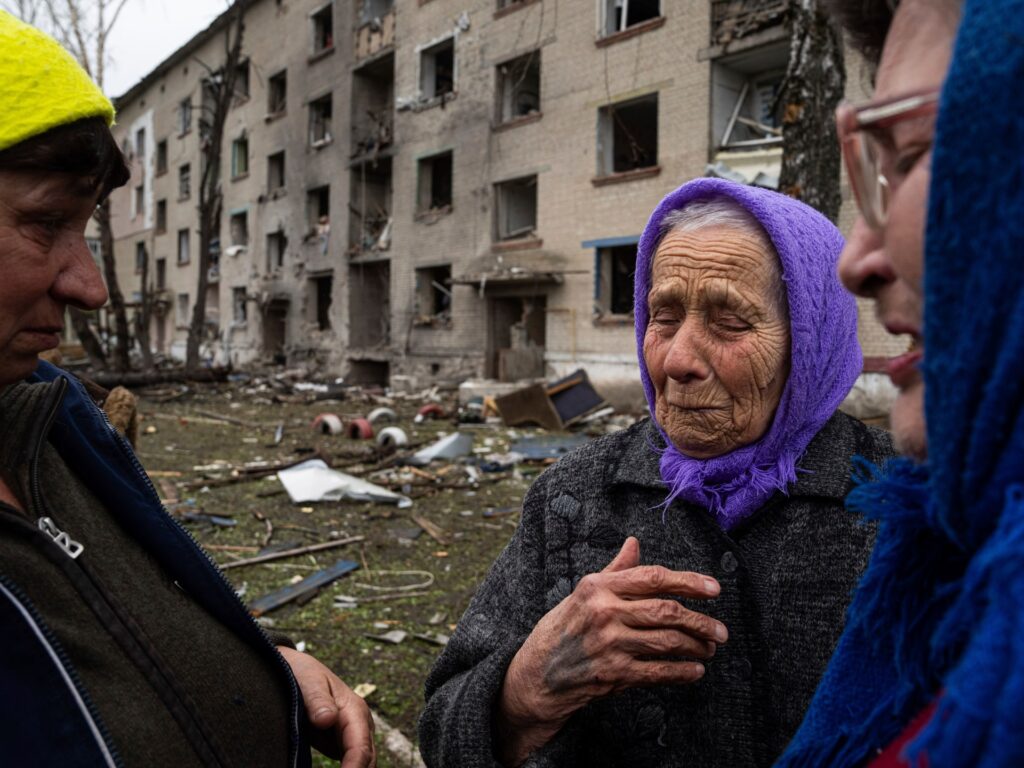
As the war enters its 783rd day, these are the main developments. Here is the situation on Wednesday, April 17, 2024. Fighting Ukraine’s Air Force said air defence systems destroyed nine Russian drones launched over several eastern and southern regions. The Institute for the Study of War, a United States-based think tank, said Russian troops on the front line were “breaking out of positional warfare and beginning to restore maneuver to the battlefield” because of US delays in providing military assistance to Ukraine. The think tank warned Ukrainian troops would not be able to hold their current lines “without the rapid resumption of US assistance, particularly air defense and artillery”. Ukrainian President Volodymyr Zelenskyy signed into law a new mobilisation bill to address severe troop shortages. The new law includes measures to toughen penalties on draft dodgers and incentivise conscription but no plan to demobilise long-serving soldiers on the front line. The changes come into effect in one month. Ukraine’s Human Rights Commissioner Dmytro Lubinets said almost 37,000 people, including military personnel, were unaccounted for since Russia’s full-scale invasion of his country began in February 2022, warning the actual figure may be “much higher”. Ukraine and the Red Cross had also identified about 1,700 people “illegally detained” by Russia, Lubinets said. Politics and diplomacy On a visit to Beijing, German Chancellor Olaf Scholz asked Chinese President Xi Jinping “to exert pressure on Russia so that [President Vladimir] Putin finally calls off his insane campaign, withdraws his troops and ends this terrible war”. Xi did not appear supportive of a Ukrainian-led peace summit to be held in June, however, saying any peace conference needed to be recognised by both sides and have equal participation. A Ukrainian man who says he was detained at work and tortured by Russian occupying forces filed a war crimes case in Argentina, the Reuters news agency reported. In the filing, the man accuses one named person, two identified by their call signs or military insignia, and others who are unnamed, of using electrocution and unlawful imprisonment as forms of torture in mid-to-late 2022. Russia denies committing war crimes in Ukraine. Russia’s FSB security service said it detained a man it accused of trying to kill a former officer in Ukraine’s main security service (SBU) who lives in exile in Moscow. The FSB alleged Kyiv had ordered the man to kill Vasily Prozorov, a former Lieutenant Colonel in the SBU, who told Russian news agencies he had passed sensitive information to Russia’s intelligence services since 2014. Prozorov’s car exploded in a suspected car bombing in Moscow last week. Weapons Zelenskyy said Ukraine “ran out” of defensive weapons to defend the Trypilska thermal power plant (TTPP), one of the biggest electricity suppliers to the Kyiv region, which allowed it to be destroyed by Russian missiles on April 11. Czech Prime Minister Petr Fiala said 20 countries had pledged enough to buy 500,000 artillery shells for Ukraine under a Czech-led international fundraising drive to buy ammunition for the Ukrainian army. Adblock test (Why?)
Canada’s Trudeau government asks rich to pay more in pitch to Gen Z

Budget proposes higher capital gains taxes and billions in spending on education, housing, jobs and mental health. Canada will ask the wealthy to pay higher taxes as Prime Minister Justin Trudeau’s government seeks to shore up flagging support among young voters ahead of an election expected next year. Minister of Finance Chrystia Freeland said in the annual budget announcement on Tuesday that the wealthiest Canadians should pay more, while billions of dollars would be invested in education, housing, jobs and mental health services. The budget proposes 53 billion Canadian dollars ($38bn) in new spending over five years, much of it directed towards Millennials and Generation Z in the form of affordable housing, student grants and loans, rent subsidies and work placement programmes. Under the proposals, capital gains over 250,000 Canadian dollars ($180,804) would be taxed at 66.7 percent, up from 50 percent, raising nearly 20 billion Canadian dollars ($14.5bn) in revenue over five years. Freeland said the opportunity for young people to build a comfortable middle-class life had “always been the promise of Canada”. “But today, Millennial and Gen Z Canadians can get a good job, they can work hard, they can do everything their parents did and more, and too often the reward remains out of reach,” she said. “They look at their parents’ lives and wonder: ‘How will I ever be able to afford that?’” Freeland acknowledged that the tax hike would prompt some pushback but said the increase would ensure the wealthiest pay their fair share. “But before they complain too bitterly, I would like Canada’s 1 percent – Canada’s 0.1 percent – to consider this: What kind of Canada do you want to live in?” she said. The Business Council of Canada (BCC) slammed the proposed budget as “good politics to some” but “bad economic policy for all.” “Wealth redistribution is not wealth creation and the spending measures introduced today will saddle Canadians with debt without encouraging the strong and sustained economic growth they deserve,” BCC President and CEO Goldy Hyder said in a statement. The budget will need the backing of the left-leaning New Democratic Party, which is keeping Trudeau’s minority government in power, to pass through parliament. Trudeau’s Liberal government is badly trailing the Conservatives, led by Pierre Poilievre, ahead of general elections due to be held by the end of October 2025. Trudeau, who has led Canada since 2015, has seen his popularity severely dented amid widespread discontent over the cost of living and housing. In a poll by Nanos Research released in January, two in three Canadians said that Trudeau was doing a poor job of addressing the problem of unaffordable housing. Trudeau earlier this month announced plans to build nearly 3.9 million houses by 2031 to close the yawning gap between housing supply and demand. Adblock test (Why?)
Australia’s Great Barrier Reef suffers worst bleaching on record

The 2,300km (1,429-mile) reef is in its fifth mass bleaching event since 2016 with aerial surveys showing the scale of damage. Australia’s Great Barrier Reef, which stretches for some 2,300km (1,429 miles) off the country’s northeastern coast, is suffering its worst bleaching event on record. The extent of the bleaching was revealed in aerial surveys after the government agency tasked with the reef’s management confirmed early last month that the reef had been hit by its fifth major bleaching event since 2016. The bleaching, when corals expel the colourful microscopic algae that live in their tissues in an effort to survive, was triggered by an increase in water temperatures that began in December last year. “This prolonged heat exposure has caused mass bleaching of coral reef communities observed within all three regions of the Great Barrier Reef,” the Great Barrier Reef Marine Park Authority said in an update on its website on Wednesday. “The combination of aerial and in-water surveys in 2024 confirm a mass bleaching event, with prevalent and extreme bleaching observed at multiple reefs in all 3regions of the Great Barrier Reef Marine Park.” The agency said it surveyed a total of 1,080 reefs and 79 percent of them showed some level of coral bleaching. Some 49 percent of surveyed reefs showed high to extreme levels of bleaching, it said, with the worst-affected areas in the central and southern parts of the World Heritage-listed reef. In the southern region, thermal stress was the highest recorded from the National Oceanic and Atmospheric Administration satellite since it began operations in 1985, the agency said. Across that area, bleaching prevalence ranged from high (31-60 percent of cover bleached) to extreme (more than 90 percent of cover bleached). Only 3 percent of surveyed reefs were not bleached. Coral reefs are living organisms and the Great Barrier Reef is considered one of the most species-rich habitats on earth. It is home to hundreds of types of coral, 1,500 fish species and 4,000 different molluscs. Reefs also provide protection for coastal communities and are natural carbon sinks. Climate change is the biggest threat to their survival because of their sensitivity to heat. “Only the strongest and fastest possible actions to decrease global greenhouse gas emissions will reduce the risks of thermal stress on the Reef and limit the impacts from climate change on the Great Barrier Reef,” the marine park authority said. Corals can recover from bleaching and the agency said the full impact of the event would not be known for some time. It added that in-water surveys would continue. Adblock test (Why?)
Insurance firms should shun the East African Crude Oil Pipeline

Last year was the hottest on record, with extreme weather events in many corners of the globe. It was also the year in which countries reached a landmark agreement at the UN Climate Conference (COP28) to begin “transitioning away from fossil fuels”. If governments are to comply with this agreement and avert global climate collapse, there cannot be any new expansion of coal, oil and gas production. This includes the East African Crude Oil Pipeline (EACOP), one of the largest and most controversial fossil fuel projects currently under development. Financing for EACOP is yet to be secured, but if it is and the project moves forward, a 1,443km (897-mile) pipeline will stretch from oil fields in western Uganda to the port of Tanga in eastern Tanzania. The project’s completion would not only contribute to increased greenhouse gas emissions which fuel climate change but also harm local communities. That is why, Human Rights Watch is calling on insurance firms to stop providing support for it. The pipeline is planned to traverse some of Africa’s most sensitive ecosystems, including Murchison Falls National Park and the Murchison Falls-Albert Delta Ramsar site. Pipeline ruptures, inadequate waste handling, and other pollution impacts would cause significant damage to the land, water, air and the species that rely on them. Our research found that the project’s initial land acquisition process has already devastated thousands of people’s livelihoods in Uganda, causing food insecurity and household debt that has resulted in children dropping out of school. During our interviews with local communities, many described being largely self-sufficient before the project began, using revenue from coffee, bananas and other cash crops to pay for school fees and other household expenses. When their land was allocated for the pipeline construction, they were not compensated immediately for it. They waited an average of three to five years after the land evaluation process took place, and interviewees repeatedly told Human Rights Watch that the payments they received were not adequate to purchase replacement land. They said they were worse off than they were previously. While they were waiting for compensation, many farmers understood that they were not permitted to access their land to tend perennial crops, and were therefore deprived of crucial income. Residents described how the payment delays impacted their food security, pushing them to sell household assets, including livestock, or borrow money from predatory lenders at excessive rates to buy the food they would have previously grown on their plots and cover other expenses. This has left many families poorer and more insecure about their future. If the pipeline is completed, more than 100,000 people in Uganda and Tanzania will permanently lose land to make way for it. Civil society groups in Uganda and Tanzania have called for the pipeline not to be built, citing climate, environmental and social risks. Ugandan civil society groups say that, instead of building the pipeline, the Ugandan government should develop its abundant renewable energy resources – particularly solar and hydropower – to drive economic development and secure access to energy without further contributing to climate change. Their demands have been met with hostility from the Ugandan authorities. Our research documented the Ugandan government’s systematic harassment, arbitrary arrests of and threats against environmental defenders and anti-fossil fuel activists for raising concerns over the pipeline project and oil development. In this context, it is deeply troubling that insurance companies are enabling this and other big fossil fuel projects by providing insurance for them. This is despite the fact that new oil projects are wholly inconsistent with limiting global warming to 1.5 degrees Celsius and avoiding the worst consequences of climate change. In late 2023, Human Rights Watch wrote to 15 insurance and reinsurance companies and shared our findings on the grave environmental and human rights risks associated with the pipeline. Only two companies – Lloyd’s of London and Chubb – responded to us, and neither agreed to reassess their involvement in the project. In early March, civil society groups across the world organised a global week of action to end fossil fuels, including confronting insurance companies about their role in the climate crisis and asking them to rule out support for fossil fuel projects. Anti-fossil fuel activists held peaceful protests at regional offices of the insurance companies still involved in the East African project with the message: “Insure our futures, not fossil fuels.” Increasing numbers of insurers have made public commitments to not underwrite the pipeline, but others have persisted. Continued support for EACOP is a mistake. By underwriting the project, insurers are helping to build the longest heated oil pipeline in the world at a time when the world is warming at dangerous levels. Insurance companies should refuse to support this project. The views expressed in this article are the authors’ own and do not necessarily reflect Al Jazeera’s editorial stance. Adblock test (Why?)
Armenia claims Azerbaijan ‘completed’ ethnic cleansing in Nagorno-Karabakh
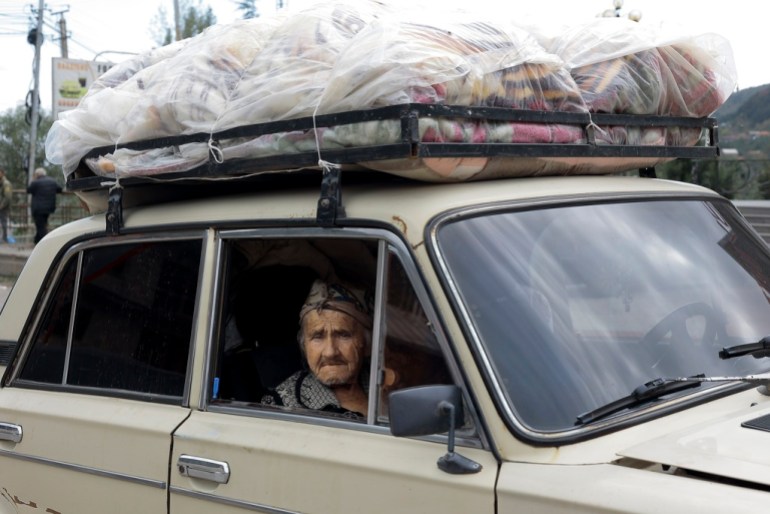
Azerbaijan systematically ‘erasing’ all traces of ethnic Armenians in the disputed region, Yerevan says. Azerbaijan has “completed” the ethnic cleansing of Nagorno-Karabakh, Armenia claimed to the UN’s top court. In a case brought by Yerevan against its Caucus neighbour and rival over alleged discrimination and ethnic cleansing, lawyers for Armenia on Tuesday told the International Court of Justice (ICJ) that Baku is “erasing all traces of ethnic Armenians’ presence” in the contested territory. “After threatening to do so for years, Azerbaijan has completed the ethnic cleansing of the region,” Armenia’s representative Yeghishe Kirakosyan claimed. The two Caucasian countries have been contesting the Nagorno-Karabakh territory during the three decades since the Soviet Union collapsed. Yerevan has sought to bring international attention to the mountainous enclave since Baku took control in a military operation in September. The ICJ case, filed by Armenia in 2021, accuses Azerbaijan of glorifying racism against and allowing hate speech against Armenians and destroying Armenian cultural sites. Armenia said that put Azerbaijan in violation of a UN anti-discrimination treaty. Baku has denied all the accusations against it. The case stems from a 2020 war over Nagorno-Karabakh that left more than 6,600 people dead, one of three full-scale conflicts that the pair have fought over the issue. Azerbaijan’s armed forces recaptured the mountainous region in September after years of ethnic Armenian control, prompting most ethnic Armenians to flee to Armenia. Kirakosyan said Baku was “now consolidating [its control of Nagorno-Karabakh] by systematically erasing all traces of ethnic Armenians’ presence, including Armenian cultural and religious heritage”. He told the judges that Baku “has increasingly been characterising Armenia’s human rights claims … as some sort of challenge to Azerbaijan’s sovereignty or territorial integrity.” “Azerbaijan is profoundly mistaken. Armenia has no claims to Azerbaijan’s territory and is also committed to establishing conditions for genuine and enduring peace,” the lawyer asserted. Bad faith On Monday, the first day of the hearings, Azerbaijan told the court that most of Armenia’s complaints did not fall within the scope of the UN treaty. Baku’s lawyers also accused Armenia of failing to genuinely engage in negotiations, a pre-requisite under the treaty for bringing the case to the ICJ. Kirakosyan rejected the claims. “Armenia negotiated with Azerbaijan in good faith and pursued discussions far beyond the point of utility,” he stated. An ethnic Armenian woman from Nagorno-Karabakh sits inside an old Soviet-style car as she arrives in Goris, in Syunik region, Armenia, on September 27 [File: Vasily Krestyaninov/AP Photo] In November, the court issued emergency measures in the case, ordering Azerbaijan to allow ethnic Armenians who fled Nagorno-Karabakh to return. Azerbaijan says it has pledged to ensure all residents’ safety and security, regardless of national or ethnic origin, and that it has not forced ethnic Armenians to leave Karabakh. The hearings will cover only the legal objections to the jurisdiction of the ICJ and will not go into the merits of the discrimination claims. A final ruling in both cases could be years away and the ICJ has no way to enforce its rulings. Adblock test (Why?)
Global day of action over Gaza war

NewsFeed Pro-Palestine protesters shut down the Golden Gate bridge as part of a global day of action over Israel’s war on Gaza, which also saw key economic sites blockaded in cities across the world. Published On 16 Apr 202416 Apr 2024 Adblock test (Why?)
Armourer for the film Rust sentenced to 18 months in fatal on-set shooting

A New Mexico state judge cited Hannah Gutierrez-Reed’s apparent lack of remorse in her decision to impose the sentence. The weapons supervisor for the film Rust has been sentenced in the United States to 18 months in prison for her role in the fatal on-set shooting of cinematographer Halyna Hutchins. Hannah Gutierrez-Reed, the armourer on the film, received the maximum possible sentence at Monday’s hearing in Santa Fe, New Mexico, after being convicted of involuntary manslaughter on March 6. The state judge who handed down the sentence, Mary Marlowe Sommer, said Gutierrez-Reed had a responsibility to keep the set safe and that she failed to do so. “You were the armourer, the one that stood between a safe weapon and a weapon that could kill someone,” Marlowe Sommer said. “You alone turned a safe weapon into a lethal weapon. But for you, Ms Hutchins would be alive, a husband would have his partner and a little boy would have his mother.” Hutchins’s killing in October 2021 sent shockwaves through the Hollywood film industry. Rust’s star and producer, Alec Baldwin, had been practising for a shootout scene with a revolver when the gun went off. The revolver was carrying live ammunition – something banned on US film sets – and the round struck Hutchins in the chest. She died on the way to the hospital. The bullet also hit director Joel Souza, though he has since recovered from his injuries. Baldwin has repeatedly denied pulling the trigger, though a forensic analysis from the prosecution concluded the revolver was unlikely to fire unless he did. He too faces trial for involuntary manslaughter in July, with a sentence of up to 18 months in prison as well. Olga Solovey speaks to the loss of her daughter Halyna Hutchins via video conference in court on April 15 [Eddie Moore/Reuters, pool] Ahead of Monday’s sentencing, defence lawyers asked the judge to consider the “devastating effect a felony will have” on the 26-year-old Gutierrez-Reed. But prosecutors highlighted Gutierrez-Reed’s seeming lack of remorse. “Ms Gutierrez continues to refuse to accept responsibility for her role in the death of Halyna Hutchins,” said special prosecutor Kari Morrissey. In a court filing earlier this month, prosecutors requested that Gutierrez-Reed receive the maximum sentence “due to her recklessness in the face of knowledge that her acts were reasonably likely to result in serious harm”. They cited instances where Gutierrez-Reed was allegedly in possession of cocaine and smuggled a firearm into a bar, something for which she faces charges in a separate case. The filing also outlined jailhouse phone calls where Gutierrez-Reed allegedly said “she can’t believe that the judge put her in jail” and that she was “wrongly incarcerated”. Those calls appeared to have played a role in the outcome of her sentencing hearing. “The word ‘remorse’ – a deep regret coming from a sense of guilt for past wrongs – that’s not you,” Judge Marlowe Summer said after referring to a portion of the phone call transcripts. At the sentencing hearing, family and friends of the late Hutchins gathered to share statements and remembrances. “I struggle to deal with this repeatedly being called an accident, because it was not an accident, it was negligence,” said Jen White, a colleague. Hutchins’s mother, Olga Solovey, also appeared at the hearing via video conference from Kyiv in her native Ukraine. Speaking in Ukrainian, she testified to the impact her daughter’s death has had: “It’s the hardest thing to lose a child. There are no words to describe.” Adblock test (Why?)
Tesla to lay off more than 10 percent of staff worldwide amid falling sales
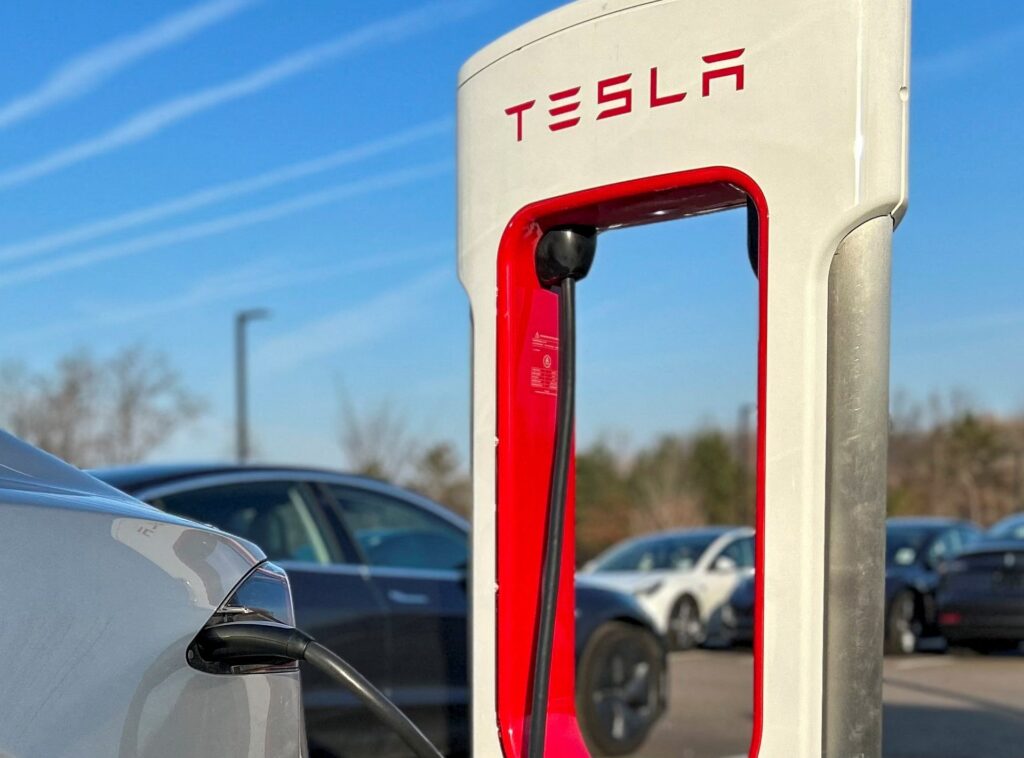
CEO Elon Musk says in memo that job cuts will leave firm ‘lean, innovative and hungry for the next growth phase cycle’. Electric carmaker Tesla plans to lay off more than 10 percent of its global workforce, according to a memo sent to employees by CEO Elon Musk. Musk told staff in an email on Monday that the cuts were necessary due to the “duplication of roles and job functions in certain areas”, which had followed the company’s rapid global expansion. “As we prepare the company for our next phase of growth, it is extremely important to look at every aspect of the company for cost reductions and increasing productivity,” Musk said in the memo obtained by multiple media outlets. “As part of this effort, we have done a thorough review of the organisation and made the difficult decision to reduce our headcount by more than 10 per cent globally. There is nothing I hate more, but it must be done. This will enable us to be lean, innovative and hungry for the next growth phase cycle.” Musk thanked the remaining staff for the “difficult job that remains ahead” as the company worked to develop “revolutionary technologies in auto, energy and artificial intelligence”. In a post on X after the news became public, Musk said that Tesla needed to “reorganise and streamline the company for the next phase of growth” about every five years. Electrek, a media outlet focused on electric transportation and sustainable energy, first reported the layoffs. The announcement comes less than two weeks after Tesla reported that vehicle deliveries fell by 8.5 percent in the first quarter, the first year-over-year drop since 2020. Tesla’s disappointing results followed supply chain disruptions caused by Houthi attacks on shipping in the Red Sea and an arson attack by environmental activists at a production facility in Germany. In a further sign of upheaval at the company, two senior executives announced their departure on social media. Andrew Baglino, the senior vice president of powertrain and energy engineering, said on X that he had made the “difficult decision to move on from Tesla after 18 years”. “I am so thankful to have worked with and learned from the countless incredibly talented people at Tesla over the years,” Baglino said. Rohan Patel, the senior global director of public policy and business development, also said he would be leaving the company after eight years. Tesla shares fell by more than 5 percent on Monday, continuing a downward streak which has seen the stock lose about one-third of its value so far this year. Adblock test (Why?)