

Russia-Ukraine war: List of key events, day 782
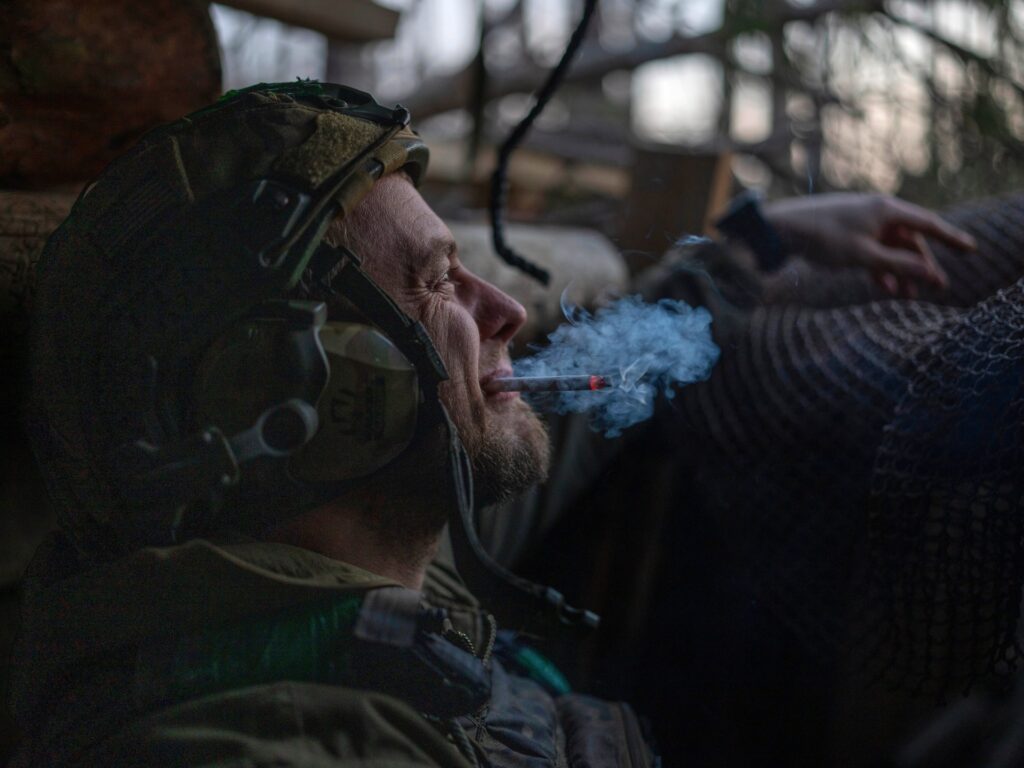
As the war enters its 782nd day, these are the main developments. Here is the situation on Tuesday, April 16, 2024. Fighting At least two people were killed after a Russian guided aerial bomb hit an education centre in the village of Lukiantsi in the northeastern Kharkiv region. Ukrainian President Volodymyr Zelenskyy issued a new plea to Ukraine’s allies for air defences to protect against Russian strikes on cities and infrastructure and noted that Ukraine’s forces were facing difficult situations along the eastern front line in Chasiv Yar, west of the destroyed Russian-held town of Bakhmut, and in Pokrovsk and Kupiansk, further west and north. Politics and diplomacy International Atomic Energy Agency (IAEA) chief Rafael Grossi told the United Nations Security Council that “reckless attacks” on the Zaporizhzhia Nuclear Power plant in Ukraine had put the world “dangerously close to a nuclear accident”. Russia and Ukraine have blamed each other for the incidents over the last week but Grossi said it was “impossible” at the moment to prove who was behind them. Senior officials in the United States accused China of supporting Russia’s war effort in Ukraine by providing drone and missile technology, satellite imagery and machine tools. The Chinese Embassy in the US said it has not provided weaponry to any party and that it was “not a producer of or party involved in the Ukraine crisis”. US House Speaker Mike Johnson said the House of Representatives would consider aid to Ukraine and Israel as separate pieces of legislation this week. Some $60bn in assistance to Ukraine, which was passed by the Senate as a single bill alongside aid for Israel and Taiwan, has been blocked by Republicans for weeks. A Russian military court jailed a 29-year-old man for 14 years after he was found guilty of cooperating with a foreign state and “justifying terrorism”. Vladlen Menshikov was initially accused of attempting to sabotage railway lines carrying military equipment near his hometown of Rezh, a small village near the Urals city of Yekaterinburg. The US imposed sanctions on 12 Belarus entities and 10 individuals over what it said was their support for Russia’s war on Ukraine. A ballet performance in South Korea featuring principal dancers from Russia’s Bolshoi Ballet was cancelled a day before opening night, the organiser said. The last-minute cancellation came after Seoul performances of a ballet starring Svetlana Zakharova, a Ukrainian-born Russian prima ballerina and vocal supporter of Russian President Vladimir Putin, were called off in March. Weapons Colonel Vadym Sukharevskyi, the commander of Ukraine’s drone forces, said Ukraine had delivered three times more drones to its army so far this year than in the whole of 2023. Foreign Minister Dmytro Kuleba appealed for “extraordinary and bold steps” to supply air defences to help Ukraine defend itself against waves of Russian air strikes. “We urgently require additional Patriot and other modern air defence systems, weapons and ammunition,” Kuleba told a Black Sea security conference via videolink. Adblock test (Why?)
What is Donald Trump’s ‘hush money’ trial all about?
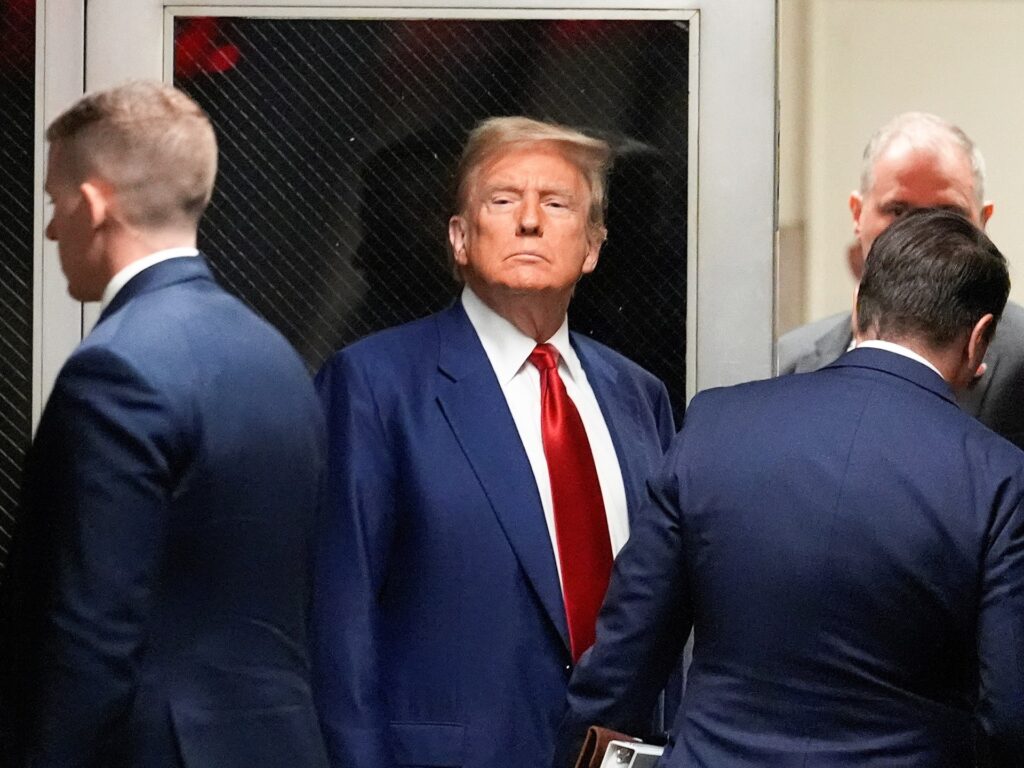
NewsFeed Here’s what you need to know about Donald Trump’s ‘hush money’ criminal trial involving Stormy Daniels. Published On 15 Apr 202415 Apr 2024 Adblock test (Why?)
Lawmakers brawl as Georgian Parliament considers ‘foreign agent’ bill
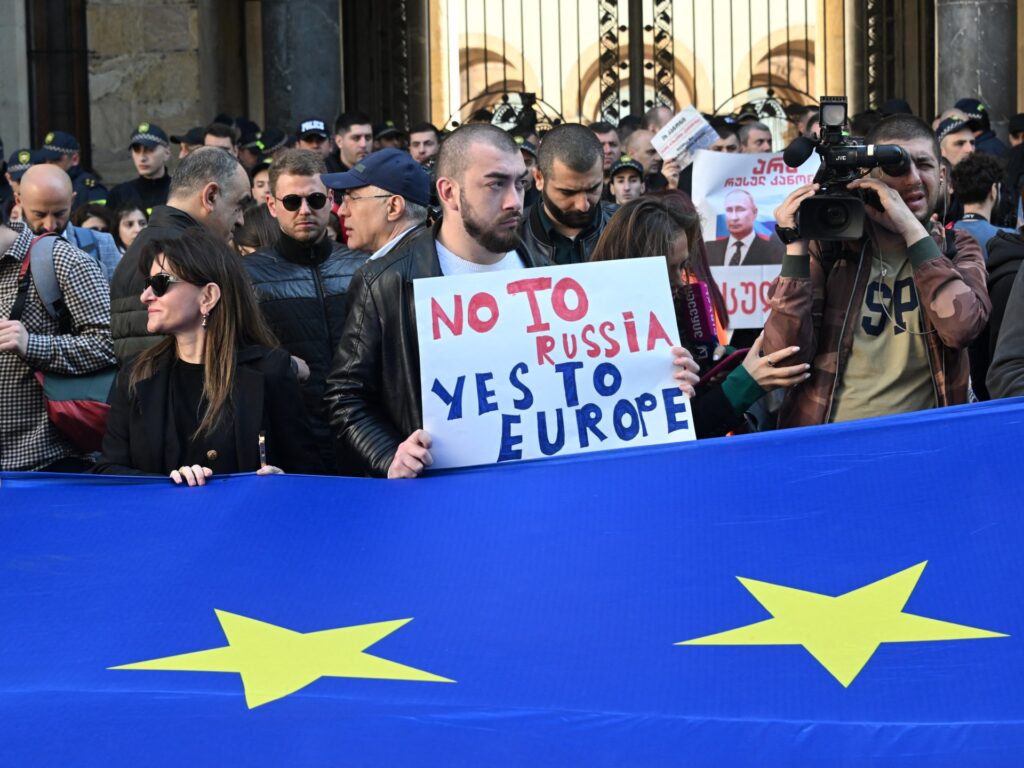
Legislators debate bill requiring organisations that accept overseas funds to register as foreign agents or face fines. Lawmakers in Georgia have come to blows inside parliament as ruling party legislators appeared likely to advance a bill on “foreign agents” that has been criticised by Western countries and has caused protests at home as “pro-Russia”. Footage broadcast on Georgian television showed Mamuka Mdinaradze, leader of the ruling Georgian Dream party’s parliamentary faction and a driving force behind the bill, being punched in the face on Monday by opposition MP Aleko Elisashvili while speaking before the legislative body. Tensions in parliament have bubbled up in recent years as the ruling party and the opposition have debated whether to deepen relations with the West or reconnect the former Soviet republic with Russia. Russia is widely unpopular in Georgia due to Moscow’s support of the breakaway Georgian regions of Abkhazia and South Ossetia. Russia also defeated Georgia in a short war in 2008. The incident on Monday prompted a wider brawl between several lawmakers, an occasional occurrence in the often raucous Georgian Parliament. ‘No to the Russian law’ Footage showed Elisashvili being greeted with cheers after the incident by protesters gathered outside the parliament building. Before a rally to protest the bill on Monday evening, protesters unfurled a large European Union flag and shouted: “No to the Russian law!” “Georgia’s society is strong enough not to allow the country to slide into Russian-styled authoritarianism,” Saba Gotua, an architect, told the Agence France-Presse news agency. Georgian Dream said this month that it would reintroduce legislation requiring organisations that accept funds from abroad to register as foreign agents or face fines, 13 months after protests forced it to shelve the plan. The bill has strained relations with European countries and the United States, which have said they oppose its passage. The EU, which gave Georgia candidate status in December, has said the legislation is incompatible with the bloc’s values. Georgian Dream says it wants the country to join the EU and NATO even as it has deepened ties with Russia and faced accusations of authoritarianism at home. It says the bill is necessary to combat what it calls “pseudo-liberal values” imposed by foreigners and to promote transparency. Deep divisions Georgia’s government said Prime Minister Irakli Kobakhidze held a meeting on Monday with the EU, British and US ambassadors during which they discussed the bill. In a statement, Kobakhidze defended the draft law as promoting accountability and said it was “not clear” why Western countries opposed it. The US said last week that passing the law would “derail Georgia from its European path”. “We are deeply concerned that, if it is enacted, this draft legislation would harm civil society organisations [and] … impede independent media organisations,” US Department of State spokesman Matthew Miller told journalists. Last year, Kobakhidze also clashed with the West over the imposition of sanctions on Russia, saying the move would “destroy” Tbilisi’s economy and “damage the interests” of Georgian citizens. Georgian critics have labelled the bill “the Russian law”, comparing it to similar legislation used by the Kremlin to crack down on dissent in Russia. If approved by members of the legislature’s legal affairs committee, which is controlled by Georgian Dream and its allies, the foreign agent bill could proceed to a first reading in parliament. The adoption of the legislation is likely to further deepen divisions in Georgia, whose staunchly pro-Western president, Salome Zurabishvili, has condemned the bill as damaging to democracy. Georgia is due to hold elections by October. Opinion polls show that Georgian Dream remains the most popular party but has lost ground since 2020 when it won a narrow majority. Adblock test (Why?)
Azerbaijan calls for ICJ to throw out Armenian ethnic cleansing case
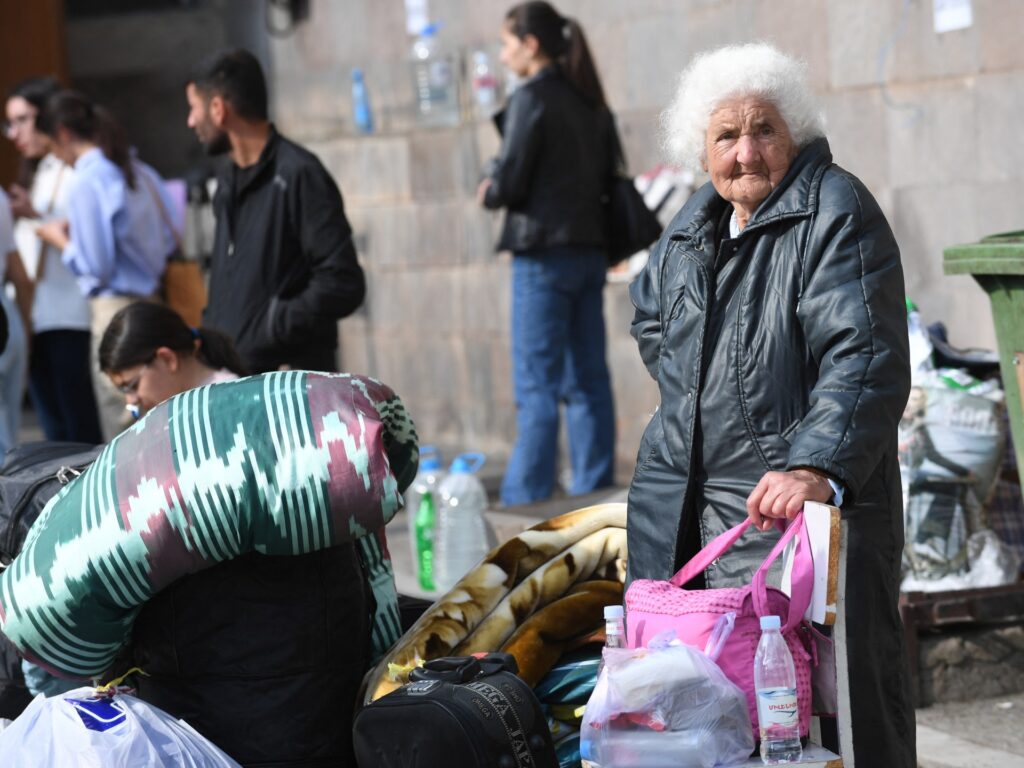
The case accuses Azerbaijan of glorifying racism and allowing hate speech against Armenians. Azerbaijan has called for the UN’s International Court of Justice to throw out a case accusing it of ethnic cleansing brought by its neighbour and rival Armenia. Lawyers for Azerbaijan argued on Monday that the case does not meet the conditions of the United Nations anti-discrimination treaty on which it is based. They also claimed that the ICJ does not have the jurisdiction to rule on the issues contained in the complaint. The two Caucasian countries have been contesting the Nagorno-Karabakh territory during the three decades since the Soviet Union collapsed. Yerevan has sought to bring international attention to the mountainous enclave since Baku took control in a military operation in September. The ICJ case, filed by Armenia in 2021, accuses Azerbaijan of glorifying racism against and allowing hate speech against Armenians and destroying Armenian cultural sites. Baku has denied all the claims. The case stems from a 2020 war over Nagorno-Karabakh that left more than 6,600 people dead, one of three full-scale conflicts that the pair have fought over the issue. ‘Premature’ The UN convention on stamping out racial discrimination has a clause allowing disputes to be resolved by the ICJ should bilateral talks fail to broker a settlement. Azerbaijan’s representative Elnur Mammadov claimed to the court that Armenia had failed to “engage in negotiations with Azerbaijan in an attempt to settle” the issue and that the lawsuit was therefore “premature”. There were “limited negotiations” but Yerevan “failed to pursue them”, Mammadov said. “From the outset, Armenia had its sights firmly set on commencing these proceedings before the court … and using the fact of these proceedings to wage a public media campaign against Azerbaijan.” International law professor Stefan Talmon, representing Azerbaijan, added that Armenia “never gave negotiations a chance”. He argued that “with no negotiations and no genuine attempt at negotiations, that basically is the end of Armenia’s application”. Azerbaijan also asserted that most of the allegations in Armenia’s case fall outside the scope of the discrimination convention, meaning the court does not have jurisdiction. Armenia is scheduled to respond on Tuesday to Azerbaijan’s arguments. Azerbaijan also has a case against Armenia lodged with the court, alleging breaches of the same convention. Objections filed by Armenia to that case will be heard later this month. The 2020 conflict ended with a Russia-brokered ceasefire agreement that granted Azerbaijan control over parts of Nagorno-Karabakh as well as some adjacent territories. Azerbaijan then waged a lightning military campaign in Nagorno-Karabakh in 2023 that resulted in the vast majority of the region’s 120,000 residents fleeing. In December, the two sides agreed to begin negotiations on a peace treaty. However, many residents of Armenia’s border regions have resisted the demarcation effort, seeing it as Azerbaijan encroaching on areas they consider their own. Adblock test (Why?)
US: Iran ‘will be held responsible’ for further attacks

NewsFeed The United States is warning Iran that if it or its proxies attack the United States or Israel, it will be held responsible. The warning came during a UN Security Council meeting Sunday in which the US condemned what it called Iran’s ‘unprecedented’ drone and missile attack on Israel. Published On 14 Apr 202414 Apr 2024 Adblock test (Why?)
Iran claims ‘right to self-defence’ in Israel attack

NewsFeed Iran’s ambassador to the United Nations says his country’s drone and missile attack against Israel was ‘in the exercise of Iran’s inherent right to self-defence’. Saeid Iravani told the UN Security Council Iran is not seeking to escalate conflict in the region. Published On 15 Apr 202415 Apr 2024 Adblock test (Why?)
US military says it destroyed dozens of drones fired from Iran, Yemen

US Central Command says it hit more than 80 one-way attack drones aimed at Israel. The United States has destroyed dozens of drones and at least six ballistic missiles aimed at Israel from Iran and Yemen, its military has said. US forces hit more than 80 one-way attack drones, including seven UAVs targeted on the ground prior to launch, US Central Command (CENTCOM) said on Monday. “Iran’s continued unprecedented, malign, and reckless behaviour endangers regional stability and the safety of U.S. and coalition forces,” CENTCOM said in a post on X “CENTCOM remains postured to support Israel’s defense against these dangerous actions by Iran. We will continue to work with all our regional partners to increase regional security.” CENTCOM made the announcement after Iran late on Saturday launched its first-ever attack on Israeli territory in retaliation for a suspected Israeli attack on its embassy in Syria. The attack involving more than 300 drones and missiles caused only modest damage as most were shot down by Israel’s Iron Dome missile defence system or the US and its partners. Defense of Israel Activities Update On April 13 and the morning of April 14, U.S. Central Command (CENTCOM) forces, supported by U.S. European Command destroyers, successfully engaged and destroyed more than 80 one-way attack uncrewed aerial vehicles (OWA UAV) and at least six… pic.twitter.com/QYyk01o1Vs — U.S. Central Command (@CENTCOM) April 14, 2024 US President Joe Biden earlier praised US forces for their “extraordinary skill” in helping Israel take down “nearly all of the incoming drones and missiles.” Biden described US support for Israel’s self-defence as “ironclad” but warned that Washington would not join any retaliatory action taken by Israeli Prime Minister Benjamin Netanyahu’s government against Tehran. US Secretary of Defense Lloyd Austin said US forces “remain postured to protect US troops and partners in the region, provide further support for Israel’s defence, and enhance regional stability.” The threat of all-out war between Israel and Iran has put the region on tenterhooks, prompting calls for restraint from Middle Eastern neighbours and major powers. United Nations Secretary-General Antonio Guterres on Sunday warned that the Middle East was on “the brink”. “The people of the region are confronting a real danger of a devastating full-scale conflict. Now is the time to defuse and de-escalate,” Guterres told a UN Security Council meeting convened in response to the Iranian attack. Adblock test (Why?)
Celebrations in Iran as it ‘concludes’ retaliatory attack on Israel

NewsFeed Iran says its first-ever direct attack on Israel was revenge for Israel’s targeting of Iranian personnel. Tehran says its retaliation has been ‘concluded’ but warns of a harsher response next time if Israel strikes again. Published On 14 Apr 202414 Apr 2024 Adblock test (Why?)
Cyprus suspends asylum applications for Syrians as arrivals rise

More than 1,000 people have arrived in Cyprus on boats from Lebanon this month amid deepening tensions in the Middle East. Cyprus has suspended the processing of asylum applications from Syrians following a sharp increase in arrivals this month, authorities say. More than 1,000 people have arrived in Cyprus on boats from Lebanon this month amid deepening tensions in the Middle East. The exodus has triggered calls from Nicosia to its European Union partners to do more to assist Lebanon, as well as reconsider the status of war-torn Syria, which is at present considered unsafe to repatriate asylum seekers. “This is an emergency measure, it’s a difficult decision to protect the interests of Cyprus,” Cypriot President Nikos Christodoulides told reporters on Sunday. Cyprus, the EU’s easternmost state and the closest to the Middle East, lies about 160km (100 miles) west of the shores of Lebanon or Syria. It recorded more than 2,000 arrivals by sea in the first three months this year, compared with just 78 over the same period in 2023. In practice, the measure means asylum seekers will be confined to two reception camps offering food and shelter, with no other benefit. Those who choose to leave those facilities will automatically forfeit any kind of benefit and will not be allowed to work, government sources said. Christodoulides visited Lebanon last week and is liaising with the European Commission on how Brussels could assist Beirut in halting the flows. Lebanon, coping with a crippling economic crisis since 2019, hosts some 805,000 Syrian refugees registered with the United Nations, of which 90 percent live in poverty, the UN agency says. Lebanese officials estimate the actual number is much higher, ranging between 1.5 and 2 million. Many have escaped the civil war in their country which entered its 14th year. Cypriot Interior Minister Constantinos Ioannou last week visited Denmark, Czechia and Greece to drum up support for a push to get the EU to declare parts of Syria as safe. However, UN agencies, human rights groups, and Western governments maintain that Syria is not yet safe for repatriation. Adblock test (Why?)
Iran attacks Israel with over 300 drones, missiles: What you need to know
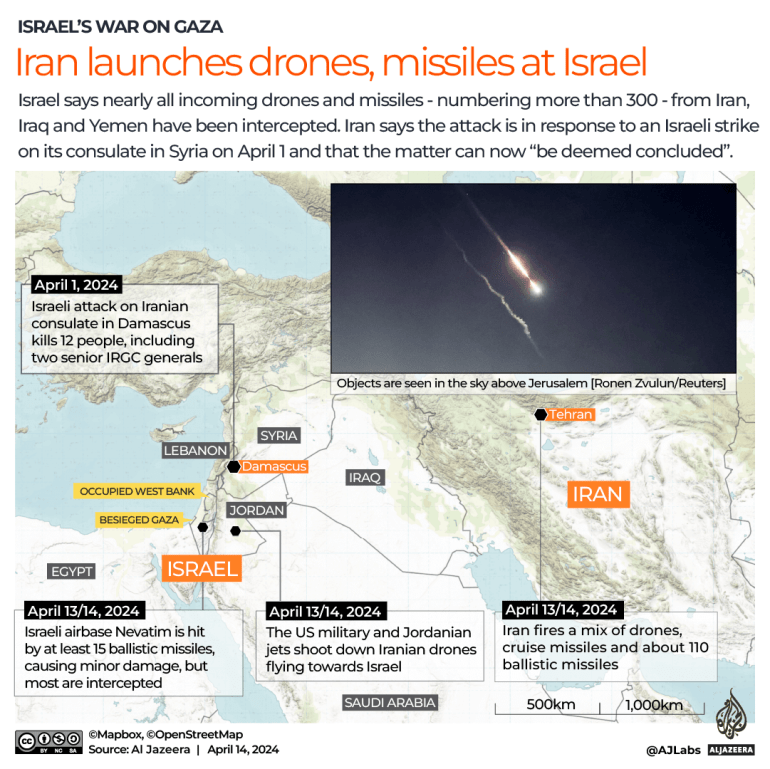
EXPLAINER Iran has launched a massive aerial attack on Israel, two weeks after a deadly strike on its consulate in Syria. Iran unleashed a barrage of missiles and drones on Saturday and during the early hours of Sunday, targeting Israel in retaliation for last week’s suspected Israeli strike on its consulate in Damascus that killed 13 people. Here is what happened, and what analysts say could happen next. What happened in Israel and when? Iran launched a massive aerial attack on Israel, two weeks after a suspected Israeli strike on its consulate in Syria. This marks the first-ever direct attack by Iran on Israeli territory from Iranian soil. Iran called the attack Operation True Promise. The attack began on Saturday night around 20:00 GMT. It lasted approximately five hours, according to US officials. During the attack, explosions were heard in cities across Israel, including Tel Aviv. The explosions were also heard in Jerusalem, and air raid sirens sounded in more than 720 locations as Israeli forces sought to shoot down the projectiles. Israel’s chief military spokesman, Daniel Hagari, said Iran’s attack involved more than 120 ballistic missiles, 170 drones, and more than 30 cruise missiles, according to a report by The Associated Press news agency. The Israeli military also said that the vast majority of the projectiles were intercepted outside the country’s borders, with help from the United States, the United Kingdom and France. Jordan also shot down some of the missiles aimed at Israel as they were flying through Jordanian airspace. Israel’s military added that a “small number of hits were identified”. In a base located in southern Israel, “minor damage occurred to the infrastructure”. A seven-year-old girl was also severely injured by missile fragments, while other patients sustained minor injuries and some were treated for anxiety. US Defense Secretary Lloyd Austin said on Saturday that the US also intercepted “dozens” of missiles and drones launched at Israel from Iraq, Syria and Yemen. Where exactly did the attacks take place? During the attack, Israel’s military ordered residents in the northern Israeli-occupied Golan Heights – near the Syrian and Lebanese borders – and in the southern cities of Nevatim, Dimona and Eilat to remain near bomb shelters. Nevatim is the site of an Israeli airbase, while Dimona has a nuclear reactor on the outskirts. Eilat is Israel’s southern Red Sea port, which has suffered from a sharp decline in operations because of repeated attacks by Yemen’s Houthis on ships passing through the waterway. Why did Iran attack Israel? Iran’s attack is a retaliation for a suspected Israeli strike that killed an Iranian military commander, Major-General Mohammad Reza Zahed, in Damascus on April 1. He was killed along with six other Iranian nationals, including another general. At least six Syrian citizens were also killed. “It seems that Iranian leaders are determined to take action, but also [be] seen to take action,” David Des Roches, an associate professor at the National Defense University in Washington, DC, told Al Jazeera. “What that indicates to me is that there are considerations of pride and prestige that are divorced from strategy and tactical utility that may indicate a more dangerous era than we thought,” he added. Hezbollah, a Lebanese armed group backed by Iran, and the Israeli military have been trading attacks across the Lebanon-Israel border since October 8, the day after the Hamas-led attack in southern Israel and Israel’s brutal retaliation on the besieged Gaza Strip. Since then, more than 330 people in Lebanon have been killed in Israeli attacks, including at least 66 civilians. Hezbollah attacks have killed at least 18 people on the Israeli side, 12 soldiers and six civilians. On Saturday, Iranian state media announced that the the country’s armed forced had seized an Israel-linked container ship near the Strait of Hormuz. What is the Israeli government saying? Israeli Prime Minister Benjamin Netanyahu said his country “will win”, in a tweet after the attacks. Earlier, he spoke to the nation, stating that the military was prepared for any scenario. “Citizens of Israel, in recent years, and especially in recent weeks, Israel has been preparing for a direct attack by Iran,” Netanyahu said. “Our defensive systems are deployed; we are ready for any scenario, both defensively and offensively. The State of Israel is strong. The [Israeli army] is strong. The public is strong.” He also thanked his allies, including the US and UK, for “standing alongside” Israel. “We have determined a clear principle: Whoever harms us, we will harm them. We will defend ourselves against any threat and will do so level-headedly and with determination,” he added. After the attack was over, Israeli Defense Minister Yoav Gallant said that the attack had been “blocked”. “The Iranian attack was blocked in the most impressive way, together with our partners, the Americans and others… The entire world saw today who is Iran – a country of terror,” Gallant added. What is the Iranian government saying? Iran warned Israel of any response. The Iranian armed forces chief of staff, Major-General Mohammad Bagheri, told state TV that if Israel retaliates, Iran’s response would be “much larger” than the overnight bombardment, according to a Reuters report. Iran also warned Washington that backing Israeli retaliation would lead to the targeting of US bases. Earlier, Iran’s mission to the UN cited the UN Charter provision for self-defence, under Article 51, and said that the country considered “the matter … concluded”, its permanent mission at the United Nations said on X. “The matter can be deemed concluded. However, should the Israeli regime make another mistake, Iran’s response will be considerably more severe. It is a conflict between Iran and the rogue Israeli regime, from which the US MUST STAY AWAY!” President Ebrahim Raisi issued a statement hailing the “brave men” of Iran’s Islamic Revolutionary Guard Corps (IRGC) who “taught a lesson to the Zionist regime”. Conducted on the strength of Article 51 of the UN Charter pertaining to legitimate defense, Iran’s military action was in response to the Zionist regime’s