

Germany to send new missiles to Ukraine as army struggles on eastern front
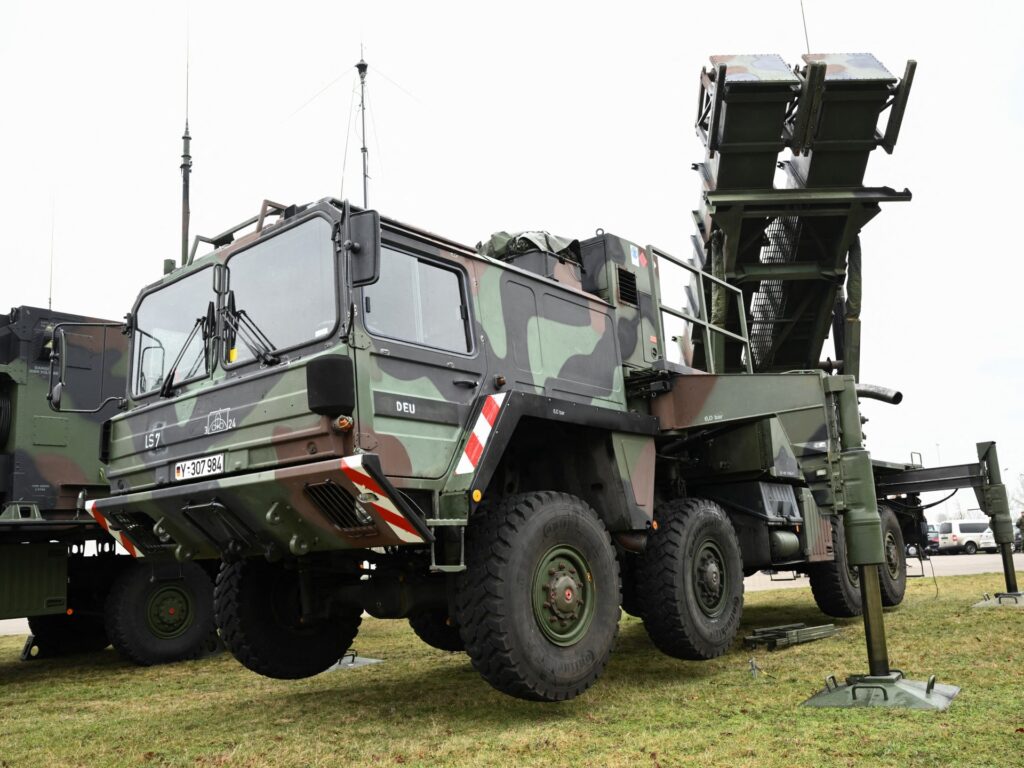
Germany says it will hand over Patriot air defence system and missiles, while Russia claims capture of another village. Germany will deliver a United States-made Patriot air defence system and air defence missiles to Ukraine at a “critical time” as Kyiv struggles to defend its energy system from Russian bombardment, according to Ukrainian President Volodymyr Zelenskyy. More than two years into its full-scale invasion, Russia has staged three massive air attacks on power stations and substations in recent weeks, prompting Kyiv to issue desperate appeals for supplies of high-end air defences. “I am grateful to the chancellor for the decision to supply another, additional Patriot system to Ukraine, as well as missiles for the existing air defence systems,” Zelenskyy said after speaking by telephone with German Chancellor Olaf Scholz on Saturday. He described their conversation as “important, productive” and said: “I call on all other leaders of partner states to follow this example.” Germany will hand over the Patriot system immediately and it will be in addition to air defence systems that were already delivered and planned, the German defence ministry said in a post on X. An April 10 German government summary of arms and military equipment transfers to Ukraine included two Patriot systems on a list of air defence supplies already delivered, making this the third from Germany. Zelenskyy said last week that Ukraine needed 25 US-made Patriot air defence systems to protect the country from Russian attacks. After the outbreak of the Ukraine war in 2022, Germany dropped a traditionally pacifist stance and has become Ukraine’s second-biggest supplier of military aid, after the US. As well as Patriots, Berlin has supplied a wide array of other armaments, ranging from artillery to armoured fighting vehicles. Pressure on eastern front On the front lines, “the situation on the eastern front has deteriorated significantly in recent days”, Ukraine’s commander-in-chief, Oleksandr Syrskii, said in a statement on Saturday. This comes as Russia claimed the capture of a village near the industrial town of Avdiivka that it captured in mid-February. Russia’s defence ministry announced its troops had “liberated” the village of Pervomaiske in the Donetsk region, about 11km (seven miles) west of largely destroyed Avdiivka. Ukraine has not confirmed the loss. Its army said on Friday that it had repelled attacks on the village. On his Telegram channel, Syrskii wrote of “a significant intensification of the enemy’s offensive after the presidential elections in Russia” last month. The commander-in-chief, who took over in February after Zelenskyy fired his popular predecessor General Valerii Zaluzhnyi, added decisions were being taken “to strengthen the most problematic defence areas with electronic warfare and air defence”. Russia says 10 killed in attack by Ukraine Meanwhile, in the southern Zaporizhia region, a local Kremlin-installed official blamed Ukraine on Saturday for a shelling that killed 10 people, including children. The Tokmak municipal administration reported on Telegram that the shelling struck three apartment blocks on Friday evening. Five people were pulled alive from the rubble and 13 were hospitalised, according to the regional head, Yevhen Balitsky. The town fell to Russia at the start of the invasion. Ukrainian authorities in Zaporizhia said Russia had attacked the region more than 400 times over the last day, including from planes. Ukraine has also said the situation around the eastern front-line city of Chasiv Yar is “difficult and tense” with the area under “constant fire”. Chasiv Yar lies 20km (12 miles) west of the town of Bakhmut, which was flattened by months of artillery fire before it was captured by Moscow last May. Russia is recently securing new territorial gains and trying to press onward against Ukrainian units hobbled by delays in the supply of Western military aid. Adblock test (Why?)
Iran launches air attack on Israel, with drones ‘hours’ away
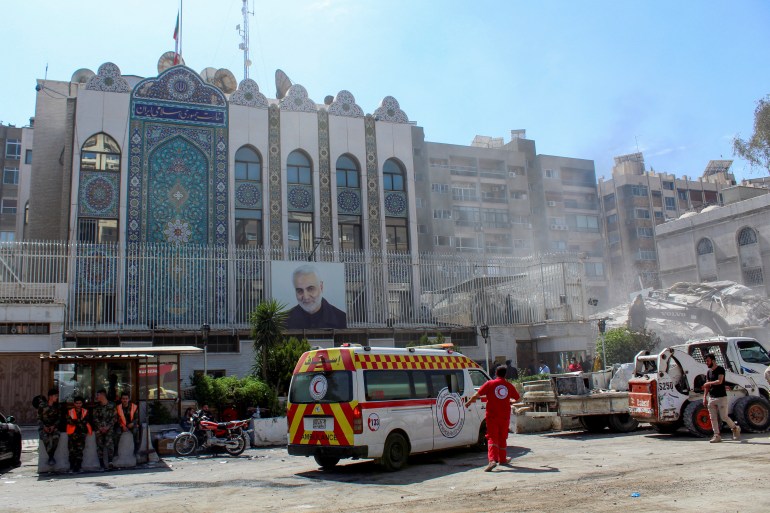
US and Israel confirm that an aerial attack on Israeli territory is under way as Jordan and Iraq close their airspace. Iran has launched dozens of drones and missiles at Israel, the country’s Islamic Revolutionary Guard Corps (IRGC) confirmed, after Israel said Tehran had begun attacks. The IRGC said on Saturday that it had released the drones and missiles under the operation “True Promise”, adding that the move was part of the punishment for “Israeli crimes”. Israel said the drones would take several hours before reaching its airspace. The strikes come nearly two weeks after an Israeli attack on the Iranian consulate in Syria killed seven IRGC members. “We launched an operation using drones and missiles in response to the Zionist entity’s crime of targeting the Iranian consulate in Syria,” the IRGC said in a statement. “The operation was carried out with dozens of missiles and drones to strike specific targets in the occupied territories.” Speaking in televised address on Saturday, Israel’s army’s spokesman, Daniel Hagari, said: “Iran launched UAVs [unmanned aerial vehicles] from its territory towards the territory of the state of Israel. “This is a severe and dangerous escalation. Our defensive and offensive capabilities are at the highest level of readiness ahead of this large-scale attack from Iran.” An ambulance is parked outside the Iranian embassy in Damascus after an Israeli strike on April 1, 2024 [File: Firas Makdesi/Reuters] High alert Israel has been on heightened alert since its strike on Damascus on April 1, even though it did not comment on that attack. Iran pledged revenge and a retaliatory attack had been expected. Israeli Prime Minister Benjamin Netanyahu said on Saturday that Israel was prepared for a “direct attack from Iran”. Minister of Defence Yoav Gallant said Israel was “closely monitoring a planned attack” against it by Iran and its allies in the region. United States President Joe Biden, who on Friday warned Iran against attacking Israel after saying such a scenario appeared imminent, has pledged to stand with Israel against Iran, the White House said. US National Security Council spokesperson Adrienne Watson said in a statement that Biden is regularly updated by his national security team and is in constant communication with Israeli officials, US partners and allies. Syria also put on high alert its Russian-made Pantsir ground-to-air defence systems around the capital Damascus and major bases in the event of an Israeli strike, army sources told the Reuters news agency. Meanwhile, Iraq, Jordan, Lebanon and Israel announced they had temporarily closed their airspace. ‘A country waiting’ A retired Israeli general, Amos Yadlin, told the country’s Channel 12 news that the Iranian drones were equipped with 20 kg (44 pounds) of explosives each. Israel’s military said sirens would sound in any threatened areas and that its defences were poised to deal with them. “We know that planes are patrolling in the skies above [Israel], we know that Benjamin Netanyahu is meeting with his war cabinets, his security cabinets this evening,” said Al Jazeera’s Rory Challands, reporting from occupied East Jerusalem. “This is a country… waiting for those drones to arrive,” he added. Challands said that although Haggari did not confirm how long it would take, “it will have to go through several countries’ airspace … They could take about nine hours to arrive”. Israel’s war on Gaza, now in its seventh month, has driven up tensions in the region, spreading to fronts with Lebanon and Syria and drawing long-range fire at Israeli targets from as far away as Yemen and Iraq. Earlier on Saturday, Iranian armed forces seized a container ship linked to Israel near the Strait of Hormuz. Adblock test (Why?)
How high is the risk of conflict between Iran and Israel?
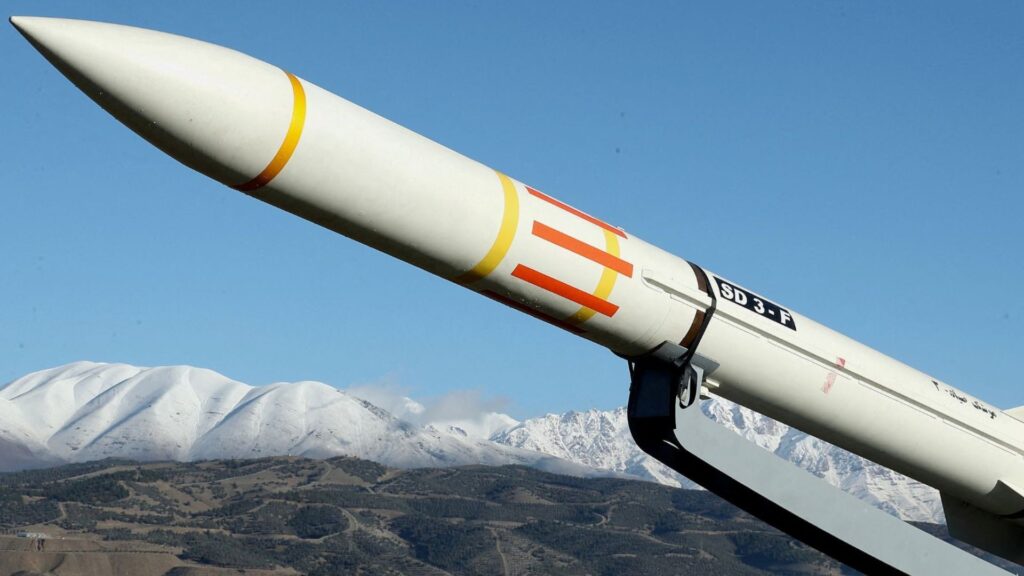
Tehran promises a response to Israeli attack on its consulate in Syria. Iran is threatening retaliation for the Israeli attack on the Iranian consulate in Syria that killed seven people at the start of April. The United States is talking up the possibility of an imminent attack by Tehran and promising to defend Israel. So how dangerous is the situation? And what’s the risk of a wider conflict? Presenter: James Bays Guests: Hassan Ahmadian – Professor of Middle East and North Africa studies at the University of Tehran Trita Parsi – Executive vice president at the Quincy Institute, a US think tank in Washington, DC Carne Ross – Founder of the Independent Diplomat advisory group Adblock test (Why?)
Russia-Ukraine war: List of key events, day 779

As the war enters its 779th day, these are the main developments. Here is the situation on Saturday, April 13, 2024. Fighting The commander-in-chief of the Armed Forces of Ukraine, Colonel General Oleksandr Syrskii, said the situation on the eastern front “has deteriorated significantly in recent days” in the face of a heightened Russian offensive. Ukraine has said the situation around the eastern front-line city of Chasiv Yar is “difficult and tense” with the area under “constant fire”. It lies 20km (12 miles) west of Bakhmut, which was flattened by months of artillery fire before it was captured by Russia last May. Six people, including a child, have been killed after Ukrainian troops shelled Russian-controlled Zaporizhzhia, a southern region of Ukraine. Vladimir Rogov, a Russia-installed official, said 20 people were injured in the strike. Politics and diplomacy An aborted 2022 peace deal between Russia and Ukraine could be the basis for new negotiations but there is no sign that Kyiv is ready for talks, Kremlin spokesman Dmitry Peskov has said. Russian President Vladimir Putin has repeatedly said that Russia and Ukraine were on the verge of agreeing to a deal to end hostilities at talks in Istanbul in April 2022, but that Ukraine backed away from it once Russian troops fell back from near the Ukrainian capital. The United States and the United Kingdom have imposed new sanctions prohibiting metal-trading exchanges from accepting new aluminium, copper and nickel produced by Russia, which is one of the world’s major producers of such minerals. The US has accused China of backing Russia’s war effort in Ukraine by helping Moscow in its biggest military buildup since the Soviet era, providing drone and missile technology, satellite imagery and machine tools. Unnamed senior US officials said US President Joe Biden reportedly raised the issue during his recent phone call with Chinese leader Xi Jinping. Prosecutors in Belgium are investigating suspected Russian interference in the upcoming European Parliament elections with the goal of affecting Ukraine policy, Prime Minister Alexander De Croo has said. Russia has summoned French Ambassador Pierre Levy over French Foreign Minister Stephane Sejourne’s “unacceptable” comments on the Kremlin. Sejourne was quoted as saying this week that France had no interest in talking to the Kremlin, a few days after a telephone conversation between the two nations’ defence ministers ended in an argument. Military Ukrainian fighter pilots likely to fly US F-16 aircraft are receiving their initial training with France’s air force, French Defence Minister Sebastien Lecornu told the newspaper Ouest-France. Other countries including the Netherlands, Denmark and Romania are seeking to help Ukraine train its F-16 pilots after the United States gave the go-ahead. Russia’s Ministry of Defence says Moscow had conducted a successful test launch of an intercontinental ballistic missile at the Kapustin Yar rocket launch complex in the southern Astrakhan region. Adblock test (Why?)
Genocide in Gaza: Enabled by AI, powered by Big Tech

Artificial intelligence has unleashed terror in the killing fields of Gaza. The algorithms that Big Tech designed – and the genocide they assisted. The Listening Post explores how Israel’s killing campaign of Palestinians has relied on artificial intelligence to choose its targets. A dystopian nightmare serves as a marketing campaign for technology flawed by design, and deepens the global digital divide. Contributors:Sophia Goodfriend – Researcher, Duke UniversityMona Shtaya – Digital rights scholarMatthew Mahmoudi – Researcher, Amnesty TechSebastian Ben Daniel – Journalist, +972 Magazine On our radar: Nicaragua put Germany in the dock at the International Court of Justice, accusing it of facilitating genocide in Gaza. Germany is the second largest weapons supplier to Israel. Meenakshi Ravi dissects the reaction from Berlin and the German media to the case. Truth to power in wartime Ukraine Three years into Ukraine’s war with Russia, journalists are feeling the pressure. Where once investigative outlet Bihus.info was relied on to expose Russian war crimes, they’re now undergoing Soviet-style surveillance by security services for exposing corruption in Ukraine. Featuring:Yaroslav Yurchyshyn – Ukrainian Member of Parliament and chair, Freedom of Speech CommitteeNatalia Ligachova – Editor-in-Chief, Detector MediaMaria Zemlyanska – Investigative journalist, Bihus.InfoDenys Bihus – Founder, Bihus.Info Adblock test (Why?)
Israel’s war on Gaza: List of key events, day 190
Fears of a wider regional conflict intensify as the Israel military and Lebanon’s Hezbollah escalate attacks. Here’s how things stand on Saturday, April 13, 2024: Bombardments and fighting Dozens of Israeli air strikes have hit central Gaza, including in the area of Deir el-Balah, with several casualties reported. Israel’s military said its aircraft struck more than 60 targets in Gaza over the previous day. Authorities in the enclave said at least 25 people were taken to hospital after a house was hit. Five Palestinians have been killed and more than 30 injured overnight after the Israeli army bombed a residential building in the Zarqa area of central Gaza City, according to Gaza civil defence. Five Palestinians were injured overnight in an Israeli settlers’ attack in a village northeast of Ramallah in the occupied West Bank, a day after an attack killed a 25-year-old Palestinian man and injured 25 people. (Al Jazeera) Politics and diplomacy Ireland, Spain and other countries are getting “much closer” to recognising a Palestinian state, Irish prime minister Simon Harris said as he met his Spanish counterpart, Pedro Sanchez. The comments came just hours after Norway announced during a visit by Sanchez that it, too, was ready to recognise a Palestinian state. Senior Hamas leader Khaled Meshaal has promised to “break the enemy soon”, as he attended an event to mourn members of Hamas leader Ismail Haniyeh’s family killed in an Israeli air strike. Referring to the six-month-old war, Meshaal said, “This is not the final round” in the path to a free Palestine. Regional tensions Lebanon’s Hezbollah said it fired “dozens of rockets” at Israeli artillery positions in response to the Israeli military’s strikes in southern Lebanon, in one of its largest assaults since the start of the war on Gaza. The Israeli army said “approximately 40 launches were identified crossing from Lebanese territory”, but there were no reports of casualties. In response, the Israeli army said it hit a Hezbollah military compound in southern Lebanon. The United Kingdom Maritime Trade Operations (UKMTO) said a vessel has been seized by “regional authorities” 50 nautical miles (92km) northeast of the United Arab Emirates’s Fujairah. UKMTO did not say which authorities it was referring to. The commander of the Islamic Revolutionary Guard Corps’ (IRGC) navy had warned this week that Israel’s presence in the UAE was viewed as a threat by Iran, adding that it could close the Strait of Hormuz if necessary. Iranian state media reported that the IRGC’s navy had detained the container ship. The United States has moved warships into position to protect not only Israel but its own forces in the Middle East amid growing concern that Iran might launch a direct attack on Israel in response to an attack on its consulate in Syria, according to The Wall Street Journal. Italy’s Minister of Foreign Affairs Antonio Tajani has spoken by telephone with his Iranian counterpart, Hossein Amirabdollahian, urging restraint amid fears of an attack on Israel from Tehran. He said the world “cannot risk escalation” and urged all regional actors to “show responsibility”. Australian airline Qantas has announced it would redirect its long-haul flights between Perth and London to avoid Iran’s airspace amid soaring Middle East tensions. Earlier, German airline Lufthansa said its planes would no longer use Iranian airspace as it extended a suspension on flights to and from Tehran. Adblock test (Why?)
Ireland, Spain, Norway moving closer to recognising a Palestinian state

Spanish PM Pedro Sanchez says declarations on Palestine will be made “when the conditions are appropriate”. Ireland and Norway are both moving closer to recognising Palestinian statehood, leaders of the two countries expressed separately after meetings with Spain’s Prime Minister Pedro Sanchez, who also champions the move. Ireland wants to recognise Palestine soon, but in a coordinated action with Spain and more European nations, the country’s Prime Minister Simon Harris said after meeting Sanchez in Dublin on Friday. Earlier in the day, Sanchez travelled to Oslo, where Norwegian Prime Minister Jonas Gahr Store said his country also “stands ready” to recognise Palestine together with “like-minded countries”. Sanchez said Spain wants to recognise Palestine “as soon as possible”, leveraging the move as a way to gain momentum for a definitive peace process. The current efforts come as the mounting deaths, starvation and infrastructure damage in the besieged Gaza Strip due to Israel’s war have resulted in growing international criticism. Within Europe, the concerns about Israel’s war on Gaza have also led to shifting positions – including more nations considering the possibility of recognising Palestine. Last month, Spain and Ireland, long champions of Palestinian rights, announced alongside Malta and Slovenia that they would jointly work towards the recognition of a Palestinian state. They said they were “ready to recognise Palestine” in a move that would happen when “the circumstances are right”. On Friday, after meeting Sanchez, Harris said, “Let me this evening say our assessment is that that point is coming much closer and we would like to move together in doing so.” “The people of Palestine have long sought the dignity of their own country and sovereignty – a home that like Ireland and Spain can take its place amongst the nations of the Earth.” Sanchez said that willing countries would make their declarations “when the conditions are appropriate” and that they would support the new Palestinian state becoming “a full member of the United Nations”. The Spanish leader has repeatedly angered Israel with his outspoken comments since the start of Israel’s war on Gaza, while Harris has already drawn a rebuke from the Israeli government this week. Israel told the four European Union countries that committed to moving towards Palestinian recognition that their initiative would amount to a “prize for terrorism” that would reduce the chances of a negotiated resolution to the generations-old conflict. Norway ‘stands ready’ “Norway stands ready to recognise the state of Palestine,” Norwegian Prime Minister Store, whose country is a part of the Schengen zone but not the EU, told a joint news conference with Sanchez earlier on Friday. “We have not set a firm timetable,” he added, saying a decision on Palestine’s recognition would need to be taken in close coordination with “like-minded countries”. In November, Norway’s parliament adopted a government proposal for the country to be prepared to recognise an independent Palestinian state. Norway also hosted Israeli-Palestinian peace talks at the beginning of the 1990s, which led to the Oslo Accords. Israel’s war on Gaza has killed more than 33,600 Palestinians and injured more than 76,000 others since October 7. A Hamas attack on southern Israel before the war killed about 1,100 people there. In all, 139 out of 193 UN member states recognise Palestine as a state. Adblock test (Why?)
Journalist loses foot after being badly wounded in Israeli attack in Gaza

Gaza’s media office and Reporters Without Borders say there is evidence to suggest it was a targeted attack. Three journalists have been injured, one seriously, in an Israeli attack at the Nuseirat refugee camp in central Gaza that authorities in the besieged strip say was a targeted attack. Sami Shehadeh, a journalist with Turkish broadcaster TRT had his foot amputated after being wounded in the attack on Friday, according to the channel. TRT Arabi correspondent Sami Berhum was also wounded. “The vehicle of a team from TRT Arabi [TRT’s Arabic-language channel] that was preparing to broadcast from the Nuseirat camp … was targeted by an Israeli army strike,” the broadcaster said. TRT’s Director General Zahid Sobaci called the attack “Israeli brutality” and said it had gone beyond all “moral, legal or humanitarian limits”. Lying on the floor of the al-Aqsa Hospital in the Gaza City of Deir el-Balah, Shehadeh told an AFP reporter that he was “far from the danger zone. I was even surrounded by people and journalists,” when the attack took place. “We were shooting when a strike targeted us, I don’t know if it was a missile or a tank. I saw that my leg was amputated,” he recounted. “I was wearing a press vest and helmet and it was clear even for the blind that I am a journalist.” ‘Journalists deliberately targeted’ Gaza’s media office condemned the Israeli attack on the vehicle carrying the three journalists. “We strongly condemn the ongoing targeting of journalists and media crews by Israeli occupation forces,” it said in a statement. Israeli forces are “deliberately killing and wounding journalists in an attempt to scare, threaten, and prevent reporters from carrying out their duties, as well as to stifle the truth,” it added. Jonathan Dagher, the head of the Reporters Without Borders (RSF) Middle East desk, said reports of journalists being attacked, injured, and killed in Gaza by Israel have become “so commonplace”. “We’ve had to report them almost daily for the past six months. This is just the latest attack, it’s terrible … it’s unacceptable,” he told Al Jazeera. Dagher described the attack as “unprovoked”, and said there is enough evidence to prove that the vehicle was targeted. More than 100 journalists have been killed by Israel in Gaza over the past six months, he said. This “massacre has to stop”, he added, calling on the international community to “step up the pressure” on Israel. Speaking to journalists in Ankara, Turkey’s presidential office communications director Fahrettin Altun said that “Israel targeted, deliberately and willingly committed this massacre.” Altun reported that Turkish President Recep Tayyip Erdogan and his Palestinian counterpart Mahmoud Abbas had discussed the attack in a phone call. “No matter what happens, we will continue to stand firm against Israel’s barbaric attacks on Gaza and Israel will pay the price for this cruelty,” Altun reported Erdogan as saying. At least 70 people injured in Israeli attacks on Nuseirat camp in central Gaza have been brought to the camp’s al-Awda Hospital since Friday morning, according to local sources. Israel’s attacks on Gaza have killed more than 33,600 people since the war began on October 7. Adblock test (Why?)
Chile calls for the extradition of Venezuelans after dissident’s murder

Chilean Interior Minister Carolina Toha said all ‘eyes’ are on Venezuela to act in the pursuit of justice. Chile has announced plans to seek the extradition of two Venezuelans it considers suspects in the grisly murder of a political dissident. Speaking to reporters on Friday, Chilean Interior Minister Carolina Toha called on her Venezuelan counterparts to be partners in her country’s pursuit of justice. “What happened in this crime is important for Chile,” she said. “We give it the highest gravity, but also it is important for Venezuela.” She said there will be “eyes” on Venezuela’s behaviour in the matter. “The willingness to collaborate in this investigation has to be demonstrated in facts — firstly, by discovering those responsible, and secondly, by making it easier for them to face justice.” Toha’s statement comes as part of an investigation into the killing of 32-year-old Ronald Ojeda, a Venezuelan dissident and former military lieutenant. Ojeda had been imprisoned in Venezuela for alleged treason. In 2017, he escaped to Chile, where he sought and was granted asylum. From abroad, Ojeda continued to vocally criticise the government of President Nicolás Maduro, whose administration is accused of human rights abuses and the suppression of dissent. But early on the morning of February 21, surveillance footage showed three men disguised as Chilean police kidnapping Ojeda from his apartment. His body was later discovered on March 1 stuffed in a suitcase, buried under lime powder and cement in a Santiago suburb. Chilean police afterwards arrested a 17-year-old Venezuelan suspect, allegedly linked to the Tren de Aragua, Venezuela’s largest criminal network. Officials have said two additional suspects escaped to Venezuela. Chilean authorities suggested on Friday that the murder was politically motivated and coordinated from Venezuela itself. “We are talking about a victim who has participated in actions against the Venezuelan government, and secondly, he has been detained for nine months in Venezuela. He escaped and has political asylum in Chile,” said Hector Barros, a prosecutor for Santiago’s organised crime and homicide team. “Given the profile he has, there is no other line of investigation.” But earlier this week, Venezuela disputed the continued existence of the Tren de Aragua criminal group, with Foreign Minister Yvan Gil calling it “a fiction created by the international media”. That prompted an outcry from the Chilean government. “It is an insult to the people of Chile and Latin America,” Toha said on Monday, referencing violent incidents credited to the group across the region. Chilean President Gabriel Boric also announced on Thursday that he would recall his administration’s ambassador to Venezuela in response. “The irresponsible statements from the chancellor of Venezuela, ignoring the existence of the Tren de Aragua, are worrying and constitute a serious insult to those who have been victims of this organisation and also demonstrate a lack of commitment to necessary international cooperation in matters of security,” Boric wrote on social media. Venezuela has yet to respond to Chile’s most recent extradition requests. It has denied responsibility for Ojeda’s murder. Maduro is seeking a third term in the upcoming presidential elections, set for July 28. But the race has been marred by accusations that his government has attempted to intimidate and derail the opposition, including through detentions, arrest warrants and bans from holding public office. Speaking on Friday, Toha, the Chilean interior minister, emphasised the need to cooperate on matters of justice. “A case like this, with the implications it has, must have at its centre that justice is done, that the truth is found, that those responsible are discovered, and that they face sentences that correspond to [their crimes],” she said. Adblock test (Why?)
Russia sends military trainers, air defence system to Niger: State media

Violence in the region has worsened since coups in Niger and its neighbours Mali and Burkina Faso. Russian military trainers have arrived in Niger with an air defence system and other equipment as part of the West African nation’s deepening security ties with Moscow, state media reported. Niger’s military government agreed in January to step up military cooperation with Russia, after expelling French forces that were helping fight armed rebellions in several Sahel nations. Broadcaster Tele Sahel showed a Russian transport plane arriving at Niamey airport, as it reported late on Thursday that “the latest military equipment and military instructors” from Russia’s Ministry of Defence had landed in the capital. Russia will help “install an air defence system … to ensure complete control of our airspace”, the report said. State-run Radio Television du Niger said on its Facebook page that 100 Russian military instructors had arrived in Niamey. There was no immediate comment from Russia, which has been seeking to boost its influence in Africa, promoting itself as a friendly country without a colonial background on the continent. ‘Global strategic cooperation’ Niger, one of the world’s poorest countries, had been a front-line partner of the West in battling armed fighters in the Sahel but has turned to Russia since a coup last July overthrew elected President Mohamed Bazoum. In March, Niger decided to revoke its military accord with the United States that had allowed Pentagon personnel to operate on its soil from two bases, including a drone base it built at a cost of more than $100m. The US still maintains about 1,000 soldiers in Niger, but their movements have been limited since the coup. The head of the military government, General Abdourahamane Tchiani, spoke by telephone with Russian President Vladimir Putin in March to discuss “global strategic cooperation” against “current threats”, authorities said at the time, without elaborating. Niger has joined neighbours Mali and Burkina Faso – also ruled by military leaders after coups – to create a joint force to battle long-running armed rebellions. Violence in the region has worsened since the coups, the instability exacerbating a humanitarian crisis in the region bordering the Sahara desert. As of March, more than three million people were displaced there, the International Organization of Migration said this week. Adblock test (Why?)