

A rubber bullet cost me an eye at a protest, but I am still protesting

I am a 29-year-old environmental activist from Chaiyaphum, Thailand. I have a passion for people power and a deeply held belief in the pivotal role protests play in enacting positive change. For many years, I have been taking to the streets with fellow activists to draw attention to the ongoing war on Thailand’s natural resources and demand constructive action from our political leaders. Two years ago, I paid a steep price for my activism. At a protest for environmental justice and human rights outside the Asia Pacific Economic Cooperation (APEC) summit in Bangkok, a police officer fired rubber bullets onto the crowd. One of these projectiles penetrated my eyeball. I lost sight in that eye instantly. That bullet changed my life completely and forced me to relearn the most basic life skills. It did not, however, affect my passion for the environment or belief in the power of protest. In fact, it convinced me to fight harder for environmental justice, and demand more from our leaders – including better protections for peaceful protesters. On the day that I was shot, I was at the APEC summit to protest the intergovernmental forum’s recent approval of the military-dominated Thai government’s greenwashing Bio-Circular-Green Economy (BCG) Policy. My fellow protesters and I knew the policy would intensify the exploitation of Thailand’s natural resources and wanted to confront the APEC delegates directly about the harm they were inflicting on the lives of everyday people in Thailand. At first, the protest seemed like any other. Riot police were there to control the crowd as usual, but we did not feel threatened. We had no weapons – only banners and a sound system – and were not posing a threat to anyone. When it became clear that the police would not allow us to come any closer to the summit venue, we decided to approach the officers on the front line to try and negotiate a solution. We told them that we did not want to cause harm to anyone and were only there to advocate for the environment. They did not listen and started arguing with us – threatening us. “Hey you, the one wearing the helmet,” one of the officers told me, “You will get a lesson, definitely. Prepare yourself.” Soon after this threat, police started using their batons on the protesters. Out of anger or by mistake, one officer shot a rubber bullet on the ground, which bounced off and hit a protester. Suddenly, we were scared. Something was off – this was not normal practice. Accepting that we won’t be allowed to move closer to the summit venue, we decided to continue with our protest where we were. After a short break for lunch, we started our “cursing ritual” – a symbolic act that involves burning dried chilli peppers and salt on a stove. When we finished, we put the charcoal grill we used in our ritual on a police car. The fire in the portable grill was already extinguished, but the police directed their water cannon at it anyway. The protesters who got hit by pressured water became upset, and clashes erupted. Several police officers started shooting rubber bullets and using their batons on protesters. A few officers tried to calm their colleagues down and put an end to the violence, but no one listened. It was clear that commanders had completely lost control of the situation. At one point, several officers started to shoot rubber bullets at a car in which several protesters were shielding. I was worried that the glass would break and harm the protesters, so I rushed there to help them. As I moved towards them, I looked back for a second, and a rubber bullet hit me in the eye. At first, I didn’t understand what had happened. It was a hot day, and I could feel cold blood running down my neck, but I was not yet aware of the extent of my injury. I could hear a buzzing noise so I touched my face to try and understand what was causing it. I noticed a lot of blood was coming out of my eye. An officer approached me and told me to go to an ambulance. It was then that I realised I was seriously injured. On my way to the hospital, I fleetingly worried whether I’d see from that eye again, but I did not panic. We had conducted a risk assessment before the protest, and I was mentally prepared. During that journey, I thought not about myself but about my family and how they would react to my injury. My grandparents, who raised me, have been concerned about my activism for years since I first joined a non-violent protest group to support communities affected by coal mines as a student. I really did not want them to be upset. Once we reached the hospital, my treatment began immediately. I did not have time to worry about anything. My grandparents later told me that when they first heard that I had been hit in the eye with a rubber bullet, they feared that I would die. They said they wanted to donate their eyes to me because they feared even if I survived, my disability would prevent me from working and I would no longer be accepted in society. Thankfully, after completing my treatment and returning home, I was able to show them that I could still live a normal life. Of course, recovery was not easy. Since I had lost sight in one eye, some basic activities were very difficult for me to perform. My perception of distance and depth was off. I would often fail to grasp items that I wanted to pick up. I had to learn to use my body again and rebuild confidence. My biggest worry in those early days was that I may not be able to drive again. I love driving. I’ve always wanted to race cars and own a garage. In the early days of recovery,
See destruction inside Ukraine power plant after Russian attack

NewsFeed Missile attacks have left major Ukrainian power plants in ruins after Russia targeted key energy infrastructure sites on the same day. Al Jazeera’s Charles Stratford has been inside one of the plants, in Kharkiv. Published On 12 Apr 202412 Apr 2024 Adblock test (Why?)
What has allowed Israel operate an assassination policy for decades?
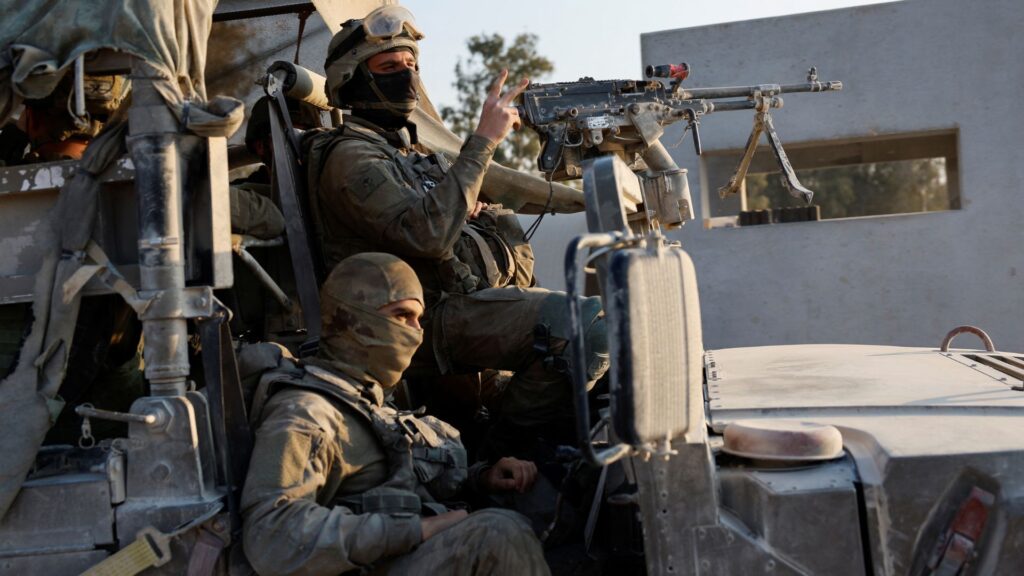
Sons and grandchildren of Hamas political leader killed in latest Israeli air attack in Gaza. Three sons and four grandchildren of Hamas political leader Ismail Haniyeh were assassinated in Gaza on Wednesday. Their names added to a long list of people killed by Israeli targeted operations worldwide. So, why does Israel pursue such policy? And what is its impact? Presenter: Sohail Rahman Guests: Ilan Pappe – Professor of history at Exeter University in the UK Rami Khouri – Distinguished public policy fellow, Issam Fares Institute at the American University of Beirut Colin Clarke – Director of research at The Soufan Group Adblock test (Why?)
Mexico calls on the International Court of Justice to expel Ecuador from UN
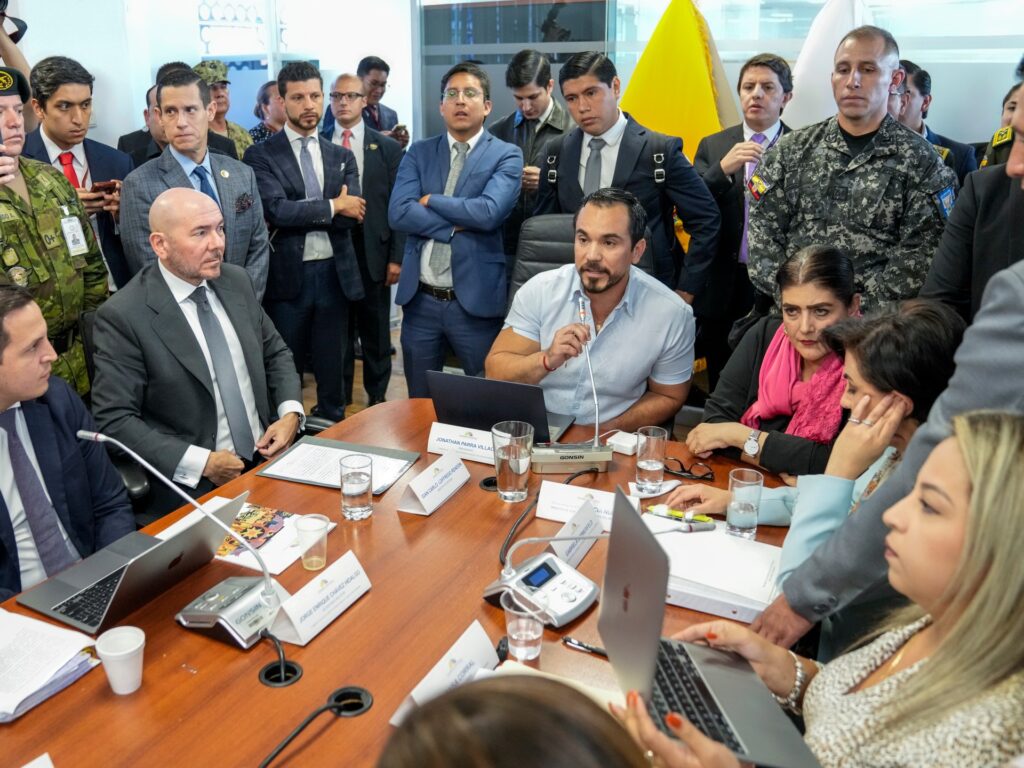
Mexico has appealed to the International Court of Justice to boot Ecuador from the United Nations, following a late night police raid on its embassy in Quito. President Andres Manuel Lopez Obrador said Mexico filed a complaint with the court on Thursday, calling Ecuador’s actions a violation of international law. “The court, in accordance with the United Nations Charter, should approve the expulsion, and there should be no veto,” Lopez Obrador said at a news conference. On social media, Mexican Foreign Minister Alicia Barcena echoed the president’s statement, saying Ecuador should be held “to account for flagrant violation of the inviolability of our embassy and attacks on our staff”. “The letter and spirit of international law is the guide for our steps,” she wrote. Mexico’s case centres on a controversial police raid that resulted in the capture of former Ecuadorian Vice President Jorge Glas, who had been sheltering in the Mexican embassy in Quito to avoid arrest. Embassies are considered protected spaces. Although they are not “foreign soil” — a common misconception — international law places them off limits to local police. That, in turn, allows embassy employees to carry out their work without fear of arrest or harassment from local authorities. The 1961 Vienna Convention on Diplomatic Relations, for example, says: “The premises of the [diplomatic] mission shall be inviolable. The agents of the receiving State may not enter them, except with the consent of the head of the mission.” However, this “rule of inviolability” has also been used by political dissidents and other figures to avoid arrest by taking shelter in a foreign embassy. Glas, for instance, has been twice convicted on bribery and corruption charges. He was sentenced in 2017 to six years in prison and again in 2020 to an eight-year sentence. Since December, Glas had sought refuge in the Mexican embassy, and shortly before his arrest on Friday, President Lopez Obrador had offered him political asylum in Mexico. But late on Friday night, Ecuadorian police scaled the wall of the Mexican embassy, bursting through its doors and pointing a gun at one of its chief diplomatic officers. Video released by the Mexican government on Wednesday shows that officer, diplomat Roberto Canseco, being thrown to the ground as he tried to block police vehicles leaving the embassy with Glas inside. Mexico has since called for Ecuador’s suspension from the UN. It said the suspension should only be lifted once Ecuador issues “a public apology recognising its violations to the fundamental principles and norms of international law”. The administration of President Lopez Obrador also severed diplomatic ties with Ecuador as a result of Glas’s arrest. Other countries and international organisations have likewise expressed concern and outrage over the police raid, calling it a violation of international laws. On Tuesday, United States National Security Adviser Jake Sullivan said, based on security footage of the police raid, his government believes “these actions were wrong”. The Organization of American States (OAS) also released a statement saying that “strict compliance” with the international law governing diplomatic relations is “essential”. In addition, OAS Secretary-General Luis Almagro suggested the situation with Glas should have been handled differently. Neither “the use of force, the illegal incursion into a diplomatic mission, nor the detention of an asylee are the peaceful way toward resolution of this situation”, he said. Ecuador has defended its decision to storm Mexico’s embassy, though. The government of President Daniel Noboa has questioned whether Glas met the requirements to receive political asylum, and it reaffirmed its commitment to fighting corruption within its borders. Ecuadorian Foreign Minister Gabriela Sommerfeld also said that a public apology “is not something that is under discussion at this moment”. Glas, meanwhile, has been on a hunger strike in his prison in Guayaquil. He was briefly hospitalised on Monday. Rafael Correa, the former president in whose administration Glas served, said the ex-vice president had attempted suicide after his arrest. Correa himself lives in exile in Belgium and faces a prison sentence in his native Ecuador, likewise on corruption-related charges. Adblock test (Why?)
O.J. Simpson dies after battle with cancer
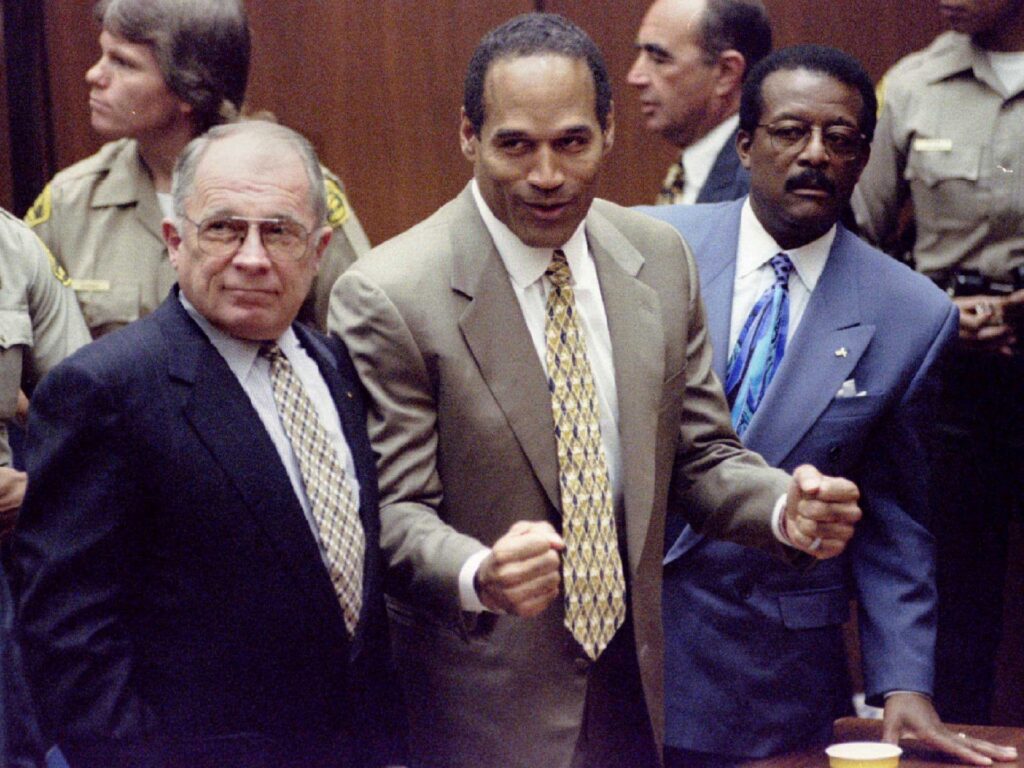
NewsFeed Former NFL star, actor, and acquitted murder suspect, O.J. Simpson has died. Simpson was found not guilty in the 1994 murder of of ex-wife and her friend in a sensational trial, watched by millions of Americans. His family said Simpson died on Wednesday after a battle with cancer. He was 76. Published On 11 Apr 202411 Apr 2024 Adblock test (Why?)
Akebono, sumo’s first foreign-born grand champion, dies aged 54

The enormous Hawaiian-born wrestler helped raise the international profile of Japanese sumo wrestling in the 1990s. Akebono, an American-born sumo wrestler who became the first non-Japanese grand champion or “Yokozuna”, died of heart failure this month in Tokyo, the sumo association said on Thursday. He was 54. The winner of 11 championships – the 10th most in modern sumo history – Akebono was physically imposing at 203cm (6 feet 8 inches) and 233kg (514 pounds). His fighting style relied on his immense size to thrust his foes out of the ring. Born Chad George Ha’aheo Rowan in Hawaii, Akebono was a college basketball player who was recruited by the head of a Japanese sumo stable, who was also Hawaiian. He entered the sumo world in 1988 and rose to its highest rank of Yokozuna in January 1993, becoming modern sumo’s 64th Yokozuna. He later became a Japanese citizen, taking the name Taro Akebono. As a foreigner, Akebono followed in the footsteps of the even bigger Konishiki, also from Hawaii, and alongside fellow Yokozuna Musashimaru, originally from American Samoa. “Throughout his 35 years in Japan, Akebono strengthened the cultural ties between the United States and his adopted homeland by uniting us all through sport,” US Ambassador Rahm Emanuel Emanuel posted on X. Akebono also regularly appeared as a celebrity on Japanese TV shows, and after retiring from sumo in 2001 fought in various mixed martial arts and professional wrestling events. “RIP to the Mighty Akebono,” posted Samoa Joe, the current world champion of AEW pro wrestling. “The epitome of a Yokozuna, both a warrior and a gentleman. A hui hou.” Akebono is survived by his wife, daughter and two sons. Adblock test (Why?)
Will oil prices keep rising, and how will that affect inflation?

The increase this year, driven by geopolitical tensions and supply shocks, could hamper efforts to rein in inflation. Oil prices are at their highest level in months and central banks are keeping a close eye on the markets. For the first time since October, Brent crude, the international benchmark, topped $91 a barrel last week. That threatens a rise in gasoline prices in the United States and elsewhere, reigniting fears over inflation. The increase in prices has been driven in part by geopolitical tensions in the Middle East. Supply shocks after several output cuts by the Organization of the Petroleum Exporting Countries (OPEC) and its allies are also pushing prices up. Zimbabwe has launched a new currency. Plus, McDonald’s buys back its Israeli restaurants. Adblock test (Why?)
Australian women lose bid to sue Qatar Airways over 2020 strip searches

Judge dismisses case because women not searched on the aircraft, says they could seek damages from the airport operator. A group of Australian women who were strip-searched at Doha’s main international airport have lost a legal bid against Qatar Airways. In early October 2020, the female passengers were ordered to disembark their flight to Sydney and subjected to gynaecological examinations to check whether they had given birth. The body searches were part of an investigation into the whereabouts of the mother of a newborn baby who was found abandoned in a plastic bag in a bin at a toilet in one of the terminals of Hamad International Airport. The women later launched legal action seeking damages over alleged “unlawful physical contact”, false imprisonment and mental health impacts. An Australian court on Thursday dismissed the case because the women were not searched on board the aircraft, citing a well-worn international convention covering airline liability. Federal Court Justice John Halley indicated they could instead amend the claim to seek damages from the operator of the airport. In September last year, Australia’s government cited the “invasive” examinations as a reason to block Qatar Airways from operating more flights into the country. The airline said Australia’s decision was “very unfair”. Following the incident, Qatar’s then-Deputy Prime Minister and Minister of Foreign Affairs Sheikh Mohammed bin Abdulrahman Al Thani, who since became the prime minister, had expressed his “deepest sympathies with the women impacted by the search at the airport” and renewed the Gulf state’s apology to them. “The incident is considered a violation of Qatar’s laws and values,” he said at the time, adding that the officials involved had been referred to the public prosecutor. Adblock test (Why?)
What’s behind Germany’s unwavering support for Israel?

Germany is one of the staunchest backers of Israel’s war on Gaza. Eighty years after the Holocaust, Germany is accused of being complicit in an alleged Israeli genocide in Gaza. Nicaragua wants the International Court of Justice to order Berlin to stop military exports to Israel. German lawyers have rejected the case as baseless and biased. They say Berlin is a fierce advocate for international humanitarian law. For years, Germany has declared the security of the state of Israel is at the core of its foreign policy. As world opinion turns against Israel’s brutal war on Gaza, where does that leave Berlin’s unwavering support for Israel? Presenter: Laura Kyle Guests: Tobias Bacherle – Member of the German parliament and a political scientist John Kampfner – Author, journalist and senior associate fellow at the Royal United Services Institute Shir Hever – Director of the Alliance for Justice between Israelis and Palestinians Adblock test (Why?)
Activists spray paint UK’s Ministry of Defence building red

NewsFeed Activists protesting Britain’s arms sales to Israel doused the UK’s Ministry of Defence building with red paint. As other demonstrators gathered, chanting, ‘Stop the bombing,’ 5 of the activists were arrested by police. Published On 10 Apr 202410 Apr 2024 Adblock test (Why?)