

Israeli attack kills three sons of Hamas political leader Ismail Haniyeh
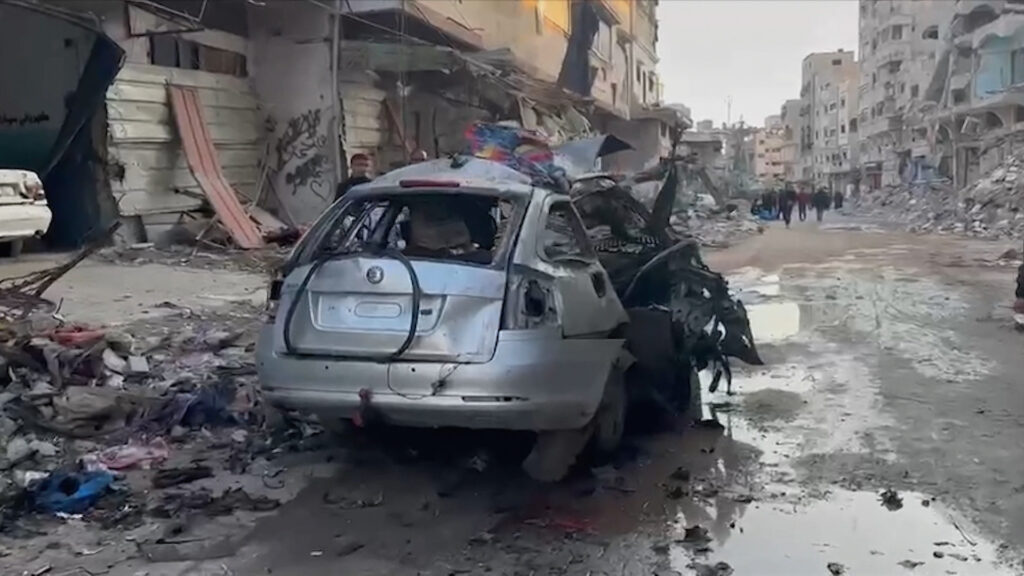
NewsFeed The Israeli military has confirmed it killed three sons of Hamas political leader Ismail Haniyeh, who says three of his grandchildren were also killed in the air attack which happened on the first day of Eid al-Fitr. Haniyeh has told Al Jazeera that Palestinian leaders will not back down if their families are targeted by the Israeli army, and that the killings will not affect Hamas’s demands in negotiations for a ceasefire. Published On 10 Apr 202410 Apr 2024 Adblock test (Why?)
Biden: Israel’s Netanyahu making ‘mistake’ on Gaza

In strongest criticism yet, Biden takes issue with Israel’s approach but not its devastating war on Gaza. United States President Joe Biden has said Israeli Prime Minister Benjamin Netanyahu is making a “mistake” in his handling of the Gaza war and its repercussions inside Israel and internationally. “I think what he’s doing is a mistake. I don’t agree with his approach,” Biden told Univision, a US-based, Spanish-language television network, in an interview that aired late on Tuesday when asked whether Netanyahu was putting his own political survival before national interests. Biden also said it was “outrageous” that Israel targeted a convoy of US food charity World Central Kitchen (WCK) in Gaza, killing seven aid workers. “So what I’m calling for is the Israelis to just call for a ceasefire, allow for the next six, eight weeks, a total access to all food and medicine going into the country,” he said, adding that other countries were ready to help as well. “I’ve spoken to everyone from the Saudis to the Jordanians to the Egyptians. They’re prepared to move this food in. There’s no excuse to not provide for the medical and food needs of those people. It should be done now.” Al Jazeera’s White House Correspondent Patty Culhane reported that the interview took place last week, shortly after the WCK aid workers were killed in an Israeli military attack. Biden was only asked one question on Gaza, Culhane said, if “he thought that … Netanyahu was putting his political survival over the interests of Israel”. It remains to be seen if Biden’s staff later walk back his remarks on the ceasefire that he called for, Culhane added. While international pressure is growing for a truce in the six-month war, there has been no progress in weeks of talks with Israeli and Hamas officials as well as international mediators – the US, Egypt and Qatar. Senior officials in the US administration continue to defend and support the war – while sending weapons to Israel – even as 33,360 Palestinians have been killed in the Gaza Strip since October 7. In testimony before the US Senate Armed Services Committee on Tuesday, Defense Secretary Lloyd Austin again categorically rejected that Israel is perpetrating genocide in the besieged enclave, where famine has set in, children have died of malnutrition and Israeli authorities have continued to block humanitarian aid convoys while carrying out attacks across the territory. “We don’t have any evidence of genocide being created,” he said. At a joint news conference in Washington, DC, alongside British Foreign Secretary David Cameron, US Secretary of State Antony Blinken said the enclave needs more humanitarian assistance. He said what matters is “sustained results” and that means ensuring aid “is distributed effectively throughout Gaza”. While Netanyahu announced Israel has decided on a date for its planned ground invasion of Rafah in southern Gaza, Blinken said the US has not been briefed on the decision and that he is expected to meet with Israeli officials next week. “We do not have a date for any Rafah operation. On the contrary, what we have is an ongoing conversation with Israel. The president has been very clear about our concerns about Israel’s ability to move civilians out of harm’s way,” he said. Rafah, bordering Egypt, is where about 1.5 million displaced Palestinians are taking shelter. Israel has long threatened an offensive there, but the US has opposed this absent a plan to evacuate Palestinians from the area. Adblock test (Why?)
Israel’s war on Gaza: List of key events, day 187

Palestinians in Rafah are celebrating Eid al-Fitr with Israeli drones buzzing overhead. Here’s how things stand on Wednesday, April 10, 2024: Fighting and humanitarian crisis On Tuesday, one day before Eid, an Israeli air strike killed at least 14 Palestinians, including four children, in the Nuseirat camp in central Gaza. Palestinians in Rafah began celebrating Eid al-Fitr with Israeli drones buzzing overhead, Al Jazeera’s Tareq Abu Azzoum said late on Tuesday. Separately, world leaders acknowledged the suffering in Gaza and Sudan in their Eid al-Fitr messages on Wednesday. US Secretary of State Antony Blinken said on Tuesday that Israel has not apprised the US of any specific date for the start of a major offensive into the southern Gaza city of Rafah, but added that American and Israeli officials remained in contact to try to ensure that “any kind of major military operation doesn’t do real harm to civilians”. Diplomacy and geopolitical tensions Israeli Prime Minister Benjamin Netanyahu’s approach to the war in Gaza is a “mistake”, US President Joe Biden said in an interview published on Tuesday. Separately, on Tuesday, Netanyahu said there is “no force in the world that will stop us” from completing the elimination of Hamas’s brigades, including in the southern city of Rafah. Several family members of the captives held by Hamas met US Vice President Kamala Harris at the White House on Tuesday to call for a deal to ensure the release of their loved ones and implement a temporary ceasefire in Gaza. In a hearing on Tuesday, Defense Secretary Lloyd Austin told the Senate Armed Services Committee that the US does not “have evidence” that Israel is committing genocide in Gaza. UN Secretary-General Antonio Guterres expressed his sorrow over the violence and hardships being experienced by Muslims in Gaza and elsewhere in his annual greeting for Eid al-Fitr. “My heart is broken to know that in Gaza, Sudan and so many other places, because of conflict and hunger, so many Muslims will not be able to celebrate Eid properly,” Guterres said in a video message posted on X. In a message wishing “Eid Mubarak“, Australia’s Prime Minister Anthony Albanese acknowledged that “the suffering in Gaza will mean many Muslim Australians will mark Eid al-Fitr with sorrow”. Ireland will move to recognise a Palestinian state “in the next couple of weeks”, Irish Foreign Minister Micheal Martin told local news site The Journal on Tuesday. Eid Mubarak. pic.twitter.com/473MWspVo7 — Anthony Albanese (@AlboMP) April 9, 2024 Violence in the occupied West Bank A young man was shot in the leg during an Israeli raid on the village of Asira al-Qibliya, south of Nablus on Tuesday, in the occupied West Bank, Wafa news agency reported. Israeli soldiers fired live bullets, stun grenades and tear gas during the raid, Wafa added. Adblock test (Why?)
Olympics: India’s Zareen ready to step out of Mary Kom’s shadow, says coach

The current IBA women’s world boxing champion will go for gold at the Paris Olympics. Two-time world boxing champion Nikhat Zareen is ready to step out of fellow Indian MC Mary Kom’s shadow with a medal at the Paris Olympics, coach Blas Iglesias Fernandez has said. Six-time world champion MC Mary Kom has been the face of women’s boxing in India and her illustrious career inspired a Bollywood biopic in 2014. She won the flyweight bronze at the 2012 London Olympics to cement her legacy and announced her retirement earlier this year. Zareen will make her Olympic debut in the 50kg event in Paris and Fernandez expects the 27-year-old to return with a medal around her neck. “This is Nikhat’s time to prove herself,” the Cuban said in a Sports Authority of India (SAI) media release on Tuesday. “It’s true that she had lived in the shadows of Mary Kom but now it’s her chance to prove herself and make India proud.” Since 1990, Fernandez has worked with India’s top boxers, including Mary Kom, and is the only foreigner to have won India’s highest award for a coach. Currently India’s high-performance coach, the 68-year-old was particularly pleased by Zareen’s ring awareness. “I love the boxing (style) of Nikhat. She is very intelligent. She has good ring tactics,” he said. India could expect a second boxing medal in the women’s event if Lovlina Borgohain, who won the welterweight bronze at the Tokyo Olympics, could find her “killer instinct”, Fernandez said. “Lovlina has to show more killer instinct,” he said of the boxer, who had to move from 69kg to 75kg after the Olympic categories were revised. “I have seen some of her bouts and I think she lost them because Lovlina was not aggressive and proactive enough. “If she can box to her potential, she can finish among the medals in Paris.” India has bagged four women’s quota places for Paris. Fernandez was hopeful the male boxers would give a good account of themselves at the world qualifiers in Bangkok where India can potentially clinch nine Paris spots. “I reckon Nishant Dev and Amit Panghal can bag Paris quotas. They both have the potential to do this,” he said. “Men’s boxing is very tough and should not be compared with women’s where the competition is relatively easier.” Adblock test (Why?)
South Korea holds parliamentary elections: All you need to know

South Koreans will head to the polls on Wednesday to choose who will sit in the country’s 300-member parliament in a major political test of conservative President Yoon Suk-yeol. Yoon was elected leader two years ago with the slimmest margin of victory in any presidential election, defeating Lee Jae-myung of the Democratic Party by 0.73 percent. His approval ratings remain low amid an acrimonious doctors’ strike, rising food prices and allegations of corruption, which could spell trouble for his People Power Party. But the Democratic Party is not much more popular, with Lee facing corruption charges. The National Assembly, as the parliament is known, is currently controlled by the Democrats, and whoever wins the April 10 vote will be in a position to set the tone for domestic politics over its next four-year term. Here is all you need to know about the elections: Why does the election matter? The election comes with Yoon enduring months of low approval ratings, and can be seen as a “half-term assessment” of his administration, according to the US-based Stimson Center. If the PPP performs poorly or is unable to claim a majority in parliament the president is likely to lose further momentum in his final three years in office. South Korean presidents serve only a single term. “With the opposition-led parliament, it has been hard to make a policy push or achievement over the last two years. Without change during the rest of his term, it would be extremely hard to do his job,” said Lee Jun-han, professor of political science at Incheon National University. The election is being seen as a referendum on conservative President Yoon Suk-yeol [Yonhap via Reuters] Whatever the outcome, the election is unlikely to have much of an effect on the country’s foreign policy, however. Yoon has sought to deepen its political and military ties with Japan and the United States amid bellicose talk from Pyongyang, which has been testing new weaponry and developing closer relations with Russia. What are the main parties? The PPP and Democratic Party have dominated South Korean politics for years. As of March 2024, the National Assembly had 297 members out of a total of 300 seats. The DP held the most seats with 160, followed by the PPP with 113. There are also a number of smaller parties, some of them set up by breakaway factions of the established parties. More than 20 percent of voters said they would vote for the newly-launched Reform Korea party under former justice minister Cho Kuk via the proportional representation vote, according to a Gallup poll released on March 29. That could give the party between 10 and 15 seats, and perhaps make them a kingmaker in the new parliament. Democratic Party campaigners perform a dance routine for the crowd at a rally earlier this week [Kim Hong-Ji/Reuters] What are the key issues? Opinion polls suggest the cost of living and rising food prices are key issues for voters. Yoon and his party felt the heat after a visit to a supermarket last month when he tried to promote government efforts to tame prices by talking about the price of green onions. Looking at a bundle of onions with a price tag of 875 won ($0.65) – a discounted price as a result of a government subsidy – Yoon said he thought the price was “reasonable”. The comment gave plenty of fodder to the opposition – the average retail price for green onions has been hovering between 3,000 won and 4,000 won ($2.20 to $2.90) – with candidates for the Democratic Party brandishing onions at campaign rallies and accusing Yoon of being out of touch. It is not just onions that have surged in price, either. Prices of agricultural products increased by more than 20 percent in March from the same month last year. The price of apples surged nearly 90 percent, marking the largest one-year jump since 1980. Onions have emerged as an unlikely issue in the election, amid rising frustration over the government’s handling of the economy [File: Kim Daewoung/Reuters] Voters are also concerned about a weeks-long strike by thousands of doctors angry over plans to reform medical education, which has forced operations to be cancelled and increased waiting times. Yoon has refused to budge, but opinion polls suggest increasing public support for a compromise to end the dispute. Corruption also remains a major issue. Yoon is under pressure over the so-called “Dior bag scandal” after footage surfaced last November showing his wife accepting a $2,200 designer handbag. Yoon has dismissed the video as a “political scheme” but such a gift would breach South Korean law banning public officials and their spouses from accepting anything worth more than $750. He is also facing the heat over his decision to appoint former defence minister Lee Jong-sup as the country’s ambassador to Australia while being under investigation for corruption. Lee resigned on March 29 less than a month after an outcry, not only among the opposition but also within the PPP. The Democratic Party also has its own struggles with corruption. Leader Lee is facing trial over charges including bribery. Cho also has baggage. A rising political star during the government of Yoon’s Democratic predecessor, Moon Jae-in, he faced a slew of scandals that undermined his reformist image and sharply split the nation. In February, a court sentenced him to two years in prison for forging documents for his children’s university admission, and he has one last appeal. And what will not be an issue? North Korea. Despite all its weapons tests and moves to end all forms of cooperation with South Korea, most voters are inured to the rumblings from across the border. The “widespread public feeling towards North Korea is pity, not fear,” political consultant Bae Kang-hun told the AFP news agency, noting the South Korean economy is about 40 times larger than North Korea’s. Turnout for early voting was high, suggesting strong interest in Wednesday’s poll [Kim Soo-hyeon/Reuters] How does the election
Photos: Palestinians in Gaza prepare for Eid amid death and destruction

This year, the shadow of continued Israeli attacks on the Gaza Strip looms large over Palestinians as they prepare for the Muslim holiday of Eid al-Fitr, marking the end of the fasting month of Ramadan. The bloodshed in the Gaza Strip, despite the UN Security Council’s demand for an immediate ceasefire and the International Court of Justice’s order for Israel to allow humanitarian relief and prevent genocide, has placed a pall over Eid celebrations. Israel’s war on Gaza, which has killed about 33,360 people and wounded 75,993 others, according to Palestinian authorities, has taken a massive toll on the holiday spirit. Despite the devastation, a large number of Palestinians who have been displaced and lost their homes and loved ones as a result of the six-month-long war went shopping for Eid al-Fitr. Thousands of Palestinians throng the markets in some parts of Gaza to try to experience the joy of Eid despite the ongoing war. Adblock test (Why?)
UK will not block arms sales to Israel, says Foreign Minister David Cameron

British government is coming under growing pressure to halt weapons supplies to Israel as it continues its war on Gaza. The United Kingdom will not halt arms sales to Israel by British companies after reviewing the latest legal advice on the matter, Foreign Minister David Cameron has said. Six months into the Israeli assault on Gaza, triggered by the October 7 Hamas-led attack on Israel, British Prime Minister Rishi Sunak’s government has come under heavy pressure to revoke licences that allow arms exports to Israel. “The latest assessment leaves our position on export licences unchanged. This is consistent with the advice that I and other ministers have received,” Cameron said on Tuesday at a press conference with his US counterpart Antony Blinken in Washington, DC. “And as ever, we will keep the position under review.” Britain supplied 42 million pounds ($53m) of arms to Israel in 2022. Last week three former senior UK judges joined more than 600 members of the British legal profession in calling for the government to halt arms sales to Israel, saying it could make Britain complicit in genocide in Gaza. Some opposition political parties in Britain have called for the government to recall Parliament from its current holiday and revoke the export licences, and also to publish the legal advice the government has used to reach its position. “This was yet another missed opportunity from David Cameron to move himself and other UK officials away from their current complicity in Israeli war crimes, apartheid and possible genocide,” said Amnesty International UK’s crisis response manager, Kristyan Benedict. Israel denies it has committed war crimes or genocide in its assault on Gaza, and has rejected the use of the term “apartheid” to describe its treatment of Palestinians. At least 33,360 people have been killed and 75,993 others wounded in Israeli attacks on Gaza since October 7, according to Palestinian authorities. Israel launched the assault after the Palestinian group Hamas led an attack on southern Israel on October 7, killing at least 1,139 people, according to an Al Jazeera tally based on Israeli statistics. Cameron said Britain continued to have “grave concerns around the humanitarian access issue in Gaza”. He defended the decision not to publish the legal advice on arms export licences. He said it was an important principle that ministers act consistently with legal advice without making it public. “The overall judgement is that those export licences will remain open and continue,” he said. His visit to the United States comes as Israel says it has set a date for a military offensive on Rafah in southern Gaza, where more than a million displaced Palestinians have sought shelter from the Israeli assault. Blinken on Tuesday said he expects talks between Israeli and US officials to take place next week on a potential Israeli military operation in Rafah. Israeli Prime Minister Benjamin Netanyahu said on Monday that victory over Hamas required entry into Rafah and said there was a date for the operation, despite Washington’s warning not to go ahead. Blinken said Washington has not been given a date. “On the contrary, what we have is an ongoing conversation with Israel about any Rafah operation,” Blinken said, adding that he expected the talks would continue next week. “I don’t anticipate any actions being taken before those talks, and for that matter, I don’t see anything imminent. But there’s a lot of work to be done and it remains our conviction that major military operations in Rafah would be extremely dangerous for civilians who would be caught in harm’s way,” he said. Blinken also said the US is continuing to work closely with Qatar and Egypt on a potential ceasefire agreement between Israel and Hamas in Gaza. He said that 400 trucks were cleared to go into Gaza on Monday, the most since October 7, when the conflict was triggered. Adblock test (Why?)
Total solar eclipse sweeps across North America: Eight highlights

A total solar eclipse has crossed North America, slicing a diagonal line from the southwest to the northeast, briefly plunging communities in Mexico, the United States and Canada along the path into darkness. This was the first total eclipse to sweep across a large swath of North America since 2017. The next total solar eclipse will take place on August 12, 2026, over Greenland, Iceland and Spain. Here are eight highlights: Mexico’s Mazatlan was first city to experience totality Mexico’s beachside resort town of Mazatlan was the first major viewing spot for totality. Thousands in solar-safe eyewear perched in deck chairs along the coastal promenade, and an orchestra played the Star Wars movie theme as skies darkened under the approaching lunar shadow. The crowds burst into cheers, applause and whistles when the eclipse reached totality. Eclipse fans travelled from far and wide hoping to glimpse the phenomenon somewhere along the “path of totality” stretching 2,500 miles (4,000 km) from Mexico’s Pacific Coast through Texas and across 14 other US states into Canada. Lourdes Corro, 43, said she travelled 10 hours by car to reach Mazatlan. “The last one I saw was when I was nine years old,” Corro said. “There are a few clouds but we can still see the sun.” Mexican President Andres Manuel Lopez Obrador uses special protective glasses to observe the total solar eclipse in Mazatlan [Reuters] Some animals changed their behaviour A researcher observing animals at the Fort Worth Zoo in Texas during totality said some seemed extra vigilant, including a rambunctious young male gorilla that stood on a pole. At the Dallas Zoo, flamingos gathered in the middle of a pond and the penguins also clustered together, an employee said. “The flamingos started getting crazy and started getting in the water because they thought it was time to sleep,” visitor Mara Villeda, of Arlington, told local news agency NBC 5 Dallas-Fort Worth. Despite some changes at the Fort Worth Zoo, most animals remained relatively calm during totality and many moved to where they were put away for the evening. “In general, everybody was really well adjusted. Nobody was doing sort of bonkers behaviour,” said Adam Hartstone-Rose, a researcher from North Carolina State University who came with a team to Texas for the eclipse. A gorilla sits in an enclosure as the sun returns at the Fort Worth Zoo after a total solar eclipse on Monday in Fort Worth, Texas [LM Otero/AP] Weddings and proposals In Russellville, Arkansas, a town of roughly 30,000 people near the southern US state’s only nuclear power plant, almost 400 couples tied the knot by the shadow of the moon in a mass wedding event dubbed “Elope and the Eclipse”. Further north in Niagara Falls, clouds threatened to disrupt viewing parties for the crowd of about 2,000 people who had gathered in the state park. There were at least two weddings and one marriage proposal at the falls as the clouds parted to reveal the last 30 seconds of totality, and the crowd went wild, cheering and shouting, “It’s so beautiful.” As the skies began to brighten again, a band played out the retreating lunar shadow with a rendition of REM’s 1992 hit song Man on the Moon. Couples exchange rings just before totality during a solar eclipse at a mass wedding ceremony at Trenton, Ohio [Jon Cherry/AP] New world record Across the river in Niagara Falls, Ontario, 309 people – some from as far away as Singapore and London – came dressed up as the sun, setting a new world record for the largest group to wear solar costumes in one place, contest organisers said. The previous record was set in 2020 by 287 participants in China. Some of the 309 people gathered to break the Guinness World Record for the largest group of people dressed as the sun pose on a sightseeing boat [Jenna Zucker/Reuters] Hear and feel the eclipse While eclipse watchers looked to the skies, people who were blind or visually impaired were able to hear and feel the celestial event. Devices that can translate the eclipse on sound and touch devices were available at some public gatherings. An astronomer who is blind collaborated with an astronomer from Harvard University to design the LightSound box, which translates changing light in the sky into differing musical notes. Another device allowed users to feel the eclipse through rows of dots that moved up and down. In this composite of eight photographs, the moon passes by the sun into totality and away again during a total solar eclipse in Bloomington, Indiana [Josh Edelson/AFP] The eclipse in numbers The out-of-sync darkness lasted as long as 4 minutes and 28 seconds. That is almost twice as long as it was during the US coast-to-coast eclipse seven years ago because the moon was closer to Earth. It took just 1 hour and 40 minutes for the moon’s shadow to race more than 4,000 miles (6,500 kilometres) across the continent. The path of totality – approximately 115 miles (185 kilometres) wide – encompassed several major US and Canadian cities, including Dallas, Indianapolis, Cleveland, Buffalo, New York and Montreal. An estimated 44 million people lived within the track, with a couple of hundred million more within 200 miles (320 kilometres). (Al Jazeera) Jupiter and Venus visible during totality Hundreds of people at Shawnee National Forest in the US state of Virginia erupted into cheers as darkness fell over their campsite. Temperatures dropped several degrees. Birds chirped and frogs croaked. And planets including Jupiter and Venus were visible during the more than 3 minutes of totality. When is the next total solar eclipse? The next total solar eclipse will take place on August 12, 2026, over Greenland, Iceland and Spain. Almost exactly a year later, on August 2, 2027, one will be visible from northern Africa, Gibraltar and the Arabian Peninsula. In the US, the next total eclipse will occur in 2033 but will only be visible from Alaska. Western Canada, Montana and North Dakota will witness a
Activists calling for Israel arms embargo target UK’s Labour party HQ

NewsFeed Video shows activists spraying red paint on the UK’s Labour party headquarters in a protest calling for an arms embargo against Israel and an end to new drilling for oil and gas. At least two people were arrested. Published On 9 Apr 20249 Apr 2024 Adblock test (Why?)
Israel says ‘date set’ for Rafah invasion amid ongoing Gaza truce talks
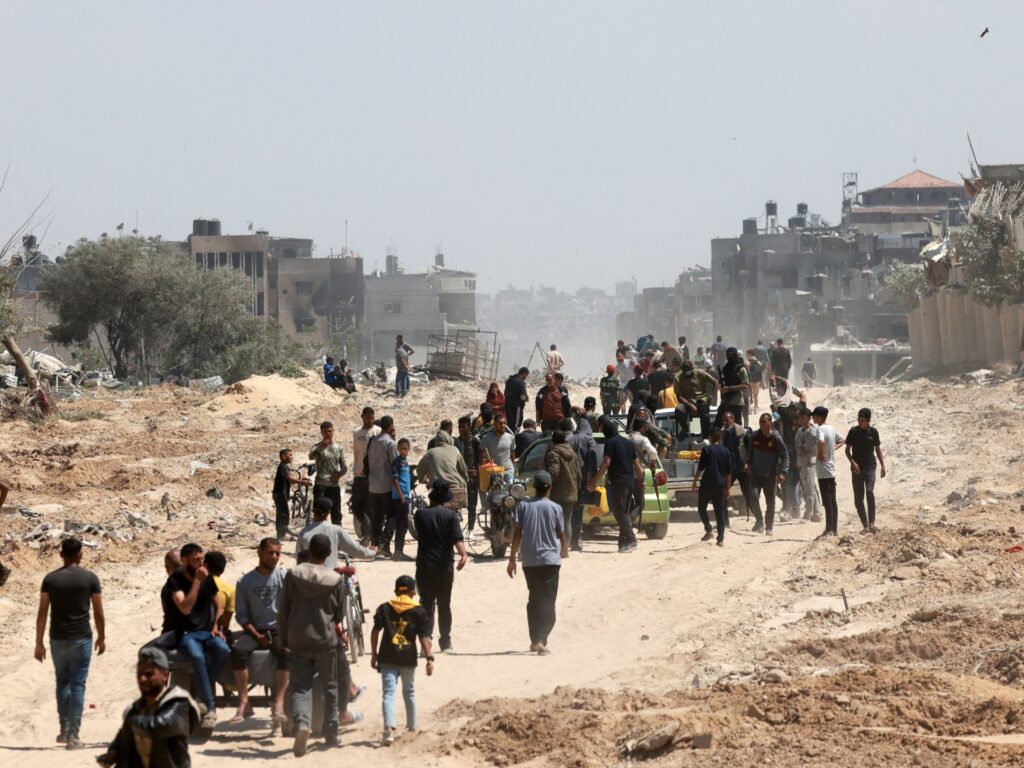
Hamas says Israel is not acceding to demands of a military withdrawal and allowing Palestinians to return home. Israeli Prime Minister Benjamin Netanyahu says a date has been set to invade Rafah in southern Gaza as truce talks with Hamas in Cairo are ongoing but do not appear close to the finish line. In a video statement in Hebrew, Netanyahu reiterated his position that a ground military operation in Rafah, bordering Egypt, where more than 1.5 million Palestinians are sheltering, is essential for victory in the war. “It will happen. There is a date,” he said on Monday without elaborating. This comes as Hamas was presented with a new proposal in ceasefire talks at the end of the weekend, but one that does not appear to be able to secure a deal. The Palestinian group confirmed in a statement that it is reviewing the proposal, but said Israel “has not responded to any of the demands of our people and our resistance”. Senior Hamas spokesperson Sami Abu Zahry told Al Jazeera that Netanyahu’s remarks “raise questions about the purpose of resuming negotiations”. “The success of any negotiations depends on ending the aggression,” said Zahry, adding that the group’s “demands are clear: an end to aggression against our people”. Israel has so far rejected Palestinian demands of an unrestricted return of hundreds of thousands of Gaza Palestinians to the enclave’s north, and the retreat of Israeli military ground forces from the strip. The Israeli military said it has withdrawn some of its ground forces from Gaza, but has kept the troops in charge of maintaining an east-west corridor that effectively cuts the enclave in half and prevents the return of Palestinians to the north. The United States continues to be publicly opposed to the idea of Israel’s invasion of Rafah as it has said there are no viable plans to evacuate the large number of civilians who are in the area. An unnamed Israeli official told The Associated Press news agency that Israel is buying 40,000 tents to prepare for the evacuation of Palestinians from Rafah. US Department of State spokesperson Matthew Miller told reporters following Netanyahu’s announcement that the US has not been fully briefed on any new Rafah developments. “We have made clear to Israel that we think a full-scale military invasion of Rafah would have an enormously harmful effect on those civilians and that it would ultimately hurt Israel’s security,” Miller said. This comes as the leaders of Egypt, Jordan and France wrote a joint op-ed published by several media outlets, including The Washington Post and Le Monde, that called for an immediate and unconditional ceasefire, as demanded by a United Nations Security Council resolution passed in late March. “We warn against the dangerous consequences of an Israeli offensive on Rafah, where more than 1.5 million Palestinian civilians have sought refuge. Such an offensive will only bring more deaths and suffering, heighten the risks and consequences of mass forcible displacement of the people of Gaza and threaten regional escalation,” said the leaders. Mahjoob Zweiri, director of the Gulf Studies Center at Qatar University, told Al Jazeera it has become apparent to Israel’s Western allies and even within the country that Netanyahu has no interest in reaching a deal “any time soon”. “He wants more time, he wants to go to Rafah, he wants to have something he has failed to achieve so far,” Zweiri said. “He and the right wing need individuals, they need names – they talk about [Hamas leaders Yahya] Sinwar and [Mohammed] Deif, and none of this has been achieved.” Zweiri said as long as this continues, the Israeli prime minister’s stance will remain the same out of “self-interest” to preserve his political future. “Everyone knows, but the issue is whether the international community accept this, will accept to see more killing and more destructionfor someone who is irresponsible politically and immorally is waging war on civilians,” he added. Adblock test (Why?)