

Why are doctors striking in several countries?

Doctors are trying to make the field more accessible, but are they concerned about quality of care or their own prestige? Many countries around the world are facing a shortage of qualified doctors. Several countries have taken steps in recent months to make achieving qualification as a doctor more accessible. But these attempts have been met with pushback from doctors, especially younger junior doctors, with many expressing frustration at having undertaken long and expensive degrees that will no longer have the same value. Some have taken their frustrations to extremes, with patients dying as junior doctors in South Korea strike. Presenter: Myriam Francois Guests: Dr Habib Rahman – Cardiology registrar Dr David Bhimji Atellah – KMPDU secretary-general Dr Alice Tan – Internal medicine specialist Adblock test (Why?)
No Labels group abandons US presidential third-party bid

It was the third-party challenge that wasn’t. The No Labels group announced on Thursday that it will not field a third-party candidate to challenge Democrat Joe Biden and Republican Donald Trump in November’s presidential election. The move comes after the organisation, which has billed itself as a bipartisan antidote to hyper-partisanship in the United States, failed to attract a high-profile centrist to be its champion. The US has long been dominated by two main parties — Republicans and Democrats — with third-party candidates generally failing to gain traction. They are often accused of siphoning votes from mainstream candidates. “No Labels has always said we would only offer our ballot line to a ticket if we could identify candidates with a credible path to winning the White House,” Nancy Jacobson, the group’s CEO, said in a statement sent out to allies. “No such candidates emerged, so the responsible course of action is for us to stand down.” The announcement further cements the general election matchup between Biden and Trump, both of whom have occupied the White House — and both of whom have seen tanking popularity in recent months. The update leaves only anti-vaccine activist Robert F Kennedy Jr, a scion of the Kennedy political dynasty, as the only prominent outsider still seeking the presidency. Kennedy said this week that he had collected enough signatures to qualify for the fall ballot in five states. No Labels’ decision comes just days after the death of founding chairman Joe Lieberman, a former Democratic senator and vice presidential candidate who became a political independent during his final term in office. Thursday’s move caps months of internal discussions at No Labels, during which the group raised tens of millions of dollars from a donor list it has kept secret. Democrats had feared the ticket would be damaging to Biden and threatened to fracture the diverse coalition of voters seen as his best pathway to victory, particularly in key battleground states. No Labels never named all of its delegates and most of its deliberations took place in secret, further stoking concerns it could scuttle Biden’s chances. “Millions of Americans are relieved that No Labels finally decided to do the right thing to keep Donald Trump out of the White House,” said Rahna Epting, a No Labels critic and executive director of the progressive organisation MoveOn. “Now, it’s time for Robert Kennedy Jr to see the writing on the wall that no third party has a path forward to winning the presidency. We must come together to defeat the biggest threat to our democracy and country: Donald Trump.” Kennedy’s campaign did not immediately comment. No Labels had previously said it qualified to appear on ballots in 21 states. But several potential presidential candidates said they would not be the group’s standard-bearer. They include former United Nations Ambassador Nikki Haley, who suspended her campaign for the Republican presidential nomination last month. Senator Joe Manchin, a Democrat who has long roiled the party, also ruled out running, and former Maryland Governor Larry Hogan, a centrist Republican, decided to run for the US Senate instead. Last month, former New Jersey Governor Chris Christie, a Republican candidate for the presidency in 2024, also said he would not run under the No Label banner. The group had been weighing a so-called “unity ticket” with a presidential candidate from one major party and a vice presidential candidate from the other, to appeal to voters unhappy with both Biden and Trump. “We are deeply relieved that everyone rejected their offer, forcing them to stand down,” said Matt Bennett of the centrist group Third Way, which has been fighting No Labels’ 2024 ambitions. “While the threat of third-party spoilers remains, this uniquely damaging attack on President Biden and Democrats from the centre has at last ended.” Dan DuPraw, a 33-year-old sales worker in Philadelphia who would have been a delegate for the No Labels convention, called Thursday’s decision disappointing but prudent. He said he trusts the No Labels leadership to make the right call. “I understand why they made the decision, and I think it’s the right thing to do in this moment,” DuPraw told The Associated Press news agency. “But I’m so disappointed that we get Trump and Biden again. I think it’s such a horrible thing for our country.” DuPraw said he will now decide between Biden and Kennedy. “I’m excited that there are other options than the two main parties,” he said. Adblock test (Why?)
US judges reject Trump’s attempt to dismiss charges in two criminal cases

Trump has sought to dismiss cases accusing him of election interference in Georgia and of mishandling classified files. Donald Trump has suffered setbacks in two criminal cases against him, after judges in the United States nixed the former president’s efforts to dismiss charges over his efforts to overturn the 2020 election and his handling of classified documents. In Florida on Thursday, US District Judge Aileen Cannon rejected Trump’s attempt to have the case accusing him of mishandling secret government files thrown out. Trump had argued that US law authorised him to retain highly sensitive documents at his Mar-a-Lago estate in Palm Beach, Florida, after leaving office in 2021. He cited the Presidential Records Act, which allows former presidents to keep personal records unrelated to their official responsibilities. But prosecutors said he was not authorised to keep secret information related to US national security, even if he viewed the records as personal. Separately on Thursday, the judge overseeing the election interference case in Georgia rejected Trump’s argument that the indictment seeks to criminalise political speech protected by the First Amendment. The First Amendment of the US Constitution guarantees the right to free speech. But Fulton County Superior Court Judge Scott McAfee wrote in his decision that, at the current pretrial stage, he must consider the language of the indictment in a way that is favourable to the prosecution. Georgia prosecutors have accused Trump and 18 others of joining a conspiracy to “unlawfully change the outcome” of the 2020 vote in the US state. But McAfee wrote that the charges do not suggest that Trump and the other defendants are being prosecuted simply for making false statements, but rather that they acted willfully and knowingly to harm the government. “Even core political speech addressing matters of public concern is not impenetrable from prosecution if allegedly used to further criminal activity,” the judge wrote. Thursday’s decisions mark the latest developments in ongoing efforts by Trump and his legal team to challenge the four criminal indictments against him, two of which relate to his attempts to overturn the results of the 2020 election. He lost that race to current President Joe Biden. Trump has pleaded not guilty in all the cases. He has also accused prosecutors of conducting a politically motivated “witch hunt” that aims to derail his 2024 election campaign. Trump is the presumptive Republican presidential nominee and is expected to face Biden in November’s contest. While the criminal indictments have failed to curb Trump’s support among his Make America Great Again (MAGA) base, experts say a potential conviction in any of the cases could affect his chances at the ballot box. But it remains unclear whether a verdict will be reached before the election, and Trump’s team has sought to delay many of the legal proceedings. Trials in any of the four cases could create scheduling conflicts during a busy campaign season. Georgia decision Thursday’s decision in Georgia echoed an earlier ruling in the federal election interference case against Trump, brought by Special Counsel Jack Smith. US District Judge Tanya Chutkan wrote in December that “it is well established that the First Amendment does not protect speech that is used as an instrument of a crime”. The Georgia judge, McAfee, added in his decision that even lawful acts involving speech protected by the First Amendment can be used to support a charge under Georgia’s anti-racketeering law, which is being invoked in the case. But McAfee did leave open the possibility that Trump and others could raise similar arguments “at the appropriate time after the establishment of a factual record”. Steve Sadow, Trump’s lead lawyer in Georgia, said in an email to The Associated Press (AP) that Trump and the other defendants “respectfully disagree with Judge McAfee’s order and will continue to evaluate their options regarding the First Amendment challenges”. He called it significant, though, that McAfee made it clear they could raise their challenges again later. A spokesperson for Fulton County District Attorney Fani Willis declined to comment to AP. Adblock test (Why?)
Russia-Ukraine war: List of key events, day 771

As the war enters its 771st day, these are the main developments. Here is the situation on Friday, April 5, 2024. Fighting The death toll in a Russian drone attack on Kharkiv rose to four, including three rescue workers who were killed in a second strike after they’d gone to provide assistance following the initial attack. Governor Oleh Synehubov said 12 people were injured, with three in serious condition. The attack also cut power to about 350,000 people. In separate incidents, four people were killed in Russian artillery fire and aerial bomb attacks in the regions of Donetsk, Kharkiv and Sumy, according to local officials. Moscow-installed officials in Russian occupied parts of eastern and southern Ukraine said a total of six civilians were killed in Ukrainian drone and shelling attacks. Vasily Golubev, the governor of Russia’s Rostov-on-Don region bordering Ukraine, said air defence destroyed more than 40 airborne targets. An electricity substation in Morozovsk district was hit and work was under way to restore power supplies, he added. Border police in Moldova said they found what appeared to be fragments of an Iranian-made Russian drone about 500 metres (1,600 feet) from the border with Ukraine. The area was cordoned off. Politics and diplomacy Russian Foreign Minister Sergey Lavrov said China’s 12-point peace plan, released on the first anniversary of Russia’s full-scale invasion of Ukraine, was “reasonable” because it was “based on an analysis of the reasons for what is happening and the need to eliminate these root causes.” Critics have called the plan vague. An investigation by Monitor magazine and shown on public broadcaster ARD said two German construction companies were involved in rebuilding the Ukrainian city of Mariupol, which Russia seized two years ago after a weeks-long siege that killed thousands and left the city in ruins. Ukraine said it sentenced a resident of the eastern city of Kramatorsk to life in prison after he was found guilty of high treason for helping Russia target a missile strike on a pizzeria last June killing 13 people and injuring dozens more. Switzerland’s population grew last year at its fastest rate in 60 years, pushed by record immigration including thousands of people from Ukraine, according to preliminary figures from the Federal Statistics Office. Weapons Czech Prime Minister Petr Fiala said Prague will donate tens of millions of euros to an initiative it is leading to buy hundreds of thousands of artillery ammunition rounds for Ukraine. The first deliveries are expected by June. NATO members agreed to scour their arsenals to provide more air defence systems to help Ukraine protect itself from Russian ballistic missile attacks, but provided no specific targets or pledges. Adblock test (Why?)
Displaced 12-year-old boy becomes Gaza’s youngest medic
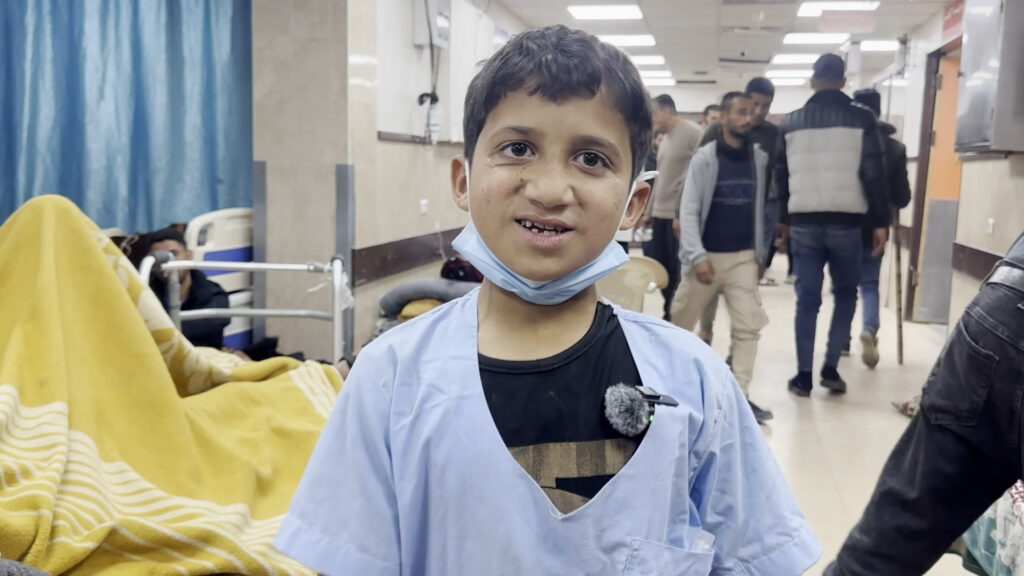
NewsFeed 12-year-old Zakaria es-Sersek is a volunteer medic at Al-Aqsa Martyrs Hospital in Gaza. Inspired by seeing medical staff working around the clock, he now assists doctors with newly-developed skills. Published On 4 Apr 20244 Apr 2024 Adblock test (Why?)
Russia scales up its attacks as Ukraine warns of urgent need for weapons
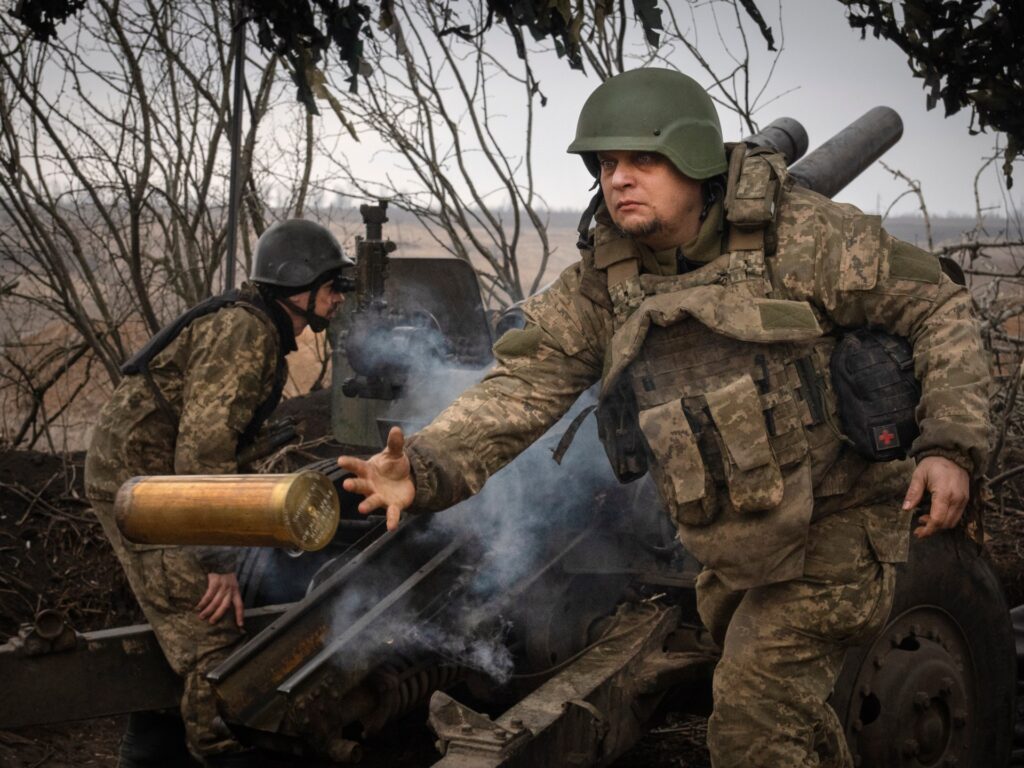
Ukraine has repelled a battalion-sized mechanised assault on its eastern front – the first attack of such a scale in five months – proving the resilience of its defences, but raising concerns that Russia is becoming increasingly ambitious as it gears up for an expected major offensive. The attack on Sunday reportedly included three dozen tanks and a dozen infantry fighting vehicles, and struck near Tonenke, a village close to Avdiivka, the city Russia overran on February 17 and has been inching westward from ever since. A Ukrainian serviceman reported that a third of the tanks and two-thirds of the infantry fighting vehicles were destroyed. “The start was very good. We carried out combined fire,” said a Russian trainer of Storm-Z assault forces. “On subsequent approaches, which lasted until lunchtime, the fire supply dwindled to sparse artillery fire … and then significant losses began.” Yet he noted that the last group of vehicles to enter the fray suffered no losses, possibly indicating that local Ukrainian defences had been exhausted: “I would venture to cautiously suggest that these regular visits could ultimately overload the enemy’s strike capabilities.” “We are trying to find some way not to retreat,” Ukrainian President Volodymyr Zelenskyy told the Washington Post’s David Ignatius in an interview published two days before the battle. “If there is no US support, it means that we have no air defence, no Patriot missiles, no jammers for electronic warfare, no 155-millimetre artillery rounds,” he said. “It means we will go back, retreat, step by step, in small steps.” Some $60.1bn in United States military aid the administration of Joe Biden requested last December has been stalled by a small group of lawmakers loyal to former President Donald Trump, who hopes to return to power in the November election. Europe was stepping in to cover some of the shortages. A Czech initiative had reportedly located a million artillery shells around the world which would start to be delivered to Ukraine this month; and France pledged hundreds of reconditioned armoured personnel vehicles. Ukrainian commander-in-chief Oleksandr Syrskii told Ukrinform that Avdiivka would not have fallen if deliveries of Western military aid had been more constant, and that the Ukrainian counteroffensive that reclaimed much of Kharkiv and Kherson in September 2022 would have been more sustained. He said Ukrainian soldiers were outnumbered, and outgunned by a ratio of 6:1, but despite this Russians were suffering staggering losses – 570 tanks, 1,430 armoured vehicles and 1,680 artillery systems in the last two months alone – thanks to changes in tactics that optimised available resources. Russia creeps forward Although Ukrainian forces had largely managed to stabilise the front line following the fall of Avdiivka, Ukraine was not prepared to stop another major Russian offensive, Zelenskyy told the US broadcaster CBS. “Partners are sometimes really happy that we have stabilised the situation,” Zelenskyy said. “No, I say we need help now.” And that stabilisation is not 100 percent solid. Russian forces have continued to make marginal advances. Most of these have been in the neighbourhood of Avdiivka. Despite their defeat on Sunday, they made marginal gains west of Tonenke, and were photographed in the settlements of Semenivka and Berdychi, both northwest of Avdiivka, on Monday and Tuesday. To the south, they advanced into the settlement of Novomykhailivka, southwest of Donetsk city, on March 27. And at the northern end of the front, in Luhansk, they began to creep into Bilohorivka on Tuesday. Russian defence minister Sergei Shoigu boasted in a Tuesday conference call with military personnel that Russian forces had gained 403sq km since the beginning of the year. The Institute for the Study of War, a Washington-based think tank, put the figure at 305sq km since January 1, and a total of 505sq km – five times the size of Paris – since Russian forces went on the offensive in October. Russia trying to power down Ukraine’s industry Russia has been targeting Ukraine’s power plants, and in the past week began to bomb hydroelectric power stations in addition to thermal power plants. The Kaniv Hydroelectric Power Plant, 80km southeast of Kyiv, and the Dnister Hydroelectric Power Plant, 300km southwest of Kyiv, just north of the Moldovan border, have been among the main targets. The barrage of drones and missiles that targeted these dams and other infrastructure was massive: 60 Iranian-designed Shahed drones and 37 missiles of various types. Ukraine managed to down 58 of the drones and 26 of the missiles, but Zelenskyy stressed the need for greater air defence. “It is necessary to replenish supplies more quickly,” he said. Zelenskyy told the Washington Post that air defence ammunition was running low, and CBS that Ukraine could lock its skies to Russian attacks with another five to seven Patriot batteries. “The range of possible outcomes from most advantageous to most dangerous – is very wide and will remain so until it is clear whether the US will resume military support,” said the ISW. The other great variable, it said, was Ukrainian manpower, and on Tuesday Zelenskyy signed into law a long-awaited bill lowering the conscription age from 27 to 25. The bill is expected to raise up to half a million new soldiers for Ukraine, though Syrskii said a more efficient rotation of existing manpower had made that scale of recruitment unnecessary. Russia also reached a new milestone on March 22, when it completely destroyed one of the largest thermal power plants in Kharkiv. “All units were destroyed” at the Zmiivska power plant said its operator, Tsentrenergo. “The degree of destruction is different.” Ukrainian foreign minister Dmytro Kuleba said Russia had launched 140 drones and 190 missiles against civilian infrastructure far from the front lines in just one week, from March 18 to 24. French defence minister Sebastien Lecornu said his country would provide Aster 30 surface-to-air missiles to strengthen air defence. Ukraine fights back Ukraine’s response has been to target Russian energy infrastructure back – specifically oil refineries – and on Tuesday a Ukrainian drone struck
At least 11 killed in attack on Iran’s IRGC in border province: State media
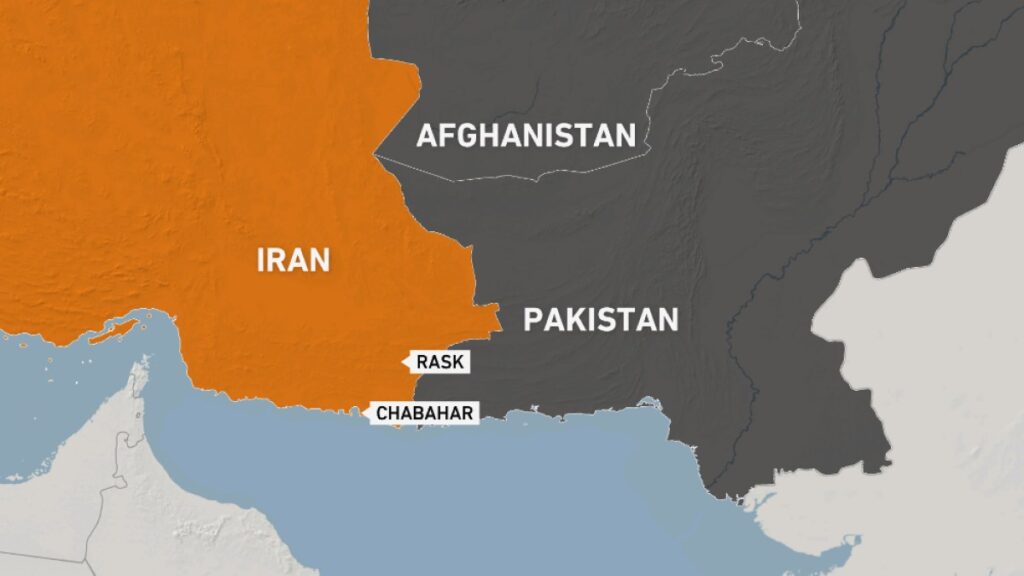
Several wounded in clashes in restive Sistan-Baluchestan province which borders Afghanistan and Pakistan. At least 11 Iranian security force members have been killed in an attack on an Islamic Revolutionary Guard Corps (IRGC) headquarters in the southeastern border province of Sistan-Baluchestan, state media reported. In the ensuing overnight clashes with security forces, 16 members of Jaish al-Adl (Army of Justice) – a Sunni armed group – were killed, Iranian state TV reported on Thursday. The attack took place in the towns of Chabahar and Rask in Sistan-Baluchestan which borders Afghanistan and Pakistan. Reporting from Tehran, Al Jazeera’s Dorsa Jabbari said it was one of the deadliest attacks carried out by Jaish al-Adl. “Gunmen stormed various security and military compounds simultaneously … and they also had suicide vests on,” Jabbari said, adding that the fighting continued for several hours. “The terrorists failed to succeed in achieving their goal of seizing the Guards headquarters in Chabahar and Rask,” Deputy Interior Minister Majid Mirahmadi told state TV. Ten security officers were injured in the fighting in the impoverished region, which has a predominantly Sunni Muslim population. Jabbari said the attack took place at a very “critical time” for Iran, coming days after its consulate in Damascus, Syria, was hit in a suspected Israeli missile strike for which Iran pledged revenge. Brigadier-General Mohammad Reza Zahedi, a senior commander in the IRGC’s Quds Force, and his deputy, General Mohammad Hadi Hajriahimi, were killed in Monday’s attack. “Many questions will be asked about how this attack was able to be carried out at this time,” Jabbari said. Jaish al-Adl was formed in 2012 and is blacklisted by Iran as a “terror” group. The group claimed responsibility for an attack in December that killed 11 officers, one of the deadliest assaults in years, at a police station in Sistan-Baluchestan’s city of Rask, about 1,400km (875 miles) southwest of the capital, Tehran. It also said it was behind a strike on a police station in Rask that killed one officer on January 10. Later that month, Iran struck two bases of the group in Pakistan with missiles, prompting a rapid military riposte from Islamabad targeting what it said were separatist armed rebels in Iran. Jaish al-Adl says it seeks greater rights and better living conditions for ethnic minority Baluchis in Shia-dominated Iran. It has claimed responsibility for several attacks in recent years on Iranian security forces in Sistan-Baluchestan. The area has long been plagued by unrest and the site of frequent clashes between Iranian security forces and Sunni fighters, as well as drug traffickers. Iran is a key transit route for narcotics smuggled from Afghanistan to the West and elsewhere. Adblock test (Why?)
US prosecutors spar with judge over order in Trump classified document case
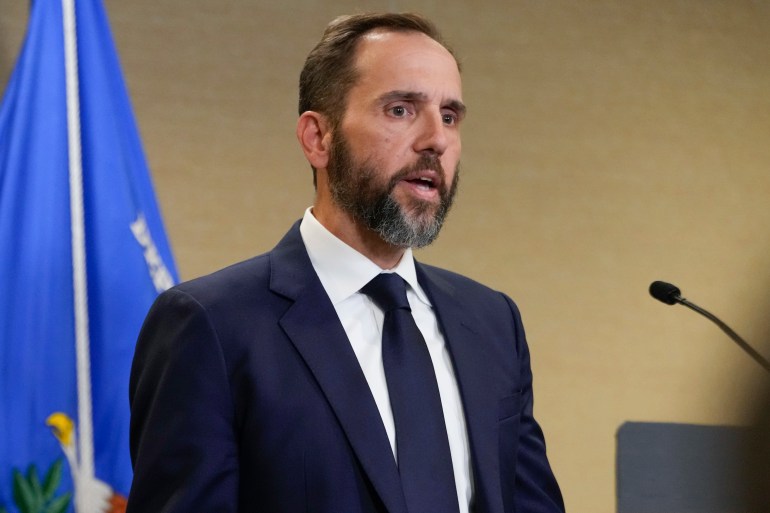
United States prosecutors involved in the criminal indictment of Donald Trump in Florida have questioned a judge’s order that they indicate risks tipping the case in the former US president’s favour. Their 24-page filing was issued late on Tuesday, as part of an ongoing case looking into Trump’s handling of classified documents after leaving office. In the filing, Special Counsel Jack Smith and his team of prosecutors rebuked Judge Aileen Cannon for ordering that instructions be provided to an eventual jury suggesting that Trump could have kept the classified documents as part of his “personal” record-keeping. The judge’s order appeared to be a hat tip to the defence’s argument that the Presidential Records Act (PRA) entitled Trump to keep the sensitive government documents, something Smith and his team have disputed. “That legal premise is wrong,” Smith and his colleagues wrote, adding that any jury instruction to that effect would “distort the trial”. The court filing was an unusual display of public discord between the prosecutors and the judge, who Trump nominated to the bench. Special Counsel Jack Smith has questioned a judge’s order that appears to lend credence to a Trump defence argument [Jacquelyn Martin/AP Photo] Questions over judge Judge Cannon, who serves on the federal court in the Southern District of Florida, has previously faced scrutiny over decisions she has made in the long-running classified document case. In September 2022, for instance, she granted the Trump legal team’s request to have a “special master” appointed to filter through the classified documents retrieved from the former president’s home at Mar-a-Lago in Palm Beach, Florida. Legal experts decried the move as unprecedented, and it delayed the US Department of Justice from having full access to the documents as part of its investigation. An appeals court ultimately ended the special master’s review. In Tuesday’s court filing, meanwhile, Special Counsel Smith and his team argued that Judge Cannon’s order would not only colour a prospective jury’s perception of the facts, but also slow the case down significantly. No trial date has been set in the classified documents case. It was the first federal criminal indictment Trump faced as a result of Smith’s investigations. “Whatever the Court decides, it must resolve these crucial threshold legal questions promptly,” Smith and his colleagues wrote. “The failure to do so would improperly jeopardize the Government’s right to a fair trial.” Judge Aileen Cannon, seen here in a screenshot from her Senate confirmation hearings, has faced scrutiny for her handling of Trump’s legal proceedings [US Senate/AP Photo] Allegations of withholding documents The case began in 2021, shortly after Trump left office that January. According to the indictment, the National Archives and Records Administration attempted to retrieve classified documents it believed remained with the former president. But Trump and his allies allegedly refused to return the documents, instead attempting to conceal them in unsecured locations at his Mar-a-Lago estate, including in a bathroom and shower area. In March 2022, the Federal Bureau of Investigation opened a criminal investigation into the matter, and a grand jury subpoenaed Trump to return all the classified records. Special Counsel Smith, who was appointed by the US Justice Department that November, has accused Trump of obstructing that subpoena and other efforts to recuperate the documents, which contained national security secrets. The government ultimately recovered more than 300 classified documents from the Mar-a-Lago resort, where dozens of public events had taken place. Trump faces 40 felony charges in relation to the classified documents case. His aid Walt Nauta and Mar-a-Lago employee Carlos De Oliveira were also charged. Multiple legal battles The former president, however, has consistently denied wrongdoing and pleaded not guilty. As part of his defence, he argued that he had declassified the documents before leaving office, though audio recordings have since surfaced where he indicates otherwise. “As president, I could have declassified, but now I can’t,” Trump said in a piece of audio from 2021. Trump’s legal team has also raised the question of whether these documents fall in the realm of “personal” records under the Presidential Records Act. But in Tuesday’s court filings, Smith and his fellow prosecutors sought to quash that argument. “Trump has never represented to this Court that he in fact designated the classified documents as personal,” they wrote. “The reason is simple: he never did so.” Smith and his team also asserted that, by invoking the Presidential Records Act, Trump sought to make his actions “impervious” to judicial review. “It would be pure fiction to suggest that highly classified documents created by members of the intelligence community and military and presented to the President of the United States during his term in office were ‘purely private’,” the court filings said in one sharply-worded section. Trump is the subject of four separate criminal indictments, including the classified documents case. He has framed all four, however, as being the product of a politically motivated “witch hunt” designed to derail his re-election efforts in November. The first slated to go to trial is a state-level case in New York, concerning alleged hush-money payments during the 2016 presidential race. It is scheduled to start on April 15. On Wednesday, a New York judge rejected Trump’s attempt to further delay that trial. Adblock test (Why?)
Turkey’s election authority reinstates pro-Kurdish mayoral election winner
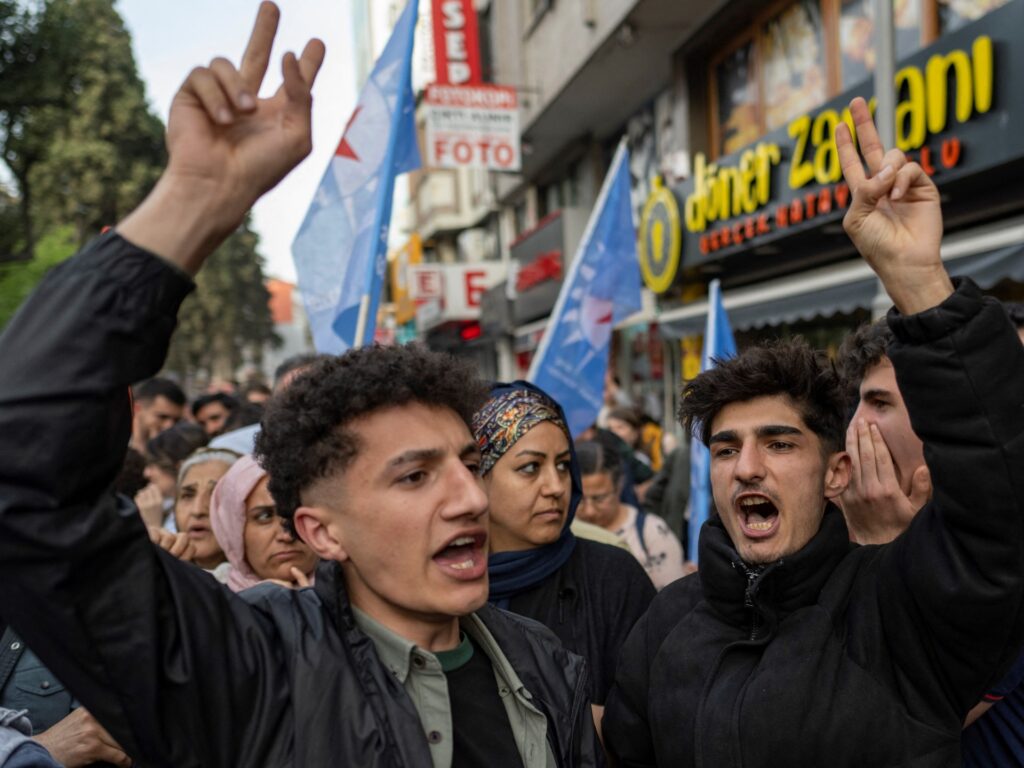
Election authority reverses ejection of Kurdish winner of mayoral race in city of Van in eastern Turkey. Turkey’s election authority has reinstated a pro-Kurdish mayoral election winner in the eastern city of Van after the annulment of his victory provoked clashes. The Supreme Election Board (YSK) announced on Wednesday that it has overturned a decision by the regional election commission in eastern Turkey to remove Abdullah Zeydan, the candidate of the pro-Kurdish Peoples’ Equality and Democracy Party (DEM). The reversal is viewed as another boost for the Turkish opposition following Sunday’s local elections, which dealt a blow to President Recep Tayyip Erdogan and his Islamic-oriented Justice and Development Party (AKP), after their wins last year in the presidential and parliamentary elections. Zeydan had garnered more than 55 percent of the vote in the municipal elections on Sunday, but the regional electoral commission claimed he was ineligible to stand due to a previous conviction, and handed the mayoral seat to a candidate from AKP who had won 27 percent of the vote. Zeydan had been arrested and jailed in 2016 after criticising the Turkish army’s air campaign against outlawed Kurdish fighters in the Kurdish-majority southeast. He was released in 2022. The removal provoked violent protests on Tuesday that lasted throughout the night across the province, which lies on Turkey’s eastern border with Iran. The authorities cracked down. Interior Minister Ali Yerlikaya said 89 people were detained, for joining unauthorised rallies and chanting slogans in praise of a “separatist terror organisation”, referring to the Kurdistan Workers’ Party (PKK) that has been blacklisted by Turkey, the United States and the European Union. DEM has often been accused by the Turkish authorities of links to the PKK. The movement is the third-largest party in Turkey’s national parliament. However, on Wednesday, DEM said the YSK had decided to reinstate Zeydan as the mayor of Van as “a result of the resistance of the Kurdish people”. Kürt halkının, dostlarımızın ve demokratik kamuoyunun direnişi sonucunda Van Büyükşehir Belediyesi Eş Başkanımız Abdullah Zeydan’a mazbatasının verilmesine karar verilmiştir. Her Bijî Berxwedana Gelê Kurd! pic.twitter.com/EoZTIjrtCD — DEM Parti (@DEMGenelMerkezi) April 3, 2024 The YSK considered an appeal by DEM and ruled to reinstate Zeydan, the state-run Anadolu Agency reported. The decision was taken by a majority of the board’s members, the agency said. Over the years, Erdogan’s government has removed elected pro-Kurdish mayors from office for alleged links to Kurdish fighters and replaced them with state-appointed trustees. Besides the victory in Van, DEM also claimed the mayorships of other large towns in Turkey’s Kurdish-majority southeast, including Diyarbakir, the region’s largest city. Before the election board’s decision to reinstate Zeydan, Istanbul’s re-elected mayor Ekrem Imamoglu, seen as a likely rival to Erdogan, called the events in Van a “total aberration”. “We will be following this meaningless practise of double standards from Van,” Imamoglu, whose party backed the DEM in its battle against the Van ruling, told a crowd of about 500 supporters gathered outside Istanbul’s main court after he was officially given a mandate to serve five more years. Adblock test (Why?)
Gaza ceasefire talks stall as Israel and Hamas dig in

Revived talks on a ceasefire between Israel and Hamas appear to be making little progress, with the two sides showing few signs that they are ready to compromise on their demands. Israeli objections to the return of displaced residents to their homes in Gaza is a key issue holding up the negotiations, Qatari officials said on Wednesday. Meanwhile, Hamas said that it will not budge on its conditions to release captives it holds in the besieged and bombarded territory. Alongside the United States and Egypt, Qatar has been running behind-the-scenes talks in a bid to secure a truce and the release of Israeli captives in exchange for Palestinian prisoners held in Israeli jails after nearly six months of war. “The return of the IDPs [internally displaced people] to their homes, which the Israelis didn’t agree to yet … is the main point we are stuck on,” Qatar’s Prime Minister and Foreign Minister Sheikh Mohammed bin Abdulrahman bin Jassim Al Thani told a news conference in Doha. Another outstanding issue is the number of Palestinian prisoners to be released by Israel in exchange for each hostage freed by Hamas, Sheikh Mohammed said, noting however that he believed this “can be bridged”. However, Hamas’s senior political leader Ismail Haniyeh said on Wednesday that his movement will stick to its conditions for a ceasefire in Gaza. The Palestinian group insists that an Israeli military withdrawal must happen before it releases the remaining captives taken in its assault on southern Israel on October 7. “We are committed to our demands: the permanent ceasefire, comprehensive and complete withdrawal of the enemy out of the Gaza Strip, the return of all displaced people to their homes, allowing all aid needed for our people in Gaza, rebuilding the Strip, lifting the blockade and achieving an honourable prisoner exchange deal,” Haniyeh said in a televised speech marking al-Quds (Jerusalem) Day. Israel has said it is interested only in a temporary truce to free the captives, while Hamas has said it will let them go only as part of a deal to permanently end the war. Sticking points Sheikh Mohammed said the major sticking points remained the same as those that stymied a deal during negotiations in Paris in February. Talks were set to resume in Cairo last Sunday, Egyptian TV channel Al-Qahera reported, two days after Israeli Prime Minister Benjamin Netanyahu gave approval for fresh negotiations. Israel and Hamas have traded blame for the failure in achieving a deal. In recorded comments shown at a Hezbollah meeting on Wednesday, Haniyeh said Israel “continues to procrastinate stubbornly, and does not respond to our fair demands for an end to the war and aggression”. The day before, Netanyahu’s office claimed, after an Israeli negotiating team had returned from another round of discussions in Cairo, that Hamas has hardened its stance. “In the framework of the talks, under useful Egyptian mediation, the mediators formulated an updated proposal for Hamas,” the premier’s office said. However, senior Hamas official Basem Naim said on Tuesday that the group had not been sent any new proposals. No effect The US said on Wednesday that it did not expect the Israeli strike that killed seven World Central Kitchen workers in Gaza to affect ceasefire talks. “The ceasefire and hostage negotiations are ongoing,” White House national security spokesman John Kirby told reporters in a briefing. “I wouldn’t anticipate any particular impact on those discussions as a result of the strike yesterday.” He said the incident was not a standalone in the conflict, in which too many aid workers have been killed. “It’s not the first time that this has happened and so yes, we’re frustrated by this,” Kirby said. United Nations spokesperson Stephane Dujarric on Wednesday said the intergovernmental organisation had suspended movements at night in Gaza for at least 48 hours to evaluate security issues following the incident. The UN’s World Food Programme is continuing operations during the day, including daily efforts to send convoys to the north of Gaza “where people are dying,” Dujarric said. “As famine closes in we need humanitarian staff and supplies to be able to move freely and safely across the Gaza Strip,” he told reporters. Adblock test (Why?)