

How India came to embrace the politics of Hindutva

As Modi religiously prepares for India’s elections, Sreenivasan Jain examines the tussle between Hindutva and secularism. The politics of Hindu nationalism have played a central role in the dramatic rise of the BJP and Prime Minister Narendra Modi. As the elections have neared, the Modi regime has turbocharged its Hindu-first agenda – best exemplified in the inauguration of the Ram Temple in the city of Ayodhya. Veteran journalist Sreenivasan Jain explains how the opening of this temple – and the whitewashing of its controversial past – illustrates how Modi and his party have made their brand of Hindu supremacism not only acceptable, but a key part of Narendra Modi’s appeal to Indians. Featuring: Asaduddin Owaisi – Member of the Indian Parliament Uma Bharti – Former Vice-President, Bharatiya Janata Party Hartosh Singh Bal – Political Editor, The Caravan Adblock test (Why?)
Taiwan joins China rescue mission after boat capsizes near Kinmen

Six people were on the fishing vessel near the Taiwan-controlled islands, which lie just a few kilometres off China’s eastern coast. Taiwan and China are conducting a joint rescue mission to find two missing crew members after a fishing vessel capsized near Taiwan’s Kinmen islands. The boat carrying six people sank about 1.07 nautical miles (about 2km) southwest of the island chain’s Dongding islet at about 6am on Thursday (22:00 GMT on Wednesday), according to authorities in Taiwan. Two people have been confirmed dead and two were rescued. The area is sensitive because Kinmen is located just 5km (three miles) off China’s eastern coast. The joint operation, which includes six Chinese rescue ships, comes a month to the day after the Taiwanese coastguard’s pursuit of a Chinese fishing boat in the area left two men dead, and added to the tensions between Taipei and Beijing. Coastguard chief Chou Mei-wu told a parliamentary committee that Taiwan sent four boats after Chinese authorities sought help. He said Chinese requests for assistance were common, with 119 people rescued in such efforts over the past three years or so. “The waters are narrow around the Kinmen-Xiamen [area] and cooperation between Taiwan and China is very important,” he said, referring to the cities that face each other across the strait. China’s coastguard began regular patrols around the Kinmen islands after last month’s incident. It also came under criticism in Taiwan after briefly boarding a Taiwanese cruise ship causing panic among the passengers. Beijing claims Taiwan as its own territory and has not ruled out the use of force to achieve its goals. Adblock test (Why?)
Denmark to conscript women into armed forces for first time

The country scaled back its military capabilities after the Cold War ended but is reassessing the situation in a changed security climate. Denmark will call up women as well as men as it expands conscription to respond to Europe’s changing security climate. Danish Prime Minister Mette Frederiksen said the revised policy was designed to increase the number of young people doing military service. Conscripts will also be expected to serve more time in the military – 11 months, compared with four months at the moment. “We are not rearming because we want war, destruction, or suffering. We are rearming right now to avoid war and in a world where the international order is being challenged,” Frederiksen told reporters on Wednesday, indirectly referring to Russia’s military moves in recent years and months. Denmark, a founding member of the NATO alliance, also plans to boost its defence budget by 40.5 billion Danish crowns ($5.9bn) over the next five years. Frederiksen said defence spending would amount to 2.4 percent of gross domestic product (GDP) this year and in 2025, above NATO’s target for member states. The country scaled back its military capabilities after the end of the Cold War in the early 1990s, but Russia’s full-scale invasion of Ukraine has reawakened concerns about security on the continent. On Wednesday, President Vladimir Putin said Russia would send troops to its border with Finland, which joined NATO last year as a result of the Ukraine invasion, as Finnish Prime Minister Petteri Orpo warned Moscow was gearing up for a “long conflict with the West”. The situation in Europe “has become more and more serious, and we have to take that into account when we look at future defence,” Defence Minister Troels Lund Poulsen said. “A broader basis for recruiting that includes all genders is needed,” he said, adding it will create “a more versatile and more complete defence”. Denmark currently has as many as 9,000 professional soldiers in addition to 4,700 conscripts undergoing basic training, according to official figures. The government wants to increase the number of conscripts by 300 to reach a total of 5,000. Under the revised draft, conscripts will first spend five months in basic training, followed by six months in operational service along with supplementary training. The new system will require a change in the law, which Poulsen said would happen in 2025 and take effect in 2026. Currently, all physically fit men over the age of 18 are called up for military service, which is decided according to a lottery system. Neighbouring Sweden introduced a military draft for men and women in 2017 amid concerns about the security environment in Europe and around Sweden. The Scandinavian country, which joined NATO this month, had previously abolished compulsory military service for men in 2010 because there were enough volunteers to meet its military needs. Women had not been required to do national service before the law was changed. Norway introduced a law applying military conscription to both sexes in 2013. Adblock test (Why?)
Lionel Messi sustains leg injury as Inter Miami enter CONCACAF Cup quarters

Messi and Suarez scored in Miami’s 3-1 win but the Argentinian was substituted after sustaining an injury that will force him out of Miami’s next MLS game. Lionel Messi scored a goal and made an assist before leaving the field due to a leg injury as Inter Miami beat Nashville 3-1 in the second leg of the CONCACAF Champions Cup round-of-16 match. Messi found his former Barcelona teammate, Luis Suarez, in stride for a goal that opened scoring in the eighth minute. The eight-time Ballon d’Or winner then added a first-half goal to give Inter Miami an early 2-0 lead on Wednesday night. The Argentinian great was substituted in the 50th minute and coach Gerardo “Tata” Martino later revealed that Messi was dealing with a mild leg injury that started bothering him during the game, so he was taken off as a precaution. “He is overloaded in the right posterior,” Martino said through a translator. “We tried to see if he could go further along [in the game], but it was bothering him so we preferred to have him get out of the game.” Messi had rested during Sunday’s 3-2 loss to Montreal, which is the only game he has missed this season. Martino said Messi will likely miss the team’s Major League Soccer (MLS) match on Saturday against DC United. “I don’t want to risk it,” Martino said. Messi was replaced on Wednesday by Robert Taylor, who scored in the 63rd minute to give Inter Miami a 3-0 lead. Inter Miami advanced to the CONCACAF Champions Cup quarterfinals with the win and 5-3 advantage in aggregate goals in the total-goals series. The chase for the cup continues 🏆⏳#MIAvNSH pic.twitter.com/7l1hV3XiA7 — Inter Miami CF (@InterMiamiCF) March 14, 2024 ‘No one can do what he can do’ Messi had an instant impact on the game. He earned a free kick after a foul by Nashville’s Anibal Godoy just four minutes into the match but had his attempt blocked. The 36-year-old seized his opportunity a few minutes later, using his impressive vision to fit a pass to a streaking Suarez, who sent the ball into the bottom right corner of the net. Messi then used a pass from Diego Gomez to score from inside the penalty area as fans started chanting his name. Taylor later got on the board with a header off an assist by Suarez. “Lionel Messi himself was very, very sharp in the first 15 minutes,” Nashville coach Gary Smith said after the match. He was then asked his thoughts when he saw Messi trotting off the field early in the second half. “Firstly, thank goodness,” Smith said jokingly. “He’s such a huge influence on the rest of the group. Yes, they have other very good players, but there is no one that can do what he can do. … Delighted to see him go off, I honestly thought that their performance dipped, and it gave us a little bit of an incentive.” Inter Miami are currently amid a busy month that includes seven matches — four of which have come in a 10-day span. Messi is expected to join the Argentinian national team in a pair of Copa America warm-up matches on March 22 and 26. Adblock test (Why?)
Russia-Ukraine war: List of key events, day 750
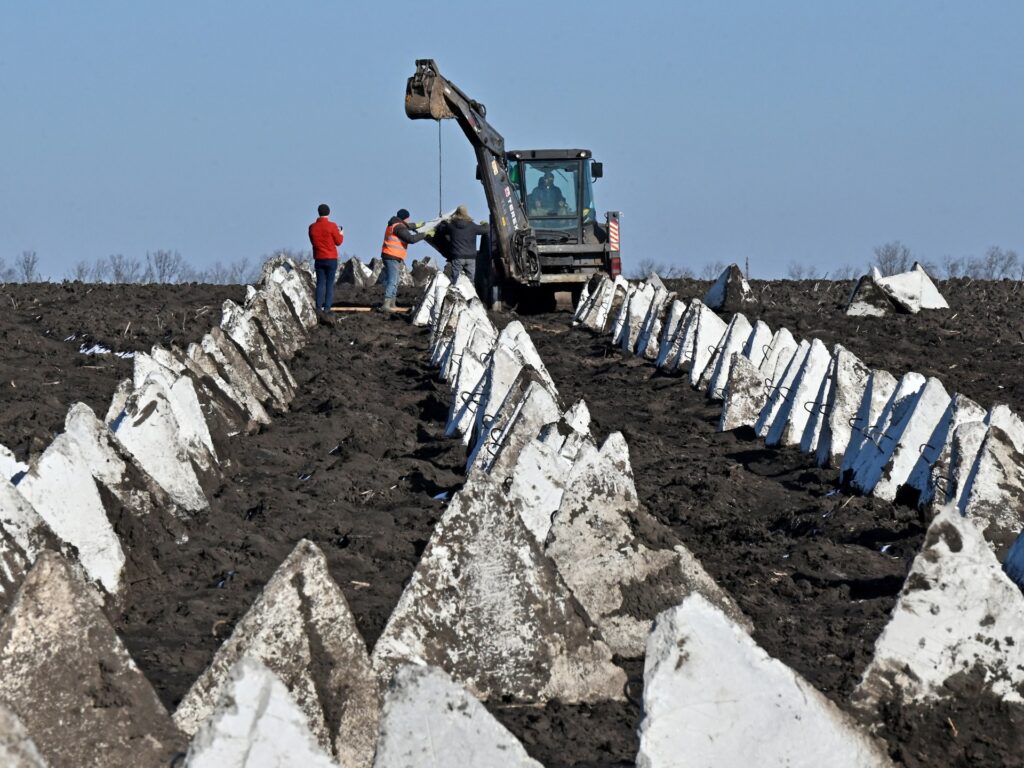
As the war enters its 750th day, these are the main developments. Here is the situation on Thursday, March 14, 2024. Fighting At least four people were killed and eight injured after a Russian drone and bomb attack on Ukraine’s eastern Donetsk and Sumy regions hit residential buildings. Commander-in-Chief Oleksandr Syrskii, Ukraine’s army chief, said the situation on the eastern front was “difficult” and that Russian forces continued to conduct offensive operations. He said Russian activity on the southern front had “decreased significantly”. Ukraine targeted oil refineries in Russia’s Rostov and Ryazan regions in a second day of heavy drone attacks, causing a fire at Rosneft’s biggest refinery and temporarily halting production. A Ukrainian source told the Reuters news agency the attacks were the work of the SBU security services. Ukraine-based anti-Putin Russian paramilitaries supporting Kyiv urged civilians to flee Belgorod and Kursk, threatening large-scale attacks on military targets in the Russian border cities. Politics and diplomacy Finnish Prime Minister Petteri Orpo warned that Russia was gearing up for a “long conflict with the West” and urged European countries to step up spending and coordination on defence. Russian President Vladimir Putin said he would send more troops to Russia’s border with Finland, which joined NATO in 2023 after Moscow launched its full-scale invasion of Ukraine. Leonid Volkov, an exiled Russian activist and one-time senior aide to Russian opposition leader Alexey Navalny, who died in an Arctic penal colony last month, was attacked with a hammer and tear gas near his home in Lithuania’s capital, Vilnius. Lithuania accused Russia of being behind the attack, which left Volkov in hospital. The leaders of France, Germany and Poland said they would hold urgent talks in Berlin on Friday to boost support for Ukraine. Andriy Yermak, chief of staff to Ukrainian President Volodymyr Zelenskyy, met the Chinese ambassador to Kyiv for further discussions on a visit last week by China’s special envoy and preparations for a peace summit to be held in Switzerland. Russia said it had no intention of joining the summit, even if invited. Austria ordered two diplomats from Russia’s embassy in Vienna to leave the country. The Foreign Ministry said the two had “engaged in acts incompatible with their diplomatic status”. It did not elaborate. Weapons After months of wrangling, European Union countries agreed to provide five billion euros ($5.48bn) for military aid to Ukraine as part of a revamp of an EU-run assistance fund. Czech National Security Adviser Tomas Pojar said the first deliveries of artillery ammunition under a Czech-led plan to boost Ukraine’s supplies should reach the country by June at the latest. Adblock test (Why?)
US says working to get maritime aid into Gaza
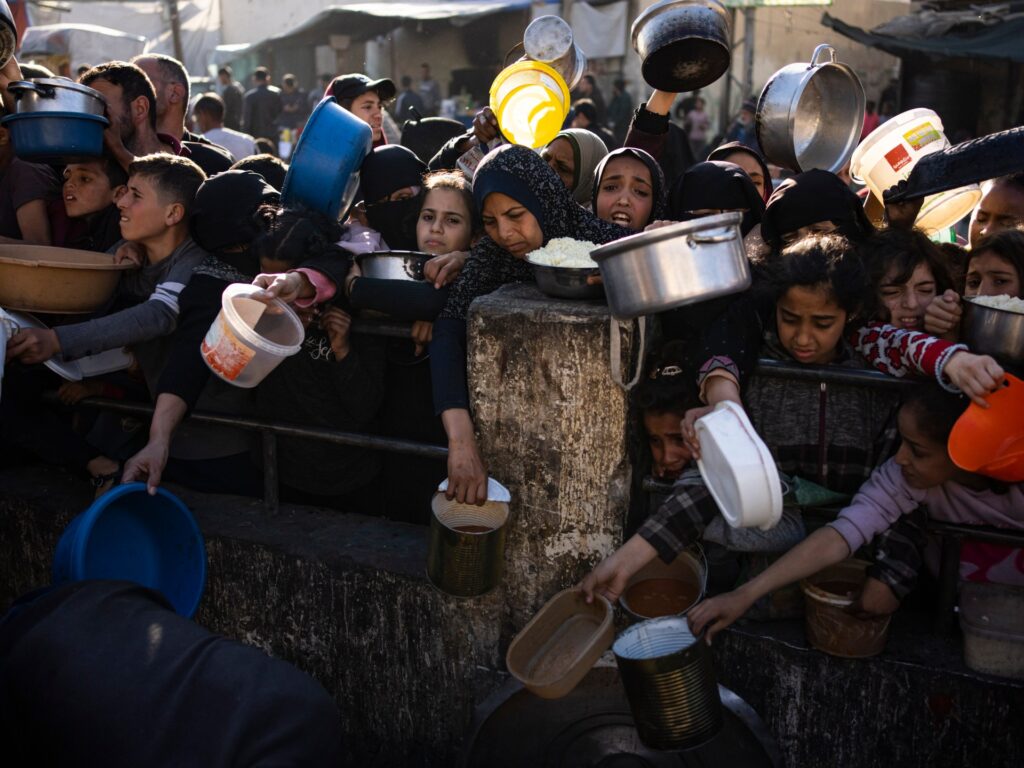
NewsFeed The US says it has held talks with a number of countries, as well as the UN, to establish a maritime corridor for getting humanitarian aid into Gaza that could provide up to 2 million meals per day. Published On 13 Mar 202413 Mar 2024 Adblock test (Why?)
Who are Haiti’s gangs and what do they want? All you need to know
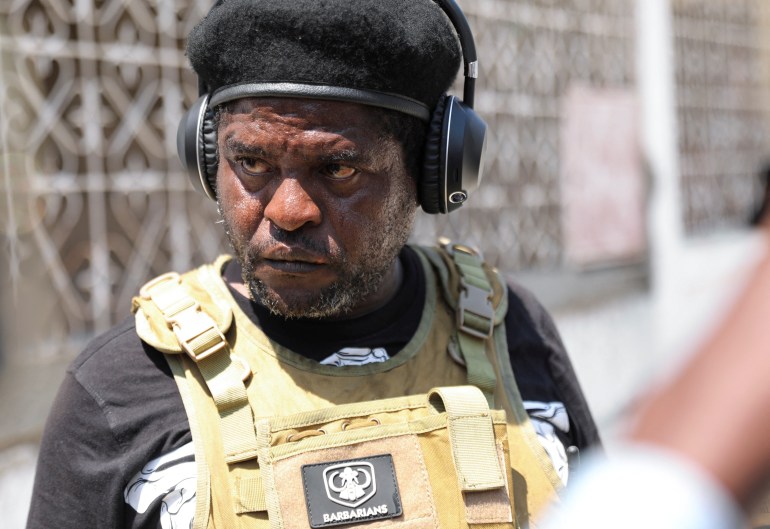
Haitian armed groups have dominated global headlines in recent weeks, as gunmen attack police stations, prisons and other institutions in the capital of Port-au-Prince, effectively paralysing the city. But the power of these gangs has long rocked daily life and politics in Haiti, plunging the country into a years-long crisis. The latest example came this week, as Prime Minister Ariel Henry announced he would resign his post once a transitional presidential council is established and a successor chosen. His announcement came amid pressure from both the international community and gang leaders, who warned that the Caribbean nation could face “civil war” if Henry, an unelected official, did not step down. Henry’s planned departure, however, has done little to temper the grip of the gangs, which control around 80 percent of Port-au-Prince. They have also promised to oppose any outside intervention in Haiti’s affairs. That includes an effort backed by the United Nations to send a multinational armed force, led by Kenya, to Haiti to help the national police respond to the widespread violence and unrest. But who exactly are Haiti’s armed gangs? How do the gangs function, and what do they want? And ultimately, how can — and should — the country handle them? Here’s what you need to know. Who are Haiti’s armed gangs? There are believed to be about 200 armed gangs operating in Haiti, about half of which have a presence in Port-au-Prince. In the capital, there are two major gang coalitions. The first — the G9 Family and Allies alliance, or simply G9 — is led by Jimmy “Barbecue” Cherizier, a former Haitian police officer who is under UN and United States sanctions for his involvement in Haiti’s violence. The second is GPep, led by Gabriel Jean-Pierre, also known as Ti Gabriel. He was the leader of a gang called Nan Brooklyn before the creation of G-Pep, which has been based in Port-au-Prince’s impoverished Cite Soleil district. G9 and GPep have been rivals for years, battling for control of neighbourhoods in Port-au-Prince. Both groups have been accused of mass killings and sexual violence in areas under their authority, as well as in districts they want to take over. But Cherizier has said that the two groups reached a pact late last year — dubbed “viv ansanm” or “live together” in Haitian Creole — to cooperate and oust Henry, the prime minister. “We are not sure how much this dynamic will last,” said Mariano de Alba, senior adviser at the International Crisis Group. “But they formed a joint alliance in September 2023, basically trying to respond to the possibility that a multinational security mission was going to be deployed to Haiti, and they wanted to prevent that.” Haitian gang leader Jimmy ‘Barbecue’ Cherizier leads the G9 gang alliance [Ralph Tedy Erol/Reuters] Where did the gangs come from? For decades, Haiti’s gangs have been closely associated with politicians, political parties, businessmen or other so-called “elites” in the country. G9, for example, has been linked to the Parti Haitien Tet Kale (PHTK), the political party of former President Jovenel Moise, who was assassinated in July 2021. Moise chose Henry for the prime minister post shortly before he was killed. For its part, GPep has been associated with Haitian opposition parties. When did the gang violence start? Most experts trace the phenomenon back to the era of Haiti’s former President Francois “Papa Doc” Duvalier and his son, Jean-Claude “Baby Doc” Duvalier, whose combined dictatorship lasted 29 years. The Duvaliers established and used a paramilitary group, the widely feared Tontons Macoutes, to stamp out opposition to their rule. The brigade killed and tortured thousands of people. Robert Fatton, a Haiti expert and professor at the University of Virginia, said armed gangs are not a new phenomenon in Haiti. “They’ve been part of the history of the country for a very, very long time,” he told Al Jazeera. But Fatton explained that the armed groups in Haiti today are different. How so? They have better weapons than before and have reached a new “level of sophistication” in their attacks, Fatton noted. For example, drones were reportedly used when gunmen stormed two Port-au-Prince prisons in early March, part of the latest round of violence. Fatton also explained that the armed groups were, “until fairly recently”, beholden to politicians, political parties and businessmen. Those individuals “could control them”, Fatton said. But that is no longer the case. “They are a force unto themselves,” Fatton said. “That means they can essentially dictate to certain politicians or to many politicians, as it were, what they ought to do or what they can do.” How did the gangs become autonomous? “They’ve been able to amass much more money independently of politicians and businessmen,” said Fatton. That includes through extortion, as well as kidnappings for ransom, drug trafficking and the smuggling of small weapons. But both Fatton and de Alba stressed that Haitian armed groups are not only criminal in nature. “They also have a political aspect,” de Alba told Al Jazeera. “They gain their income through illicit activities, and they are willing to use their arms for political purposes.” So what do they want? De Alba said Haiti’s major gangs have increasingly made political demands, particularly after the 2021 assassination of President Moise left a power vacuum in the country’s government. The gangs’ most recent surge in violence, for instance, included a call for Prime Minister Henry to resign. But their ambitions go further than that. For example, G9 chief Cherizier has warned that his forces will oppose any foreign intervention in Haiti, and he has said that he wants to help lead the country out of its current crisis. “These are groups that increasingly think that the only way to retain not only their relevance but their existence is if they are able to at least manage some important degree of political power,” said de Alba. Fatton summarised the gangs’ long-term goals as one of enduring influence in Haiti’s leadership. “It’s not just, ‘Let me do
Artists and speakers protest SXSW festival over defence sponsors, Gaza war
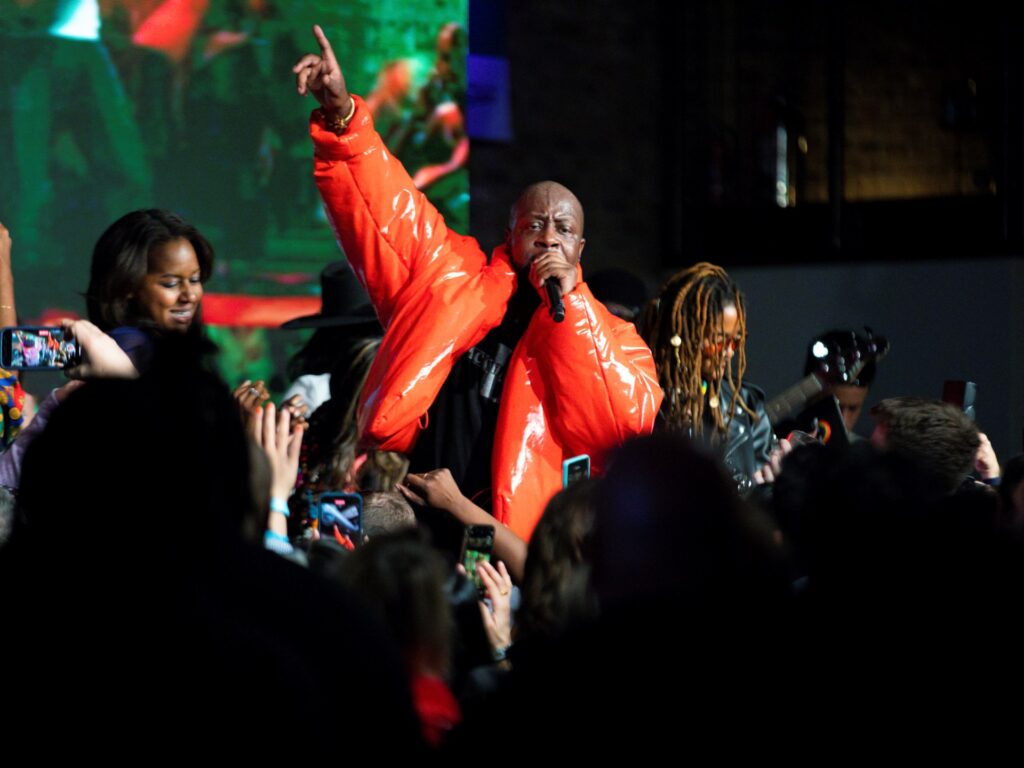
Dozens of acts scheduled to appear at the South by Southwest (SXSW) festival in the United States have withdrawn in an act of protest against sponsors with ties to Israel’s war in Gaza. As of Wednesday, at least 80 artists and panellists have pulled out of the nine-day festival, citing the involvement of several weapons companies and agencies tied to the US Department of Defense, according to the Austin for Palestine Coalition, which helped organise the protest. The event, billed as a “convergence of tech, film, music education and culture”, is among the most prominent entertainment festivals in the southern US. Taking place each year in Austin, Texas, the festival has been a launchpad for up-and-coming indie acts and filmmakers since its opening in 1987. This year’s festival will conclude on March 16. But several artists slated to appear this year have withdrawn, in an effort to show solidarity with the people of Gaza. “I have decided to pull out of my official SXSW showcases in protest of SXSW’s ties to the defense industry and in support of the Palestinian people,” musician Ella Williams, who is known as Squirrel Flower, posted on Instagram on March 4. We are boycotting @sxsw pic.twitter.com/mGN7XeXlwr — Lambrini Girls (@Lambrini_Girls) March 9, 2024 The Austin for Palestine Coalition identified Williams as one of the first nine acts to withdraw as part of the protest. Ibrahim Batshon, the founder of the BeatStars digital production company, posted a day later on social media that artists associated with his organisation would also boycott the festival, which attracted over 345,000 people last year. He cited the involvement of Raytheon and BAE Systems, two of the companies involved in this year’s SXSW festival. “Both of these companies manufacture and provide weapons to the terrorist state of Israel, whom is currently conducting an internationally condemned genocide against an occupied and besieged population of Palestinians,” Batshon posted. The boycott, however, has since ballooned to include featured speakers like labour union organiser Chris Smalls and musicians like Buffalo Nichols. The advocacy organisation United Musicians and Allied Workers has also thrown its support behind the protest, echoing its rallying cry on social media: “Warmongers have no place at SXSW!” We will not be appearing at @sxsw festival. 👇 pic.twitter.com/nt5hEMH2GM — KNEECAP (@KNEECAPCEOL) March 10, 2024 In announcing its withdrawal this week, Northern Ireland hip-hop trio Kneecap highlighted the costs small acts would incur by missing the high-profile event. “This decision will have a significant financial impact on Kneecap, both on lost income and on logistical costs already incurred,” the trio said in a statement. “But it isn’t an iota of hardship when compared to with the [unimaginable] suffering being inflicted every minute of every day on the people of Gaza.” As of Wednesday, at least 31,272 Palestinians had been killed in Israel’s operations in Gaza, the vast majority of them women and children, according to local authorities. The fighting has left the enclave on the brink of famine, with human rights groups accusing Israel of slowing the delivery of humanitarian aid. The administration of US President Joe Biden has continued to pledge political and material support to Israel, despite issuing stronger criticism of its military campaign in recent weeks. “There are a lot of innocent people who are in trouble and dying,” Biden said last month. “And it’s got to stop.” Governor responds: ‘Don’t come here’ The growing SXSW boycott effort, however, prompted a rebuke on Tuesday from Texas Governor Greg Abbott. “We are proud of the US military in Texas,” he wrote on social media. “If you don’t like it, don’t come here.” In late February, the Austin Chronicle also reported that SXSW organisers sent a cease-and-desist letter to the Austin for Palestine Coalition as they sought to rally support for the boycott. The letter said the group had used trademarked SXSW art in their social media posts and threatened legal action, according to the news site. Bands pull out of SXSW over U.S. Army sponsorship. Bye. Don’t come back. Austin remains the HQ for the Army Futures Command. San Antonio is Military City USA. We are proud of the U.S. military in Texas. If you don’t like it, don’t come here.https://t.co/t3RyQgLRKN — Greg Abbott (@GregAbbott_TX) March 12, 2024 Still, the festival defended the artists who chose not to participate in this year’s festival, responding directly to Governor Abbott’s comments. “SXSW does not agree with Governor Abbott,” SXSW wrote on social media on Tuesday. “We fully respect the decision these artists made to exercise their right to free speech.” In the same thread of messages, however, SXSW also attempted to justify its ties to the defence industry. “The defense industry has historically been a proving ground for many of the systems we rely on today,” the festival wrote in its statement. “These institutions are often leaders in emerging technologies, and we believe it’s better to understand how their approach will impact our lives.” The Austin for Palestine Coalition and the United Musicians and Allied Workers Union are set to host a protest show in Austin on Thursday. Adblock test (Why?)
How does US intelligence disagree with Israel on Gaza?

Spy agencies say Hamas and its tunnel network will not be destroyed. In its annual threat report, the United States’ intelligence community has concluded that Hamas cannot be destroyed. The group’s elimination is a core aim of Israeli Prime Minister Benjamin Netanyahu’s merciless onslaught in Gaza. So why is the US continuing to arm Israel, to fight a war it doesn’t believe can be won? Presenter: James Bays Guests: Glenn Carle – Served for more than 20 years in the clandestine services of the CIA and is now a US national security and foreign policy specialist Yossi Mekelberg – Associate fellow with the Middle East and North Africa Programme at the UK think-tank Chatham House Tamer Qarmout – Assistant professor of public policy at the Doha Institute for Graduate Studies and a specialist in conflict resolution and international aid Adblock test (Why?)
UN seeking more than $850m for Rohingya refugees in Bangladesh

Bangladesh hosts more than a million Rohingya people, many of whom fled a 2017 military crackdown in Myanmar. The United Nations is calling for more donations for Rohingya refugees living in camps in Bangladesh. In its annual response plan to the crisis, the UN appealed for $852.4m to provide food and other aid to the mostly Muslim Rohingya refugees and their host communities. Bangladesh has taken in more than a million members of the mostly stateless minority, many of whom fled a 2017 military crackdown in Myanmar, where conflict continues to escalate. About 95 percent of the Rohingya people in Bangladesh remain dependent on humanitarian assistance, the Office of the UN High Commissioner for Refugees (UNHCR) said in a statement on Wednesday. “International solidarity with Bangladesh and refugee protection is needed more than ever as the conflict in Myanmar escalates,” it said. The UN made a similar appeal last year, asking countries to provide $876m to help the Rohingya, but only $440m was provided. With the humanitarian crisis largely out of the international spotlight, the UNHCR warned that significant funding shortfalls in recent years has had “serious implications”. Many of the refugees are struggling to meet their basic needs, it warned, insisting that “sustained assistance is critically and urgently needed.” More than 75 percent of the refugees receiving aid are women and children, it said, adding that they are facing “heightened risks of abuse, exploitation and gender-based violence”. “More than half of the refugees in the camps are under 18, languishing amidst limited opportunities for education, skills-building and livelihoods,” the UNHCR said. The donations will be used to pay for food, shelter, healthcare, drinking water access, protection services, education and other assistance, the agency said. Many Rohingya wanting to escape conditions in the camps have attempted dangerous, often deadly boat journeys to Malaysia and Indonesia. Meanwhile, there is little progress towards repatriating the refugees to Myanmar, which is facing a UN genocide probe over the 2017 crackdown. In 2021, the military seized power in Myanmar, ousting Nobel Peace Prize laureate Aung San Suu Kyi’s democratically elected government. “The human rights situation in Myanmar has morphed into a never-ending nightmare away from the spotlight of global politics,” UN rights chief Volker Turk told the UN Human Rights Council this month. Adblock test (Why?)