

Biden to deliver State of the Union address: All you need to know
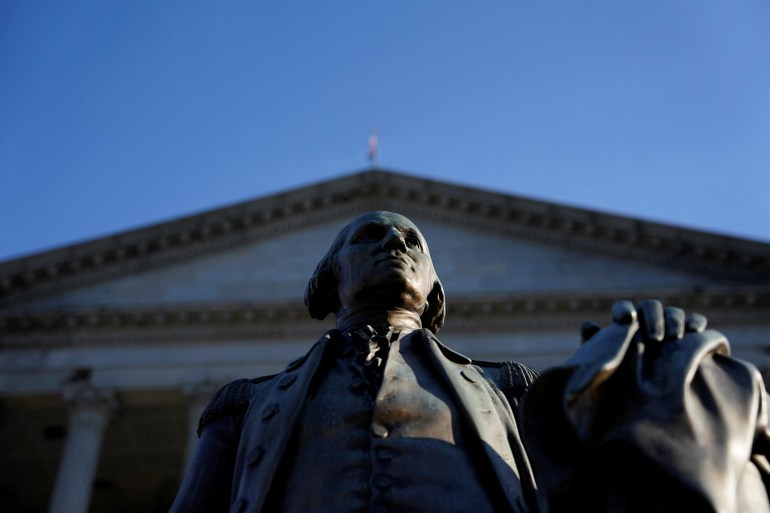
United States President Joe Biden is to deliver the third State of the Union address of his presidency, an opportunity for him to highlight his successes and chart a path forward. But this State of the Union speech will also be his first since he announced his re-election bid last year. That makes it a pivotal moment for Biden, as the Democrat faces fierce criticism both from within his party and from the Republican opposition. The president is expected to face his Republican predecessor Donald Trump in November’s general election. Recent polls show the pair in a neck-and-neck fight for the White House. Against that backdrop, the State of the Union address will allow Biden to make his case to the American people about why he should get a second term. Speaking at the US Capitol in Washington, DC, on Thursday evening, Biden is expected to make the future of US democracy a central theme. Biden has repeatedly warned that Trump and his supporters are a threat to the country, referencing their efforts to overturn the 2020 election. Support for foreign allies such as Ukraine and Israel, migration at the US-Mexico border and a push to bridge political partisanship in Washington, DC, are also likely topics for Biden. Here’s all you need to know about the 2024 State of the Union: What is the State of the Union? The State of the Union is an annual speech in which the US president outlines — as its name suggests — the state of the country and priorities for the future. This fulfils a requirement in the US Constitution, which asserts that a president “shall from time to time give to the Congress information of the State of the Union”. Ultimately, the State of the Union address provides US presidents with a “big stage” to speak both to Congress and the American public, said Donna Hoffman, a professor of political science at the University of Northern Iowa. Biden will want to claim credit for his accomplishments and also say, “Here are the things that I want to get done,” Hoffman told Al Jazeera. Looking forward to it, Mr. Speaker. https://t.co/YChdO92WQK — President Biden (@POTUS) January 6, 2024 When is the State of the Union? This year’s State of the Union is set for 9pm local time on Thursday (02:00 GMT on Friday). Who attends the State of the Union? The State of the Union is delivered to a joint session of Congress. This means members of both the Senate and the House of Representatives will be in attendance. As is custom, Vice President Kamala Harris and the speaker of the House, Republican Mike Johnson, will be seated behind Biden. The president’s cabinet will also be present, as well as any Supreme Court justices who choose to be there. The White House also typically invites special guests to attend. Last year, Biden invited the parents of Tyre Nichols, a Black man who was beaten to death by police in Tennessee, and Brandon Tsay, who disarmed a mass shooter in California. Already, two key figures have reportedly declined the White House’s invitation to attend this year. Yulia Navalnaya — the widow of Russian opposition leader Alexey Navalny — and Ukrainian First Lady Olena Zelenska both bowed out of the engagement. Have US presidents always delivered the State of the Union? Yes, though the format has changed over the years. George Washington, the first US president, delivered the inaugural address in 1790. “This ritual originated from the British practice of giving ‘a speech from the throne’ to open every new session of Parliament,” according to a US Congressional Service report. Washington and John Adams, the country’s second president, also presented their messages in person. But that changed in 1801 when Thomas Jefferson sent his in writing. “That precedent held until Woodrow Wilson decided to deliver his message in person in 1913, a tradition that continues today,” a Senate fact sheet explained. A statue of George Washington is seen at the South Carolina State House [File: Allison Joyce/Reuters] Was it always called the State of the Union? No. For many years, it was referred to as the “President’s Annual Message to Congress” or simply the “Annual Message”. Franklin Delano Roosevelt, the 32nd US president, was the first to call it the State of the Union address. But the title only became official during the tenure of President Harry Truman, who took office in 1945, after Roosevelt’s death. The format of the State of the Union has changed over the years too. “The first national radio broadcast of the message occurred in 1923,” the Senate fact sheet said. “Truman’s 1947 address was the first to be televised, and in 1965, President Lyndon Johnson began the tradition of delivering the address in prime time.” OK, let’s get back to this year’s address. What can we expect from Biden? The speech provides an important platform for Biden, who will address a deeply divided Congress months before a presidential election. The 81-year-old continues to face questions over whether he is fit enough to seek a second term, as well as protests in critical swing states over his staunch backing of Israel despite its deadly military offensive in the Gaza Strip. Axios reported in mid-February that Biden’s team is hoping the State of the Union will be a “big, public reset moment” in his bid for re-election. One unnamed source close to the president told the US news outlet: “Everyone around him is well aware — well aware — of the need to jack this campaign up.” What will be the focus of Biden’s speech? Biden has tried to present himself as a bulwark protecting American democracy against Trump and his Make America Great Again (MAGA) base. A mob of the former president’s supporters stormed the US Capitol in January 2021, in an attempt to stop Congress from certifying Biden’s 2020 election victory. Trump also faces two criminal cases linked to his efforts to overturn the election results. “Their extreme agenda, if
The US prepares new ceasefire draft resolution

NewsFeed The US says it’s prepared a new ceasefire draft resolution to secure a 6-week ceasefire in Gaza and the release of Israeli captives. Published On 6 Mar 20246 Mar 2024 Adblock test (Why?)
US denies pressuring Haiti PM Henry to resign, urges political ‘transition’

The United States says it is not pressuring Haitian Prime Minister Ariel Henry to step down amid a fresh wave of violence and soaring instability in the Caribbean nation, where powerful gang leaders are demanding Henry’s resignation. During a news conference on Wednesday afternoon, US State Department spokesman Matthew Miller said Washington is “not calling on him [Henry] or pushing for him to resign”. However, Miller told reporters that the US is urging Henry “to expedite the transition to an empowered and inclusive governance structure that will move with urgency to help the country prepare for a multinational security support mission”. That mission, which has the backing of the United Nations but has been stalled for months, will then “address the security situation and pave the way for free and fair elections” in Haiti, Miller said. His comments come after the Miami Herald reported early on Wednesday that the State Department had asked Henry to agree to a new transitional government and resign amid the growing crisis in Haiti. A surge in gang violence that began at the weekend — and included attacks on police stations and raids on two prisons in the capital of Port-au-Prince — has displaced tens of thousands of people and effectively paralysed the city. A 74-year-old neurosurgeon, Henry was sworn in as Haiti’s prime minister in July 2021, less than two weeks after President Jovenel Moise was assassinated. Moise had chosen Henry for the post shortly before he was killed. The assassination worsened months of political instability in Haiti, and gang violence soared in the resulting power vacuum. Meanwhile, Henry — who long enjoyed the backing of the US and other Western powers, including the so-called Core Group of nations — faced a crisis of legitimacy from the very start of his tenure. Some Haitian civil society groups had urged him to hand power over to an inclusive, transitional government, a move they argued would help stem the gang violence and widespread insecurity plaguing the country. Henry rejected that demand, but said he was seeking unity and dialogue. He also repeatedly said that elections could not be held until it is safe to do so. But that angered many people across Haiti, including armed gang leaders who over the past few years have used pressure tactics – including fuel terminal blockades – in an effort to force him to resign. Current crisis The situation escalated when Henry left Haiti last month to attend a four-day summit in the South American country of Guyana organised by a regional trade bloc known as the Caribbean Community and Common Market (CARICOM). While Henry did not speak to the media, Caribbean leaders said that he promised to hold elections in mid-2025. A day later, coordinated gang attacks began in Haiti’s capital and beyond. Henry then departed Guyana for Kenya last week to meet with President William Ruto and to push for the UN-backed deployment of a Kenyan police force, which a court in the East African country ruled was unconstitutional. Officials never said when the prime minister was due back in Haiti following his Kenya trip, and his whereabouts were unknown for several days until he unexpectedly landed in Puerto Rico on Tuesday. In the meantime, the Haitian government declared a state of emergency and imposed a curfew as the country’s already overwhelmed and ill-equipped police force tried to stem the surge in gang violence. Haitian gang leader Jimmy ‘Barbecue’ Cherizier has warned of ‘civil war’ if Henry doesn’t step down [Ralph Tedy Erol/Reuters] Schools and shops have closed in Port-au-Prince — where gangs are believed to control about 80 percent of the city — and 15,000 Haitians have been forced to flee their homes in recent days, according to the UN Office for the Coordination of Humanitarian Affairs (OCHA). The head of a powerful Haitian gang alliance known as G9, Jimmy “Barbecue” Cherizier, also warned that “if Ariel Henry doesn’t resign, if the international community continues to support him, we’ll be heading straight for a civil war that will lead to genocide”. At UN headquarters in New York on Wednesday, US Ambassador Linda Thomas-Greenfield echoed Miller at the State Department when she was asked if Washington had urged Henry to step down. “What we’ve asked the Haitian prime minister to do is move forward on a political process that will lead to the establishment of a presidential transitional council” to allow for elections, Thomas-Greenfield told reporters. “We think that it’s urgent … that he moves forward in that direction and start the process of bringing normalcy back to the people of Haiti.” ‘No quick fix’ Jake Johnston, a senior research associate at the Center for Economic and Policy Research in Washington, DC, and expert on Haiti, said it is “no surprise” that the US government is denying reports that it is asking Henry to resign. “But what they are saying they are asking Henry to do is likely to result in his resignation, because nobody is making a political deal that keeps him in power,” Johnston wrote on X. Emmanuela Douyon, a Haitian rights advocate and analyst, also wrote in a social media post that “there is no quick fix for such a profound and protracted crisis”. “It’s urgent to act to save lives, protect the population, restore peace, and reinstate democratic order. This necessitates addressing not only the activities of gangs but also tackling corruption and criminal activities, including collusion with gangs within political and economic elites,” she said. “To guide this process efficiently and keep it as short as possible, we need capable and credible leaders, some political consensus, and a significant amount of political will. It is imperative to ensure that forthcoming elections are inclusive, free, fair, and credible.” #Haiti.-There is no quick fix for such a profound and protracted crisis. Picking another “puppet” won’t help. It’s urgent to act to save lives, protect the population, restore peace, and reinstate democratic order. This necessitates addressing not only the activities of gangs but… pic.twitter.com/v4pE1jKMjH —
South Africa asks ICJ for more measures against Israel over Gaza ‘famine’

South Africa warns Palestinians in Gaza are facing starvation, asks court to order all parties to cease hostilities. South Africa has asked the International Court of Justice (ICJ) to order additional emergency measures against Israel over its war on Gaza, the court has said. In its application, South Africa warned that Palestinians in Gaza were facing starvation and asked the court to order that all parties cease hostilities and release all hostages and detainees. In a statement issued on Wednesday, the South African presidency warned that the people of Gaza cannot wait. “The threat of all-out famine has now materialised. The court needs to act now to stop the imminent tragedy by immediately and effectively ensuring that the rights it has found are threatened under the Genocide Convention are protected,” it added. South Africa also asked to court to order that Israel take “immediate and effective measures to enable the provision of urgently needed basic services and humanitarian assistance to address famine and starvation” in Gaza. It said that the ICJ, also known as the World Court, should take these measures without scheduling a new round of hearings because of the “extreme urgency of the situation”. Judges at the International Court of Justice (ICJ) rule on emergency measures against Israel following accusations by South Africa that the Israeli military operation in Gaza is a state-led genocide [File: Piroschka van de Wouw/Reuters] Famine looms The United Nations has warned that widespread famine in the Gaza Strip is “almost inevitable” without action. Aid organisations have blamed military operations, insecurity and extensive restrictions to the delivery of essential supplies for the shortage of food in the enclave, which has been under an Israeli siege and assault since October. The five-month war has killed more than 30,000 people in the strip, according to health officials in Gaza. At least 20 people have died from malnutrition and starvation in Gaza since Israel launched its assault, Palestinian authorities have said. The number of humanitarian aid convoys entering Gaza daily must at least double to meet some of the population’s most basic needs, the World Food Programme (WFP) said on Wednesday. “I would say that we need to double the level we have now. We are now at around 150 trucks. We need a minimum of 300 trucks a day coming in,” Carl Skau, deputy executive director and chief operating officer at the World Food Programme, told the Reuters news agency. “But of course, that also in the longer run needs to be supplemented with commercial [supplies].” In January, the ICJ ordered Israel to refrain from any acts that could fall under the Genocide Convention and to ensure its troops commit no genocidal acts against Palestinians, after South Africa accused Israel of state-led genocide in Gaza. Israel described the allegation as baseless. The request on Wednesday is the second time Pretoria has asked the court for additional measures – its first request to pressurise Israel to halt an offensive against the Gaza city of Rafah in February was denied. A final ruling in the case in The Hague could take years. Adblock test (Why?)
Will Joe Biden and Donald Trump face each other in the US elections?

The current and former presidents swept polls in the Super Tuesday vote, but both have vulnerabilities. A rematch between United States President Joe Biden and former President Donald Trump now seems almost certain. Both swept to impressive victories in Super Tuesday elections when primaries were held in more than a dozen US states. But despite strong showings, both candidates face challenges in rallying their base. What are American voters’ priorities this time round? Presenter: Adrian Finighan Guests: James Zogby – President of the Arab American Institute Arshad Hasan – Democratic Party political strategist and co-founder of Convey Communications Rina Shah – Conservative political adviser and Republican opposed to Donald Trump’s leadership Adblock test (Why?)
What happened on Super Tuesday

NewsFeed Despite winning sweeping victories on Super Tuesday, results revealed President Joe Biden and former President Donald Trump could face vulnerabilities in the US election in November. Published On 6 Mar 20246 Mar 2024 Adblock test (Why?)
Nikki Haley suspends US presidential campaign

NewsFeed Nikki Haley has suspended her campaign for US president, leaving Donald Trump as the leading candidate for Republicans. Haley chose not to endorse Trump in her resignation speech, telling him instead he must earn the votes of those who do not yet support him. Published On 6 Mar 20246 Mar 2024 Adblock test (Why?)
Suspected Houthi attack forces crew to abandon ship in Gulf of Aden

Officials say the attack on the Greek-owned, Barbados-flagged ship has caused fatalities. The Greek-owned cargo ship True Confidence has been hit by a missile about 50 nautical miles (93km) southwest of the Yemeni port of Aden in an attack claimed by Houthi forces. The bulk carrier was drifting with a fire continuing onboard after it was attacked on Wednesday, a statement by the ship’s owner and operator said, adding that no information was available on the status of the ship’s 20 crew members and three armed guards. But a shipping source told the Reuters news agency that three sailors were missing from the Barbados-flagged bulk carrier and four were badly burned. Two United States officials, speaking on the condition of anonymity, told The Associated Press that the attack had caused fatalities. The United Kingdom Maritime Trade Operations (UKMTO) agency said the vessel was no longer under the command of the crew and they had abandoned it. Yemen’s Houthis said on Wednesday they had targeted the cargo ship with missiles, causing a fire to break out onboard. “The targeting operation came after the ship’s crew rejected warning messages from the Yemeni naval forces,” the militia’s military spokesman Yahya Sarea said in a televised speech. There was no immediate claim of responsibility although it typically takes Houthi forces several hours to acknowledge their assaults. Houthi fighters in Yemen have repeatedly launched drones and missiles against international commercial shipping since mid-November, saying they are acting in solidarity with Palestinians and in opposition to Israel’s war on Gaza. The Houthi attacks have disrupted global shipping, forcing firms to reroute to longer and more expensive journeys around Southern Africa. The True Confidence is owned by the Liberian-registered company True Confidence Shipping and operated by the Greece-based Third January Maritime, both firms said in their joint statement. They said the ship had no link to the US. However, it had previously been owned by Oaktree Capital Management, a Los Angeles-based fund that finances vessels on instalments. Despite more than a month and a half of US-led air strikes on the Houthis, the group has remained capable of launching significant attacks. They include the attack last month on a cargo ship carrying fertiliser, the Rubymar, which sank on Saturday after drifting for several days, and the downing of an American drone worth tens of millions of dollars. A Houthi assault on Tuesday apparently targeted the USS Carney, an Arleigh Burke-class destroyer that has been involved in the US campaign against the rebels. The attack on the Carney involved bomb-carrying drones and one antitank ballistic missile, the US military’s Central Command said. The US later launched an air strike destroying three antiship missiles and three bomb-carrying drone boats, Central Command said. Yahya Saree, a Houthi military spokesperson, acknowledged the attack but said its forces targeted two US warships, without elaborating. The Houthis “will not stop until the aggression is stopped and the siege on the Palestinian people in the Gaza Strip is lifted”, Saree said. Adblock test (Why?)
Egypt strikes expanded $8bn deal with the IMF

The deal comes as the central bank said it would let the Egyptian pound trade freely. Egypt has signed an expanded $8bn deal with the International Monetary Fund (IMF), Egypt’s Prime Minister Mostafa Madbouly has said. The new agreement announced on Wednesday is an expansion of the $3bn, 46-month Extended Fund Facility that the IMF struck with Egypt back in December 2022, which was predicated on the shift to a more flexible exchange-rate system. The deal comes as the central bank said it would let the pound currency trade freely and announced an interest-rate hike of 600 basis points in a bid to stabilise the economy. As part of the new deal, Egypt will also receive a loan of about $1.2bn from a separate facility that promotes environmental sustainability, Madbouly said. The December 2022 programme had stalled when Egypt reverted to keeping its pound at a tightly managed rate, and amid delays to an ambitious programme to divest state assets and boost the role of the private sector. The International Monetary Fund (IMF) logo in Washington, DC, the United States [File: Yuri Gripas/Reuters] The IMF deal comes less than two weeks after Egypt announced a deal with the Emirati sovereign wealth fund ADQ that it said would deliver $35bn in investments by late April. Economists say the central bank’s moves earlier today were likely signs that the government was looking to nab another IMF deal, as a flexible exchange rate has been one of the key demands of the IMF. Ahmed Helal, head of MENA at Global Counsel, a strategic advisory firm, said the divergence between the official and black market exchange rates of the Egyptian pound to the dollar was becoming “unsustainable”. “It was bad for business and bad for investment. It was prolonging the unpredictability and volatility that investors had to face when looking at opportunities in Egypt.” The Egyptian economy has been hit hard by years of government austerity, the COVID-19 pandemic, the fallout from the war in Ukraine, and most recently, the war in Gaza. Since January 2022, the Egyptian pound has lost around 50 percent of its value against the US dollar. Meanwhile, nearly 30 percent of Egyptians live in poverty, according to official figures. Adblock test (Why?)
Yulia Navalnaya calls on Russians to join election protest

NewsFeed Yulia Navalnaya, widow of opposition leader Alexey Navalny, called on Russians to join an election day protest by voting against President Vladimir Putin or spoiling their ballots. Published On 6 Mar 20246 Mar 2024 Adblock test (Why?)