

Russia takes more ground in east Ukraine but loses another ship at sea
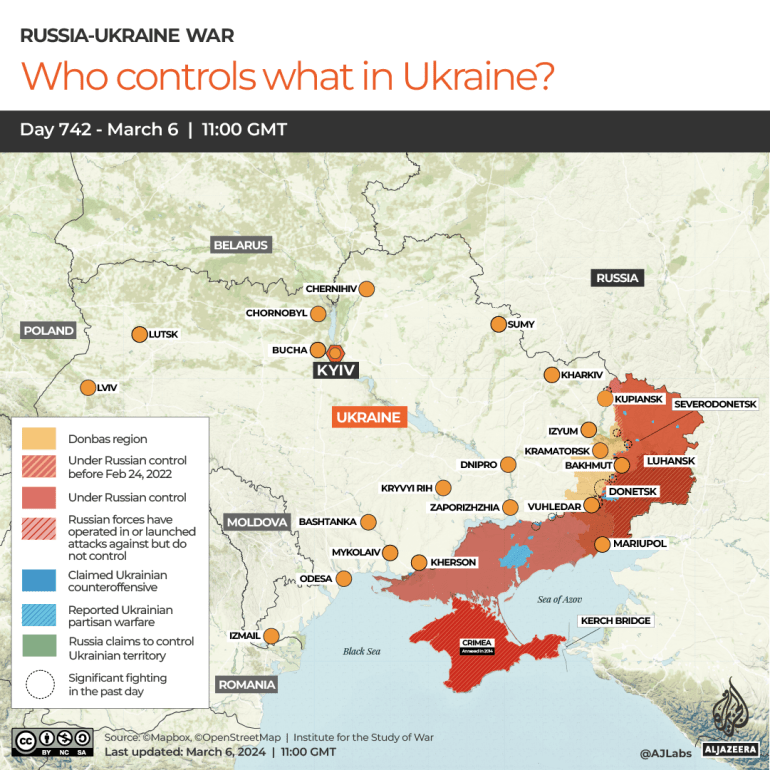
Russian troops continued a relentless march in eastern Ukraine for a third straight week, giving defenders no respite since seizing Avdiivka on February 17. Geolocated footage on February 29 showed Russian troops had advanced 5km (3 miles) west of Avdiivka to the outskirts of Orlivka and Berdychi. The following day, they were in central Orlivka. By Monday, they were spotted close to a road that connects Orlivka to the village of Tonenke to its south. By the estimate of the Russian Ministry of Defence, it took Moscow’s forces four months to advance 9km (5.6 miles) through the Donetsk region before seizing Avdiivka. By that standard, 5km in three weeks – including 3km (nearly 2 miles) in the past week alone – was fast progress. (Al Jazeera) It was a similar story west of Bakhmut, another city in Donetsk, which Russian forces captured in May. Ukrainian forces said on Sunday that they were fighting fierce battles to hold onto Ivanivske, a village 2km (1.2 miles) west of Bakhmut. Geolocated footage showed Russian troops making their way into the village centre that day. “Our military is heroically resisting and trying to repel the enemy from the occupied lines,” said Captain Ilya Yevlash, a spokesperson for the defenders in the area. A spokesperson for the Tavria group of forces fighting there said they were managing to build tank trenches, ramparts and bunkers but these were isolated, not contiguous. It may not have been a coincidence that Ukraine’s military on Sunday announced record spending on fortifications in the Zaporizhia region on the southern front. Russian troops claimed to have advanced marginally at many points along the battlefront in Donetsk. Another advance was confirmed in the village of Novomykhailivka. Geolocated footage published on Tuesday showed Russian forces in the fields south of the settlement “I don’t buy … that this is going to shift the course of the war,” retired US Colonel Seth Krummrich told Al Jazeera. “Show me the map. Show me what’s been achieved in two years. … I see maybe one-eighteenth [of Ukrainian territory] in Russian control at the cost of 250,000 to 500,000 casualties. I don’t see imminent victory by the Russians,” said Krummrich, now vice president of Global Guardian, a security consulting firm. (Al Jazeera) Yet the situation was worrying enough to bring Ukraine’s newly installed commander-in-chief, Oleksandr Syrskii, to the eastern front for three days. On Friday, Syrskii revealed he had made command personnel changes and reinforced decision-making in some brigades around Avdiivka. “I have sent groups of specialists to individual brigades where there are problems … to transfer experience and provide assistance,” he said. “In some cases, when … the actions and commands directly pose a threat to the life and health of subordinates, I am forced to make personnel decisions.” There appear to be qualitative changes in Russia’s tactics that could spell trouble for Ukraine. The Russian assault on Bakhmut last year relied heavily on pardoned prison inmates who were thrown into battle in continuous waves with little training and suffered heavy casualties. A number of Ukrainian soldiers who fought in Avdiivka recently told The Washington Post that the Russian assaults were well-prepared and the units well-manned and mostly well-trained. They also said Russian artillery targeting was accurate and fast. Ukrainian fallback positions were being shelled soon after Ukrainian defenders reached them, and a column of retreating troops was decimated, they added. “It was … a convoy of the best men ever. And in front of our eyes, this convoy was destroyed by artillery,” one survivor said. (Al Jazeera) Perhaps most worrying was Russia’s effective use of air support to drop satellite-guided glide bombs – inertial bombs fitted with flight surfaces to achieve greater range and accuracy. Ukraine’s air force has been taking out the Sukhoi-34 and Sukhoi-35 fighter-bombers that deliver those bombs in increasing numbers, including six Su-34s on February 28 and 29 alone. Ukrainian President Volodymyr Zelenskyy said Kyiv’s forces had shot down 15 Russian military planes from February 1 to Sunday, an unusually high number. Russia may have decided to accept higher losses for increased firepower on the ground. Forbes and The New York Times have reported that Russia was adopting more aggressive air tactics, conducting an increased rate of 100 or more sorties a day on the eastern front. Observers have blamed Republicans in the United States Congress for holding up aid to Ukraine as the biggest cause for Russian advances. “The collapse of Western aid to Ukraine would likely lead to the eventual collapse of Ukraine’s ability to hold off the Russian military and significant Russian advances further west, likely all the way to the western Ukrainian border with NATO member states,” wrote the Institute for the Study of War, a Washington-based think tank. Zelenskyy warned on February 25 that Russian forces were planning a major new offensive as early as May. War in the air Russia’s war on Ukraine’s will to fight scored a direct hit on Friday when a Russian drone demolished a nine-storey apartment building in Odesa, killing at least 12 people. It was the deadliest attack of the past week and one of the worst this year. “The delay in the supply of weapons for Ukraine, air defence systems for the protection of our people leads, unfortunately, to such losses,” Zelenskyy said after the attack. (Al Jazeera) Ukrainian air force spokesperson Yuri Ignat said on Tuesday that it was not possible to protect Odesa from all missiles and drones. “Odesa is … a densely populated city bordering the coast, large buildings, infrastructure. The location of air defence in the Odesa region is built in such a way that it is not always possible to intercept both drones and missiles on the approaches to the city itself,” Ignat said. Another drone struck Odesa on Wednesday as Greek Prime Minister Kyriakos Mitsotakis met with Zelenskyy in the city. Ukraine’s air defences downed 36 of 43 drones that Russia launched from February 29 to Tuesday, but officials have warned that
Peru’s PM quits amid claims of influence peddling
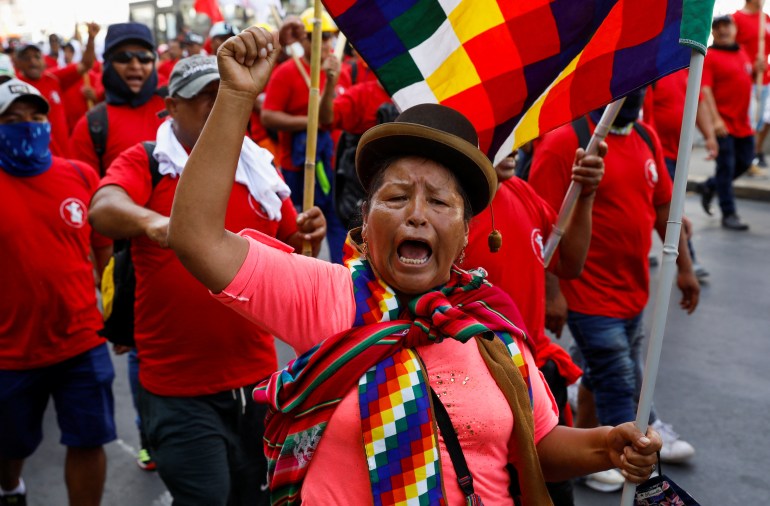
Alberto Otarola denies allegations that he attempted to improperly influence government contracts to help love interest. Peruvian Prime Minister Alberto Otarola has resigned after audio recordings, allegedly featuring him using his influence to help his love interest get government contracts, were released by the media. Otarola tendered his resignation on Tuesday after television programme Panorama broadcast the recordings over the weekend. Announcing his resignation, Otarola told reporters in Lima he had been framed by political opponents. He claimed his rivals had manipulated and edited the recordings, which he said were made before he entered office in 2022. However, Otarola said on X that he was resigning “to give peace of mind to the president and recompose the cabinet”. He presentado mi renuncia al cargo de presidente del Consejo de Ministros para dar tranquilidad a la presidenta y recomponga el gabinete. Continúo al servicio del país, como ha sido durante toda mi vida profesional. pic.twitter.com/LfvQUFXhfR — Alberto Otárola (@AlbertoOtarolaP) March 6, 2024 In the audio recordings, Otarola, 57, appears to be speaking to Yazire Pinedo. The 25-year-old woman landed contracts worth $14,000 this year to do archive and administrative work for the government. In one of the recordings, he allegedly tells her: “Tell me, then, my love, so we can talk. You know these things are annoying, they are a pain, but you also know that I love you.” Ordered home from Canada by President Dina Boluarte after the scandal erupted over the weekend, Otarola has denied any violation of Peruvian labour laws or other wrongdoing. “I understand the gravity of the political circumstances, but I repeat that I did not do anything illegal,” he said on Monday on X. En relación al informe difundido por Panorama, que aclararé cuando pise suelo peruano, comunico que, como ha dispuesto la presidenta Dina Boluarte, adelanto mi regreso a Perú. Entiendo la gravedad de la coyuntura política, pero reitero que no he cometido ningún acto ilegal. — Alberto Otárola (@AlbertoOtarolaP) March 4, 2024 Pinedo said on Tuesday that the leaked conversations with Otarola, who is married and has five children, were from 2021. She acknowledged having had a brief “perhaps sentimental relationship” with him. The president’s office said in a statement that it would hear Otarola out before deciding what to do. Prosecutors said they will investigate him for possible conflict of interest and “illegal sponsorship”. With Otarola’s departure, the other 18 members of the cabinet must also resign, according to Peruvian law. The president can choose to reinstate each of them. Recent unrest Boluarte, 61, came to power in 2022 after then-President Pedro Castillo, a left-wing leader, tried to dissolve Congress and rule by decree, leading to his quick removal and arrest. Violent protests followed in several cities to demand Boluarte step down and for elections to be held. A woman gestures as demonstrators call for an indefinite nationwide strike during a march against the government of President Boluarte in Lima, on February 9, 2023 [Alessandro Cinque/Reuters] About 50 people were killed in the ensuing crackdown by security forces, according to an estimate by Human Rights Watch, which accused the authorities of extrajudicial and arbitrary killings. Multiple legal proceedings were launched after the crackdown to investigate if Boluarte bears any responsibility for the deaths. Adblock test (Why?)
Indigenous Bolivian women take up taekwondo against gender-based violence

A violent attack by would-be robbers steered Bolivian Lidia Mayta towards the martial art of taekwondo. Three years later, she helps train other Indigenous women to defend themselves against rampant gender-based violence in the South American country. Mayta says she would have died if neighbours had not come out of their homes to scare off the assailants choking her outside her front door as they tried to steal her wallet. After the attack, she pledged she would never feel so helpless again. She joined a woman-only class at the Warmi Power taekwondo studio in Bolivia’s second city El Alto. Warmi means “woman” in the indigenous Quechua language. Her enthusiasm was such that the founders soon asked her to join the training team, helping in particular to translate instructions into Aymara, another of Bolivia’s indigenous tongues. “I didn’t know how to defend myself, now I try to help other women lose that fear,” the 56-year-old shopkeeper and community health secretary said. “This is a job of violence prevention.” Government data shows that eight out of 10 women and girls in Bolivia suffer physical violence at least once in their lives. “This is a violent country for women,” said Lucia Vargas of Coordinadora de la Mujer, or Women’s Coordinator, a rights advocacy group. In 2023, more than 51,000 women reported falling victim to violence. Husbands or partners were the perpetrators in the vast majority of cases. Warmi Power was launched by Laura Roca and Kimberly Nosa – both taekwondo black belts – in 2015. “Violence is not solved with violence, but learning to defend ourselves can save our lives,” said Nosa, who has been practising the martial art for 18 years. Roca is a trained psychologist who said she took up the discipline despite her father insisting it was the preserve of men. Together, the pair have trained more than 35,000 women countrywide. At the class in El Alto, most of the women are Indigenous and engaged in informal trade. Adblock test (Why?)
Who is Jason Palmer, the only Democrat to beat Joe Biden on Super Tuesday?

EXPLAINER Palmer won against Biden in American Samoa, but had never visited the South Pacific territory before the caucus. President Joe Biden has won every Democratic contest on Super Tuesday – except for one; American Samoa. Of 91 ballots cast in American Samoa, a United States territory in the South Pacific, Palmer won 51 and Biden won 40. Here is what we know about Palmer’s victory and American Samoa. Who is Jason Palmer? As well as being a hopeful politician, Palmer, a resident of Baltimore, is an entrepreneur. He has been actively involved in numerous businesses and non-profit organisations, primarily focusing on matters related to technology and education. The candidate said he believes voters are seeking a presidential candidate who embodies a more 21st-century perspective than Joe Biden. In February, Palmer distanced himself from Biden on foreign policy and called for a ceasefire in Gaza in a video which was posted on X. “Israel’s unrelenting attacks on the people of Gaza is inhumane,” Palmer said. “We need to withhold all military aid from Israel until a ceasefire is adopted, we need to be pro-peace in that region,” he added. Did he ever have a hope of winning against Biden? Palmer launched his bid for the White House in November. On his official campaign website, he acknowledged he had a very low chance of winning. “I know I’m a longshot candidate with very little chance of winning,” Palmer said. “Incumbent Presidents almost always win re-nomination from their party. As a result, our campaign is less focused on winning, and more focused on ideas, solutions and changing the conversation,” he added. On his website, Palmer explains that he chose to run in the Democratic primary “because (1) I’m a Democrat, and (2) we don’t want to play a spoiler role in this election”. But Palmer, 52, also said he had never visited American Samoa before his win over Biden there. “I have been campaigning remotely, doing Zoom town halls, talking to people, listening to them about their concerns and what matters to them,” he said. According to campaign finance records, Palmer personally loaned his campaign more than $500,000. “You can’t take the money with you when you die,” he said. “But you can change the world while you’re here.” After Tuesday’s victory, he thanked the community for the support on X. “I found out that I had won because my phone started blowing up with friends and campaign staffers texting me,” he told the Associated Press. Honored to announce my victory in the American Samoa presidential primary. Thank you to the incredible community for your support. This win is a testament to the power of our voices. Together, we can rebuild the American Dream and shape a brighter future for all #VoteJasonPalmer pic.twitter.com/Txf771rhtI — Jason Palmer (@educationpalmer) March 6, 2024 Where is American Samoa? American Samoa is an unincorporated territory of the US located in the South Pacific ocean, about halfway between Hawaii and New Zealand. The territory is slightly larger than Washington, DC, and it consists of five main islands and two coral atolls. According to the US Central Intelligence Agency (CIA) about 46,620 residents live on the islands. American Samoans have representation in the electoral college but don’t have voting rights in the national election in November — just like American citizens in other US territories, including the US Virgin Islands, Puerto Rico, Guam and the Northern Mariana Islands. In all, 3.5 million Americans — 98 percent of whom are ethnic or racial minorities — lack the right to vote in presidential elections. Is this the first time that American Samoa has delivered a surprise result? No. In 2016, voters opted for uncommitted delegates instead of casting their ballots for either Hillary Clinton or Bernie Sanders. In 2020, Michael R Bloomberg, the former mayor of New York City, secured a victory in the region, representing his sole triumph in the campaign. Adblock test (Why?)
New AI video tools increase worries of deepfakes ahead of elections
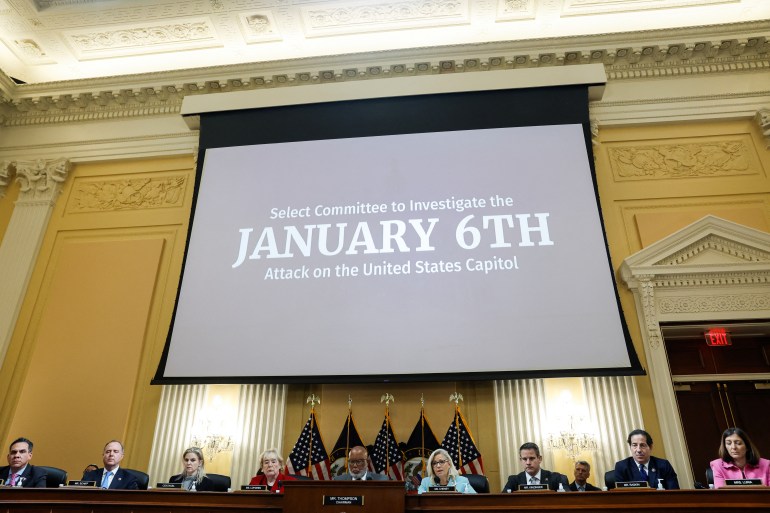
The video that OpenAI released to unveil its new text-to-video tool, Sora, has to be seen to be believed. Photorealistic scenes of charging woolly mammoths in clouds of snow, a couple walking through falling cherry blossoms and aerial footage of the California gold rush. The demonstration reportedly prompted movie producer Tyler Perry to pause an $800m studio investment. Tools like Sora promise to translate a user’s vision into realistic moving images with a simple text prompt, the logic goes, making studios obsolete. Others worry that artificial intelligence (AI) like this could be exploited by those with darker imaginations. Malicious actors could use these services to create highly realistic deepfakes, confusing or misleading voters during an election or simply causing chaos by seeding divisive rumours. Regulators, law enforcement and social media platforms are already struggling to cope with the rise of AI-generated disinformation, including faked audio of political leaders that have allegedly helped to skew an election in Slovakia and discourage people from voting in the New Hampshire primaries. Politicians and civil society worry that as these tools become more and more sophisticated, it will be harder than ever for everyday people to tell what is real and what is fake. But experts in political disinformation and AI say that the increasing use of AI products is only a new facet of an old problem. These tools just add to an already well-stocked arsenal of technologies and techniques used to manipulate and mislead. Dealing with the challenge of deepfakes really means addressing the unresolved questions of how to regulate the social media platforms on which they will spread and making Big Tech companies responsible when their products are left open to misuse. “These AI image generators threaten to make the problem of election disinformation worse but we should be very conscious that it’s already a problem,” said Callum Hood, the head of research at the Center for Countering Digital Hate (CCDH), a campaign group. “We already need tougher measures from social media platforms on that existing problem.” Several companies that offer generative AI image makers, including Midjourney, OpenAI and Microsoft, have policies that are supposed to prevent users from generating misleading pictures. However, CCDH claims these policies are not being enforced. In a study released on March 6, the centre showed that it was still relatively straightforward to generate images that could well be dangerous in the highly partisan context of the United States elections, including faked photorealistic images of President Joe Biden in hospital or greeting migrants on the Mexican border and CCTV-style images of election tampering. Former US President Donald Trump’s claim that the 2020 elections were stolen helped instigate violent protests at the Capitol building [Jonathan Ernst/Reuters] These images reflect common falsehoods in US politics. Former President Donald Trump has routinely promoted the idea that the results of the 2020 election were manipulated, a lie that helped give rise to violent protests at the Capitol building in January 2021. “It shows [the companies] haven’t thought this through enough,” Hood said. “The big vulnerability here is in images that can be used to support a narrative of stolen election, or false claims of election fraud.” The researchers found significant differences in how individual image makers responded to the prompts – some would not allow users to create images that were very obviously partisan. “Those differences show that it is possible to put effective safeguards in place,’ Hood said, adding that this reflects a choice on the part of the companies. “It’s symptomatic of a broader imbalance between the profit motive and safety of AI companies,” he said. “They have every incentive to move as fast as possible with as few guardrails in place so they can push products out, push new features out and grab a bit more in venture funding or investment. They have no incentive to slow down and be safe first.” OpenAI, Microsoft and MidJourney did not respond to requests for comment. Little achieved That incentive is only likely to come in the form of regulation that forces tech companies to act and penalises them if they do not. But social media disinformation experts say they feel a sense of déja vu. The conversations taking place around the regulation of AI sound eerily like those that were had years ago around the spread of disinformation on social media. Big Tech companies pledged to put in place measures to tackle the spread of dangerous falsehoods but the problem persists. “It’s like Groundhog Day,” said William Dance, a senior research associate at Lancaster University, who has advised United Kingdom government departments and security services on disinformation. “And it tells you how little, really, we’ve achieved in the last 10-15 years.” With potentially highly charged elections taking place in the European Union, the UK, India and the US this year, Big Tech companies have once again pledged, individually and collectively, to reduce the spread of this kind of disinformation and misinformation on their platforms. In late February, Facebook and Instagram owner Meta announced a series of measures aimed at reducing disinformation and limiting the reach of targeted influence operations during the European Parliament elections. These include allowing fact-checking partners – independent organisations Meta allows to label content on its behalf – to label AI-generated or manipulated content. Meta was among approximately 20 companies that signed up to a “Tech Accord”, which promises to develop tools to spot, label and potentially debunk AI-generated misinformation. “It sounds like there’s a kind of blank template which is like: ‘We will do our utmost to protect against blank’,” Dance said. “Disinformation, hate speech, AI, whatever.” The confluence of unregulated AI and unregulated social media worries many in civil society, particularly since several of the largest social media platforms have cut back their “trust and safety” teams responsible for overseeing their response to disinformation and misinformation, hate speech and other harmful content. X – formerly Twitter – shed nearly a third of its trust and safety staff after Elon Musk took over the platform
‘Joyful but afraid’: Disabled Indian academic Saibaba’s family on acquittal
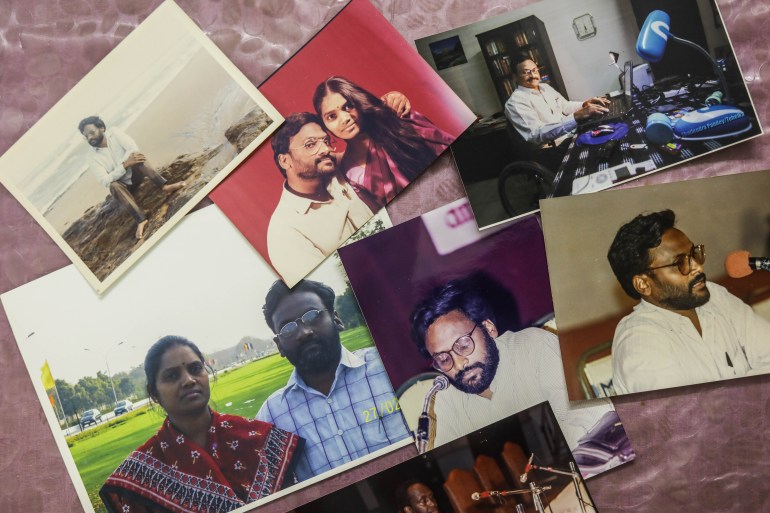
New Delhi, India – Vasantha Kumari shuffles through things she needs to pack for her visit to Nagpur where she will meet her academic husband, Gokarakonda Naga Saibaba, who is being released from prison after a decade for suspected links with Maoist rebels. Saibaba, 57, a professor of English who is paralysed waist down and uses a wheelchair, was arrested in May 2014 for being an alleged member of the banned Communist Party of India (Maoist) and charged under the Unlawful Activities Prevention Act (UAPA), an anti-terror law declared “draconian” by several rights groups. In March 2017, he was sentenced to life imprisonment. On Tuesday, Saibaba was acquitted along with four others of all charges by the Nagpur bench of the Bombay High Court. Pandu Narote, the sixth accused in the case, died in August 2022 awaiting the verdict. This is Saibaba’s second acquittal. In October 2022, the Bombay High Court ordered his release, saying legal procedures were not properly followed during the trial. But within 24 hours, the Supreme Court cancelled the order, stating the charges against Saibaba and the other accused were “very serious” and required a new hearing. “On one side, we are joyful; on the other, we are afraid. They did the same thing in 2022. I know he has not done anything wrong. But now, I can only hope,” Kumari, also 57, told Al Jazeera as she prepared to travel to Nagpur, 1,072km (666 miles) south of New Delhi to receive her husband. Some photos of academic GN Saibaba and his wife Vasantha Kumari [Md Meharban/Al Jazeera] She has reasons to be worried. Within hours of the court order, the government in Maharashtra state, which had prosecuted Saibaba and others in the case, again approached the Supreme Court to challenge the acquittal. In its 293-page verdict on Tuesday, the Bombay High Court said the prosecution had failed to establish the grounds on which Saibaba was arrested in the case, including the allegedly incriminating material found at his New Delhi residence. The court held that mere possession of Maoist literature did not constitute an offence under the UAPA – an overturning of the same ground on which another court had ordered his life imprisonment in 2017. ‘Voice of tribal rights’ Saibaba, who taught at Delhi University, rose to prominence nearly 15 years ago when he protested against Operation Green Hunt, a paramilitary offensive launched by the Congress-led government in power at the time to crush an armed Maoist rebellion in several parts of central and western India. The Maoists say they are waging a war against the Indian state to protect the rights of the tribal and marginalised people, many of whom live in forests sitting on top of vast mineral reserves eyed by influential private corporations. Nandita Narain, retired maths professor and former president of the Delhi University Teachers’ Association (DUTA), told Al Jazeera her colleague Saibaba is a powerful voice in support of tribal rights. “[The] state is particularly bent on silencing voices in support of tribal rights in areas where a corporate plunder is taking place because the land is very mineral rich,” she said. “He posed a greater challenge to the state and the corporates. That is why they wanted to silence him.” Activists have described Saibaba’s imprisonment as a national security threat, despite his serious paralysis, as a textbook case of India’s prolonged – and often botched – court trials as well as denial of facilities to disabled inmates in the country’s perpetually cramped prisons. Saibaba has had permanent post-polio paralysis since he was five. He used to crawl on the ground and wore slippers on his hands until he moved from Hyderabad to New Delhi in 2003 to teach at Delhi University’s Ram Lal Anand College and was finally able to buy a wheelchair. During his decade-long imprisonment, he was twice infected with COVID-19, once with swine flu, and diagnosed with severe health conditions including hypertrophic cardiomyopathy with left ventricular dysfunction, a brain cyst, kidney stones and acute cervical spondylitis. His wife Kumari said he never got the treatment he needed in jail. “He faints frequently. He requires physiotherapy and cardiac monitoring,” she said, adding that she plans to get her husband treated at a good hospital when he is freed. Saibaba’s wife Vasantha Kumari at their residence in New Delhi [Md Meharban/Al Jazeera] In the summer of 2022, Saibaba had staged a three-week protest, including a four-day hunger strike, to get a plastic water bottle in his cell. He had also protested against a wide-angle CCTV camera recording the toilet and bathing area of his prison. Following the protest, the jail authorities allowed him to keep a water bottle and the camera angle was tilted. When his mother died of cancer in 2020, Saibaba was denied permission to attend her funeral. Kumari claimed the courts and the state discriminate in granting bails or acquittals based on the accused’s political and ideological associations. “You see how other accused are granted bail and acquitted so quickly, including rape and murder charges. However, when people like my husband are acquitted, the state steps in and prevents him from being released, keeping him in jail,” she said. In August last year, Mary Lawlor, the United Nations special rapporteur on human rights, slammed Saibaba’s prolonged detention as “inhumane”, citing grave concerns for his health and demanding an immediate release. Lawlor said his small cell had no window and a wall made of iron bars, “exposing him to extreme weather, especially in the scorching summer heat”. ‘He lost 10 years of his life’ For Kumari and their 26-year-old daughter Manjeera, the last 10 years have been harrowing. Saibaba was suspended by Delhi University shortly after his arrest. The family was forced to vacate university housing and received only half of his salary until 2021, when he was sacked. “In 2014, some intellectuals, students and writers formed a committee for Saibaba’s release. Through them, I received some financial and legal assistance,” said Kumari. But that
Navalny’s widow calls for Russia election day protests against Putin

Yulia Navalnaya calls presidential election a ‘sham’, urges Russians to register their protest at polling stations. Yulia Navalnaya, the widow of Russian opposition leader Alexey Navalny, has called for people to join mass election day protests against President Vladimir Putin. In a video on YouTube, Navalnaya on Wednesday urged Russians to gather at polling stations on March 17 and spoil their ballots or vote against Putin, who is almost certain to win a fifth term as president. Navalnaya promised to continue the work of her husband, Putin’s toughest opponent, who died last month in an Arctic prison colony. Navalny had backed ideas of simultaneous election protests in one of his final posts on social media, for people to turn out en masse at the same time on election day in cities across the country. “We need to use election day to show that we exist and there are many of us,” Navalnaya said. “We are real, living people, and we are against Putin. You need to come to the voting station on the same day and at the same time – March 17 at noon,” she continued. “What to do next? The choice is yours. You can vote for any candidate except Putin. You can ruin the ballot, you can write ‘Navalny’ in big letters on it. And even if you don’t see the point in voting at all, you can just come and stand at the polling station, and then turn around and go home.” The elections will be held from March 15 to 17. Despite Navalnaya’s moves to unite those who supported her husband against Putin, the Russian opposition remains largely fractured. In the video, she said she had drawn hope from the large crowds of supporters that turned out for Navalny’s funeral last week. Hundreds were detained after laying flowers at makeshift memorials for him as many chanted anti-Putin slogans. She called the upcoming vote a “sham” and alleged that Putin would “draw up any result he wants”. Navalnaya has made high-profile political appearances since Navalny’s death, including meeting United States President Joe Biden, addressing the Munich Security Conference and speaking at the European Parliament. The Kremlin has strongly denied accusations that Putin was behind Navalny’s death, which drew condemnation from world leaders as the opposition figure was mourned across the world. His death certificate said he died of natural causes at the age of 47. Adblock test (Why?)
In Gaza, football means life amid Israel’s continuing war
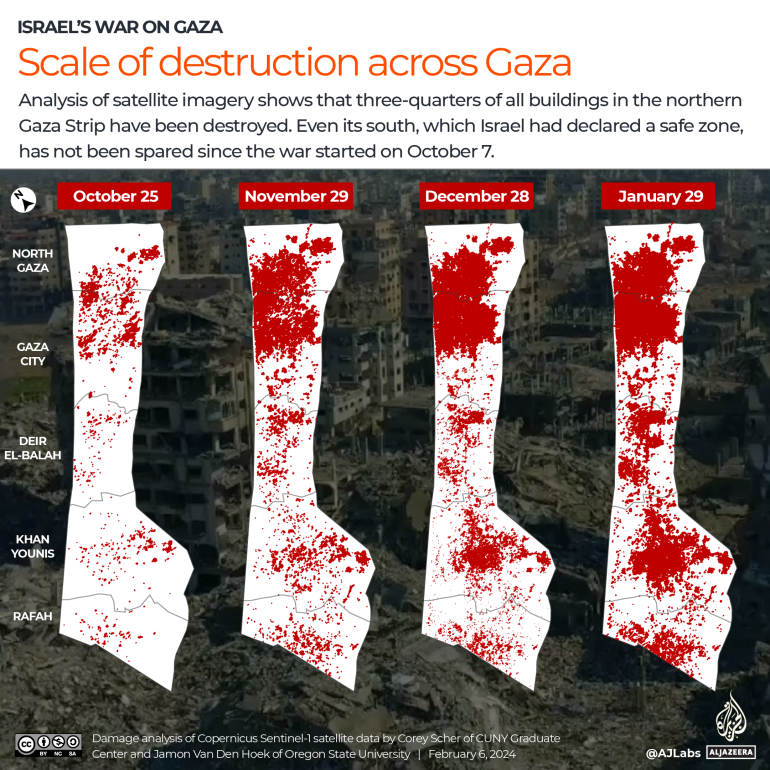
Deir el-Balah, Gaza – For Hamza El Outy, a Real Madrid fan, Champions League football nights have always been special. The 20-year-old medical student grew up following the Spanish club as they reigned over European football in the past decade, winning it five times to extend their record to 14 titles. In November, El Outy and his family moved further west towards the coastline in the war-torn Gaza Strip after miraculously surviving an Israeli rocket attack next to their house in Deir el-Balah, which was largely designated as a safe area in the initial weeks of the war. The date palm-lined city has become a site of relentless air strikes. The attacks, mainly targeting the western part of the city, have caused a great deal of damage and destruction to multiple homes as well as public facilities. (Al Jazeera) “My house is a pile of rubble, where all my football memories lay buried,” El Outy says, holding back his tears. “When I had a home, I would always prepare for the late [Champions League] games with a can of soft drink, crisps and popcorn,” El Outy tells Al Jazeera. The Madridista – as Real Madrid fans are known – still finds a way to follow his favourite team’s exploits in the Spanish La Liga and the Champions League. When the 14-time Champions League winners take on RB Leipzig to book a place in the tournament’s quarterfinals on Wednesday night, El Outy may not be able to follow the game live but he hopes to catch up later on. “I [will] go to my friend’s house to watch the highlights. I can’t miss the game – they [Real Madrid] are a piece of my heart,” he says. Gaza has been facing frequent prolonged communications blackouts since the war began as several mobile communications towers have been destroyed in attacks. On March 7, it will be five months since Israel launched its war on Gaza, following the Hamas attack on southern Israel. More than 31,000 Palestinians, including at least 12,300 children, have been killed in Gaza since October 7. More than 8,000 remain missing, many trapped under the rubble of destruction caused by Israeli air and land attacks, according to the Palestinian Ministry of Health. More than half of Gaza’s homes – 360,000 residential units – have been destroyed or damaged, according to the latest data from the UN’s Office for the Coordination of Humanitarian Affairs (OCHA), the World Health Organization (WHO) and the Palestinian government. According to OCHA, Israeli forces have carried out “significant destruction” of residential blocks across Gaza. The streets, which were once filled with laughter and revelry, now paint a traumatic picture: women wail over the bodies of their dead children, men search for people buried under the rubble and children desperately look for food. Hamza El Outy watches football highlights on his mobile phone while sitting next to the rubble of his house destroyed by Israeli rockets near Deir el-Balah, Gaza [Abubaker Abed/Al Jazeera] Despite the challenging circumstances, football fans in Gaza carry a love for the game in their hearts. It brings them rare joy and momentary distraction from the bombings and loss of precious lives. Whether it’s on battery-powered radio sets or TV screens, or on their phones despite poor internet connections amid communications blackouts, Gazan Palestinians try their best to keep up with the game they so love. Sondos Abu-Nemer and her mother are big-time football fans. The 15-year-old from Deir el-Balah is a proud owner of an Al Nassr replica shirt that bears the name of Cristiano Ronaldo – her favourite player. “The last time I saw an Al Nassr game was on February 1, against Inter Miami, when Talisca scored a wonderful hat-trick” she exclaims. Abu-Nemer had barely watched a few minutes of the game on a phone before the internet was cut off. “[When] we don’t have an internet connection, we rely on the radio for updates and that’s how I heard about Palestine’s performance at the Asian Cup in Qatar.” Palestine reached the tournament’s round-of-16 stage for the first time in their history, sending waves of joy through the Gaza Strip and occupied West Bank. Players hailing from Gaza broke down on the pitch as their run ended in a loss against Qatar, but they won over tens of thousands of fans in the host country and back home in Palestine. “No one expected Palestine to go past the first round – we are all so proud of these players,” Abu-Nemer, the young fan, says proudly. In Gaza, football has always been synonymous with life. Before October 7, football would be at the heart of every conversation among friends – young or old – all around the enclave. Cafes dotted along the shores of the Mediterranean Sea that forms Gaza’s coastline would make special arrangements to screen games and hundreds of fans would gather around to watch and cheer. Most of these cafes – Ranoosh, Al-Waha and Flamingo – have been destroyed in the war. Young aspiring footballers would try to imitate their favourite players’ acrobatic celebrations after scoring a goal in a game of street football. The biggest games in club football, such as the El Clasico (Real Madrid vs Barcelona) or English derbies, and the FIFA World Cup, would empty streets as everyone would be glued to their TV screens. This 2020 file photo shows Palestinian football fans watching a Premier League match in Gaza City on a TV screen in a cafe [File Mohammed Salem/Reuters] Whereas one generation grew up in the Cristiano Ronaldo vs Lionel Messi era, the current one reveres the likes of Vinicius Junior, Jude Bellingham, Pedri and Lamine Yamal. Barcelona fan Basel Abdul-Jawwad, a nurse at Al-Aqsa Martyrs Hospital, is a Frenkie De Jong fan. “I would watch every Barcelona game before the war,” he says. The 23-year-old lives along Salah al-Din Street. The last time Barcelona played in the Champions League, Abdul-Jawwad roared in delight as Robert Lewandowski scored for the Spanish
What went wrong with the British media coverage of the Gaza war?

Over the past five months, a lot has been said and written on the British media’s coverage of Israel’s war on Gaza. Experts, journalists and activists, including myself, have argued in numerous articles and interviews that the British media exhibits certain biases in its coverage of this war, and the broader issue of Israel-Palestine. In a new report, based on the largest statistical analysis of the media coverage of the atrocities committed in Israel on October 7, and Israel’s genocidal campaign against the Palestinian people in the first month of the war, the Muslim Council of Britain’s Centre of Media Monitoring (CfMM) laid out the empirical evidence for these observations and concerns. Looking at some 180,000 video clips from seven United Kingdom broadcasters and three international broadcasters, as well as about 26,000 news articles from 28 British media websites, CfMM has assessed whether the UK media have reliably informed the public on the conflict and shared the positions of all concerned parties responsibly. In line with the findings of smaller-scale studies conducted thus far, it found that Israeli narratives, voices and grievances were favoured over Palestinian voices, narratives and grievances in the coverage. “Israel’s rights” were insistently emphasised, often resulting in the exclusion and erasure of the rights of the Palestinians. Emotive language was consistently used for Israeli victims of violence, but not as much for the Palestinians. Representatives and supporters of Israel were allowed to dehumanise Palestinians on air, with no considerable pushback from news presenters and talk show hosts. Analysing the coverage under six themes – contextualisation, language, framing, claims, the undermining of Palestinian sources and the misrepresentation of pro-Palestinian protesters – the research found that many news outlets have opted to present news from an Israeli perspective, often with significant lapses in basic fact-checking and verification. Remarkably, the analysis unveiled that Palestinian symbols, such as the Palestinian flag, were overwhelmingly “used to illustrate stories on anti-Semitism”. It also exposed the many Islamophobic aspects of the coverage, such as the framing of pro-Palestine protests and support as inherently dangerous and akin to “a terror threat” often because of the Muslim presence among them. The report revealed that the Islamophobic trope of “Islam being an anti-Semitic religion” was repeatedly presented – by editors, analysts and columnists alike – as the driving force behind the growing opposition to Israel and its treatment of Palestinians. This led to the misrepresentation of the 75-year conflict in Israel-Palestine as a “religious war” between Muslims and Jews, rather than a matter of oppression and occupation. The report determined that pro-Palestinian voices and Palestinian activists have repeatedly been misrepresented by many British media outlets since the beginning of the conflict. It found that the right-wing media has been particularly hostile towards pro-Palestinian voices, “framing them as supporters of terrorism and anti-Semites as well as being hostile to British values”. The analysis also unearthed many instances of misinformation through deliberate omission. The context of decades-long Israeli oppression of Palestinian people and occupation of Palestinian territory was absent from most of the coverage. The coverage was framed in a way that implied the conflict started on October 7. The report showed how some reportage on the ongoing war failed to even mention that the West Bank is Palestinian territory occupied by Israel, and that, according to international law, Gaza has also been effectively under Israeli occupation prior to October 7 – despite the absence of a military presence on the ground since 2005. There were also many instances of apparent “mistakes” and misinformation being given a pass on British TV screens, as long as they reaffirmed Israeli narratives. In one instance, a defence analyst claimed on TV that “the West Bank is occupied by Palestinians”. Despite such a claim not having any basis in international law, or any current or historic reality on the ground, the presenter did not correct him or seek clarification. Misleading use of imagery in some newspapers is another failure identified in the analysis. For instance, distressing images depicting the flames and extensive destruction caused by Israeli air strikes on Gaza were paired with headlines referencing the atrocities committed by Hamas in Israel on October 7. In one case, a horrifying image of frightened, injured Palestinian children in Gaza was juxtaposed with a headline about “mutilated babies in Israel”. Using misleading imagery, omitting facts, allowing guests to spread misinformation without challenge and sharing unverified information as fact are examples of irresponsible and unethical journalism. And such acts could have grave consequences. Misinformation and disinformation breeds hate speech, which can result in harm being inflicted on innocent individuals. Misrepresentation of the current conflict as a “religious war” between Jews and Muslims, coupled with the dehumanisation of Palestinians and vilification of their supporters around the world as terrorists or “terrorist-adjacent” has exacerbated anti-Muslim, anti-Arab and anti-Palestinian sentiments. As a result, hate directed towards British Muslims has manifested itself on the streets and screens across the UK. According to Tell Mama, the leading hate crime monitoring agency on measuring anti-Muslim hate in the UK, between October 2023 and February 2024, there were more than 2,000 anti-Muslim hate cases in the UK – a shocking 335 percent increase compared with the same period in the previous year. Research conducted by UK NGOs More in Common and the Together Coalition since the beginning of the war in Gaza, published on March 3, highlighted the prevalence of anti-Muslim sentiment in the country. Among those who responded to the survey, 21 percent – one in five – said they have a “very negative” or “somewhat negative” view of Muslims. Media’s false labelling of pro-Palestinian protesters as “terror threats”, “pro-Hamas”, “extremists” and “opposing to British values” undoubtedly contributed to this unprecedented rise in anti-Muslim hate and prejudice in the country. Indeed, anti-Palestinian, anti-Arab and anti-Muslim sentiments many British Palestinians, Arabs and Muslims are currently faced with in their schools, universities and places of work could – at least in part – be tied to the predominantly one-sided coverage of the
Spanish prosecutors accuse Real Madrid manager Carlo Ancelotti of tax fraud

Prosecutors have called for a prison sentence of four years and nine months for the manager for failing to declare earnings of 1 million euros. Spanish prosecutors have called for Real Madrid coach Carlo Ancelotti to be jailed for four years and nine months for allegedly failing to declare earnings to the tax office. Prosecutors said in a statement Wednesday that they are accusing Ancelotti of two accounts of tax fraud worth 1 million euros ($1,1m). The Madrid state prosecutor’s office has accused the 64-year-old Italian of having deprived Spain’s treasury of the earnings from image rights that he did not declare in 2014 and 2015. They have accused him of allegedly setting up a “confusing” system of shell companies to hide his extra earnings. A Spanish court in July ordered Ancelotti to stand trial over the affair but no date has been set. Ancelotti coached Madrid from 2013 to 2015 before rejoining the club in 2021. Ancelotti is one of football’s most successful coaches. He is the only coach to have won the Champions League four times, twice with Madrid and twice with AC Milan, and the only coach to have won domestic league titles in England, Spain, Italy, Germany and France. Spain has cracked down on top football players who have not paid their due. Former Madrid coach Jose Mourinho received a one-year suspended sentence after reaching a guilty plea for tax fraud in 2019. Star players Lionel Messi and Cristiano Ronaldo have also been found guilty of tax fraud in Spain. Adblock test (Why?)