

Will Biden reconsider his unconditional support for Israel?

Facing a rebellion in his party and starvation in Gaza, will the Biden administration consider a new approach to Israel? US policy on Israel “looks incoherent because it is incoherent,” argues Matt Duss, former adviser to Senator Bernie Sanders, and this is making the United States look “feckless and weak”. Duss tells host Steve Clemons that Israel is violating US law by using US-supplied weapons while preventing humanitarian aid. But President Joe Biden “has simply taken the tools of leverage off the table”. Duss, the executive vice president at the Center for International Policy, says there are still no indications that the Abandon Biden movement within the Democratic Party, nor Israel’s war crimes, will lead to a shift in course anytime soon. Adblock test (Why?)
Four arrested after Spanish blogger on India motorcycle tour gang-raped

The couple had set up a tent to pass the night in Jharkhand state’s Dumka as seven men attacked them. Indian authorities have arrested four people suspected of being part of a group that gangraped a Spanish tourist and assaulted her partner. The woman – whose identity was not revealed by the authorities – is a travel blogger with more than 200,000 followers on Instagram. She was travelling with her partner in the eastern Indian state of Jharkhand when the attack happened on Friday night. The couple had stopped their motorbikes and set up a tent to pass the night in the state’s Dumka district before a group of seven men attacked them. All the members of the group have been identified and the remaining suspects will be arrested “soon”, Jharkhand police chief Ajay Kumar Singh told The Indian Express newspaper. “They had beaten us and robbed us, although not many things [were taken] because what they wanted was to rape me,” the 28-year-old woman said in an Instagram post. In another post, her male partner said he was hit several times in the head with a helmet and that his “mouth is destroyed”. A patrol car rescued the duo late on Friday night after the assault and escorted them to a local hospital. The couple were touring South Asia and had concluded a trip to Sri Lanka before the Indian leg of their journey. Sexual violence targeting women is common in India, with women from minority tribal communities being particularly at risk. Taboos around speaking up about the crime and low conviction rates of suspects add to the problem. An average of nearly 90 rapes were reported in India every day, meaning one woman was raped every 18 minutes, in 2022, according to the National Crime Records Bureau, which recorded 31,516 rape cases that year. Rajasthan, Uttar Pradesh and Madhya Pradesh states recorded the highest number of cases. Adblock test (Why?)
Heavy rains kill 29 in Pakistan as houses collapse, landslides block roads

The majority of deaths reported in the northwestern province of Khyber Pakhtunkhwa. At least 29 people have been killed and 50 others injured due to heavy rains that swept Pakistan in the past 48 hours, causing several houses to collapse and landslides to block roads, particularly in the northwest. At least 23 rain-related deaths were reported in various areas in the Khyber Pakhtunkhwa province bordering Afghanistan since Thursday night, the provincial disaster management authority said in a statement on Sunday. Five people died in the southwestern Balochistan province after the coastal town of Gwadar got flooded, forcing authorities to use boats to evacuate some 10,000 people. Casualties and extensive damage were also reported in Pakistan-administered Kashmir, the National Disaster Management Authority said in a separate statement. Emergency relief was being provided to people in affected areas and heavy machinery was being used to remove debris blocking highways, the agency added. The country’s Karakoram Highway, which links Pakistan with China, is still blocked in some places due to landslides, according to the spokesperson for the northern Gilgit Baltistan region, Faizullah Faraq. Authorities advised tourists against travelling to the scenic north due to weather conditions. Last week, several visitors were stranded there because of the heavy rains, which came as Pakistan witnessed severe snowfall. Pakistan is among the 10 most vulnerable countries to climate change despite the South Asian nation’s almost zero contribution to global carbon emissions, according to the United Nations. This year, Pakistan is witnessing an unusual delay in winter rains, starting in February instead of November. Monsoon and winter rains cause damage in Pakistan every year. In 2022, climate-induced unusual monsoon rains and flooding devastated most of the areas in impoverished Pakistan, killing nearly 1,800 people, affecting about 33 million people and displacing nearly eight million. The rains and floods in 2022 also caused billions of dollars of damage to the country’s economy and some of the areas people who lost their homes are still living in makeshift homes. Adblock test (Why?)
‘If UNRWA goes, so do our dreams of returning home’, Palestinians fear
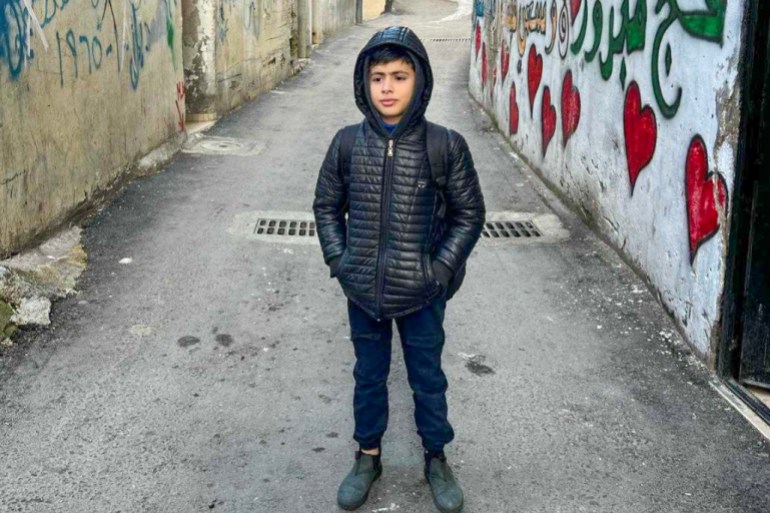
Aida, Bethlehem, occupied West Bank – Among the children playing on the street in the Aida refugee camp near Bethlehem in the occupied West Bank is 10-year-old Ahmad Damaseh who dreams of becoming a doctor when he grows up. He belongs to the fourth generation of the Damaseh family to live in this refugee camp since his ancestors fled the Nakba from the Jerusalem neighbourhood of Deir Aban 75 years ago as some 750,000 Palestinians were driven from their homes to make way for the creation of the state of Israel. Central to Damaseh’s dream is a United Nations agency that has provided for Palestinian refugees in occupied Palestinian territory and neighbouring nations since then. The UN Relief and Works Agency for Palestine Refugees (UNRWA) provided the Damaseh family with their very first tent in Aida. It is responsible for 702 schools providing education to 500,000 children and students, according to Anwar Hammam, deputy head of the PLO’s Refugee Affairs Department. It provides aid to 400,000 people living in the Aida refugee camp. At the heart of UNRWA’s mission is the idea that it would support displaced Palestinians until they could return to their homes, something Israel has denied generations of Palestinians. Israel has also set its sights on UNRWA, which is now on the verge of collapse as funding is withdrawn and more news headlines imply that Israel and the United States want to end its mandate. Ahmad Damaseh, 10, dreams of being a doctor but the loss of UNRWA services like schools may mean an end to those dreams [Monjed Jadou/Al Jazeera] After the Israeli government accused the organisation of having links to those responsible for attacks by the Qassam Brigades and other armed Palestinian fighters on southern Israel on October 7, many large donors and donor nations – who together provide more than 80 percent of UNRWA’s funding – have withdrawn their financial support. Only a handful of countries, including Belgium, Norway, Ireland and Saudi Arabia, have pledged to continue funding. The largest donors, including the US, United Kingdom, Germany and Spain, have suspended funding altogether. For now, residents of Aida say, their dreams are on hold and possibly gone forever. ‘No one else can manage the camps’ Aida refugee camp, located between Bethlehem, Beit Jala and Jerusalem, is home to more than 8,000 Palestinian refugees, two schools for boys and girls and a clinic serving refugees from all the camps near Bethlehem. For seven-and-a-half decades, four generations of the Damaseh family have held onto the hope of returning to their original village. Children in the Aida refugee camp return home from the UNRWA school they attend [Monjed Jadou/Al Jazeera] The Damasehs have relied on UNRWA for food, healthcare and education through the years since the Nakba. Now, they are terrified of what will become of them if the agency is forced to cease all operations in the near future, as it has warned might happen. “There is no Palestinian or international entity capable of assuming the responsibility for the camps, neither in education nor in health,” said Ahmad’s father, Muhammad. Like others in the community, he strongly believed the cessation of funding to UNRWA is part of a larger plot against Palestinians. “As refugees, we know there is a major political plan to end UNRWA’s existence, preventing the right of return. This is something we will not allow. My son, Ahmed, will study in Aida camp school until he returns to our original village,” he added defiantly. If UNRWA disappears, they said, so does the dream of ever returning home. Instead, it is likely that these camps will be absorbed as towns under the wider Palestinian Authority. The entrance to the UNRWA-run Aida camp school. UNRWA operates 702 schools for 500,000 children and students across the occupied Palestinian territory [Monjed Jadou/Al Jazeera] While Ahmad’s father is particularly concerned about the future of his son’s education – and what that means for his dreams to study medicine – his grandmother, 70-year-old Haleema Damaseh worries about healthcare services. Even before the war in Gaza began last October, services offered by UNRWA clinics had been shrinking, with only medical treatment and prescriptions for chronic conditions available, said Muhammad. Even that will stop if UNRWA can no longer operate. His mother, Haleema, told Al Jazeera, “The UNRWA clinic has stopped providing diabetes medication, among others, which I need. So, my son buys it for nearly $100 a month.” She feared this would not be sustainable for the longer term, especially with the severe economic crisis in the occupied West Bank which has taken hold due to the crackdown on the occupied Palestinian territories since the war began. This crackdown has taken the form of multiple roadblocks throughout the occupied West Bank, raids on camps and towns and a strict curfew on residents. Employment has plummeted and prices have soared, while the Palestinian Authority is struggling to pay salaries to public employees. ‘Palestinians will fight against losing UNRWA.’ Saeed Al-Azaha works for the PLO’s Refugee Affairs Department and warns of rising tensions if UNRWA services are halted [Monjed Jadou/Al Jazeera] ‘Palestinians will take a stand’ Saeed al-Azha, the head of the Popular Committee for Services in Aida, part of the Refugee Affairs Department of the PLO, explained that the camps have been raided often, with incursions and arrests increasing recently, exacerbating conditions for Palestinian refugees. He warned that conditions would only deteriorate further if funding to UNRWA operations were suspended. “Palestinian refugees will fight against losing UNRWA,” he said. “They will take a stand in all five regions where the agency works – Gaza, Jordan, Lebanon, and Syria, in addition to the occupied West Bank. “UNRWA holds political significance as a witness to the Nakba and as an UN-mandated agency that no Palestinian wants to lose before refugees get their right of return to their homes from which they were displaced in 1948.” UNRWA Operations Director in the West Bank Region Adam Pollock told Al Jazeera that the removal of
Haiti police unions plead for help as armed gangs storm main prison
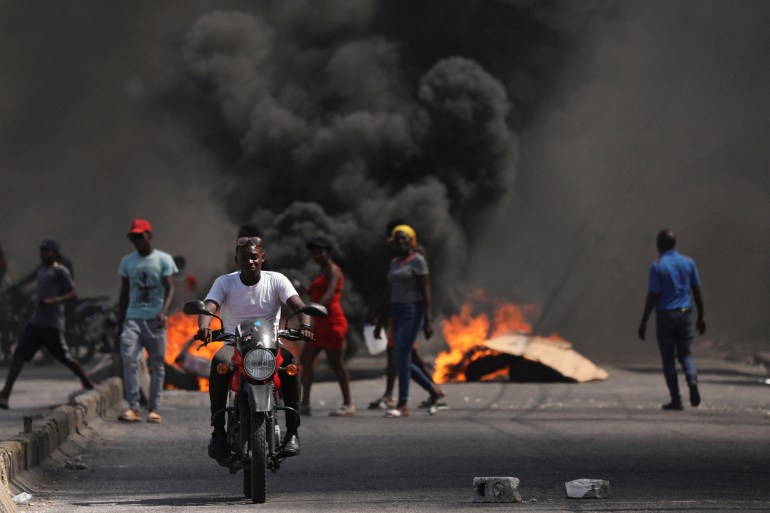
Police issue urgent appeal for help as they struggle to hold back gangs trying to storm the prison in a major escalation of violence. Armed groups have stormed Haiti’s largest prison, defying police forces who have called for help after days of gunfire in parts of the capital as a major gang leader seeks to topple Prime Minister Ariel Henry. Two of the Caribbean country’s main police unions called for assistance on Saturday to stop inmates, many considered to be high-profile criminals, from fleeing the National Penitentiary in Port-Au-Prince. “They need help,” one of the unions said in a message on social media, bearing an “SOS” emoji repeated eight times. “Let’s mobilise the army and the police to prevent the bandits from breaking into the prison.” It was unclear how many had fled the prison, a number that the newspaper Gazette Haiti said was “significant”. Some detainees were reluctant to leave en masse for fear of being killed in crossfire, sources told Reuters news agency. Police officers assigned to the prison had vacated the premises on Saturday, according to reports by local media AyiboPost. A man drives past a burning barricade during a protest in Port-au-Prince [File: Ralph Tedy Erol/Reuters] The government of Haiti, the poorest country in the Americas, did not comment on the situation on Saturday. Prime Minister Henry is in Kenya to salvage a proposed security mission in Haiti to be led by that East African country and backed by the United Nations. Heavy gunfire has caused panic in recent days after calls by gang leader Jimmy Cherizier, a former police officer, for criminal groups to unite and overthrow Henry. Cherizier, also known as Barbecue, heads an alliance of gangs and faces sanctions from the UN and the United States. The penitentiary, built to hold 700 prisoners, held 3,687 inmates as of February last year, according to the rights group RNDDH. A 2017 report by the group warned of serious overcrowding at the prison, which is said to suffer from poor police staffing. The prison attack follows reports on Friday that armed men had attempted to take control of the capital’s main container port, causing traffic disruptions, and gangs threatened to attack more of the city’s police stations. Cherizier this week warned locals to keep children from going to school to “avoid collateral damages” as violence surged. Henry, who came to power after the assassination of the country’s last president, Jovenel Moise, in 2021, had previously pledged to step down by early February. He later said security must first be re-established to ensure free and fair parliamentary and presidential elections, which have not taken place for almost a decade. Adblock test (Why?)
David Miliband on global crises: Gaza, DRC, Sudan, Ukraine

The International Rescue Committee president discusses the urgent international responses required for ongoing emergencies. In this episode, we explore the essential role of non-governmental organisations in confronting global emergencies. The International Rescue Committee, initiated by Albert Einstein, is known for its impactful work. The organisation delivers aid and hope to at-risk populations in conflict zones, notably Gaza, marked as the most hazardous area for civilians and aid workers. Amid turmoil in Sudan, the Democratic Republic of the Congo and Ukraine, David Miliband, president of the International Rescue Committee, talks to Al Jazeera. Adblock test (Why?)
Israeli air raid on Rafah kills 14 Palestinians, many of them children

At least six children killed in latest Israeli attack on Rafah, with many more trapped under rubble, witness and media reports say. Israeli forces have bombed a residential building in the city of Rafah in southern Gaza, according to a witness and media reports, killing at least 14 Palestinians and burying many others under the rubble. The attack on Saturday evening came hours after an Israeli drone attack on tents housing displaced Palestinians in Rafah left at least 11 people dead. The latest attack in Rafah reduced a four-storey building in the Al Salam neighbourhood to rubble, according to witnesses. At least six children were killed and dozens more were wounded, the Wafa news agency reported. Ahmed Radwan, a rescue worker, said the building struck was housing civilians and included people displaced by Israel’s ongoing assault on Gaza. “We managed to remove several bodies and rescue several wounded people but many more civilians – women and children are still under the rubble,” he told Al Jazeera. “We have limited and scant resources. As this war enters its sixth month, there is no fuel to operate search and rescue equipment. We need heavy equipment to help rescue women and children from under the rubble but unfortunately, we do not have the ability to do so,” he said. “We have to use our hands and some light old equipment to rescue victims from under the rubble.” Wafa also reported air attacks on the southern city of Khan Younis as well as attacks on the Jabalia and Nuseirat refugee camps in the north and central parts of the Gaza Strip. It said several people were killed and wounded in Jabalia and Nuseirat, but did not provide an exact toll. The relentless attacks on Gaza came as Israeli forces also launched raids in the occupied West Bank, including in the city of Tulkarem, the towns of Azzun and Jayyous near the city of Qalqilya, and the Al-Arroub refugee camp north of the city of Hebron. Two men were interrogated and one of them was briefly detained, Wafa reported. Overall, at least 30,320 Palestinians have been killed and 71,533 wounded since Israel launched its war on Gaza on October 7. Israel’s devastating offensive and blockade of Gaza has laid much of the coastal enclave to waste and left some 2.3 million people on the brink of famine. Israeli forces on Thursday opened fire on hungry Palestinians trying to reach an aid convoy, killing at least 118 people. The attack spurred global outrage and led to the United States carrying out airdrops of food aid into Gaza. Jordanian forces also took part in the operation. Global efforts to end the conflict were continuing, meanwhile, with a senior US official saying a framework for a six-week pause in fighting was in place. The official told reporters that “the Israelis have more or less accepted it” and that “the onus right now is on Hamas”, the armed group that governs Gaza. The Reuters news agency, citing two Egyptian security sources, said delegations from Israel and Hamas were expected to arrive in Cairo on Sunday for talks. Adblock test (Why?)
Saving Baboo the baby tiger: Inside Pakistan’s zoo-turned-rescue centre

Islamabad, Pakistan – From the outside, one might assume that the former premises of Marghazar Zoo are now deserted. A dilapidated ticket office and overgrown foliage suggest an absence of visitors. But listen closely, and you might hear the chatter of monkeys, the growl of bears, and even the roar of a tiger. The Islamabad High Court ordered Marghazar Zoo to be closed in 2020, following local and global protest against its treatment of animals. After relocating the animals, the High Court in Islamabad ordered the zoo’s premises to be entrusted to the Islamabad Wildlife Management Board (IWMB), a government body in charge of preserving the wildlife of Islamabad and the neighbouring Margalla Hills National Park. Pakistan is a richly biodiverse country, home to several endangered species threatened by illegal hunting, poaching and habitat loss. Facing daily reports of injured and trafficked wildlife, the IWMB gradually began to use the old zoo’s premises as a rehabilitation centre for rescued animals, in collaboration with local animal rights activists and the conservation non-profit, Second Chance Wildlife. Since 2020, the Margalla Wildlife Rescue Centre has rescued more than 380 animals, including rhesus monkeys, Asian black bears, Indian pangolins, several bird species and a three-month-old Bengal tiger. As well as receiving reports about injured animals, the centre leads raids to rescue animals when they hear of criminal activity. Some of these animals were rescued from poachers. Others, like the bears, had been used for entertainment, forced to “dance” or fight for entertainment. Baboo, the young tiger, was in critical condition when he was rescued. “When we found him, he was so weak he couldn’t walk,” says IWMB ranger Anees Hussain. Early separation from his mother had led to malnutrition and he had multiple bone fractures. Over the 14 months following his rescue, a small team of staff and volunteers at the centre nursed Baboo back to health. “Initially, we were not sure he would make it,” said Dr Usman Khan, one of the veterinary consultants handling the young tiger’s care. “It is thanks to the daily care and treatment that he received [at the centre] that he made a full recovery.” Yet as Baboo grew, it became increasingly clear that he needed more space and the company of other tigers – something the centre could not provide. On February 14, after a lengthy administrative and fundraising process, Baboo was successfully relocated to Isindile Big Cat and Predator Sanctuary in South Africa. The IWMB is planning to establish a sanctuary that can permanently house animals that cannot be released into their natural habitat. However, the centre’s survival is not without obstacles. Fundraising is a constant challenge as the centre relies heavily on civil society donations to meet the growing cost of maintaining the facilities and caring for the animals. “We are currently operating on a subsistence budget from one week to the next,” said Leah Boyer, co-founder of Second Chance Wildlife. Not everyone supports the centre’s mission. The Capital Development Authority, a civic authority responsible for providing municipal services and which previously managed the zoo, has repeatedly attempted to reclaim the premises and parts of the Margalla Hills National Park to reopen the old zoo. However, it did not challenge the High Court’s ruling and is unlikely to succeed, according to the IWMB. “We just don’t understand why we should go backwards and again open up another zoo in Islamabad,” says Rina Saeed Khan, chair of the IWMB. “[We] emphasise care over cruelty and our goal is to try and save as many of Pakistan’s threatened and vulnerable wildlife species”. The team hopes to continue developing the capacity of the centre to rehabilitate wildlife, including big cats. Leopards, for example, are indigenous to the area and incidents of human-leopard conflict are not uncommon. Just days after Baboo’s relocation, staff are preparing his old enclosure for two new arrivals. Two leopard cubs, Sultan and Neelu, look up wide-eyed as Hussain gently lifts them out of the carrier they were brought in. “Their mother just died,” he says while stroking the thick fur on Neelu’s neck. “I think they will stay with us for some time.” Adblock test (Why?)
LeBron James becomes first NBA player to reach 40,000 points

The LA Lakers forward reached the milestone in his 21st season in the NBA, but termed it ‘bittersweet’ as it came in a loss against Denver Nuggets. LeBron James has become the first NBA player to reach 40,000 career points, scoring on a driving layup in LA Lakers’ home game against the Denver Nuggets. James became the NBA’s all-time scoring leader more than a year ago when he passed former Lakers star Kareem Abdul-Jabbar in a home game against the Oklahoma City Thunder on February 7, 2022. Abdul-Jabbar had 38,387 points over 20 seasons. James entered Saturday’s game with a career average of 27.1 points per game over 1,474 contests in 21 NBA seasons. Needing nine points to reach his latest milestone, the Akron, Ohio, native had five points on 2-of-3 shooting in the first quarter. James cut to the basket for a layup to open the second quarter then reached the 40,000 mark when he drove past the Nuggets’ Michael Porter Jr with a spin then made a left-handed layup with 10:39 remaining in the second quarter. He called the historic effort “bittersweet” as it came in a losing cause. James finished with 26 points, but the Lakers lost to the Nuggets 124-114. “Being the first player to do something, it’s pretty cool in this league ‘cause you just know the history, you know the grace that has come through the league,” James said after the game. “But the main thing is always the main thing and that’s the win. And I hated that had to happen in a defeat, especially versus a team that plays extremely well. “We played some good basketball but wasn’t able to close it out, so bittersweet, but I enjoyed every moment though, while on the floor.” Congrats to @KingJames of the @Lakers for becoming the first player ever to score 40,000 career points! pic.twitter.com/gShSHPICS8 — NBA (@NBA) March 3, 2024 James is a four-time NBA champion and four-time NBA Most Valuable Player as well as the league’s oldest active player, now in his 21st campaign. The 39-year-old has been on a scoring surge of late, with an average of 30.8 points over his previous four games. James entered the game averaging 25.3 points per game this season with 7.1 rebounds and 7.9 assists. He scored the first points of his career as a member of the Cleveland Cavaliers on October 29, 2003, against the Sacramento Kings. He reached 10,000 points in February 2008 and hit 20,000 points in January 2013. James made his 30,000th point in January 2018. “Just happy for him. It was a hell of an accomplishment,” Lakers coach Darvin Ham said. “Wish we could have got the win to cap it off. But my hat’s off to him. Amazing, amazing run that continues to this day.” The crowd gave James a standing ovation during a timeout and the ball James used for the milestone hoop was removed from the game. Adblock test (Why?)
US says Israel ‘more or less’ accepts framework deal for Gaza ceasefire
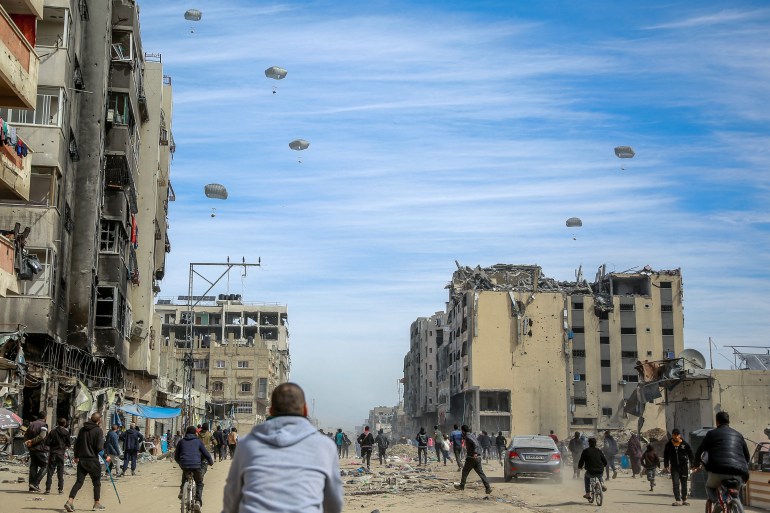
There is an agreement in place for a potential six-week truce in Gaza, a US official says, and Hamas must now decide. The United States says Israel has essentially endorsed a framework for a proposed Gaza ceasefire and captive release deal, and it is now up to the Palestinian group Hamas to agree to it. “There’s a framework deal. The Israelis have more or less accepted it,” a senior US official in the Biden administration told reporters on a conference call on Saturday. “Right now, the ball is in the camp of Hamas,” the official said, speaking on condition of anonymity. The announcement comes a day before talks to reach a truce agreement are expected to resume in Egypt. International mediators have been working for weeks to broker a deal to pause the fighting before the Muslim holy month of Ramadan begins around March 10. The framework proposal includes a six-week ceasefire, as well as the release by Hamas of captives considered vulnerable, which includes the sick, the wounded, the elderly and women, the US official said. A deal would also likely allow aid to reach hundreds of thousands of desperate Palestinians in northern Gaza, which humanitarian officials say are under threat of famine. Israel has severely restricted the entry of food, water, medicine and other supplies into the Gaza Strip since its war began on October 7. Palestinians run along a street as humanitarian aid is airdropped in Gaza City [AFP] ‘Impasses’ News of the framework deal “sounds like a significant development from the Americans because they want it to sound like a significant development,” said Al Jazeera’s Bernard Smith, reporting from Ramallah in the occupied West Bank on Saturday. “But it clearly looks like an attempt to pile on the pressure on Hamas before the Muslim fasting month of Ramadan begins in just over a week from now,” he added, saying that the proposal is presenting them with a six-week pause in fighting and the promise of more aid deliveries at a desperate time. Earlier this week, senior Hamas official Basem Naim told Al Jazeera that “the gap is still wide” in reaching an agreement with Israel, as the Palestinian group is calling for a total ceasefire and the withdrawal of Israeli troops from Gaza. Naim’s comments followed remarks from Joe Biden on Monday that a truce was a week away – comments the US president later walked back on. Al Jazeera’s Hamdah Salhut, reporting from Tel Aviv, said there had not been any Israeli response to the Biden administration official’s comments about the ceasefire framework. “Over the last week, the only thing we’ve been hearing about are impasses when it comes to this deal, and conflicting reports about where delegations are or are not being sent,” she said. In recent days, several Israeli media outlets have reported that there will not be an Israeli delegation going to the next round of truce talks. A senior Egyptian official said mediators Egypt and Qatar are expected to receive a response from Hamas during the Cairo talks reportedly scheduled to start on Sunday. The official also spoke on condition of anonymity because he was not publicly authorised to discuss the sensitive talks. Hamas has not backed away from its position that a temporary truce must be the start of a process towards ending the war altogether, Egyptian sources and a Hamas official told the Reuters news agency. However, the Egyptian sources also said assurances had been offered to Hamas that the terms of a permanent ceasefire would be worked out in the second and third phases of the deal. During a Qatari-mediated weeklong truce in November, 105 captives were released in exchange for 150 Palestinian women and children held in Israeli prisons. Adblock test (Why?)