

‘In Gaza, football is the only escape’: Palestine star Mahmoud Wadi on war

On October 7, Palestinian footballer Mahmoud Wadi was recovering from an injury in Egypt when Israel launched its war on Gaza, following the Hamas attacks on southern Israel. The 29-year-old, from Khan Younis in southern Gaza, has spent the past five months desperately seeking news about the safety of his friends and family in the besieged enclave while travelling with the Palestinian national team. He has lived through three Israeli military assaults on Gaza – in 2008, 2012 and 2014 – and says he remembers spending every night wondering if he would make it to dawn. Wadi, who now lives in Cairo and plays for Arab Contractors in the Egyptian Premier League, was part of Palestine’s squad for the AFC Asian Cup 2023 in Qatar, where the team recorded a historic second-round finish. The al-Fidayi (as the Palestinian team is known to its fans) received passionate support from the crowds of people from various countries, religions and age groups, who turned up in their tens of thousands to support the Palestinian team before their round-of-16 elimination by hosts and eventual champions Qatar. In a conversation with Al Jazeera, Wadi opens up about the struggles of putting on his best performance on the field while the war rages at home. Al Jazeera: Growing up in Gaza, what did football mean to you? Wadi: Football is the only escape from war and the Israeli occupation. Young people and children turn to football as it offers distraction from the circumstances. Football makes them feel good. In Gaza, we love football. But the wars waged against us over the years, the harsh economic conditions and the siege that has completely closed Gaza and its people, preventing children from achieving their [footballing] dreams. The Israeli occupation always places barriers and obstacles that prevent us from achieving that and, unfortunately, people leave Palestine. We are forced to look for options elsewhere. Al Jazeera: Why did you leave Gaza and how difficult was that decision? Wadi: To leave your country, your homeland, your family and your friends for a better future is not easy. It brings a constant feeling of alienation and loneliness. But we make sacrifices for our ambitions. We are people who love life, people who want to live like others and follow our dreams. The difficulty lies in the fact that you are leaving behind the people you love. Now, I live abroad and my family is in Gaza exposed to the killing, destruction and displacement. I left Gaza, my family and friends to play football, but I live in fear and anxiety. We do not leave Palestine because it is not a beautiful country. We love our land madly, but we have to search for a better life. Al Jazeera: What are the struggles of being an international footballer for Palestine? Wadi: In light of the Israeli occupation and its obstacles, it is not easy to be a footballer. It has a massive impact because you cannot gather players for football camps in Palestine. Players from Gaza cannot enter the occupied West Bank, and vice versa. There are players outside Palestine who cannot enter, and so on. Despite the difficult circumstances, the Palestine national team gathers abroad from various places. We have players from the occupied West Bank, Gaza Strip, Palestine 48, from various Palestinian refugee camps in the occupied territories, and from the diaspora. No team in the world can go through such conditions and participate in a prestigious regional championship [like we have]. This in itself is considered a great Palestinian achievement and source of pride. We have always harboured dreams and ambitions but the occupation tries to crush our spirit. We rose from under the rubble of three wars in order to reach where we are now, and we hope to carry on this path. We derive our strength from our people’s courage and steadfastness. Mahmoud Wadi, centre, trains with the Palestinian football team during the AFC Asian Cup 2023 in Doha, Qatar [Sorin Furcoi/Al Jazeera] Al Jazeera: How difficult is it for you to communicate with friends and family back home? Wadi: It is very difficult, especially when communication is cut off in Gaza. I have never left my phone since the start of the war. Be it in Egypt, while travelling with the team, or during our training sessions. One morning, my brother disappeared. No one in my family knew anything due to a communication blackout. I felt very anxious during those 10 hours until I heard from him. This is our situation: A constant feeling of anxiety and unimaginable conditions. It’s indescribable not knowing where your loved ones are, feeling helpless and unable to do anything. All you can do is pray. Every second of our lives is a test. Al Jazeera: How do you feel after speaking to your family and friends in Gaza? Wadi: They try to describe a small part of the reality they live through every day but it’s very difficult for them to convey their feelings. Words cannot describe the reality of the war. Our conversations are focused on the harsh and bitter conditions they face. But just like everyone else in Gaza, they remain brave. Al Jazeera: What was it like to meet your family after two months? Wadi: I met my mother, brothers, and their families in Egypt after more than 80 days of war. I had an image in my mind about the ugliness of the war, but when I looked at their weak faces, eyes, frail bodies, and white hair, it was far worse than anything I could imagine. I have lived through three wars. It was scary spending nights waiting for bombs to drop and for the roof to crush me – but this war is not the same. Al Jazeera: What is the last memory of Gaza in your mind? Wadi: I remember the people, their affection, and their bonds of love. It feels great. My last memory of Gaza was its sea, streets, buildings, and the electricity schedule – on for
Israel’s war on Gaza: List of key events, day 148

At least 17 people are killed in Israeli attacks on Deir el-Balah and the Jabalia refugee camp as the humanitarian crisis worsens. Here’s how things stand on Saturday, March 2, 2024: At least 17 people were killed on Friday night after Israeli fighter jets attacked three residential buildings in the Gaza Strip’s Deir el-Balah area and the Jabalia refugee camp. The United Nations humanitarian agency confirmed that 193 Palestinians were killed and 920 injured between Thursday afternoon and midday on Friday. The death toll of Palestinians killed after Israeli forces opened fire on a crowd waiting to receive food aid on Thursday morning has risen to 115. Some 760 people were wounded in the Israeli attack that has triggered global condemnation. A UN team found that most of those injured in Thursday’s killings – some as young as 12 – have gunshot wounds. That has been corroborated by the acting director of al-Awda Hospital who said 80 percent of the wounded brought to the hospital had been shot. Hamas’s military wing said seven more Israeli captives held in Gaza have been killed due to bombardments by the Israeli military. At least 10 children have died from malnutrition and dehydration, Gaza’s health ministry announced on Friday, amid warnings by the UN of “famine” in the Strip because of inadequate aid. Gaza’s southern Zeitoun neighbourhood, once densely populated, has been levelled by Israeli bombings, an Al Jazeera correspondent said on Friday, adding that dozens of bodies remain trapped beneath the rubble. The US has announced plans to drop airdrop aid into Gaza at an unspecified date. President Joe Biden said on Friday that Washington would work with Jordan to ramp up aid to Gazans, possibly through sea borders. Regional tensions and diplomacy More countries are calling for an independent probe of the deadly aid delivery incident in Gaza on Thursday. France, Germany and the European Union all said on Friday that Israel must “explain” why its troops opened fire on aid seekers. The UN Human Rights office revealed that “at least 14” attacks similar to the aid killings have occurred since mid-January, and has also called for an investigation. Meanwhile, the US military said it destroyed a surface-to-air missile that Yemen’s Houthi rebel group was preparing to launch. US President Joe Biden and Italian Prime Minister Giorgia Meloni emphasised their support for Israel’s right to “self-defence” in a meeting at the White House on Friday, and also discussed the urgent need for more aid in Gaza. Separately, Biden told reporters on Friday he hoped for a ceasefire in Gaza by the Muslim holy month of Ramadan, although, he added, “We may not get there”. Also in the US, Abdullah Hammoud the mayor of Dearborn, an Arab-majority city in the state of Michigan, has criticised Biden’s plan to airdrop aid in Gaza. Hammoud said the White House was refusing to hold Israeli Prime Minister Benjamin Netanyahu accountable. Violence in the occupied West Bank Israeli soldiers killed 16-year-old Muhammad Murad al-Deek, after a raid on the Kafr Nima village in Ramallah early on Saturday morning. Elsewhere, Israeli soldiers arrested a young man during raids on Qalqilya city and the eastern Azzun town on Friday night – the sixth consecutive night of raids in that location. Israeli forces used live bullets and sound bombs as they were confronted by Palestinian youths resisting a raid on the town of Jaba, south of Jenin. Adblock test (Why?)
Iranian singer ‘sentenced to jail’ over Mahsa Amini protest anthem

Shervin Hajipour says he was sentenced to more than three years in prison for ‘inciting people to riot’. An Iranian singer whose song became an anthem during the 2022 mass protests has been sentenced to more than three years in prison for “inciting and provoking people to riot to disturb national security”, the 26-year-old artist posted on his Instagram account on Friday. Shervin Hajipour won Grammys for the song Baraye (“For”) which supported the protests triggered by the death of 22-year-old Mahsa Amini in police custody. Amini was detained for allegedly not wearing an appropriate hijab (headscarf), which is mandatory in the country. It was not immediately clear when the verdict was issued, and it was not reported elsewhere. Iranian state-run media also did not report the sentencing. But Hajipour posted it on the same day that Iran held its parliamentary elections. Voting counting is under way in the first elections since the nationwide protests. Hajipour thanked his lawyers and his agent for their support. “I will not mention the name of the judge and the prosecutor so that they don’t get insulted and threatened, because insults and threats are not in the religion of humanity,” he wrote. “Finally, one day we will understand each other. Until then.” The singer already had served some prison time, but was out on bail pending the court’s decision. It was unclear if he had already reported to serve his sentence. Under Iranian law, jail sentences run concurrently, meaning Hajipour would serve three years behind bars. Iran’s mission to the United Nations in New York did not respond to a request for comment. “Baraye” was played at a White House celebration in March 2023 marking Nowruz, the Persian New Year. A month earlier, US First Lady Jill Biden awarded Hajipour a special Grammy for best song for social change, calling the tune a “powerful and poetic call for freedom and women’s rights”. Amini’s death sparked months-long protests which saw hundreds of people, including dozens of security forces, killed, and thousands of others arrested. Hajipour’s sentencing comes as other activists, journalists and artists have faced arrest, imprisonment and harassment since the demonstrations. Among those imprisoned is Nobel Peace Prize laureate Narges Mohammadi. Adblock test (Why?)
‘Reminds us of home’: An Indian kitchen serves love against bias, violence
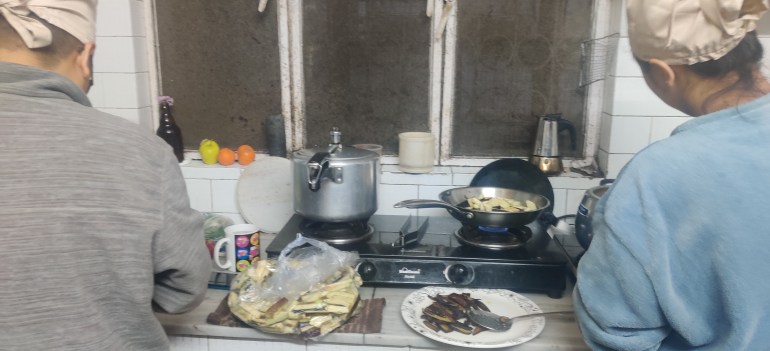
New Delhi, India – Bidotama, 26, is in the kitchen stirring peanuts in a pan. Every few minutes, she turns to her best friend, Mardza, 25, who is busy chopping tomatoes and slicing U-morok, a hot chilli variety, that will go into the special chicken curry bubbling on a two-burner gas stove. They speak in their native Meitei language and chuckle as they continue cooking. In the living room, Akoijam Sunita, 45, is moving a mixture of black perilla seeds, ginger and salt between a heavy pestle mortar and an electric grinder, hoping to get a grainy texture and not a paste. The graininess is key to getting thoiding asuba, a Manipuri side-dish, right. Bidotama, or Bido as she likes to be called, and Mardza dressed in those comfy, furry pants the young like to live in these days, have been up since 4:30am cooking for a Sunday lunch service that they run out of Akoijam’s three-bedroom apartment in New Delhi. Until May last year, both Bido and Mardza worked as digital marketing managers in Imphal, the capital of Manipur in India’s northeast. Akoijam, or Akoi as she is referred to, was their Delhi-based team leader. Mardza and Bido cooking food for Lombard Kitchen at the New Delhi apartment of their friend, Akoi [Suparna Sharma/Al Jazeera] Now Bido and Mardza are Akoi’s house guests and she is their business partner in the lunch service they have started in an attempt to rebuild their lives after they were wrenched from their homes in Manipur in the wake of ethnic violence that broke out in May. It has left over 200 people dead and thousands injured, and turned the beautiful, scenic state with the world’s only floating national park, into a ravaged war zone. A day after violence erupted, Manipur was placed under curfew and an internet ban was imposed that lasted till December. In those seven months, many businesses shut down, including Bido and Mardza’s. In the clashes between the dominant, largely Hindu Meitei community and the minority Christian Kuki-Zo community, many have lost their homes and continue to live in relief camps in Manipur or, like Bido and Mardza, fled the state fearing for their lives and in search of a livelihood. [Clockwise from top right] A pressure cooker with dal, chayote squash, lightly boiled Manipuri chicken curry with king chillies and kambong kanghou, a stir-fry dish made with brinjal, crispy peanuts and water bamboo [Suparna Sharma/ Al Jazeera] In the New Delhi apartment, all three women find solace in cooking, eating, talking about their food and running the Lomba Kitchen. “This meal from Lomba Kitchen is Yum Gi mathel,” types Akoi on her phone as she composes a brief note about the Manipuri dishes. She will WhatsApp it to customers as the food parcels are sent out for delivery later in the day. Their enterprise is named after a purple-coloured herb that looks like lavender and has a citrusy aroma and a peppery taste – the Lomba. It flowers around October-November and is used as a garnish in several Manipuri dishes. “The name Lomba has meaning … When we think of winter, we think of Lomba. It reminds us of home,” says Bido. Akoi crushes some Lomba flowers and sprinkles them on eromba, a mash made with yendem (colocasia) stalks, beans, sponge gourd, potatoes and fermented grilled fish. In the text she is sending to customers, she calls it “an object of our unconditional love”. It’s 7am, and New Delhi’s temperature has dropped to a freezing single digit. But Akoi’s apartment, where the Sunday lunch menu is slowly coming together, is warm with the aroma of Manipur. Akoijam Sunita, 45, at a pop-up dinner she hosted in Bengaluru, India, recently [Photo courtesy Lomba Kitchen] ‘Dirty food’ Roughly 1,500 miles from New Delhi, Manipur is one of the seven ‘sister states’ in the northeast that is geographically connected by a narrow 200km (120-mile) strip of land called the Chicken’s Neck to India’s mainland. Most people from the northeast have distinct physical features and culinary traditions that add to India’s much-vaunted diversity. But incidents of racial discrimination, even verbal and physical abuse for their food choices, are routine in cities they migrate to, like New Delhi and Mumbai. Staples like fermented bamboo shoots, soya bean paste and dried fish are added to northeastern dishes for their meaty, savoury aroma and umami flavour – one of the five core tastes that include sweet, sour, bitter and salty. In her 2022 paper on “Dirty Food, racism and casteism in India”, anthropologist Dolly Kikon gives the instance of landlords and neighbours finding the food cooked by people from the northeast “stinky and revolting”, a reaction that, she says, stems from “ignorance of the eclectic food cultures in northeast India”. The 2019 Bollywood film Axone, about a group of friends cooking the northeastern delicacy akhuni (or axone) with pork and strong-smelling, fermented soya beans, captures the hate that northeastern food often faces in the rest of India. “My food has been so racially attacked that I always wanted to do something around food … When they [Bido and Mardza] came to stay here, we started talking about cooking … Maybe invite people over for a Manipuri meal,” Akoi says and then laughs as she adds, “But we didn’t have a dining table.” Cooking chicken with king chilli [Suparna Sharma/Al Jazeera] ‘The drums fell quiet’ ”I’m here and she’s over there. We have a river in the middle,” says Bido, gesturing to explain where she and Mardza live – across the Nambul river that runs through Imphal, a city where the sun comes up early and the streets get crowded by 6am. On alternate days, Bido and Mardza would set off around 4am to buy vegetables from the Ima Keithel or Mothers’ Market, the largest all-women market in the world. And then they would cook for both their families before heading to work. May 3, 2023, was no different. After finishing work, Mardza filled petrol
Argentina’s Milei vows to push economic reforms with or without parliament

Argentina’s libertarian leader says he will ‘keep pushing forward’ with radical economic agenda. Argentina’s libertarian President Javier Milei has promised to keep pushing his agenda of radical economic liberalisation with or without the support of parliament. In a state-of-the-union-style address to lawmakers on Friday, Milei said he would “keep pushing forward” with a package of sweeping economic reforms aimed at jolting the country out of decades of dysfunction and decline. “We are going to change the country for good … with or without the support of political leaders, with all the legal resources of the executive,” Milei said. “If you look for conflict, you will have conflict.” Milei laid down the gauntlet to parliament after lawmakers last month rejected his omnibus reform bill despite tough negotiations with the opposition that reduced the number of proposed changes by nearly half. In more conciliatory remarks to local governors, Milei called for a 10-point “social pact” that would overhaul the framework for distributing tax funds between the federal government and provinces. Milei, who was elected resoundingly in a run-off election in November, began his term by devaluing the peso by more than 50 percent, slashing state subsidies for fuel and transport, cutting the number of ministries by half, and scrapping hundreds of regulations. His government has claimed credit for tentative signs of economic revival, including the country’s first monthly budget surplus in 12 years and growing foreign currency reserves. But sky-high inflation and Milei’s austerity measures have weighed heavily on Argentinians, prompting strikes and protests. Milei, a self-proclaimed anarcho-capitalist who has pledged to restore the dynamism of Argentina’s “golden age” during the early 20th century, took office warning Argentinians to prepare for a “shock adjustment” to fix the economy. “I ask for patience and trust. It will be some time before we can perceive the fruit of the economic reorganisation and the reforms we are implementing,” Milei said in his address on Friday. Argentina, Latin America’s third-largest economy, has stumbled between economic crises for decades, beset by enormous debt, widespread poverty and triple-digit inflation. Adblock test (Why?)
Are snakebites rising in South Asia — and what’s responsible?
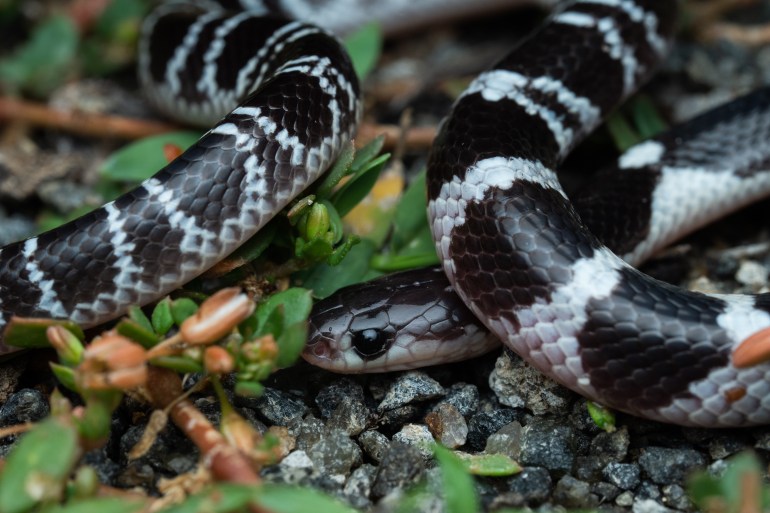
In 1950, Roald Dahl wrote a short story titled Poison. The tale, set in colonial India and often found in deckle-edged children’s anthologies, tells a riveting story about racism. In the story, a striped snake called a common krait slithers on the stomach of one of the main characters. The journey to save the character from the krait’s bite brings the plot to a panicky crescendo, to reveal that the poison was racism all along. The krait possibly worked as an excellent metaphor because the fear of poisonous snakes is very real and pervasive in India, among other South Asian countries including Pakistan, Nepal and Sri Lanka. Hence, snakes have slithered their way into folklore, pop culture and media, but incidents of venomous bites may also be rising. The World Health Organization estimates that 5.4 million people worldwide are bitten by snakes each year – half of those by venomous snakes, causing 100,000 deaths. Snakebites in South Asia contribute to almost 70 percent of these deaths. Research from India alone indicates that 58,000 deaths result from about one million cases of snakebite envenoming there each year, the WHO said. Worryingly, this is likely to rise. A 2018 study from the University of Kelaniya in Sri Lanka also concluded that climate change is likely to increase the number of snakebites. The WHO announced last year that it is stepping up its work to prevent snakebites in South Asia, which it describes as a “biodiversity hotspot for venomous snakes, and is also home to some of the world’s most densely packed agrarian communities”. Where do snakebites occur most frequently in South Asia? Data about snakebites in South Asia is patchy, a fact which prompted the WHO to add snakebite poisoning to its list of neglected tropical diseases in June 2017. No official data has been available from Pakistan since 2007, when 40,000 snakebites occurred, killing 8,200 people, according to the WHO. Nepal’s official Ministry of Health and Population does not have official data for snakebite deaths, either. However, a study carried out by doctors in Nepal showed that 40,000 people are bitten by snakes every year there, too, of whom about 3,000 die. The WHO estimated that 33,000 snakebites in Sri Lanka between 2012 and 2013 had resulted in 400 deaths. It is thought that these numbers are severely underreported, however, due to the lack of research into snakebites in South Asia. “Because they’re underreported, it’s thought to be maybe not as large of an issue,” said Rmaah Memon, a resident physician at Harvard Affiliated Emergency Medicine Residency at Massachusetts General Hospital and Brigham and Women’s Hospital. Furthermore, as the study from the University of Kelaniya suggests, snakebites in Sri Lanka may already be increasing. That study carried out climate change projections and estimated that the annual snakebite burden could increase by 31.3 percent over the next 25 to 50 years. The common krait, one of the ‘big four’ snakes in India [Shutterstock] Which snakes are the most common? Common species of snakes found in Pakistan and India include the big four: the common krait, Russell’s viper, saw-scaled viper and the Indian viper (naja naja). Other species include the king cobra, which averages 3-3.6 metres in length but can grow as large as 5.4 metres. It is found in northern India and also in Nepal alongside the banded and common kraits, green pit vipers, checkered keelbacks and the Nepal kukri snake. In Sri Lanka, species of Russell’s viper and the common krait are found, as well as the Indian python. The king cobra can be found in northern India and Nepal [Shutterstock] How dangerous are snakebites? Of the 5.4 million snakebites which occur each year, 1.8 to 2.7 million result in “envenoming”. Envenoming is when the poison from a snakebite results in a possibly life-threatening disease. “Snake venom can kill the victim from a few minutes up to two to three hours if not treated in time,” said Sadanand Raut, a doctor who, along with his wife Pallavi Raut, has made it his mission to prevent snakebite deaths entirely in the Narayangaon region of India’s Maharashtra state. Raut is also a member of the WHO roster of experts for snakebite envenoming. Raut explained that the type of snake venom depends on the species of snake. He said that Indian cobras have very quick-acting neurotoxic venom, which means it has a paralysing effect that can cause symptoms minutes after the bite. While krait bites inject the same type of venom, it may take longer – four to six hours after the bite – for symptoms to show. Krait bites might not hurt initially, but cause issues such as an inability to open the eyes, difficulty in breathing and cardiac problems when left untreated, Raut added. Other snakes such as Russell’s vipers and saw-scaled vipers release vasculotoxic venom. These snakebites are very painful and result in necrosis, which means death of the body tissue. Raut explained that vasculotoxic venom can result in the thinning of the blood and can even lead to kidney failure. The symptoms can begin to show within minutes of the bite. The Russell’s viper releases a vasculotoxic venom which can result in necrosis – the death of body tissue [Shutterstock] What happens when a snake bites you? The effects of a poisonous snakebite can be terrifying, according to those who have survived. Kabiraj Kharel was about 18 years old when a krait bit his right hand. Kharel, now 50, whose family are farmers, had been removing ears from a batch of corn at his home in Sagarnath, Nepal, close to the Indian border, when he noticed the bite. Kharel recalled feeling terrified. “I thought I was going to die,” he told Al Jazeera. He rushed to get medical help. The nearest hospital was 25km (15.5 miles) from his house. Kharel said that he was aware of his surroundings for the first 20km, then his eyes and tongue began to tingle and go numb. After that, he lost consciousness. Venomous snakebites
Manchester City ready for United to try to ‘close gap’ in Premier League

Who: Manchester City vs Manchester UnitedWhat: Premier League footballWhen: Sunday, March 3, 2024, 15:30 GMTWhere: Etihad Stadium, Manchester, England Manchester City manager Pep Guardiola says the Premier League champions are ready for rivals Manchester United to try to “close the gap” ahead of Sunday’s derby match at the Etihad Stadium. City are just one point behind league leaders Liverpool, who travel to Nottingham Forest on Saturday. United are eight points off Aston Villa in fourth spot, the fourth Champions League qualification spot. New minority owner at Old Trafford, Sir Jim Ratcliffe, laid out his plans to return the 20-time English champions to the summit when he completed his acquisition of 27 percent of the club’s shares this month, including re-establishing the pecking order in the city. Ahead of Sunday’s match, Guardiola admits the recent change at United is likely to change matters. “Sir Jim and others know the diagnosis of the club. If Sir Jim said they need two or three years to be there, who am I to say the opposite?” the manager said. “I’m sure they will work to close the gap.” 🔴👔 Mikel Arteta🔵👔 Pep Guardiola👹👔 Erik ten Hag Only one can win February’s @BarclaysFooty Manager of the Month award! #PLAwards | Vote 👉 https://t.co/ynFTphsa0X pic.twitter.com/W3cnwW7Jzx — Premier League (@premierleague) February 29, 2024 Last season’s treble winners, City also added the European Super Cup and Club World Cup to their haul by the end of 2023. Guardiola says he knows this era of dominance on the blue side of Manchester will end eventually, but he’s determined it won’t be anytime soon. “In the ’80s it was Liverpool, the ’90s, it was United – now we are this many years, winning seven Premier League titles in the last 11, 12 years,” he said. “It has happened, but in 50 or 60 years, there has never in one country been a club that dominates and controls everything, so we can try to extend for as many years as possible what we are trying to do.” United’s Premier battle for a Champions League spot Although not feasting at the top table, United have their own battles to fight and Champions League qualification is top of their agenda. A home defeat by Fulham last weekend ended a seven-game unbeaten run, but United manager Erik ten Hag remains in defiant mood. “We are also on a good run. The spirit is very good,” he said. “We have done it before against City, also against Liverpool. We will prepare well. The players are looking forward to it. I can smell it. I’m excited.” City defeated United in the FA Cup final last season on the way to emulating the domestic treble only their rivals, in 1999, had previously achieved. This fixture last season resulted in a humiliating 6-3 defeat, although United did win at Old Trafford. That was not the case this season though, with City claiming a 3-0 win in the reverse fixture in October. “We need a great day,” ten Hag admitted. “We like the challenge and we are looking forward to the challenge with them. We know we have to give everything and show a team performance if we want to get the result. But if you do it, it is possible.” 🗓️ 3 Mar: Man Utd🗓️ 6 Mar: Champions League round of 16🗓️ 10 Mar: Liverpool🗓️ 16 Mar: FA Cup quarter-final🗓️ 31 Mar: Arsenal🗓️ 3 Apr: Aston Villa Pep Guardiola is looking forward to @ManCity‘s upcoming run of fixtures 💬 pic.twitter.com/2SWB7nLEqt — Premier League (@premierleague) March 1, 2024 Following the United game, City face a tough run of games facing their title rivals Liverpool and Arsenal in the league, along with their Champions League last 16-second leg with Copenhagen on Wednesday. “I prefer that than the opposite,” Guardiola said on the challenge he faces in all competitions. “Key players, we have 20 key players. We have had key players out injured and still done well. “So nice to play the fixtures. They are the best. A chance to get to the quarterfinals of the Champions League, then Anfield, a chance against Newcastle United [in the FA Cup] – we work to arrive here to live these moments.” Form guide Manchester City’s season has picked up pace since their Club World Cup triumph in December. Pep Guardiola’s side have won 14 of their last 15 games and are undefeated in their last 18 games. United had been on a seven-game undefeated run until Fulham’s surprise win at Old Trafford in the Premier League last weekend. Erik ten Hag’s side returned to winning way in the FA Cup in midweek by overcoming Nottingham Forest 1-0. Head-to-head The Manchester rivals first faced each other in the old Division Two in England in November 1894. United won 5-2 at City before sealing the double over their neighbours with a 4-1 win in the return fixture in January 1985. There have been 190 meetings in total with United winning 77 to City’s 60. Team news Manchester City are without Jack Grealish, who injured his groin in the FA Cup at Luton on Tuesday. Defender Josko Gvardiol is close to a return from an ankle injury but the derby is likely to be too soon. Manchester City predicted lineup: Ederson; Kyle Walker, Josh Stones, Ruben Dias, Nathan Ake; Rodri; Phil Foden, Bernardo Silva, Julian Alvarez, Jeremy Doku; Erling Haaland Manchester United’s main absentees are defender Luke Shaw and striker Rasmus Hojlund. Harry Maguire, Lisandro Martinez and Aaron Wan-Bissaka are also all absent from the back line. Manchester United predicted lineup: Andre Onana; Diogo Dalot, Raphael Varane, Jonny Evans, Victor Lindelof; Kobbie Mainoo, Casemiro; Christian Eriksen, Bruno Fernandes, Alejandro Garnacho, Marcus Rashford Adblock test (Why?)
What is Super Tuesday and why is it important? All you need to know
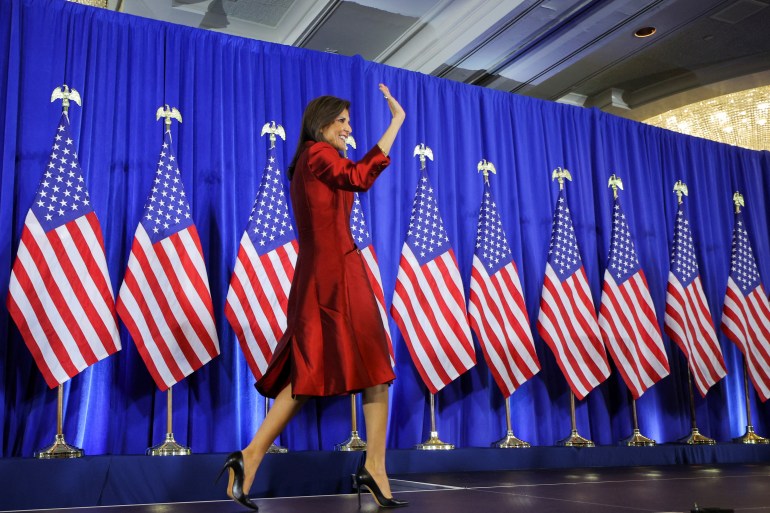
One of the busiest days in the United States election calendar is nearly here. Super Tuesday takes place on March 5, with millions of voters expected to cast their ballots in presidential primaries and caucuses across more than a dozen states. Also on the ballot will be races for both chambers of the US Congress — the House of Representatives and Senate — as well as other contests. President Joe Biden faces little opposition on the Democratic side and is all but guaranteed to be confirmed as the party’s nominee. In the race for the Republican presidential nomination, however, Super Tuesday could spell the end of the road for former United Nations Ambassador Nikki Haley. She is the last major candidate still challenging the frontrunner, former President Donald Trump, but her campaign has failed to make a dent in Trump’s iron-clad grip on the party. Here’s all you need to know about Super Tuesday, its history and its biggest battlegrounds this year. What is Super Tuesday? Super Tuesday is the day when the largest number of states hold their presidential primaries and caucuses. Those state-level races help candidates from the two major political groups — the Democrats and the Republicans — gather the delegates they need to earn their party’s nods. Delegates ultimately represent their states at a party convention, where they cast votes for the nominee based on the primary and caucus results. During this year’s Super Tuesday races, 874 Republican delegates will be up for grabs — or about 36 percent of all those available. A candidate needs at least 1,215 of 2,429 total delegates to win the Republican nomination. For Democrats, 1,439 of the party’s 3,979 total delegates will be at stake on Tuesday. When is Super Tuesday? This year, it falls on Tuesday, March 5. Which US states are voting on Super Tuesday? Fifteen US states are holding votes on Super Tuesday: Alabama Alaska Arkansas California Colorado Maine Massachusetts Minnesota North Carolina Oklahoma Tennessee Texas Utah Vermont Virginia The territory of American Samoa will also be voting. The results of the Democratic caucuses in Iowa, which are being held via mail-in ballot, are also expected on March 5. Where does the phrase “Super Tuesday” come from? The origins of the phrase are a bit murky, but Pew Research Center editor Drew DeSilver says it dates back to at least 1976. At the time, though, “Super Tuesday” referred to the last major primaries in June: California, New York and Ohio. But most experts agree that, as DeSilver writes, “Super Tuesday was born, more or less as we know it today”, in 1988. That’s when a group of Democrats in southern US states decided to “front-load” the presidential primary process after Republican President Ronald Reagan cruised to victory four years earlier over Democratic White House hopeful Walter Mondale. Their thinking was that by holding their votes on the same day, early in the election cycle, they could better influence their party’s pick — and ensure that the eventual nominee can succeed in the American South. The 1988 effort didn’t work, but Super Tuesday remains the day that most US states hold their votes. Why does Super Tuesday matter? Super Tuesday matters because about a third of the delegates will be allocated by each party to decide their respective presidential nominee. A strong showing can effectively give a presidential campaign a shot in the arm, helping White House hopefuls secure more financial contributions and build momentum. But a poor result can bring a campaign to a screeching halt. “Because there are so many states holding contests simultaneously, candidates need to be really well funded, well organised and have good name recognition to do well across the board on Super Tuesday,” Caitlin Jewitt, an associate professor of political science at Virginia Tech, told Al Jazeera. “If we have a clear frontrunner going into Super Tuesday, we often see that — after Super Tuesday — that candidate is by far the frontrunner and many others drop out of the race.” Jewitt pointed to the 2020 Democratic race as one example of how Super Tuesday can jump-start a campaign. That year, Biden delivered a strong showing on Super Tuesday after a slow start: He won 10 states. The race then transformed into a two-man competition between him and Senator Bernie Sanders. Successful Republican candidates have likewise enjoyed a boost from Super Tuesday. Jewitt noted that, in 2016, Texas Senator Ted Cruz did not do as well as he had hoped on Super Tuesday, while Trump did better than expected. He went on to win the presidency that year. “So we see Trump start to gain momentum from that,” Jewitt said. What can we expect this year in the presidential primary contests? For Haley, the ex-UN ambassador, a poor showing could augur the end of her campaign for the 2024 Republican nomination. Polls show her trailing Trump in all of the Republican contests on Super Tuesday. “It’s not going to be so super,” Jewitt said of the lopsided races. “It’s much less important this year. It may be important because it might be Haley’s sort of last stand, but other than that, it looks inevitable that Joe Biden and Donald Trump will gain their respective nominations, and so we don’t expect very many surprises on Super Tuesday.” Haley — who has lost to Trump by a sizeable margin in all the early state contests so far — said she planned to stay in the race until at least Super Tuesday. Her plans beyond that are unclear. “I’m not giving up this fight when a majority of Americans disapprove of both Donald Trump and Joe Biden,” she said after losing a February 24 primary in her home state of South Carolina. Republican presidential candidate Nikki Haley walks on stage after the South Carolina Republican primary in Charleston, South Carolina, on February 24 [File: Brian Snyder/Reuters] Will there be more on the ballot than the presidential primary races? Yes. Americans will also be voting
Money, power and the peril of courting Chinese nationalism

In January, a Chinese ultranationalist vlogger – video blogger – came across red circular stickers on the glass doors of a shopping mall in Nanjing featuring the words: “Happy 2024.” The vlogger claimed that what appeared to be innocent New Year decorations were, in fact, nationalistic Japanese motifs since the red circles resembled the rising red sun in Japan’s national flag. “This is Nanjing, not Tokyo! Why are you putting up junk like this?” he snarled at a manager at the mall. Local police subsequently got involved and ordered staff at the mall to take down the decorations and gave the mall’s management an official warning. “It is the most ridiculous thing I have ever heard,” 33-year-old noodle shop owner Alice Lu from Shanghai told Al Jazeera. “If red circles are not allowed then there is no end to the things that must be removed,” Lu said. Red souvenir plates with images of China’s Mao Zedong (right) and Chinese President Xi Jinping (left) in Beijing, China in 2017 [Tyrone Siu/Reuters] Following the standard set by the local police in Nanjing, users on Chinese social media were quick to highlight the absurdity of all the red circular objects that would need to be banned, including the logo of China’s telecommunications giant Huawei, posters of China’s first Communist leader, Mao Zedong, featuring a rising sun in the background, and even traffic lights. The fiasco drew in China’s state-run CCTV which chastised the vlogger in an article on its Weibo account, calling his actions “detrimental to individuals, companies and society as a whole”. Shaoyu Yuan, a scholar of Chinese studies at Rutger’s University in the United States, said CCTV’s comments demonstrated an attempt by the Chinese government to maintain state control over the narrative surrounding nationalism. “They want to ensure that nationalism serves as a unifying force rather than being misused,” Yuan told Al Jazeera. The logo of the Chinese telecommunications giant Huawei Technologies is pictured next to a statue on top of a building in Copenhagen, Denmark, in 2021 [Wolfgang Rattay/Reuters] Steering patriotism Under the rule of Chinese President Xi Jinping, fervent patriotic sentiment has been encouraged among the public for years. Xi said in June that “love of our country, the feeling of devotion and sense of attachment to our motherland is a duty and responsibility of every Chinese”, and that “the essence of patriotism is loving the country, the Party and socialism all at the same time”. The importance of state-defined patriotism was highlighted at the beginning of January when a new “patriotic education law” came into effect in China with the stated aim of instilling “love of the country and the ruling Chinese Communist Party (CCP)”. During Xi’s presidency, that patriotic fervour has been projected outward from China by its “wolf warrior” diplomats, including former foreign ministry spokesperson Zhao Lijian who infamously floated the idea that the US military was responsible for the COVID-19 coronavirus outbreak in Wuhan. Zhao also posted a fabricated image depicting an Australian soldier holding a bloody knife to the throat of an Afghan child in 2020, at a time when relations between Australia and China were in free fall. While the CCP promotes its own version of patriotism, it also moderates nationalistic output at times, too. Incessant bashing of the US online is a common pastime among active Chinese nationalists. But leading up to a highly anticipated summit between President Xi and US President Joe Biden in November, China’s media and nationalist commentators suddenly dialled down their anti-US rhetoric. Beijing adjusts the volume on nationalistic rhetoric to serve its interests, according to Yuan, engaging in a balancing act of patriotic sentiment when necessary. “While nationalism is encouraged as a means of fostering a strong national identity and loyalty, its excesses can lead to extremism and undermine international diplomacy, social harmony and public order,” Yuan said. Nationalism turns violent Lu from Shanghai said the Nanjing incident was an example of how the promotion of intense patriotic feelings in China has led to a toxic environment – particularly when it comes to Japan-related topics. “It is a bit scary actually how anti-Japanese feelings can make some people react in China,” she said. Chinese modern nationalism directed at Japan is deeply influenced by historical conflicts, most notably the events of the Second Sino-Japanese War during World War II, Yuan said. “These have left a lasting imprint on the Chinese collective memory, fuelling sentiments of resentment and vigilance towards Japan,” he said. Anti-Japanese sentiment was on display in 2022 when a known cosplayer was approached by police in Suzhou, a city not far from Shanghai, as she was taking pictures of herself on the street wearing a Japanese kimono. Before being taken away, a police officer was recorded shouting at the woman: “If you came here wearing hanfu (traditional Chinese clothing), I wouldn’t say this, but you are wearing a kimono as a Chinese. You are Chinese!” A few days after the arrest, CCTV launched a social media topic promoting the wearing of hanfu-style clothing. A protester holding a banner shouts slogans during an anti-Japan protest over disputed islands called Diaoyu in China and Senkaku in Japan, outside the Japanese Ito Yokado shopping mall at Chunxi Road business area in Chengdu in 2010 [Jason Lee/Reuters] The Suzhou incident pales in comparison, however, to August 2012 when a dispute in the East China Sea over control of the Senkaku/Diaoyu Islands, which are administered by Tokyo but claimed by Beijing, led to large anti-Japanese protests across urban China. While protests are often swiftly broken up by the Chinese authorities, the anti-Japanese demonstrations in several cities saw no interference, and from there they turned increasingly violent. In the central Chinese city of Xi’an, a Chinese man in a Japanese car was pulled out of his vehicle and severely beaten, sustaining life-changing injuries. The government-controlled People’s Daily subsequently said in an editorial that it did not condone the violence, but attempted to explain it as a sign of Chinese people’s patriotism.
UN official warns of possible war crimes, rape as a weapon in Sudan

The United Nations human rights chief has said that the apparent deliberate denial of safe access for humanitarian agencies within war-torn Sudan could amount to a war crime. “Sudan has become a living nightmare. Almost half of the population – 25 million people – are in urgent need of food and medical aid. Some 80 percent of hospitals have been put out of service,” UN High Commissioner for Human Rights, Volker Turk, said on Friday. The Sudan crisis “continues to be marked by an insidious disregard for human life”, he told the UN Human Rights Council in Geneva, saying that many of the violations of international humanitarian law committed by the warring parties “may amount to war crimes, or other atrocity crimes”. The paramilitary Rapid Support Forces (RSF) has been fighting Sudan’s army for control of the country since April last year in a war that has killed thousands, displaced millions inside and outside the country, and sparked warnings of famine. Both sides “have killed thousands, seemingly without remorse”, Turk said, noting the use of heavy artillery, even in densely populated urban areas. He said in 11 months, at least 14,600 people had been killed and 26,000 others injured. “Actual figures are undoubtedly much higher.” Noting the implications of the apparent denial of aid, he called on the warring parties to “meet their legal obligations by opening humanitarian corridors without delay, before more lives are lost”. Aid supplies have been looted and humanitarian workers attacked, while international agencies and NGOs have complained about bureaucratic obstacles to get into the army-controlled hub of Port Sudan to get humanitarian assistance into the country. Last month, the UN urged countries not to forget about civilians, appealing for $4.1bn to meet their humanitarian needs and support the more than 1.5 million people who have fled to neighbouring countries. “With more than eight million forced to flee within Sudan and to neighbouring countries, this crisis is upending the country and profoundly threatening peace, security and humanitarian conditions throughout the entire region,” Turk said. Rape as a weapon of war The rights chief also highlighted another weapon in Sudan’s continuing war. “Sexual violence as a weapon of war, including rape, has been a defining – and despicable – characteristic of this crisis since the beginning,” he said. Since last April, his team has documented 60 incidents of conflict-related sexual violence, involving at least 120 victims across the country, the vast majority women and girls, he said but added that “these figures are sadly a vast underrepresentation of the reality.” “Men in RSF uniform and armed men affiliated with the RSF, were reported to be responsible for 81 percent of the documented incidents,” Turk said. According to a report to the UN Security Council, obtained by The Associated Press on Thursday, sexual violence by the RSF and its allied militia was widespread. The panel of experts said that, according to reliable sources from Geneina, a city in west Darfur, women and girls as young as 14 were raped by RSF elements in a UN World Food Programme storage facility that the paramilitary force controlled, in their homes, or when returning home to collect belongings after being displaced by the violence. Additionally, 16 girls were reportedly kidnapped by RSF soldiers and raped in an RSF house. “Racial slurs toward the Masalit and non-Arab community formed part of the attacks,” the panel said. “Neighbourhoods and homes were continuously attacked, looted, burned and destroyed,” especially those where Masalit and other African communities lived, and their people were harassed, assaulted, sexually abused, and at times, executed. The panel stressed that disproportionate and indiscriminate attacks on civilians – including torture, rape and killing, as well as destruction of critical civilian infrastructure – constitute war crimes under the 1949 Geneva Conventions. “Perpetrators of the horrific human rights violations and abuses must be held to account, without delay,” Turk said on Friday. “And without delay, the international community must refocus its attention on this deplorable crisis before it descends even further into chaos. The future of the people of Sudan depends on it.” Adblock test (Why?)