

Hamas says seven captives killed in Israeli army bombing of Gaza
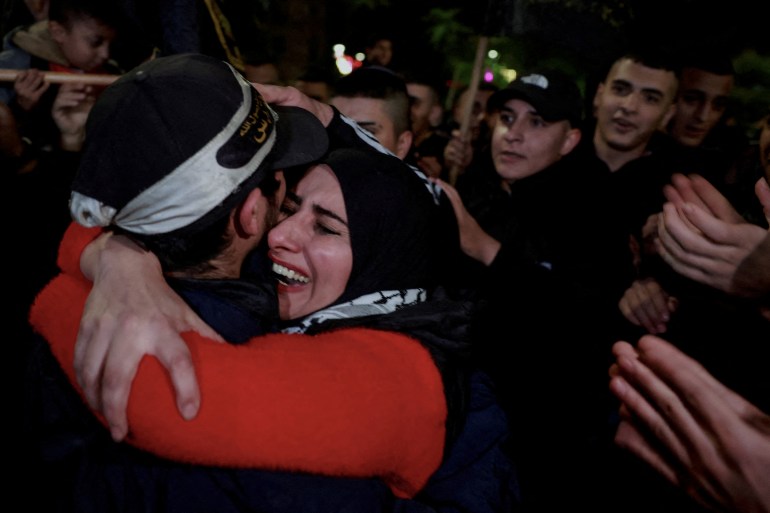
The group’s military wing confirms the news after an investigation although it does not state when the captives died. The military wing of the Palestinian group Hamas says seven more captives held in the Gaza Strip have died as a result of Israel’s bombardment of the besieged enclave. Abu Obeida, the spokesperson for Hamas’s Qassam Brigades, made the statement on the Telegram app on Friday. The group said it confirmed the news following investigations conducted over the past few weeks after it had lost contact with the fighters who had been holding the captives. Hamas seized about 250 Israelis and foreigners during its October 7 attacks on southern Israel, of whom about 130 are believed to still be held captive. The Qassam Brigades said three of the captives mentioned in Friday’s statement had been identified, but it did not clarify when the seven had died. The group said the total number of captives killed as a result of Israeli military operations “may have exceeded” 70. ‘Second priority’ for Israel The deaths of the captives show that Israel’s government considers them a “secondary priority”, Omar Ashour, a professor of security and military studies at the Doha Institute for Graduate Studies, told Al Jazeera. “The [Israeli military’s] first priority is to destroy the armed wing of Hamas and the other Palestinian factions, to undermine them in any way, even if it costs the lives of some of the hostages,” Ashour said. Friday’s reported deaths also indicate that Israel’s war strategy is not achieving its objectives, he said, adding: “We are in the 147th day of the war, and there are more and more hostages dying, the majority of them by Israeli fire.” During a Qatari-mediated weeklong truce in November, 105 captives were released in exchange for 150 Palestinian women and children held in Israeli prisons. “The only way to release the hostages safely is the way it was done before – through some sort of negotiations. The Israeli government knows that/ … They just don’t want to admit it,” Ashour said. A Palestinian prisoner hugs his mother after being released during a captive-prisoner swap between Hamas and Israel in Ramallah in the occupied West Bank on December 1, 2023 [Ammar Awad/Reuters] Truce talks ongoing Israel’s war on Gaza has killed at least 30,228 Palestinians, according to the Gaza Ministry of Health. The death toll in Israel from the October 7 attacks stands at 1,139. Egyptian, Qatari and United States mediators are currently scrambling to lock down a new truce. In telephone talks on Thursday, the three countries’ leaders set out what a ceasefire deal could look like, the White House said. “The leaders underscored that the release of hostages would result in an immediate and sustained ceasefire in Gaza over a period of at least six weeks,” the White House said. However, Israel’s Walla news site, citing a senior Israeli official, reported that Israel has told Egypt and Qatar that it will not proceed with ceasefire negotiations until Hamas sends it a list of Israeli captives who remain alive in the Gaza Strip. The official said Israel is also seeking a “serious answer” from Hamas on the number of Palestinian prisoners it is requesting be released as part of a potential deal, Walla reported. Adblock test (Why?)
Will Israel’s ultra-Orthodox community serve in its military?

There is renewed push to force ultra-Orthodox Jews to serve in the Israeli military. Israel has called on its reserves to wage its ground war on Gaza. But its ultra-Orthodox Jewish community has an exemption to military service going back decades. Now, the defence minister says they need to join the fight. But can a national consensus be reached on such a divisive issue? And can Prime Minister Benjamin Netanyahu’s government survive the fallout from such a policy change? Presenter: Hashem Ahelbarra Guests: Efraim Inbar – President of The Jerusalem Institute for Strategy and Security Akiva Eldar – Political analyst and former columnist for Israel’s Haaretz newspaper Yehoshua Pfeffer – Community rabbi and executive member of Netzah Yehuda Adblock test (Why?)
In New York, Israeli conscientious objectors find community after ostracism
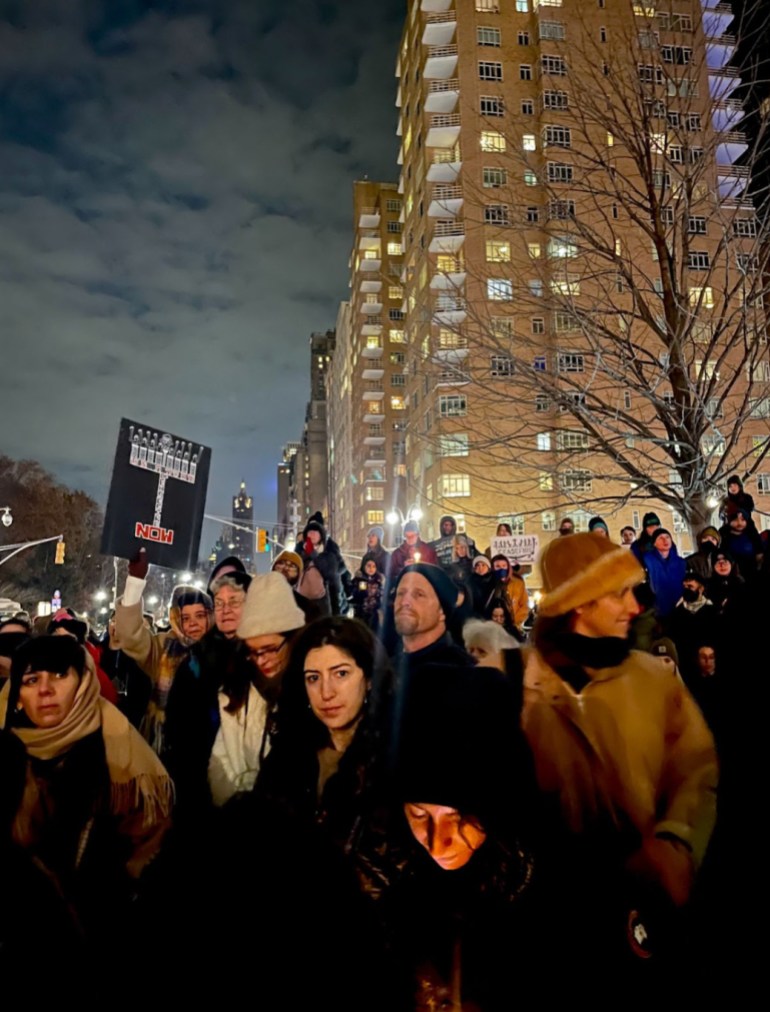
New York, United States – He feared being called a “mishtamet”. A draft dodger. Someone who shrinks from their responsibility. But at age 17, Jewish social worker Asaf Calderon made a fateful decision: not to participate in the mandatory military service required of nearly all Israeli citizens. Instead, he pursued and was granted a medical exemption for mental health reasons. Still, his choice came with a cost. A soft-spoken man with round glasses and a tender smile, Calderon, 34, noticed that, afterwards, his friends started to seem distant. Members of his family fell out of contact. He realised his decision had left him a pariah in Israel, even among his loved ones. He eventually moved away to New York City. “It doesn’t matter why you do it,” Calderon said of becoming a conscientious objector, someone who refuses to participate in military service on ethical or moral grounds. “You are going to get ostracised in a way.” But the war in Gaza has amplified the pressures he and other conscientious objectors face. Since October 7, Israel has led a military campaign in the Palestinian enclave, with ground forces and aerial bombardment levelling entire neighbourhoods. The offensive follows an attack on southern Israel that killed an estimated 1,200 people. The subsequent war, however, has left more than 30,000 Palestinians dead, many of them children. United Nations experts have warned of a “risk of genocide”. “The main thing that I’ve been told ever since the war started, by Israeli people who oppose me, is that I have lost my Israeli-ness. That I’m no longer Israeli,” Calderon told Al Jazeera. Then came Shoresh. Founded in the United States at the end of November, partly in reaction to the war, the group aims to promote anti-Zionism from the viewpoint of Israelis themselves. Members of Shoresh join a Hanukkah march in New York City to call for a Gaza ceasefire [Claudia Gohn and Carolyn Gevinski/Al Jazeera] There, Calderon met others who avoided Israeli military service through roundabout means — or applied for official status as conscientious objectors. It gave him a sense of community that he struggled to find elsewhere. Guy Erez, who has attended Shoresh events, described joining the group as an antidote to the isolation. “Oh my God,” he remembers thinking. “Somebody gets it. Thank God I’m not crazy.” A tradition of mandatory military service There are no official statistics about the number of conscientious objectors in Israel — in part because there is no single profile of what a conscientious objector is. Some, like the members of Shoresh, are anti-Zionists, critical of Israel’s founding as a Jewish nation-state. Others, particularly in Orthodox Jewish communities, object to military service for religious reasons. Still more oppose certain military activities they might be called upon to perform, like assignments that take them into the occupied Palestinian territories. The history of mandatory military service — and refusing to comply — goes back as far as Israel itself. In May 1948, shortly after Israel declared independence, its government founded a conscription-based military, drawing largely from existing militias and paramilitary forces. By the following year, though, mandatory service had become cemented in Israeli law. Today, once Israeli men turn 18, most are expected to serve 32 months in the military. Women, meanwhile, serve 24 months. Broad exceptions are carved out for certain Palestinian citizens of Israel, religious groups, married people and “those deemed unfit medically or mentally”. And conscientious objectors can also apply for an exemption before a special military committee. But critics argue relatively few applications are granted, outside of religious grounds or proven track records of pacifism. Without such an exemption, the consequences of rejecting military service can be severe. Israel’s Defence Service Law stipulates that a citizen’s failure to fulfil their military duty can result in up to two years’ prison time. If they intentionally “injure or maim” themselves in the process, that prison sentence can jump up to five years. Since the war in Gaza began, an 18-year-old named Tal Mitnick has become the highest-profile instance of military refusal. He surrendered to the Tel Hashomer military base in December for a 30-day sentence. “I believe that slaughter cannot solve slaughter,” he said in a video recording, before walking inside. Mandatory service in the Israeli military is a long-running tradition, stretching back to the 1940s [Amir Cohen/Reuters] Refusing in solidarity with Palestinians The Israeli-Palestinian conflict has long been a motive for “refusers” — or “seruvnikim” — like Mitnick to reject military service, even before the current war began. In 2014, for instance, reserve soldiers with Unit 8200, a secretive intelligence group, penned an open letter to Prime Minister Benjamin Netanyahu, refusing to take part in Israeli military actions involving Palestinians. “There’s no distinction between Palestinians who are, and are not, involved in violence,” the reservists said of the military’s actions. The military’s “intrusive supervision”, they added, “does not allow for people to lead normal lives and fuels more violence, further distancing us from the end of the conflict”. Their public refusal was believed to be the first of its kind for Israel’s intelligence community. But Netanyahu has long pledged to take a firm stance against so-called “refuseniks”. Last year, when military reservists threatened to shirk their duties in protest of his government’s far-right reforms, Netanyahu threatened a crackdown: “The government will not accept refusal to serve.” Like many Israeli children, Roni Zahavi-Brunner — another member of Shoresh — grew up never questioning the requirement to serve, even though her family was relatively progressive. It wasn’t until she went to a boarding school in Italy that her perspective changed. Some of her classmates were Palestinians. Zahavi-Brunner came to know their struggles intimately, as they lived day in and day out together. “We were all 16, and yet they all had so many scary interactions with the [Israeli] military at such a young age,” said Zahavi-Brunner. “And I realised that that’s not something that I’m really willing to take part in.” One classmate became a close friend.
Iran Revolutionary Guard member and two others killed in attack in Syria

Iranian media reports say IRGC member Reza Zarei was killed in a suspected Israeli attack in the port city of Baniyas. A member of Iran’s Islamic Revolutionary Guard Corps (IRGC) and two other people have been killed in a suspected Israeli attack, Iran’s state news agency IRNA reported. IRNA said Reza Zarei, a member of the IRGC, had been “killed at dawn today by the usurping Zionist regime” in the port city of Baniyas. The Syrian Observatory for Human Rights war monitor corroborated Friday’s attack. It said three explosions shook the centre of Baniyas, on Syria’s Mediterranean coast, during the dawn strike on a villa that sheltered “a group affiliated with Iran”. A building was destroyed, killing an Iranian and two other non-Syrians who were with him, said the Britain-based Observatory, which relies on a network of sources inside Syria. There were separate reports that several others were also injured in the attack. There was no comment from Israel after the strike, but its air force has repeatedly bombed targets in Syria. On Thursday, Israel killed a Hezbollah member in a strike on Syria, close to the Lebanese border, the Observatory said, hours after similar attacks. “Yet another targeted assassination in Syria, yet another member of the Iranian Revolutionary Guards killed in Syria,” said Al Jazeera’s Zeina Khodr, reporting from Beirut in Lebanon on Friday. “Iranian media is blaming Israel. Israel usually does not comment on individual strikes but it has acknowledged carrying out hundreds of strikes against Iranian targets and Iranian-linked targets in recent years. “But in recent weeks, what we have seen is more frequent attacks, similar attacks. Back in December, for example, one of the top commanders of the Revolutionary Guards in Syria was assassinated in Damascus.” Israel has been carrying out raids for years as it does not want Iran to entrench itself militarily in Syria, according to Khodr. But since Israel’s war on Gaza began on October 7, its strategy has changed. “It is now going after high-value targets,” our correspondent said. “Reza Zarei, the man who was killed in Baniyas, was in charge of Iranian oil shipments to Syria. According to analysts, Israel is targeting these high-value targets to cut the link between the command in Tehran and local actors in Syria affiliated to Iran,” she added. Iran’s Revolutionary Guard have scaled back deployment of their senior officers in Syria due to a spate of deadly Israeli attacks and were relying more on allied militias to preserve their sway there, the Reuters news agency reported in February. Adblock test (Why?)
Israeli MP denounces ‘tsunami of fanatic nationalism’ in Israel

‘We are on the brink of a fascist dictatorship,’ Knesset member Ofer Cassif tells Marc Lamont Hill. Over the past five months, Israel’s war on Gaza has caused mass devastation and led to more than 30,000 deaths. In January, the International Court of Justice (ICJ) in The Hague found that there was a plausible risk that Israel may be committing genocide. While the ICJ case has been met with opposition from Israel’s political class, there have been those who have voiced support. Israeli parliament member Ofer Cassif has been an outspoken supporter of the ICJ procedures – a position that resulted in a failed attempt to expel him from Israel’s legislature, the Knesset, last week. So what is the cost of dissent in Israel in the current climate? This week on UpFront, Marc Lamont Hill speaks to Cassif about the current political climate in Israel and unpacks the push within Israel to silence dissent. Adblock test (Why?)
Global condemnation grows over Israel’s killing of Gaza aid seekers

French authorities have called for an independent inquiry into the killing of more than 100 Palestinians who were collecting food aid in northern Gaza as global outrage against Israel’s attack grows. At least 112 people were killed and more than 750 wounded in the attack, which occurred at the Nabulsi roundabout in Gaza City on Thursday. Witnesses said Israeli soldiers opened fire as people gathered for flour while Israeli officials said their soldiers fired because they felt threatened when people stormed the aid trucks. Speaking to national broadcaster France Inter, Foreign Minister Stephane Sejourne said France would not apply “double standards” to the Israel-Palestine conflict. “We will ask for explanations, and there will have to be an independent probe to determine what happened,” Sejourne said. “France calls things by their name. This applies when we designate Hamas as a terrorist group, but we must also call things by their name when there are atrocities in Gaza.” Earlier, French President Emmanuel Macron said the Palestinian aid seekers were “targeted by Israeli soldiers” and expressed his “strongest condemnation of these shootings.” Global outrage mounts Reacting to the incident in a post on the social media platform X, the Palestinian Ministry of Foreign Affairs accused Israeli Prime Minister Benjamin Netanyahu of a “disregard for the Nabulsi roundabout massacre” and said he was the “political face” of Itamar Ben-Gvir, Israel’s far-right national security minister. The Ministry of Foreign Affairs and Expatriates// Netanyahu’s disregard for the #Nabulsi roundabout massacre, proves that he is the political face of the fascist Ben Gvir. The Ministry calls for imposing deterrent #sanctions on the Israeli government to compel it to ensure the… pic.twitter.com/ZxymkFlxXB — State of Palestine – MFA 🇵🇸🇵🇸 (@pmofa) March 1, 2024 The ministry said it “calls for imposing deterrent sanctions on the Israeli government to compel it to ensure the protection of civilians and secure their humanitarian needs”. United States President Joe Biden did not condemn the shootings but said Washington was checking “two competing versions” of the killings and the incident would complicate efforts to broker a truce between Israel and Hamas. The United Nations Security Council, meanwhile, held a closed-door emergency meeting late on Thursday but failed to issue a statement condemning the killings after the US objected to placing blame on Israel, diplomatic sources told reporters. US Deputy Ambassador to the UN Robert Wood condemned the deaths before entering the chamber, but upon leaving, he said the US “does not have all the facts on the ground”. Meanwhile, Chinese Ministry of Foreign Affairs spokesperson Mao Ning said on Friday that Beijing was shocked by the incident and strongly condemned the killings. “China urges the relevant parties, especially Israel, to cease fire and end the fighting immediately, earnestly protect civilians’ safety, ensure that humanitarian aid can enter and avoid an even more serious humanitarian disaster,” Mao said. ‘Oblige Israel to respect international law’ Qatar’s Ministry of Foreign Affairs said it condemned “in the strongest terms the heinous massacre committed by the Israeli occupation” and called for “urgent international action” to halt the fighting in Gaza. Doha warned that Israel’s “disregard for Palestinian lives … will ultimately undermine international efforts aimed at implementing the two-state solution and thus pave the way for the expansion of the cycle of violence in the region”. Likewise, Saudi Arabia’s Ministry of Foreign Affairs condemned the deaths and reiterated “the need to reach an immediate ceasefire”. Jeddah renewed its “demands to the international community to take a firm position to oblige Israel to respect international humanitarian law, immediately open safe humanitarian corridors, allow the evacuation of the injured and enable the delivery of relief aid. Turkey accused Israel of committing “another crime against humanity” and condemning Palestinians in Gaza to “famine” as civilians struggle to get the most basic of food supplies. “The fact that Israel … this time targets innocent civilians in a queue for humanitarian aid is evidence that [Israel] aims consciously and collectively to destroy the Palestinian people,” the Turkish Ministry of Foreign Affairs said. (Al Jazeera) In Iran, authorities described the incident as a “barbaric attack by the Zionist regime” while Lebanon’s Ministry of Foreign Affairs and Emigrants said the incident fell “within the framework of the policy of mass starvation and extermination of the Palestinian people, which drives them to despair and adds fuel to the fire”. Jordan and the Arab League have also denounced the killings. EU, Germany join calls for investigation Ursula von der Leyen, president of the European Commission, said on Friday that she was “deeply disturbed by images from Gaza” and that “every effort must be made to investigate what happened and ensure transparency.” Earlier, the European Union’s top diplomat, Josep Borrell, posting on X, denounced the incident as “carnage”. The foreign ministers of Spain, Italy, Belgium and Portugal have similarly spoken out against the deaths of aid seekers. Germany, a staunch backer of Israel, joined the calls to demand an “explanation” from Israel. “People wanted relief supplies for themselves and their families and found themselves dead,” German Foreign Minister Annalena Baerbock wrote on X. “The reports from Gaza shock me. The Israeli army must fully explain how the mass panic and shooting could have happened.” Es braucht jetzt endlich die humanitäre #Feuerpause, damit die Geiseln endlich aus den Händen der Hamas freikommen und nicht noch mehr Menschen in Gaza sterben. Und Hilfe sicher verteilt werden kann. 3/3 — Außenministerin Annalena Baerbock (@ABaerbock) March 1, 2024 In South America, Colombian President Gustavo Petro moved to suspend purchases of weapons from Israel, a key supplier of his country’s security forces, saying Israel’s actions amount to a “genocide” of the Palestinian people. “Asking for food, more than 100 Palestinians were killed by Netanyahu. This is called genocide and recalls the Holocaust. The world must block Netanyahu,” Petro said. Brazil also condemned the killings, saying Israel’s military operation has no “ethical or legal limits”. Gaza’s Ministry of Health said 30,228 Palestinians have died in the war since October 7. UN agencies have warned there’s a
Israeli settlers build symbolic house on Gaza border

NewsFeed A group of Israeli settlers have built a symbolic house on the border with Gaza, as part of a campaign calling for new settlements on Palestinian land and the ethnic cleansing of the territory. Published On 1 Mar 20241 Mar 2024 Adblock test (Why?)
Photos: Crowds attend Navalny funeral as Kremlin warns against protests

Under a heavy police presence, hundreds of people bade farewell to Alexey Navalny in Moscow after his still unexplained death two weeks ago in an Arctic penal colony. The funeral on Friday of Russian President Vladimir Putin’s fiercest critic followed a battle with authorities over the release of his body. Navalny’s supporters said several churches in Moscow refused to hold a service for the man who crusaded against official corruption. Many Western leaders blamed his death on the Russian president, an accusation the Kremlin rejects. Navalny’s team eventually got permission from the Church of the Icon of Our Lady Quench My Sorrows, which was encircled by crowd-control barriers on Friday. Hours before the funeral started, hundreds of people waited to enter under the watch of police. Western diplomats were spotted in the long line along with presidential hopefuls Boris Nadezhdin and Yekaterina Duntsova. Both wanted to run against Putin in this month’s presidential election and oppose his war in Ukraine. Neither was allowed on the ballot. After the hearse arrived at the church, the coffin was taken out of the vehicle as the crowd applauded and chanted: “Navalny! Navalny!” Some also shouted: “You weren’t afraid. Neither are we!” A photo from inside the church showed an open coffin with Navalny’s body covered with red and white flowers and his mother sitting beside it holding a candle. Navalny’s father was also present, but it wasn’t clear who else in his family attended. His widow, Yulia Navalnaya, is outside Russia and did not attend the funeral. Their daughter is a student at Stanford University in California, and the whereabouts of their son are unknown. The politician’s closest associates have all left Russia under pressure and watched the funeral, footage of which was streamed live on his YouTube channel, from abroad. Kremlin spokesperson Dmitry Peskov urged those gathering in Moscow and other places not to break the law, saying any “unauthorised gatherings” are violations. A burial followed at the nearby Borisovskoye Cemetery, where police also showed up in force. Crowds from the church marched there after the funeral ended, chanting: “No to war” and “Love is more powerful than fear.” Adblock test (Why?)
Massive fire kills dozens in Dhaka restaurant building

NewsFeed At least 46 people have died after a massive fire spread through a multi-storey building housing restaurants in Dhaka. The cause of the fire is still under investigation. Published On 1 Mar 20241 Mar 2024 Adblock test (Why?)
Elon Musk sues OpenAI and CEO Sam Altman for putting profits above humanity

Billionaire entrepreneur says Microsoft-backed company originally promised to make an open-source, non-profit company. Elon Musk is suing OpenAI and its chief executive Sam Altman, alleging the start-up betrayed its original promise of working to benefit humanity when it forged a multibillion-dollar alliance with Microsoft. The lawsuit filed in San Francisco on Thursday said Altman and OpenAI’s co-founder Greg Brockman had initially pledged to make an open-source, non-profit company, and that its pursuit of profit constituted a breach of contract. The company had kept the design of GPT-4, its most advanced AI model, “a complete secret”, said Musk’s lawyers. Musk co-founded OpenAI in 2015, but stepped down from its board in 2018. He also runs electric vehicle maker Tesla and rocket maker SpaceX, and bought Twitter for $44bn in October 2022. Sam Altman, CEO of Microsoft-backed OpenAI and ChatGPT creator speaks during a talk at Tel Aviv University in Tel Aviv, Israel, on June 5, 2023 [Amir Cohen/Reuters] Last year, entrepreneur Altman was fired by OpenAI’s former board which said it was trying to defend the company’s mission to develop AI that benefits humanity. A few days later, Altman returned to the company with a new initial board. OpenAI is reportedly planning to appoint several new board members in March. OpenAI’s chatbot, ChatGPT, became the fastest-growing software application in the world within six months of its launch in November 2022. It also sparked the launch of rival chatbots from Microsoft, Alphabet and a bevvy of start-ups that tapped the hype to secure billions in funding. Adblock test (Why?)