

Biden says he told Zelenskyy he’s ‘confident’ US will renew aid to Ukraine

US president warns of further losses of Ukrainian territory if Congress does not renew military aid. United States President Joe Biden has said he assured Ukraine’s Volodymyr Zelenskyy that he is confident Congress will renew military aid to repel Russia after its forces captured the Ukrainian stronghold of Avdiivka. “I spoke with Zelenskyy this afternoon to let him know that I was confident we’re going to get that money,” Biden told reporters on Saturday. Biden said he was not confident another Ukrainian city would not fall to Russian forces without US support and that it would be “absurd” and “unethical” for lawmakers not to approve a new package of military aid. “I find it contrary to everything we are as a country,” he said. Biden spoke to Zelenskyy in a call hours after Russia announced the capture of Avdiivka following the earlier withdrawal of Kyiv’s forces, which the Ukrainian leader described as “a professional decision that will save many Ukrainian lives”. Russian President Vladimir Putin hailed the capture of Avdiivka, an industrial hub located some 10km (6.2 miles) north of the city of Donetsk, as an “important victory” in the war, which is nearing the two-year mark. The White House said in a statement after the call that Ukrainian forces withdrew after being forced to “ration ammunition due to dwindling supplies as a result of congressional inaction, resulting in Russia’s first notable gains in months”. Zelenskyy said in a post on Telegram after the call that he was “glad that I can count on the full support of the American president” and that he had faith in the “wise decision of the US Congress.” US Vice President Kamala Harris also took aim at Republicans for holding up aid on Saturday, accusing them of “political gamesmanship” after meeting with Zelenskyy on the sidelines of the Munich Security Conference in Germany. Democrats and Republicans have been sharply divided over continuing support for Kyiv, with allies of former US President Donald Trump insisting the funds be spent on domestic issues, including border security. While the US Senate passed a $95bn package of aid for Ukraine, Israel and Taiwan earlier this week, the bill faces a difficult road in the Republican-controlled House of Representatives. Republican House Speaker Mike Johnson has slammed the bill for not addressing security on the US-Mexico border, which he has described as the “most pressing issue facing our country”, and insisted the House will not be rushed to approve the aid. On Friday, Biden blasted House Republicans for taking a two-week recess, saying it was “time they step up” and assuage concerns about the US being a reliable ally. Adblock test (Why?)
Thailand’s ex-PM Thaksin leaves hospital after six months in detention

Thaksin returned to Thailand in August after nearly 16 years of self-imposed exile. Thailand’s jailed former Prime Minister Thaksin Shinawatra has left the hospital where he spent six months in detention following his return to the kingdom after more than 15 years of self-imposed exile. Thaksin, wearing a neck brace and a surgical mask, was seen early on Sunday in a vehicle leaving the Police General Hospital in central Bangkok. Thaksin was taken to his home in western Bangkok, where a banner with the words “Welcome home” and “We’ve been waiting for this day for so so long” was hanging at the front gate. Thailand’s Prime Minister Srettha Thavisin said earlier this week that Thaksin, who was jailed for eight years on corruption charges before his sentence was reduced to one year by King Maha Vajiralongkorn, would be released on parole. The exact details of Thaksin’s parole are unclear but the return of his Pheu Thai party to power in a coalition with the pro-military Palang Pracharath Party and United Thai Nation has fuelled rumours that a backroom deal was struck to reduce his time in jail, which the government has denied. Thaksin, a towering but divisive presence in Thai politics for more than two decades, led Thailand between 2001 and 2006 when his government was toppled in a military coup. After convictions for abuse of power and other offences while in office, Thaksin spent nearly 16 years in self-imposed exile overseas before returning home in August to cheering crowds to serve his sentence. Within hours of his return, Thaksin was moved from prison to the police hospital to receive treatment for unspecified health issues. Even after he fled the country in 2008, Thaksin’s allies continued to be a major force in Thai politics, with his sister Yingluck Shinawatra serving as the country’s first female prime minister from 2011 until 2014. Thaksin’s parole caps a period of reconciliation between his populist movement and the country’s conservative, royalist establishment, which have been locked in a heated rivalry that has consumed Thai politics for decades. Thaksin’s populist platform appealed to rural Thais who had long felt neglected by the country’s ruling elites. The former telecoms tycoon was also accused of serious human rights abuses amid a violent conflict in the country’s mostly Muslim southern provinces and a “drugs war”, which killed thousands. Adblock test (Why?)
DR Congo accuses Rwanda of airport ‘drone attack’ in restive east
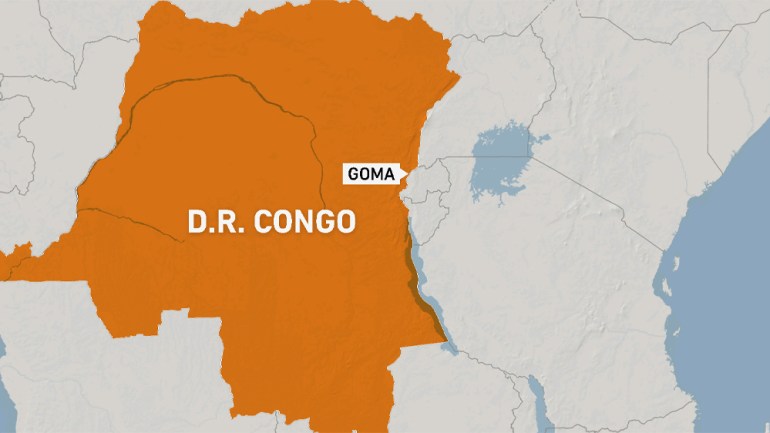
The Democratic Republic of the Congo has accused Rwanda of carrying out a drone attack that damaged a civilian aircraft at the airport in the strategic eastern city of Goma, the capital of North Kivu province. Fighting has flared in recent days around the town of Sake, 20km (12 miles) from Goma, between M23 rebels – which Kinshasa says are backed by Kigali – and Congolese government forces. “On the night of Friday to Saturday, at 2-o-clock in the morning local time, there was a drone attack by the Rwandan army,” said Lieutenant-Colonel Guillaume Ndjike Kaito, army spokesperson for North Kivu province. “It had obviously come from the Rwandan territory, violating the territorial integrity of the Democratic Republic of the Congo,” he added in a video broadcast by the governorate. The drones “targeted aircraft of DRC armed forces”. However, army aircraft “were not hit”, he said, but “a civilian aircraft was hit and damaged”. The Rwandan government did not immediately respond to the allegations. An AFP correspondent and Goma residents reported hearing two loud explosions around the time of the blast. A security source told AFP about “two bombs” on Saturday and said experts were on site to check where they had been fired from. Despite the bomb reports, national and international traffic was normal, sources at the airport said. ‘Escalating violence’ Alain Uaykani, reporting for Al Jazeera from Goma on Saturday, said that if the drone attack targeted military craft, as the army has said, it shows that M23 rebels are capable of more advanced attacks than the Congolese government may have expected. The DRC, the United Nations and Western countries have said Rwanda is supporting the rebels in a bid to control vast mineral resources, an allegation Kigali has denied. The rebels have conquered vast swaths of North Kivu in the last two years. According to a confidential UN document seen by the AFP earlier this week, the Rwandan army is using sophisticated weapons, such as surface-to-air missiles, to support M23. A “suspected Rwandan Defence Force mobile surface-to-air missile” was fired at a UN observation drone last Wednesday without hitting it, the report said. The UN Security Council voiced concern this week at “escalating violence” in eastern DRC, and condemned the M23 offensive near Goma. Dozens of soldiers and civilians have reportedly been killed or wounded in the fighting over the last 10 days. ‘A new front’ The latest fighting has pushed tens of thousands of civilians to flee neighbouring towns towards Goma, which stands between Lake Kivu and the Rwandan border and is practically cut off from the country’s interior. “The security situation remains very volatile in the Sake area where for several days government forces with their allies are trying to remove the M23 rebels on several mountains that they occupied around this strategic city at the gate of Goma,” Uaykani reported from Goma. “While the government coalition is trying to block the advance of rebels in this part of Sake, since this morning security sources reported that the rebels are also fighting with the DRC army in the village of Kashuga, in the territory of Rutshuru, at the limit of territory with Walikale,” Uaykani reported. He said fighting in this part of the country is significant for the rebels as it has opened “a new front” for Walikale, which had never before been affected by the years-long conflict. “It’s also very significant because it’s in this territory that several international companies are based with larger mining activities in the region. For the past week, several outlying neighbourhoods of Goma have already been targeted by bombs, fired by the M23 according to the authorities,” he added. With multiple diplomatic efforts failing to quell the violence in DRC, the continent’s leaders are expected to discuss the conflict at the 37th African Union summit taking place in the Ethiopian capital Addis Ababa this weekend. Adblock test (Why?)
Why Navalny was hated in the Kremlin and in some Western circles
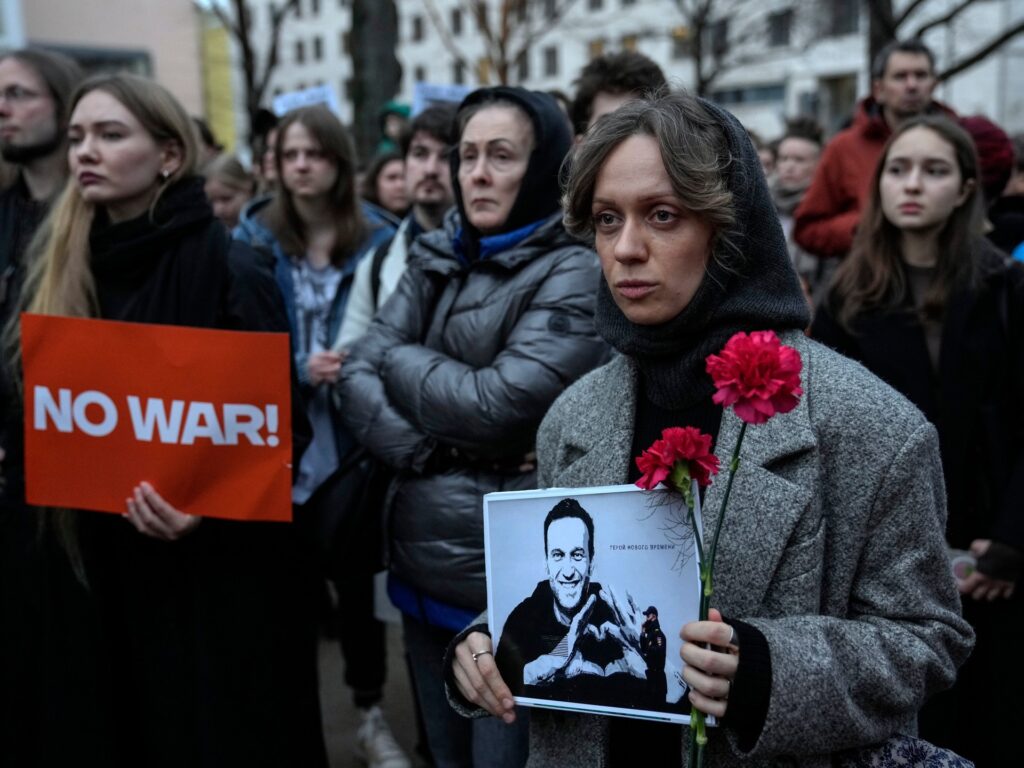
It doesn’t matter what caused the death of Russian politician Alexey Navalny; he was killed by Vladimir Putin’s regime. It was a slow execution that started with his poisoning with the Novichok chemical agent in 2020 and proceeded with sadistic torture in prison after his insanely daring move to return to Russia in January 2021. The official version about a blood clot suddenly killing the 47-year-old politician on Friday may or may not be true, but the blame for his death still remains squarely with the Russian president. Navalny was outstanding in every sense. Head and shoulders above all Russian and likely all contemporary European politicians in terms of charisma and bravery, he was a figure of hopewhot exuded immense optimism and displayed an irresistible sense of humour until his very last days in prison in the Arctic. He was a character akin to the Hummingbird in Salman Rushdie’s Midnight’s Children, a charismatic politician trying to prevent the spilt of the newly independent India. Navalny was a highly inspiring and unifying personality that was capable of bringing together what was breaking apart in this current epoch of conflict and polarisation. With his anticorruption crusade that exposed the illicit riches of top regime figures in a series of brilliantly produced YouTube videos, he built a vast support base and Russia’s biggest regional opposition network. He brought together liberals, nationalists and left-wingers – everyone who was tired of the corrupt securitocracy that has ruled Russia for a quarter-century. Navalny took opposition politics out of Moscow and St Petersburg into distant regions and small towns. Internet-savvy and very well versed in contemporary culture, he brought about a generational shift in the ranks of Russian opposition. His following to a large extent comprised 20-somethings or even teens who have never experienced any other political regime than Putin’s. He embodied the hope that changes could be brought about by non-violent resistance in the style of the velvet revolutions that brought down the communists in 1989-91. Born to a Ukrainian father and having spent some of his happiest childhood days in Ukraine, Navalny could have also potentially helped mend the rift between the two neighbours currently locked in a bloody war. Although his death is squarely on Russia’s political leadership, the hope he represented was shattered by the renewed geopolitical confrontation between Russia and the US-led West. He was a thorn in the eye of the beneficiaries of this conflict – first and foremost among them being Putin himself. But Navalny and his movement were also an object of incessant bashing by anti-Russian troll farms and hawkish pro-Ukrainian figures linked to the military-industrial complex and securitocratic blobs in the capitals of NATO countries. Accusations thrown at Navalny boiled down to him being a Russian nationalist who would have done the same thing as Putin – but perhaps even more efficiently because he would have clamped down on corruption. In the beginning of his political career, Navalny indeed flirted with far-right politics, but he drifted away from it to straightforward pro-Western liberalism a long time ago. There is no straightforward answer to the question of how Navalny would have acted had he indeed become the Russian president instead of Putin. It is indeed difficult to say to what extent all that happened between Russia, Ukraine and the West was about personalities. It is important to remember Putin himself underwent an evolution from a West-backed nominee of the Russian liberal elite to a murderous authoritarian – a process in which the West’s frivolous and arrogant attitude to Russia’s core security interests played no small role. A few weeks into Russia’s full-out invasion of Ukraine two years ago, one of the main spokespeople for the Ukrainian government at the time, Oleksiy Arestovych, said that a Russian liberal-democrat president would have also invaded Ukraine in the same manner – such was the logic of geopolitical confrontation. That kind of thinking presumes that the US-led West was intent on humiliating Russia in the way no Russian leader would have ever accepted – delivering a strategic defeat upon it. That’s indeed something that many hawkish commentators in the West are calling for today. Navalny was first and foremost a Russian politician, which is why he made what felt like a suicidal choice to return to Russia after surviving the poisoning. That was the only way to remain politically relevant in Russia. He didn’t want to be anyone’s stooge. In the West, he would have been at best like General Charles de Gaulle in London during World War II – mistrusted and isolated. How would have he managed the insane xenophobic attacks on social platforms his exiled allies are being subjected to on a daily basis now? How would have he reacted to visa and travel restrictions that harm anti-Putin Russian exiles to a much greater extent than the supporters of the regime? Unlike de Gaulle, he would have had few chances of returning and playing a role as the geopolitical conflict was strengthening Putin’s regime and threatening to usher another half a century of cold war and iron curtains in Europe. In Russia, he thought he could at least gamble on the growing war fatigue and become an East European version of Nelson Mandela, waiting for the hour of freedom. Had he miraculously succeeded in coming to power, he would have still faced a very hostile West inclined towards defeating and humiliating Russia rather than finding a common language and an uneasy compromise. Yet, he was a very different man than Putin in that he was simply not the kind of politician who thrived on conflict. He was not a man from the current epoch of confrontation and polarisation. He perhaps belonged to the better future that Eastern Europe may still attain after years of misery. Would he have succeeded in finding compromise-leaning interlocutors in the West and sidelining trigger-happy hawks? He would have had a fair chance. This is why he was such an unloved figure in those circles. Navalny is
Thousands take part in pro-Palestine protests across the world

Protests took place in major world cities, including London, Madrid and Istanbul. Thousands of people have taken to the streets around the world to protest against the war in Gaza as Israel pledges to go forward with its offensive in Rafah in southern Gaza. Waving pro-Palestinian flags and banners, thousands marched through the streets of Madrid, Spain to demand an immediate ceasefire in Gaza. The crowd snaked through closed-off streets in the Spanish capital from Atocha train station to the central Plaza del Sol square behind a large banner that read: Freedom for Palestine. Many carried signs that read “Peace for Palestine” and “Don’t ignore Palestinian suffering”. At least six ministers from Prime Minister Pedro Sanchez’s cabinet also took part in the demonstration, five from the left-wing Sumar party, his junior coalition partners, as well as Transport Minister Oscar Puente of the prime minister’s Socialist party. “We need an immediate ceasefire, an end to the killing and attacks against innocents, we must achieve the release of all hostages,” Puente told reporters at the start of the march. In the UK’s capital London, approximately 250,000 people took part in the protest demanding a ceasefire in Gaza, according to the Palestine Solidarity Campaign (PSC). Today 250,000 people took to the streets to demand an immediate #CeasefireNOW to #StopGazaGencide. We won’t stop until Palestine is free 🇵🇸 pic.twitter.com/NPE5nqJpuZ — PSC (@PSCupdates) February 17, 2024 Reporting from London, Al Jazeera’s Harry Fawcett said that according to organisers the demonstration taking place in London is expected to be among the top three in terms of size since the start of the war in Gaza in October. “This could be an indication of the increasing concern about the situation in Gaza, on the cusp of Israel’s intended intensification of military operations in Rafah in the south. YouGov has issued a poll saying that two-thirds of people in the UK now support an immediate ceasefire,” Fawcett said. Fawcett said that the main body of the march arrived outside the Israeli Embassy, where solidarity speeches and a static protest took place. The organisers also timed the beginning of the march to ensure that an event at a nearby Jewish synagogue was over. A pro-Palestinian supporter poses with a placard during a National March for Palestine in central London [Justin Tallis/AFP] More than 1,500 police officers were on the streets in London to police the protest. According to the Metropolitan Police, 12 people were arrested for placard-related offences, assaults on officers and refusal to remove face coverings. “Despite these arrests, the overwhelming majority who took part were peaceful and acted entirely with the law,” the police said in a statement on the social media platform X. Pro-Israeli groups have attempted to paint the mass pro-Palestinian movement in the UK as anti-Semitic. The protest movement regards that as an attempt to whitewash Israel’s assault on Gaza, which has now killed almost 29,000 people. Pro-Palestine protests also took place in Sweden and other countries, where people demanded that Israel stop its offensive on Rafah and called for a ceasefire. Demonstrations in Israel Protests also took place in Israel’s capital Tel Aviv and outside Israeli Prime Minister Benjamin Netanyahu’s residence in West Jerusalem with demonstrators calling for a captive-prisoner exchange deal and immediate elections in the country. The rallies took place in the wake of Netanyahu’s decision last week not to send an Israeli delegation to Cairo for further negotiations on a deal to release more than 100 captives still held in Gaza. The Hostages and Missing Families Forum called the decision a “death sentence” for the remaining captives. But in a news conference on Saturday, Netanyahu denounced the possibility of elections in Israel right now. He also said that Israel’s military “pressure is working” against Hamas, claiming the army has “reached areas in Gaza that the enemy never imagined”. “Whoever is telling us not to operate in Rafah is telling us to lose an ear,” he added, saying that the Israeli army would attack Rafah – a city in southern Gaza that now hosts more than one million displaced Palestinians – even if a deal to release captives is reached with Hamas. Adblock test (Why?)
The ‘inclusive’ Afghan government Afghans do not want

On February 18, UN Secretary-General António Guterres will host a meeting of special envoys for Afghanistan in Doha, Qatar. The Taliban had earlier confirmed it will be sending a delegation to the event, which will also be attended by other Afghan political stakeholders and representatives of the Afghan civil society. This gathering is being held to accommodate one of the recommendations presented by the UN Special Coordinator for Afghanistan Feridun Sinirlioğlu in his November report (PDF) on the state of affairs in the country. Although the report highlighted the need to focus on confidence-building measures between the international community and Afghan stakeholders, which would imply identifying areas of possible cooperation that are not politically sensitive, some difficult issues are bound to be brought up at the meeting. Prime among them would be the matter of the formation of an inclusive government in Afghanistan. This demand has been reiterated by regional and international actors as one of the key preconditions for the recognition of the Taliban government. Seeking inclusive governance after a conflict is a routine diplomatic intervention. The idea is that inclusion is vital in peace-building, as it can resolve grievances produced by exclusion and prevent the re-emergence of violence. However, the term evokes unpleasant memories for the Afghan people because it reminds them of the Bonn Conference that followed the US invasion of Afghanistan where the exiled and reviled warlords of the country were given a clean slate and an opportunity to participate in the subsequent power-sharing arrangement. This inclusion of the warlords effectively meant impunity for crimes and played a vital role in the failure of the subsequent attempts at state-building in Afghanistan. The warlords were also spoilers of the peace process with the Taliban, the failure of which led to the eventual fall of Kabul to Taliban forces in August 2021. The Taliban has used the negative sentiment the term invokes in the population to its advantage, refusing to succumb to international pressure to include other Afghan political forces in its government. It has made clear that it considers such pressure an attempt to repeat the experience of the Bonn Conference. This is not an unpopular move, as the Afghan people dread the return of warlordism to Afghanistan. Some of these exiled warlords who still have eyes on power include Abdul Rashid Dostum who has been accused of sexually assaulting political opponents and of committing war crimes during the US invasion and Abdul Rasul Sayyaf who was one of the warlords responsible for the Afshar massacre of 1993 in which up to 1,000 people were butchered in a western district of Kabul. Ahmad Massoud, the son of the late Ahmad Shah Massoud, who was also involved in the Afshar massacre and the Afghan civil war, has also recently emerged as a political player. He is currently attempting to rally exiled warlords and allies of his father to fight against the Taliban while seeking funding from foreign governments. Apart from the warlords, there is a great number of former Afghan officials of the previous government who have expressed a desire to come back to power. Many of them are being included in conversations on the future of Afghanistan despite standing accused of large-scale corruption and even drug trafficking. It is not clear if any of the warlords or other problematic political players will participate in the meeting in Doha. The invitation process has not been transparent and it seems attempts were made to include some controversial figures, as the Taliban warned it would not attend if the selection of the Afghan participants was not agreeable to its leadership. If the meeting in Doha is meant to find ways to build bridges with the Taliban, then it should not be a venue where the inclusion of warlords and former Afghan officials of ill repute is pushed. Such a move would be counterproductive as it would make the Taliban more reluctant to engage. The issue of larger participation in the Taliban government can be brought up when enough trust has been built and momentum generated. While it is clear who should not be part of a future government, finding qualified and trusted figures from non-Taliban political forces can be a challenge. That is because, between 2001 and 2021, the elections in the country were repeatedly rigged, making it unclear who represents the will of the Afghan people. Ultimately, the Taliban should be allowed to choose who beyond its movement to include in government. This is not an ideal outcome but it would be an improvement on the current status quo. The demand for the Taliban to break its current monopoly on power should be framed differently if it is ever to be realised. The term inclusivity not only is a non-starter for the Taliban but also evokes bad memories in Afghanistan’s general population. The views expressed in this article are the author’s own and do not necessarily reflect Al Jazeera’s editorial stance. Adblock test (Why?)
Somalia president accuses Ethiopia of trying to annex part of its territory

President Mohamud ‘categorically objects’ to Ethiopia’s Red Sea port deal with Somaliland, territory Somalia claims as its own. Somali President Hassan Sheikh Mohamud has accused Ethiopia of trying to annex part of his country’s territory by signing a sea access deal with the breakaway region of Somaliland. Speaking at the African Union summit in Ethiopia’s capital, Addis Ababa on Saturday, Mohamud also said Ethiopian security forces tried to block his access to the summit amid a dispute between the two countries. The agreement between Ethiopia and Somaliland signed on January 1 “is nothing more than annexing part of Somalia to Ethiopia, and changing the borders of Somalia,” Mohamud told reporters. “Somalia categorically objects to that.” As part of the deal, signed by Ethiopian Prime Minister Abiy Ahmed and Somaliland’s leader Muse Bihi Abdi, Somaliland grants Ethiopia a 50-year lease on a naval base with access to Somaliland’s Berbera port for commercial marine operations. Neither side has made the terms of the deal public, but it appears to give Ethiopia the right to build a port in Somaliland in exchange for recognition. Somaliland has enjoyed de facto independence for three decades, but Somalia considers the self-governing region and its four million people to be a part of its northern territory. Mogadishu regards any international recognition of Somaliland as an attack on Somalia’s sovereignty, and the Somali government has called the port deal with Addis Ababa “outrageous” and “unauthorised”. “Ethiopia is misleading the world by claiming that they need an access to the sea,” Mohamud said on Saturday. “The question is not an access to the sea. The question is how Ethiopia wants access to the sea.” He claimed senior officers from Ethiopia’s military were in Somaliland “preparing the ground” for the territory’s annexation. It was not possible to verify his allegation. Somalia has suggested it would be prepared to go to war to stop Ethiopia from building a port in Somaliland. But Ethiopia’s Abiy has played down fears of an armed conflict over the Somaliland deal, telling lawmakers earlier this month that he had “no intention” of going to war with Somalia. ‘Provocation’ Reporting from Addis Ababa on Saturday, Al Jazeera’s Mohamed Vall noted that Somalia’s president had been very outspoken in his remarks at the AU Summit. “[Mohamud] accused Ethiopia not just looking for access to the sea in a normal way, because Ethiopia has lots of other neighbours who have access to the sea, who have sea shores … The real purpose, he said, of Ethiopia’s [deal] is to annex Somaliland, which is a part of the sovereign republic of Somalia,” Vall said. “The Somali president condemned the behaviour of the Ethiopian government, saying that they have even tried to block his access to the venue of the summit today,” our correspondent added. “He wondered how can this happen in a country that hosts the AU, an organisation based on equality between African states and the freedom of the leaders coming here to access the summit.” Mohamud, attending the 37th summit of the AU, said that Ethiopian security services tried to block him from leaving his hotel in Addis Ababa on Saturday morning, forcing him to travel in the convoy of Djibouti’s president. When the pair arrived at the AU headquarters, armed guards tried to prevent them from entering the building, Mohamud said, describing the alleged action as “provocation”. Ethiopia however said it had “warmly welcomed” Mohamud and accorded him the full honours of visiting heads of state and governments to the summit. Prime Minister Abiy’s spokesperson Billene Seyoum told the AFP news agency that the Somalia delegation was blocked when its security detail tried to enter a venue with weapons. “The Somali delegation security attempted to enter the AUC premises with weapons which was blocked off by AUC security,” she said. As African leaders convene in Ethiopia for the AU summit, Palestinian Prime Minister Mohammad Shtayyeh also attended the two-day gathering and raised the issue of Israel’s war in Gaza with leaders of the AU who remain divided over their support for Palestine. Adblock test (Why?)
Hungary could ratify Sweden’s NATO membership in February: PM Orban

Budapest is the only NATO member yet to ratify Stockholm’s membership to the world’s largest military alliance. The Hungarian parliament can ratify Sweden’s NATO membership when it convenes for its new session later this month, Prime Minister Viktor Orban has told his supporters. “It’s good news that our dispute with Sweden will soon be settled,” Orban said in his state-of-the-nation address on Saturday in Budapest. “We are going in the direction that at the start of parliament’s spring session we can ratify Sweden’s accession to NATO.” Orban highlighted that he and Swedish Prime Minister Ulf Kristersson had taken steps “to rebuild trust” between the two countries. But he did not say what those steps were. Sweden applied to join NATO in May 2022 in a historic shift in policy prompted by Russia’s invasion of Ukraine. Hungary is the only NATO country not yet to have ratified Sweden’s application, a process that requires the backing of all NATO members. Turkey was the only other NATO holdout, but the Turkish parliament voted to approve Swedish membership last month. Earlier this month, lawmakers from Hungary’s governing Fidesz party boycotted an emergency parliament session in which a vote on Sweden’s bid to join NATO was on the agenda. Fidesz cited what it called unfounded Swedish allegations that it has eroded democracy in Hungary as the reason why Sweden’s NATO bid had been held up. Hungarian officials have also indicated that Fidesz lawmakers won’t support holding a vote on Sweden’s NATO bid until Kristersson accepts an invitation by Orban to visit Budapest to negotiate the matter. On Wednesday, Swedish Foreign Minister Tobias Billstrom said his country hoped that Hungary would soon ratify its accession to NATO, removing the last obstacle to its membership. Billstrom reiterated there would be no negotiations on the ratification despite Orban inviting Kristersson to “negotiate” Sweden’s accession. “There is nothing to negotiate, if there is a visit, it’s not going to be a negotiation, that has been made very clear by my prime minister,” the Swedish foreign minister said earlier this week. The delay in ratifying Sweden’s NATO application has also soured Budapest’s relations with the United States and raised concerns among its allies. US Senator Ben Cardin, a Maryland Democrat and chairperson of the Senate Foreign Relations Committee, also raised the prospect of imposing sanctions on Hungary for its conduct and called Orban “the least reliable member of NATO”. Orban, who has better ties with Russia than other EU states and most NATO members, has repeatedly said his government backs Sweden joining the alliance, but the legislation has been stranded in the Hungarian parliament since mid-2022. The Hungarian Parliament is scheduled to reconvene on February 26. Adblock test (Why?)
US to send weapons to Israel amid invasion threat in Gaza’s Rafah: Report

Planned delivery of bombs and other munitions comes as President Biden pushes for truce in Israel’s war on Gaza. The United States is preparing to send more bombs and other weapons to Israel even as it pushes for a ceasefire in the war on Gaza and has said it opposes Tel Aviv’s plans for a ground invasion in southern Rafah where more than half the enclave’s displaced population is trapped. The proposed arms delivery includes about a thousand each of MK-82 500-pound (227kg) bombs and KMU-572 Joint Direct Attack Munitions (JDAMs) that turn unguided munitions into precision-guided bombs, The Wall Street Journal reported on Friday, citing unnamed US officials. The US is further considering sending FMU-139 bomb fuses, with the total shipment estimated to be worth tens of millions of dollars, which will be paid from US military aid to Israel. The report cited an assessment of the proposed arms transfer drafted by the US embassy in Jerusalem as saying the Israeli government has requested “rapid acquisition of these items for the defence of Israel against continued and emerging regional threats”. The assessment also dismisses potential human rights concerns, saying “Israel takes effective action to prevent gross violations of human rights and to hold security forces responsible that violate those rights”. The administration of US President Joe Biden has so far twice bypassed Congress to urgently send bombs and other munitions to Israel amid the war that has killed more than 28,000 Palestinians, mostly children and women, and left tens of thousands more injured or missing. According to the WSJ, the US has provided roughly 21,000 precision-guided munitions to Israel since the start of the war last October. It said the remaining weapons are enough to sustain 19 weeks of bombing Gaza, but that would shrink to days if Israel also launches a full assault on Lebanon, where it has been engaged in border fighting with Hezbollah. On Friday, Biden said he has repeatedly told Israeli Prime Minister Benjamin Netanyahu there “has to be a temporary ceasefire” in Gaza during “extensive” conversations this week. In the face of widespread international condemnation, Israel has insisted it will soon launch a ground invasion of Rafah, the southernmost city in the Gaza Strip that borders Egypt. It is where an estimated 1.4 million of the enclave’s 2.3 million population has been forcibly displaced in Israeli attacks across Gaza in the four-month conflict. While the Biden administration maintains that an Israeli incursion into the densely packed city would be a “disaster”, it has said that such an operation would not result in tangible consequences, such as a freeze in US weapons transfers. Biden said he cautioned Netanyahu against moving forward with a military operation into Rafah without a “credible and executable plan” to protect Palestinians sheltering there. “I anticipate, I’m hoping, that the Israelis will not make any massive land invasion [of Rafah] in the meantime. So, my expectation, that’s not gonna happen,” Biden said. Washington, some of Israel’s other allies, in addition to the United Nations and a slew of rights groups, have said an assault on Rafah given the dire humanitarian situation suffered by Palestinians in Gaza would prove catastrophic. Netanyahu has ordered the military to draw up plans that would evacuate civilians, but top UN officials have said there is no feasible way of moving people from the area and that there is no safe place left in Gaza. Israeli defence minister Yoav Gallant said the country is “thoroughly planning” its ground invasion of Rafah, and Netanyahu promised early on Friday to reject “international dictates” on a long-term resolution of Israel’s conflict with the Palestinians. Adblock test (Why?)
Butter chicken battle: How the dish brought two Indian restaurants to court

Butter chicken has long been a national and global crowd-pleaser. Golden, succulent pieces of chicken cooked in a bright, tangy and silky tomato and cream sauce, the dish is often served with naan or steaming white rice. Now, the decadent dish is at the centre of a bitter legal spat between two restaurants in the Indian capital, New Delhi. Owners of the eateries are now in court, debating the history of this curry which dates back to before the subcontinent was partitioned into India and Pakistan. Both restaurants claim to be the original home of the beloved victual. The (contested) history of butter chicken Kundan Lal Gujral first learned how to cook in a sweets and sherbet shop in Peshawar, which is now in Pakistan. The moustachioed founder of Moti Mahal restaurant, Kundan Lal Gujral [File: Wikimedia Commons] In 1947, amid the chaotic split of the subcontinent into India and Pakistan, Gujral moved to Delhi, where he opened the first Moti Mahal restaurant. The opening team of the Moti Mahal restaurant in 1947 [File: Wikimedia Commons] The eatery was frequented by quite a notable cohort, with guests including India’s first prime minister, Jawaharlal Nehru; first education minister Maulana Azad as well as former United States President Richard Nixon and former First Lady Jacqueline Kennedy. Gujral later appointed his cousin, Kundan Lal Jaggi, as a partner – a decision that, decades later, would lead to the butter chicken brawl. Jaggi’s heirs opened their own restaurant, Daryaganj, in Delhi in 2019 to celebrate Jaggi’s culinary legacy. Gujral’s relative and partner, Kundan Lal Jaggi, whose legacy led to the opening of Daryaganj restaurant, also in Delhi [File: Wikimedia Commons] Moti Mahal vs Daryaganj – the battle of the Kundan Lals There is now bitterness between the two restaurants and the furious feud between the two families has materialised into a 2,752-page lawsuit filed by Moti Mahal, accusing its rival eatery, Daryaganj, of falsely taking credit for inventing butter chicken. The case had its first hearing on January 16. Moti Mahal has also accused Daryaganj of claiming credit for conceptualising the creamy, slow-cooked black lentil dish, dal makhani. Daryaganj used “By the inventors of butter chicken and dal makhani” as its slogan, which was trademarked in 2018, local media reported. But the current owner of Moti Mahal, Manish Gujral, claims he has submitted documentary evidence that his grandfather, Kundan Lal Gujral, was the true inventor of the dishes. According to Gujral, his grandfather first created butter chicken by adding a rich tomato-based gravy to leftover chicken to keep the pieces moist. Jaggi’s grandson, Raghav Jaggi, tells a similar story, except his version features the other Kundan Lal. Raghav Jaggi narrates that his grandfather only had a few pieces of tandoori chicken left and he quickly whipped up a gravy in order to produce a more hearty meal. The Daryaganj family additionally argues that the late Jaggi had partnered with Gujral to open Moti Mahal in 1947, where the dish was invented. Daryaganj argues that this gives it the right to lay claim to the creation of the dish. Moti Mahal is seeking 20 million rupees ($240,000) in damages for copyright infringement and unfair competition. Additionally, the restaurant wants the court to bar Daryaganj from claiming that butter chicken and daal makhani were invented by its forebears. Tulasi Srinivas, an anthropology professor at Emerson College in Boston, who writes about South Asian food cultures and gastronomy, speculated Moti Mahal’s move to be a result of food production becoming “a very entrepreneurial space”. She spoke about the value of originality in a space where tremendous profits can be made with quick-service restaurants. “If you want to lay claim that you’re the original creator of something, it translates into real money. “Not all sparkling wines are champagne, right?” Srinivas inherited her interest in food from her mother, a famous cookbook author and academic. Srinivas grew up in Delhi and visited Moti Mahal occasionally when her parents took guests there. Srinivas described Moti Mahal to be a “middle-class luxury restaurant, famous for its smokey tandoori flavours”. Srinivas added that it is common for feuds over food to occur when it comes to inherited knowledge within the same families. “It is frequently true in restaurant families, there are shared recipes so each arm of the family claims ownership”. Food – delectable and divisive This is not the first dispute over who invented a dish within South Asia or beyond. Delhi High Court heard a food fight in 2018 when two kebab shops were vying for the brand name, “Tunday Kababi”. The states of Odisha and West Bengal both lay claim to the iconic rasgulla, which is a confection made with curdled milk and dipped in sugar syrup. In 2020, China laid claim to kimchi, a fermented cabbage dish that has long been a staple of Korean cuisine, leading to a social media row among users from China and South Korea. Senegal, Ghana and Nigeria all lay claim to jollof rice, a West African staple consisting of long rice cooked with tomatoes, onions and spices. What will happen next? The owners of Daryaganj are studying the petition before filing their reply. The next court hearing is on May 29. In India, court proceedings can take months, even years to resolve. Until then, the case will marinate. Srinivas said that the results of the court proceedings are unpredictable and depend on the lawyers employed and the nature of evidence produced. While Moti Mahal has claimed they have documentary evidence, it is unclear how strong the proof is. However, she looks ahead and postulates: “As Indian restaurants go global, we will see more litigation around family recipes.” Questions of who owns a recipe or method of food production will become more pervasive. Srinivas said that this becomes an even greater issue with the rise of social media influencers, who reveal family recipes in brief videos on platforms such as TikTok. “If content is disseminated so quickly and so broadly on that