

‘The tourists have gone’: Jerusalem restaurateur struggles amid Gaza war

What’s your money worth? A series from the front lines of the cost of living crisis, where people who have been hit hard share their monthly expenses. Name: Mo Sarwa Age: 50 Occupation: Owner of Sarwa Street Kitchen in East Jerusalem Lives with: His wife, Ilona, and their three children – one son, Ruslan, 20, and two young daughters, Anastasia, 10, and Ulana, 5. The newest addition to their family is Yokie, a brown-and-white rabbit from the pet store across the street. Lives in: One of seven apartments in a building that has been in Mo’s family since 1954 in Ras al-Amud, a Palestinian neighbourhood in East Jerusalem. Mo himself was born and raised there alongside his six brothers and two sisters. In the 90-square-metre (nearly 1,000-square-feet), two-bedroom, three bath home, Mo, Ilona and the girls share the larger bedroom, while Ruslan has the smaller one to himself. Monthly household income: Before the war, Mo earned 10,000 Israeli shekels ($2,697) each month. This compares with the average monthly gross salary in Israel of 12,009 shekels ($3,238) as of May 2023. This month, Mo made 500 shekels ($137). He is currently relying on his savings to support his family as their sole source of income, which he only expects to last for another six months. Total expenses for the month: 23,173 shekels ($6,286.70). Adblock test (Why?)
After gains against Modi, India’s Congress party slips before election

New Delhi, India — A little more than two months ago, the Congress party, India’s biggest opposition force, seemed to be on a roll. Rahul Gandhi, the leader of what is the country’s oldest political movement, the party of Mahatma Gandhi, had attracted large crowds on a nationwide march, rekindling hopes in the Congress that had been struggling for relevance after a series of political setbacks. In May, the party won legislative elections in the southern state of Karnataka that is home to startup capital Bengaluru, unseating Prime Minister Narendra Modi’s Bharatiya Janata Party. And it was projected, in opinion polls, to win four out of five states – Madhya Pradesh, Rajasthan, Telangana, Chattisgarh and Mizoram – that voted for their state assemblies in November. Those predicted wins, party veterans said, would have provided the ballast for the Congress to take Modi on in the general elections that are now weeks away. Just the opposite happened. The opinion polls were wrong. The Congress won only Telangana. “All opinion polls showed Congress was ahead by 2 percent votes in Madhya Pradesh elections, but we lost by 8 percent of votes. How did the final results go contrary to these opinion polls?” asks senior party leader, Digvijay Singh, former chief minister of the central Indian state. Answering that question and similar ones tied to the gulf between the party’s hopes and recent results, quickly could be central to the chances of the 138-year-old party as it prepares to lock horns with Modi in the coming national vote, say analysts and Congress leaders. A strong showing in those state elections would have validated Rahul Gandhi’s Bharat Jodo Yatra (Uniting India March), which had seen him walk more than 4,000km (2,485 miles) over 150 days, from the country’s southern tip, Kanyakumari, to Indian-administered Kashmir in the north. In most of the states that voted in November, the Congress was in a direct one-on-one contest with the BJP and was in the opposition, hoping to reap the benefits of anti-incumbency voter sentiment against the ruling government. What went wrong? One Congress leader in Madhya Pradesh, who requested anonymity, claimed that he had warned the party leadership that it needed to concentrate mobilisation efforts around the state’s 21 percent tribal vote, but that his attempts at persuasion failed. “Congress was very complacent,” the leader said. The BJP, he said, gained, focusing on tribal communities, and securing their votes. Many of the seats that the Congress had won in the 2018 assembly elections flipped to the BJP. The same script played out in Rajasthan and Chattisgarh where the BJP also won the bulk of seats where tribal votes dominate, reversing what had happened in 2018. Party insiders also accuse leaders of arrogance, in spurning the offers of smaller regional parties like the Samajwadi Party, which is primarily based in Uttar Pradesh, India’s most populous state, but also has a small presence in Madhya Pradesh. Some, like former chief minister Singh, see a more nefarious plot unfolding: he alleged that the rigging of electronic voting machines and a mechanism to keep a paper trail of voting had allowed the BJP to buck opinion polls in the recent elections. But there is little hard evidence of systematic rigging in those elections, and critics of the Congress point out that it is quick to accept results when it wins using the same processes that it criticises while losing. Many Congress leaders do not agree with Singh’s assertion. One of them said that in Madhya Pradesh, it was clear that the party was losing – not because of any foul play but because of poor “both management”, a reference to the practice of party workers ensuring that their voters come and vote at every polling station. The Congress has tried to revive its fortunes by embracing regional parties in a national coalition called the INDIA alliance. That move forced the BJP to rethink its own strategy. But since then, the BJP has successfully chipped away at the INDIA alliance: Nitish Kumar, the chief minister of the northern state of Bihar has broken away and joined the BJP-led NDA coalition. West Bengal Chief Minister Mamata Banerjee has also walked out of INDIA, though it is unclear whether she will join the NDA that she was once a part of two decades ago. Many Congress allies have faced the wrath of law enforcement agencies controlled by the Modi government in New Delhi, such as the former chief minister of the central state of Jharkhand, Hemant Soren, who was arrested in January on corruption-linked charges that he denies. Yet, the Congress itself is also to blame for parties breaking away from its alliance, admit party insiders. One reason? Its refusal, they say, to adequately accommodate partners in seat-sharing, a concern that Bihar’s Kumar raised, too. At the heart of that failure is a challenge that the Congress faces, said Sanjay Kumar, political analyst and professor at the Centre for the Study of Developing Societies in New Delhi. It wants to collaborate with smaller parties at the moment, but in the long run wants to compete from all parliamentary seats on its own. “The Congress party is suffering from a dilemma between the short and the long term,” said Kumar. In a bid to shift public opinion in favour of the Congress party, Rahul Gandhi has tried a repeat of his earlier long march. The Bharat Jodo Nyay Yatra (Uniting India Through Justice March), the latest iteration, promises to cover 6,500km (4,000 miles) from the country’s east to the west. However, experts have questioned whether it makes sense for the party to be focusing on grand philosophical questions when the country is in the throes of winner-takes-it-all election campaigning. “The yatra is oddly timed. When the party’s attention and imagination should be fully geared for the Lok Sabha poll, it has become a distraction,” said political analyst Harish Khare, referring to the lower house of the Indian parliament. “Neither has Rahul managed to snatch
Pro-Gaza feeling runs high in Lebanon, but Hamas presence is controlled
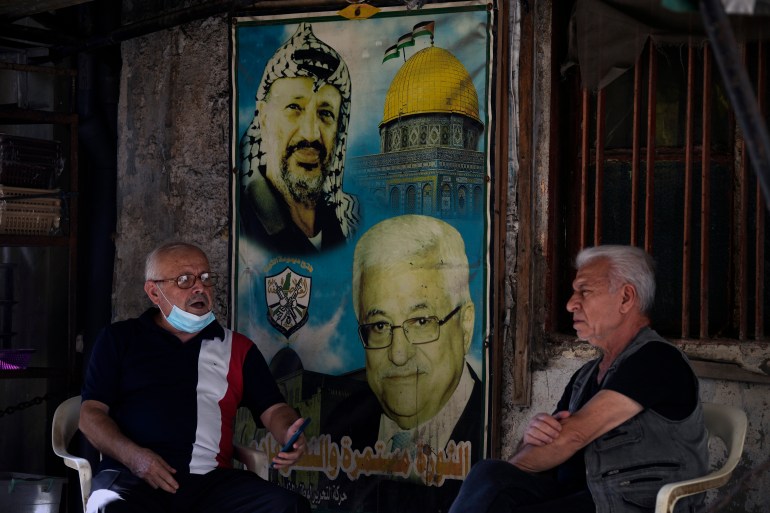
Beirut/Tripoli, Lebanon — The entrance to the Burj Barajneh refugee camp is covered in the small yellow flags of the Palestinian group Fatah displaying the faces of the late Yasser Arafat and his successor, current Palestinian Authority leader Mahmoud Abbas. But these are not the men of the hour. That honour is for a man whose face is unknown because he covers it with a red keffiyeh: Abu Obaida, the spokesman for Hamas’s armed wing, the Qassam Brigades. Fatah and Hamas are opponents with presences in Lebanon, although they often have competing agendas politically or even militarily, but that does not filter down to the Palestinians there. “I’m not with any party, not Fatah or Hamas,” Hassan, a Palestinian refugee in his mid-20s, told Al Jazeera from under the sea of yellow. But, Hassan adds, he likes Abu Obaida because: “We’re with anyone who helps the Palestinian cause.” On October 7, Qassam Brigades and other armed Palestinian factions launched Operation Al-Aqsa Flood, an attack on Israel during which 1,139 civilians and Israeli security personnel died and another 240 or so were taken into Gaza. Israel responded with a vicious campaign of retribution that has now killed more than 28,000 people and displaced more than two million people, or 90 percent of Gaza’s population, to the horror of Palestinians and their supporters all over the world. Israel has also intensified attacks on southern Lebanon in recent days, amid heightened tension with the Hezbollah armed group that dominates the region. On Wednesday, Israeli strikes in Lebanon killed 10 civilians. Amid the destruction and death, Palestinians in Lebanon and many Lebanese have formed an affinity to movements they feel are standing up to Israel effectively. Palestinians speak as they sit next to a poster of the late Palestinian leader Yasser Arafat, left, and Palestinian Authority President Mahmoud Abbas, right, at the Burj Barajneh Palestinian refugee camp, in Beirut, Lebanon, on Friday, October 21, 2022 [FILE: Bilal Hussein/AP Photo] A Palestinian presence in Lebanon for 75 years After the 1948 Nakba, many Palestinian refugee camps were established in Lebanon and 12 remain today across the country, according to the United Nations Relief and Works Agency (UNRWA), with a handful in the capital, Beirut. Each camp has its political dynamics but, historically, Fatah has been the strongest political and social force. The group firmly established itself in the camps in the 1960s and 1970s, thanks in part to the Cairo Accord, which transferred control over the camps from the Lebanese army to the Palestinian Armed Struggle Command. By the time the Lebanese Civil War broke out in 1975, Fatah had established what many considered a state within a state, with checkpoints and roadblocks that earned parts of south Lebanon the label “Fatahland”. But that ability to mobilise has faded a bit over time, with many Palestinians in Lebanon now disillusioned with the status quo and looking to emigrate rather than stay in camps with few political or economic rights or opportunities. “Many are with neither [Fatah nor Hamas],” said Marie Kortam, associate researcher at the French Institute of the Near East specialising in Palestinian groups. Palestinians walk under a poster that shows Yahya Sinwar, head of Hamas in Gaza, on a street inside the Burj Barajneh Palestinian refugee camp, south of Beirut, Lebanon, on Monday, February 5, 2024 [Bilal Hussein/AP Photo] Is Hamas making inroads? Analysts say Hamas is trying to use its moment in the spotlight and the unhappy conditions in the refugee camps to recruit and grow its influence in Lebanon. In early December, Hamas announced “Vanguards of Al-Aqsa Flood”, a recruitment drive it said was to find new political and social cadres. “[They] are trying to form a cadre of politicians and supporters in order to instil in them morals, values and a political formation,” Kortam said. While the Palestinian camps support Abu Obaida, Hamas’s Yahya Sinwar and Qassam Brigades head Mohammed Deif, it is for the resistance they represent, not their party, Kortam maintains. “Hamas is not rooted in the camps like Fatah,” Kortam said. While it is perhaps not as historically strong as Fatah, Hamas “has gained popularity specifically among Sunnis in Lebanon” since October 7, Mohanad Hage Ali, an expert on Islamist groups at the Carnegie Middle East Center, said. In late October, Hamas organised a large protest in downtown Beirut. Thousands of people were bussed in from around the country to take part as green Hamas flags filled Martyr’s Square. While much of the crowd was Palestinian, many Lebanese were also present and some had travelled for hours to get there. On a cold evening in February, Abu Iyad, a 38-year-old Lebanese man, sat at a table in the corner of a cafe off Azmi Street in Tripoli. “We’re with the people of Gaza and if the border was open, maybe people would go,” Abu Iyad, who works as a sports teacher, told Al Jazeera. “Look at Syria and Iraq.” During the Syrian civil war, many young men from north Lebanon, including Tripoli, joined groups fighting against Bashar al-Assad’s regime. Yet, while many in Lebanon’s north are moved or outraged by the violence in Gaza and support the Palestinian cause, they have not mobilised politically or militarily. While there has been gossip about at least one Lebanese father naming his newborn son Obaida, so he can be called Abu Obaida, support for Hamas or the Palestinian resistance here is less steadfast than in the Palestinian camps. Smoking a cigarette outside his cafe near the Tripoli fairgrounds, Hajj Kamal said young people in Tripoli could offer little to the people of Gaza aside from solidarity. “What are we supposed to do, send them an OMT?” he asked mockingly, referring to a Lebanese money transfer service. In November, two men from Tripoli, Lebanon’s second city, were killed when the car they were in was hit by an Israeli strike in south Lebanon. Also in the car was a Hamas operative and two Turkish citizens who had recently landed in the country. Tripoli
Jailed former Thai PM Thaksin Shinawatra to be freed on Sunday

Despite being granted parole, Thaksin could face further legal troubles over charges for insulting the monarchy in 2015. Thailand’s jailed former Prime Minister Thaksin Shinawatra will be freed on Sunday, just six months after returning to the country following more than 14 years in self-imposed exile. Speaking to reporters on Saturday, Prime Minister Srettha Thavisin said Thaksin’s release would be “on the 18th” and handled “according to the rule of law”. Thaksin was granted parole earlier this week but it was not certain until now when he would be freed. Sunday is the first day of his parole eligibility. Justice Minister Tawee Sodsong said earlier this week that Thaksin, 74, would be among 930 prisoners granted early release. Thaksin could still face further legal troubles as public prosecutors are considering charging him for insulting the monarchy during a 2015 media interview. The billionaire who made his fortune in the telecommunications business was jailed for eight years on graft and abuse-of-power charges upon his return to Thailand in August. His sentence was reduced to one year by King Maha Vajiralongkorn and he has served six months in hospital detention due to an undisclosed health condition. His homecoming coincided with his Pheu Thai Party returning to government in alliance with pro-military parties, leading many to conclude that an agreement had been struck to cut his jail time. The rumours grew stronger when he was transferred to a police hospital within hours of being sentenced because of his poor health, and it is not clear that he has spent any time in a prison cell. Local media reported that Thaksin had been suffering from tightness in the chest and high blood pressure when he was admitted to hospital, and his family said he had undergone two operations in the following months. Srettha is from the Pheu Thai Party led by Thaksin’s youngest daughter Paetongtarn Shinawatra. It formed a government after last May’s election, where the progressive Move Forward Party won the most votes but was blocked from taking power by still-powerful elements linked to the military and the traditional elite. The former prime minister swept to power in 2001 on a populist platform that appealed to rural Thais who had long been neglected by the country’s ruling elite. He was returned to office in a landslide five years later, but in September 2006, when Thaksin was in New York preparing to address the United Nations, the military seized power in a coup. Before being convicted for abuse of power and going into exile, mostly in Dubai, Thaksin was accused of serious human rights abuses amid a violent conflict in the country’s largely Muslim southern provinces and a “drugs war”, which killed thousands. Adblock test (Why?)
Japan successfully launches H3 rocket after back-to-back failures

The H3 flagship rocket is designed to replace the H-IIA after more than two decades in service. Japan has successfully launched its next-generation rocket into orbit, the country’s space agency has announced, after two failed attempts cast a pall over Tokyo’s space ambitions. The H3 had a “successful liftoff” at 9:22 am Tokyo time (12:22 am GMT) on Saturday and entered its planned orbit carrying a dummy satellite and two functioning microsatellites, the Japan Aerospace Exploration Agency (JAXA) said in a live broadcast. Employees at the JAXA command centre cheered and hugged each other during the broadcast as the rocket reached its trajectory and released its first payload. The H3’s microsatellites are expected to assist with disaster prevention efforts and monitor the operation conditions of factories. JAXA is scheduled to hold a press conference on the launch later on Saturday. The H3, billed as Japan’s flexible and cost-effective flagship rocket, was designed to replace the H-IIA, which has been in service since 2001. The H3, which was developed with Mitsubishi Heavy Industries, is designed to carry a 6.5 metric tonne payload into space for as little as five billion yen ($33m) per launch, about half the cost of its predecessor. JAXA hopes that the H3’s lower costs and greater payload capacity will attract global clients for missions, such as delivering supplies to the International Space Station and supporting the US-led Artemis moon exploration programme. Tokyo has said it intends to launch about 20 satellites and probes with H3 rockets by 2030. The H3’s successful launch follows back-to-back failures last year, including a botched launch in March that ended with ground control utilising the rocket’s self-destruct function shortly after blast-off after the second-stage engine failed to ignite. JAXA identified three possible electrical faults in a subsequent review of the launch, but could not determine the direct cause of the failure, which caused significant delays to its space plans. Japan last month successfully landed its unmanned probe SLIM on the moon, becoming the fifth country to place a craft on the lunar surface. Adblock test (Why?)
Old ways survive in Bali despite mass tourism, but for how long?

Bali, Indonesia – At dawn, as the first shards of light dance over the rice fields in the seaside village of Seseh on Bali’s west coast, Putu and her husband Made, who like many Indonesians go by one name only, spend an hour reciting prayers and distributing small palm leaf baskets containing offerings to ensure the health of the coming harvest. Later in the day, their 11-year-old daughter will attend a class for “sanghyang dedari”, a sacred trance dance for girls that is designed to counteract negative supernatural forces. Meanwhile, her two older brothers will hone their skills on wooden xylophones and hand drums as part of a traditional “gamelan” orchestra in preparation for a ceremony celebrating the completion of a new Hindu temple, one of more than 10,000 on the island. In the coming weeks, Made and his children will help their neighbours create giant “ogoh-ogoh” dolls, representations of evil mythological creatures fashioned from wood, bamboo, paper and styrofoam, that will be paraded through the streets and set alight the night before Nyepi, the Balinese Hindu new year. Taking place this year on March 11, Nyepi, or the “day of silence”, will see every light on the island turned off, transport come to a halt and the airport close. Everyone, Balinese or not, will stay at home to give evil spirits the impression there is nothing to be found on the island. “Every day I lay offerings, attend a ceremony or go to a temple,” Putu told Al Jazeera. “I do this because I am Hindu, because I believe. My children do the same and when they have children, they will do the same also.” Balinese place small palm leaf baskets containing offerings around their homes, fields, temples and buildings every day [Ian Neubauer/Al Jazeera] The Balinese anomaly Putu’s hopes for the future are shared with the vast majority of Balinese, an island where a hybrid Hindu-Buddhist religion based on ancestor worship and animism dating back to the first century has survived and even thrived in the face of mass tourism. By 1930, tourist numbers reached several hundred per year. Last year, 5.2 million foreigners along with 9.4 million domestic holidaymakers visited Bali, according to government data, and the island is developing at breakneck speed to cater to the demand. The negative effects of such tremendous growth are illustrated in the murals of Balinese artist Slinat, who marries the iconic photographs of Balinese dancers with contemporary emblems like gas masks and dollar bills. “These old photos were the first images used to promote tourism in Bali and convey that it is an exotic place. They kick-started tourism in Bali,” Slinat told Al Jazeera. “But then we had too much tourism and it ruined the exoticness of Bali. So I created this parody to express how much things have changed here since those photos were taken.” Nevertheless, Balinese traditional culture and religion have remained resilient in the face of the tourist onslaught, which is something of an anomaly compared with other tourist hot spots around the world. “When local people entertain tourists, they adapt [to] tourists’ needs, attitudes and values and ultimately start to follow them. By following tourists’ lifestyle, young people bring changes in the material goods,” was the finding of a study on the impact of tourism on culture that was published in 2016 in the Journal of Tourism, Hospitality and Sports. The study said the Pokhara-Ghandruk community in Nepal was a textbook example, where “the traditional fashion, behaviour and lifestyle of young Gurungs have been severely affected by tourism … [who] disobey their elders’ Kinship titles”. It said Indonesia was an exception – a country where “to attract distant tourists, children nurture local customs to create a strong and authentic base of cultural components without disrupting ancestors’ values”. There are no flights in or out of Bali’s international airport on Nyepi day and tourists must stay in their hotels [File: Fikri Yusuf/Antara Foto via Reuters] A lecturer in traditional architecture at Warmadewa University in Bali, I Nyoman Gede Maha Putra explains the roots of that approach. “Colonial government policies dating back to the 1930s that promote how the Balinese should be Balinese, including school curriculums, production of traditional foods and beverages and unsparing investments in religious buildings have played a key role in preserving culture and religion on the so-called Island of the Gods,” he said, adding that construction codes formalised in the 1970s that required no new building to be no taller than a coconut tree had helped maintain “a sense of the place” on the island. “Soon, all our young people will start making ogoh-ogoh paper statues for Nyepi. No one will be left out. They will enjoy the process, they will enjoy the parades, and feel proud when the tourists see what they’ve made. And our daily ceremonies will continue because we believe very strongly that our ancestors’ ghosts live around us and our ceremonies are the only way we can communicate with them,” Maha Putra said. A facade Others say it is the adaptability of Balinese culture that has made it resilient. “Balinese culture is not static,” I Ketut Putra Erawan, a lecturer in political science at Bali’s Udayana University, told Al Jazeera. “Time and time again it has shown it has the power to reinvent itself through the problems and opportunities we face; things like tourism, social media, individualism, capitalism and mass culture. It finds new ways to make itself relevant to young people in new times.” But these new shapes and expressions are not as solid as those of the past, he cautions. “Today we are flooded with so much information and misinformation, and what that tends to do is promote the skin of the culture, the outside element of the culture, things like consumerism and fashion, but not the core of the culture,” Erawan said. “Many people prioritise the wrong things in their cultural expressions. They are much more interested in dressing like Balinese and telling everyone on social
ICJ demands implementation of Gaza measures, but no new action on Rafah

Top UN court notes ‘perilous’ situation but rejects South African request to order urgent measure to safeguard civilians. The top United Nations court said that it notes the “perilous” situation in the southern Gaza city of Rafah, but has declined South Africa’s request for urgent measures to safeguard Palestinians being threatened by an Israeli ground assault there. “The Court notes that the most recent developments in the Gaza Strip, and in Rafah in particular, ‘would exponentially increase what is already a humanitarian nightmare with untold regional consequences’, as stated by the United Nations Secretary-General,” the International Court of Justice (ICJ) said in a statement on Friday. It said the situation in Rafah “demands immediate and effective implementation of the provisional measures indicated by the Court in its Order of 26 January 2024”, when it ordered Israel to take all steps within its power to ensure genocidal acts are not being committed in its war on Gaza. However, the court “does not demand the indication of additional provisional measures”, its statement added. PRESS RELEASE: the #ICJ issues its decision on South Africa’s request for additional provisional measures in the case of Application of the Convention on the Prevention and Punishment of the Crime of Genocide in the Gaza Strip (#SouthAfrica v. #Israel) https://t.co/dh9olqXtD9 pic.twitter.com/KLIMOD69uo — CIJ_ICJ (@CIJ_ICJ) February 16, 2024 South Africa said on Tuesday that it had lodged an “urgent request” with the ICJ to consider whether Israel’s military operations targeting Rafah breach provisional orders the court handed down last month in a case alleging genocide. Israel on Thursday called on the court to reject the request, saying: “South Africa’s unjustifiable claims make clear that its request is not driven by any change in circumstances, nor does it have any basis in fact or law.” ‘Serious breach’ of Genocide Convention Israel’s war on Gaza has killed more than 28,000 Palestinians across the Strip, according to health authorities. The relentless bombardment since October 7 has also displaced most of the population. About 1.4 million people are now sheltering in Rafah, on the border with Egypt, which Israel had initially designated a “safe zone” for civilians. But Israel has been threatening to launch a ground invasion there, a move that the UN and international governments – including Israel’s Western allies – have warned against. South Africa’s urgent request to the court mentioned the hundreds of thousands of civilians trapped in Rafah, many of them fleeing “pursuant to Israeli military evacuation orders, from homes and areas that have largely been destroyed by Israel”. They could now be threatened directly, it said. Israel’s unprecedented planned military offensive against Rafah would result in further large-scale killing, harm and destruction “in serious and irreparable breach” of the Genocide Convention and of the ICJ’s ruling at the end of January, the request added. In its statement on Friday, the ICJ said that Israel “remains bound to fully comply with its obligations under the Genocide Convention and with the said Order, including by ensuring the safety and security of the Palestinians in the Gaza Strip”. Israel strongly denies committing genocide in Gaza. However, the ICJ last month ruled that it had jurisdiction to hear South Africa’s case against Israel, in which the latter is accused of breaching the Genocide Convention. The court ordered Israel to do all it can to prevent death, destruction and any acts of genocide in Gaza, but the panel of judges stopped short of ordering an end to the military offensive that has laid waste to the Palestinian enclave. Adblock test (Why?)
Ukraine signs French security pact after similar agreement with Germany

Deal with France promises $3.23bn in military aid to Ukraine, while pact with Germany secures $1.22bn support package. Ukrainian President Volodymyr Zelenskyy has signed a new long-term security pact with France, hours after securing a similar deal and aid from Germany. France and Ukraine signed a bilateral security agreement seeking to help Kyiv in its war against Russia, the Elysee said on Friday. Signed by Zelenskyy and French President Emmanuel Macron, the pact includes pledges from Paris to deliver more arms, train soldiers in Ukraine and send up to three billion euros ($3.23bn) in military aid. The pact is set to run for 10 years and will not only strengthen cooperation in the area of artillery but also help pave the way towards Ukraine’s future integration into the European Union and NATO, Macron and Zelenskyy said. “Our cooperation yields results in the protection of life in Ukraine and our entire Europe,” Zelenskyy said on his social media platforms, shortly before meeting Macron. Париж. Запланована зустріч із Президентом Макроном і важлива угода. Наша співпраця дає результати в захисті життя України та всієї нашої Європи. 🇺🇦🇫🇷 — Volodymyr Zelenskyy / Володимир Зеленський (@ZelenskyyUa) February 16, 2024 Earlier on Friday, the German Ministry of Defence announced that a deal had been signed between Zelenskyy and Chancellor Olaf Scholz. The German security pact, which will last for 10 years, commits Germany to supporting Ukraine with military assistance and hitting Russia with sanctions and export controls, and ensuring that Russian assets remain frozen. Berlin also prepared another immediate support package worth 1.13 billion euros ($1.22bn) that is focused on air defence and artillery. “The document’s importance cannot be overestimated. It makes clear that Germany will continue to support an independent Ukraine in its defence against the Russian invasion,” Scholz said. “And if in the future there is another Russian aggression, we have agreed on detailed diplomatic, economic and military support,” he added. Avdiivka Zelenskyy’s visit to France and Germany is part of his mini-European tour where he was attempting to secure much-needed aid for Ukraine as Russia’s war in the country rages on, edging closer to its third year. On Friday, Ukrainian troops were trying to hold back Russian forces closing in on the eastern town of Avdiivka. The Ukrainian army said it was pulling back from a position on the southern outskirts of the front-line city, but that its forces were taking up “new positions”. Avdiivka, which Russia has been trying to capture since October, is a main target for Moscow ahead of the second anniversary of the start of the Ukraine war. To tackle battlefield challenges, Ukraine has been facing a shortage of ammunition stockpiles amid delays in Western military assistance. “We are doing everything we can to ensure that our warriors have enough managerial and technological capabilities to save as many Ukrainian lives as possible,” Zelenskyy said on arriving in Germany. In January, UK Prime Minister Rishi Sunak also signed a security accord with Ukraine. Meanwhile, across the pond in Washington, DC, US President Joe Biden has repeatedly been stressing the importance of sending more aid to Ukraine. On Tuesday, the US Senate passed a $61bn aid bill for Ukraine. But the bill still faces an uncertain fate with several right-wing US Republicans in the House already saying they will block it as the money should be spent on domestic issues. On Friday, Biden highlighted that the reported death of Russian anticorruption activist Alexey Navalny brings new urgency to the need for Congress to approve funds for Ukraine to stave off Moscow’s invasion. “The failure to support Ukraine at this critical moment will never be forgotten,” Biden said. “And the clock is ticking. This has to happen. We have to help now.” Adblock test (Why?)
Thorny question of presidential ‘age limit’ grows in US political discourse

The question of whether there should be an age limit for US presidents was raised in a particularly high-profile public forum this week when Congresswoman Katie Porter said in a televised debate that such restrictions “are a conversation for all elected officials that we ought to be having”. Porter’s acknowledgement was made during a candidate debate for the US Senate seat left vacant by Dianne Feinstein’s death in September and represents the latest instance of a thorny issue that is increasingly becoming a topic of discussion in mainstream political life, as the inevitable rematch between 81-year-old Joe Biden and 77-year-old former President Donald Trump takes shape. If elected, Biden would become the oldest sitting president in US history, a mantle he first claimed when he took office in 2021, while Trump would tie Biden for the record if he were to enter office next January at the age of 78. It is an unprecedented situation that has brought potentially uncomfortable questions of age to the fore on cable and internet news talk shows, academia, and public opinion polls. Discussions of cognitive decline in the elderly have proven particularly fraught, raising the spectre of ageism and ableism and a delicate question: How old is too old to lead the wealthiest and most powerful nation in the world? “This year, there’s been an exceptional focus on the age of the candidates, particularly the age of President Biden,” Steven Austad, a professor focusing on ageing at the University of Alabama in Birmingham, said on Thursday while moderating a webinar on presidents and age. “It is an issue that’s not simply being raised by his political opponents, but it’s also been whispered about among people in his own party.” As Porter – a left-leaning Democrat who has aligned with Biden in the past – showed on Monday, those whispers can sometimes be deafening. As the election season draws near, lawmakers, particularly Democrats, have been forced to confront the issue of age more directly, according to Nicholas Beauchamp, a professor at Boston’s Northeastern University who studies political discourse. “Whereas before they sort of avoided it in various ways,” he said. Beyond concerns that advanced age could undermine an official’s ability to perform in demanding jobs, critics have also called it a feature of party politics that favour loyal incumbents and seeks to shut out potentially disruptive upstarts who are more representative of the country’s youth. Porter’s comments “speak to the cleavage within the Democratic Party between the younger members and the older members”, according to Beauchamp, who noted that the 50-year-old congresswoman is competing for the same demographic as 77-year-old progressive stalwart Barbara Lee in the race for the open California seat. “So she’s kind of in the strategic position where she needs to emphasise her youth and empathise with younger Democrats, who may be more concerned about Biden’s age,” he said. Uncomfortable question Recent times have seen public discourse over the subject grow to a fever pitch; elected officials are staying in office longer as life expectancies have extended. Infirmities and illnesses affecting Congressional leaders in recent years – including Feinstein, who died in office at the age of 90, 81-year-old Mitch McConnell and 90-year-old Chuck Grassley – have increasingly stoked calls to impose age or term limits for members of the Senate and House of Representatives. Supporters have argued such limits would discourage parties from continuing to prop up elderly incumbent candidates who are seen as electoral safe bets. But Porter’s articulation of the need to at least explore age limits elevates the argument of those who say term limits are not enough. To be sure, Porter, who was responding to a question on presidential age limits during the debate, said she was not using age as a metric to measure Biden. US presidents are already constitutionally constrained by two four-year terms. There is a minimum age requirement of 35 years, but no maximum age limit. Adding one would require a constitutional amendment, which in itself would require massive – and near-impossible – bipartisan support in both chambers of Congress. It would also require lawmakers to answer a question that many bioethicists and ageing experts see as impossible: What would the cut-off age be? Speaking at Thursday’s webinar, Dr Bradley Willcox, a geriatrician, pointed to the difference between “chronological age” and “biological age”. Put simply, people age differently and maintain vastly different levels of functionality, despite some broad trends. He said it is not feasible to determine an age limit without it being arbitrary. “It totally abrogates the relationship [between biological age and chronological age], because you can be 20, 25 years younger biologically,” he said. “So are you going to make it a calendar age or your biological age that is the limit?” He also pointed to problem-solving capacities like inductive reasoning – the ability to draw larger conclusions based off of specific evidence – and crystallised intelligence – the ability to make decisions based on accumulated knowledge – which are shown to increase with age. Meanwhile, memory and the capacity to learn new problem-solving approaches tend to diminish. Jay Olshansky, a professor of epidemiology and biostatistics at the University of Illinois, Chicago, also described the folly of attempting to use other physical and medical measures to determine a president’s fitness to serve based on their age. “I’m waiting for the cartoon to come out with two presidential candidates on treadmills – connected to every conceivable device,” he said. “This is what running for president will be, a measure of just cognitive functioning and physical functioning and no longer about all the issues that everyone’s interested in.” Still, the question of presidential age – and age limits – is unlikely to leave the political discourse any time soon. That is consistent with public opinion polls that have shown widespread support for imposing age limits. In October of last year, 82 percent of Republicans and 76 percent of Democrats supported imposing a maximum age limit for federal elected officials, according to a
Kremlin critics: What happens to Putin’s most vocal opponents?

Russian opposition figure Alexey Navalny is just one of many Kremlin critics to have fallen foul of the government under President Vladimir Putin’s rule. Navalny, 47, who Russian prison authorities said had died on Friday, was jailed in early 2021 after returning from Germany, where he was recovering from a near-fatal poisoning attack. He was sentenced to 19 years in prison on “extremism” charges that rights organisations widely condemned. In late 2023, he was moved to the remote prison colony in the Arctic Circle where he reportedly died. But Navalny is not the first opposition figure or Kremlin critic to die or be penalised for speaking out against Putin’s government. Here are a few others. Alexander Litvinenko, 43, died in London in 2006 after drinking polonium-210 [File: EPA] Alexander Litvinenko The former Russian FSB spy and Putin critic was killed in 2006 after drinking tea that had been poisoned with polonium-210, a radioactive isotope. Litvinenko had accused Putin, who was prime minister at the time, of corruption and of orchestrating the Moscow apartment bombings which were used as an excuse to start the 1999 Chechen War. Litvinenko, who had claimed citizenship in the United Kingdom, drank the poisoned tea during a meeting with two Russian spies in London. The murder is said to have been approved by Putin, but he has denied the allegation. Mikhail Khodorkovsky Some of Putin’s high-profile critics have been in exile for years. They include former oil tycoon Mikhail Khodorkovsky, who spent a decade in prison after challenging the Russian leader early in his rule. Khodorkovsky left Russia after his release in 2013. He lives in London and has financed media projects critical of the Kremlin. Many of Navalny’s prominent allies similarly fled Russia after his organisations were banned as “extremist”. But the decision in February 2022 to send troops into Ukraine, which ushered in an unprecedented crackdown at home, proved to be a final nail in the coffin for Russia’s opposition movement. Russians opposed to Moscow’s attack on Ukraine are now scattered around the world. Many have fled to Europe and Israel. Boris Nemtsov In 2015, Boris Nemtsov, the former prime minister, was shot dead as he walked home across a Moscow bridge near the Kremlin. The 55-year-old had spoken out about Putin’s annexation of Crimea from Ukraine in 2014 and regularly taken part in opposition protests. Five Chechen men were convicted of killing Nemtsov, but the mastermind of the murder was never found. Nemtov’s allies pointed to the Kremlin and to Chechen leader and Putin-ally Ramzan Kadyrov, who denied the accusation. Vladimir Kara-Murza was jailed for 25 years in April 2023 [File: Moscow City Court/Handout via Reuters] Vladimir Kara-Murza Opposition politician Vladimir Kara-Murza was jailed in April 2023 for 25 years, the harshest sentence so far, for comments critical of the Kremlin and the military operation in Ukraine. Since the Ukraine war began nearly two years ago, the Kremlin has passed strict anti-defamation laws that make it illegal to speak out against the military and can result in long-term sentences. Kara-Murza, 42, was jailed on charges of treason, spreading “false” information about the Russian army and being affiliated with an “undesirable organisation”. His lawyers say he suffers from serious health problems due to two poisoning attempts in 2015 and 2017. Yevgeny Prigozhin Although not a critic of the Kremlin, the Wagner mercenary group founder, Yevgeny Prigozhin, fell foul of his ally Putin months into the Ukraine war. Prigozhin first rose to prominence in Russia for his fighter role in the war. But he died in a plane crash in August 2023 after criticising the army for failing to accomplish its military goals. After taking control of Bakhmut, a city in eastern Ukraine, Prigozhin, 62, became more vocal about his dissatisfaction with the Russian defence ministry, and in June, ordered his troops to march towards the Russian border city of Rostov-on-don. In an address at the time, Putin said that the “armed mutiny” amounted to treason. The Kremlin has rejected accusations that it assassinated the mercenary chief. Boris Akunin Famous author and outspoken Putin critic Boris Akunin, real name Grigory Chkhartishvili, lives in self-imposed exile in Europe. he was added to a list of “terrorists and extremists” by Moscow last month due to his views on the Ukraine war. The Russian justice ministry said he had spread “false information” and accused him of helping raise money for Ukraine. On Friday, Akunin said that Navalny’s death had made him “immortal” and he was now a more significant threat to Putin’s regime. “I also think that a murdered Alexei Navalny will be a bigger threat for the dictator than a living one,” Akunin said. “Most likely, to drown out voices of protest, he [Putin] will launch a campaign of terror in the country.” Adblock test (Why?)