

Russia-Ukraine war: List of key events, day 723
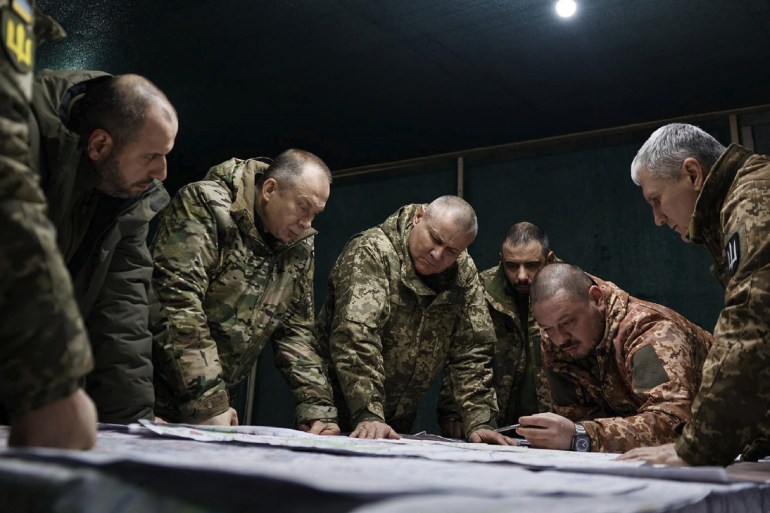
As the war enters is 723rd day, these are the main developments. Here is the situation on Friday, February 16, 2024. Fighting At least seven people were killed in the Russian city of Belgorod after what authorities said was a Ukrainian rocket attack. A shopping centre, sports centre and apartment blocks were damaged. Oleh Syniehubov, the governor of the northern Kharkiv region, said at least three people were killed and two more injured after a Russian bombing hit a car and set a residential building on fire. Russia launched missile attacks on seven Ukrainian regions, including the capital Kyiv, and the cities of Dnipro, Zaporizhzhia and Lviv, injuring at least 11 people. Air raid warnings lasted for more than two hours across the country. The air force said air defences shot down 13 of the 26 missiles Russia launched. Ukraine said it was withdrawing troops from some parts of eastern Avdiivka to more advantageous positions and deployed the battle-hardened Third Assault Brigade to reinforce its forces as Russia intensifies efforts to encircle the front-line town. White House spokesperson John Kirby, meanwhile, said Avdiivka was at risk of falling to Russia because Ukrainian troops were suffering a shortage of artillery ammunition. Admiral Viktor Sokolov, the commander of Russia’s Black Sea Fleet was dismissed, Russian military bloggers and a former Kremlin adviser said, a day after Ukraine said it had destroyed the Russian landing ship, the Caesar Kunikov. There was no official confirmation from Moscow. Ukraine’s military intelligence chief Lieutenant General Kyrylo Budanov told the Wall Street Journal that Russian troops were using thousands of Elon Musk’s Starlink satellite communications terminals after acquiring them from private Russian firms that purchased them from intermediaries. Politics and diplomacy Ukrainian President Volodymyr Zelenskyy will visit Germany and France on Friday and sign bilateral agreements on security commitments with each country. Zelenskyy will also speak at the Munich Security Conference on February 17. Russia’s Supreme Court rejected two legal challenges by antiwar candidate Boris Nadezhdin after he was disqualified from next month’s presidential election, Nadezhdin said. Poland’s special services said they detained a Ukrainian citizen suspected of working for the Russian intelligence agency and planning an attack in the southwestern city of Wroclaw. The man could be jailed for as long as 12 years if convicted. Weapons The United Kingdom detailed plans to jointly lead an international “drone capability coalition” with Latvia aimed at delivering thousands of unmanned aerial vehicles (UAVs) to Ukraine. The drones will include thousands of “first-person view” drones, which give operators the situational awareness to target positions, armoured vehicles and ships. Adblock test (Why?)
Thailand sees Chinese tourism soar as visa requirement dropped

Bangkok, Thailand – Bangkok’s Chinatown, lit up by red-lanterns and decorative banners to celebrate the Lunar New Year holidays, is bustling. As the region welcomed the Year of the Dragon last weekend, ethnic Chinese Thais thronged temples to light candles and pray for good fortune. Inside the glowing red interior of Wat Mangkon Kamalawat – the largest Chinese temple in Bangkok – women wore traditional cheongsam dresses and took photos with their loved ones. Outside, in the hustle and bustle of Yaowarat Road, lion dancers performed as visitors – Thais and legions of tourists – crowded the street, sampling the food and shopping from stalls in the market. Many were from China, with official figures showing hundreds of thousands of Chinese nationals chose to spend the holiday, which began on February 10, in Thailand where they no longer need to get a visa. “Destinations in Southeast Asia traditionally rely on a strong Lunar New Year holiday to kick-start the tourism calendar,” Gary Bowerman, a tourism analyst in Kuala Lumpur, told Al Jazeera. “Thailand has positioned itself astutely to capture outbound travel demand from China with its bilateral visa waiver and aggressive marketing into the Chinese market led by the prime minister. This resonates well with Chinese tourists and has encouraged Chinese airlines to add more capacity over [the] Chinese New Year.” A lion dance on the streets of Bangkok [Tommy Walker/Al Jazeera] Thai Prime Minister Srettha Thavisin started his push to lure more arrivals from China in September when he announced a temporary visa waiver for Chinese tourists. The short-term agreement soon became permanent after Thailand and China signed an indefinite mutual visa exemption for their nationals to visit each other’s country starting from March 1. Nithee Seeprae, deputy governor for marketing at the Tourism Authority of Thailand, says Chinese arrivals have been encouraging. “It’s very exciting and [a] successful Chinese New Year, and it is a positive sign for the new visa waiver between China and Thailand because it brings more confidence for the Chinese tourists,” he told Al Jazeera. “Now we got 27-28,000 tourists [arriving each day] since the 1st of February, it is almost back to normal before Covid. Last year, at the same time, it was 7-8,000. Last month 500,000 [China visitors arrived].” Thailand’s government spokesman Chai Wacharonke said on Saturday that four million tourists had arrived in the country from January 1 to February 8, including more than 730,000 Chinese. Based on Nithee’s approximate figures, Chinese arrivals could reach one million by the end of the month. “We have promotions with online travel agents, and [we] coordinate with normal travel agents to create a roadshow in the big cities in China. Also, the flights are back to 90 percent [capacity] like before the pandemic because of the visa waiving. We [are trying] to coordinate with influencers and key opinion leaders from China to create the content experience in Thailand,” he added. More initiatives planned Phuket, in southern Thailand, has seen an influx of arrivals in recent weeks. Yaowarat Road in Bangkok’s Chinatown is packed with food stalls and shops [Tommy Walker/Al Jazeera] The island hotspot is expected to welcome 49,000 tourists a day through the international airport during the Chinese New Year period until February 16, according to local media. The festival falls in the middle of Thailand’s high season, which usually runs from November to March, and is a major holiday for mainland China. Ranjeet Viswanathan, the director of sales and marketing at the luxury Hyatt Regency Phuket Resort, said occupancy was even higher than many had hoped. “This year has started with a bang. Every hotel has seen better-than-expected results in January and this continues in February. Our hotel has been doing over 92 percent in occupancy since January 1,” he told Al Jazeera. Chinese tourists make up about 12 percent of the resort’s business and the number of travellers in 2024 so far is five percent higher than a year ago. According to the Chinese calendar, 2024 is the Year of the Wood Dragon, which can be a time for new ideas, projects and prosperity. Chinese visitors have long been crucial to the Thai travel industry, but even with the jump in arrivals, the numbers remain well below 2019, the year before the COVID-19 pandemic. In that year, Chinese visitors made up more than 11 million of the record 39 million tourists who visited Thailand. Last year, there were more than 3.5 million Chinese arrivals, but that still fell short of the five million predicted by Thai officials. Experts put the lower-than-expected numbers down to China’s own economic issues and domestic travel trends. The mass shooting in a Bangkok shopping mall in September that killed one Chinese national, and the release of the Chinese blockbuster movie No More Bets, a film depicting scams in Southeast Asia, may have also played a part. The Thai government under Prime Minister Srettha Thavisin has introduced visa-free travel for Chinese tourists [File: Sakchai Lalit/AP Photo] But the recent surge of Chinese visitors to Thailand shows China’s outbound travel is recovering, according to Bowerman, the tourism analyst. “Strong demand for travel to Thailand from China in the first two months of 2024 suggests that this year will be very different for outbound travel from China compared to 2023,” he said. Thai tourism officials have forecast more than eight million arrivals from China by the end of 2024. The tourism authority’s Nithee is already working on luring more visitors from China and is in talks to arrange new flight routes from China into Thai cities including Udon Thani in the northeast and Hat Yai in the south. He is optimistic Thailand is on track to meet its arrivals target by the end of the year. “It is really promising. We have to keep an eye on these situations and get more confidence for tourists and do more promotion,” he added. Adblock test (Why?)
Israeli forces storm besieged Nasser Hospital in Gaza

NewsFeed Israeli forces storm Gaza’s Nasser Hospital in Khan Younis, forcing everyone inside to evacuate and flee for their lives. Published On 15 Feb 202415 Feb 2024 Adblock test (Why?)
‘Catastrophic situation’ at Gaza’s Nasser Hospital amid Israeli raid

There have been scenes of chaos and panic at Nasser Hospital in Khan Younis as Israeli forces stormed the medical facility in the southern Gaza Strip and Palestinians tried to evacuate. The Israeli army has besieged the facility for weeks, isolating thousands of patients, medical staff and displaced families – many of whom remain trapped inside. Verified video footage showed those who tried to flee on Thursday came under attack after leaving the hospital. Gaza Ministry of Health spokesperson Ashraf al-Qudra said Israeli troops were forcing 95 medics, 191 patients and 165 displaced people into an old building at the medical centre under “harsh conditions” without water, food or milk for the children. “The Nasser Medical Complex is witnessing a catastrophic, worrying situation because of the dwindling medical capacity as fuel is set to run out in the next 24 hours, which directly threatens the lives of patients, including six on respirators in intensive care and three children in incubators,” al-Qudra said in a statement. The Israeli army accused Hamas of using the medical compound to hold captives, but it hasn’t provided evidence for the claim. The Palestinian group, which governs Gaza, has vehemently denied it. The raid has displaced patients and medical workers who spoke of terrifying and strenuous conditions. “I left with my husband, who is blind. I was doing kidney dialysis. They destroyed the walls surrounding us as well as the doctor’s room. They ordered us to leave and fired at us, fired bombs and rockets on our heads from the top,” patient Rasmeya Saleem Abu Jamoos told Al Jazeera. “They demolished the building. We left from the door, and we walked through sewage along with my husband. The Israelis then took my husband, and I lost my two bags. I cannot find them,” she said. The Israeli military, which used drones and loudspeakers to tell people to leave Nasser Hospital, said it opened “a secure route” to allow civilians to exit while medics and patients could remain inside. However, witnesses and the medical NGO Doctors Without Borders (Medecins Sans Frontieres, or MSF) said those sheltering inside were afraid to leave after reports that people were shot at on their way out. The Israeli army also fired on people inside the hospital, including a doctor and a nurse. MSF described a “chaotic situation” in the hospital after it was shelled early on Thursday. “Our medical staff have had to flee the hospital, leaving patients behind,” MSF said on X. It said one of its employee is unaccounted for and another was detained by Israeli forces. 🔴 Gaza update: Nasser hospital in Khan Younis, Gaza, was shelled in the early hours of this morning, despite Israeli Forces having told medical staff and patients they could remain in the facility. Thousands of displaced people were ordered to evacuate it on 13 February…🧵 — MSF International (@MSF) February 15, 2024 The Israeli army damaged two ambulances in the medical compound on Thursday, the Health Ministry said. Israeli soldiers have also stormed the maternity ward and were “sweeping” the area, it added. Israeli soldiers “threatened those inside with killing and with direct gunfire”, the ministry said. Ahmed al-Moghrabi, the head of plastic surgery at Nasser Hospital, recorded a message from inside the facility when Israel’s evacuation orders came in. “[The Israeli army] sent a hostage with cuffed hands into the hospital asking him to tell us that we should evacuate. And when people started really evacuating, they opened fire, and they shot at the people, and they killed the hostage as well,” he said. Speaking to Al Jazeera late on Wednesday, he said thousands of people, including critically ill patients, are being delayed at Israeli checkpoints as they try to flee the area. He also described the situation at the hospital as “dangerous”. Nasser Hospital, the largest health facility in southern Gaza, has been under siege for around three weeks. The bodies of several people killed by Israeli sniper fire in the hospital compound have been lying on the ground for days because it is too unsafe for staff to reach them. Israeli forces across the Gaza Strip have repeatedly besieged and raided hospitals, alleging that the facilities are being used as command centres by Hamas fighters. Hamas denies the accusation and the Israeli military has shown no concrete proof of such command centres. The World Health Organization (WHO) has described Nasser Hospital as a critical facility “for all of Gaza”, where only a minority of hospitals are even partly operational. WHO chief Tedros Adhanom Ghebreyesus said Wednesday that he was “alarmed” by reports from Nasser Hospital, which he described as the “backbone of the health system in southern Gaza”. In October, in the first 36 hours of the assault on Gaza, Israel targeted Nasser Hospital as well as the Indonesian Hospital and al-Quds Hospital, killing dozens of healthcare workers. By the end of November, 30 of Gaza’s 36 hospitals had been hit by Israeli rockets. Currently, only six of Gaza’s hospitals remain partially functional. The Ministry of Health in Gaza said at least 28,663 people have been killed in Israel’s attacks since October 7, and at least 68,395 have been wounded. Israel began the assault on Gaza after Hamas fighters from the territory led attacks on southern Israel, killing at least 1,139 people, according to an Al Jazeera tally based on official Israeli figures. Adblock test (Why?)
Venezuela orders suspension of UN rights office, gives staff days to leave

Earlier this week the UN agency expressed ‘deep concern’ over the detention of prominent rights activist, Rocio San Miguel. Venezuela has ordered the local office of the United Nations human rights body to suspend operations and given its staff 72 hours to leave, accusing it of promoting opposition to the South American country. Foreign Affairs Minister Yvan Gil announced the decision at a news conference in the capital Caracas on Thursday. He said the office – the local technical advisory office of the UN High Commissioner for Human Rights – had been used by the international community “to maintain a discourse” against Venezuela. The move came two days after the UN agency expressed “deep concern” over the detention of prominent rights activist Rocio San Miguel and called for her “immediate release”. Gil said the UN rights office had taken on an “inappropriate role” and had become “the private law firm of the coup plotters and terrorists who permanently conspire against the country”. He said the decision would remain in place until the agency “publicly rectify, before the international community, their colonialist, abusive and violating attitude of the United Nations Charter”. In a statement, Venezuela’s government said it decided to suspend the activities of the UN rights office and “carry out a holistic revision of the technical cooperation terms”. It said the review would take place over the next 30 days. It was not immediately clear if the Venezuelan government had notified the UN directly of its order to close the office. UN spokesperson Stephane Dujarric said during his daily briefing on Thursday that he had just been made aware of the decision and would get back to members of the press. The UN human rights office has operated in Venezuela since 2019. Rights activist detained San Miguel, 57, was arrested last Friday in the immigration area of an airport in Caracas, sparking an international outcry. Prosecutors have accused her of taking part in the latest alleged plot to assassinate President Nicolas Maduro, which the government has said was backed by the United States. Authorities said in January that they had uncovered five plots to assassinate Maduro, implicating rights activists, journalists and soldiers. The UN High Commissioner for Human Rights, based in Geneva, Switzerland, on Tuesday expressed “deep concern” over San Miguel’s detention. In a post on the social media platform X, the office urged “her immediate release” and respect for her right to legal defence. Shortly before Gil’s Thursday announcement, the UN agency called for the respect of “due process guarantees, including right to defence” in her case. The detention of San Miguel comes in a crunch election year that has already seen Maduro block his main opposition rival, prompting the US to threaten to reimpose recently eased oil sanctions. San Miguel is the founder of an NGO called Citizen Control, which investigates security and military issues, such as the number of citizens killed or abused by security forces. She has detailed military involvement in illegal mining operations, and a recent femicide in the army. International rights groups see in the arrests a coordinated plan to silence government critics and perceived opponents. Adblock test (Why?)
‘Enough is enough’: Australian PM denounces US, UK legal pursuit of Assange

Anthony Albanese takes stand against attempts to extradite Australian to US ahead of court ruling next week. Australian Prime Minister Anthony Albanese has slammed the years-long United States and British legal pursuit of WikiLeaks founder Julian Assange ahead of a court ruling on his appeal against extradition next week. Albanese said on Thursday that the country as a whole shared the view that “enough is enough”. Assange, 52, is an Australian citizen. Speaking in parliament after backing a motion on Wednesday calling for an end to Assange’s prosecution so that he can return to his family in Australia, Albanese said, “This thing cannot just go on and on and on indefinitely”. Judges at London’s High Court are due to rule on Assange’s appeal against extradition to the United States at a hearing on February 20 and 21. He has spent five years in London’s high-security Belmarsh Prison, battling extradition to the US, where he is wanted on criminal charges over the release of confidential military records and diplomatic cables in 2010. Washington says the release of the documents had put lives in danger. Assange was arrested after spending seven years in Ecuador’s embassy in London to avoid extradition to Sweden, where he faced accusations of sexual assault, which were later dropped. Reporting from London, Al Jazeera’s Sonia Gallego said that his supporters fear that Assange could essentially be “put behind bars for the rest of his life”. “What they’re essentially saying is that it is really the last chance for … Assange to be able to be granted any sort of freedom,” she said at a press conference held by Assange’s supporters. They said it would be a “terrible thing” for the notion of press freedom, Gallego reported, in essence, “setting a precedent for those who’ve been tried under the Espionage Act to essentially be pawns in the system”. Geoffrey Robertson, a former legal adviser to Assange, said the whistleblower had suffered enough. “He’s published details that were available to three million servicemen and officials about American policy and about war crimes that America committed. And this is what he’s got for it,” he told Al Jazeera. Australia’s parliamentary motion was a “wake-up call” for Washington, he said. He expected that the case would drag on after next week’s ruling. Assange, he said, would eventually have the option of taking his case to the European Court of Human Rights to request an interim order that could halt his extradition. ‘Standing as one’ Albanese said that the Australian government had a duty to lobby for its citizens and that he had raised the issue “at the highest levels” in Britain and the US. Australia should not interfere in the legal processes of other countries, he said. “But it is appropriate for us to put our very strong view that those countries need to take into account the need for this to be concluded.” Speaking in parliament on Wednesday, MP Andrew Wilkie, who authored the parliamentary motion, said that it sent a powerful message that Australia stood “as one” on the matter, he said. “Regardless of what you might think of Mr Assange, justice is not being served in this case now,” he said. Pleased to see @AlboMP give his strongest, clearest and most detailed statement on Julian Assange in the Federal Parliament today in response to my question. Please see full question and response at https://t.co/ZBZiBuP39h. #FreeAssangeNOW #auspol #politas — Andrew Wilkie MP (@WilkieMP) February 15, 2024 Adblock test (Why?)
Bay FC break women’s football transfer record to sign striker Kunhananji

Zambia forward Racheal Kundananji becomes the most expensive female footballer as she signs for US side Bay FC. Zambia forward Racheal Kundananji has become the most expensive player in the history of women’s football after signing for National Women’s Soccer League (NWSL) expansion team Bay FC. The US club, based in the San Francisco Bay Area, signed the 23-year-old from Spanish club Madrid CFF for a fee of $788,000. Bay FC will play in the NWSL for the first time this year, becoming the league’s 14th team. The regular season starts on March 16. The deal also represents the first time an African player, male or female, has broken a world transfer record. Kundananji has signed a four-year contract with an option for a fifth year with the signing coming just two weeks after Nigeria’s Asisat Oshoala, who won the African Footballer of the Year award for the sixth time in December, signed from Barcelona. The Copper Queen @KKundananji has arrived! 👑 The Zambian forward joins #BayFC from @MadridCFF. Read the announcement at: https://t.co/S5koi2QcV6#WeCameToPlay pic.twitter.com/xqNt4YN7zw — Bay Football Club (@wearebayfc) February 13, 2024 ‘A natural ability to score’ Kundananji played for Zambia in last year’s Women’s World Cup. Overall, she has 10 goals in 18 games with her national team. She scored 33 goals in 43 Liga F games since joining Madrid CFF in 2022. “Racheal has a composure in front of goal and a natural ability to score with different types of finishes and from various locations,” Bay FC general manager Lucy Rushton said in a statement. “We believe she will continue to grow and develop at our club, showcasing her skillset and adding to the array of exciting attacking talent we have here.” Kundananji arrived at Madrid CFF from Sociedad Deportiva Eibar and quickly became one of the club’s top players. “[She] improved with our club to become a great forward and we hope for the best in her next professional adventure,” the Spanish club said. “Madrid CFF once again demonstrates that it is one of the best clubs in attracting and incubating talent and will continue working with that goal in the future.” Kundananji’s arrival with the team is pending the approval of her visa and international transfer certificate. The transfer tops the reported fee of nearly $500,000 that Chelsea paid last month to Spanish club Levante for Maya Ramirez. Adblock test (Why?)
Which countries have stopped supplying arms to Israel?

EXPLAINER As civilian casualties continue to mount in Gaza, global calls for countries to halt arms sales to Israel grow. The United States Senate has approved a bill committing $14bn to support Israel’s war on Gaza this week. Even before the start of the war last October, the US firmly supported Israel with the supply of military equipment, contributing $3bn annually in military aid. Many other countries provide military support to Israel via arms sales. Civilian casualties continue to mount in Gaza – currently standing at more than 28,000 dead with thousands more trapped under rubble and presumed dead in just four months of bombardment and ground invasions. The rising death toll is prompting international condemnation from humanitarian and civil society groups in the form of statements, protests and lawsuits filed against countries alleged to be providing military support to Israel. Some countries are responding to this pressure. On Monday, the European Union foreign policy chief, Josep Borrell, commented on US President Joe Biden’s description of Israel’s response to the October 7 Hamas attacks as “over the top”. “Well, if you believe that too many people are being killed, maybe you should provide less arms in order to prevent so many people being killed,” Borrell told reporters. So which countries continue to send weapons to Israel and which are taking steps to suspend supply? Who supplies arms to Israel? According to the Stockholm International Peace Research Institute’s arms transfers database, 68 percent of Israel’s weapons imports between 2013 and 2022 came from the US. The US military also stockpiles weapons on the ground in Israel, presumably for use by the US army itself. However, the US has allowed Israel to make use of some of these supplies during the Gaza war. Besides the US, Israel also receives military imports from other nations. Weapons imported from Germany make up 28 percent of Israel’s military imports. Germany’s military exports rose nearly tenfold in 2023 compared with 2022 after it increased sales to Israel in November, according to figures from the German Economic Ministry. Germany primarily supplies Israel with components for air defence systems and communications equipment, according to the German press agency dpa. The United Kingdom has licensed at least 474 million pounds ($594m) in military exports to Israel since 2015, Human Rights Watch reported in December 2023. These exports included aircraft, missiles, tanks, technology and ammunition, including components for the F-35 stealth bomber used in Gaza. In Canada, dozens of civil society groups have recently urged Prime Minister Justin Trudeau to end arms exports to Israel. The government says it does not send full weapons systems to Israel, but these civil society groups claim it is downplaying the amount of military support it provides. “Canadian companies have exported over $84m [114 million Canadian dollars] in military goods to Israel since 2015,” said Michael Bueckert, vice president of Canadians for Justice and Peace in the Middle East, an advocacy group, adding that the government has continued to approve arms exports since the start of the war. Australia’s foreign affairs minister has said the country has not provided weapons to Israel since the start of the war. However, The Australian Greens party’s defence spokesperson, David Shoebridge, has asked for the government to be more transparent about exactly what items have been exported to Israel, adding that the country has one of the most secretive weapons export systems in the world. Amnesty International has also called on Australia to halt arms sales to Israel and claims the country has approved 322 defence exports to Israel over the past six years. In France, a pro-Palestine demonstration on February 7 called on French companies, including Dassault Aviation, to stop selling arms to Israel. Demonstrators said, according to the Anadolu news agency, “all French companies that sell arms to the Tel Aviv administration are complicit in Israel’s genocide in Gaza”. Demonstrators condemn Israel’s military operations in the Gaza Strip, near the southern port city of Limassol, Cyprus, January 14, 2024. Lawyers say weapons sales to Israel could render other countries ‘complicit’ in war crimes in Gaza [Petros Karadjias/AP Photo] Which countries are stopping arms supplies to Israel? In the Netherlands, a court on Monday gave the government one week to block all exports of parts for the F-35 fighter jet, which Israel is using to bomb the Gaza Strip. The ruling was the result of a lawsuit filed by Dutch humanitarian organisations Oxfam Novib, PAX Netherlands Peace Movement Foundation and The Rights Forum against the government. The concerns laid out in this lawsuit overlap with the issues the International Court of Justice (ICJ) is considering in South Africa’s apartheid case against Israel. “It is undeniable that there is a clear risk the exported F-35 parts are used in serious violations of international humanitarian law,” the court ruling stated. In Belgium, a regional government said it suspended two licences for the export of gunpowder to Israel on February 6. It was reported that the regional government cited the ICJ interim ruling which found Israel may “plausibly” be committing genocide in Gaza. Japanese company Itochu Corporation announced on February 5 that it will end its partnership with Israeli weapons manufacturer Elbit Systems by the end of February. Itochu chief financial officer Tsuyoshi Hachimura told a news conference that the suspension of a memorandum of understanding (MOU) with Elbit Systems was based on a request from Japan’s Ministry of Defense and “not in any way related to the current conflict between Israel and Palestine”. However, he added: “Taking into consideration the International Court of Justice’s order on January 26, and that the Japanese government supports the role of the Court, we have already suspended new activities related to the MOU, and plan to end the MOU by the end of February.” Foreign Minister Antonio Tajani said on January 20 that Italy had suspended all shipments of weapons systems or military material to Israel since the outbreak of the war on October 7. This was in response to Democratic Party leader Elly Schlein’s calls on
Will Israel release Marwan Barghouti, the ‘Palestinian Mandela’?

Marwan Barghouti’s supporters call him the Palestinian Mandela. Like the South African leader who was imprisoned by the apartheid regime for 28 years, the Fatah politician has been in jail for more than two decades. Now, despite growing calls for his release — including from Hamas, a longtime rival of Fatah — his incarceration appears poised to continue. On Wednesday, Israel’s extreme right security minister Itamar Ben-Gvir, announced that Barghouti had been placed in solitary confinement. Al Jazeera has independently confirmed this. Barghouti was a prominent leader in the first and second Intifadas and was convicted by an Israeli court on five counts of murder in 2004, two years after he was jailed. His imprisonment by Israel has been among the most high profile and his release has long been a key aim of several of the groups opposing Israel’s occupation of Palestine. Protesters wave banners of Marwan Barghouti under a statue of Nelson Mandela, at a rally supporting hunger-striking Palestinian prisoners in Israeli jails, in Ramallah, May 3, 2017 [Nasser Nasser/AP Photo] Israel accused Barghouti of having founded the Al-Aqsa Martyrs’ Brigades in the early 2000s and indicted him on 26 charges of murder and attempted murder attributed to the Brigades. He was sentenced by an Israeli court to five cumulative life sentences, plus 40 years for attempted murder and membership in a terrorist organisation. Barghouti offered no defence, refusing to recognise the authority of the Israeli court and saying only that he supported the armed resistance but opposed the targeting of civilians. Israeli reluctance Barghouti’s absence from Palestinian politics has done little to dampen his popularity. According to a wartime poll by the Palestinian Center for Policy and Survey Research, Barghouti is the most popular Palestinian leader, with support for him outstripping Hamas leader Ismail Haniyeh and the Western-backed Mahmoud Abbas, whose resignation 90 percent of those polled called for. His son, Arab Barghouti, and those around him have heard nothing to suggest the elder Barghouti’s release might be imminent, but he remains optimistic, especially with Hamas demanding his release early in February. “Hamas wants to show to the Palestinian people that they are not a closed movement. They represent part of the Palestinian social community,” Qadoura Fares, who heads the Commission of Detainees and Ex-Detainees Affairs in the occupied West Bank told The Associated Press. “From a Palestinian perspective, the timing for his return is especially auspicious,” Khaled Elgindy, a senior fellow with the Middle East Institute said. “Barghouti is a highly respected figure by all sides. Moreover, he’s a unifying figure and that’s what the Palestinians need. That, or even the promise of that,” he added. Hamas understands that, in the wake of October 7, it cannot be the public face of the Palestinian national movement, Elgindy added. But, analysts have said, Israel will be very reluctant to release a man who can mobilise so many people. Barghouti, his son Arab tells Al Jazeera, “knows he can be the guarantee for unifying the Palestinian people and political partnerships, and that’s what Israel is scared of.” Ironically, it may well be Barghouti’s commitment to a two-state solution that presents the most significant threat to an Israeli government seemingly determined to backtrack upon the agreements it undertook in Oslo in the 1990s, analysts have suggested. Barghouti was one of the authors of the 2006 Palestinian Prisoners’ Document, an extraordinary achievement that not only recognised Israel but had a broad range of signatories whose factions lent their names to the document. In it, members of Fatah, Hamas, Islamic Jihad, the Popular Front for the Liberation of Palestine (PFLP) and the Democratic Front for the Liberation of Palestine called for the establishment of two states, with resistance to Israeli occupation limited to military targets within the territory seized by Israel in the 1967 war. “Israel has every reason to keep him in prison,” Elgindy said, “It’s the old colonial strategy of divide and rule … Netanyahu is going to be very keen on keeping the West Bank separate from Gaza and Abbas, with all his shortcomings, in place,” he added. Pragmatism Allied to the potential difficulties of having to deal with a unified Palestinian front is Barghouti’s reputation as a noted resistance fighter and someone Israel convicted for his past actions. “Releasing Barghouti is going to take a degree of pragmatism that appears beyond Netanyahu’s right-wing cabinet, or Netanyahu himself for that matter,” Elgindy said. “From what we’ve seen, they have no interest beyond playing to their base, and their base’s basest instincts.” International support for Barghouti’s release may also be uncertain. “For the Biden administration, it’s an option,” Elgindy cautioned, “but I don’t know if there’s enough pragmatism in that government to deal with Barghouti,” a man routinely lambasted in the Israeli media and convicted on five counts of murder. Retaining his seat on Fatah’s Central Committee, Barghouti is understood to retain his belief in drawing the various Palestinian factions together and ending much of the factionalism that has held since Hamas’s 2006 election victory and fighting between the group and Bargouthi’s own Fatah party. That Barghouti has retained his influence on the Palestinian population was apparent in December when Quds Press published a statement it said it received from him, calling on all the Palestinian factions in the occupied West Bank to rise up and fight the Israeli occupation. The purported call spread like wildfire and the prisoner was thrown into solitary confinement where, lawyers say, prison authorities removed his mattress and bedding, blocked his access to basic hygiene facilities and subjected Barghouti to speakers blasting out the Israeli anthem for 12 hours a day. “No one’s been able to visit him since October,” Arab said, “How anyone could claim to have got a statement out of him I don’t know. It’s been a full-time job to get him a new lawyer.” Since October 7, there have been numerous reports and testimonies by prisoners about the mistreatment and abuse they faced from Israeli prison authorities. Questioned by British
World leaders warn Israel against ‘catastrophic’ Rafah ground offensive

Australia, Canada, New Zealand say ‘there is nowhere else for civilians to go’ and urge Israel to ‘listen to its friends’. World leaders are ratcheting up pressure on Israel to abandon its plans for a ground offensive in Rafah as an exodus from the southern Gaza city once declared a “safe zone” which shelters more than half the enclave’s population is under way. As Israel stepped up its air strikes and artillery fire, Australia, Canada and New Zealand issued a joint statement on Thursday, calling for an “immediate” humanitarian ceasefire”, warning that Israel’s planned operation would have a “devastating” impact on the Palestinians taking refuge in the area. “There is simply nowhere else for civilians to go,” said the prime ministers of the three countries, Anthony Albanese, Justin Trudeau and Christopher Luxon, adding that Israel “must listen to its friends”. The leaders pointed out that many of their own citizens and families were among the estimated 1.4 million displaced Palestinians, who have been driven into makeshift camps in Gaza’s southernmost city by Israel’s relentless bombardment across the Strip. Joint statement with @JustinTrudeau and @chrisluxonmp. pic.twitter.com/Egqy6ZyrtZ — Anthony Albanese (@AlboMP) February 15, 2024 Spain and Ireland also applied pressure on Israel on Wednesday, asking the European Commission to urgently review whether Israel is complying with its human rights obligations in Gaza. In a joint letter, Pedro Sanchez and Leo Varadkar, the prime ministers of Spain and Ireland respectively, said that attacking Rafah posed “a grave and imminent threat that the international community must urgently confront”. ‘Stop and think seriously’ On Monday, British Foreign Secretary David Cameron said Israel should “stop and think seriously” before launching its ground invasion of Rafah. Asked whether Israel had breached international law, he said: “We think it is impossible to see how you can fight a war amongst these people. There’s nowhere for them to go.” Alexander De Croo, the prime minister of Belgium, said any Rafah operation could generate an “unmitigated humanitarian catastrophe”, as did Annalena Baerbock, the foreign minister of Germany, one of Israel’s staunchest allies. Displaced Palestinians stand outside their tents in Rafah in the southern Gaza Strip, on February 14, 2024 [Said Khatib/AFP] United States President Joe Biden, who faces widespread condemnation for his unconditional support of Israel’s war on Gaza, is reportedly expressing frustration with Israeli Prime Minister Benjamin Netanyahu behind closed doors. Recalling Biden’s comments last week that Israel’s response to the October 7 Hamas attacks that triggered the current conflict had been “over the top”, European Union foreign policy chief Josep Borrell said Washington should cut arms supplies to Israel. “Well, if you believe that too many people are being killed, maybe you should provide less arms in order to prevent so many people being killed,” Borrell told reporters after a meeting of EU development aid ministers in Brussels. Despite pressure from foreign governments and aid agencies to halt its planned Rafah operation, Israel insists it must push into the city near the border with Egypt and eliminate Hamas battalions. “We will fight until complete victory and this includes a powerful action also in Rafah after we allow the civilian population to leave the battle zones,” Netanyahu said on Wednesday. Should the assault go ahead, the risk of atrocities is “serious, real and high”, said the United Nations’ special adviser on the prevention of genocide, Alice Wairimu Nderitu. Israel’s attacks on Gaza have killed at least 28,576 Palestinians and wounded 68,291 since October 7, according to the Ministry of Health in Gaza. The death toll in Israel from the Hamas-led attacks stands at 1,139. Adblock test (Why?)