

Jimmy Lai pleads not guilty to national security, sedition charges

Media tycoon is the most prominent individual to face trial under the law imposed by China in 2020. Hong Kong media tycoon Jimmy Lai has pleaded not guilty to all charges in his closely-watched trial under the territory’s national security law that could see him jailed for life. Lai, 76, has been in prison since December 2020 and faces two counts of “conspiracy to collude with foreign forces” under the China-imposed security law as well as “conspiracy to publish seditious publications” under a colonial-era sedition law. His trial was delayed by a year – after the Hong Kong government questioned his choice of lawyer – seeking Beijing’s intervention – and finally got under way in December. The founder of the now-defunct Apple Daily newspaper is one of Beijing’s most vocal critics and has already been convicted on lesser charges related to the management of the media firm and his involvement in a vigil to mark the 1989 Tiananmen Square massacre. “Not guilty,” Lai responded in English as each of the three charges was read out. Wearing a white shirt and a navy blue jacket, Lai was surrounded by three prison guards in the defendant’s dock. He wore headphones to help him hear the trial more clearly, according to his lawyer. Other defendants in the case include three Apple Daily companies that have been taken over by the Hong Kong government, six former executives of the newspaper and two young activists related to an advocacy group called Stand With Hong Kong Fight For Freedom (SWHK). Journalists try to get a shot of Jimmy Lai as the prison van arrives at the West Kowloon Magistrates’ Courts [Billy HC Kwok/AP Photo] Beijing imposed the broadly-worded national security law in June 2020, saying it was necessary to restore stability following the mass protests the previous year, which began amid popular opposition to a plan for an extradition bill with the mainland. Amnesty has said the law has “decimated” Hong Kong’s freedoms and many pro-democracy politicians and activists have left the territory. The United States and the United Kingdom have called for Lai’s immediate release and raised concerns about whether he will receive a fair trial. Lai is also a UK citizen. “This case is about a radical political figure… who conspired with others to bring into hatred and stir up opposition to the government of ([Hong Kong] and the central authorities and to collude with foreign countries or external elements to endanger national security,” lead prosecutor Anthony Chau told the court on Tuesday. Chau labelled Lai “the mastermind” who used his media business “as a platform to pursue his political agenda… and orchestrated a conspiracy with the so-called democracy and freedom advocacy group Stand with Hong Kong Fight for Freedom”. The prosecution cited 161 publications of Apple Daily between April 2019 and the newspaper’s last day in June 2021 as “examples of seditious publications… with a view to polluting the minds of the impressionable ones”. Lai was also accused of providing instructions and financial support for SWHK to lobby foreign countries for sanctions, including the US, UK, Australia, Japan and Portugal. The trial is being heard by three specially-selected security law judges and there is no jury. It is scheduled to continue for 80 days until March next year. Adblock test (Why?)
Russia-Ukraine war: List of key events, day 678

As the war enters its 678th day, these are the main developments. Here is the situation on Tuesday, January 2, 2024. Fighting Russian President Vladimir Putin promised to intensify strikes on Ukraine after the death toll rose to 25 in Saturday’s unprecedented raid on the Russian city of Belgorod, not far from the border. Moscow has blamed Kyiv for the Belgorod attack, which came a day after Russia launched some 158 missiles and drones on Ukrainian cities killing 30 people in Kyiv and elsewhere. Ukraine held a day of mourning for Friday’s attack, the deadliest on the capital since Russia began its full-scale invasion in February 2022, as five more bodies were recovered from the rubble in Kyiv. Ukraine’s air defence systems destroyed 87 of 90 drones launched on the country by Russia, some of which targeted port infrastructure in Odesa. Oleh Kiper, the head of the region’s military administration, said a 15-year-old boy was killed and seven people injured after falling debris from one of the drones hit a residential building in the southern city. Drone strikes and artillery fire also killed three people in Ukraine’s Kherson, Kharkiv and Sumy regions, according to officials. Four people were killed by artillery fire in the Russian-occupied eastern city of Donetsk, according to Denis Pushilin, the Russian-installed head of the broader Donetsk region, adding that 14 people had been injured. One person was also killed and another wounded in shelling on the Russian border town of Shebekino, regional Governor Vyacheslav Gladkov said. Adblock test (Why?)
South Korean opposition leader stabbed in neck, rushed to hospital
DEVELOPING STORYDEVELOPING STORY, Lee Jae-myung was attacked as he spoke to reporters during a visit to the southeastern port city of Busan. South Korean opposition leader Lee Jae-myung has been rushed to hospital after he was stabbed in the neck during a visit to the southeastern port city of Busan. Lee, who heads the main opposition Democratic Party, was stabbed on the left side of his neck as he walked with journalists on Tuesday morning answering their questions. Citing witnesses, South Korea’s Yonhap news agency reported the suspect had approached Lee for an autograph pretending to be a supporter. He then attacked him with a weapon that was between 20 and 30 centimetres (7.9 – 11.8 inches) long. The unidentified man was arrested at the scene, the agency added. Pictures in South Korean media showed 59-year-old Lee lying on his back on the ground with his eyes closed, as officials crowded around him and one pressed a cloth against his neck. Yonhap said the politician was bleeding, but remained conscious. He was taken to hospital by helicopter. Lee, who had earlier toured the site of a new airport under construction on Busan’s Gadeok Island, ran for the presidency in 2022, but lost narrowly to conservative Yoon Suk-yeol in a fiercely-fought campaign. Yoon expressed “deep concern” at the attack on Lee and called for an immediate and thorough investigation. Although South Korea has strict gun laws, politicians have been attacked with other weapons, and there is normally a police presence at major events involving high-profile political leaders. Lee’s predecessor, Song Young-gil, was attacked in 2022 at a public event by an assailant who hit him in the head with a blunt object. Park Geun-hye, who later became president, was attacked with a knife at an event in 2006 while she was conservative opposition party leader and needed surgery for the wound on her face. Born into a poor farming family, Lee entered politics when was elected mayor of Seongnam, a satellite city of Seoul, in 2010. He worked in a factory to put himself through night school and become a human rights lawyer. His recent career has been overshadowed by a number of scandals. He faces trial on charges of bribery in connection with a firm that is suspected of illicitly transferring $8 million to North Korea, and is also accused of breaching his duties as Seongnam mayor after one of the city’s companies made a loss of 20 billion won ($15 million) while he was mayor. Adblock test (Why?)
Japan lifts tsunami warnings but warns quake damage ‘widespread’

At least 20 people reported dead since the 7.6 magnitude quake struck the west coast on New Year’s Day. At least 20 people have been reported dead after a massive earthquake hit the coast of central Japan on New Year’s Day with Prime Minister Fumio Kishida warning that damage was “widespread” and casualties were likely to rise. The 7.6 magnitude quake struck on Monday afternoon near the Noto Peninsula in Ishikawa Prefecture, triggering the country’s first major tsunami warning since the March 2011 earthquake and tsunami that left about 18,500 people dead or missing in the northeast. Speaking on Tuesday, Kishida said “extensive damage” had been confirmed with the quake bringing down buildings and triggering fires. Casualties were “numerous” he said, adding that it would be a “race against time” to rescue victims. The tsunami warning, which was later downgraded, was lifted on Tuesday morning. Citing local authorities, Kyodo news agency reported more than 20 deaths from the disaster. Public broadcaster NHK said 15 had died in the hard-hit town of Wajima near the epicentre, where 14 people were reported to be trapped in collapsed buildings. In nearby Suzu, it said some doctors were unable to reach a hospital that was relying on a backup generator for power. Japan’s disaster management agency said it had received unconfirmed reports of 19 deaths earlier on Tuesday but official updates on the toll have been infrequent. The Japan Meteorological Office said the country had been hit by 155 earthquakes since the initial tremor on Monday. A huge fire burned near the port of Wajima following the earthquake before it was eventually extinguished [Jiji Press via AFP] Wajima was hit by a tsunami of at least 1.2 metres (4 feet) and aerial news footage showed devastation from a major fire as a seven-storey building collapsed at the port. The fire engulfed a row of houses with people being evacuated in the dark, some with blankets and others carrying babies. Nobuko Sugimori, a 74-year-old resident of Nanao city in Ishikawa, said she had never experienced such a quake before. “I tried to hold the TV set to keep it from toppling over, but I could not even keep myself from swaying violently from side to side,” Sugimori told the Reuters news agency from her home, which had a large crack down its front wall and furniture scattered around the inside. Across the road, 73-year-old Fujiko Ueno, was counting her blessings. She said nearly 20 people were in her house for a new year celebration when the quake happened but nobody was injured. “It all happened in the blink of an eye” she said, standing in the street among debris from the wreckage and mud that oozed out of the cracked road. Nearly 100,000 people across nine prefectures were evacuated and spent the night in sports halls and school gymnasiums, commonly used as evacuation centres in emergencies in Japan. Almost 33,000 households remained without power in Ishikawa prefecture early on Tuesday morning, according to Hokuriku Electric Power’s website. NHK said most areas in the northern Noto Peninsula were also without water. As a result of the disaster, the Imperial Household Agency cancelled Emperor Naruhito and Empress Masako’s New Year’s appearance, which had been expected to take place on Tuesday. Houses collapsed in the town of Nanao in Ishikawa prefecture [Kim Kyung-Hoon/Reuters] Japan’s allies expressed their concern at the disaster and said they were ready to offer assistance. “As close allies, the United States and Japan share a deep bond of friendship that unites our people. Our thoughts are with the Japanese people during this difficult time,” US President Joe Biden said in a statement. French President Emmanuel Macron expressed “solidarity”, while Italian Prime Minister Giorgia Meloni offered condolences and assistance. United Kingdom Prime Minister Rishi Sunak said he was monitoring developments. “My thoughts are with all those affected by the earthquakes in Japan which have caused such terrible damage,” he said. Adblock test (Why?)
US watching Taiwan elections closely as China reiterates claim to island

Last month, Joe Biden and Xi Jinping strolled through the lush gardens of a grand California mansion engaged in a candid, intimate conversation. It was their first face-to-face summit in a year and the Chinese president was blunt – Taiwan, Xi told his US counterpart, was the most important and dangerous issue in the two countries’ fractious relationship. Beijing’s policy towards the self-ruled island it claims as its own will again be under the spotlight when voters in Taiwan go to the polls on January 13 to choose a new president and parliament, and the United States will be watching closely. At the moment, William Lai Ching-te, the incumbent vice president and the candidate of the ruling Democratic Progressive Party (DPP), is expected to emerge the winner. That result would likely rankle Beijing, which portrays Lai as a “separatist” bent on independence and ensure continued tension across the narrow strait that separates the island from China. “Washington is well prepared to deal with any choice that the Taiwan electorate makes, but there’s certainly going to be different opportunities and challenges depending on what the results of the election are,” Rorry Daniels, the managing director of the Asia Society Policy Institute, told Al Jazeera, adding that the US would be considering strategies for the “appropriate political signals” to deter any Chinese military responses. William Lai, the presidential candidate of the ruling Democratic Progressive Party (DPP), is leading the polls [I-Hwa Cheng/AFP] Beijing has stepped up pressure on Taiwan since voters first elected the DPP’s Tsai Ing-wen as president in 2016, cutting off all official dialogue, conducting military activities around the island and encouraging Taipei’s few remaining formal diplomatic allies to switch recognition to Beijing. The US, which maintains official ties with China, is, however, Taiwan’s most significant international supporter and is bound by law to provide Taipei with the means to defend itself. In August, it approved the sale of millions of dollars of military equipment and weapons to the island. Potential outcomes Opinion polls put Lai just ahead of Hou Yu-ih from the opposition Kuomintang (KMT). While the KMT is seen as friendlier towards Beijing, none of the candidates supports the unification which is a cornerstone of Beijing’s policy towards the island. All the candidates, to varying degrees, want to continue cooperation with the US and keep China’s influence at bay. Since taking office, Tsai, who argues that the people of Taiwan should choose their future, has bolstered cooperation with Washington, welcoming dozens of US politicians, including former House of Representatives Speaker Nancy Pelosi and meeting key representatives on stopovers in the US, despite fury in China. “She is now, I would argue, the best Taiwan president the US will ever get,” said Kharis Templeman, the programme manager of the Project on Taiwan in the Indo-Pacific at Stanford University’s Hoover Institution. A victory for the DPP’s Lai, who has also visited the US, could further distance Taiwan from Beijing, which has accused Lai of calling for independence and risking war. When Pelosi visited Taipei in August 2022, Beijing launched unprecedented war games over and around the island and cut military communication channels with Washington. “Lai will be very focused in the absence of open channels for dialogue with Beijing, making sure his US relationships are really strong,” said Daniels. Supporters at a Kuomintang (KMT) rally last month. The party is seen as being more friendly towards Beijing [I-Hwa Cheng/AFP] If the KMT’s Hou were to win, Daniels says the US would need to figure out how to counter the probable increased influence of Beijing, but analysts say a Hou victory could also be potentially beneficial to US-China ties by lowering the temperature in cross-strait relations. “That would allow the US and China to move Taiwan from the centre of the relationship off to the side,” Stanford’s Templeman noted. One caveat is that parliamentary elections will also take place on January 13 and while Lai is leading the surveys for president, experts say the DPP could lose its majority in the legislature. In that kind of scenario, the US government will be watching the candidates to see how they cope with inter and intra-party negotiations. Questions have already been raised over the ability of the opposition parties to work together after the KMT and Taiwan People’s Party’s attempt to submit a unity ticket and mount a concerted challenge to the DPP collapsed in disarray. Hou and the TPP’s Ko Wen-je ended up in an embarrassing public debacle, unable to agree on which candidate would run as the president. Policy and principle Whatever the outcome, the US will continue to stress the need for dialogue and avoiding military confrontation, especially since the military dialogue that was a casualty of Pelosi’s visit was revived last month. In recent years, the US has stepped up transits through the Taiwan Strait and Daniels says that carries a risk of being misconstrued. “We’re going to see these minor flare-ups that each side thinks is for defensive purposes that are perceived as so aggressive by the other side, that it starts an escalatory cycle,” Daniels told Al Jazeera. Instead of high-profile diplomatic visits that have raised the political and military temperature, Daniels suggests the US could push forward with more substantive commitments. “A US-Taiwan free-trade agreement would be a really strong signal of support in the relationship. And the US can deliver on its foreign military sales to Taiwan,” Daniels said. “Taiwan’s bought a lot of equipment and from my understanding, that has not been delivered yet.” Hou Yu-ih is running for the KMT after opposition parties attempt to agree on a joint candidate ended in disarray [I-Hwa Cheng/AFP] While Washington supports deterrence for Taiwan, for years it has maintained a purposefully vague policy of “strategic ambiguity” on Taiwan’s status that is typified by its approach to “One China”. For the US, One China is a policy that officially recognises Beijing as the sole legitimate government of China and acknowledges, but does not accept, Beijing’s position
Israel says it will pull out thousands of troops from Gaza

Israel has come under pressure from its principal ally, the United States, to move to a more low-intensity war. The Israeli military has announced that it will withdraw thousands of its soldiers from the besieged Gaza Strip in the first significant pullback of troops since the war there began in October. Israel has come under increasing pressure from its principal ally, the United States, to move to a more low-intensity war that has fewer civilian casualties. But in the southern city of Khan Younis, fierce fighting has continued as Israel reaffirms its pledge to press on with the war until its goals have been achieved, including destroying the Palestinian group Hamas, which killed around 1,140 people in attacks on southern Israel on October 7, according to Israeli officials. In a statement, the military said on Monday that five brigades, or several thousand troops, were being taken out of the enclave for training and rest. Army spokesperson Daniel Hagari did not say whether the decision meant the war was entering into a new phase during a briefing on Sunday that first announced the troop withdrawal. “The objectives of the war require prolonged fighting, and we are preparing accordingly,” he said. Palestinians inspect the damage to a destroyed house following Israeli air strikes on Khan Younis, in the Southern Gaza Strip [Mohammed Dahman/AP Photo] New stage? Shlomo Brom, a retired brigadier general previously in charge of strategic planning in the Israeli military, said the troop changes may be due to US pressure and could signal a shift in the way Israel is conducting the war. “The war is not stopping,” said Brom. “It is the beginning of a different mode of operations”. Israeli officials have said they would wage the war in three main stages. The first was intense shelling to clear access routes for ground forces and encourage civilians to evacuate. The second was the invasion of the Gaza Strip that began on October 27. With tanks and troops having now overrun much of the Strip, largely asserting control despite Palestinian gunmen continuing their ambushes from hidden tunnels and bunkers, the military is moving to the third stage, an Israeli official, who could not be named given the sensitivity of the issue, told the Reuters news agency. “This will take six months at least, and involve intense mopping-up missions against the terrorists. No one is talking about doves of peace being flown from Shujayea,” the official was quoted as saying, referring to a Gaza district ravaged by fighting. Separately on Monday, the US announced that it would be taking an aircraft carrier strike group back from the eastern Mediterranean and replacing it with an amphibious assault ship and accompanying warships. Palestinian health authorities say at least 21,978 people have been killed in the Israeli assault on Gaza since October 7. The Israeli military said last week that at least 172 soldiers had been killed since the ground operation began in late October, including 18 by friendly fire and 11 by weapons or equipment malfunctions. Cross-border fighting Since the outbreak of the war, the Israeli military has engaged in cross-border battles with the Lebanese armed group Hezbollah. On Monday, Hezbollah said on Telegram that three of its fighters had been killed in southern Lebanon. While it gave no detail about how they were killed, the groups said they “were martyred on the road to [liberate] Jerusalem”. The Israeli military said it hit a series of targets in Lebanon, including “military sites” where Hezbollah was operating. According to Hezbollah and security sources who have spoken to the Reuters news agency, more than 100 Hezbollah fighters and nearly two dozen civilians, including children and the elderly, have died. Adblock test (Why?)
How has Israel’s brutal Gaza war mobilised international youth?

Young people have been driving protests throughout the world, calling for an immediate ceasefire in Gaza. Demonstrations worldwide against Israel’s war on Gaza reflect widespread outrage at the months-long assault. Young people have been at the forefront of the protests. Could this global youth support for Palestine have long-term impacts? Presenter: Elizabeth Puranam Guests: Dana El Kurd – non-resident senior fellow at the Arab Center in Washington, DC Zellie Imani – Black Lives Matter activist and co-founder of the Black Liberation Collective Noga Levy-Rapoport – youth climate activist involved in Palestine solidarity campaigns in the United Kingdom. Adblock test (Why?)
Ethiopia signs agreement to use Somaliland’s Red Sea port

The deal will pave the way for the landlocked country to use the port of Berbera. Landlocked Ethiopia has signed an initial agreement with Somalia’s breakaway region of Somaliland to use its Red Sea port of Berbera, Prime Minister Abiy Ahmed’s office says. The Horn of Africa country currently relies on neighbouring Djibouti for most of its maritime trade. Ethiopia was cut off from the coast after Eritrea broke away from Addis Ababa and formally declared independence in 1993 following a three-decade war. “This has been now agreed with our Somaliland brothers and an MoU [memorandum of understanding] has been signed today,” Abiy said on Monday at the signing ceremony with Somaliland President Muse Bihi Abdi in the Ethiopian capital, Addis Ababa. Abiy’s office described the deal as “historic”, adding that it “shall pave the way to realise the aspiration of Ethiopia to secure access to the sea and diversify its access to seaport”. “It also strengthens their security, economic and political partnership,” the prime minister’s office wrote in a post on X. Prime Minister @AbiyAhmedAli and the President of Somaliland Muse Bihe Abdi have signed a historic Memorandum of Understanding in Addis Ababa.#PMOEthiopia pic.twitter.com/6lPlCoepGr — Office of the Prime Minister – Ethiopia (@PMEthiopia) January 1, 2024 The deal comes months after Abiy said the country should assert its right to access the Red Sea, rousing regional concerns. Abdi said that as part of the agreement, Ethiopia would be the first country to recognise Somaliland as an independent nation in due course. The agreement paves the way to allow Ethiopia to have commercial marine operations in the region by giving it access to a leased military base on the Red Sea, Abiy’s national security adviser, Redwan Hussien, said Somaliland would also receive a stake in state-owned Ethiopian Airlines, Hussien said, without providing details. Somaliland has not gained widespread international recognition despite declaring autonomy from Somalia in 1991. Somalia says Somaliland is part of its territory. Somalia’s SONNA state media agency reported last week that after mediation efforts led by Djibouti, Somalia and Somaliland had agreed to resume talks aimed at resolving their disputes. Adblock test (Why?)
Analysis: Is the Israeli army as militarily successful as it claims?
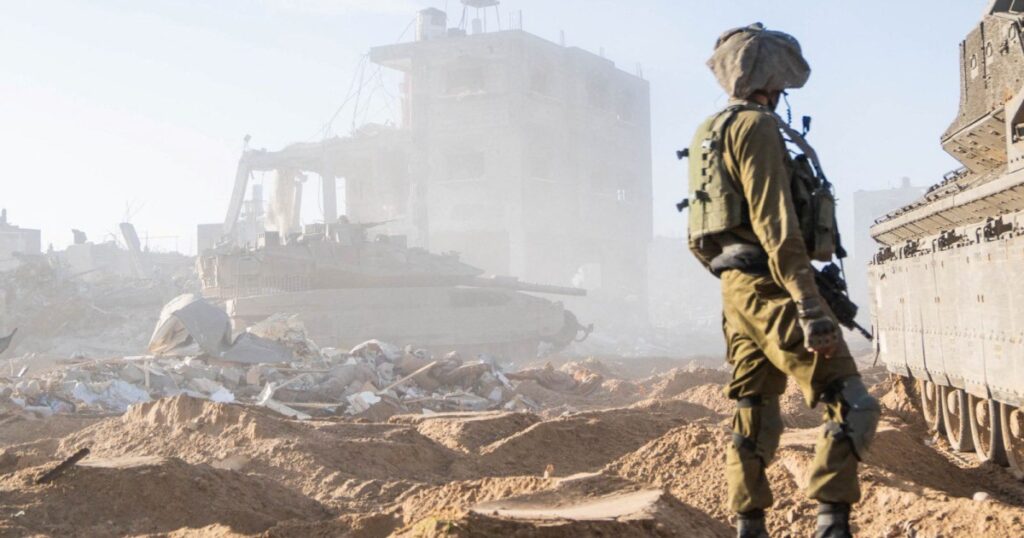
Coordinated, focused, deadly and brutal, the Hamas attacks of October 7 were a shock to Israeli society. The country’s defence, intelligence and security organisations – sources of national pride – were caught unawares and unprepared. They acted slowly and inadequately, with the whole establishment humiliated. The first military reaction was in line with the Israeli military doctrine of powerful attacks against previously designated targets. It took a few days for everyone to get their act together, create the emergency unity government (that mostly unified belligerent right-wingers) and proclaim a huge mobilisation of 360,000 reservists. Three weeks later, amid continuous indiscriminate bombardment, the Israeli army crossed into Gaza. Then, in more than two months of ground combat, the army cut Gaza in three, surrounding Gaza City and isolating Khan Younis. Most Palestinians fled to the south, where they now crowd Rafah in unbearable conditions. Israel maintains that although it has not yet defeated Hamas, it is close to its proclaimed goal, claiming to have “eliminated” 8,500 fighters. The Israeli military’s showing, however, has been very uneven across many aspects of the armed and diplomatic response. Military performance: Not a failure, but far from success In purely military terms, Israel has achieved a degree of success. It has conducted complex military operations in urban terrain, certainly the deadliest form of warfare, by advancing steadily – yet too cautiously and slowly. The centres of Gaza City and Khan Younis are surrounded on the ground, but the military has so far failed to neutralise Hamas fighting units. In an extremely challenging battle environment, the Israeli army successfully integrated many different units of various backgrounds, training and experience – including a plethora of specialised units that report directly to the General Staff outside of the normal territorial or brigade chain of command. Those complex arrangements demand the presence of higher officers on the front lines to coordinate and avoid potential confusion. Among the 172 Israeli soldiers killed so far, the proportion of senior non-commissioned officers is unusually high, but the number of officers who died in battle is staggering, with no less than four full colonels among the dead. Hamas’s losses are certainly lower than Israel claims. A prudent estimate would put it at 3,500 fighters to date – 20 percent of its front line complement. This would mean a ratio of 20 Hamas fighters killed for each Israeli soldier. In classic warfare, any general would happily accept that proportion as a certain victory. However, not in this war. Hamas fighters are ideologically and religiously motivated, and conditioned to disregard death; the fallen are seen as martyrs, which strengthens the cause. In contrast, Israeli society, which is heavily militarised – almost everyone, except the ultra-religious, serves in the military – has a lower tolerance for the losses of its people. Israelis do not see the tangible results of their sons’, husbands’ and brothers’ deaths. The attitude towards losses is probably best demonstrated by the fact that the Golani Brigade, one of the army’s oldest and most decorated units, was pulled from fighting after 72 of its soldiers died in combat. Finally, Israeli forces who claimed their overwhelming military (and moral) superiority, proved to lack either the capabilities or the willingness to decisively destroy the Hamas tunnel network. Despite demonstrating the mastery of technology to flood tunnels with seawater, the Israelis have yet to deploy that tactic. Liberation of captives: Abject failure Besides destroying Hamas, the other main proclaimed goal of the Israeli incursion into Gaza was to liberate the remaining captives. Not only has this aim not been achieved, but Israel managed to kill three captives who tried to give themselves up. Military technology: Very good, but non-decisive performance In many aspects of military technology, the Israeli military is known as a world leader. Most of its hardware and software perform to the army’s own high expectations, which will certainly boost its post-war exports and help, at least, to partially offset the staggering cost of war. New weapons and systems have been successfully integrated with old ones. The Israeli-built Eitan armoured fighting vehicle was rushed into action a year before its planned introduction into combat units without issue. New products, like the Iron Sting smart mortar, and small, simple and cheap reconnaissance quadcopter drones, have proved valuable in reducing losses in urban fighting. Existing products have demonstrated their versatility and become widespread: small body cameras and gun cams are now deployed on all teams; dogs with live cameras have expanded the possibilities of reconnaissance inside buildings suspected of being booby-trapped. Another undoubted Israeli military success is managing to keep its combat data link communications secret, encrypted in real time – there has been no hint of compromise by Hamas. The already-proven Iron Dome antimissile system has continued to be reliable. Just a few weapons have had issues, such as the much-touted Trophy armoured vehicle active protection system, which proved of mixed or no value in close-quarter combat. Initial overreliance on it cost the Israeli army some casualties in the first phases of the battle. But the Israeli army’s learning curve has been steep and, like in the case of the Merkava tank’s lack of protection from above, remedial action has been applied quickly and successfully. Despite the military’s operational success, none of its technology proved to be a real game changer. Public relations: A disaster despite all efforts The notorious overwhelming Israeli propaganda machinery has tried very hard to sell its official line but with limited success. Calling Hamas “terrorists” caught on in much of the Western world – not as much for the rest of the planet. Attempts to equate Hamas with ISIL (ISIS), an effort aimed particularly at the Arab and Islamic world and reinforced by Israeli military spokesperson Lieutenant Colonel Avichay Adraee to the Arab world, appear to have failed miserably. But Israel’s biggest failure was the attempt to make the world believe the claim that “Israel is committed to minimising civilian harm and abiding by international law”. Even Israelis themselves
Nobel laureate Muhammad Yunus convicted in Bangladesh labour law case
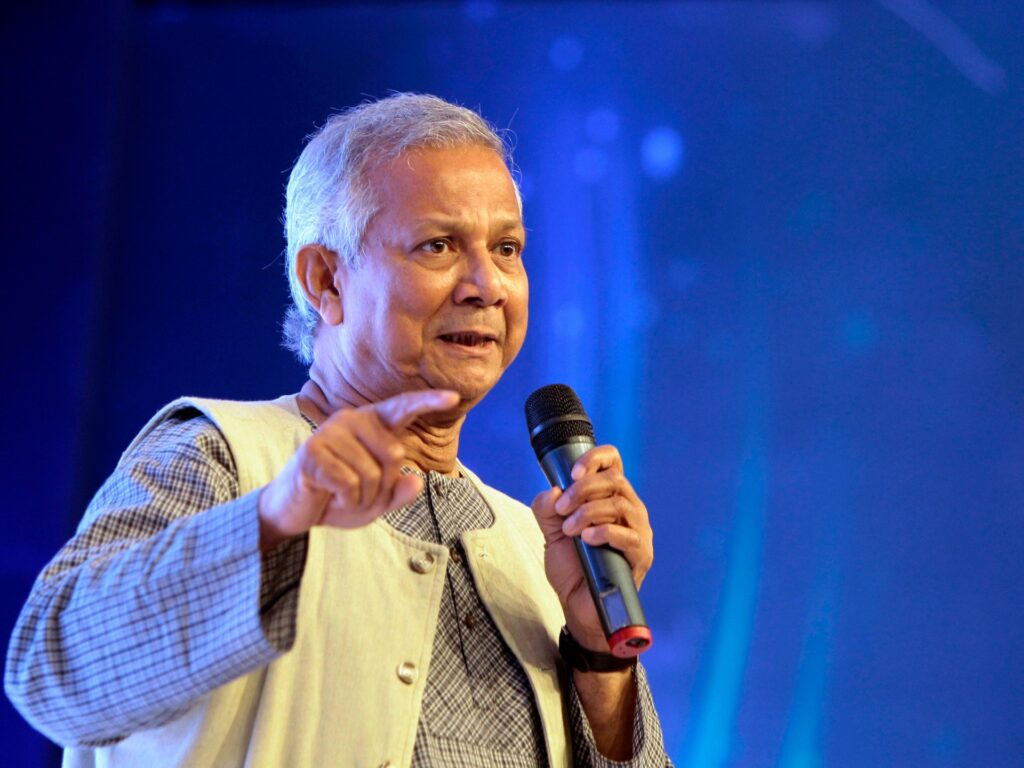
The microfinance pioneer is accused by PM Sheikh Hasina of ‘sucking blood’ from the poor, but supporters say charges politically motivated. Nobel laureate Muhammad Yunus has been convicted of violating Bangladesh’s labour laws in a case decried by his supporters as politically motivated. “Professor Yunus and three of his Grameen Telecom colleagues were convicted under labour laws and sentenced to six months in simple imprisonment,” lead prosecutor Khurshid Alam Khan told the AFP news agency on Monday. He added that all four were immediately granted bail pending appeals. Yunus, 83, is credited with lifting millions out of poverty with his pioneering microfinance bank but has earned the enmity of longtime Prime Minister Sheikh Hasina, who has accused him of “sucking blood” from the poor. Hasina has made several scathing verbal attacks against the internationally respected 2006 Nobel Peace Prize winner, who was once seen as a political rival. Yunus and three colleagues from Grameen Telecom, one of the firms he founded, were accused of violating labour laws when they failed to create a workers’ welfare fund in the company. All four deny the charges. “This verdict is unprecedented,” Abdullah Al Mamun, a lawyer for Yunus, told AFP. “We did not get justice.” Yunus is facing more than 100 other charges over labour law violations and alleged corruption. He told reporters after one of the hearings last month that he had not profited from any of the more than 50 social business firms he had set up in Bangladesh. “They were not for my personal benefit,” Yunus said. Another of his lawyers, Khaja Tanvir, told AFP that the case was “meritless, false and ill-motivated”. “The sole aim of the case is to harass and humiliate him in front of the world,” he said. ‘Travesty of justice’ Irene Khan, former chief of Amnesty International now working as a United Nations special rapporteur who was present at Monday’s verdict, told AFP the conviction was “a travesty of justice”. “A social activist and Nobel laureate who brought honour and pride to the country is being persecuted on frivolous grounds,” she said. In August, 160 global figures, including former US President Barack Obama and ex-UN Secretary-General Ban Ki-moon, published a joint letter denouncing the “continuous judicial harassment” of Yunus. The signatories, including more than 100 of his fellow Nobel laureates, said they feared for “his safety and freedom”. Critics accuse Bangladeshi courts of rubber-stamping decisions made by Hasina’s government, which is all but certain to win another term in power next week at elections boycotted by the opposition. Her administration has been increasingly firm in its crackdown on political dissent, and Yunus’s popularity among the Bangladeshi public has for years earmarked him as a potential rival. Amnesty accused the government of “weaponising labour laws” when Yunus went to trial in September and called for an immediate end to his “harassment”. Criminal proceedings against Yunus were “a form of political retaliation for his work and dissent”, it said. Adblock test (Why?)