

India’s Manisha Kalyan: From a village in Punjab to European football

Mumbai, India – In the quiet embrace of a small Indian village, where dreams are often whispered against the backdrop of simplicity, emerged a football prodigy destined for greatness. Meet Manisha Kalyan, the young Indian football sensation whose long journey from the narrow lanes of Muggowal in Punjab to the illustrious stage of the UEFA Women’s Champions League is nothing short of a remarkable odyssey. Kalyan participated in athletics and basketball during her school days before football captured her heart. Daring to dream beyond the confines of her rural beginnings, she made the cut for India in 2019, at the age of 17. Last year, Kalyan received the golden opportunity to sign with the Cypriot club Apollon Ladies. A rare chance for Indian footballers, given the country’s ranking of 65 in women’s FIFA rankings and 102 in men’s. “I made the right decision to join Apollon because I am improving and learning new things here,” Kalyan told Al Jazeera from Limassol. “Even before I was called up for India, I dreamt of playing abroad because when you begin playing abroad at an early age, you can improve and contribute more to the national team.” Kalyan signed for Apollon after playing for three Indian clubs, including Gokulam Kerala, with whom she won the top-tier Indian Women’s League twice. Known for her speed and ability to adapt to several positions, Kalyan has been recognised as one of the best Indian players in recent times. The All India Football Federation named her the Women’s Player of the Year in 2021-22 and 2022-23 and she was also part of the India team that won gold at the South Asian Games in 2019. Kalyan shot to fame in 2021 after she became the first Indian to score a goal against Brazil in a friendly match, which India lost 6-1. She rates it as the most special goal of her career. 𝐀𝐈𝐅𝐅 𝐀𝐖𝐀𝐑𝐃𝐒 𝟐𝟎𝟐𝟐-𝟐𝟑 🏆 ꜱʀ. ᴘʟᴀʏᴇʀ ᴏꜰ ᴛʜᴇ ʏᴇᴀʀ 🥇 Lallianzuala Chhangte (Men)Manisha Kalyan (Women)#IndianFootball ⚽️ pic.twitter.com/9oIIiCn1Mj — Indian Football Team (@IndianFootball) July 4, 2023 ‘If you’re quiet, you won’t get the ball’ The offer from Apollon did not come as a surprise for Kalyan, who revealed she had been attracting interest from foreign clubs since that goal against Brazil. Even though Kalyan was over the moon to receive interest from Apollon, she had very little knowledge about what she was signing up for. “When I decided to sign for Apollon, I did not know much about Cyprus. I did a bit of research about the club and the country and felt it would be a good call. I had seen some of the matches from the Cypriot First Division and knew Apollon had played in the Women’s Champions League, where I wanted to participate,” she said. A language barrier and some cultural differences made Kalyan’s start to life in Cyprus difficult but she slowly found her way. “At the time I joined, I didn’t understand English as much as I do now and couldn’t talk much with my teammates, which was difficult,” Kalyan recalled. “Now that I can speak a bit of English, I have built a connection with them. I think communication is important both on and off the field because if you’re quiet during games, you won’t get the ball. Once I started to communicate during the games, things improved.” Kalyan’s dream to play in the Women’s Champions League came true last August when she featured against Latvia’s SFK Riga in the qualifying round. Then in September, she added another feather to her cap by becoming the first Indian to score in the Women’s Champions League when she found the net against Georgia’s FC Samegrelo in the qualifiers. Coming on as a second-half substitute in that game, Kalyan scored a stunning left-footed goal from inside the box. “Having the chance to play and score in the Women’s Champions League has been the best part of my life,” Kalyan said. “I was quite happy at the time, but now I have bigger goals. I want to improve individually in the next year and perform better for India.” #IndianFootballersAbroad#ManishaKalyan Watch Manisha Kalyan’s historic UEFA Champions League goal from another angle, in Greek commentary This goal made her the first Indian Footballer to score in UEFA Women’s Champions League with a 3-0 win over Samegrelo 🇬🇪 ©️- CYTA Sports pic.twitter.com/HF9n0sXixI — Indian Football Fan (@FootbalIndiaFan) September 17, 2023 ‘Modern left-back’ Since joining Apollon, Kalyan has transitioned from an attacker to a defender. In India, while playing for Sethu or Gokulam Kerala, Kalyan would feature on the wings or as a striker, but she has been deployed as a left-back at Apollon. “She is a very good modern left-back, someone who likes to attack,” said Apollon coach Andreas Matthaiou. “In my opinion, good players can play everywhere. “She is very fast and fires very good crosses from the left. She can run throughout for 90 minutes and technically she is good, too.” Having taken over the team earlier this month, Matthaiou described Kalyan as a “hard worker” and a “quick learner”. “I am very happy with her,” he said. Indian women’s football expert Anirudh Menon believes Kalyan’s journey is already a “success story” for the country, which has seen very few women play in top-tier leagues overseas, especially in Europe. India’s all-time top-scorer Bala Devi is the highest profile player to play in Europe, having represented top-tier Scottish club Rangers, while others have played in the lower leagues in Europe or top divisions in small Asian countries such as Bhutan, Maldives and Nepal. “Bala Devi is arguably the best women’s player India has produced, and she got the opportunity only when she turned 30. So if she couldn’t play abroad in her prime, it was quite unlikely that anybody else could have,” Menon said. Poor game time for women The Indian women’s national team is ranked higher than their male counterparts, but they still receive fewer opportunities. The Indian Women’s League (IWL) usually lasts for
How Beijing is changing the way it involves itself in Taiwan’s election

A few months after Taiwanese NGO worker Cynthia Iunn bought a book titled If China Attacks from a Taiwanese bookstore in February, she started to get calls from strange numbers. In the middle of May, she decided to answer one of them. “I ended up talking to three different people and although they pretended to be from Taiwan, they were very clearly Chinese,” Iunn told Al Jazeera. Initially, she thought it was a scam and expected the conversation to eventually turn to her credit card information or bank details. Instead, Iunn was surprised when the person on the other end revealed that they knew her full name, the name of the book she had ordered in February and where she had ordered it from. According to Iunn, they were curious about what she thought of If China Attacks and why she had bought the book in the first place. “They also wanted me to know that the book contained inappropriate and sensitive content and was a piece of propaganda,” she recalled. The person also told her that in the event of a war between China and Taiwan, Taiwanese forces would be no match for the Chinese military. At that point, Iunn realised that she was being subjected to Chinese cognitive warfare. Beijing considers Taiwan to be part of China and has not ruled out using force to achieve its goal of bringing the self-ruled democratic island under its control. The best way to avoid a war, Iunn was told, would be for her to vote for the opposition party, Kuomintang (KMT), rather than the ruling Democratic Progressive Party (DPP) in the presidential and legislative elections that will take place on January 13. The KMT wants friendlier relations between Taiwan and China while Beijing has refused to engage in dialogue with the DPP, which the ruling Chinese Communist Party (CCP) claims is “separatist”. The DPP rejects such accusations and says it is up to the people of Taiwan to choose their leaders and their future. Beijing portrays Taiwan’s President Tsai Ing-wen as a “separatist”. She was first elected in 2016 and returned in a landslide four years later. She says it’s up to the people of Taiwan to decide their future [File: Sam Yeh/AFP] Iunn found the call itself ridiculous but it also left her concerned that the callers had been able to collect so much personal information about her. “It felt like a message to people like me from the CCP, saying that we know who you are and we know you are against China,” Iunn said. “And that is quite frightening.” Making the ‘right choice’ Beijing has made it no secret that it is taking an active stance regarding the Taiwanese election. Chinese officials have called the election a “choice between peace and war”, a slogan used by the KMT, and urged the people of Taiwan to make the “right choice”. During a sit-down in February in China between the head of Beijing’s Taiwan Affairs Office, Song Tao, and KMT deputy chairman, Hsia Li-yan, Tao told Hsia that China was willing to forge closer relations with the party. Meanwhile, the CCP has refused to engage in dialogue with the DPP administration of incumbent President Tsai Ing-wen since she was first elected in 2016. Instead, Beijing has bypassed the Taiwanese government to engage directly with local Taiwanese leaders and officials. Earlier this year, the Chinese authorities exempted a southeastern Taiwanese county from an import ban on Taiwanese custard apples. The exemption came through after a KMT commissioner from the county visited China twice. More than a thousand local Taiwanese leaders have headed to China lately – many more than in the lead-up to the last national election. Recently, district prosecutors’ offices across Taiwan have opened investigations into hundreds of these cases as evidence suggests that Beijing has either partly or fully covered the expenses of these trips. Prominent public figures have also been the targets of alleged Chinese activities leading up to the election. In October, China’s state-run Global Times reported that Chinese authorities had launched a tax probe into the activities of Taiwanese tech giant Foxconn which generates about 70 percent of its revenue from products made in China. The announcement came two months after billionaire founder and former Foxconn CEO Terry Gou had declared his own independent run for president – a move that the Global Times suggested would split the opposition camp and favour of the “secessionist ruling DPP”. After the tax probe became public, Terry Gou cancelled several campaign events and a few weeks later, dropped out of the race. Also in October, the Chinese authorities extended an investigation into “Taiwan’s trade barriers against China” until January 12 – the day before the election. William Lai, Taiwan’s vice president, is the ruling DPP’s presidential candidate in the election and leading the polls [File: Ann Wang/Reuters] According to Fang-Yu Chen, an assistant professor at Soochow University in Taipei who researches political relations between China and Taiwan, such decisions so close to the election are no coincidence. “This is part of an organised Chinese effort to create chaos, stoke distrust and spread dissatisfaction with the current DPP government,” Chen said. Online campaigns This is not the first time there have been reports of increasing activity directed at Taiwan in the run-up to an election. Interference efforts were also reported in the local elections in 2018 and the presidential election in 2020. As in previous polls, this time’s efforts involve cyberattacks and disinformation campaigns. Google warned in early December of a huge increase in Chinese cyberattacks over the past six months directed at Taiwan’s defence sector, private industries and government. In August, Meta, the company behind Facebook and Instagram, cracked down on a Chinese influence campaign involving more than 7,500 accounts across different platforms in the company’s largest such operation to date. Many of the accounts were targeting Taiwan. There have also been cases of TikTok being used to spread disinformation among Taiwanese users while also monitoring their
More than 100 people killed in earthquake in northwest China
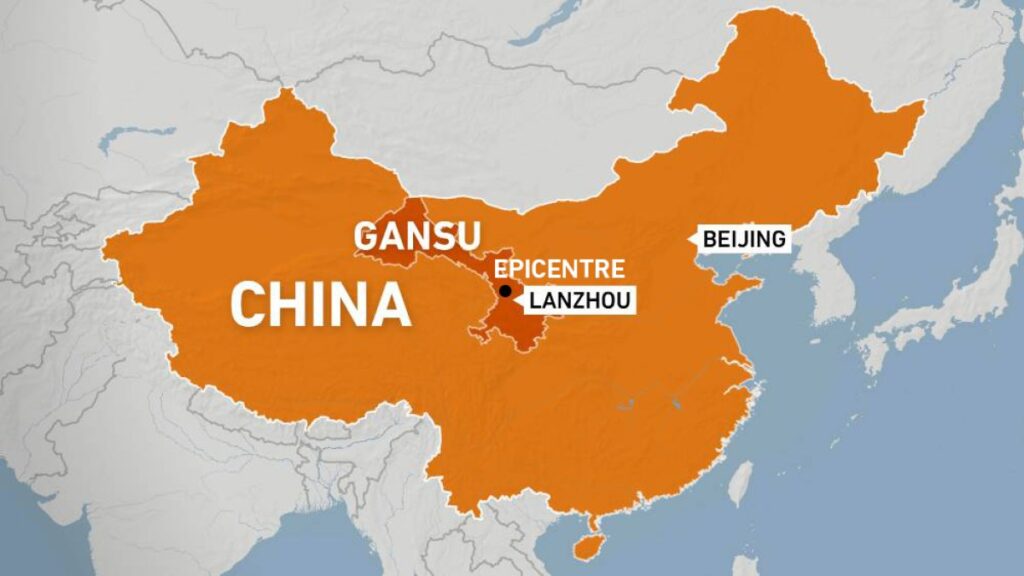
The shallow 6.2 magnitude quake struck during the night near the border of Gansu and Qinghai provinces, sending people rushing out onto the street. More than 100 people have been killed after an earthquake hit northwestern China while many people were asleep. The earthquake, measured at 6.2 according to state news agency Xinhua, struck in Gansu Province near the border with Qinghai, causing significant damage, state media reported on Tuesday. Residents rushed out onto the street as buildings collapsed and dozens of people were injured, the state broadcaster CCTV said, citing the provincial earthquake relief headquarters. According to CCTV, at least 100 people were killed in Gansu and 11 people in the city of Haidong in Qinghai. Haidong is situated close to the epicentre about 100km (60 miles) southwest of Gansu Province’s capital, Lanzhou. Rescue work was under way with Chinese President Xi Jinping calling for “all-out efforts” in the search and relief work. Power and water supplies were disrupted in some villages, Xinhua said. The US Geological Survey reported the quake was a magnitude 5.9, while the European Mediterranean Seismological Centre (EMSC) said it was a magnitude 6.1. The earthquake struck at a depth of 10km (6 miles) at 11:59 pm local time on Monday (15:59 GMT), according to the USGS, which initially reported the magnitude at 6.0. Gansu has a population of about 26 million people and includes part of the Gobi Desert. Earthquakes are not uncommon in China. In September 2022, a 6.6-magnitude quake hit Sichuan Province leaving almost 100 dead. A 7.9-magnitude quake in Sichuan in 2008 left more than 87,000 people dead or missing, including 5,335 children who were in school at the time it happened. At least 242,000 people were killed in 1976 after an earthquake struck Tangshan in the worst natural disaster in Chinese history. Adblock test (Why?)
Iceland volcano erupts weeks after thousands evacuated from nearby town
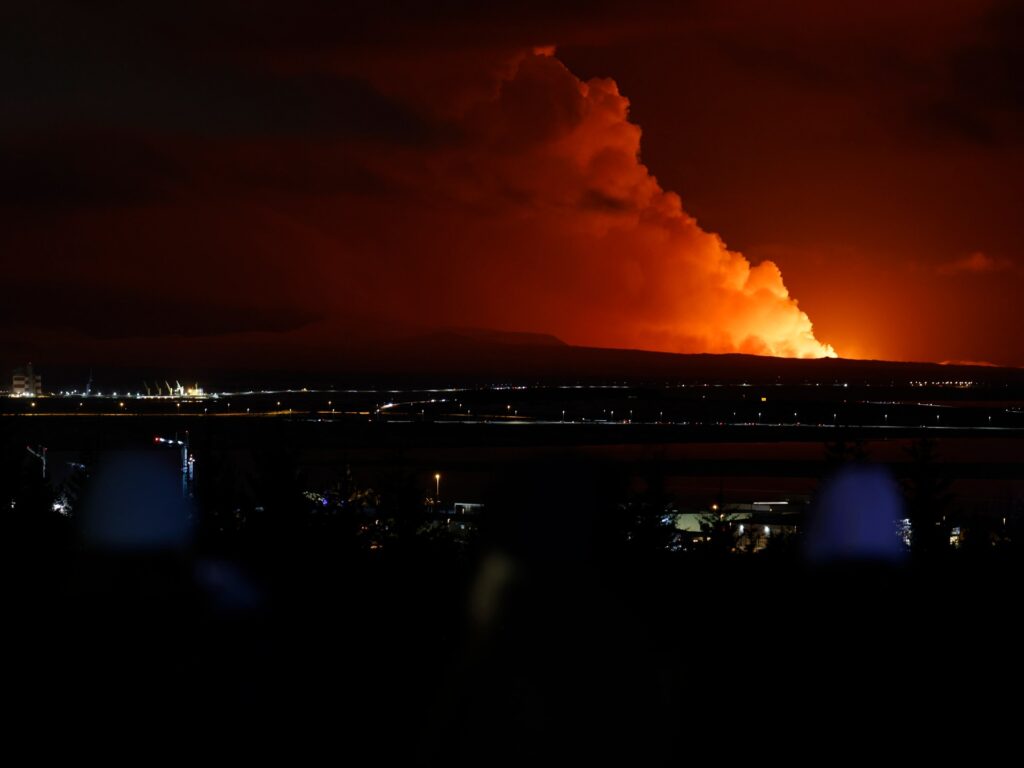
Iceland has been on high alert for an eruption on the Reykjanes peninsula after weeks of intense seismic activity. A volcano in southwest Iceland has erupted, spewing lava and smoke across a wide area weeks after nearly 4,000 residents of a nearby town were evacuated amid intense seismic activity. “At 22:17 this evening, a volcanic eruption began north of Grindavik on the Reykjanes peninsula,” Iceland’s Meteorological Office said on Monday. The livestreamed footage of the eruption showed glowing orange lava rising into the night sky, surrounded by billowing red smoke. “A Coast Guard helicopter will take off shortly to confirm the exact location and size of the eruption,” the IMO said. Iceland has been on high alert for a potential eruption after thousands of small earthquakes rattled the region about 40km (25 miles) south of the capital Reykjavik prompting the evacuation of the fishing town of Grindavik and the closure of the nearby Blue Lagoon geothermal spa. The crack in the earth’s surface was about 3.5km (2.1 miles) long and had grown rapidly, the Met Office said. Some 100 to 200 cubic metres (3,530 to 7,060 cubic feet) of lava emerged per second, several times more than in previous eruptions in the area, Icelandic seismologist Kristin Jonsdottir told the public broadcaster RUV. Local police said they had raised their alert level as a result of the outbreak and the country’s civil defence warned the public not to approach the area while emergency personnel assessed the situation. Reykjanes is a volcanic and seismic hotspot southwest of Iceland’s capital Reykjavik. In March 2021, lava fountains erupted from a 500-750-metre-long (1,640-2,460-foot-long) fissure in the ground in the Fagradalsfjall volcanic system. After Monday’s eruption, the Keflavik International Airport remained open, albeit with numerous delays listed for arrivals and departures. Iceland is home to 33 active volcano systems, the highest number in Europe. It straddles the Mid-Atlantic Ridge, a crack in the ocean floor separating the Eurasian and North American tectonic plates. Adblock test (Why?)
Austin says US support for Israel unshakeable as Gaza ceasefire calls grow
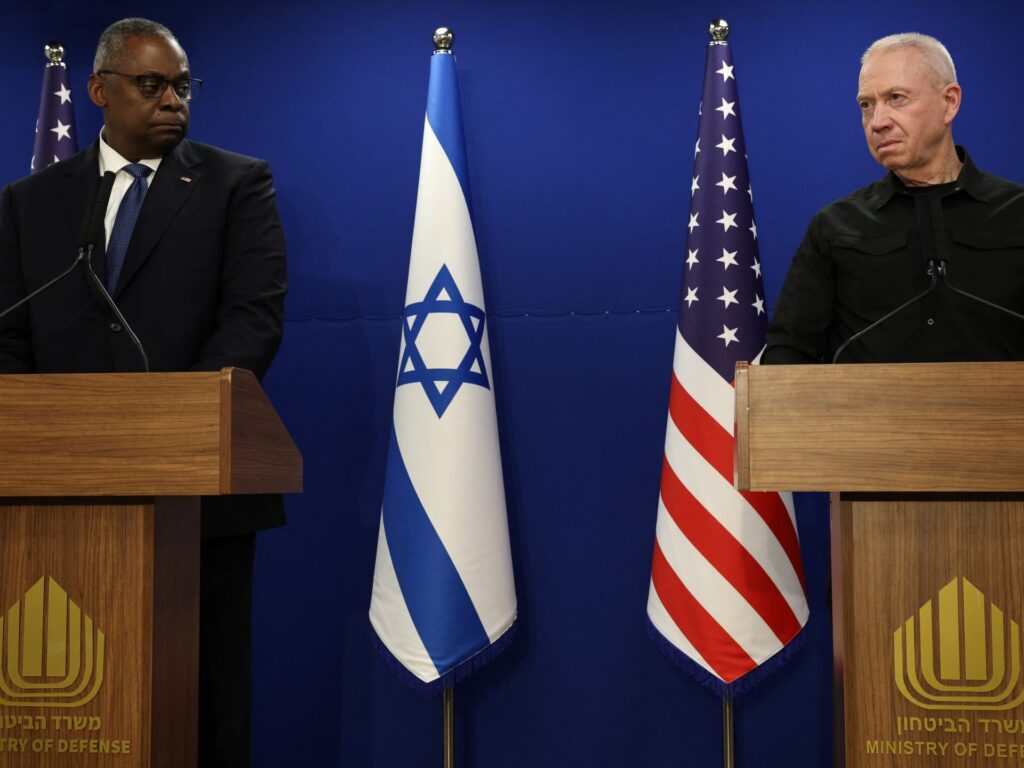
Lloyd Austin says US support ‘unshakeable’, urges Israel to do more to protect civilians and increase aid supplies. United States Secretary of Defense Lloyd Austin says Washington will continue to support Israel in its war with Hamas but urged its ally to do more to protect civilians in Gaza amid growing calls for a ceasefire. Speaking alongside Israeli Defence Minister Yoav Gallant in Tel Aviv on Monday, Austin said US support for Israel was “unshakeable”, as the death toll from the Israeli assault on Gaza surpassed 19,000, according to Palestinian health authorities. Austin said he had discussed with Gallant how to reduce harm to civilians trapped in the battlefield. They also talked about a transition from major combat to a lower-intensity conflict. “In any campaign, there will be phases,” Austin said. “We will also continue to urge the protection of civilians during conflict and to increase the flow of humanitarian aid into Gaza,” Austin said. While the US provides Israel with weapons and diplomatic support, it has recently sharpened its tone towards Netanyahu’s government. Last week President Joe Biden said Israel risked losing international support because of what he called its “indiscriminate” bombing. Austin, however, offered reassurance on Monday, saying: “American support for Israel security is unshakable. Israel is not alone.” Gallant meanwhile said Israel would gradually transition to the next phase of its operations in Gaza and displaced people would likely be able to return first to the north of the enclave. Austin’s visit came amid growing concern from foreign governments and international organisations over civilian deaths in Gaza and a deepening humanitarian crisis. Earlier, the international human rights organisation Human Rights Watch said that Israel was “deliberately blocking the delivery of water, food and fuel,” to people in Gaza and “using starvation of civilians as a method of warfare”. The Israeli assault on Gaza began after Hamas killed around 1,200 people in southern Israel and took about 240 others captive, according to Israeli authorities. Israel’s relentless bombardment and ground invasion has killed at least 19,453 people, most of them women and children, according to Palestinian health authorities, and levelled entire neighbourhoods and displaced more than 80 percent of Gaza’s 2.3 million residents. British Prime Minister Rishi Sunak, who has supported Israel’s campaign, said on Monday that “too many civilians” have been killed in the fighting, and expressed support for a “sustainable ceasefire”. While Austin has said that more aid must be delivered to the people of Gaza, the US has found itself increasingly isolated over its stance on the war between Israel and Hamas. Last week, the US cast one of the few dissenting votes against a UN General Assembly resolution calling for a ceasefire that passed with overwhelming support. The UN Security Council is scheduled to hold a ceasefire vote on Monday, after the US also vetoed a previous resolution. International leaders have also voiced concern over the possibility of a wider regional escalation as the war drags on. Austin said on Monday that the US was leading efforts to address a series of attacks by Yemen’s Houthi rebel group that have disrupted commercial shipping in the Red Sea. The Iran-backed group says the attacks are an effort to pressure Israel to halt its attacks on Gaza. “In the Red Sea, we’re leading a multinational maritime task force to uphold the bedrock principle of freedom of navigation,” Austin said. The Pentagon chief also warned against greater involvement by the powerful Iran-backed group Hezbollah, which has traded fire with Israel from southern Lebanon since the fighting began but has thus far avoided a larger confrontation. US officials have said that William Burns, the director of the CIA, the US intelligence agency, is meeting with his Israeli counterpart and the prime minister of Qatar to discuss a potential deal to secure the release of additional captives held by Hamas. A previous deal, which Qatar and Egypt helped to mediate, secured a seven-day truce and the release of dozens of captives in exchange for the release of Palestinians held in Israeli prisons. Adblock test (Why?)
Is the US complicit in the dire humanitarian crisis in Gaza?
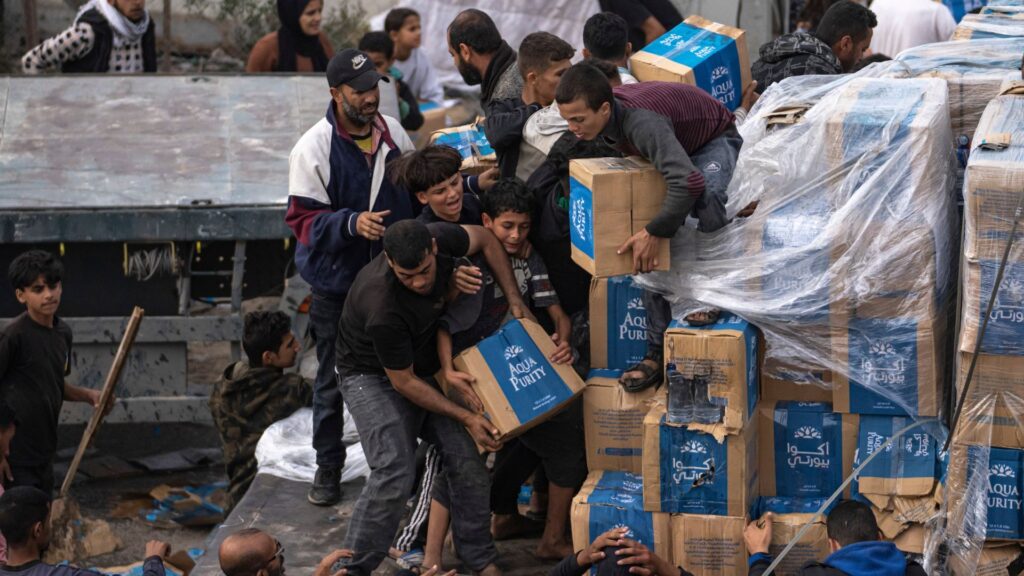
As Israel continues its assault on Gaza, there is growing concern over humanitarian conditions in the besieged enclave. Before the Israel-Hamas war, more than 500 aid trucks entered Gaza every day through the Karem Abu Salem crossing with Israel and the Rafah crossing with Egypt. Those deliveries halted when Israel imposed a complete blockade on October 7 after Hamas carried out attacks on southern Israel. Israel has temporarily reopened the route through Karem Abu Salem, called Kerem Shalom by Israel, to allow in more humanitarian aid. At least 24 trucks have been allowed through – but the deliveries are far short of fulfilling the needs of 2.3 million Palestinians in Gaza. Should the United States, a staunch ally of Israel, be doing more to help the Palestinians? And how complicit is Washington in the humanitarian catastrophe that has unfolded? Presenter: Cyril Vanier Guests: Robert Hunter – senior fellow at the Center for Transatlantic Relations at Johns Hopkins University Khaled Elgindy – senior fellow at the Middle East Institute and its director of Palestine and Israel-Palestinian affairs Zeina Ashrawi Hutchison – director of development and expansion at the American-Arab Anti-Discrimination Committee Adblock test (Why?)
Hamas video shows elderly Israeli captives pleading for release
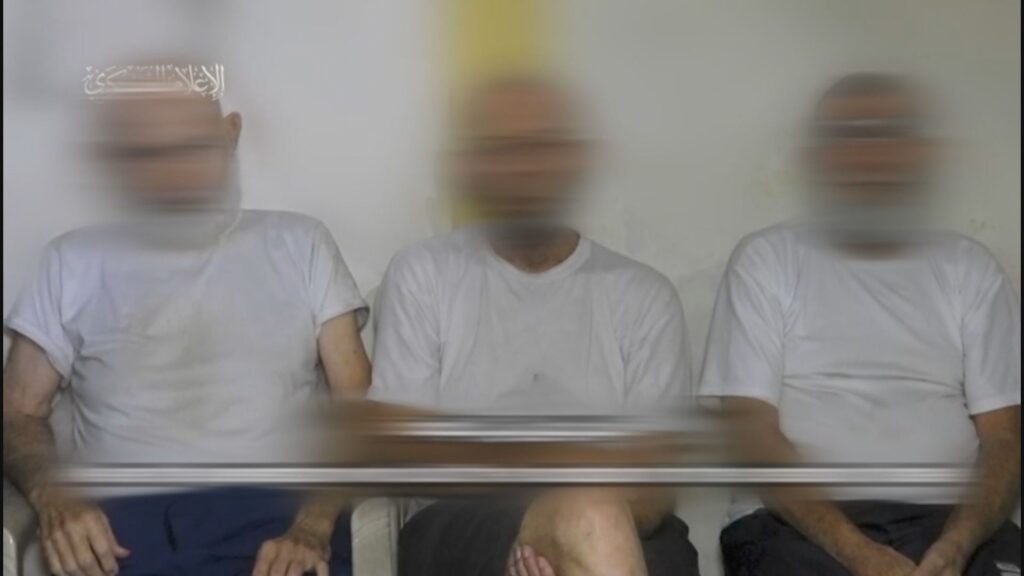
The Qassam Brigades releases the one-minute video, titled Don’t Let Us Grow Old Here, on its Telegram account. Hamas has posted a video of three elderly Israeli captives pleading for their immediate release. The Palestinian group’s armed wing, the Qassam Brigades, posted the one-minute video, titled Don’t Let Us Grow Old Here, on its Telegram account on Monday. The men – identified by Israeli officials as 79-year-old Chaim Peri, 80-year-old Yoram Metzger and 84-year-old Amiram Cooper – were taken to Gaza on October 7 when Hamas launched attacks inside Israeli territory, killing 1,147 people and taking about 240 captives. Nearly half of those captives were released as part of a weeklong truce between Israel and Hamas last month. In the video, Peri, seated between the two other captives, said in Hebrew that he was being held along with other elderly hostages with chronic illnesses and that their conditions were harsh. “We are the generation who built the foundation for the creation of Israel. We are the ones who started the IDF military. We don’t understand why we have been abandoned here,” he said, referring to the Israeli armed forces. “You have to release us from here. It does not matter at what cost. We don’t want to be casualties as a direct result of the IDF military air strikes. Release us with no conditions,” he added. The video concludes with the three men saying in unison: “Don’t let us grow old here.” Israeli media reported the three hostages came from the Nir Oz kibbutz along the Israeli border, which was targeted in the October 7 attacks. Peri was at his house in Nir Oz during the attack, Israeli media reports said. He tried to repel the gunmen while hiding his wife behind a sofa, his son told the Reuters news agency. He eventually gave himself up to save his wife, who remained hidden, the report said. Outrage over captives in Israel The Israeli military said Hamas had released a “criminal, terrorist video”. “Chaim, Yoram and Amiram, I hope that you hear me this evening,” military spokesman Daniel Hagari said in a televised briefing. “Know this – we are doing everything, everything, in order to return you back safely.” Israel has in the past labelled such videos as a form of psychological warfare by Hamas. After the release of the latest video, families of Israelis held captive by Hamas in Gaza protested outside Israeli Ministry of Defense headquarters in Tel Aviv, demanding the immediate release of their loved ones. The protest came amid growing outrage within Israel after the Israeli military last week admitted it mistakenly shot dead three Israeli captives in Gaza despite them waving a white flag. Al Jazeera correspondent Sara Khairat, reporting from occupied East Jerusalem, said the video released by Hamas sends a “strong message”. “[The video] is going to do two things: help the people know that they are alive even though it’s still not clear when it was filmed, and it will also put a lot more pressure on the Israeli government, which is already in hot waters for the death of three captives last week and at a time when the demonstrations are continuing,” she said. Meanwhile, as diplomatic efforts continue to end the war in Gaza and release prisoners taken on both sides, the Israeli military has intensified its bombardment of the enclave, killing nearly 19,500 people since October 7 – most of them women and children. The air and ground strikes on Gaza have flattened the besieged enclave, burying thousands of people under the rubble. In absence of the required aid not being allowed to flow into the strip, international aid agencies have warned of a humanitarian disaster with widespread hunger and spread of diseases. Human Rights Watched has accused Israel of using starvation as a weapon of war in Gaza. Adblock test (Why?)
Sky-high inflation takes a toll on mental health in Argentina
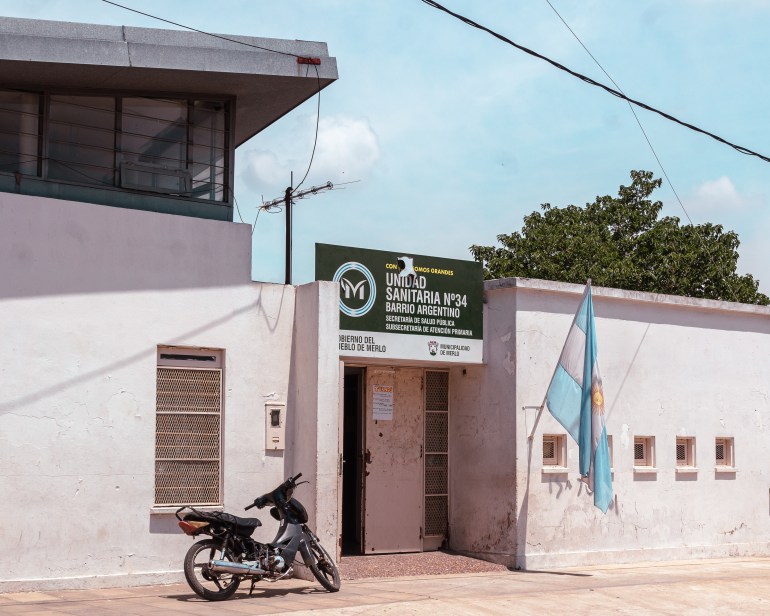
Buenos Aires, Argentina – Psychologist Jesica Bianchiotti, 35, still remembers the days when most sessions with her patients began with a chat about the weather or the results of the latest football match. But those days are long gone. With Argentina facing one of the worst economic crises in its recent history, sessions now start with conversations about politics, rising prices and how hard it is to make ends meet. “Things have changed a lot. The majority of my patients now come with issues related to anxiety, fear, problems with sleeping, all related to the uncertainty we all live with — how impossible it is to make long-term plans,” said Bianchiotti, who works in the greater Buenos Aires area. Argentina boasts the third-largest economy in Latin America — but it has been beset by financial turmoil for decades, fuelled by political instability and massive international debt. This year, inflation hit record levels, rocketing higher than 140 percent. The value of Argentina’s currency has plummeted as a result. Even basic food shopping is a challenge for some. Against that backdrop, professionals like Bianchiotti are reporting an increase in stress-related conditions. Argentina, though, has developed a way to grapple with the problem: It has the highest rate of psychologists per capita in the world. A 2015 study estimated that, for every 100,000 Argentinians, there are 194 psychologists — a rate more than three times higher than the next closest countries, Finland and Norway. Psychotherapy is so popular that certain practitioners, like Gabriel Rolon, have achieved celebrity status, appearing on TV and radio shows. In 2022, psychology was also one of the most sought-after career paths at the University of Buenos Aires, second only to medicine. A healthcare centre offers psychological services in Moreno, a city on the outskirts of Buenos Aires [Patricio A Cabezas/Al Jazeera] The widespread embrace of psychotherapy, however, corresponds with widespread need, according to Bianchiotti. She has treated patients for nearly a decade and has seen an increase in the number of consultations she conducts. “The state in which patients come in is pretty shocking. Many are not even able to listen to what I say,” she told Al Jazeera, describing how some patients talk non-stop. “They are anxious, nervous with fear, consumed by negative thoughts. Panic attacks are becoming more frequent and many people are unable to enjoy any sort of free time as they are consumed with worries.” Anxiety is a normal response to danger, real or perceived. It exists to help the body face or escape from threats. But anxiety can develop into a disorder, with symptoms like dizziness, shaking, migraines and fatigue. It can also increase risk factors for other conditions like depression. “A certain level of anxiety is necessary as a basic survival skill, but too much of it, that’s when problems start. It can become paralysing,” said Bianchiotti. In Argentina, the problem may be particularly acute. More than half of the participants in a 2022 study about the country’s psychological health, conducted by the University of Buenos Aires, said they were experiencing a “crisis”. The economy was cited as the most common reason for respondents’ crises. At 49 percent, it surpassed family problems, relationship troubles and work as a leading cause. The economy was considered the decisive factor in Argentina’s recent presidential elections, which saw libertarian candidate Javier Milei emerge victorious [Gustavo Garello/AP Photo] The study also found that 75 percent of respondents said they suffered from sleep deprivation. The number of sufferers was even higher among those with fewer resources. Meanwhile, an estimated 35 percent of those who needed psychological treatment said they could not afford it. Although psychologists are available for free in public hospitals, budget cuts have made it increasingly difficult for people with lower incomes to access their services. Those with more resources can opt for private therapy, a more expensive option that offers greater flexibility for scheduling and services. “Data shows that there are many people who go to a psychotherapist in Argentina, but many more don’t have access to any kind of services, even when they would like to access them,” Fabian Maero, a psychologist, author and professor from the University of Buenos Aires, told Al Jazeera. “If you have to choose between going to therapy and paying the rent, that is not much of a choice.” Critics including Maero worry the situation could worsen under newly inaugurated President Javier Milei, who took office on December 10. A self-described “anarcho-capitalist”, Milei was elected after promising to slash government spending to mend the economy. Though he initially proposed scrapping the Ministry of Health, Milei has since announced he would keep the agency, appointing cardiologist Mario Russo as its head. “We professionals are very worried about this situation, how the lack of psychological attention is going to affect the population and how it will affect future generations,” Maero said. He added that mental health professionals cannot ignore current events in their practices. “We are facing great challenges. You want to treat an individual for their issues, but what they might need is to talk about the context they live in, what is happening to the country.” Psychologist Fabian Maero worries budget cuts could further restrict the accessibility of mental health services [Patricio A Cabezas/Al Jazeera] Julieta Bieber, a 48-year-old administrative assistant in Buenos Aires, is among those using their therapy sessions to talk about the state of the country. “This level of inflation means you need to live day by day, and that is very hard,” she told Al Jazeera. “You wake up, and the first thing you do is check how much the dollar exchange rate is, how much things have risen in price. It really affects your quality of life.” Bieber is hardly alone. Only 68 percent of Argentinians say their state of mind is positive, according to an October survey from the consulting firm Voices and the Worldwide Independent Network of Market Research (WIN). That put Argentina’s national “mood” among the lowest of the 39
Pakistan’s Imran Khan delivers AI-generated speech to campaign from prison
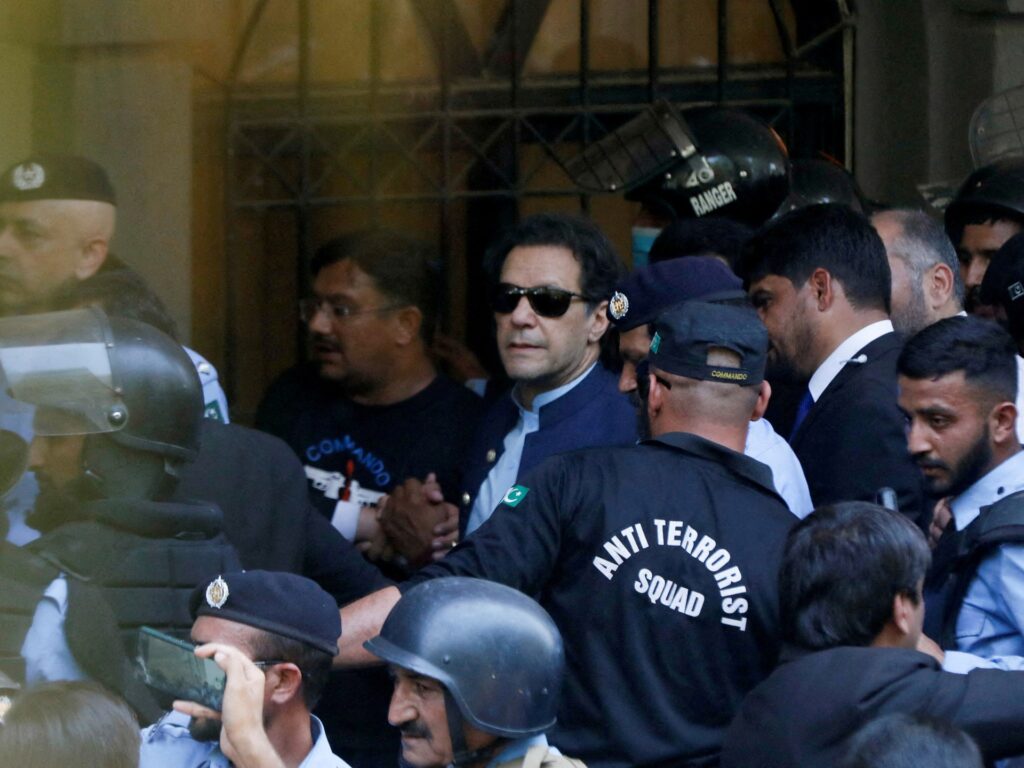
In the first event of its kind in the country, the jailed ex-PM’s party uses audio clip made by artificial intelligence during a virtual rally. Islamabad, Pakistan – Jailed former Pakistani Prime Minister Imran Khan has delivered a speech using an audio clip generated through artificial intelligence (AI) to address a virtual rally – the first event of its kind in the South Asian country. Khan delivered a four-minute address on Sunday night, using the clip, which was laid over a video containing his AI-generated image as well as photos from previous Pakistan Tehreek-e-Insaaf (PTI) rallies and earlier speeches by him. The PTI said its virtual rally drew more than five million views on social media platforms including YouTube, Facebook and Twitter despite internet outages reported from various parts of the country. The PTI organised the internet rally to bypass a government ban on public rallies by the party as it gears up for general elections, scheduled on February 8. “Our party is not allowed to hold public rallies. Our people are being kidnapped and their families are being harassed,” the AI-generated voice mimicking Khan said in the clip, carrying a disclaimer that the speech is based on his notes from prison. “History will remember your sacrifices,” the stilted voice added, referring to the months-long state crackdown on PTI, which has seen dozens of party leaders arrested or “forced to quit” the organisation. Khan himself has been in jail since August following his conviction in a case related to the illegal selling of state gifts he received as premier from 2018 to 2022. Though he got bail in that case, he remains in custody after he was indicted for allegedly leaking state secrets. Khan denies the allegations and says the cases against him are a ploy by the government and the powerful military to keep him and his party out of the February elections. ‘Internet censorship’ The opposition party accused the government of causing internet disruptions in order to prevent Khan’s supporters from watching his online speech. Several users reported outages in the live streaming of the speech, which was confirmed by NetBlocks, an internet tracking company. “Metrics show major social media platforms were restricted in Pakistan for [nearly] 7 hours on Sunday evening during an online political gathering; the incident is consistent with previous instances of internet censorship targeting opposition leader Imran Khan and his party PTI,” the firm said in a post on X, formerly Twitter. ℹ️ ICYMI: Metrics show major social media platforms were restricted in #Pakistan for ~7 hours on Sunday evening during an online political gathering; the incident is consistent with previous instances of internet censorship targeting opposition leader Imran Khan and his party PTI https://t.co/AS9SdfwqoH pic.twitter.com/XXMYBhknXd — NetBlocks (@netblocks) December 18, 2023 In a statement on Monday, the Pakistan Telecommunication Authority denied the internet outage and urged the media to exercise caution on sharing “unconfirmed news” about it. Pakistan’s free speech activist Usama Khilji praised PTI’s “innovative” method of holding the virtual event to circumvent the ban on public rallies. “With a full crackdown on PTI’s right to freedom of association and speech via arrests of leadership, the party’s use of artificial intelligence to broadcast a virtual speech in the words of its incarcerated chairman and former Prime Minister Imran Khan marks a new point in the use of technology in Pakistani politics,” he told Al Jazeera. Khilji added a note of caution in political leaders and parties using AI tools for their campaigns. “This innovative use of technology shows how AI can be used to circumvent a crackdown on a political party, but it should be viewed with caution because it signifies the potential abuse of AI technology to spread disinformation and manipulate elections as well by various political and non-political actors,” he said. Adblock test (Why?)
Vatican approves blessings for same-sex couples under certain conditions

A landmark ruling approved by Pope Francis says priests can bless same-sex couples under some circumstances. The Vatican has approved a landmark ruling to allow Roman Catholic priests to administer blessings to same-sex couples as long as they are not part of regular Church rituals or liturgies, nor given in contexts related to civil unions or weddings. A document from the Vatican’s doctrinal office approved by Pope Francis on Monday said such blessings would not legitimise irregular situations but be a sign that God welcomes all. The document backed “the possibility of blessings for couples in irregular situations and for couples of the same sex” but “this blessing should never be imparted in concurrence with the ceremonies of a civil union, and not even in connection with them”. It said priests should decide on a case-by-case basis and “should not prevent or prohibit the Church’s closeness to people in every situation in which they might seek God’s help through a simple blessing”. The document elaborates on a letter Francis sent to two conservative cardinals that was published in October. In that preliminary response, Francis suggested such blessings could be offered under some circumstances if they didn’t confuse the ritual with the sacrament of marriage. The new document repeats that rationale and elaborates on it, reaffirming that marriage is a lifelong sacrament between a man and a woman. It stresses that blessings should not be conferred at the same time as a civil union, using set rituals or even with the clothing and gestures that belong in a wedding. But it says requests for such blessings should not be denied full stop. It offers an extensive definition of the term “blessing” in Scripture to insist that people seeking a transcendent relationship with God and looking for his love and mercy should not be subject to “an exhaustive moral analysis” as a precondition for receiving it. “Ultimately, a blessing offers people a means to increase their trust in God,” the document said. “The request for a blessing, thus, expresses and nurtures openness to the transcendence, mercy, and closeness to God in a thousand concrete circumstances of life, which is no small thing in the world in which we live.” The Vatican holds that marriage is an indissoluble union between man and woman. As a result, it has long opposed same-sex marriage. And in 2021, the Vatican’s Congregation for the Doctrine of the Faith said flat-out that the church couldn’t bless the unions of two men or two women because “God cannot bless sin”. That document created an outcry, one it appeared even Francis was blindsided by, even though he had technically approved its publication. Soon after it was published, he removed the official responsible for it and set about laying the groundwork for a reversal. It stressed that people in “irregular” unions – gay or straight – are in a state of sin. But it said that shouldn’t deprive them of God’s love or mercy. Pope Francis has recently criticised laws that criminalise homosexuality as “unjust”, saying God loves all his children just as they are and calling on Catholic bishops who support the laws to welcome LGBTQ people into the church. The Vatican in 2008 declined to sign onto a UN declaration that called for the decriminalisation of homosexuality, complaining the text went beyond the original scope and also included language about “sexual orientation” and “gender identity” it found problematic. Adblock test (Why?)